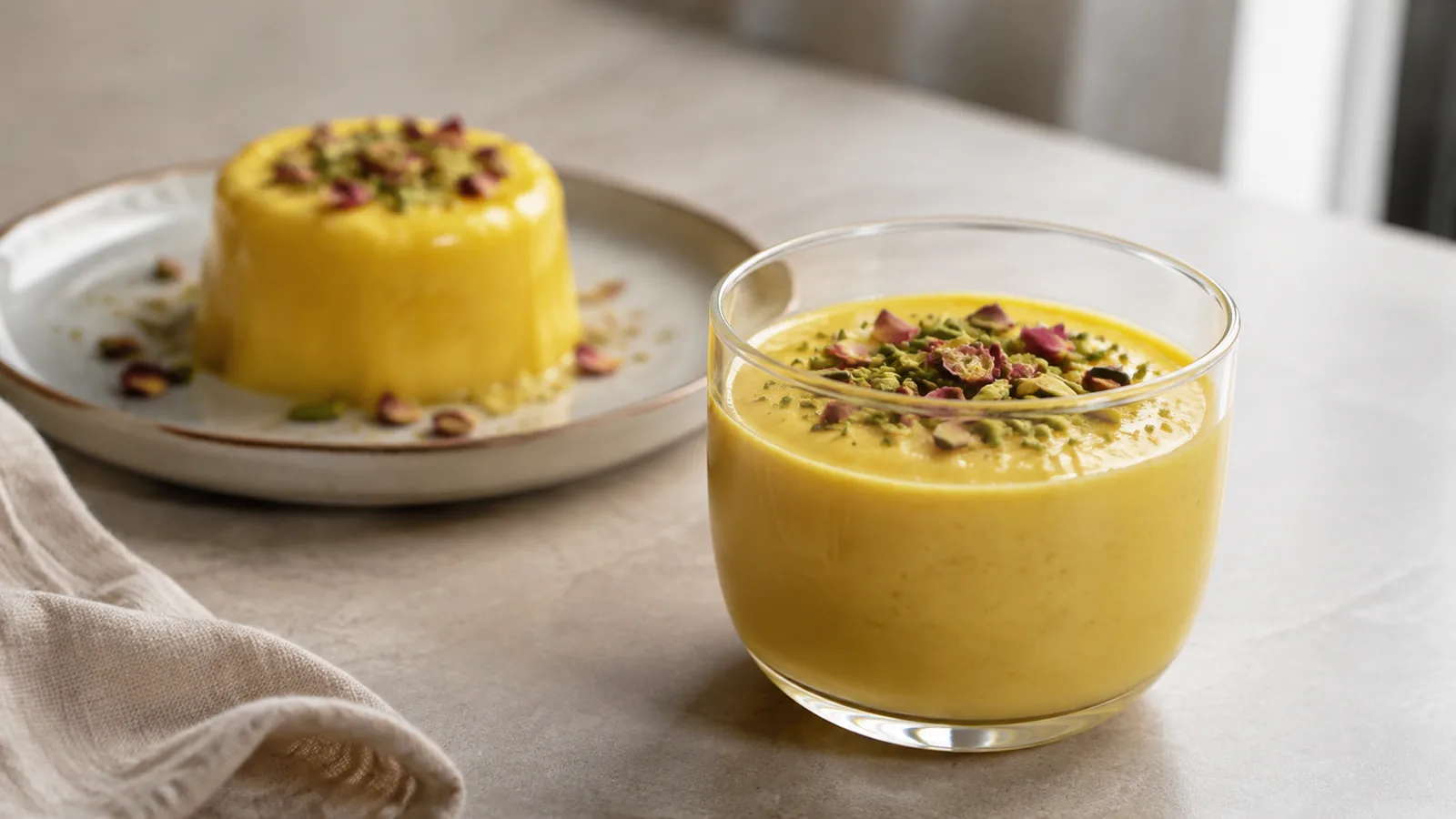
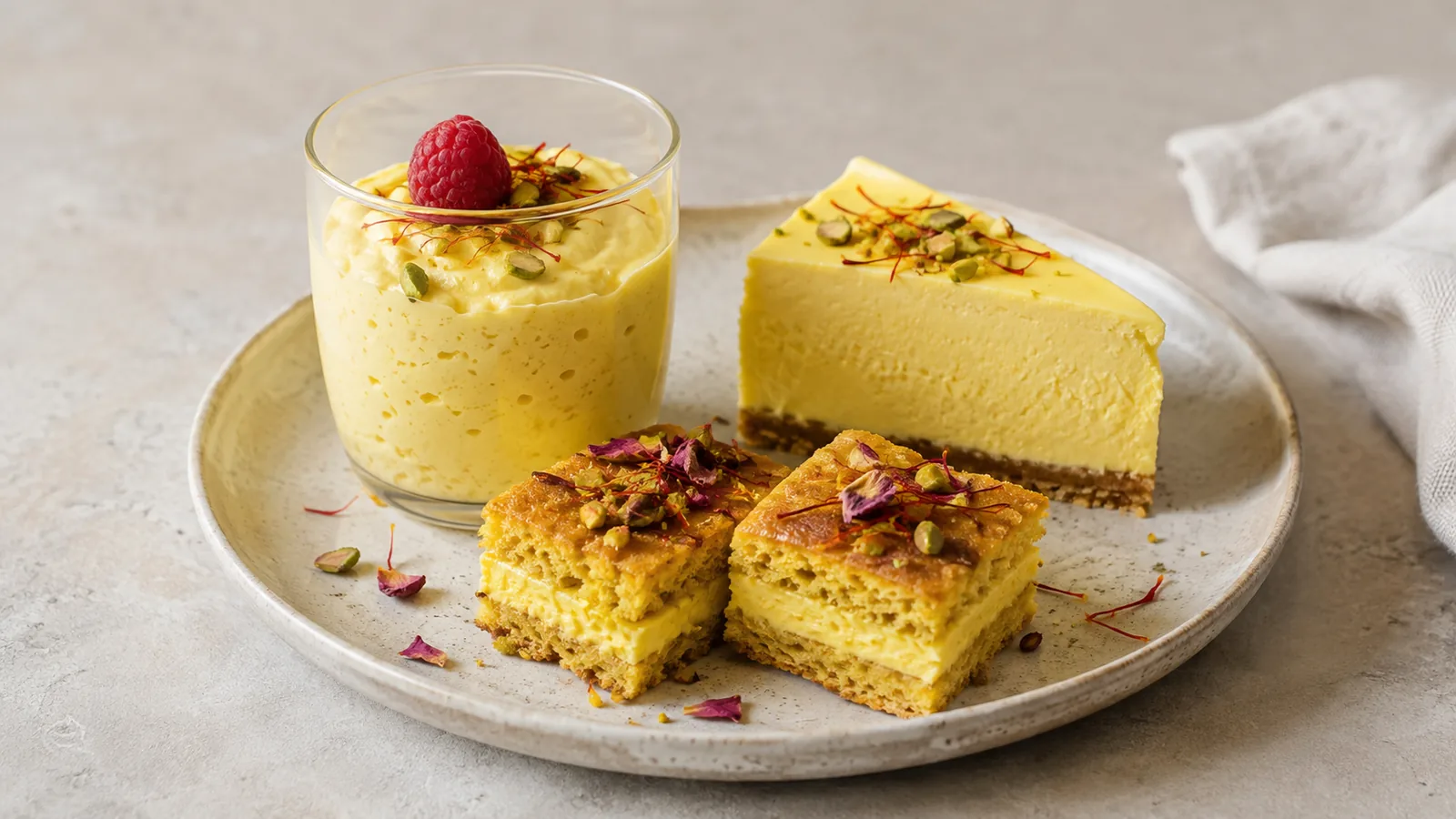
These Saffron dessert recipes turn one small tin of threads into three very different sweets: an airy mousse, a chilled cheesecake and soft cake bars topped with saffron cream. Each recipe is complete on its own, with safer egg handling and realistic chilling times.
How to use saffron in desserts
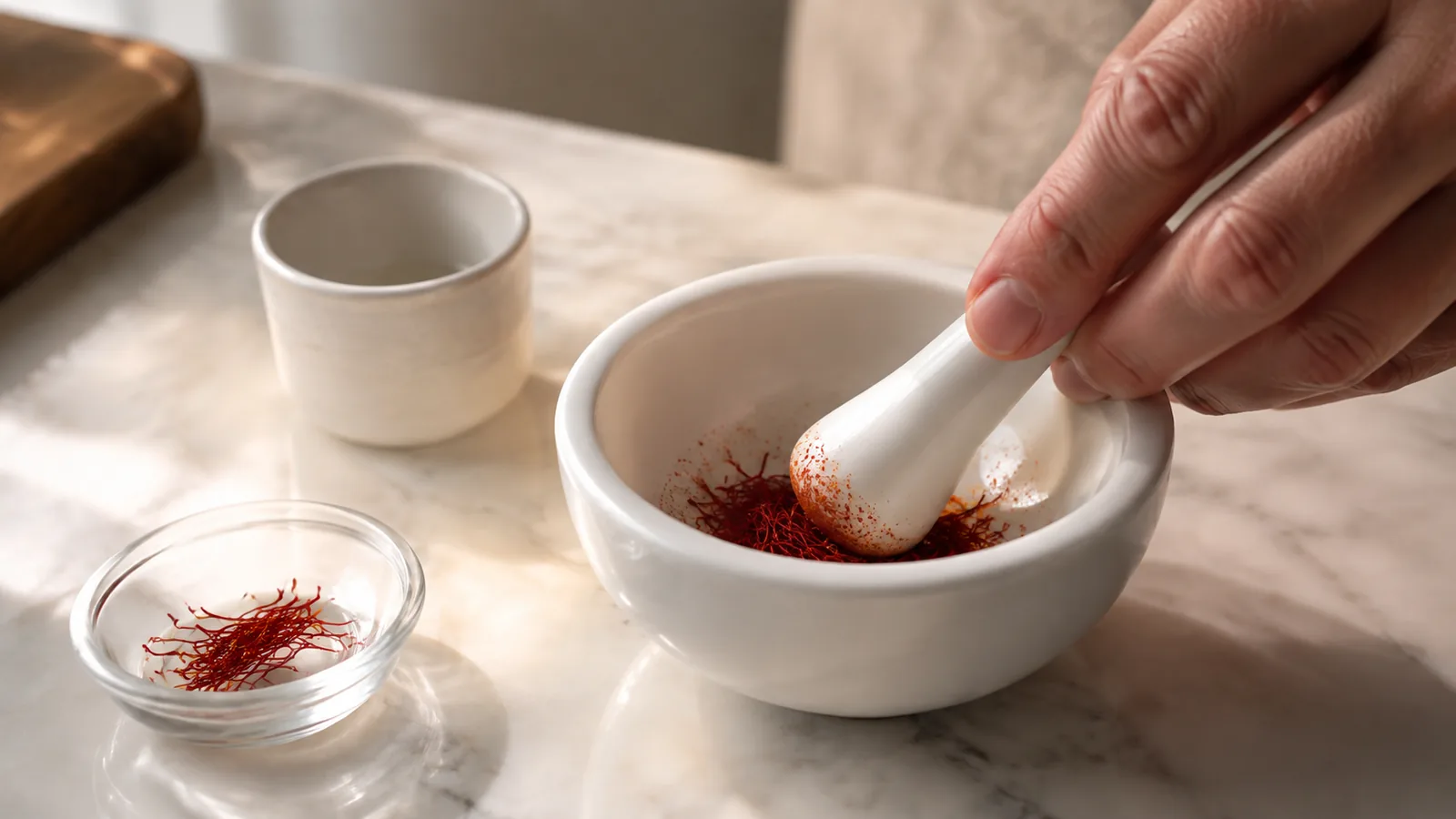
Saffron needs liquid and time to release its colour and aroma. For each recipe, grind the measured threads, cover them with 1–2 tablespoons of hot water or milk, and leave the cup covered for 10 minutes. Add the infusion after high-heat cooking whenever possible.
More saffron is not always better. Cream, vanilla and chocolate can soften its aroma, while prolonged boiling can flatten it. The 1/8-teaspoon measures below give a delicate result; increase slightly only after tasting the base.
Saffron mousse for three
This saffron dessert has about 60 minutes of active and cooling work, followed by 2–3 hours in the refrigerator.
Ingredients
- 1 tablespoon powdered gelatin
- 3 tablespoons cold water
- 4 pasteurised egg yolks
- 1 pasteurised egg white
- 4 tablespoons sugar, divided
- 1/8 teaspoon ground saffron
- 2 tablespoons milk
- 1/4 cup cold heavy cream
Method
Sprinkle the gelatin over the cold water and wait 5 minutes. Dissolve it over barely simmering water without boiling. Bloom the saffron in the milk, warming it only until steaming.
Whisk the yolks with 3 tablespoons sugar until pale. Slowly whisk in the warm saffron milk, then return the mixture to very low heat. Stir until it reaches 71°C and lightly coats a spoon. Remove from the heat and stir in the gelatin. Cool to room temperature without letting it set.
Whip the cream to soft peaks. In a clean bowl, whip the pasteurised egg white, adding the final tablespoon of sugar gradually, until it holds firm peaks. Fold the cream into the saffron custard, then fold in the egg white. Divide among three glasses and chill for 2–3 hours.
No-bake saffron cheesecake for five
Ingredients
- 200 g digestive biscuits
- 100 g butter, melted
- 200 g full-fat cream cheese, room temperature
- 200 g cold heavy cream
- 100 g sugar
- 1 tablespoon powdered gelatin
- 3 tablespoons cold water
- 1/8 teaspoon ground saffron, bloomed in 1 tablespoon hot water
Method
Crush the biscuits finely and mix with the melted butter. Press firmly into the base of a lined 18 cm springform pan. Chill for 20 minutes. For a crisper base, bake it at 180°C for 10 minutes, then cool completely.
Bloom the gelatin in 3 tablespoons cold water for 5 minutes and dissolve it gently over steam. Beat the cream cheese with the sugar and saffron until smooth. Whip the cream separately to soft peaks.
Stir 2 tablespoons of the cream-cheese mixture into the warm gelatin, then blend it back into the bowl. Fold in the whipped cream. Spread over the cold biscuit base and refrigerate for at least 4 hours, preferably overnight. The former method mentioned milk but supplied no amount; it is unnecessary here and has been removed from the formula.
Saffron cake bars for five
These bars combine a simple 25 cm cake with a chilled saffron mousse topping. The cake takes 40–50 minutes to bake, then needs to cool before the topping is added.
Cake ingredients
- 4 eggs
- 1 cup sugar
- 1/2 cup neutral oil
- 2 cups plain flour
- 1 tablespoon baking powder
- Pinch of salt
Saffron topping
- 2 pasteurised egg whites
- 80 g sugar
- 70 g cold heavy cream
- 2/3 cup milk
- 1/8 teaspoon ground saffron
- 1 tablespoon powdered gelatin
- 3 tablespoons cold water
Bake the cake
Heat the oven to 180°C. Line a 25 cm square pan. Beat the 4 eggs and 1 cup sugar for 7–10 minutes, until thick and pale. Stream in the oil at low speed. Sift in the flour, baking powder and salt, then fold only until no dry streaks remain.
Spread the batter in the pan and bake for 35–45 minutes. A skewer inserted in the centre should emerge clean or with a few dry crumbs. Cool in the pan for 15 minutes, then cool completely on a rack.
Make the saffron layer
Bloom the gelatin in the cold water for 5 minutes and dissolve over steam. Warm the milk with the saffron until steaming, then remove from the heat and stir in the gelatin. Cool until just beginning to thicken.
Whip the cream to soft peaks. Beat the pasteurised egg whites, adding 80 g sugar gradually, until glossy and firm. Fold the saffron milk into the cream, then fold in the egg-white mixture. Spread over the fully cooled cake.
Refrigerate for at least 3 hours. Lift out by the lining and cut with a warm, dry knife, wiping between slices.
Which saffron dessert should you choose?
- Mousse: smallest yield and lightest texture; useful when you want individual glasses.
- Cheesecake: easiest make-ahead choice and cleanest slices after an overnight chill.
- Cake bars: best for a larger platter and the most substantial of the three.
These are easy saffron dessert ideas, but “quick” refers to hands-on work. Gelatin desserts need uninterrupted chilling, and rushing that stage produces a loose centre.
Decoration and flavour pairings
Pistachio, almond, raspberry, orange and dried rose petals all suit saffron. Use one or two rather than every garnish at once. A little dark chocolate works with cheesecake, but a heavy chocolate layer can dominate the spice.
For clean colour, keep the saffron infusion concentrated. Adding a large volume of water to mousse or cheesecake weakens the set.
Food-safety and storage notes
Use pasteurised egg whites for mixtures that are not subsequently baked. The mousse yolk base is heated to 71°C; use a thermometer rather than guessing from thickness. Keep all three desserts refrigerated.
Mousse is best within 2 days, cheesecake within 3 days and cake bars within 2 days. Cover them so they do not absorb refrigerator odours. Freezing can damage mousse texture, while cheesecake and plain cake bars can be frozen before delicate garnishes are added.
More ideas for saffron recipes and desserts
Once you are comfortable blooming saffron, the same measured approach works in rice pudding, panna cotta, ice cream and fruit compote. Match the setting agent to the texture you want, keep the spice away from a long boil, and let each dessert chill fully before judging it.