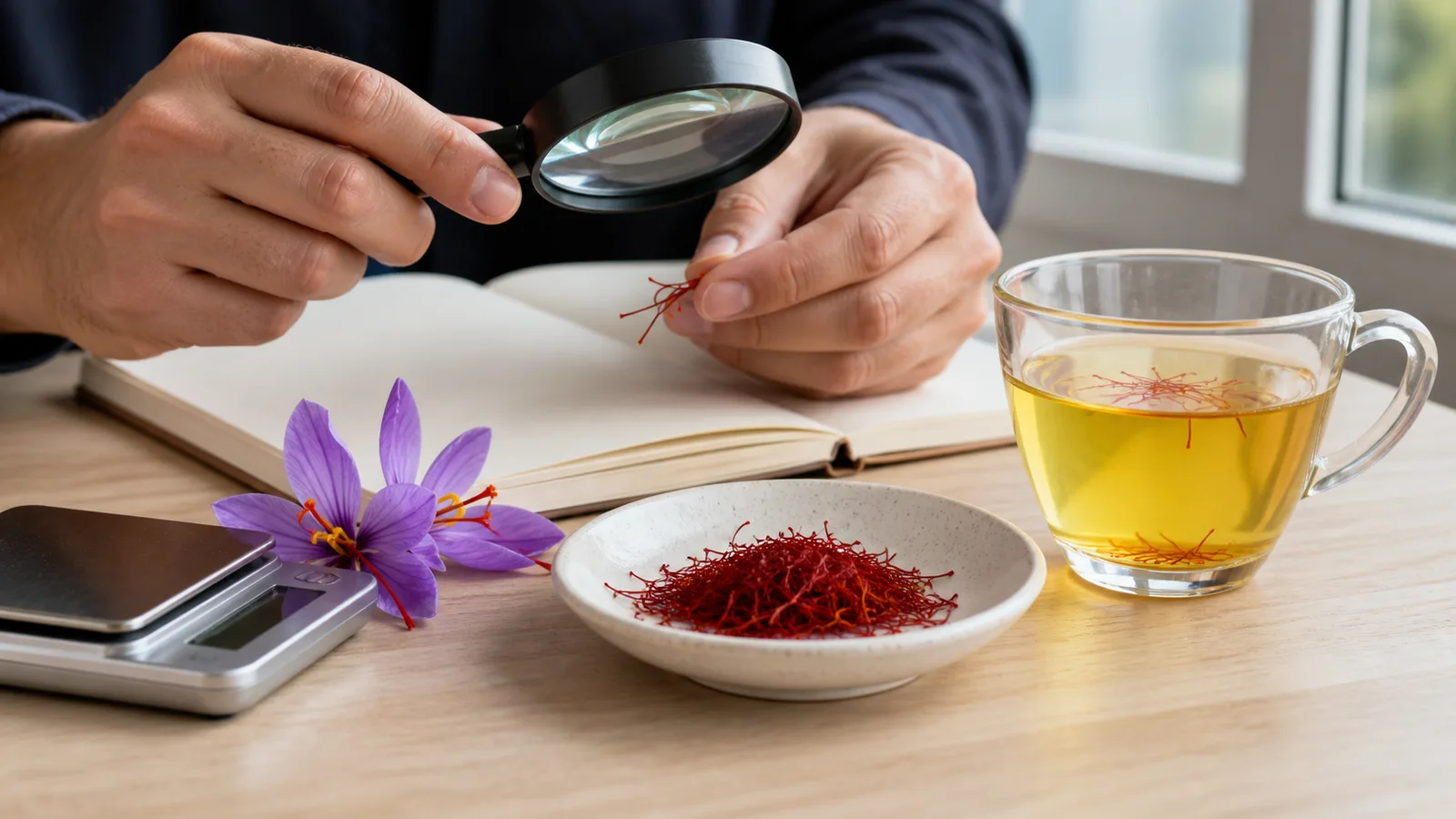
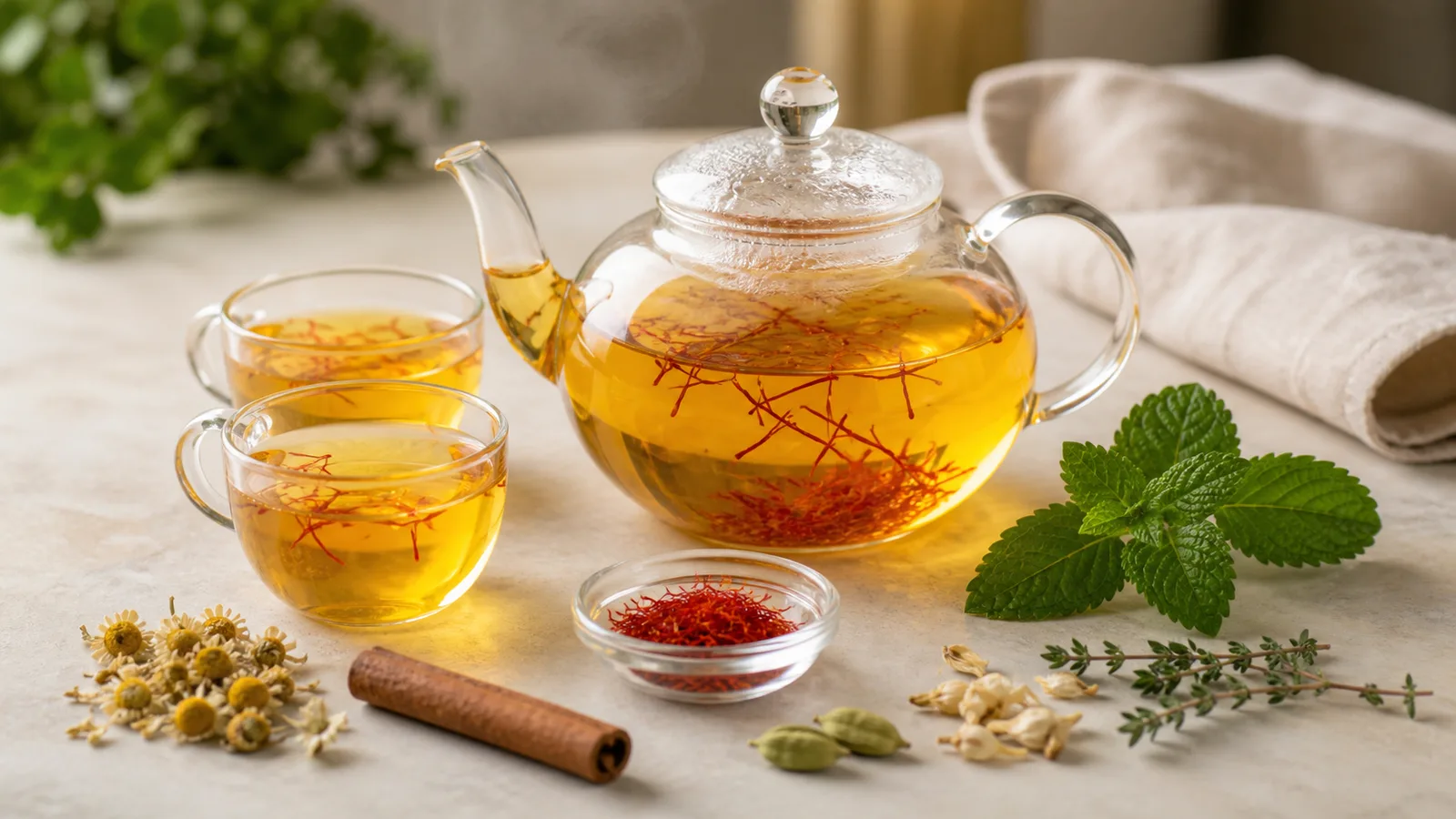
Saffron herbal tea is less one fixed drink than a useful base: a few real saffron threads steeped with an herb or spice whose aroma suits the moment. Chamomile makes a soft evening cup; cinnamon is warmer and drier; lemon balm is bright; cardamom and orange blossom lean floral; thyme is distinctly savoury.
Below are six measured recipes, followed by a careful look at saffron tea benefits. They are drinks, not concentrated remedies. The quality of the cup comes from proportion, water temperature and flavour—not from turning a pleasant infusion into a treatment claim.
A reliable base for saffron herbal tea
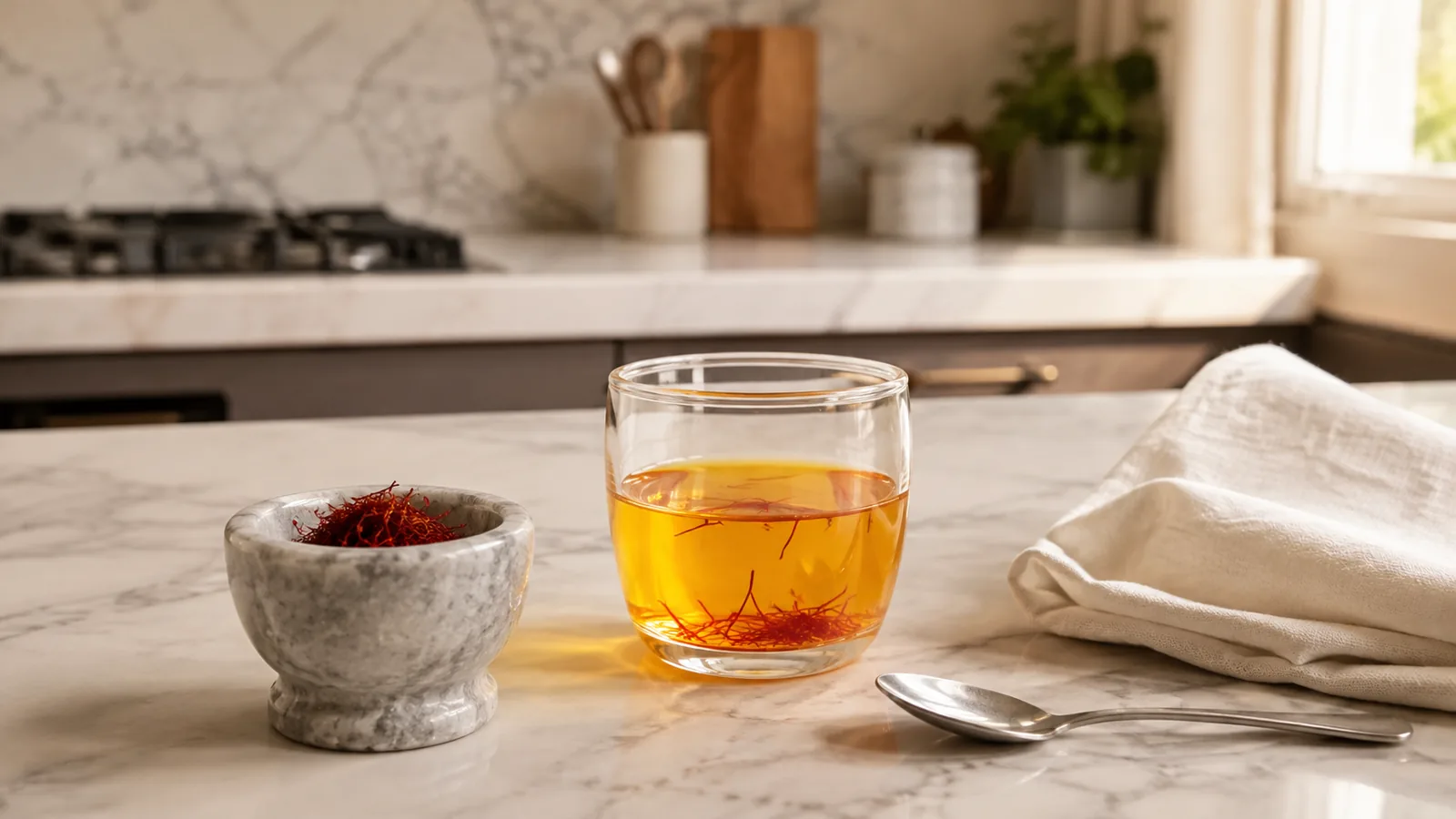
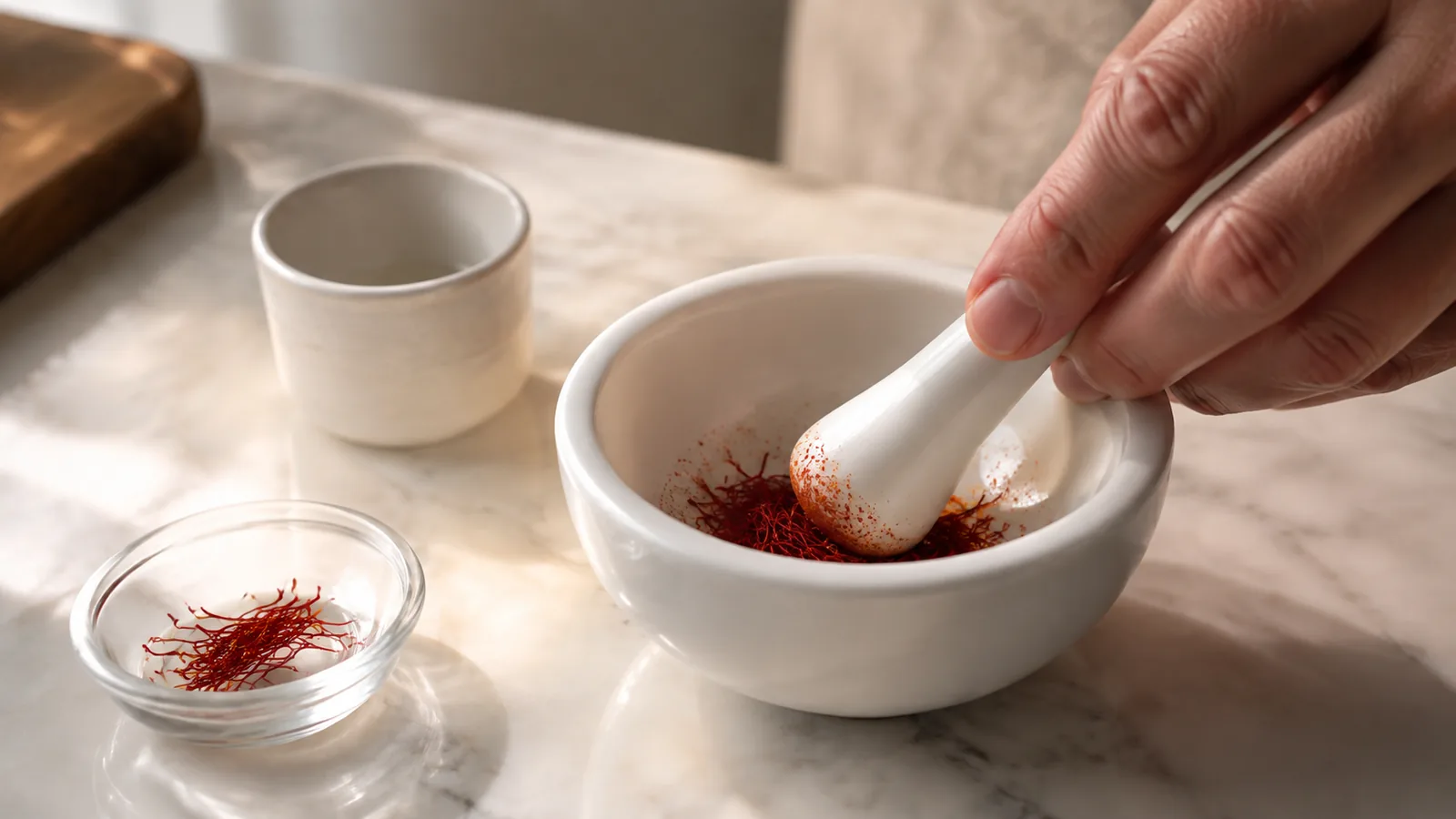
For one cup, use 240 ml freshly boiled water and 3–6 saffron threads, lightly crushed. Put the saffron in a warm teapot or heat-safe cup, add the water, cover and steep for 8–10 minutes. Add the companion herb at the time given in each recipe. Strain before drinking.
Ground saffron disperses quickly but leaves sediment; whole threads give a clearer drink and are easier to assess for authenticity. Honey or rock candy is optional. Taste first, because sweetness can cover the gentle bitter edge that keeps saffron tea balanced.
1. Saffron and chamomile tea
Add 1 teaspoon dried chamomile flowers with the saffron. Cover for 7–8 minutes, then strain. A full 15-minute steep is possible, but it can draw more bitterness from the flowers. Add honey only after tasting.
Chamomile has a long history of use as a calming drink and for mild digestive discomfort. The US National Center for Complementary and Integrative Health notes that evidence is insufficient for many promoted uses and that people allergic to ragweed-related plants may be more likely to react. Chamomile’s use as a hair rinse is a separate topical tradition; drinking the tea has not been shown to add shine, soothe the scalp or lighten hair.
2. Saffron and cinnamon tea
Add one small cinnamon stick to the water and saffron. Cover for 8–10 minutes. A stick is cleaner than ground cinnamon, which floats in the cup and makes it cloudy. Remove the bark before drinking.
Cinnamon gives warmth and sweetness without sugar, but the health claims often attached to it run ahead of the evidence. NCCIH’s current cinnamon summary says research does not clearly support using cinnamon for any health condition and remains unclear for diabetes or weight loss. This tea should not be used to treat fatty liver disease, control blood sugar, prevent type 2 diabetes or stop the protein changes associated with Alzheimer’s disease.
3. Saffron and lemon balm tea
Add 2 teaspoons dried lemon balm leaves for the last 6–8 minutes of the saffron steep. One or two dried food-grade rosebuds can add fragrance, but keep them optional; too many make the cup taste soapy.
Lemon balm is traditionally used for mild stress, sleep and digestive complaints such as bloating. That traditional-use context is not proof that an ordinary tea treats anxiety or indigestion. Claims that it curbs appetite, causes weight loss, brightens skin or reduces dark spots are not established by drinking this infusion.
4. Saffron and cardamom tea
Lightly crush 2 green cardamom pods, add them with the saffron and steep for 8–10 minutes. Crushing the pod once is enough; finely ground seeds can dominate the cup. This combination is particularly good after a rich meal because the aroma feels clean and warm.
Cardamom is traditionally associated with digestion and contains compounds studied for antioxidant and anti-inflammatory activity. A culinary infusion has not been shown to prevent oxidative damage, treat inflammation, soothe a skin disorder or provide a measurable skin-health benefit. Its reliable contribution here is fragrance.
5. Saffron and orange blossom tea
Add 1 teaspoon dried, food-grade bitter-orange blossom during the final 5–6 minutes. Use blossoms sold for culinary infusion, not decorative flowers treated with pesticides or perfume. The aroma is delicate, so this is the one recipe where using the lower end of the saffron range often tastes better.
Orange blossom is enjoyed for its scent and traditional calming associations. A dried-flower tea is not a dependable source of vitamin C, and there is no sound basis for saying it increases collagen, prevents premature skin ageing, reduces inflammation or improves skin texture. Those claims refer to different products or mechanisms, not this cup.
6. Saffron and thyme tea
Add 1 teaspoon dried culinary thyme with the saffron and steep for 6–8 minutes. Strain carefully. Thyme is assertive; more is not necessarily better, and a spoon of honey may soften its savoury edge.
Thyme contains aromatic compounds including thymol. The European Medicines Agency’s public summary recognizes traditional use of specified thyme preparations for chesty coughs associated with colds, while explaining that firm clinical conclusions could not be drawn from the limited study evidence. This home infusion may feel soothing, but it is not a substitute for care when breathing is difficult, fever is high or a cough persists.
Saffron tea benefits: what the evidence can support
People asking about the benefits of saffron tea usually mean both the drink itself and the spice steeped in it. The immediate benefits of drinking saffron tea are modest and useful: it is a warm, aromatic, normally caffeine-free drink, and unsweetened tea contributes fluid without added sugar. The supposed health benefits of saffron tea need to be judged against the preparation and dose. “Saffron hot water benefits” describes the same basic preparation. Hot water extracts colour and aroma; it does not create a new medicinal compound. Zafran is another name for saffron, so “zafran tea benefits” is not a separate category.
Mood, stress and depression
Saffron has been studied in people for mood outcomes. A current GRADE-assessed review found moderate-certainty evidence for improvement on some self-reported depression and anxiety scales, while several clinician-rated outcomes were not significant and results varied. The studies used measured powders or extracts over time, not a few threads in tea. A comforting cup can be part of a routine, but it should not replace professional care.
Digestion and inflammation
Warm drinks are often soothing after food, and several herbs here have traditional digestive uses. That does not show that saffron tea treats reflux, irritable bowel syndrome, persistent bloating or another digestive disorder. Laboratory antioxidant or anti-inflammatory activity also does not establish a clinical effect from this preparation.
Blood pressure, cholesterol and heart health
Some saffron research has examined blood pressure or lipid markers, generally with standardized preparations. It is not safe to transfer those results to tea and then claim that the drink prevents or treats heart disease. Someone prescribed blood-pressure, cholesterol or diabetes medicine should not alter treatment because of an herbal infusion.
Saffron tea and menstrual health
Saffron preparations have been researched for premenstrual syndrome (PMS) and dysmenorrhea. A 2026 systematic review reported favourable pooled results, but the trials used defined interventions and do not establish ordinary saffron tea as a treatment. Claims that the drink increases serotonin, prevents mood swings or regulates hormones go beyond what a home recipe can show.
A warm saffron-and-cinnamon tea may feel pleasant during a period, but significant pain, fainting, unusually heavy bleeding or a major cycle change needs medical assessment. Do not respond by making the infusion stronger.
Who should be cautious?
- Use culinary quantities, not spoonfuls of saffron or concentrated extracts.
- Ask a clinician before frequent medicinal use during pregnancy or breastfeeding, or with medicines for mood, blood pressure, blood sugar or bleeding.
- Check each companion herb separately; an herb that suits one person may conflict with another person’s allergy, medicine or condition.
- Do not give very hot drinks to young children, and keep honey away from infants under 12 months.
- Stop and seek help for swelling, breathing difficulty, a severe rash or another sign of an allergic reaction.
Good saffron tea does not need a long list of promises. Choose one companion herb, use enough time for the threads to open and let the aroma tell you when the balance is right. For a separate preparation guide and more serving options, read our saffron tea guide.