Shirini Saffroni with Fruit Marmalade are tender saffron thumbprint cookies filled with a bright spoonful of apricot, raspberry or orange preserve. The dough is easy to shape, but chilling it briefly keeps the cookies neat and stops the marmalade from running.
What does shirini saffroni mean?
Shirini is a broad Persian word for sweets or pastries, while saffroni indicates saffron. Here the name describes modern Persian saffron cookies rather than one single protected traditional formula.
Small sweets have a natural place at weddings, Nowruz visits and family gatherings, but claims that a particular colour “symbolises wealth” vary by family and context. The useful cultural point is simpler: a tray of neat, fragrant cookies is made to share.
Ingredients for about 24 cookies
- 170 g unsalted butter, softened but not greasy
- 90 g icing sugar
- 1 large egg yolk
- 1 teaspoon vanilla extract
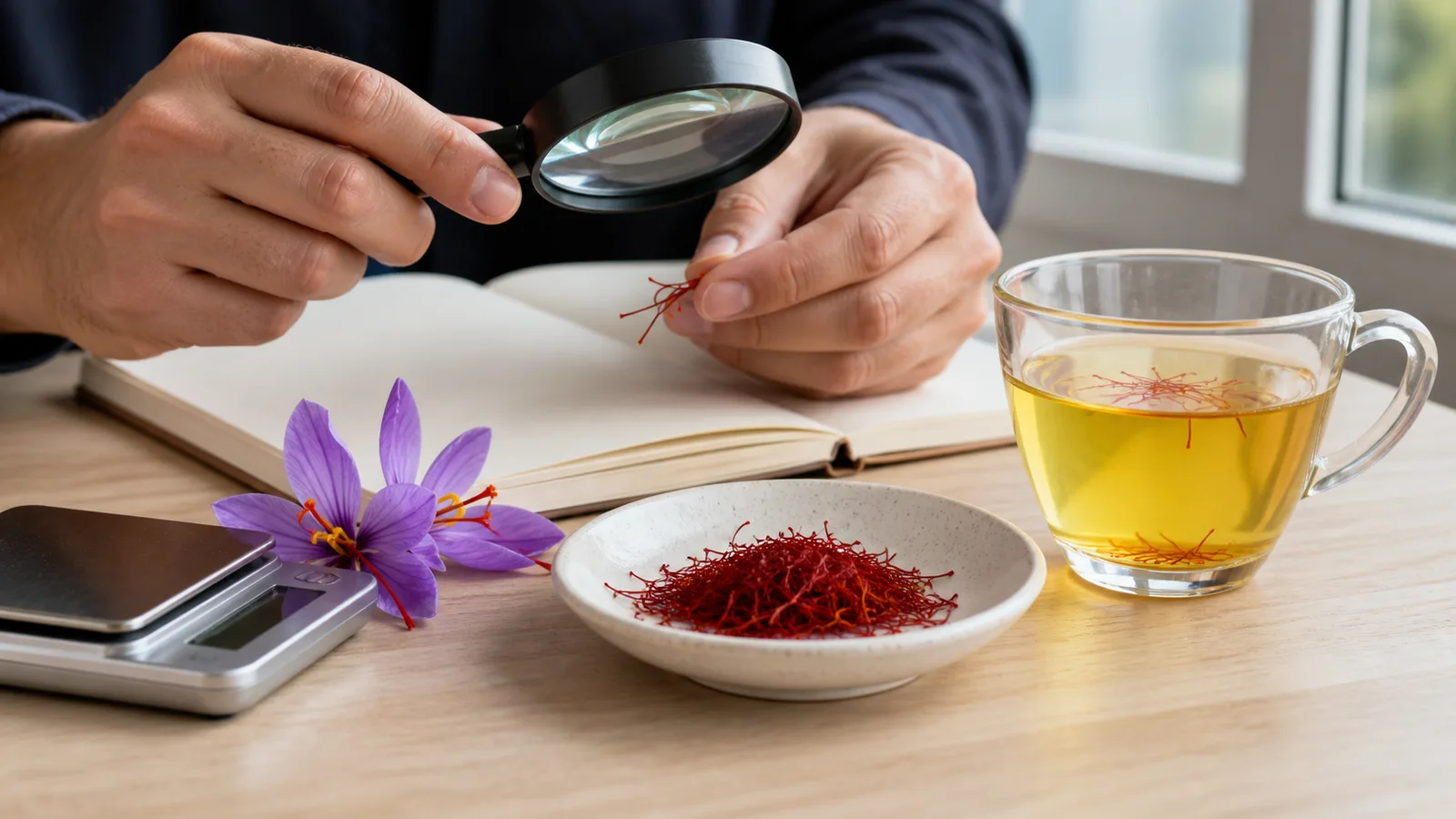
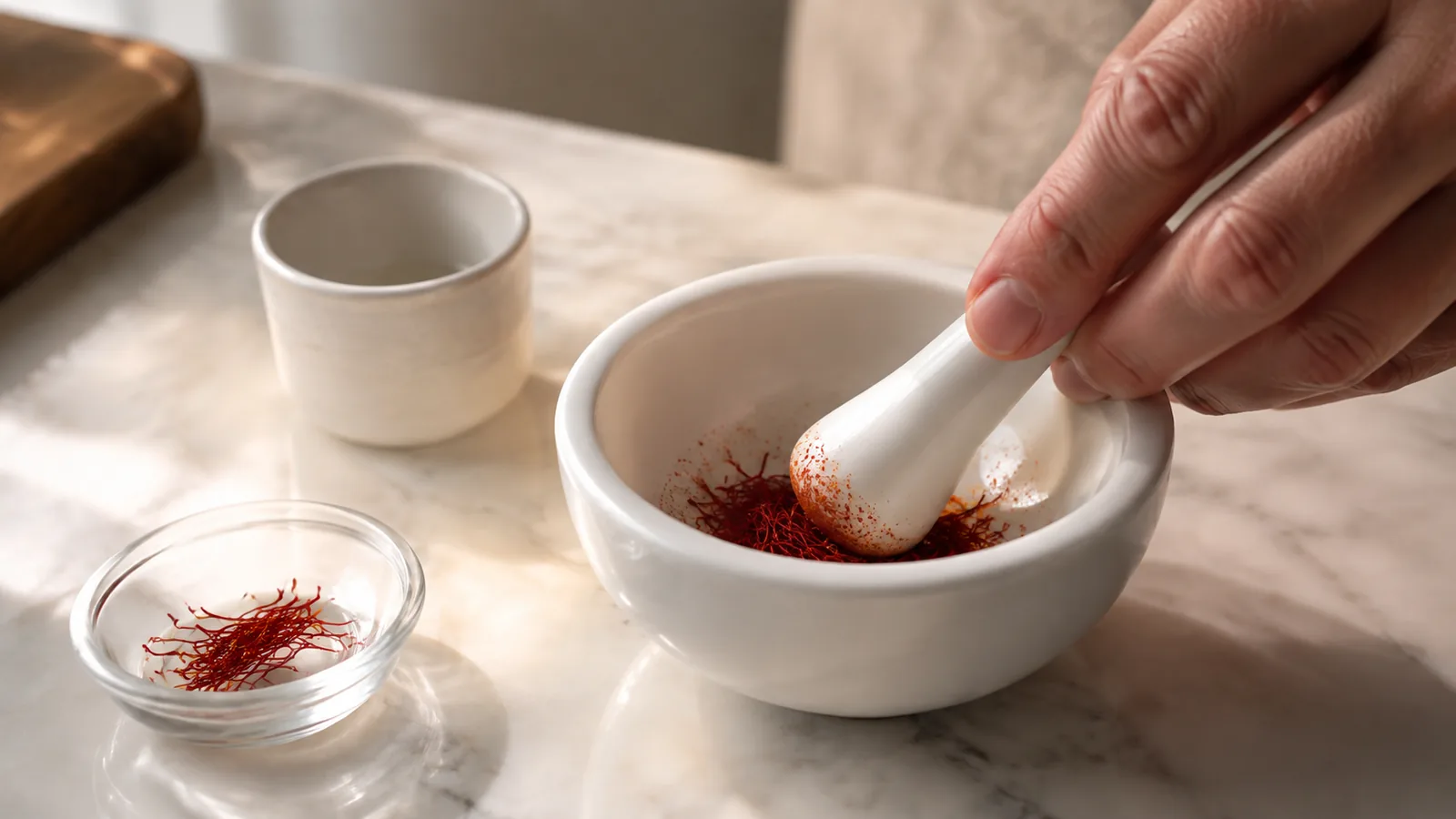
- 1 teaspoon saffron threads, finely ground
- 1 tablespoon hot water
- 240 g plain flour
- 1/4 teaspoon fine salt
- 100–120 g thick fruit marmalade or jam
- Chopped pistachios, optional
The original ingredient list named butter, flour, sugar, eggs, vanilla, saffron and fresh fruit marmalade without quantities. One egg yolk gives this measured batch tenderness without making the dough wet. A whole egg can make the cookies spread unless extra flour is added.
Choose the right fruit marmalade
Use a thick, smooth preserve that will stay in the centre of the cookie. Apricot is gentle enough to let saffron lead. Raspberry provides tart contrast, while orange marmalade adds a pleasant bitter edge.
If the marmalade contains large pieces of peel or fruit, chop or blend them first. A loose homemade preserve should be simmered briefly and cooled before filling; watery jam bubbles over the thumbprint and makes the base sticky.
How to make Shirini Saffroni with fruit marmalade
1. Bloom the saffron
Cover the finely ground saffron with 1 tablespoon hot water. Cover the cup and leave for 10 minutes, then cool to room temperature. A concentrated infusion gives even colour without adding enough liquid to soften the dough.
2. Cream the butter and sugar
Beat the softened butter and icing sugar for 2–3 minutes, until smooth and a little lighter. Add the egg yolk, vanilla and cooled saffron infusion. Beat only until the colour is even.
The butter should yield to a finger but still feel cool. If it is shiny or partly melted, refrigerate it before mixing; greasy butter encourages spreading.
3. Add the flour
Whisk the flour and salt together. Add them to the butter mixture in two batches, mixing on low or folding with a spatula. Stop as soon as the dough holds together when pressed.
If it seems crumbly, knead once or twice with cool hands. Do not add water immediately. If it is sticky, chill for 15 minutes before deciding whether it needs another tablespoon of flour.
4. Shape and chill
Line two baking trays. Roll level tablespoons of dough into balls and place them 4 cm apart. Press a deep well into each with your thumb or the rounded end of a wooden spoon, taking care not to break through the base.
Chill the shaped cookies for 20–30 minutes. Meanwhile, heat the oven to 175°C.
5. Fill and bake
Spoon about 1/2 teaspoon marmalade into each well. Do not overfill; the preserve expands as it heats. Bake for 12–15 minutes, one tray at a time, until the edges are set and only faintly golden.
Leave the cookies on the hot tray for 5 minutes, then move them to a rack. The centres are fragile while warm. If you prefer a fresher-looking filling, bake the empty thumbprints, gently redefine the wells halfway through, and add marmalade after the cookies cool.
Finishing options
Scatter a few chopped pistachios around the filling before it sets. A very light dusting of icing sugar is suitable for apricot or raspberry centres, although it can hide the saffron colour. Avoid adding rosewater automatically; vanilla, fruit and saffron already create a complete flavour.
For a mixed platter, fill one-third with apricot, one-third with raspberry and one-third with orange marmalade. Keep the dough identical so the fruit difference is easy to taste.
Troubleshooting saffroni cookies
- Cookies spread: butter or dough was too warm, or flour was undermeasured.
- Dough cracked badly: it was too cold or dry; let it stand for 5 minutes and roll gently.
- Marmalade overflowed: the wells were shallow or filled beyond 1/2 teaspoon.
- Cookies are hard: dough was overmixed or baked until deeply brown.
- Saffron tastes bitter: too much powder was used or it was exposed to prolonged high heat.
Can the dough be prepared ahead?
Wrap the dough well and refrigerate for up to 2 days. Let it soften just enough to roll without cracking. You can also freeze unfilled dough balls for up to 1 month; thaw them in the refrigerator, make the wells, fill and bake.
For another style and a broader explanation of the spice in baking, see the site’s saffron cookies guide.
Storage and serving
Cool the cookies completely before stacking. Store them in a single layer or between sheets of baking paper in an airtight container for 3–4 days. If the preserve requires refrigeration after opening, refrigerate the finished cookies and bring them to room temperature before serving.
Arrange Shirini Saffroni on a small tray with tea. Their appeal comes from the contrast between buttery saffron dough and tart fruit, so a modest two-bite size works better than a large, heavily filled cookie.