These saffron cookies with fruit marmalade are tender, buttery thumbprint cookies with a gentle saffron aroma and a bright spoonful of jam in the centre. The dough uses 80 g butter, 100 g icing sugar, one egg and 200 g flour, so weighing the ingredients gives a much more reliable result than trying to convert them into loosely filled cups. The cookies bake in about 10 minutes and are filled after they cool.

Saffron cookies with fruit marmalade at a glance
- Makes: about 20 to 24 small cookies, depending on size
- Preparation: about 25 minutes
- Baking: 10 to 12 minutes per tray
- Oven: 160°C conventional (320°F), middle rack
- Cooling: at least 20 minutes before filling
Ingredients
- 80 g unsalted butter, softened but not melted
- 100 g icing sugar (powdered sugar)
- ¼ teaspoon vanilla extract
- 1 large egg, at room temperature
- ½ tablespoon concentrated brewed saffron water
- 200 g plain flour (all-purpose flour)
- 1 teaspoon baking powder
- 6 to 8 teaspoons thick fruit marmalade or smooth jam, as needed
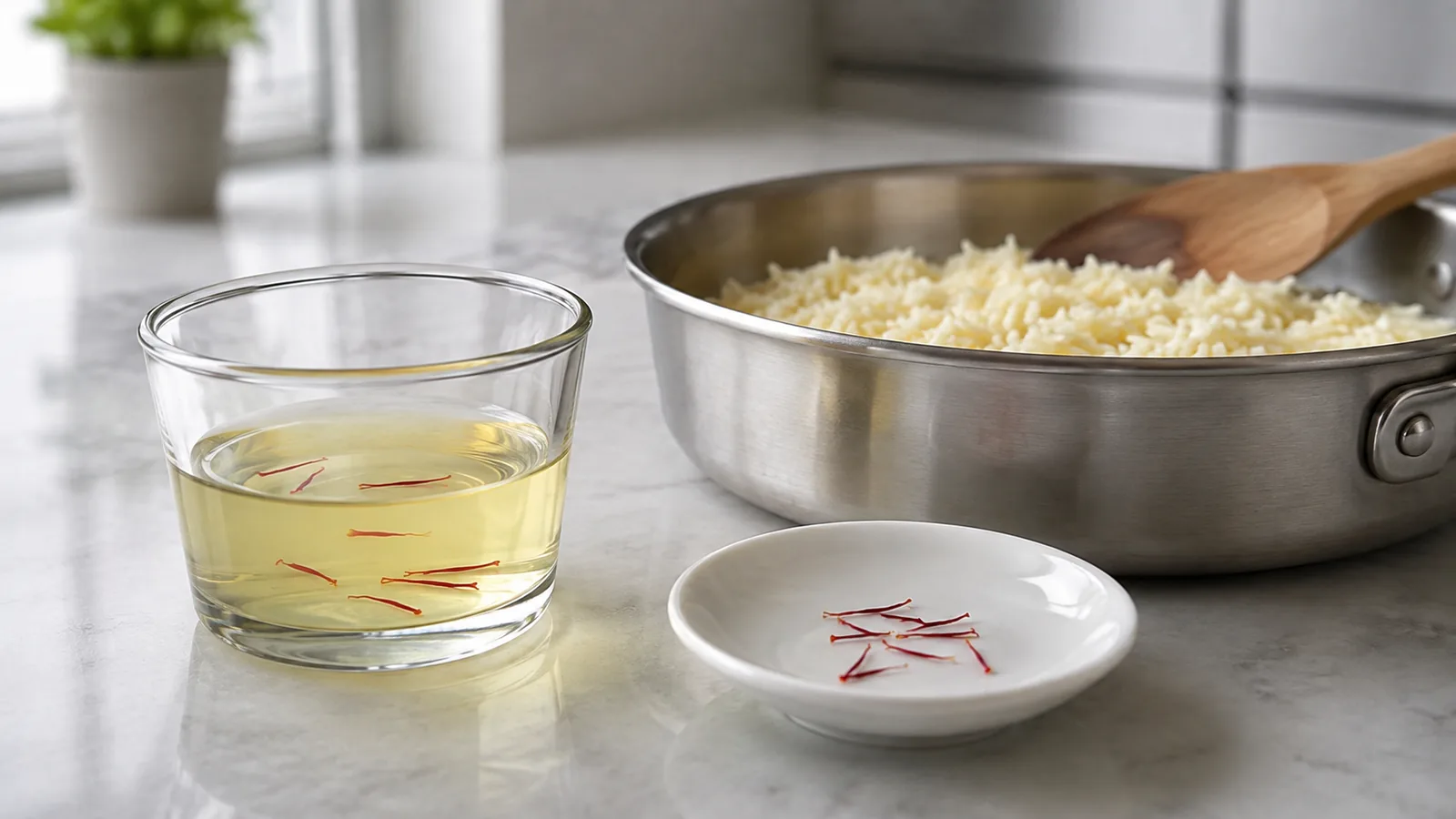
The saffron measurement refers to brewed saffron liquid, not half a tablespoon of dry threads. A concentrated infusion gives the dough colour and aroma without making it wet. If you are starting with threads, follow our guide to brewing saffron, then cool the liquid before adding it to the butter mixture.
How to make the cookies
- Prepare the oven and tray. Heat the oven to 160°C (320°F). Line a baking tray with baking paper and place a cooling rack nearby.
- Cream the butter and sugar. Beat the softened butter, icing sugar and vanilla for two to three minutes, until smooth and slightly lighter. Scrape down the bowl so no dense butter remains at the bottom.
- Add the egg and saffron. Beat in the egg until the mixture is evenly combined. Add the cooled saffron water and mix just until the colour is uniform.
- Make the dough. Whisk the flour and baking powder together in a separate bowl. Add them to the butter mixture and stir with a spoon or flexible spatula. Stop as soon as no dry flour remains. The dough should be soft and smooth but should not cling heavily to your hands.
- Shape the cookies. Roll small walnut-sized portions into balls and arrange them with room to spread. Press a neat hollow into the centre of each ball with a fingertip or the rounded end of a small utensil. Do not press all the way through.
- Bake. Bake on the middle rack for 10 to 12 minutes. The cookies should look set, with only the faintest colour at the base; dark browning can overpower saffron’s aroma.
- Cool completely. Leave the cookies on the tray for five minutes because they are fragile while hot. Transfer them to the rack and let them cool.
- Fill with marmalade. Stir the marmalade until smooth, then place a small amount in each hollow. Keep the filling below the rim so it does not run down the sides.
Choosing the fruit filling
Apricot, bitter orange and raspberry all work well. Apricot and orange echo saffron’s warm, floral character; raspberry gives a sharper contrast. Choose a thick marmalade or jam without large pieces of peel or fruit. A runny preserve will soak into the cookie and make the centre untidy.
If the preserve is very firm, stir it briefly before filling. If it is loose, warm it gently in a small pan and simmer only long enough to thicken, then let it cool. The filling should settle from a spoon rather than pour.
How to keep the dough tender
Use butter that yields when pressed but is not shiny or partly melted. Butter that is too warm makes the cookies spread; very cold butter will not combine smoothly with the sugar. Once the flour goes in, mix only until the dough comes together. Extended beating develops more gluten and can make a delicate cookie firm.
Flour absorbs moisture differently, so judge the finished dough as well as the number on the scale. If it is unusually sticky, cover and chill it for 10 to 15 minutes before shaping. Avoid adding repeated spoonfuls of flour, which can make the baked cookies dry.
Troubleshooting common problems
The cookies spread and lose their hollows
The butter or room was probably warm. Chill the shaped cookies for 10 minutes, deepen the hollows once more and then bake. Make sure the baking tray is cool before placing a second batch on it.
The dough cracks while shaping
A few fine lines are harmless, but a ball that breaks apart is too dry or cold. Knead that portion once or twice between your palms. If the whole batch is crumbly, add no more than a teaspoon of cooled saffron water and reassess before adding another drop.
The saffron flavour is faint
Freshly ground threads and a concentrated infusion give a cleaner result than adding more water. Allow the baked cookies to cool before judging them; the butter, saffron and fruit aromas become easier to distinguish once the oven heat has gone.
Storage and serving
Store filled saffron cookies in a single layer in an airtight container at cool room temperature for up to three days. Separate layers with baking paper if stacking is unavoidable. Because jam gradually softens the centre, keep unfilled cookies and marmalade separately when preparing them well in advance, then fill them shortly before serving.
Serve the cookies at room temperature with tea or coffee. Their small size and colourful centres make them useful for a mixed sweet plate, but the saffron remains clear enough for them to stand on their own.