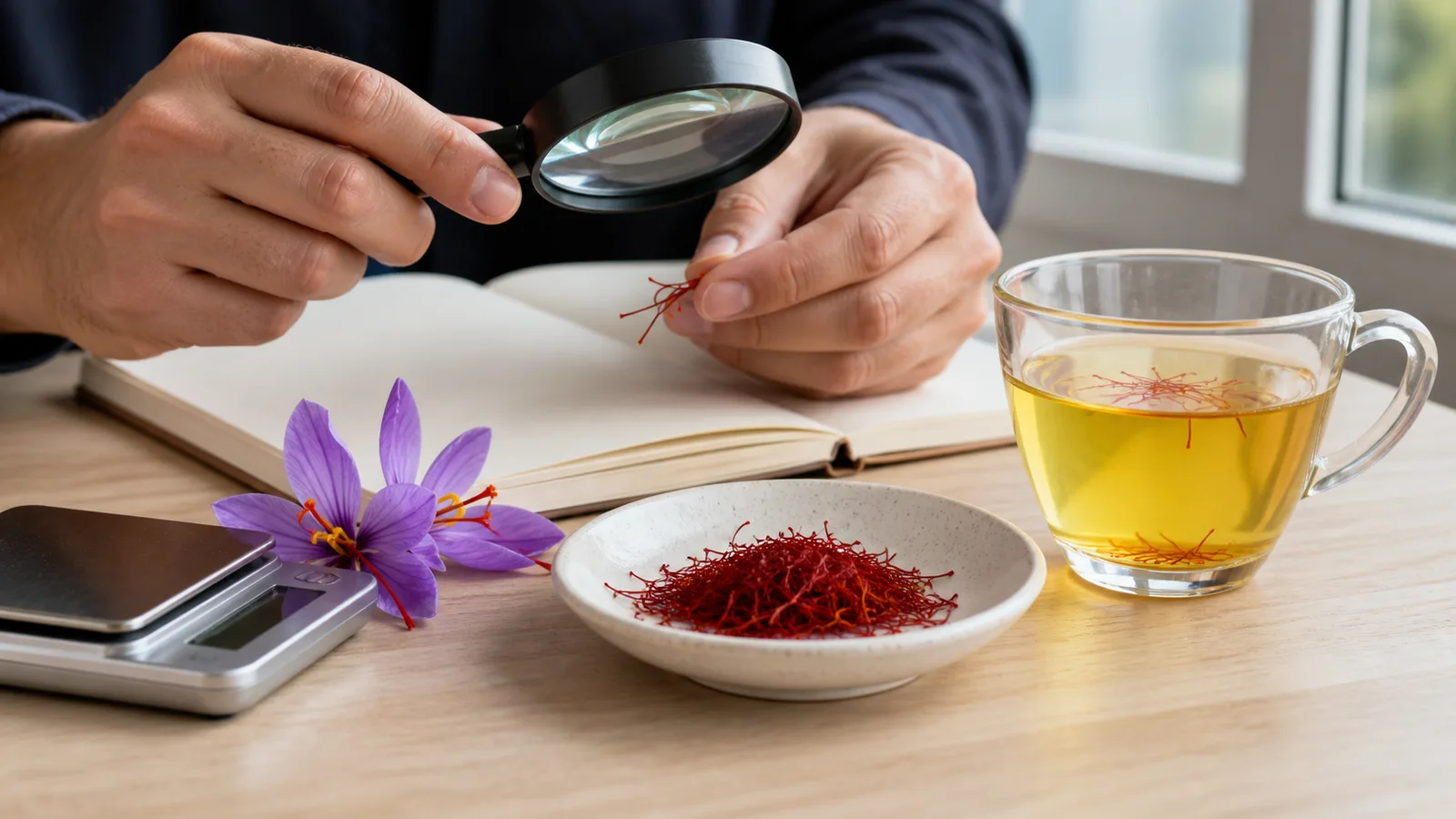
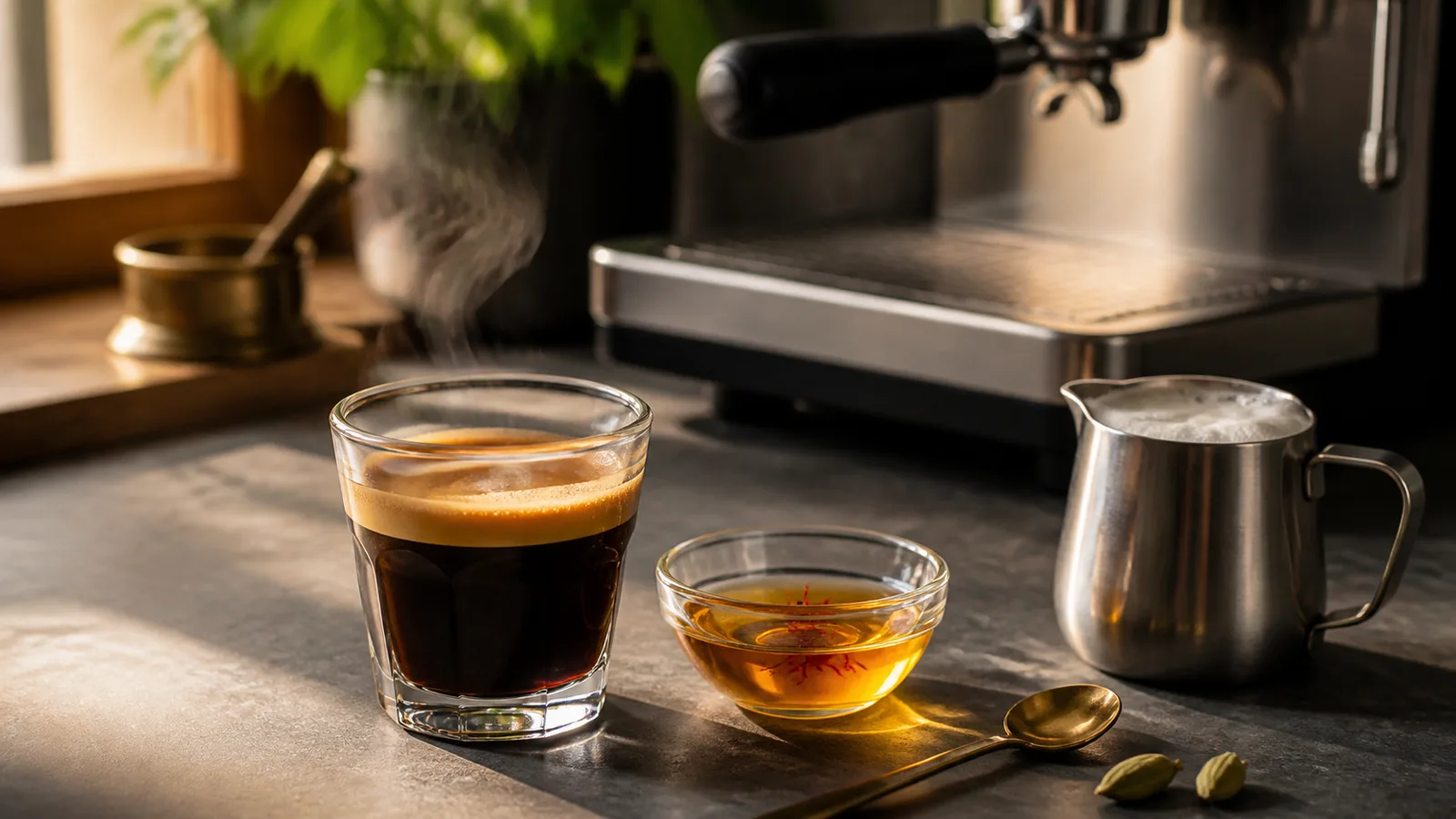
Saffron Recipes for Ramadan can range from a light barley soup at iftar to sholeh zard shared after the meal. The spice works especially well with rice, milk, wheat, chicken, cardamom and rosewater. A small amount is enough; saffron should give the dish aroma and a clear golden colour, not dominate everything on the table.
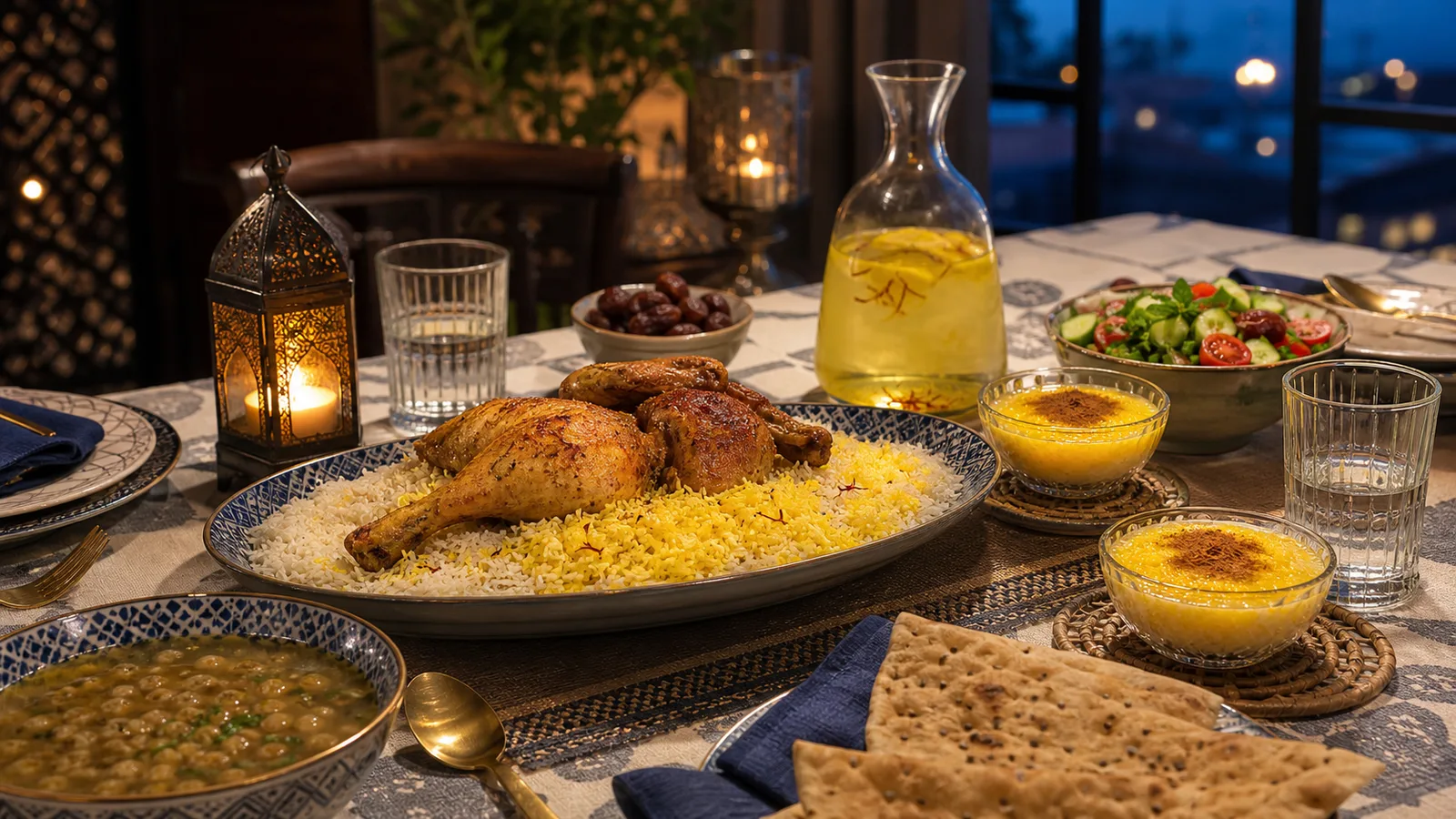
Ramadan fasting runs from dawn to sunset, but the number of fasting hours and the weather vary by date and location. Plan food around the people eating it, the local day length and any medical needs. Saffron adds character to iftar and suhoor; it does not by itself make a sweet drink hydrating or a dessert suitable for blood-sugar control.
How to plan saffron dishes for iftar and suhoor
A meal after a long fast does not need every festive dish at once. Begin with water and a modest starter, then build the main meal around vegetables, whole grains or another carbohydrate, and a useful source of protein. Save concentrated sweets and syrup drinks for smaller portions rather than treating them as hydration.
The World Health Organization’s Ramadan nutrition guidance emphasizes water and hydrating foods between iftar and suhoor, vegetables, whole grains and lean protein, while limiting heavily fried, processed and sugary foods. Saffron can fit that pattern as seasoning. It does not replace water, fibre, protein or medical planning.
For suhoor, choose foods that are practical before dawn and that you already tolerate well: porridge or whole-grain bread, eggs, yogurt, fruit, nuts, beans or another familiar protein. A few bloomed saffron threads can flavour warm milk, yogurt or porridge without turning the meal into a dessert.
Bloom saffron before adding it to Ramadan recipes
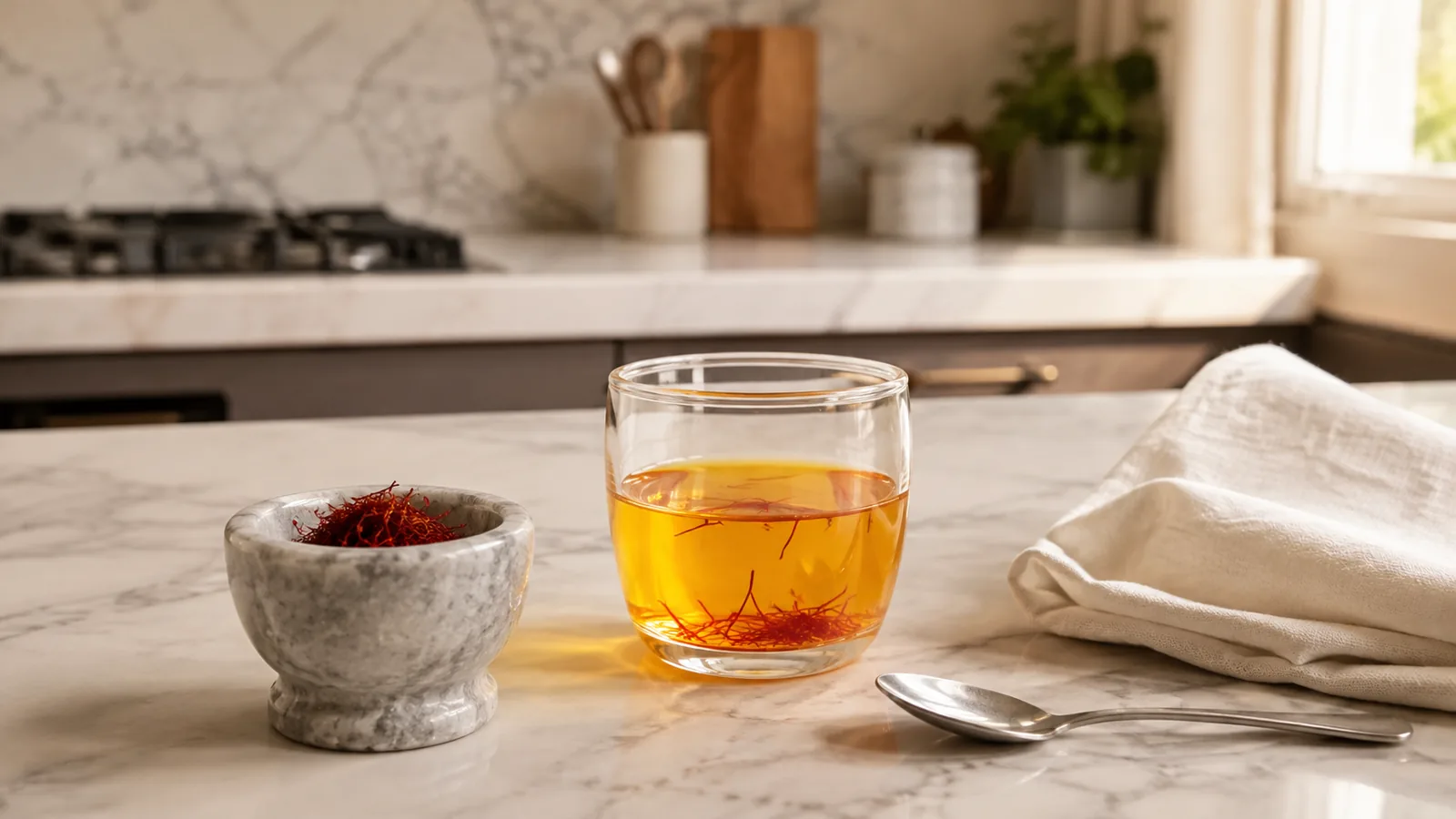
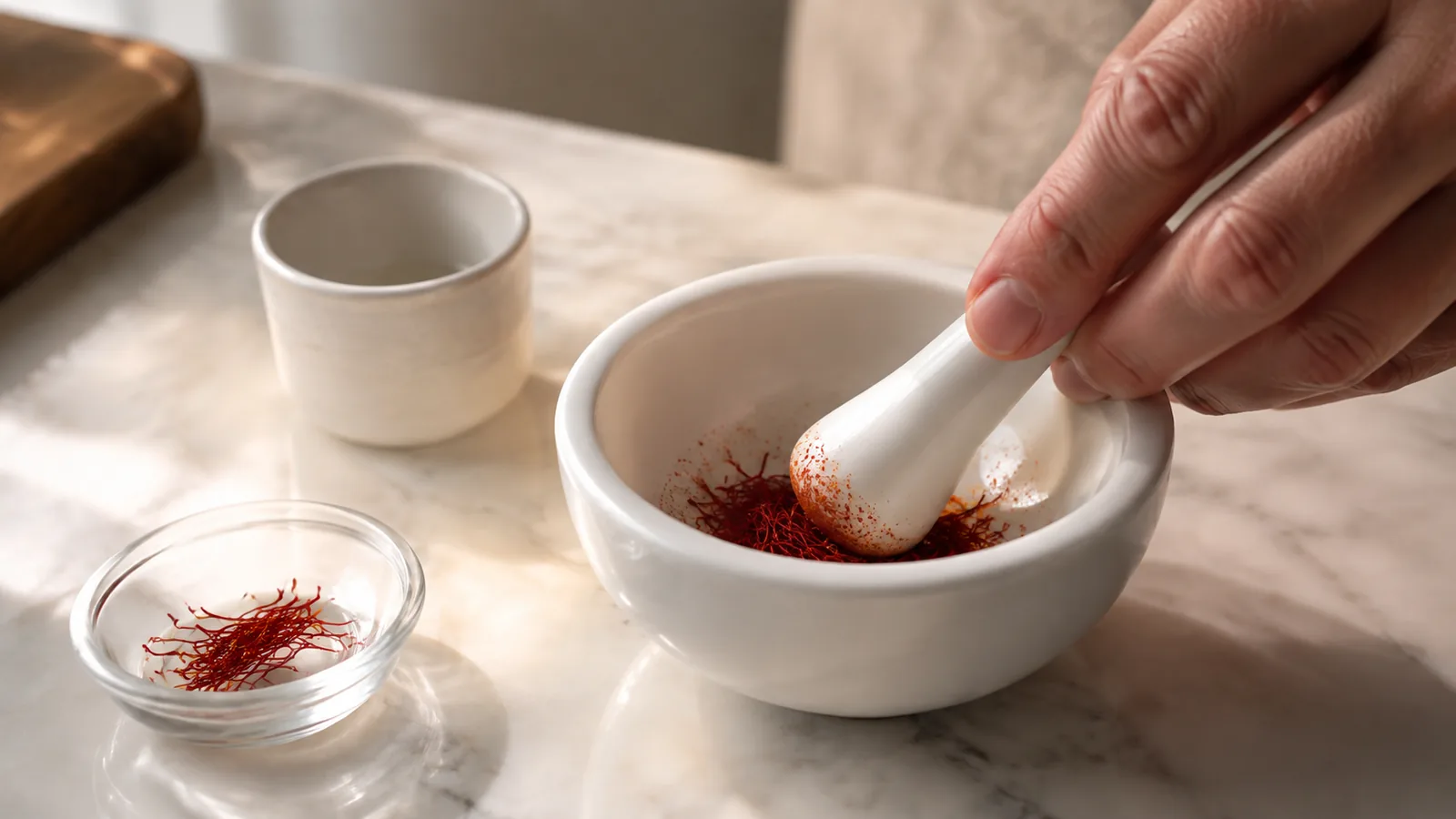
Lightly crush the required threads and cover them with a small amount of warm water. Leave for 10–15 minutes, then add the golden liquid and threads to the dish. This spreads the colour more evenly than dropping dry threads into one corner of a large pot.
For savoury rice or soup, add bloomed saffron near the end of cooking. For milk puddings, stir it in after the base has thickened so you can see the final colour. For drinks, let the infusion cool before combining it with cold water and ice. Measure rosewater carefully; it can overwhelm saffron quickly.
1. Saffron barley and lentil soup for iftar
A warm soup can open the meal without being heavy. Sauté a chopped onion in a little oil, then add rinsed barley, red lentils, grated carrot and water or low-salt stock. Simmer until the barley is tender and the lentils have softened into the broth. Stir in bloomed saffron during the final 10 minutes.
Finish with lemon, parsley or coriander. If you want more protein, add cooked chickpeas or shredded chicken. Keep salt moderate, especially when the rest of the meal includes salty cheese, pickles or packaged food.
2. Saffron chicken and rice
Cook basmati rice by your preferred absorption or parboil-and-steam method. Mix a few spoonfuls of the cooked rice with bloomed saffron, then scatter that golden rice across the white grains instead of colouring the entire pot. This gives each serving a clear saffron aroma without requiring a large amount.
Serve with grilled, baked or gently braised chicken and a generous salad or cooked vegetables. Cardamom, cinnamon, dried barberries or toasted almonds can be used according to the family’s tradition. If using nuts, make the allergen visible to guests rather than hiding it under the rice.
3. Sholeh zard
Sholeh zard is a Persian saffron rice pudding traditionally made with rice, water, sugar, saffron and rosewater, often finished with cinnamon and almonds. The rice cooks until very soft and releases enough starch to thicken the pudding. Saffron gives it the characteristic gold colour.
Add sugar only after the rice is fully tender, because sugar can slow softening. Stir in bloomed saffron and rosewater toward the end. Spoon into small dishes and chill or serve at room temperature. It is a sweet dessert, so a modest portion makes more sense after a complete iftar than using it as the meal itself.
4. Saffron ferni or firni
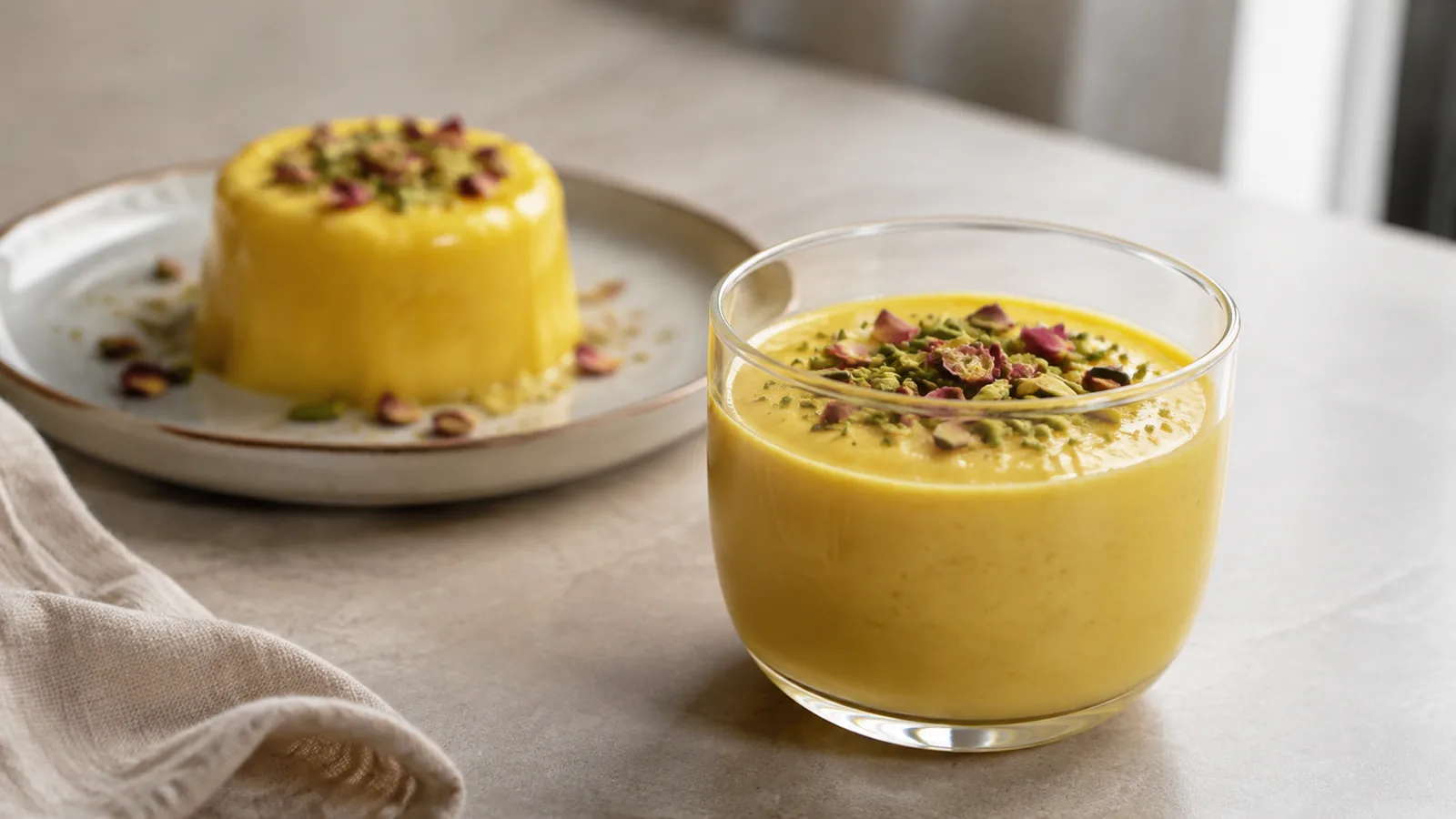
Ferni is a smooth milk pudding thickened with rice flour. Whisk rice flour into cold milk before heating so it does not form lumps, then cook slowly while stirring. Add sugar to taste, followed by bloomed saffron, cardamom or rosewater.
Pour it into small bowls while warm. Chopped pistachios or almonds add texture, but they are optional and need clear allergen awareness. Ferni can be prepared ahead, which reduces work when several dishes must reach the table at sunset.
5. Saffron milk rice
Milk rice is distinct from water-based sholeh zard. Cook short- or medium-grain rice gently in milk until creamy, stirring often enough to prevent scorching. Sweeten lightly and add saffron near the end. Orange zest or cardamom can replace rosewater if you want a cleaner dairy flavour.
For suhoor, make a less-sweet version and pair it with nuts or yogurt if those foods suit you. For dessert, serve a smaller, sweeter bowl after iftar. The recipe’s role changes with the sugar and portion, not simply because saffron is present.
6. Haleem with a saffron finish
Haleem is a slow-cooked wheat dish, often made with meat and seasoned differently across regions. Cook the wheat and meat until soft enough to shred and combine into the dish’s familiar thick texture. Saffron is optional rather than universal.
If it belongs in your household version, drizzle a small spoonful of bloomed saffron over each bowl at serving. Cinnamon, sugar, salt, fried onion and butter are regional or personal choices; set them out separately so people can season their own bowl.
7. Saffron kachi and halva
Kachi and halva use toasted flour, fat and a sweet aromatic liquid, but names and methods vary widely. The most important step is steady heat: toast the flour until its raw smell is gone without burning it, then add the warm saffron liquid gradually and stir carefully to avoid lumps and splashes.
Because these are concentrated sweets, serve them in small portions. Our separate saffron halva recipe for iftar gives a complete method rather than squeezing two regional preparations into one formula.
8. Cold saffron drinks for Ramadan evenings
A light saffron infusion can be served cold with lemon and mint. If you use basil or chia seeds, soak them fully before serving and remember that a seeded drink still does not replace plain water. Flax seeds tend to change the texture and are usually easier to include in food than in a clear drink.
For a sweeter festive option, make a saffron-and-rosewater cordial and dilute it well. The saffron syrup recipe explains the difference between concentrate, ready-to-drink cordial and unsweetened saffron water. Keep a jug of plain water on the table alongside any sweet drink.
What saffron can and cannot do during fasting
Saffron contributes aroma, colour and culinary tradition. A dish containing it may be delicious and meaningful, but the spice does not automatically increase satiety, prevent bloating, control blood sugar or blood pressure, reduce inflammation, relieve pain or protect against dehydration. Those claims depend on the whole meal, the person’s health and evidence that is not supplied by a festive recipe.
People with diabetes, kidney disease or another condition affected by fasting, food or medication timing need individualized advice before Ramadan. The WHO advises people with diabetes to consult a doctor before fasting and to limit sweetened drinks, sugar and fat. A saffron dessert can still be enjoyed where appropriate; it should not be sold as the tool that makes fasting safe.
A simple saffron Ramadan menu
One coherent iftar might begin with water and dates, continue with saffron barley-and-lentil soup, then saffron rice with chicken and vegetables, followed later by a small dish of sholeh zard. Another evening could use haleem as the main dish and reserve saffron for a cold, lightly sweetened drink. Rotating dishes gives each one space and prevents every course from tasting of the same spice.
Prepare the saffron infusion, puddings and cordial ahead; cook rice and hot dishes closer to serving. Label nut-containing desserts, chill dairy foods promptly and refrigerate leftovers. With that planning, saffron supports the meal in the way it does best: a little colour and aroma woven through food that people are glad to share.