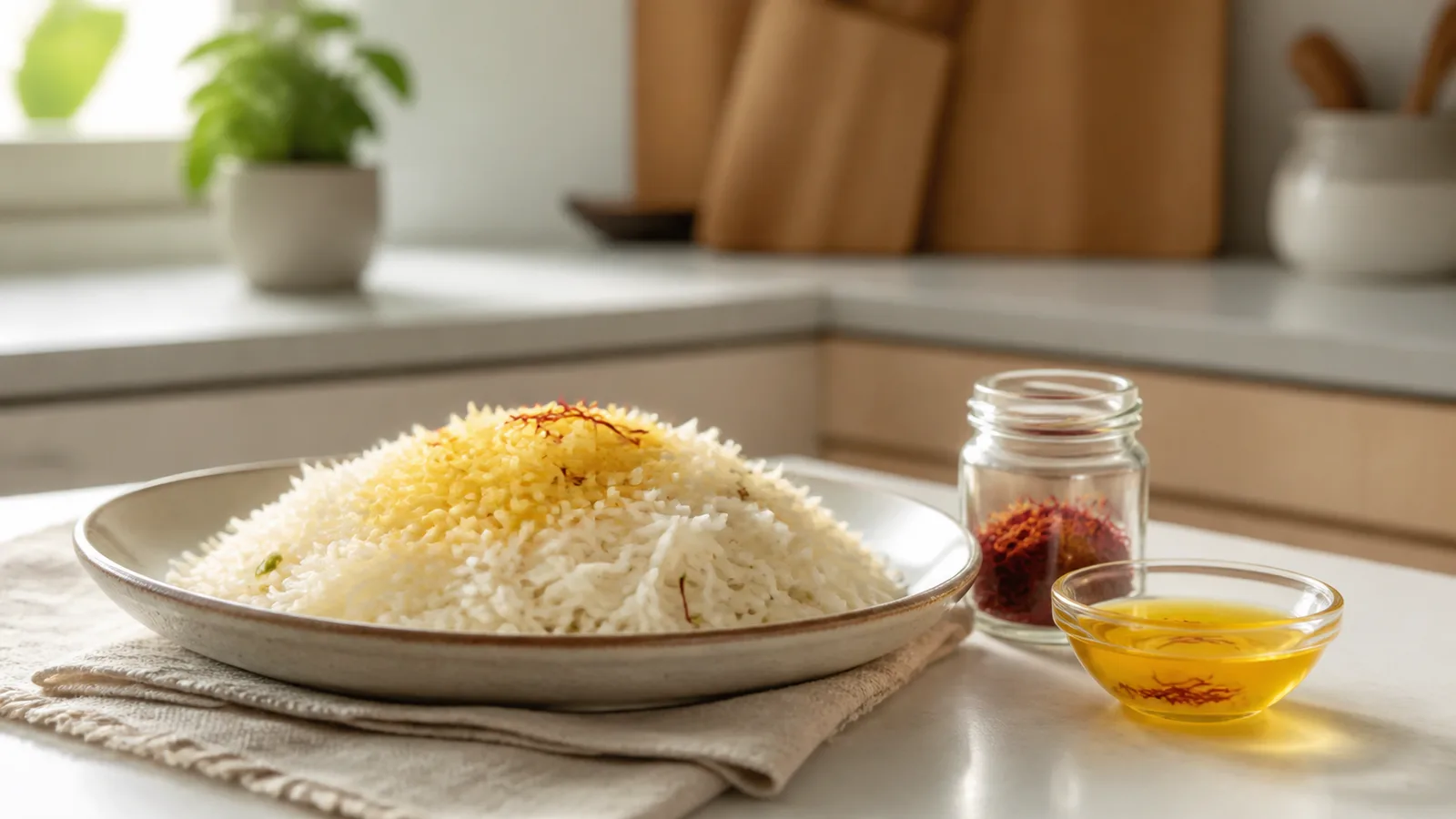
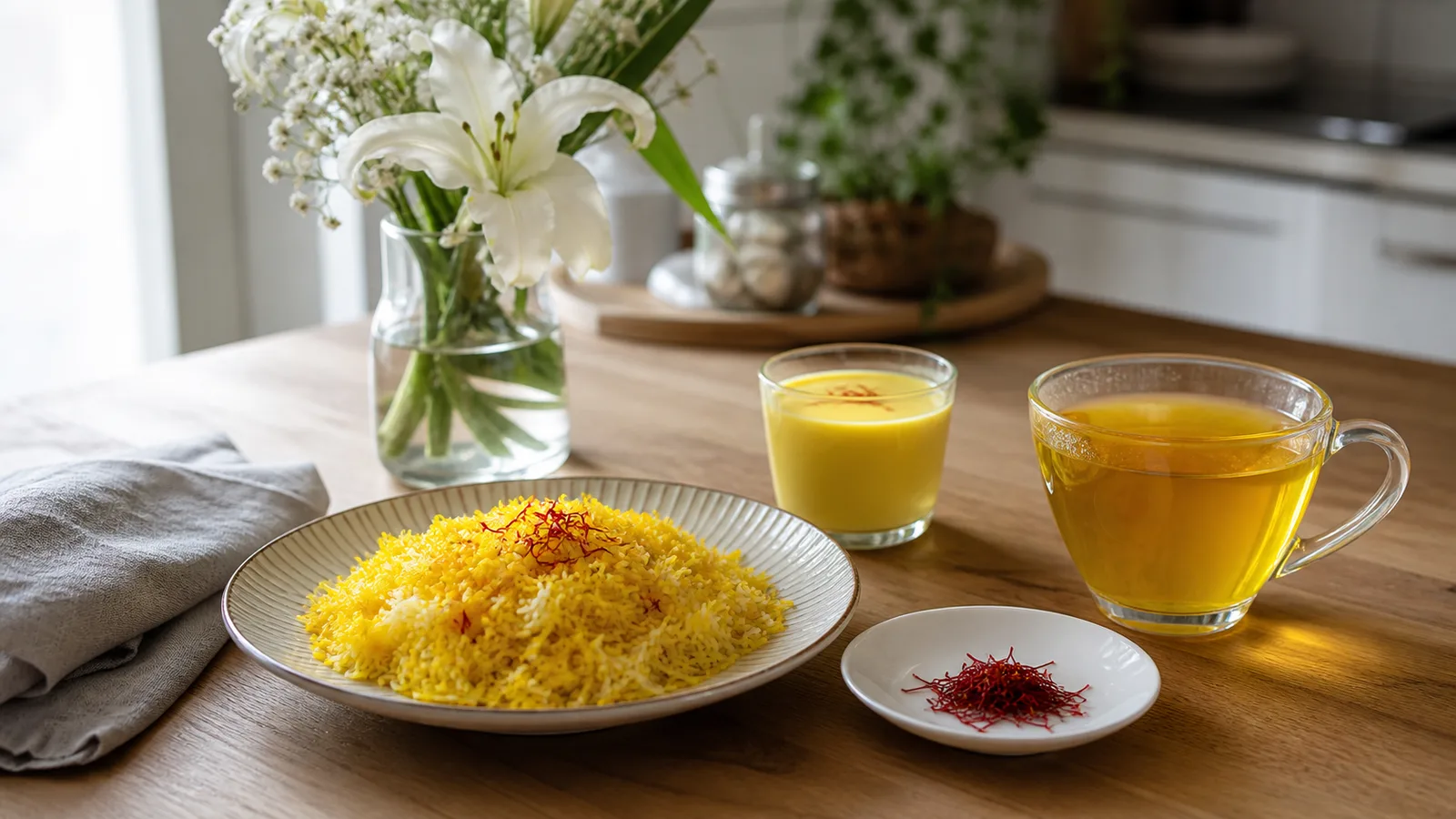
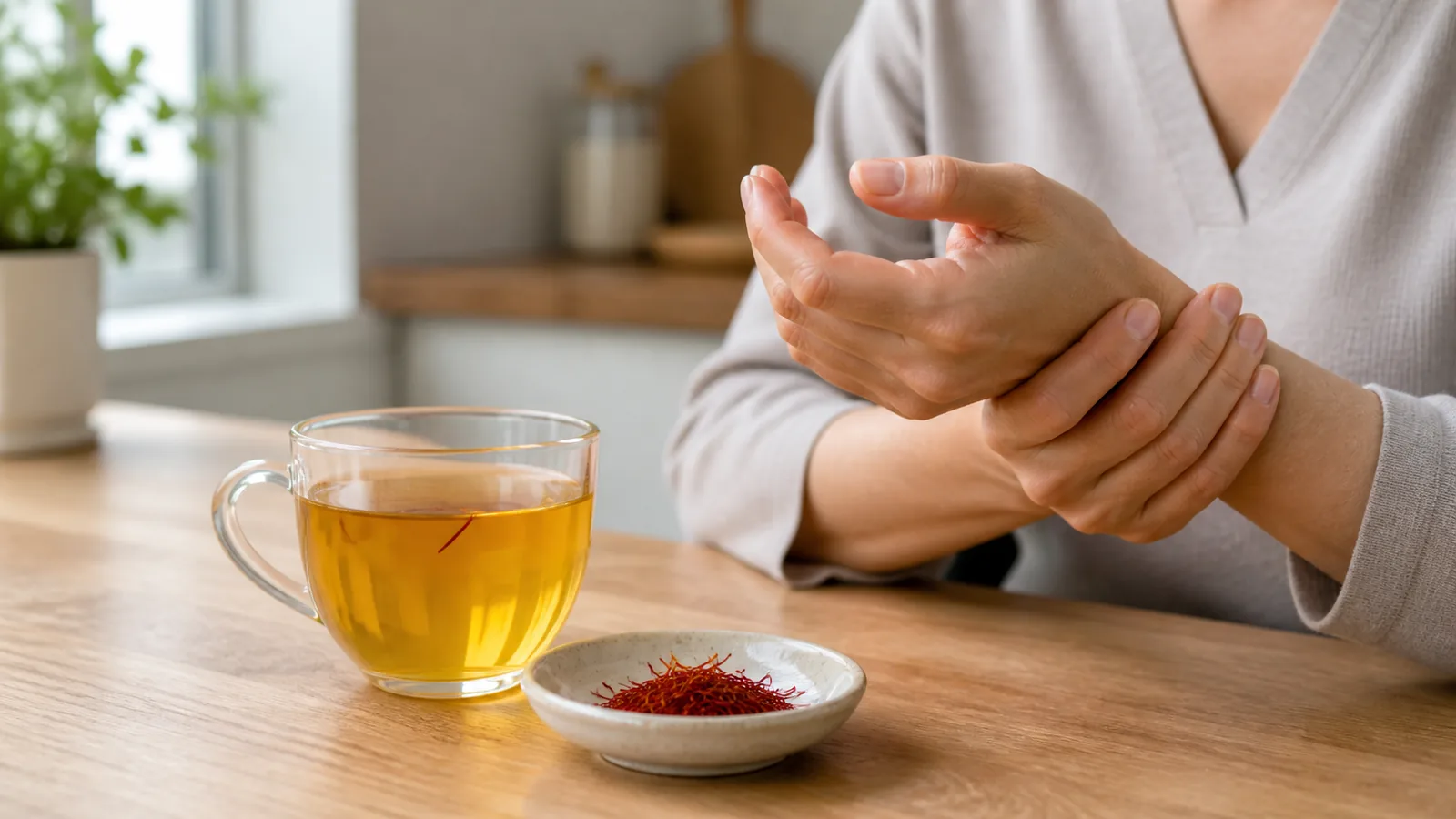
Side Effects of Saffron Consumption depend on what is being used and how. A few threads in a meal are not the same exposure as a concentrated extract, tablet or several daily cups made without measuring. Human studies generally describe saffron as well tolerated, but digestive symptoms and other reactions do occur, especially with medicinal products, higher amounts or longer use.
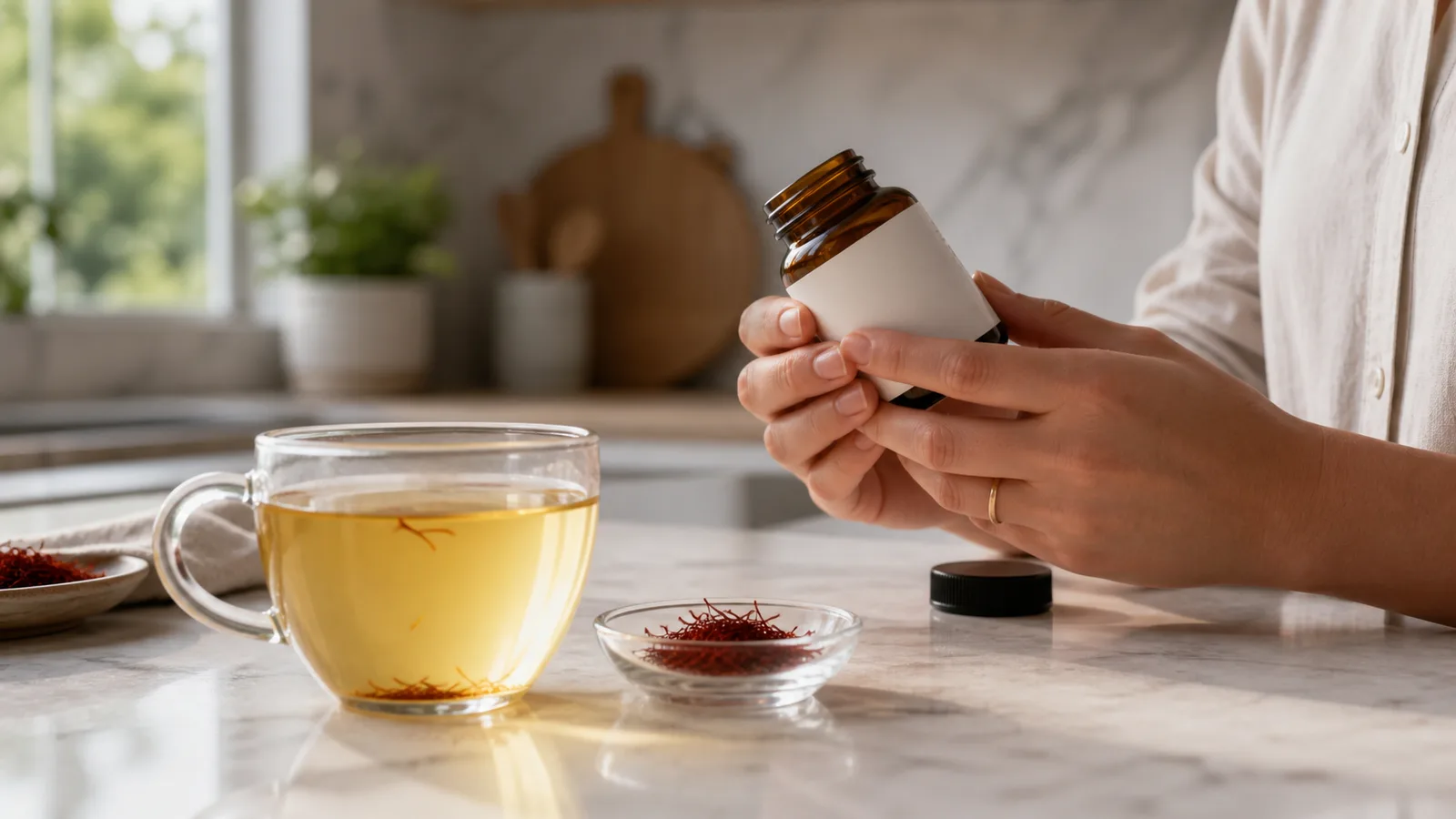
If a saffron product appears to be causing a reaction, stop using it. Trouble breathing, swelling of the lips, tongue or throat, fainting, chest pain, an irregular heartbeat, or severe and persistent vomiting, diarrhoea or abdominal pain needs urgent medical attention. Keep the packet or ingredient list because the reaction may involve saffron, another ingredient or an adulterated product.
What saffron side effects have been reported?
A 2026 systematic review of adverse events from saffron examined 102 clinical trials and one case report involving saffron stigma powder or extracts. The authors estimated that adverse events occurred in about 17.5% of participants. Gastrointestinal problems were the most frequently reported and were usually minor and self-limiting. That is useful context, but it is not a prediction of what will happen to one person: products, doses, treatment periods and study populations varied.
Reported complaints across research include nausea, abdominal discomfort, diarrhoea, dry mouth, headache, dizziness and changes in appetite. A symptom that begins after taking saffron deserves attention, but timing alone does not prove the spice caused it. Food, illness, medication and other ingredients in a supplement or drink can produce similar symptoms.
Short studies cannot settle long-term safety. In one small placebo-controlled safety trial in healthy volunteers, 200 or 400 mg of saffron tablets were taken daily for seven days. Researchers found no gross clinical changes, although some blood-pressure, blood-count and biochemical measurements shifted; the changes stayed within normal ranges. This does not establish that every extract, dose or longer course is safe.
Can saffron cause diarrhoea, nausea or a headache?
It can be associated with digestive symptoms, and diarrhoea is one of the concerns people commonly search for. Stop the suspected product and pay attention to severity and duration. Persistent diarrhoea, repeated vomiting, blood, severe pain, faintness or signs of dehydration should not be managed by simply reducing the dose.
A headache after saffron is less specific. It may relate to the product, but dehydration, caffeine changes, fasting, illness or another ingredient may be responsible. Check whether the reaction followed culinary saffron, saffron tea, a gummy or a standardized extract, and note the amount and timing. That information is more useful to a clinician than assuming every headache is a saffron allergy.
Saffron allergy symptoms are different from ordinary intolerance
Nausea or stomach discomfort alone is not enough to label someone allergic. Allergy is more concerning when there are hives, an itchy rash, swelling, wheezing, shortness of breath or a rapid systemic reaction. The US Food and Drug Administration’s guidance on dietary-supplement reactions lists hives, throat, lip or tongue swelling and wheezing among serious reactions.
Stop using the product if an allergic reaction is suspected. Seek emergency care for breathing difficulty, facial or throat swelling, collapse or rapidly worsening symptoms. Do not deliberately try the product again at home to see whether the reaction returns. Someone with pollen or plant allergies should discuss a previous reaction with an allergy professional rather than relying on a list of supposed cross-reactions online.
Culinary saffron and saffron supplements are not equivalent
Saffron tea, saffron water and saffron milk made with a small measured pinch use the same spice found in food. They may still cause a reaction, and drinking repeated strong infusions can increase exposure. Milk, honey, sugar or another spice does not create a known universal saffron hazard, but any of those ingredients may be unsuitable for a particular person.
Saffron extract side effects need separate consideration. Capsules, tablets and saffron gummies can contain a standardized extract, a concentrated dose, sweeteners or several active ingredients. Two bottles labelled “saffron” may therefore deliver very different products. Read the full label, follow its directions and avoid combining multiple saffron supplements. The FDA advises speaking with a doctor, pharmacist or other healthcare professional before using a dietary supplement because supplements can interact with medicines, affect laboratory tests or create problems around surgery.
How much saffron is too much?
There is no responsible single gram limit that applies to every culinary dish, extract and person. Claims that “three grams per month is safe,” “five grams per meal is the limit,” or a particular amount is invariably fatal flatten uncertain evidence into rules people may misuse. Clinical research usually studies a defined preparation measured in milligrams; that cannot be converted casually into a household allowance for threads.
For cooking, use saffron as a seasoning rather than eating it by the spoonful. For a supplement, do not exceed its labelled serving or treat a research dose as a personal recommendation. If someone has swallowed a large or unknown quantity, contact a local poison service or urgent medical provider promptly instead of waiting for a web page’s symptom list. In the United States, Poison Control can be reached at 1-800-222-1222 or through webPOISONCONTROL.
Pregnancy and breastfeeding require extra caution
Using a normal food-seasoning amount and taking a concentrated saffron product are different decisions. Pregnancy is not the time to experiment with medicinal quantities, extracts or unverified “pregnancy” recipes. Evidence is not strong enough to promise that a supplement is safe, and dramatic miscarriage thresholds circulating online should not be treated as dosing advice.
Tell a midwife, obstetrician or pharmacist about any saffron supplement or regular medicinal use. The NHS guidance on herbal medicines advises against herbal medicines during pregnancy or breastfeeding because safety information is often insufficient. Do not stop prescribed medicine or substitute saffron for medical care.
Medicines, blood pressure and planned surgery
Saffron is biologically active, yet that does not justify claiming it reliably “regulates” blood pressure or that ordinary food use causes a heart attack. A small short-term trial found a reduction in standing systolic blood pressure at the higher tested tablet dose. That finding supports caution, not a universal treatment or danger claim.
Ask a clinician or pharmacist before using a concentrated saffron product if you take prescription medicine, manage low blood pressure, have a bleeding disorder, are due for surgery, or live with kidney, liver or heart disease. Bring the exact bottle. The useful details are the extract, amount per serving and other ingredients—not merely the word saffron on the front.
Fake, contaminated and expired saffron
Adulterated saffron is a product-quality problem, not evidence that genuine saffron is harmless at every amount. Added dyes, other plant material or undeclared substances can change the risk. Choose traceable whole threads from a seller that identifies origin, lot or packing information, and be suspicious of colour that releases instantly and unnaturally or a price far below the normal market.
Expired saffron usually loses aroma and colour before it becomes dangerous. Discard it if moisture has entered the container, mould is visible, insects are present or the smell is musty or otherwise wrong. Keep threads dry, sealed and protected from heat and light. Storage preserves quality; it does not rescue a contaminated product.
What to do if saffron seems to cause a reaction
- Stop the suspected food, tea or supplement.
- Record the product, amount, time taken and symptoms; keep the packaging.
- Use emergency services for breathing trouble, swelling, collapse, chest pain or another severe reaction.
- Seek medical advice for persistent digestive symptoms, unusual bleeding, yellowing of the skin or eyes, palpitations or symptoms that are getting worse.
- Before using saffron again, review the event with a clinician or pharmacist—especially if it involved a supplement, pregnancy, regular medicine or a chronic condition.
The practical lesson is measured use, not fear. Culinary saffron is used in small amounts for flavour and colour. Supplements and extracts create a different level of exposure and need their own risk check. Our guide to precautions when cooking with saffron covers kitchen handling and portion decisions without turning uncertain figures into false guarantees.