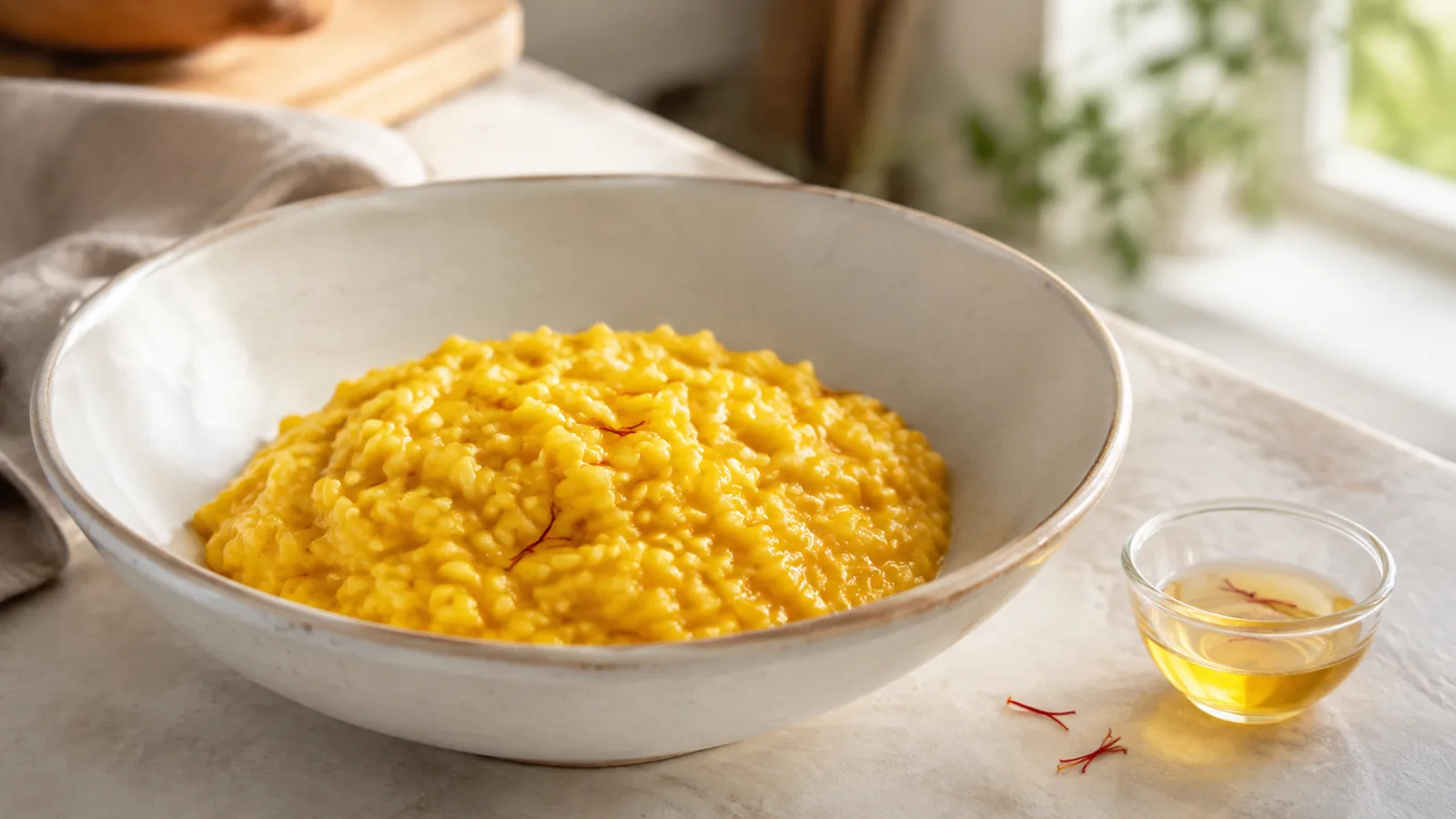
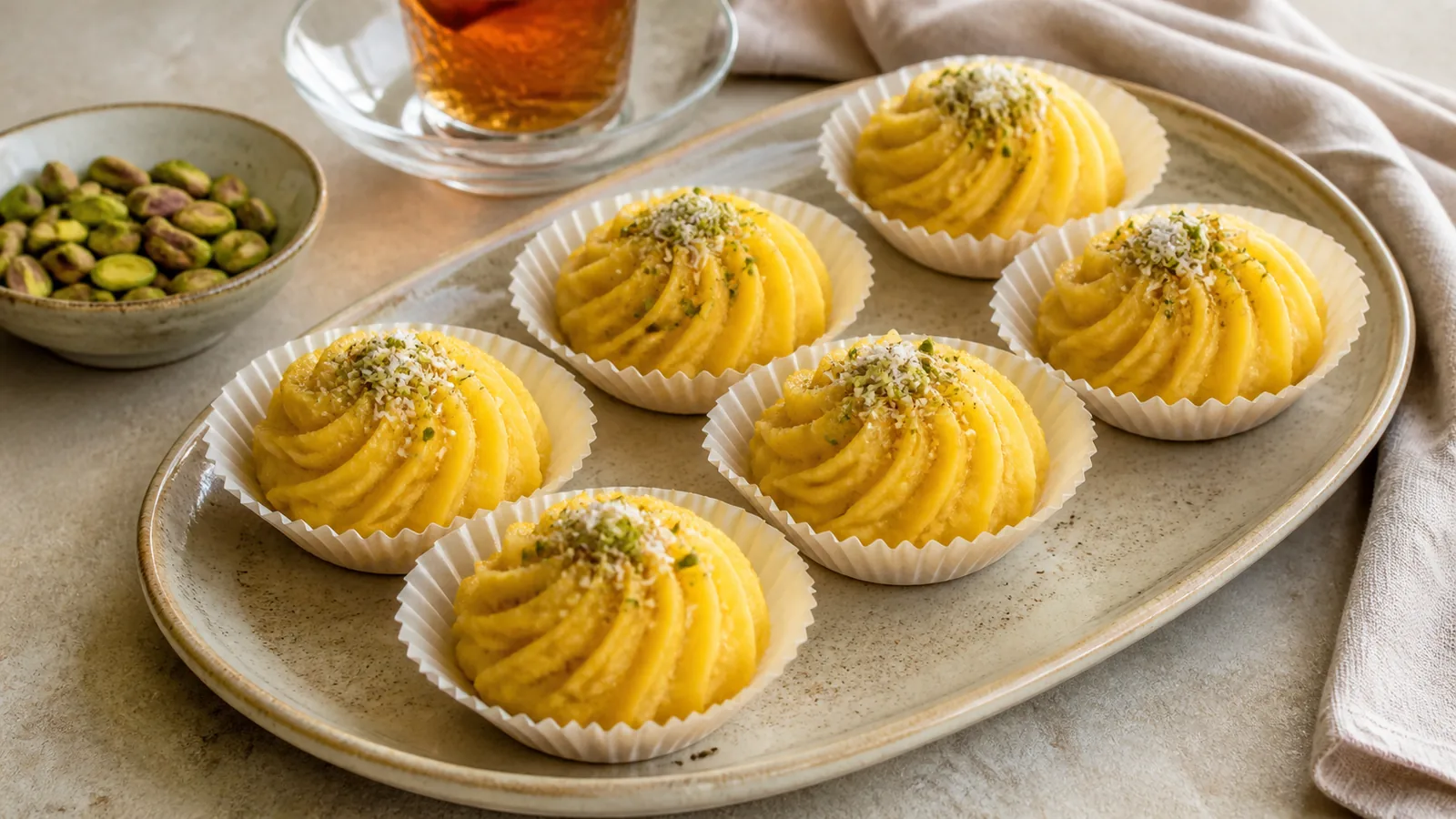
This iftar Halva Saffron Recipe makes a small batch of soft rice-flour halva with rosewater, cardamom and saffron. It can be smoothed into a serving dish or piped into individual paper cases once it is cool enough to hold a shape.
Ingredients
- 115 g rice flour
- 120 g sugar
- 170 ml water
- 60 ml rosewater
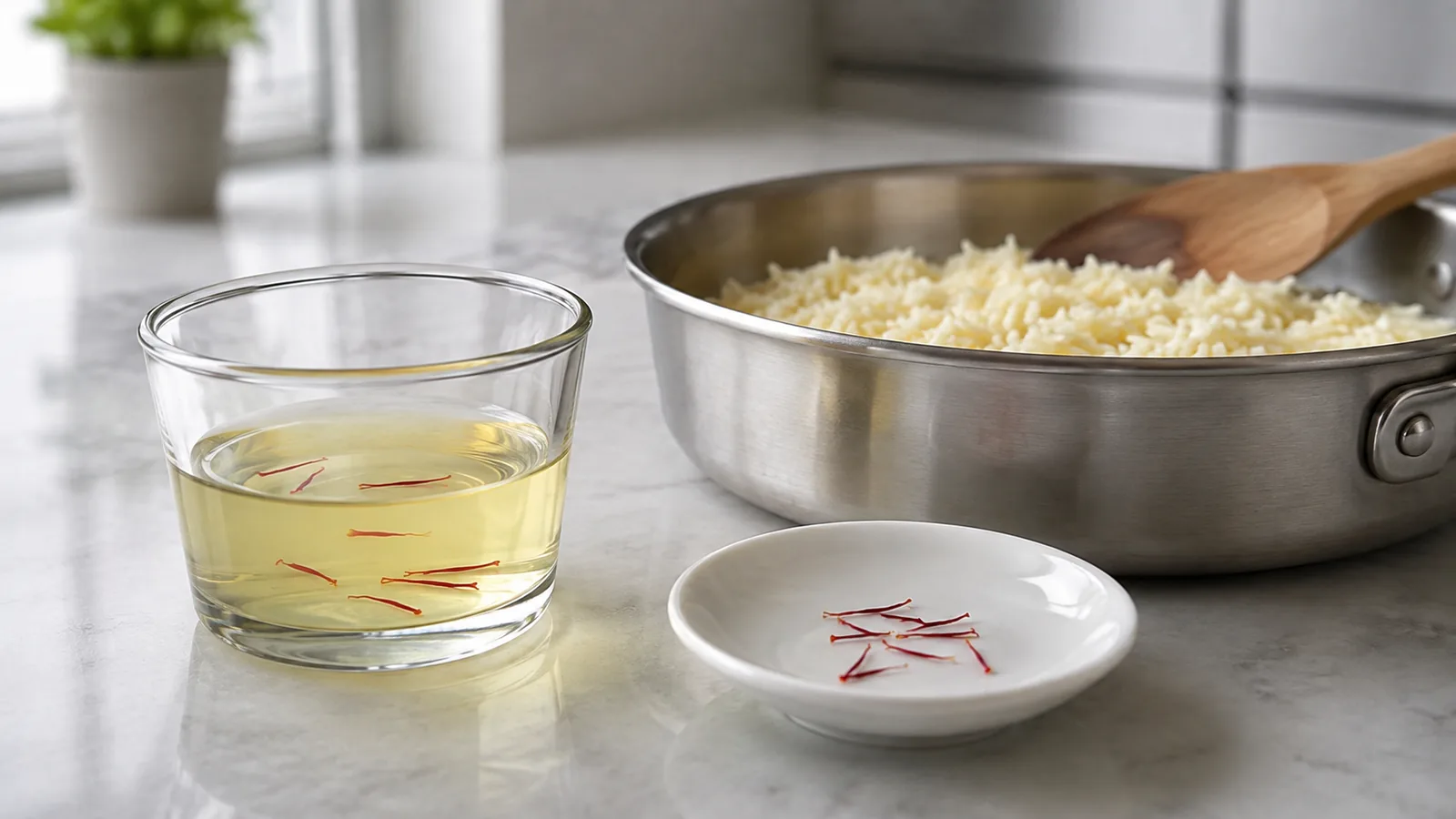
- 1/2 teaspoon concentrated saffron infusion
- 1/2 cup neutral oil
- 1/4 teaspoon ground cardamom, or to taste
- Ground pistachios or desiccated coconut, optional, for decorating
Measure the flour by weight if possible. A small change in rice flour makes a noticeable difference to the finished texture, especially if you plan to pipe the halva.
Prepare the saffron syrup
Put the water, sugar, rosewater and saffron infusion in a small saucepan. Warm over medium-low heat for about 3 minutes, stirring until the sugar dissolves.
Do not reduce the syrup or boil it until thick. The rice flour needs this liquid to cook into a smooth halva. Keep the syrup warm while you toast the flour.
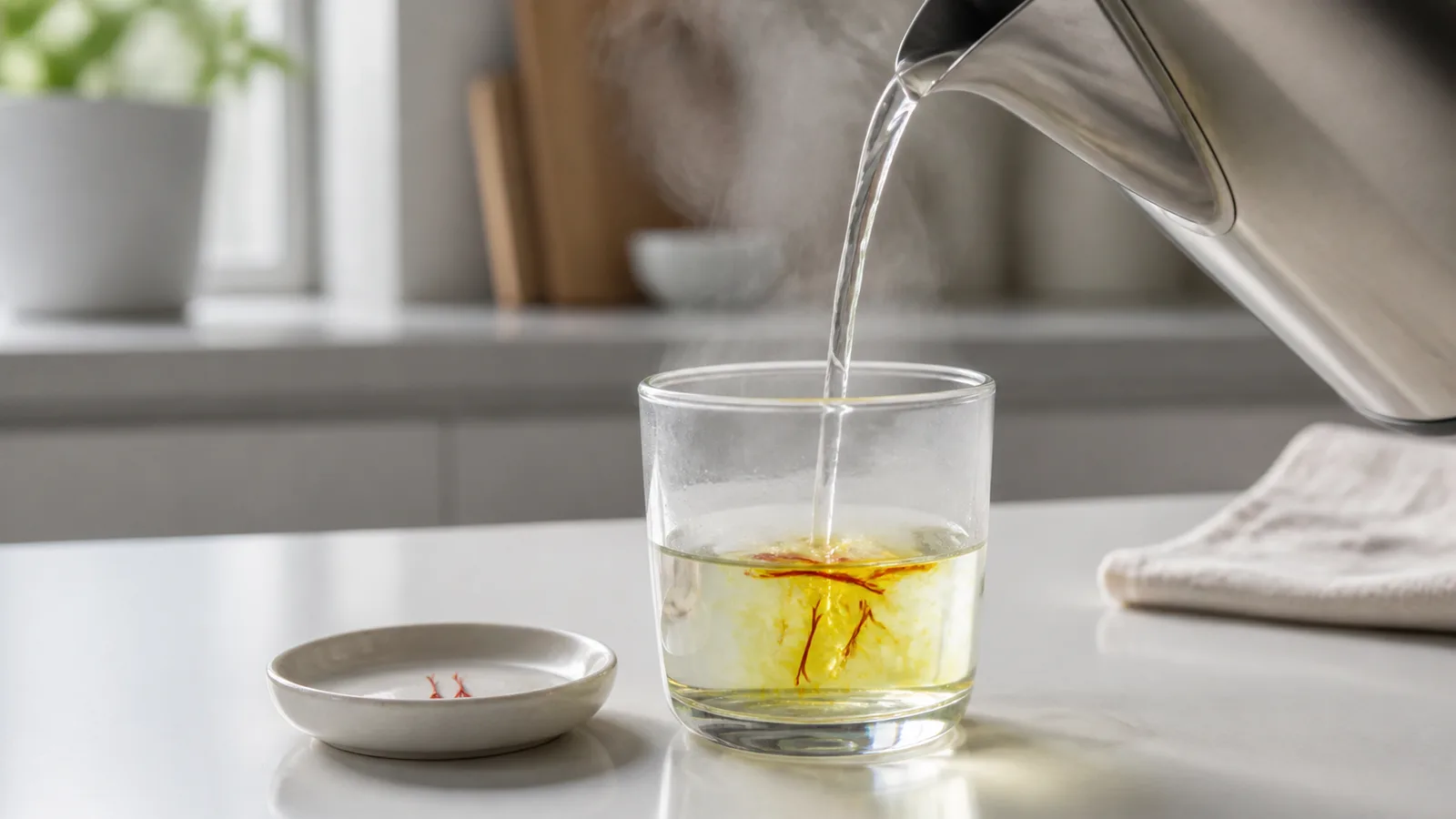
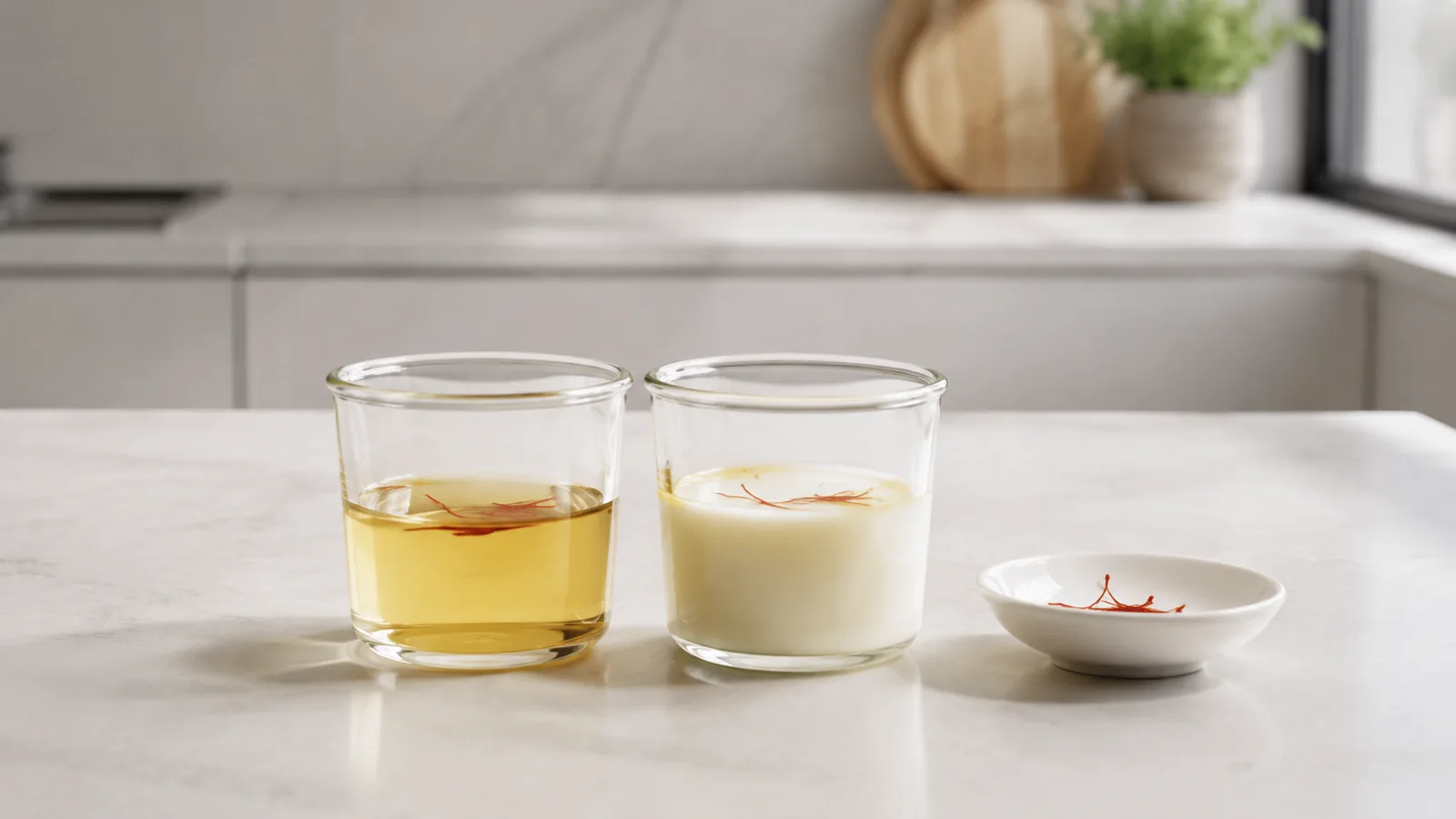
If you need to make the infusion, our guide to brewing saffron explains how to keep it concentrated.
Toast the rice flour in oil
Pour the oil into a wide, heavy frying pan and add the rice flour before the oil becomes hot. Stir until smooth, then set the pan over low heat.
Cook for about 10 minutes, stirring continuously and scraping the base and corners. The raw flour smell should disappear, but the mixture should stay pale rather than turning brown.
Add cardamom and syrup safely
Take the pan off the heat and stir in the cardamom. Let it stand for 1 minute so the oil is not fiercely hot when the liquid is added.
Add the warm syrup in four or five small portions. The mixture may hiss and release steam, so keep your face and hands back. Stir each addition in fully before pouring the next.
Once all the syrup is incorporated, return the pan to the lowest heat. Stir and fold until the saffron halva becomes glossy and begins to pull away from the sides, usually 5 to 8 minutes.
Judge the consistency
For a serving dish, stop when a spoon drawn through the halva leaves a clear path that closes slowly. For piping, cook for another minute or two until a lifted spoonful holds a soft ridge.
Do not wait for a firm ball in the hot pan. Rice-flour halva thickens as it cools, and overcooking makes it oily and difficult to pipe.
Serve in a dish
Spoon the warm halva into a shallow plate and smooth it with the back of an oiled spoon. Mark a simple pattern while the surface is still warm, then finish with pistachios or coconut.
Pipe individual iftar portions
Leave the halva to cool until warm and thick but still flexible. Fit a strong piping bag with a large open-star nozzle and fill it no more than halfway.
Pipe small rosettes into paper cases, working steadily before the mixture firms. If it becomes too stiff, knead the closed bag gently with warm hands; do not add cold water to the finished halva.
Common problems
- Halva contains lumps: add the syrup gradually and press each addition smooth before continuing.
- Oil separates: keep folding over very low heat and let the mixture cool slightly before judging it.
- Mixture will not hold a piped ridge: return it to low heat for 1 minute, stirring continuously.
- Texture is hard: shorten the final cooking stage next time; rice flour sets as it cools.
Planning for iftar
You can prepare the halva earlier in the day. Cover the serving dish or paper cases once fully cool so the surface does not dry. Arrange small portions rather than one oversized serving because the dessert is rich and sweet.
Storage
Keep covered in the refrigerator for up to 3 days. Let the halva stand at room temperature for 15 minutes before serving so the texture softens and the saffron and rosewater are clearer.