Seno City World Record- Saffron Plantation by Aqueduct refers to the qanat-based saffron farming system centred on Seno—also written Senu or Senoo—village in Gonabad County, Razavi Khorasan. The title calls it a world record, but the formal achievement was a heritage designation: the Food and Agriculture Organization of the United Nations recognised Gonabad’s system as a Globally Important Agricultural Heritage System (GIAHS) in 2018.
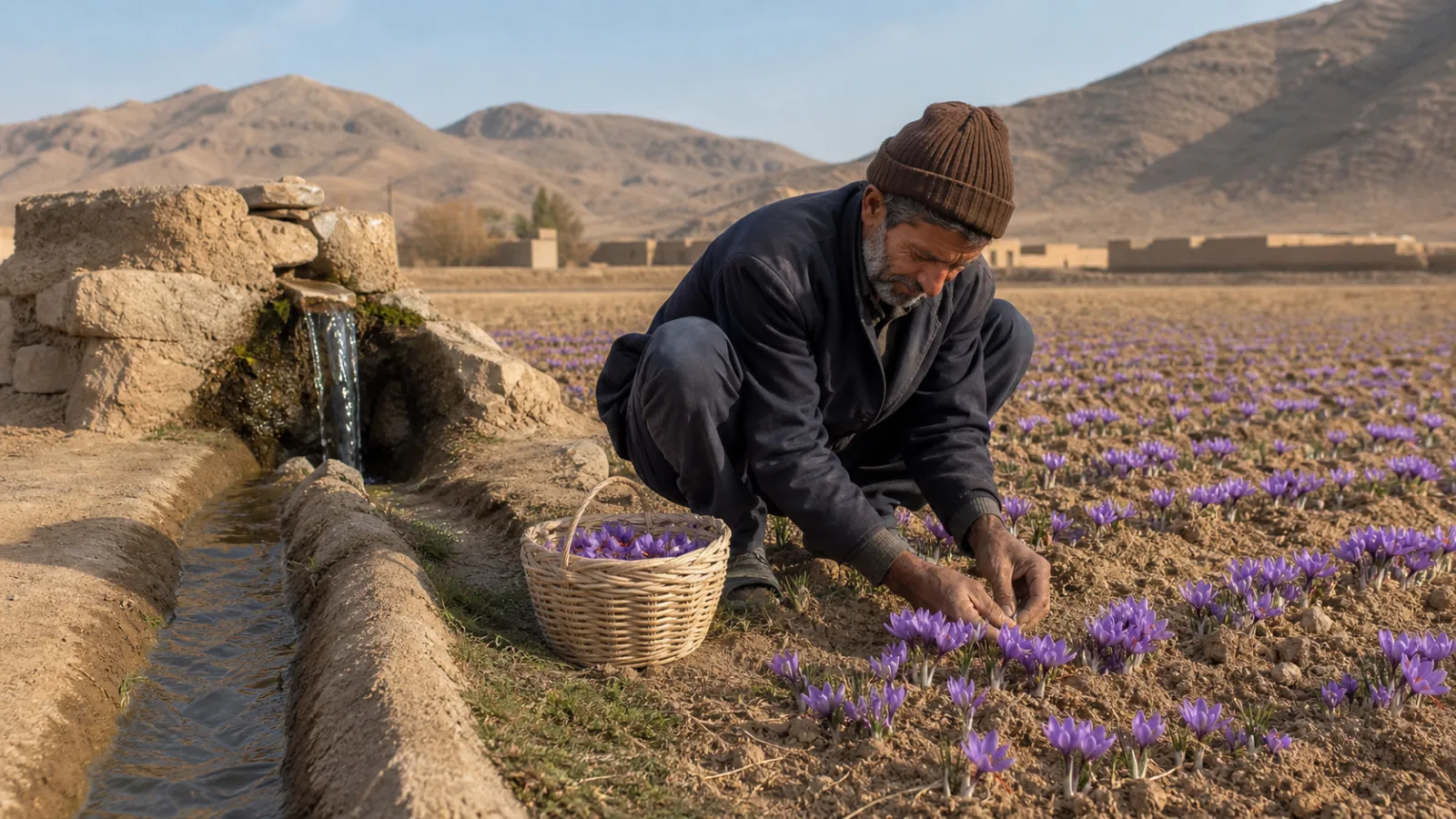
The distinction matters. FAO did not award a record for planting the most saffron. It recognised a living agricultural system in which qanat irrigation, local knowledge, village livelihoods, biodiversity and an arid landscape have developed together.
What was recognised in Seno and Gonabad
FAO’s official name is the Qanat-based Saffron Farming System in Gonabad, Iran. Seno village served as a pilot and local centre for presenting the system, while the designated heritage is broader than a single field or settlement.
The recognition followed review by the GIAHS Scientific Advisory Group. FAO announced the designation in December 2018 alongside agricultural heritage systems in Morocco and Spain. The original local report described documents and a defence presented through the FAO process in Rome; the resulting status is “designated,” not merely nominated.
The FAO profile for Gonabad’s qanat-based saffron system records a 2018 start date, designated status and more than 2,000 hectares of saffron farmland in the Gonabad area.
How a qanat irrigates saffron
A qanat is a gently sloping underground channel that carries groundwater from a higher aquifer to farms and settlements by gravity. Vertical shafts provide access during construction and maintenance. The system moves water without continuous pumping, but it still depends on recharge, careful allocation and skilled upkeep.
That makes it well suited to a dry place such as Gonabad, where perennial surface water is limited. Saffron can be grown with fewer irrigation events than many crops, and much of its active growth occurs during the cooler season. It is not a no-water crop: poorly timed irrigation, declining groundwater or a damaged channel can still reduce flowering and threaten the whole farm system.
Farmers’ knowledge determines when water reaches each plot, how corms are selected and planted, and how soil and weeds are managed. Harvesting the flowers at the right time, separating the stigmas and drying them correctly are equally important. The qanat supports the crop; it does not replace agronomy or quality control.
Why the system met the GIAHS criteria
The local agriculture director Alireza Hosseinzadeh described five connected areas considered in the application. They align with the criteria FAO uses to understand an agricultural heritage system:
- Food and livelihood security: saffron provides a high-value crop in a water-constrained rural economy.
- Agrobiodiversity: farms, terrace edges, fruit trees and surrounding habitats form a varied landscape rather than a single isolated crop.
- Local knowledge: qanat maintenance, water sharing and saffron production depend on skills passed between generations.
- Culture and social organisation: families and village institutions coordinate work, water and the short, labour-intensive harvest.
- Landscape value: small fields, settlement architecture, qanat structures and the flowering season create opportunities for careful rural tourism.
A GIAHS application also needs a plan for conservation and adaptive management. Recognition is not an instruction to freeze a community in the past. The aim is to protect the system’s essential knowledge and resources while allowing residents to respond to water stress, economic change and safer production requirements.
Saffron’s place in the local economy
Masoud Amini of Islamic Azad University of Gonabad presented saffron and other medicinal or aromatic plants as possible sources of rural income and non-oil exports. His broader argument was that Iran’s climate diversity and plant knowledge deserved research and responsible commercial development.
The report included period-specific claims that Iran produced 95% of the world’s saffron, sold to 41 countries and earned $95 million a year in exports. Those figures were statements from the time, not the measurements used to grant GIAHS status. Production shares, destination counts and export values change with the crop year, customs period and data source.
FAO’s heritage profile uses a broader, approximate description: Iran is the largest producer and accounts for more than 90% of world saffron production. It also says saffron contributed 35% of Gonabad’s agricultural income at the time of the profile. These figures explain the crop’s economic importance, but the designation rests on the complete farming system, not on market dominance alone.
What the designation can—and cannot—do
Gonabad Governor Hamid Ghorbani argued that international recognition could support tourism and local prosperity. Used carefully, it can give visitors a reason to learn about qanats, see saffron flowering and understand the work behind the spice. It may also help producers explain geographical identity and traditional practice to buyers.
The GIAHS name is not a quality certificate for every packet of saffron, however. Buyers still need lot traceability, sensory and laboratory assessment where appropriate, hygienic processing and accurate origin information. Nor does recognition guarantee that tourism income reaches the people who maintain the qanat and fields.
Local planning therefore needs visitor limits, safe access to qanat structures, fair payment for guides and growers, and protection for harvest work. A village should not have to trade water security or everyday life for a heritage label.
Protecting a living saffron landscape
The first priority is the water system. Monitoring flow, supporting skilled qanat workers, keeping shafts and channels safe, and agreeing transparent water allocations protect both farms and households. Climate pressure makes those tasks more urgent.
The second is continuity of knowledge. Younger residents need a viable reason to learn cultivation, harvesting, drying and water-management skills. Better traceability, direct market relationships, thoughtful packaging and community-led tourism can add value without separating the product from its place.
Our detailed account of how Gonabad’s qanat-based saffron system entered the FAO register explains the designation process and its terminology. Seno’s role is best understood within that larger landscape.
The achievement recorded by the original article was real, but “world record” is not the most accurate description. Seno and neighbouring Gonabad communities helped demonstrate that a centuries-old way of sharing scarce water can still support saffron, livelihoods and biodiversity. Keeping that relationship healthy is the work that gives the 2018 designation lasting value.

![Exporting Saffron to Turkey + Price Guide [Complete 0 to 100]](https://img.rowhanisaffron.com/20260827003933/saffron-export-turkey-quality-inspection.webp)