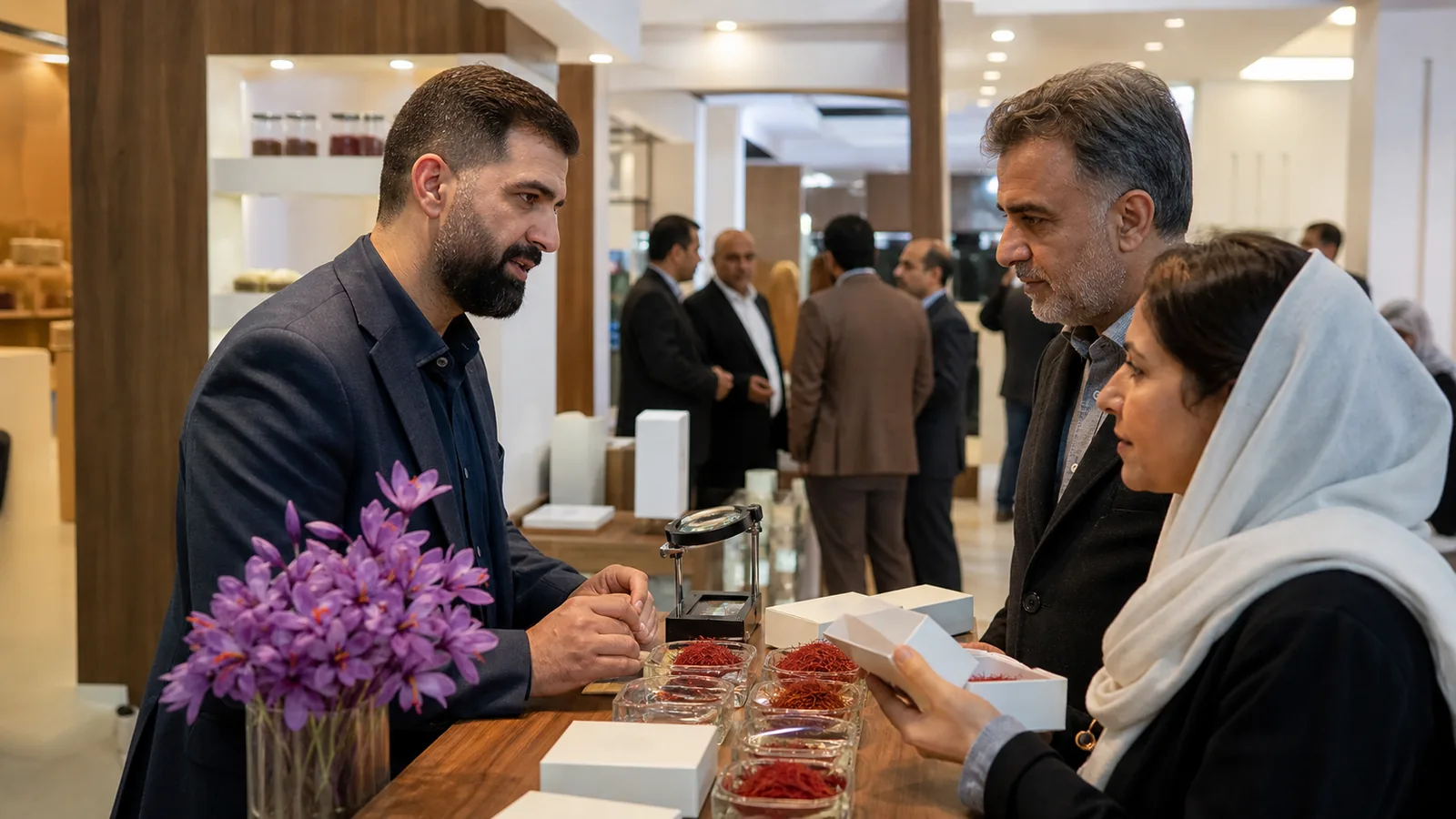
Saffron export to Turkey is a commercial food-import process, not simply a matter of finding a buyer and sending a parcel. The Turkish importer must confirm the current tariff treatment, register the product, complete the required pre-notification and present a shipment that meets food-safety, labelling and customs rules.
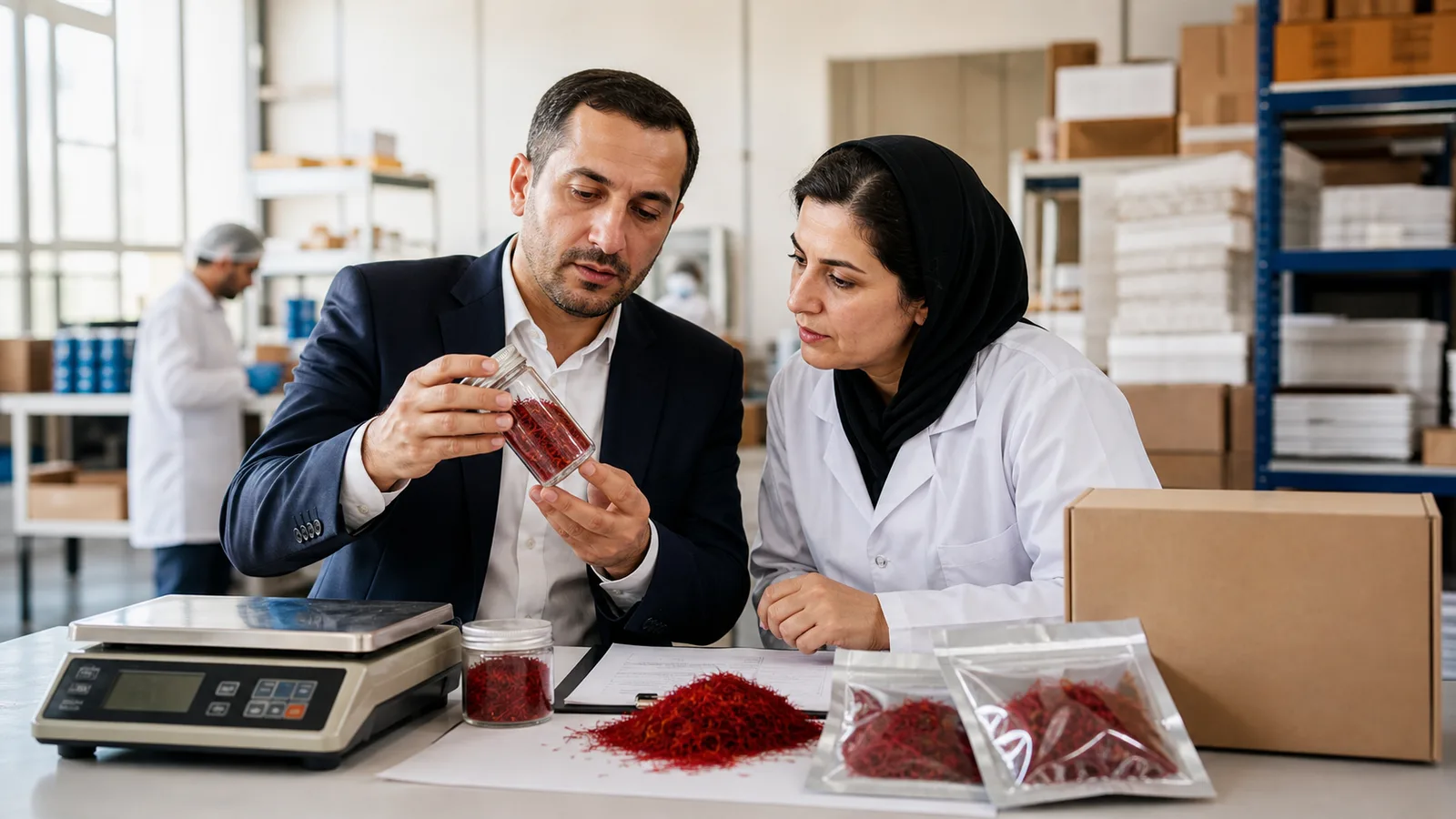
Price needs the same care. A Turkish retail listing tells you what one seller asks for a small pack on one day; it does not establish a wholesale price per kilogram. This guide separates those figures, explains what changes the landed cost and sets out the checks to complete before Iranian saffron is shipped.
How much does saffron cost in Turkey in 2026?
There is no single saffron price in Turkey. In a marketplace snapshot checked on 27 August 2026, one-gram listings included Iranian-origin products around 439–549 TL, while other one-gram offers ranged from about 212 TL to 1,349 TL. The upper example was a geographically indicated Safranbolu product advertised with ISO 3632 analysis; the lowest and highest listings were not like-for-like goods.
These are advertised retail prices, not completed-sale data, and they can change with promotions, stock and seller decisions. The current Turkish marketplace listings are useful as a market snapshot, but a buyer should compare net weight, origin, grade evidence, seller reputation and delivery terms before using any number in a business plan.
Saffron price per gram in Turkey
For a consumer pack, calculate the real price per gram by dividing the final product price by the stated net weight. Check whether delivery and tax are included. A five-gram jar at 2,000 TL, for example, is 400 TL per gram before any separate delivery charge.
Small packs carry costs that raw threads do not: the jar or sachet, label, filling, testing, marketplace commission, local fulfilment and the retailer’s margin. That is why two genuine saffron products can have very different per-gram prices.
Saffron price per kilogram in Turkey
Do not multiply a one-gram retail listing by 1,000 and call the result the saffron price per kilo in Turkey. A commercial kilogram is usually quoted after the parties agree on origin, grade or analytical specification, crop year, moisture, packaging, lot size, delivery term, payment method and laboratory documents.
A usable quotation should state the currency and how long the offer remains valid. It should also show whether freight, insurance, customs duty, import-control fees, brokerage, VAT, local transport, repacking and testing sit with the exporter or importer. Without that information, two “per-kilogram” offers cannot be compared honestly.
Why Turkish saffron prices vary so much
Origin is only one part of value. Iranian saffron, locally grown Safranbolu saffron and other imported products may serve different parts of the market. Buyers then look at the condition and length of the stigmas, the amount of yellow style present, aroma, colour strength, moisture, cleanliness and confidence in the supplier’s records.
Whole threads are easier for a buyer to inspect than powder, although visual inspection alone cannot prove identity or grade. Laboratory analysis, a traceable lot number and packaging that protects the spice from moisture and light are more useful than an unsupported label such as “premium” or “organic.” Organic is a certification claim, not another word for traditionally grown.
For a practical review of threads, aroma and documentation, see our guide to buying high-quality saffron. A current commercial quote can then be compared with the broader factors in our saffron price guide.
Start with the Turkish importer
The importer of record in Turkey should lead the local compliance work. Turkey’s Ministry of Agriculture and Forestry says an importer of plant-origin food must register its own details and, where necessary, the producer and exporter in the Food Safety Information System, known as GGBS. The importer then makes an electronic product pre-notification.
The Ministry’s current plant-origin food import procedure says the product notification covers information that should remain consistent across shipments, including the product, composition, class, brand and exporter. Once that notification is approved, the importer submits the shipment details.
This is more precise than saying every exporter needs one universal “business card.” The exporter needs the registrations and export documents required in its own jurisdiction; the Turkish importer needs the Turkish registrations and approvals. The parties should confirm responsibilities with their licensed customs advisers before accepting payment or dispatching goods.
Documents to agree before shipping
The exact file depends on the product and route, but a commercial shipment commonly needs the following information to line up across every document:
- a commercial invoice identifying seller, buyer, product, quantity, value, currency and agreed Incoterm;
- a packing list with package count, net and gross weight, lot numbers and packaging type;
- transport documents appropriate to the road, air or multimodal route;
- a certificate or official document accepted for the relevant plant-origin food control;
- origin documentation where customs treatment or the buyer requires it;
- laboratory or conformity evidence matched to the shipped lot; and
- the Turkish product and shipment notifications managed by the importer.
Turkey’s official procedure describes document, identity and physical controls. Physical control can include organoleptic examination, package inspection, sampling and laboratory analysis. Compliant goods receive an approval number through the Single Window System; non-compliant consignments may be rejected, sent elsewhere, specially processed or destroyed.
Requirements can change by year and product classification. Saffron is generally associated with HS heading 0910.20, but the importer or broker should confirm the full Turkish GTIP code and the measures attached to it for the specific shipment. The Ministry of Trade’s import-regime guidance explains that tariff treatment and trade-policy measures follow the classification in force.
Quality, testing and packaging for the Turkish market
Agree the specification before discussing a final price. A purchase contract can define whole threads or another form, origin, crop year, acceptable moisture and foreign matter, analytical measures, sampling method, pack sizes and what happens if an independent test does not match the specification.
Testing should be tied to a representative sample from the sale lot. A certificate from a different harvest or an undated promotional report does not establish the quality of the goods in front of the buyer. Keep the laboratory reference, lot code, invoice and packing list connected from dispatch through local sale.
Packaging needs to protect aroma and colour while complying with Turkish food-labelling rules. Consumer packs normally require more label work than a sealed bulk pack sent to a registered local packer. Before printing thousands of labels, have the Turkish importer confirm the required Turkish-language particulars, business details, net quantity, lot/date marking, origin statements and storage information.
Bulk saffron or a finished retail pack?
Bulk supply gives the Turkish partner control over local pack sizes and label changes. It can also reduce packaging weight and let one lot serve several sales channels. The trade-off is that the exporter’s brand may be less visible and the buyer needs reliable local packing controls.
A finished retail pack offers consistent presentation and can protect the producer’s identity. It also creates more work before import: label review, barcode and pack decisions, shelf-life support and agreement on who carries obsolete packaging if a rule or design changes.
The right choice follows the buyer and channel. A spice wholesaler, a restaurant supplier and an online consumer brand do not need the same jar, carton or sales story.
Build the landed-cost calculation
Start with the product price and add every cost up to the agreed delivery point. Include export handling, documents, testing, packaging, inland transport, international freight, insurance, customs brokerage, applicable duty and tax, official controls, storage and local delivery. Add a realistic allowance for exchange-rate movement and a failed or delayed inspection, rather than hiding those risks inside a vague margin.
Payment and banking feasibility should be checked before shipment, particularly where the origin or a counterparty may trigger sanctions screening or a bank’s internal restrictions. A lawful spice transaction can still fail if a carrier, insurer or bank will not handle it. Use qualified customs, legal and financial advisers for the actual route; this article is a planning guide, not a customs ruling.
Finding a buyer without weakening due diligence
Social media can introduce a supplier and buyer, but it does not verify either one. Confirm the company’s legal name, registration, address, authorised signatory, import experience and ability to receive the agreed product. Ask who owns the GGBS notification, customs entry, local testing and label approval.
For a first transaction, a smaller commercial lot can test documents, transit time and buyer handling. The contract should still identify the specification, inspection method, payment trigger, Incoterm, governing law and response to rejection. A sample accepted in a chat is not a substitute for those terms.
Suitcase trade is not a professional export plan
The old version of this guide claimed a fixed 100-gram traveller allowance and unlimited carriage for some passengers. Those claims should not be used. Passenger concessions depend on current customs rules, the traveller, quantity, value and whether the goods appear commercial. Food-control rules may also apply.
Turkey’s customs guidance distinguishes passenger goods and non-commercial consignments from standard imports. Repeated or resale-oriented carriage can be treated differently from a personal amount. Anyone carrying saffron should obtain current advice from Turkish Customs rather than relying on an old internet threshold.
A practical saffron export to Turkey checklist
- Identify the Turkish buyer, importer of record and intended sales channel.
- Agree the product specification and take a representative lot sample.
- Confirm the GTIP classification, current import measures, duty and tax.
- Have the importer complete the required registration and product notification.
- Approve Turkish labels and bulk or retail packaging before production.
- Match the invoice, packing list, certificates, analysis and lot codes.
- Calculate landed cost under a named Incoterm and dated exchange rate.
- Confirm payment, insurance, carrier and sanctions-screening feasibility.
- Submit shipment notification and arrange official controls with enough time.
- Keep the final clearance, test and traceability records with the lot.
A sound saffron export to Turkey begins with a compliant importer and a documented product, then arrives at price. That order protects both sides: the buyer knows what can clear and be sold, while the exporter can quote a real landed cost instead of a tempting number built on missing fees or outdated rules.