Yes, saffron can go bad, although loss of quality is more common than sudden spoilage. Under dry, clean storage it usually becomes weaker and flatter rather than changing overnight. Does saffron expire on one universal date? No: the label, packaging, storage conditions and condition of the threads all matter. Dampness, visible mould, insects or a clearly abnormal odour are reasons to discard it.

What “going bad” means for saffron
Saffron’s useful qualities come from delicate compounds associated with its colour, bitterness and aroma. Time does not affect them equally. A jar may still contain recognisable red threads while producing less fragrance and a paler infusion than it once did.
That gradual fading is a quality problem. It means a recipe may taste dull even when the dry spice shows no obvious sign of spoilage. Light, oxygen and moisture all influence stability; research on saffron packaging and storage found light protection particularly important for retaining crocin, the group of pigments responsible for much of saffron’s colour.
How to tell whether old saffron is still usable
Check the spice before judging it by age alone. Open the container in good light and look at the threads, the inside of the lid and any powder collected at the bottom.
- Aroma: dry saffron should still have a distinctive, concentrated scent. An older batch may smell faint, but a musty, sour or otherwise abnormal odour is different.
- Appearance: fading can indicate declining quality. Visible mould, insect activity or contamination means the contents should not be used.
- Texture: properly stored threads should be dry. Unexpected dampness, stickiness or wet clumping suggests moisture has entered the package.
- Container condition: a loose lid, split packet or evidence of condensation makes the storage history less reliable.
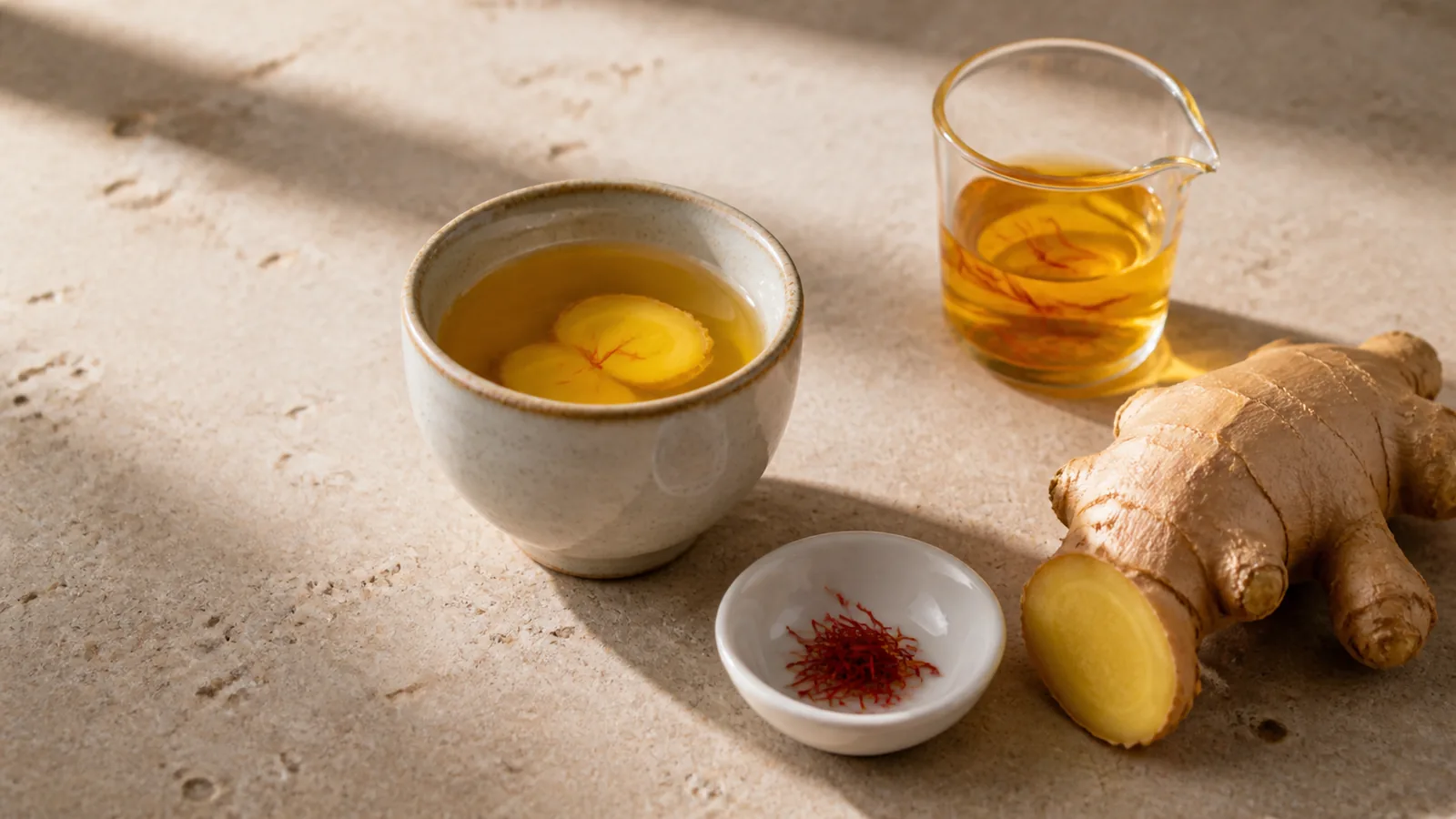
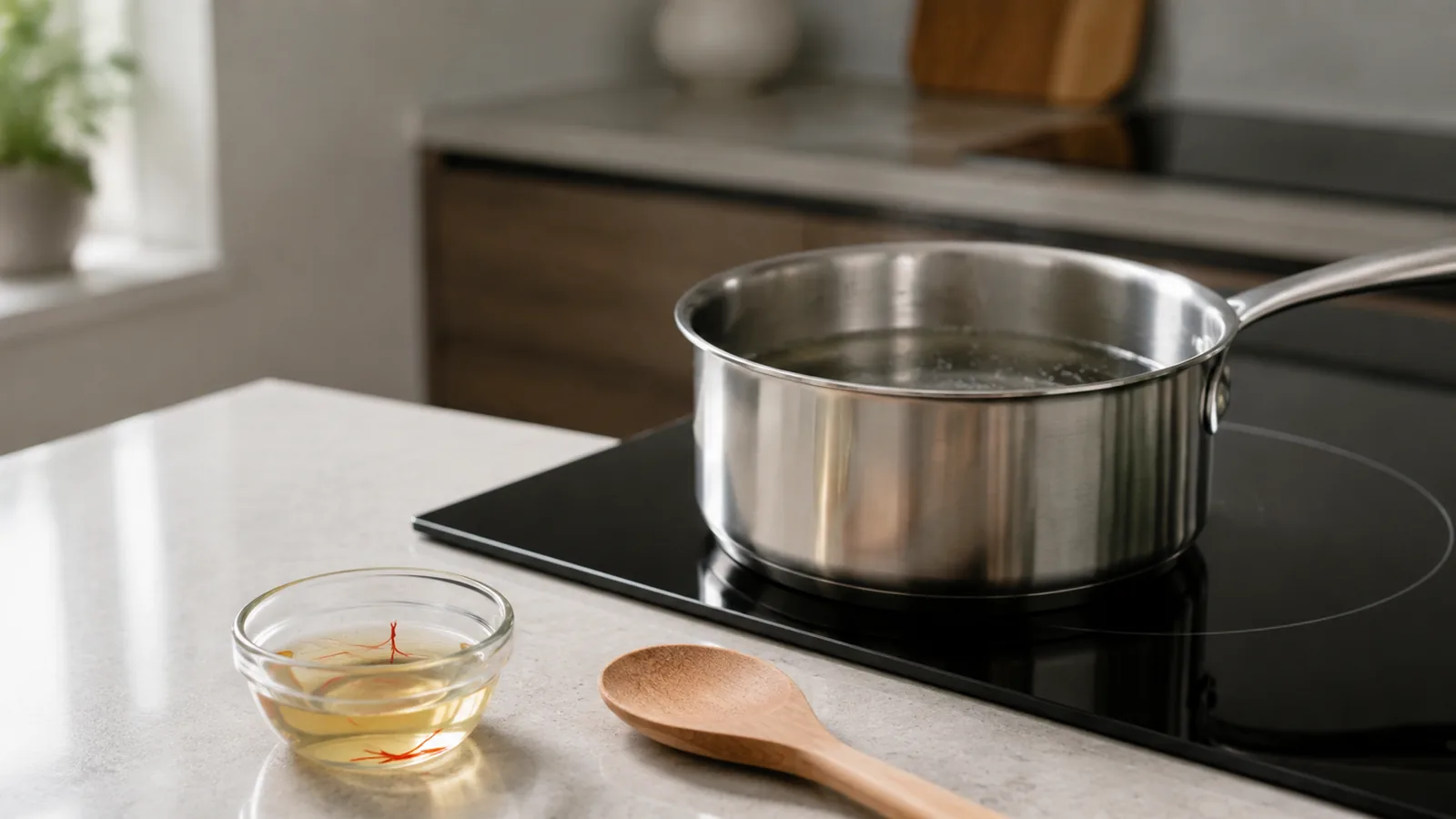
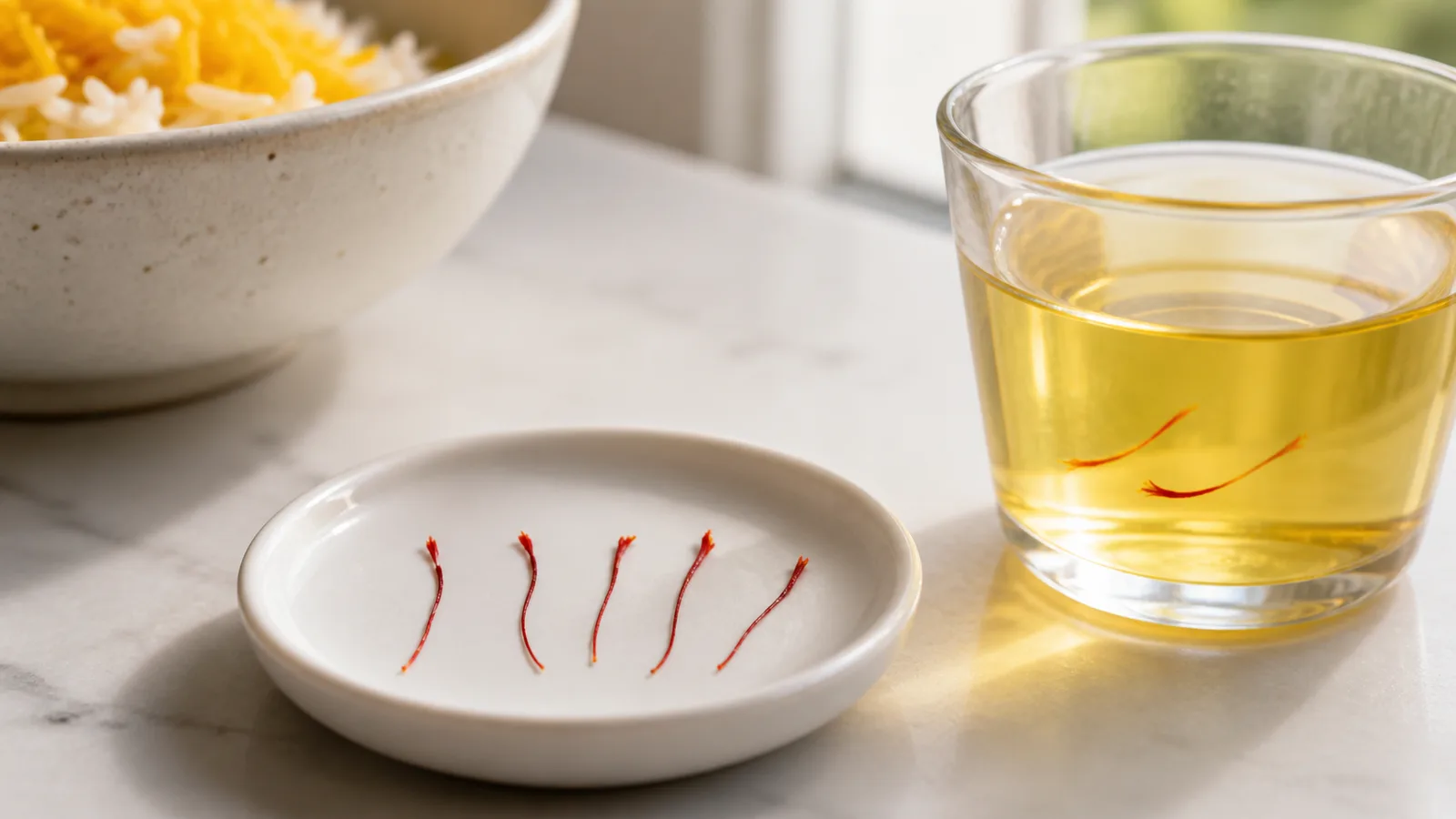
Do not taste questionable saffron to decide whether it is safe. A dry but weak batch can be tested in a small warm-water infusion: crush a few threads, allow them time to release their colour and smell the liquid. A pale or muted result can confirm loss of potency, but this kitchen check cannot prove safety or authenticity.
Faded saffron and spoiled saffron are not the same
If clean, dry threads simply give less colour or aroma, the main consequence is a disappointing dish. You may choose to replace them for quality. If moisture or visible contamination is present, adding more to a recipe is not an answer; discard the affected spice.
This distinction matters because saffron is a dried agricultural product, not a sterile ingredient. A peer-reviewed study of saffron’s microbiological condition during storage found that preventing moisture exposure and excessive warmth remains important. Home inspection cannot identify every microorganism, so uncertain or visibly compromised spice is not worth salvaging.
How long does saffron last?
There is no dependable number that applies to every jar. Initial drying and grade, whether the saffron is whole or powdered, the barrier provided by its package, local humidity and how often it is opened all affect its useful life. The producer’s printed best-before information is the best starting point for an unopened commercial pack.
For ordinary household planning, using well-stored saffron within roughly one to three years is a practical quality range, not a promise that it spoils on the following day. A frequently opened packet beside a warm cooker may fade much sooner. A tightly sealed portion kept dry and dark may remain aromatic for longer.
Powder also gives fewer visual clues and exposes more surface area to air. Whole threads are easier to inspect and can be crushed only when needed.
The best way to store saffron
Keep saffron in a clean, food-safe container with a tight seal. An opaque container is convenient; if the jar is clear, place it inside a closed cupboard. Choose a cool, dry location away from sunlight, steam, a hob and other sources of repeated heat.
- Close the container immediately after measuring.
- Use a completely dry spoon or clean, dry fingers.
- Keep the threads away from steam rising from a pot or kettle.
- For a large purchase, divide it into smaller sealed portions so the full supply is not exposed each time.
- Label the container with the purchase or opening date.
Our detailed guide to long-term saffron storage covers dry threads and prepared infusions separately. Those are different foods: brewed saffron contains water and should never be treated like a shelf-stable dry spice.
Should saffron be refrigerated?
For most households, a stable cupboard is simpler than the refrigerator. Refrigeration can create a condensation risk when a cold container is opened in warmer, humid air. If climate or packaging makes cold storage necessary, the container must be genuinely airtight and should come to room temperature before it is opened. The reasoning and trade-offs are explained in our guide to storing saffron in the fridge.
A quick decision before cooking
Use the saffron when the package is sound, the threads are dry and clean, and the aroma and infusion remain satisfactory. Replace it for better flavour when it is merely weak. Discard it when you find moisture, mould, pests, a damaged package with uncertain contents or an abnormal smell.
Saffron does not become useless simply because a calendar page turns, but careful storage and a sensible inspection matter. Keeping light, air, heat and moisture under control protects the small amount you bought—and gives the next dish the colour and aroma you expected.