Long-Term Saffron Storage is mostly a matter of keeping dried saffron away from air, moisture, light and heat. Brewed saffron needs different treatment: it is a prepared liquid, so it belongs in the refrigerator for a few days or in the freezer for longer storage.
How long can you store saffron?
Well-dried saffron threads commonly keep useful colour, aroma and flavour for about two years when the container is airtight and the storage place is cool, dry and dark. That is a practical quality estimate rather than a universal expiry date. The packaging date, the quality of the original drying, the seal and the conditions in your kitchen all affect the answer.
After three years, saffron may still look usable, but its volatile aroma and colouring strength usually become less dependable. Check the producer’s best-before date first. A best-before date describes expected quality; it does not mean that every jar becomes unsafe on the following day.
Ground saffron generally loses its character sooner than whole threads because more surface area is exposed to oxygen. If you buy threads, store them whole and grind only the amount you need.
What are the best saffron storage conditions?
The best place for everyday saffron storage is a closed cupboard away from the cooker, oven, dishwasher, kettle and sunny windows. A small cabinet used for spices is usually better than an open shelf.
- Limit air: close the container immediately after measuring what you need.
- Keep it dry: use a completely dry spoon or clean, dry fingers.
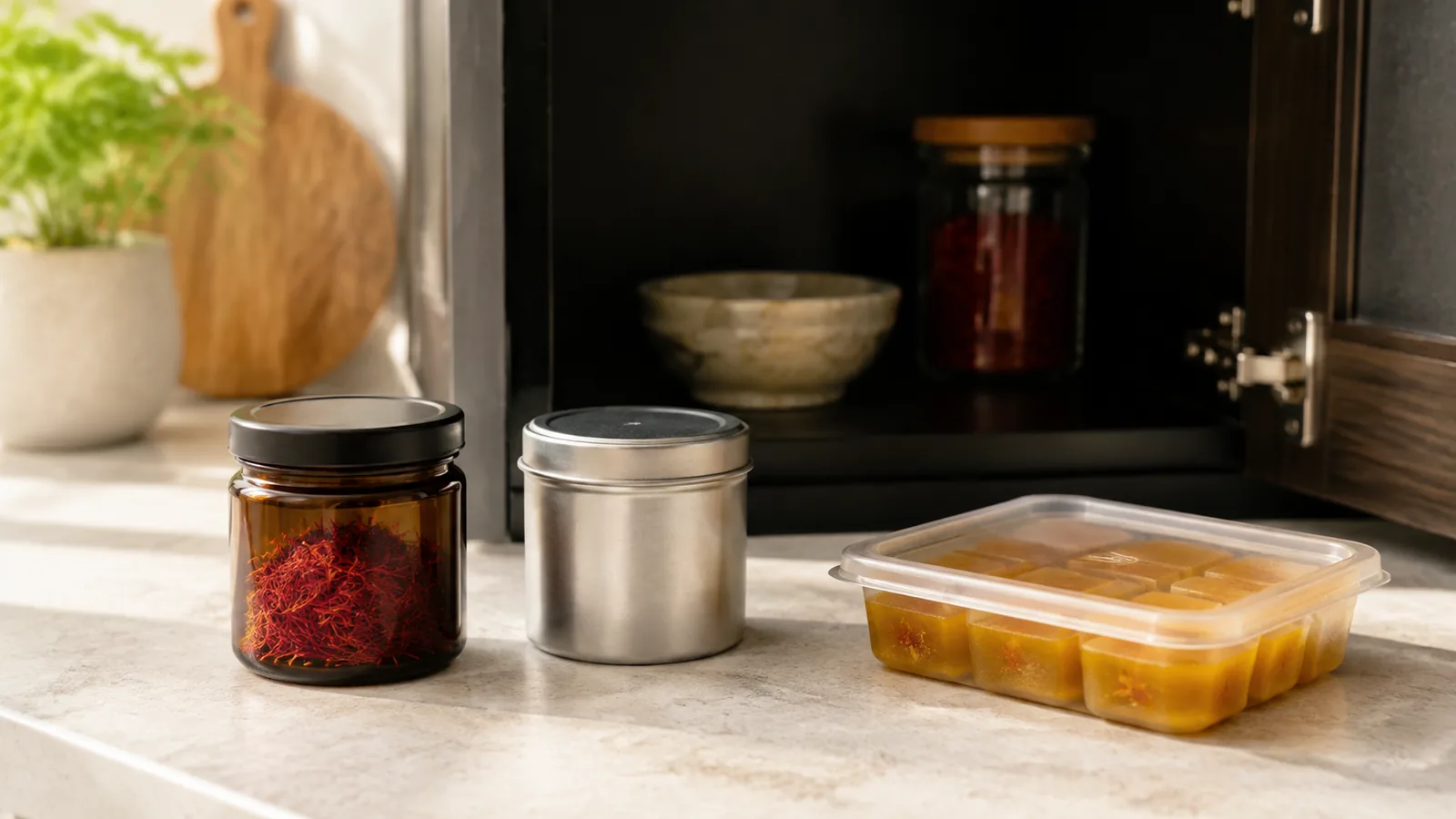
- Block light: choose an opaque tin or amber glass, or keep clear glass inside a dark cabinet.
- Avoid heat: store it where the temperature stays reasonably steady rather than rising whenever you cook.
- Prevent contamination: keep the lid, rim and storage area clean and free of dust.
Some commercial storage instructions use below 20°C and below 40% relative humidity as control targets. Those figures should not be treated as magic household cut-offs. What matters most at home is a stable, cool and dry environment with no condensation. In a warehouse, temperature and humidity should be measured, documented and matched to the product specification.
How to store saffron threads at home
Put dry saffron threads into the smallest clean container that holds them without crushing them. Less empty space means less air is exchanged each time the jar is opened. Close the lid firmly, add the packing or opening date, and return the jar to the cupboard as soon as you finish.
Do not wash dried threads before storage. Water turns a shelf-stable spice into a damp product and creates conditions in which mould can develop. If the saffron arrives as flowers or freshly separated stigmas, it must be dried correctly before it is treated as a stored spice.
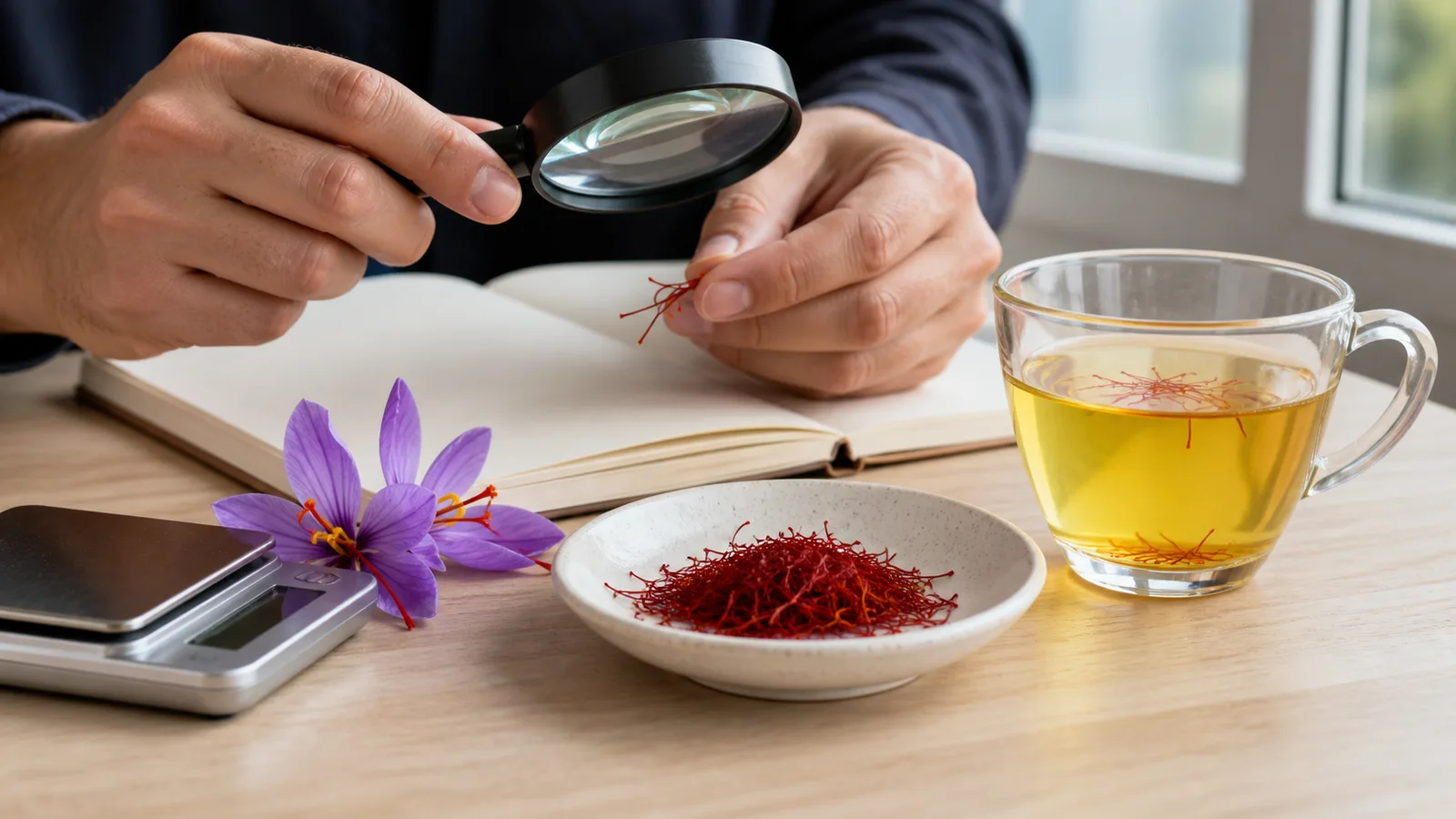
Whole strands also make it easier to inspect what you bought. Before use, look for the characteristic red threads and aroma rather than judging quality from colour alone. The current Codex standard for saffron distinguishes whole, cut and powdered forms and defines measurable quality criteria; appearance by itself cannot confirm grade or authenticity.
How to store ground saffron
Grinding is convenient, but it accelerates aroma loss. A small airtight container is especially important for powder. Keep the scoop dry, avoid holding the open jar over a steaming pan, and never return unused powder from a damp spoon.
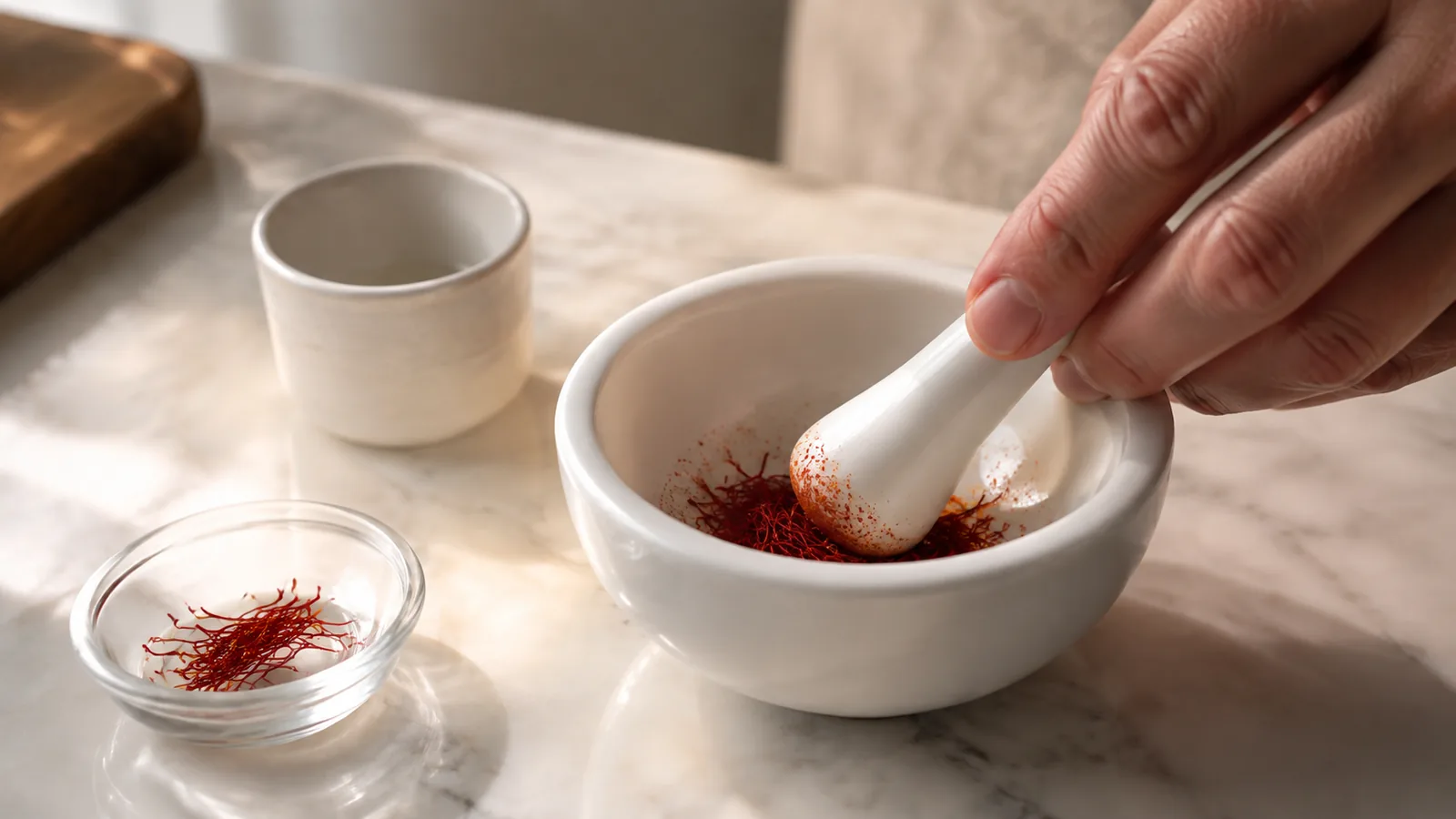
If you grind saffron yourself, use a clean spice grinder or a dry mortar and pestle. Grinding a small batch for the next few dishes gives you the convenience of powder without exposing the entire supply. There is no requirement for a marble mortar; cleanliness and dryness matter more than the material.
Should saffron be refrigerated?
Dry saffron does not normally need refrigeration. For most homes, an airtight jar in a dark cupboard is simpler and avoids condensation when a cold container is opened in warm air. This applies whether the product is labelled saffron or kesar.
In a very hot or humid home, the refrigerator can be used only if the dried saffron is sealed against moisture. Use a genuinely airtight, food-safe container, take out the portion you need quickly, and let the closed container reach room temperature before opening it. That last step keeps humid room air from condensing on cold threads. Do not repeatedly move an unsealed jar between the refrigerator and the kitchen.
The old rule that saffron must never be refrigerated is too broad, but so is the idea that refrigeration automatically extends its life. A stable dry cupboard is preferable when available; moisture control is the deciding issue.
Can you freeze saffron?
You can freeze dry saffron, but it is rarely necessary for a normal household quantity. Freezing does not repair old or poorly dried threads, and opening a frozen container can introduce condensation. If long-term freezing is genuinely useful, divide the saffron into small airtight portions first. Allow one sealed portion to warm fully before opening it, and do not keep thawing and refreezing the same supply.
Freezing makes more practical sense for brewed saffron because the liquid is already perishable. Dry threads and brewed saffron should never share the same storage routine.
How to store brewed saffron safely
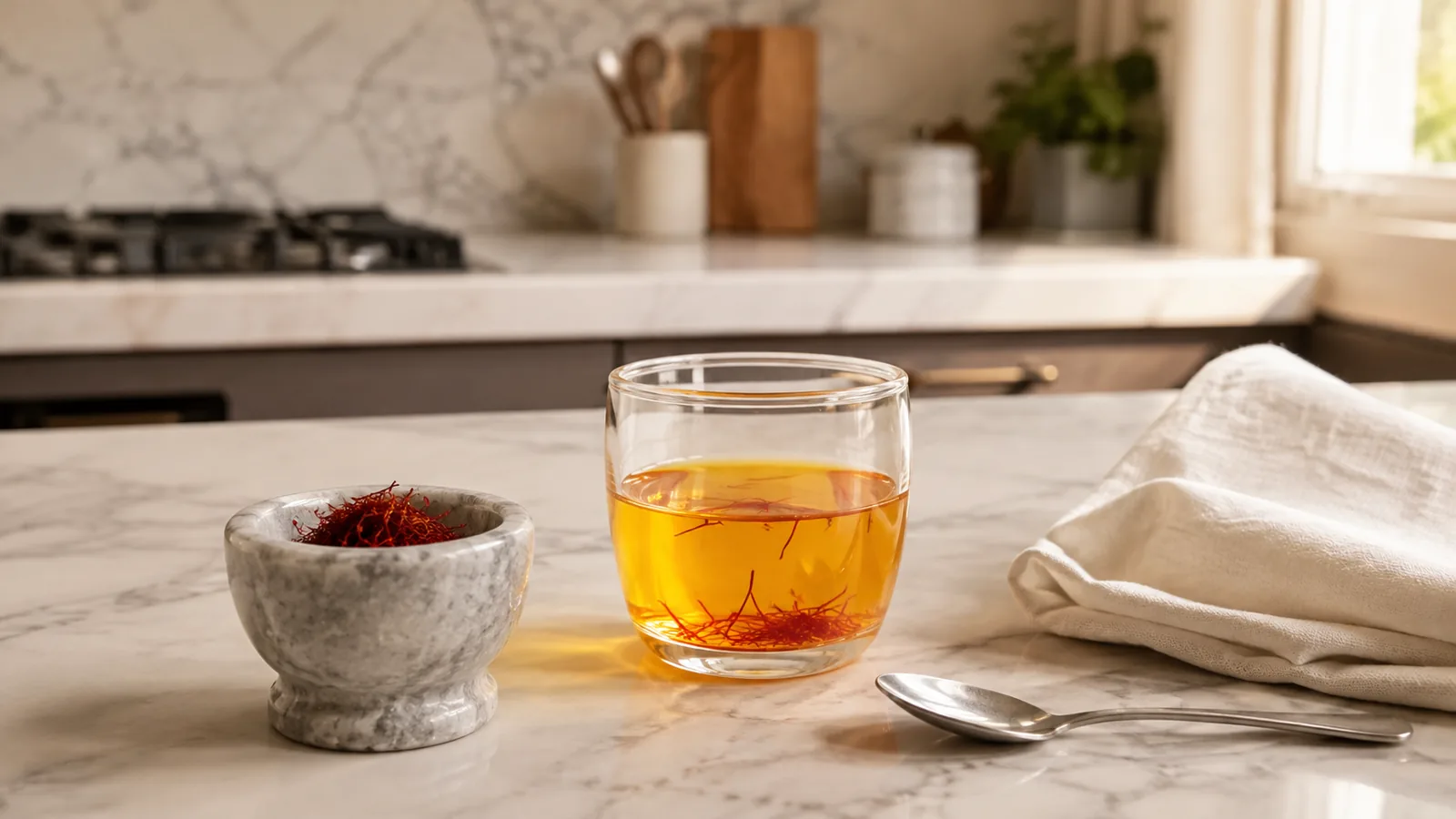
Prepare only as much as you expect to use. After following a reliable method for brewing saffron for cooking, transfer the infusion to a clean covered container and cool it promptly. Do not leave it on the counter for the afternoon.
There is no validated two-week refrigerator life for a homemade saffron infusion. As a conservative food-safety rule, refrigerate it within two hours and keep the refrigerator at or below 4°C (40°F), in line with the FDA’s food-storage guidance. Use refrigerated brewed saffron within three to four days, following the USDA guidance for prepared leftovers. If milk, stock or another ingredient was added, the shortest safe limit for any ingredient or recipe still applies.
For longer storage, freeze the cooled infusion promptly in small covered portions. An ice-cube tray is convenient, but cover it while the cubes freeze and then move them to a labelled freezer container or bag. Thaw only what a recipe needs. Discard brewed saffron that was left at room temperature beyond the safe cooling window, developed mould, or has an unusual smell; appearance and smell cannot prove that mishandled food is safe.
Bulk saffron and warehouse storage
Bulk storage begins before the finished spice enters a container. Producers need to separate the red stigmas from fresh flowers promptly, dry them under controlled hygienic conditions, and protect the dried product from dust, pests and moisture. “Raw saffron” can mean fresh stigmas or a bulk dried lot, so the receiving specification should make that distinction clear.
A warehouse should be clean, dry and protected from direct sunlight, with recorded temperature and relative humidity rather than estimates. Food-contact packaging must provide an effective barrier to moisture and odours. Lots should be labelled and rotated by packing date so older stock is used first. Any lot exposed to water, insects, damaged packaging or an unexplained odour needs inspection before it is released.
Choosing the right saffron container
Airtight glass or metal containers are dependable choices. Dark glass and opaque tins add protection from light. Clear glass is also suitable when it stays inside a closed cupboard. Choose a lid that seals consistently; an attractive jar with a loose stopper is not a good storage container.
Plastic is not automatically unsuitable. A small food-grade container with a sound moisture and odour barrier can work, particularly for short-term use. Thin bags, cracked tubs and containers that retain strong smells are poor choices. The seal and barrier performance matter more than a blanket glass-versus-plastic rule.
Does saffron expire or go bad?
Saffron can lose quality gradually, and it can also become unsuitable because of moisture or contamination. Faded aroma or weaker colour release usually means the spice is ageing. Visible mould, damp clumps, insects, a musty smell or contact with dirty water are reasons to discard it.
Freshly dried saffron should not be judged by softness alone, and older saffron is not reliably identified only because the threads look dark or brittle. Compare the aroma and colour release with earlier uses, check the date and packaging, and consider how it was stored. Never taste a product that appears mouldy or contaminated.
A simple long-term saffron storage routine
- Keep dry threads whole in a small airtight container.
- Store the container in a cool, dry, dark cupboard away from steam and heat.
- Use clean, dry tools and close the lid promptly.
- Label the purchase or opening date and aim to use the spice while its aroma is still strong, commonly within about two years.
- Refrigerate brewed saffron promptly and use it within three to four days, or freeze it in covered recipe-sized portions.
The useful distinction is simple: dried saffron needs protection from the environment, while brewed saffron needs food-safe cold storage. Treating them as two different products preserves more of the spice’s character and avoids the moisture and time mistakes that shorten its usable life.