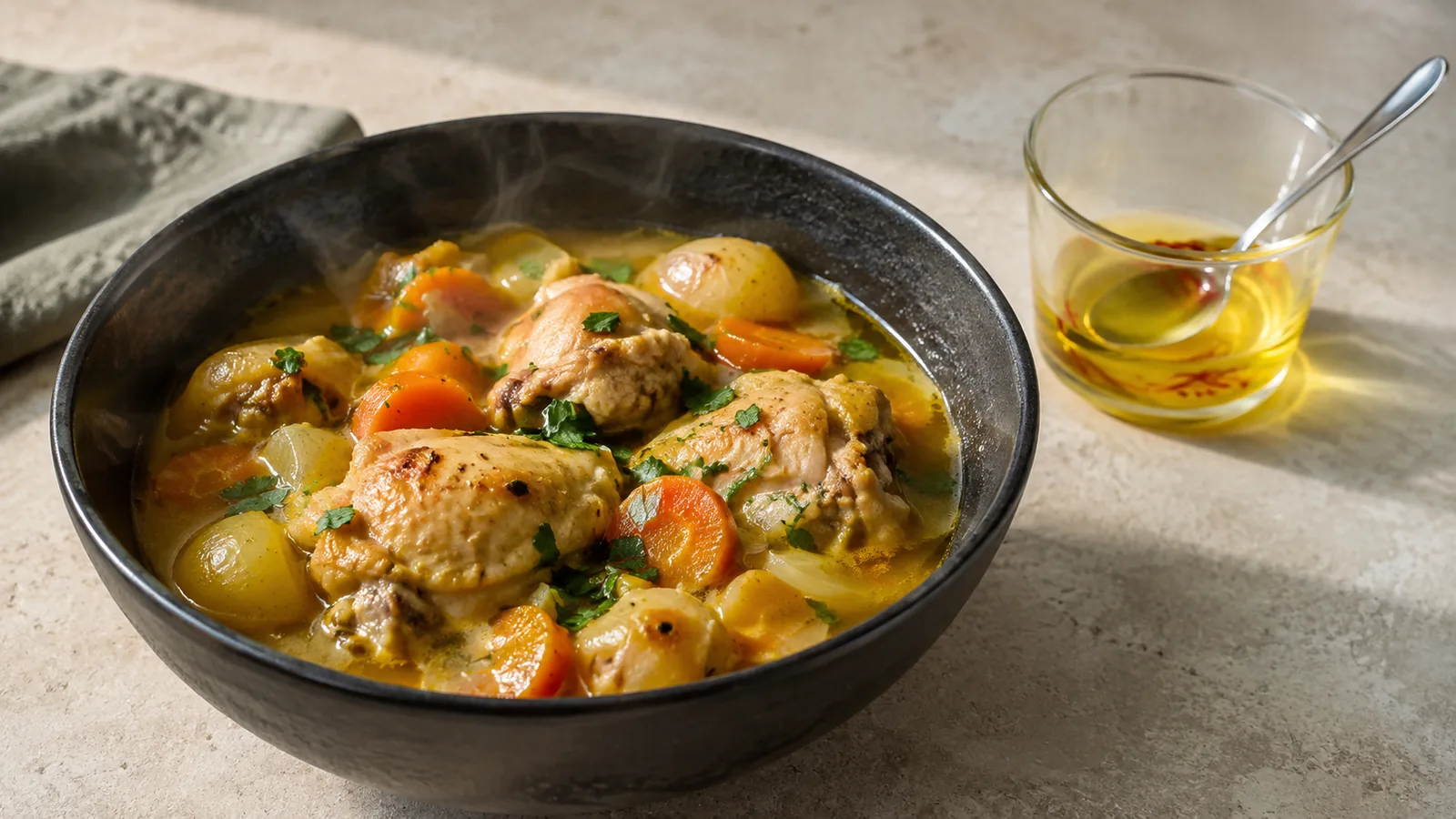
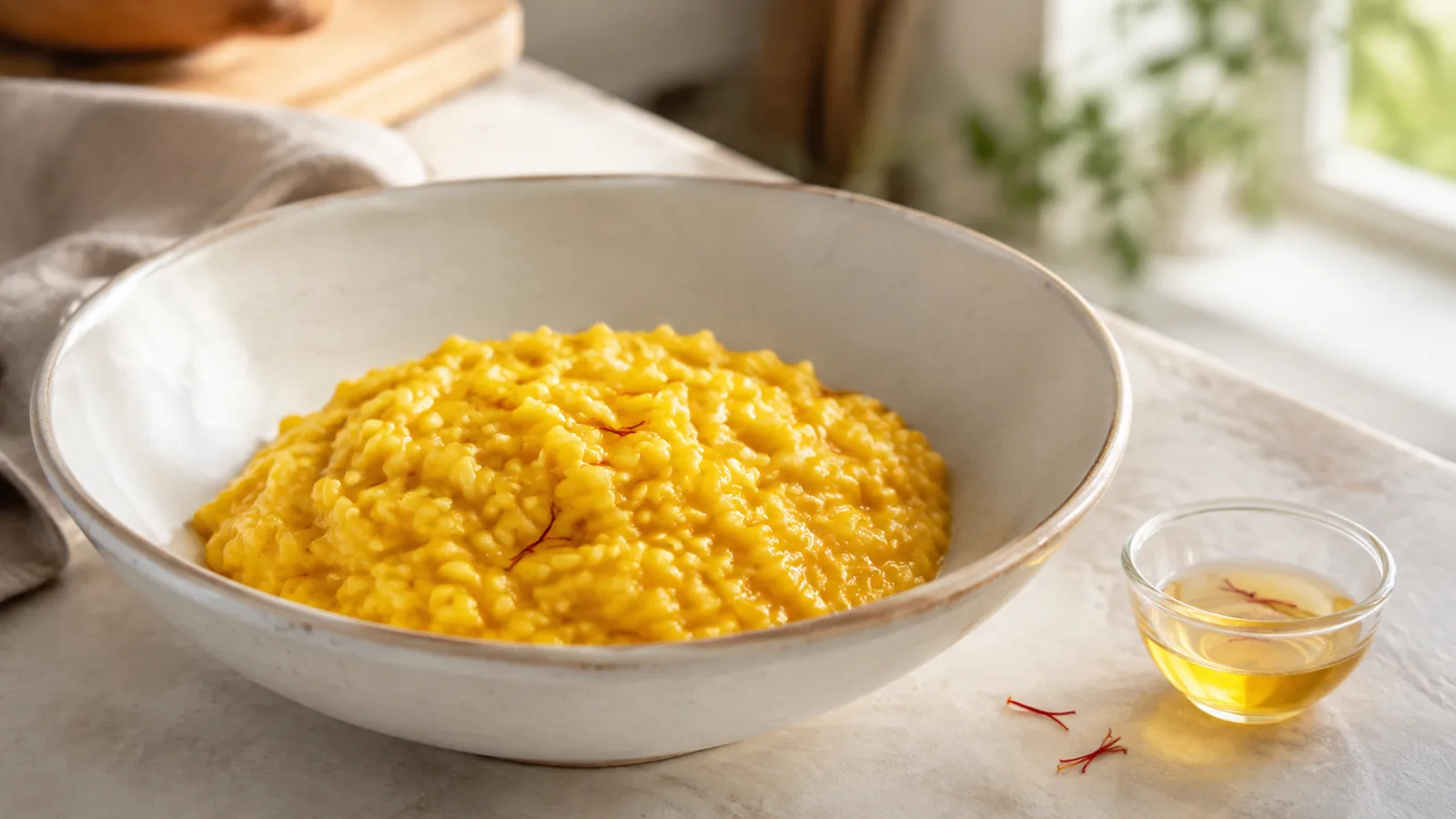
These Saffron Cake Recipes turn the spice’s colour and aroma into three distinct bakes: a simple honey-glazed tea cake, a lighter sponge and a moist cake finished with cardamom syrup. Each recipe uses a measured infusion, so the saffron is present without making the crumb wet or bitter.
Before making a saffron cake
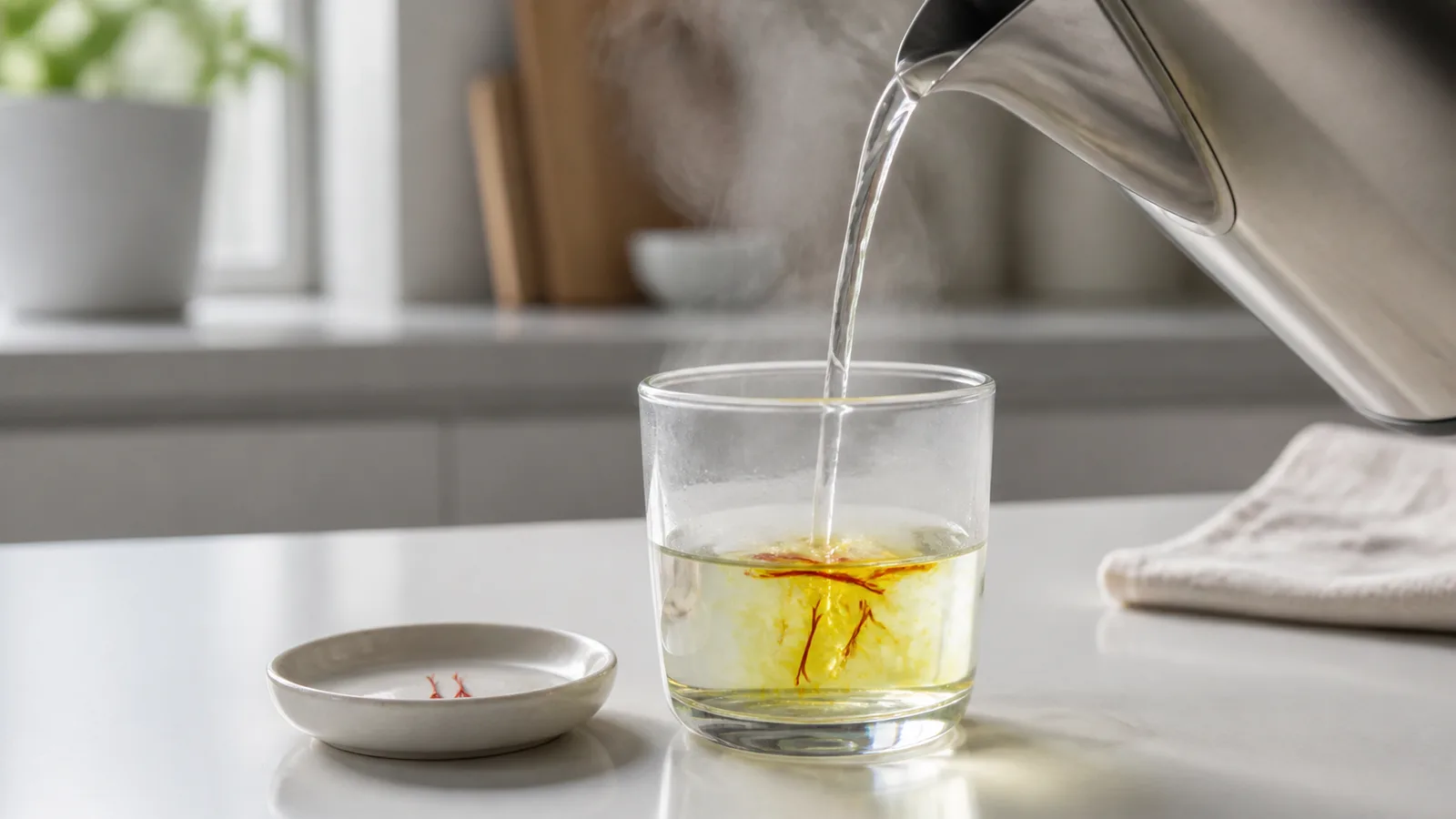
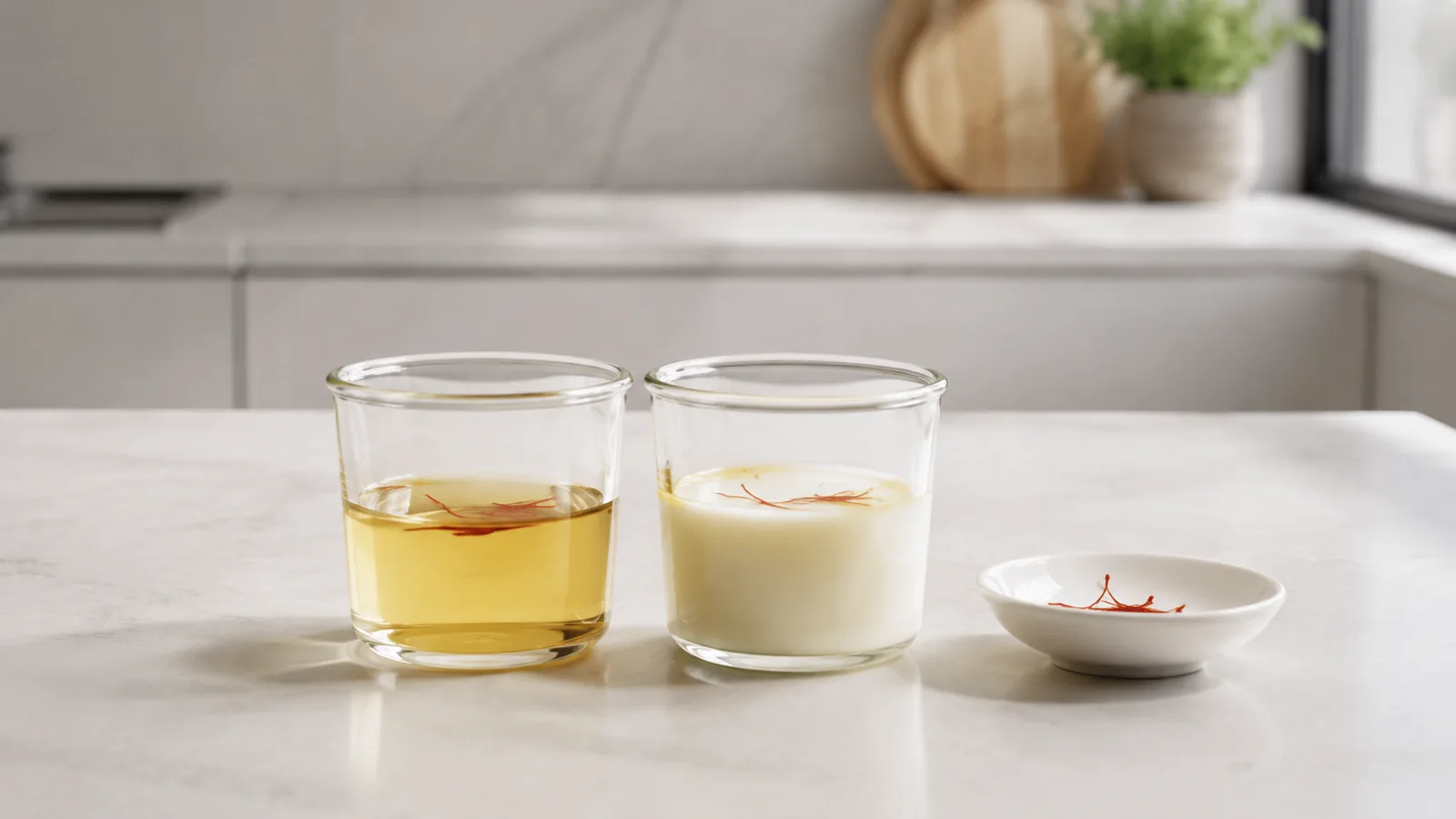
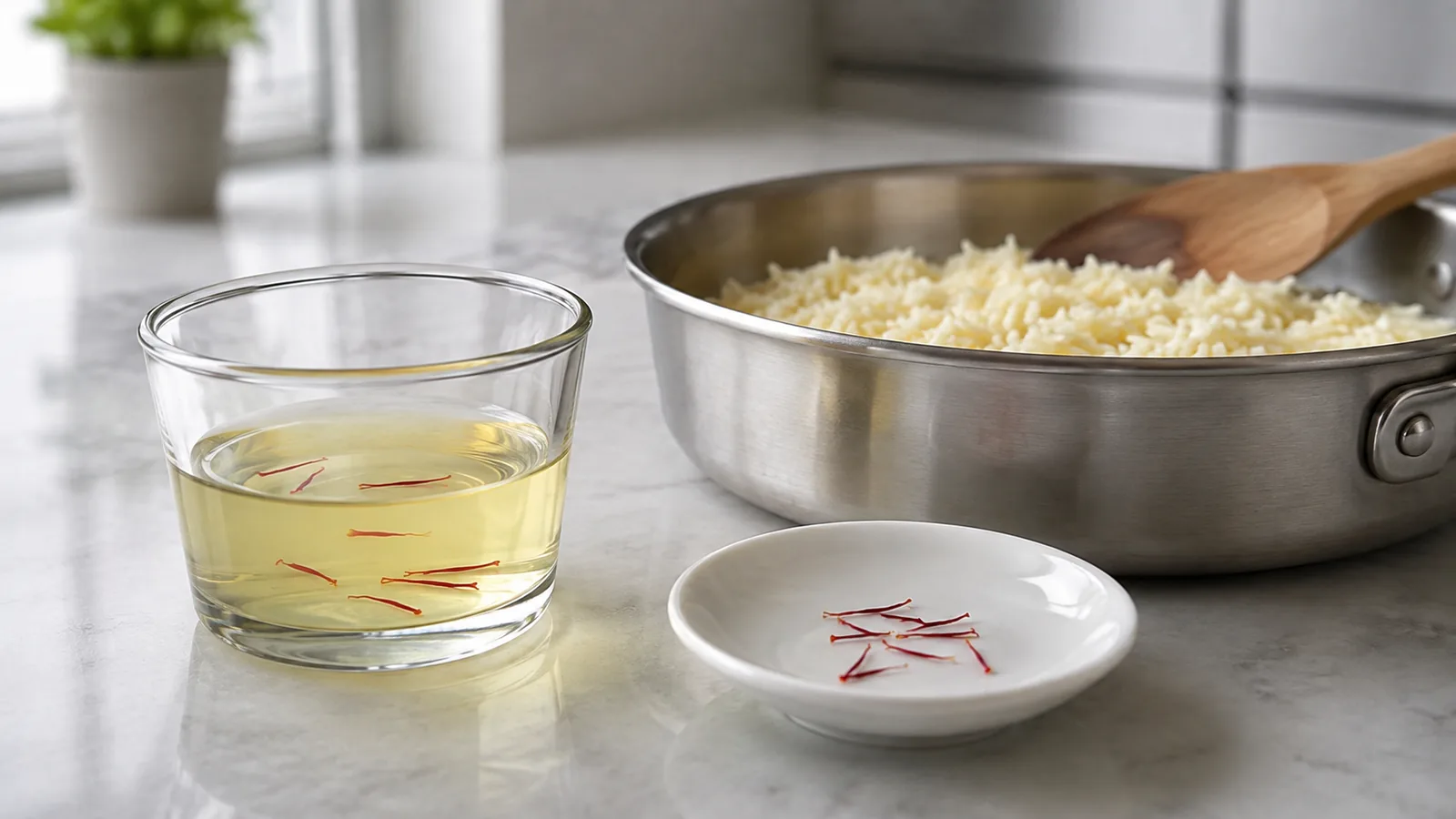
Good saffron baking begins before the flour bowl. Lightly crush the threads, cover them with a small amount of hot water and let the cup stand, covered, for 10 to 15 minutes. The liquid should become a rich golden colour and smell distinctly of saffron. Our guide to brewing saffron for cooking explains the method and how it differs from an ice infusion.
Make the infusion concentrated. Half a cup of weak saffron water can upset a cake’s liquid balance while contributing less aroma than two or three tablespoons of a strong brew. Let the infusion cool to warm before it touches eggs or whipped egg whites.
Measure flour by weight when possible, bring eggs and milk to room temperature, and preheat the oven before mixing the batter. Once baking powder meets liquid, the cake should not wait on the counter while the oven heats.
Simple Persian saffron cake with honey
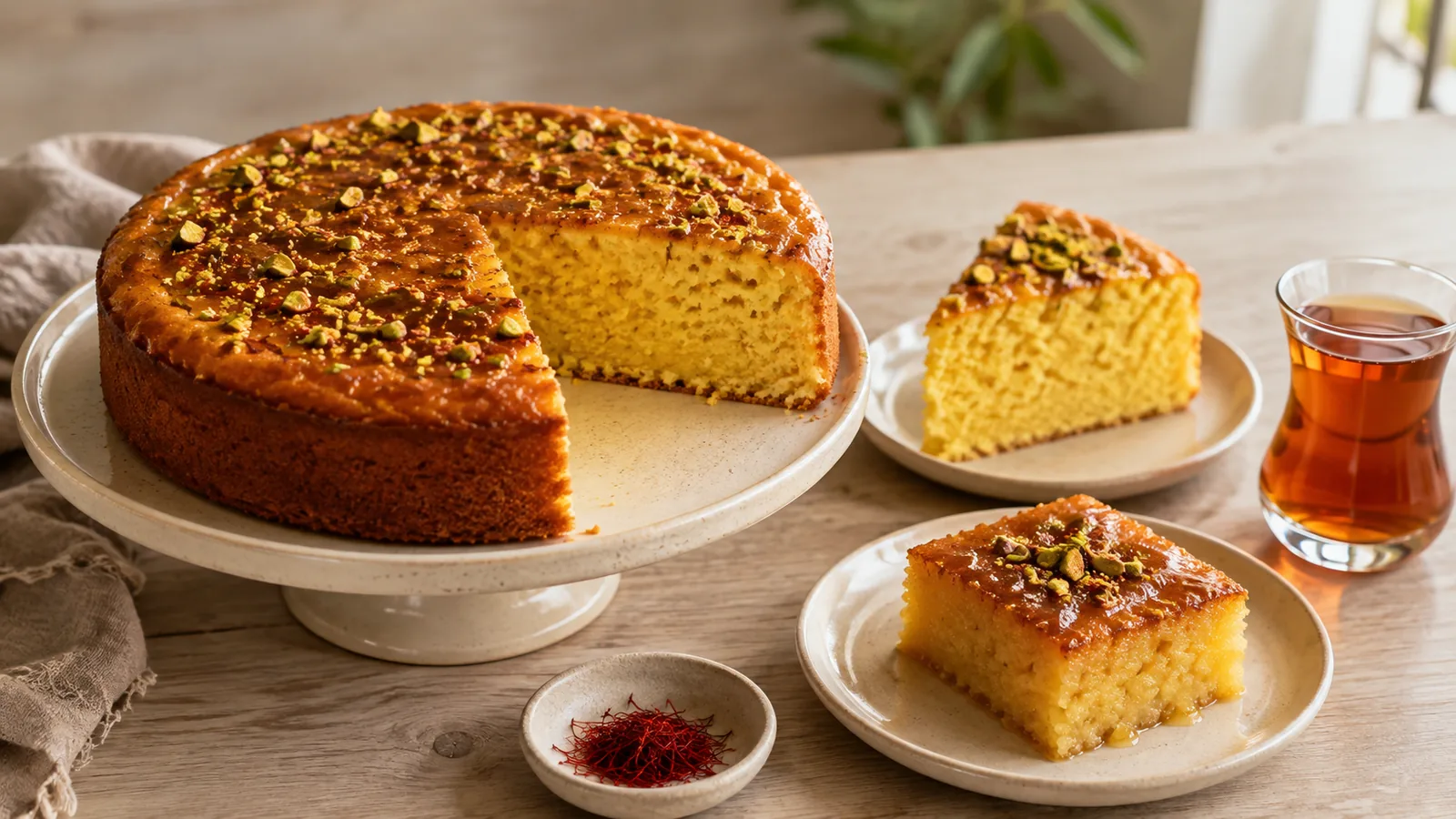
This is the most forgiving recipe for saffron cake in the collection. It has a soft everyday crumb, gentle cardamom and rosewater, and a warm honey glaze that carries pistachios across the top. It makes one 20 cm / 8-inch round cake, about 10 slices.
Ingredients
- 2 cups (250 g) all-purpose flour
- 2 teaspoons baking powder
- 1/2 teaspoon ground cardamom
- 1/4 teaspoon fine salt
- 4 large eggs, at room temperature
- 3/4 cup (150 g) granulated sugar
- 3/4 cup (180 ml) milk, at room temperature
- 1/4 cup (60 ml) neutral vegetable oil
- 4 tablespoons runny honey, divided
- 3 tablespoons strong brewed saffron, divided
- 1 tablespoon food-grade rosewater
- 1 teaspoon vanilla extract
- 2 tablespoons chopped unsalted pistachios
Method
- Heat the oven to 170°C / 340°F. Grease a 20 cm / 8-inch round tin and line its base with baking paper.
- Whisk the flour, baking powder, cardamom and salt in a medium bowl.
- In a large bowl, beat the eggs and sugar for 4 to 5 minutes, until pale, thick and increased in volume.
- Whisk the milk, oil, 2 tablespoons of honey, 2 tablespoons of brewed saffron, rosewater and vanilla in a jug.
- Add the liquid to the egg mixture in a slow stream while mixing on low speed.
- Fold in the dry ingredients in two additions, stopping as soon as no flour pockets remain.
- Pour the batter into the tin and bake for 35 to 45 minutes. Begin checking at 35 minutes; a skewer inserted in the centre should emerge without wet batter.
- Rest the cake in its tin for 10 minutes, then turn it onto a rack.
Warm the remaining 2 tablespoons of honey with the remaining tablespoon of saffron infusion. Brush it over the still-warm cake and scatter the pistachios on top. The glaze should soak into the surface, not form a thick sticky layer.
Light saffron sponge cake
This version separates the eggs and folds whipped whites into the batter. It is lighter than the honey cake and suits a simple layer filling or afternoon tea. The method takes more care: a clean bowl and gentle folding are what create the spongy texture.
Ingredients
- 2 1/2 cups (300 g) cake flour
- 2 teaspoons baking powder
- 1/4 teaspoon fine salt
- 4 large eggs, separated and at room temperature
- 1 cup (200 g) granulated sugar, divided
- 2/3 cup (160 ml) warm milk
- 1/2 cup (120 ml) neutral vegetable oil
- 5 tablespoons strong brewed saffron, cooled to warm
- 1/2 teaspoon vanilla extract
Method
- Heat the oven to 170°C / 340°F. Line the base of a deep 23 cm / 9-inch round tin. Lightly grease the sides.
- Sift the cake flour, baking powder and salt together.
- Beat the egg whites in a completely clean bowl until foamy. Add half the sugar gradually and continue until glossy medium peaks form. The tips should bend rather than stand dry and rigid.
- In another bowl, beat the yolks with the remaining sugar until pale. Whisk in the milk, oil, saffron infusion and vanilla.
- Fold the dry ingredients into the yolk mixture. Fold in one-quarter of the whipped whites to lighten it, then add the rest in two batches with broad, gentle strokes.
- Transfer the batter immediately to the tin, level the top and bake for 40 to 50 minutes. Check from 38 minutes onward without repeatedly opening the oven door.
- Cool for 10 minutes in the tin, release the edge, then let the cake finish cooling on a rack.
Do not put whipped whites in the refrigerator while the rest of the batter sits. They lose useful volume as they wait. Prepare every ingredient first, then mix the yolk batter and fold the whites without delay.
Moist Iranian saffron cake with cardamom syrup
For a cake that stays moist for several days, use a light syrup rather than adding a very large amount of rosewater to the batter. This Iranian saffron cake is fragrant but balanced: the syrup is poured over the warm crumb in stages, giving it time to absorb.
Cake ingredients
- 2 1/2 cups (310 g) all-purpose flour
- 2 teaspoons baking powder
- 1/2 teaspoon fine salt
- 3 large eggs, at room temperature
- 1 cup (200 g) granulated sugar
- 1/2 cup (120 ml) milk
- 1/2 cup (120 ml) neutral vegetable oil
- 1/4 cup (60 ml) strong brewed saffron
- 2 tablespoons food-grade rosewater
- 1/2 teaspoon vanilla extract
Cardamom syrup ingredients
- 1/2 cup (120 ml) water
- 1/4 cup (50 g) granulated sugar
- 1/8 teaspoon ground cardamom
- 1 tablespoon brewed saffron
- 1 tablespoon food-grade rosewater
Method
- Heat the oven to 180°C / 350°F. Grease and line a 23 cm / 9-inch square tin.
- Whisk the flour, baking powder and salt together.
- Beat the eggs and sugar for 3 to 4 minutes, until pale. Mix in the milk, oil, saffron infusion, rosewater and vanilla.
- Fold in the dry ingredients just until the batter is even. Pour it into the prepared tin.
- Bake for 35 to 45 minutes, checking from 35 minutes. The centre should spring back lightly and a skewer should not carry wet batter.
- While the cake bakes, combine the water, sugar and cardamom in a small saucepan. Simmer for 3 minutes, remove from the heat, then stir in the saffron and rosewater.
- Let the cake rest for 10 minutes. Poke small holes across the top with a skewer and spoon over half the warm syrup. Wait 5 minutes before adding more; stop if liquid begins pooling around the edges.
Not every cake absorbs exactly the same amount, so the syrup is a measured maximum rather than a command to empty the saucepan. Serve any remainder beside the cake. This produces a moist saffron cake, not a saturated one.
Which saffron cake recipe should you choose?
Choose the honey cake when you want a straightforward bake with a nutty finish. Choose the sponge when lightness matters or you plan to add a thin layer of whipped cream. Make the syrup cake when it needs to be prepared ahead and served in small squares.
All three are Persian-inspired saffron desserts, but they are not interchangeable batters. The honey cake relies on beaten whole eggs, the sponge on folded whites, and the moist cake on controlled syrup absorption. Mixing one recipe’s quantities with another recipe’s method is likely to give an uneven result.
For readers comparing saffron dessert recipes, these three versions stay within the cake family. Other desserts with saffron—such as custards, rice puddings and frozen sweets—need different ratios and setting methods, so their instructions should not be transferred to these batters.
How saffron behaves in baking
Saffron works best in a cake when it is infused before mixing. The water carries its colour through the batter, while the covered brewing period captures more aroma than sprinkling dry threads across flour. Keep the liquid concentrated and add it with the other wet ingredients.
Heat softens saffron’s aroma, which is why the honey glaze and cardamom syrup each contain a little infusion added after cooking. That does not mean the batter should be overloaded. A layered use—some inside, a little on the warm surface—creates a clearer result.
Rosewater, cardamom, pistachio and honey are familiar partners, but none should drown out the spice. Food-grade rosewater varies greatly in strength. Measure it, taste the glaze or syrup, and resist the urge to turn every supporting flavour up at once.
Common saffron cake problems
The cake is dense
Check that the baking powder is active, the oven was hot before mixing and the batter was not beaten after the flour went in. For the sponge cake, whites whipped to dry clumps or folded too aggressively both reduce volume.
The centre is wet
A browned top does not prove the middle is baked. Use the stated tin size, check the centre with a skewer and give the cake more time if wet batter remains. If the top is darkening too quickly, cover it loosely with foil without pressing on the surface.
The saffron cake tastes bitter or medicinal
Too much saffron, stale ground spice, excessive rosewater or a heavy hand with vanilla can all create an unpleasant finish. Use threads, brew a measured amount and let the aroma guide the quantity. Saffron should be recognisable without tasting harsh.
The honey topping is sticky
Brush the warm glaze in a thin layer and let the cake absorb it on a rack. If the honey is very thick, warm it gently with the saffron infusion rather than adding more honey. Pistachios go on while the surface is tacky enough to hold them.
Serving and storing saffron cakes
Let every cake cool before slicing. The honey cake and moist cake are good with unsweetened tea; the sponge can take fresh berries or a modest spoonful of cream. These are saffron tea cakes in spirit, meant to be fragrant and inviting rather than buried under frosting.
Store an unfilled cake in an airtight container at cool room temperature for up to two days, or refrigerate for longer storage if the room is warm. A cake filled or topped with whipped cream must be refrigerated. Bring plain slices towards room temperature before serving so the crumb softens and the aroma opens.
For another soft dairy-based variation, the existing yoghurt and saffron cake recipe uses a different route to moisture. Whichever version you make, accurate liquid, a concentrated infusion and a calm mixing method are what turn saffron in baking into a cake that tastes as good as it looks.