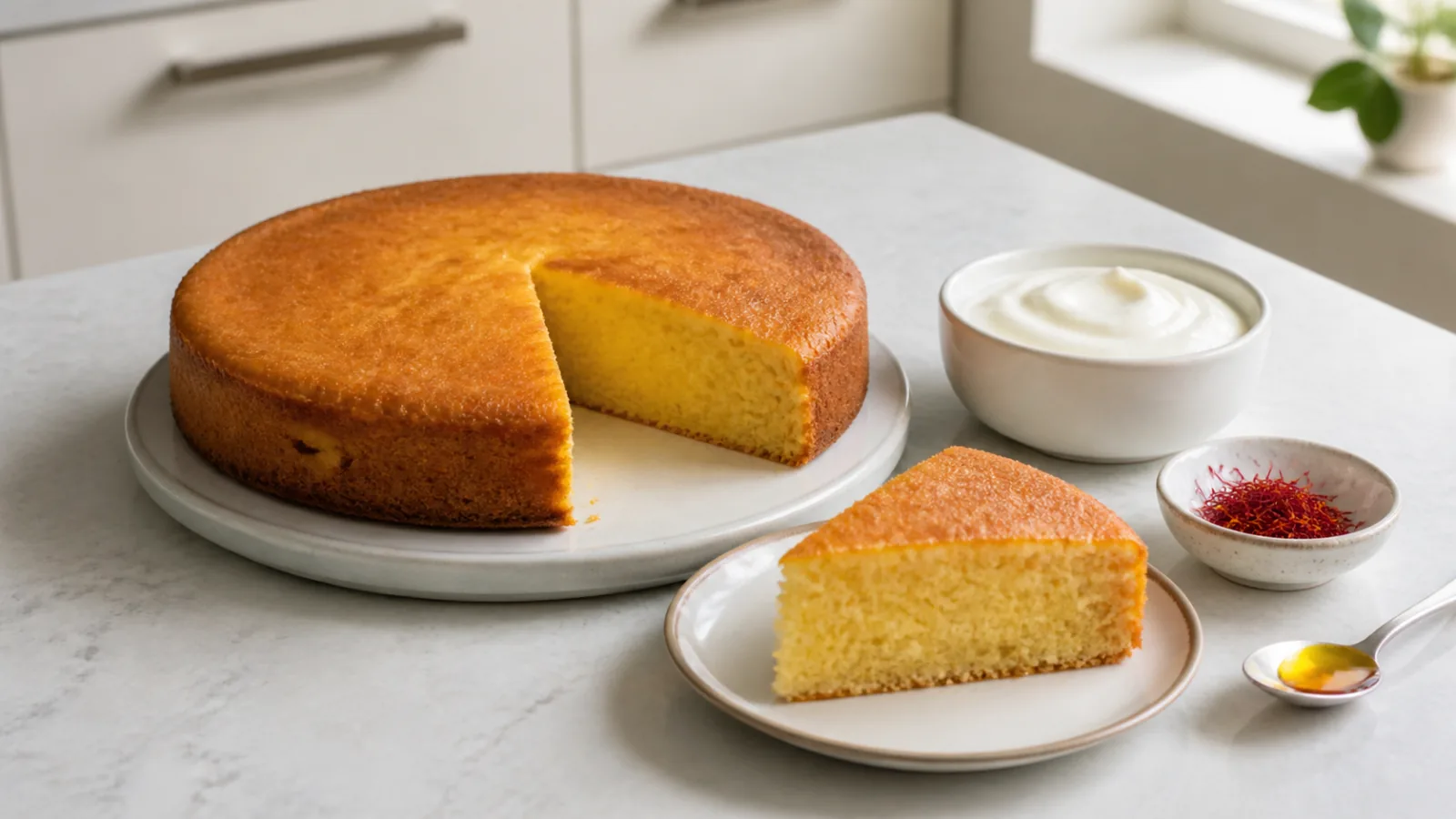
This yogurt cake and saffron recipe produces a simple golden cake with a soft, close crumb. Plain yogurt brings moisture and a gentle tang; brewed saffron gives the cake its colour and distinctive aroma without needing frosting or a long list of flavourings.
The proportions below preserve the original formula: four eggs, one cup each of sugar and oil, three-quarters of a cup of yogurt, two cups of flour and four teaspoons of saffron infusion. Weights and a clearer mixing sequence make the result easier to repeat.
Yogurt Cake and Saffron Recipe
Ingredients
- 200 g granulated sugar (1 US cup)
- 4 large eggs, at room temperature
- 240 ml neutral vegetable oil (1 US cup)
- 180 g plain full-fat yogurt, at room temperature (3/4 cup)
- 240 g all-purpose or pastry flour (2 level US cups)
- 2 teaspoons baking powder
- 1/4 teaspoon fine salt
- 4 teaspoons strongly brewed saffron
Choose an unsweetened yogurt with a smooth texture. Greek yogurt can be used, but loosen it with a tablespoon of milk if it is very thick. The oil should be neutral; a strongly flavoured oil can mask the saffron.
Equipment
- 23 cm (9-inch) round cake pan
- Baking paper
- Electric mixer
- Fine sieve
- Flexible spatula
How to prepare the cake
- Heat the oven. Preheat a conventional oven to 180°C (350°F), or a fan oven to 170°C. Grease the pan and line its base with baking paper.
- Prepare the dry mixture. Sift the flour, baking powder and salt together, then whisk briefly so the raising agent is evenly distributed.
- Beat the eggs and sugar. Mix them on medium-high speed for 4–5 minutes. The mixture should become pale, thick and roughly double in volume.
- Add the oil. With the mixer on low, pour in the oil in a thin stream. Stop as soon as it is combined.
- Add yogurt and saffron. Stir the saffron infusion into the yogurt until smooth. Add this mixture to the bowl and mix on low for only a few seconds.
- Fold in the flour. Add the dry ingredients in three batches. Fold gently with a spatula, scraping the bottom and turning the bowl, until no dry flour remains.
- Bake. Pour the batter into the prepared pan and level the surface. Bake for 40–50 minutes. Begin checking at 40 minutes; a skewer inserted in the centre should come out clean or with a few moist crumbs.
- Cool. Rest the cake in the pan for 10 minutes. Turn it onto a rack and let it cool before cutting.
How to prepare the saffron infusion
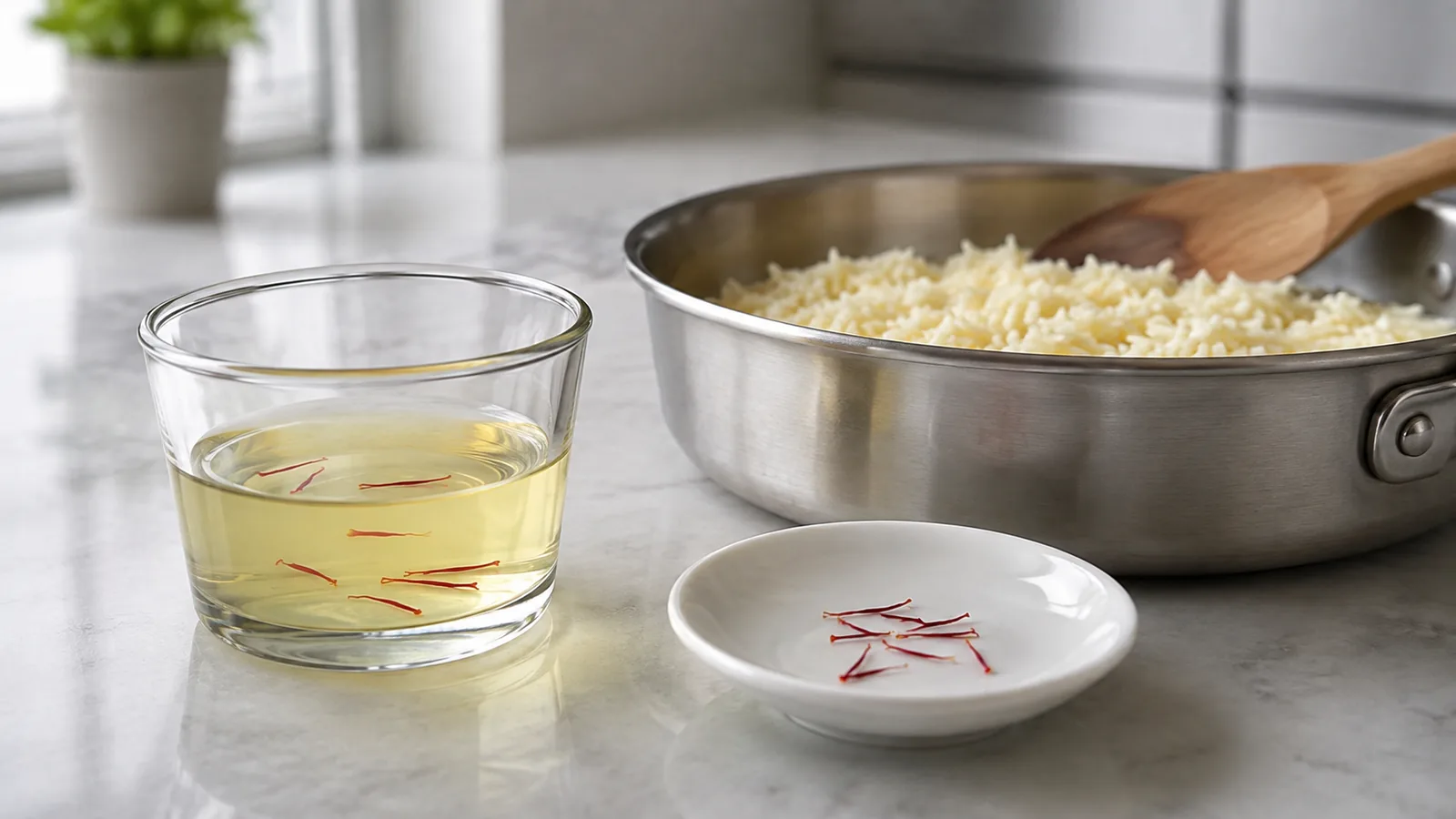
Finely grind about 1/3 teaspoon of saffron threads. Add 1 tablespoon of hot water, cover and leave for 10–15 minutes. Measure 4 teaspoons of the concentrated liquid for the batter.
A small amount of liquid is important here. A weak saffron water can add moisture without enough aroma, while a concentrated infusion distributes colour and flavour without upsetting the cake’s balance.
What yogurt does in saffron cake
Yogurt contributes water, fat and milk solids. Its acidity also works with the baking powder and helps create a tender crumb. It should disappear into the batter; the finished cake will not taste like a bowl of sour yogurt.
The visible query phrase saffron yogurt can describe several foods, but this page is specifically a baked yogurt cake. The yogurt is an ingredient in the crumb, and the saffron is bloomed before both are mixed into the batter.
Mixing without losing the egg foam
The eggs and sugar provide the starting structure. Beat them until a lifted whisk leaves a ribbon that sits on the surface for a moment. Once oil is added, long mixing is no longer helpful.
After the flour goes in, use broad, gentle folds. Stirring aggressively develops gluten and pushes out the trapped air, which can leave a rubbery or heavy cake. Stop when the last pale streak disappears.
Common problems and fixes
The cake is dense or greasy
The egg foam may have been under-whipped or deflated, or the flour may have been overmixed. Pour the oil slowly, use room-temperature ingredients and fold rather than beat after adding flour.
The centre sinks
A cake can sink when the oven door opens before the centre has set, when the baking powder is excessive or unevenly mixed, or when the cake is removed too early. Check the centre through the door first and test only near the end of the expected bake.
The outside browns too quickly
Place the pan on the middle rack. If the top is already well coloured after about 35 minutes but the centre is not ready, cover it loosely with foil and continue baking. An oven thermometer can reveal whether the dial runs hot.
The saffron is difficult to taste
Use threads with a clear aroma, grind them just before blooming and keep the infusion concentrated. Adding more water will not strengthen weak saffron. Avoid strong vanilla, citrus or flavoured oil in this particular cake.
Serving ideas and a rose-water variation
The cake needs little decoration. Serve it plain or with a light dusting of icing sugar and a spoonful of unsweetened yogurt. Chopped pistachios are optional; tell guests if nuts are present.
If you want the floral character of rose water as well as yogurt’s tender texture, use only 1–2 tablespoons at first and reduce the yogurt by the same amount. For a recipe designed around that pairing, see our saffron and rose water cake.
Storage
Once cool, keep the cake in a covered container. It can stay at cool room temperature for up to two days; refrigerate it if the room is warm or if you need longer storage. Let refrigerated slices lose their chill before serving so the crumb softens again.
The unfrosted cake can also be wrapped tightly and frozen. Thaw it while still wrapped to reduce surface drying.
A successful saffron yogurt cake should rise evenly, feel moist rather than oily and carry its aroma through the whole slice. The most important steps are a full egg foam, a concentrated saffron infusion and restrained mixing once the flour enters the bowl.