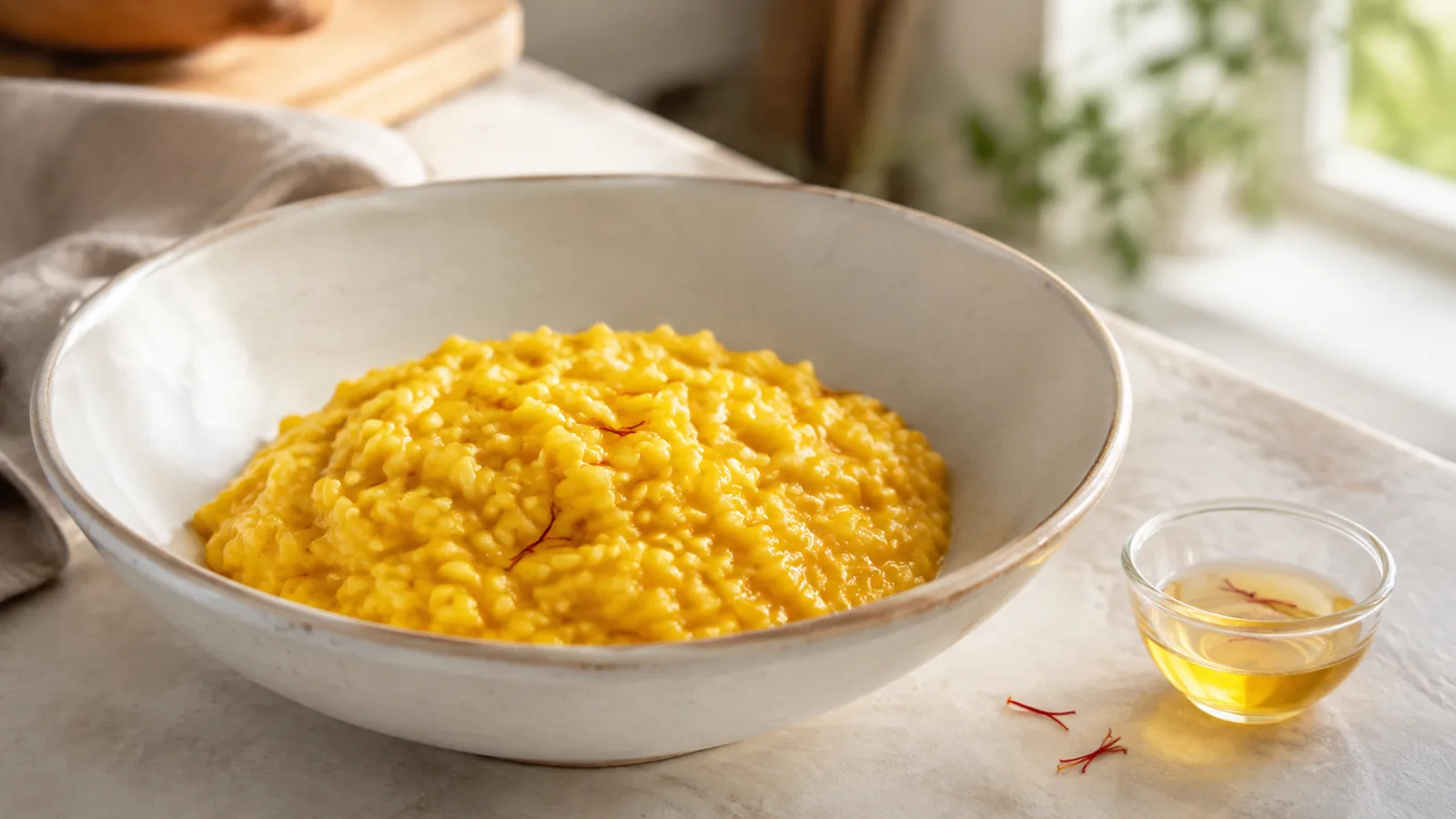
This saffron and rose water cake recipe makes a soft, fragrant cake with a warm golden crumb. Saffron supplies colour and a honeyed, earthy aroma; rose water should sit behind it rather than take over.
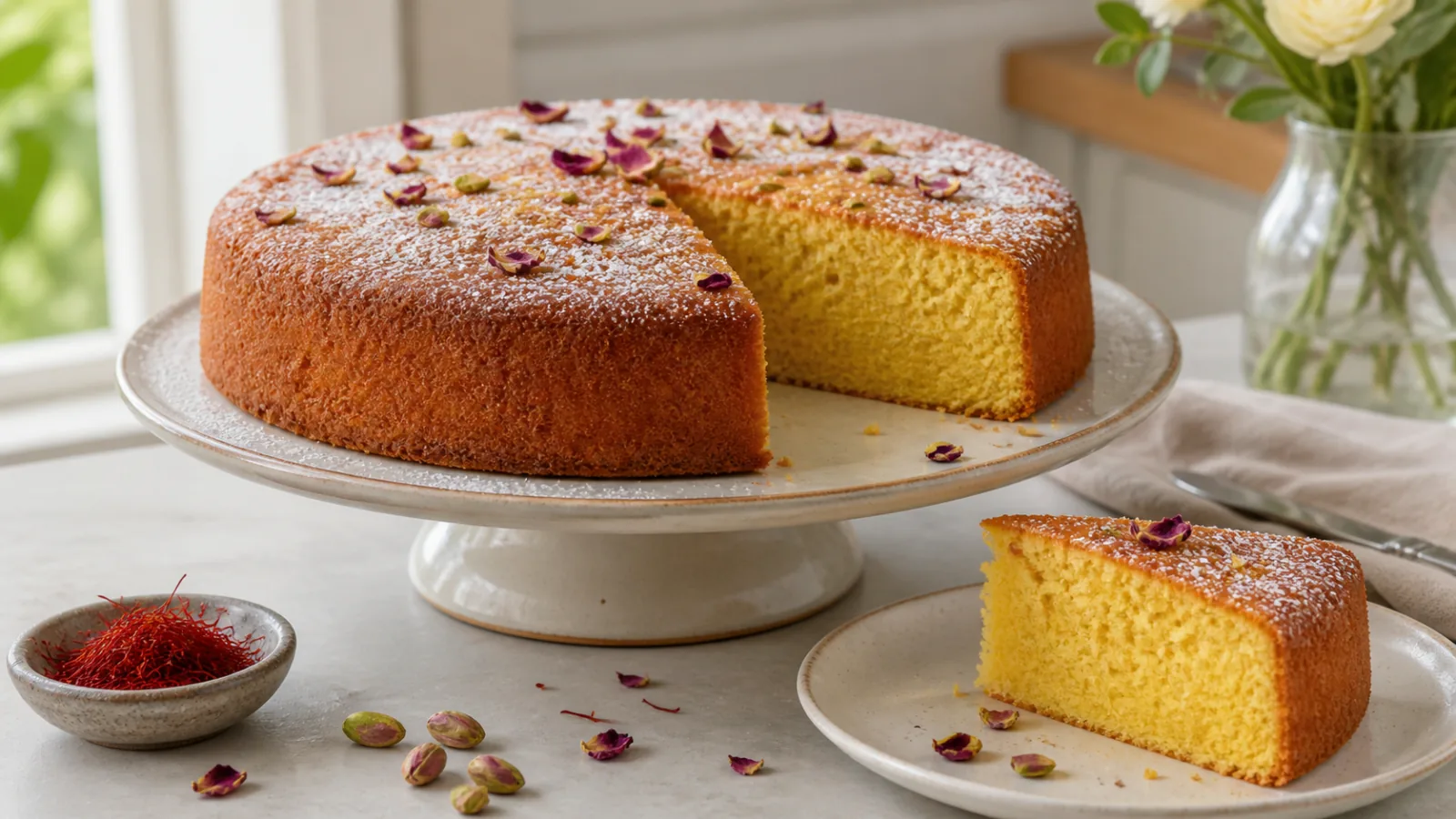
The original recipe had the right flavour structure—three eggs, milk, rose water and brewed saffron—but its method mentioned oil and boiling water without listing either amount. The measured version below repairs those gaps while keeping the 175°C oven and roughly 45-minute bake.
Saffron and Rose Water Cake Recipe
Ingredients
- 240 g all-purpose flour (2 level US cups, spooned rather than packed)
- 3 teaspoons baking powder
- 1/4 teaspoon fine salt
- 3 large eggs, at room temperature
- 200 g granulated sugar (1 cup)
- 1/4 teaspoon vanilla powder or 1 teaspoon vanilla extract
- 1 tablespoon boiling water
- 120 ml neutral vegetable oil (1/2 cup)
- 120 ml milk, at room temperature (1/2 cup)
- 60 ml culinary rose water (1/4 cup)
- 3 tablespoons strongly brewed saffron
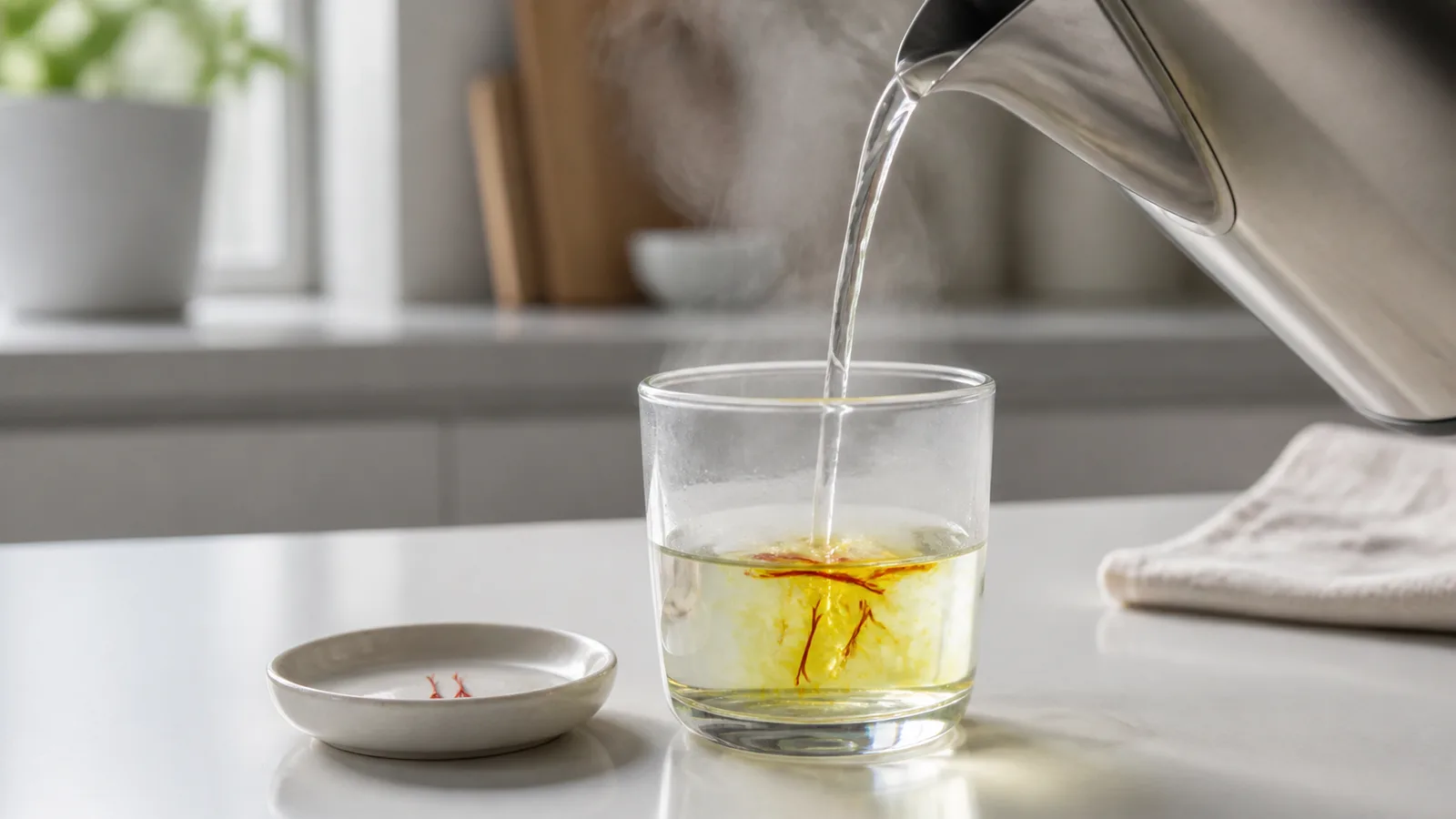
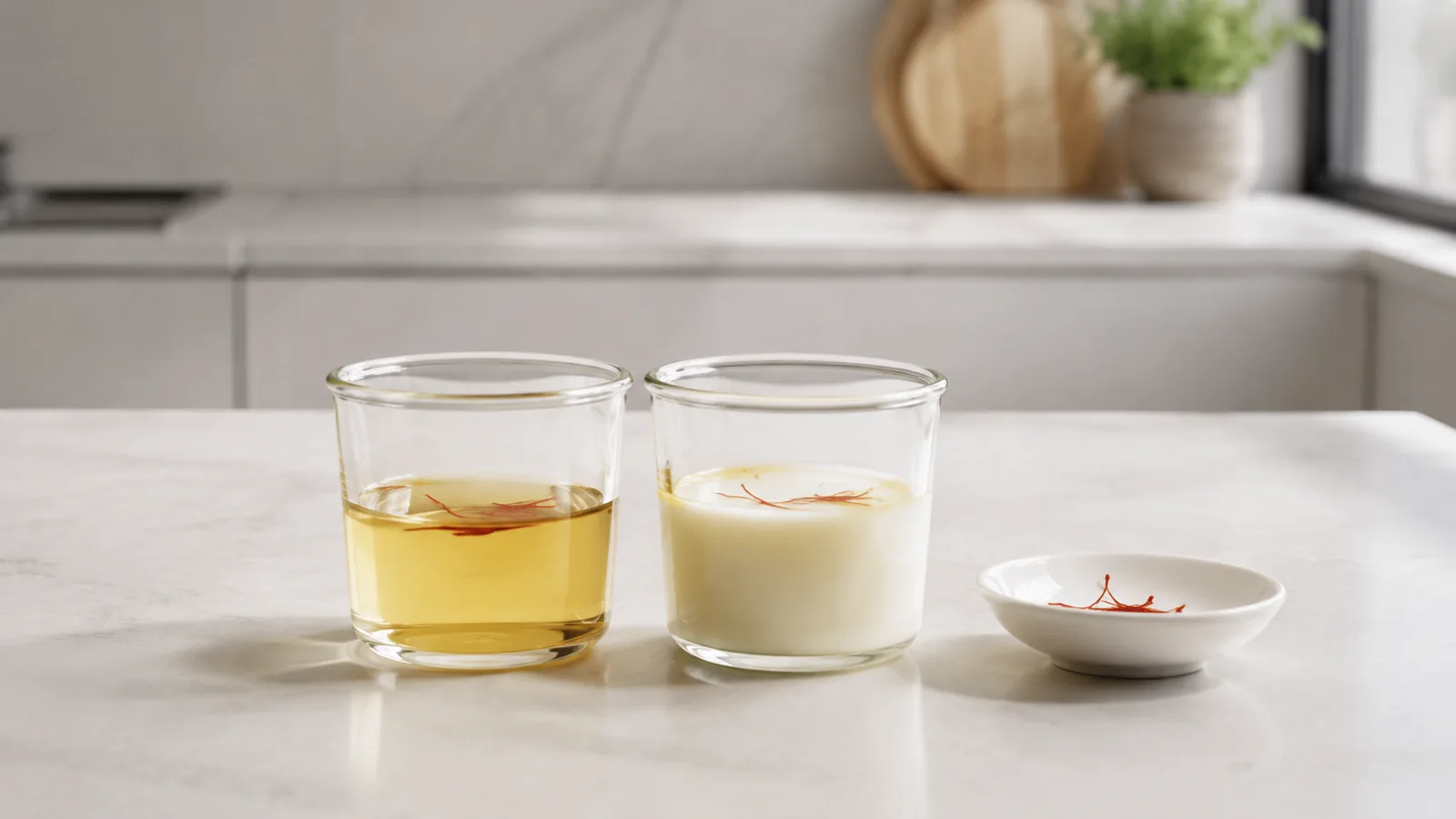
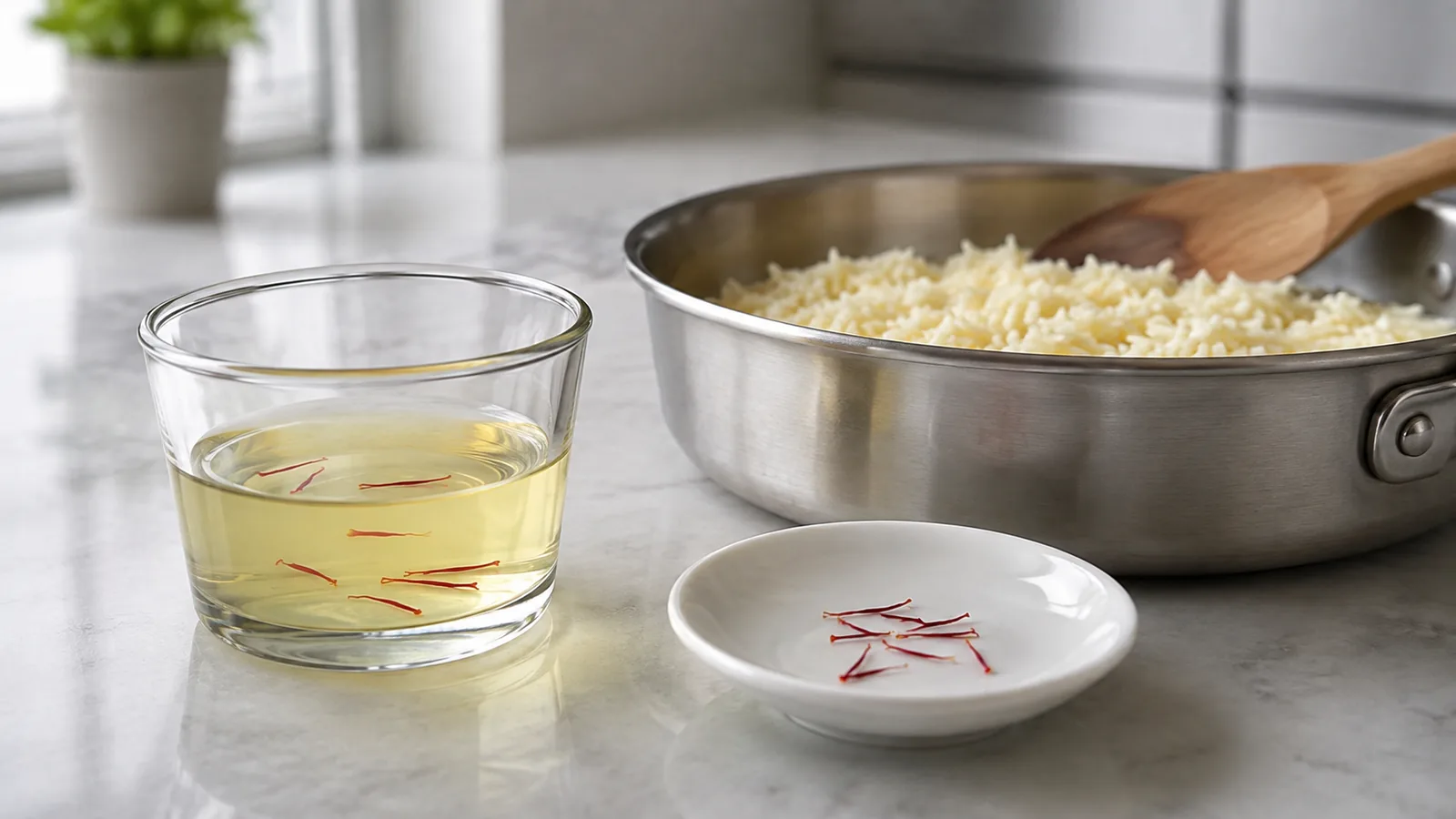
For the saffron infusion, finely grind about 1/2 teaspoon of threads, cover with 3 tablespoons of hot water and leave for 10–15 minutes. Measure the brewed liquid, including the fine saffron particles, into the batter.
Equipment
- 22 cm (9-inch) round cake pan
- Baking paper
- Electric hand mixer or stand mixer
- Fine sieve
- Flexible spatula
Method
- Prepare the oven and pan. Heat the oven to 175°C (350°F). Grease the pan, line the base with baking paper and lightly grease the paper.
- Combine the dry ingredients. Sift the flour, baking powder and salt together. The old recipe called for three siftings; one careful sifting is enough if the mixture is then whisked evenly.
- Build the egg foam. Beat the eggs, sugar and vanilla for 4–5 minutes, until pale, thick and able to leave a ribbon briefly on the surface.
- Add the boiling water. With the mixer running on medium, trickle in 1 tablespoon of boiling water. Beat for another minute. Add it slowly so it warms the foam without cooking a patch of egg.
- Add the oil. Pour in the neutral oil gradually and mix on low only until incorporated, about 30 seconds. Beating for five more minutes at this stage can knock air from the batter.
- Add the aromatics. Stir the milk, rose water and brewed saffron together. Mix them into the egg mixture on low speed just until the colour is even.
- Fold in the flour. Add the dry ingredients in three batches. Use a spatula and fold from the bottom of the bowl until no dry pockets remain. Stop as soon as the batter is uniform.
- Bake. Transfer the batter to the pan and level the top. Bake for 35–45 minutes. Begin checking at 35 minutes; a skewer in the centre should emerge clean or with a few moist crumbs.
- Cool. Leave the cake in the pan for 10 minutes, then turn it onto a rack. Let it cool before slicing so the crumb can set.
How saffron and rose water should balance
Rose water varies in strength. If yours is intensely perfumed, use 45 ml (3 tablespoons) and replace the missing tablespoon with milk. You can add more next time, but a heavily perfumed batter is difficult to correct.
Saffron should be visible in the aroma as well as the colour. Blooming ground threads distributes it more evenly than dropping dry strands into the batter. Avoid relying on a very dark orange colour as a measure of quality; natural saffron cake is usually golden rather than fluorescent.
For more detail on extraction, see the best way to brew saffron.
Why room-temperature ingredients help
Cold milk or oil can tighten the egg foam and make the batter look uneven. Bring the eggs and milk out of the refrigerator about 30 minutes before mixing. They do not need to be warm—only no longer refrigerator-cold.
The egg-and-sugar foam supplies much of the cake’s lift. Once flour is added, gentle folding protects that air and limits gluten development. This is why the mixer is useful early and the spatula is better at the end.
Common cake problems
The centre sank
The oven door may have opened too early, the cake may have been removed before its centre set, or the batter may have been overmixed after adding flour. Check oven temperature with a separate thermometer if this happens repeatedly.
The crumb is dense
Make sure the eggs reached the pale ribbon stage and that the baking powder is active. Packed cups of flour also add more than the recipe needs; weighing 240 g avoids that problem.
The cake is dry
Begin testing at 35 minutes. Dark or thin pans bake faster, and an oven running hot can dry the edges before the centre is ready. Take the cake out when the skewer has a few moist crumbs rather than waiting for the crumb to become completely dry.
The rose flavour tastes soapy
Use less rose water next time and confirm that it is a food product. A light dusting of icing sugar or a spoonful of plain yogurt alongside the slice is better than adding a heavily scented glaze.
Serving and storage
Serve the cake plain, dusted lightly with icing sugar, or with unsweetened yogurt and pistachios. If nuts are used, tell guests because of allergy risk. A thin scatter of edible dried rose petals is optional and should be used only when they are sold for culinary use.
Keep the cooled cake in a covered container at room temperature for up to two days if the room is cool. Refrigerate it in warm conditions or for longer storage, then let a slice return toward room temperature before serving. The unfrosted cake can also be wrapped well and frozen.
The finished cake should spring back lightly at the centre, cut without crumbling and smell of saffron before the rose becomes obvious. That restraint is what turns two powerful aromas into one coherent cake.