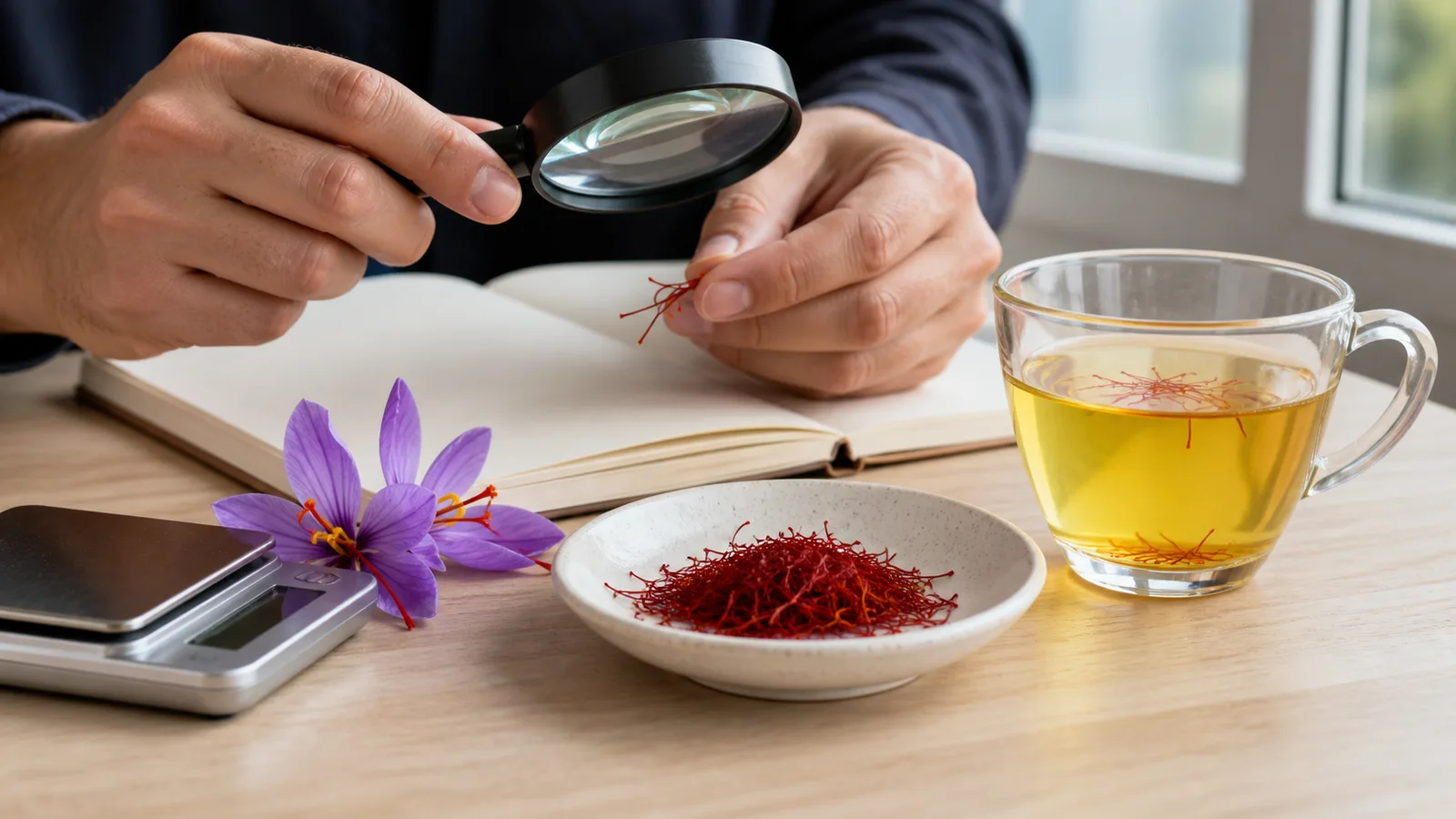
To grind saffron for maximum flavor, work with completely dry threads, crush only the amount you need and bloom the powder soon afterward. A small mortar and pestle gives the most control, but folded paper and the back of a spoon work well when you do not own one.
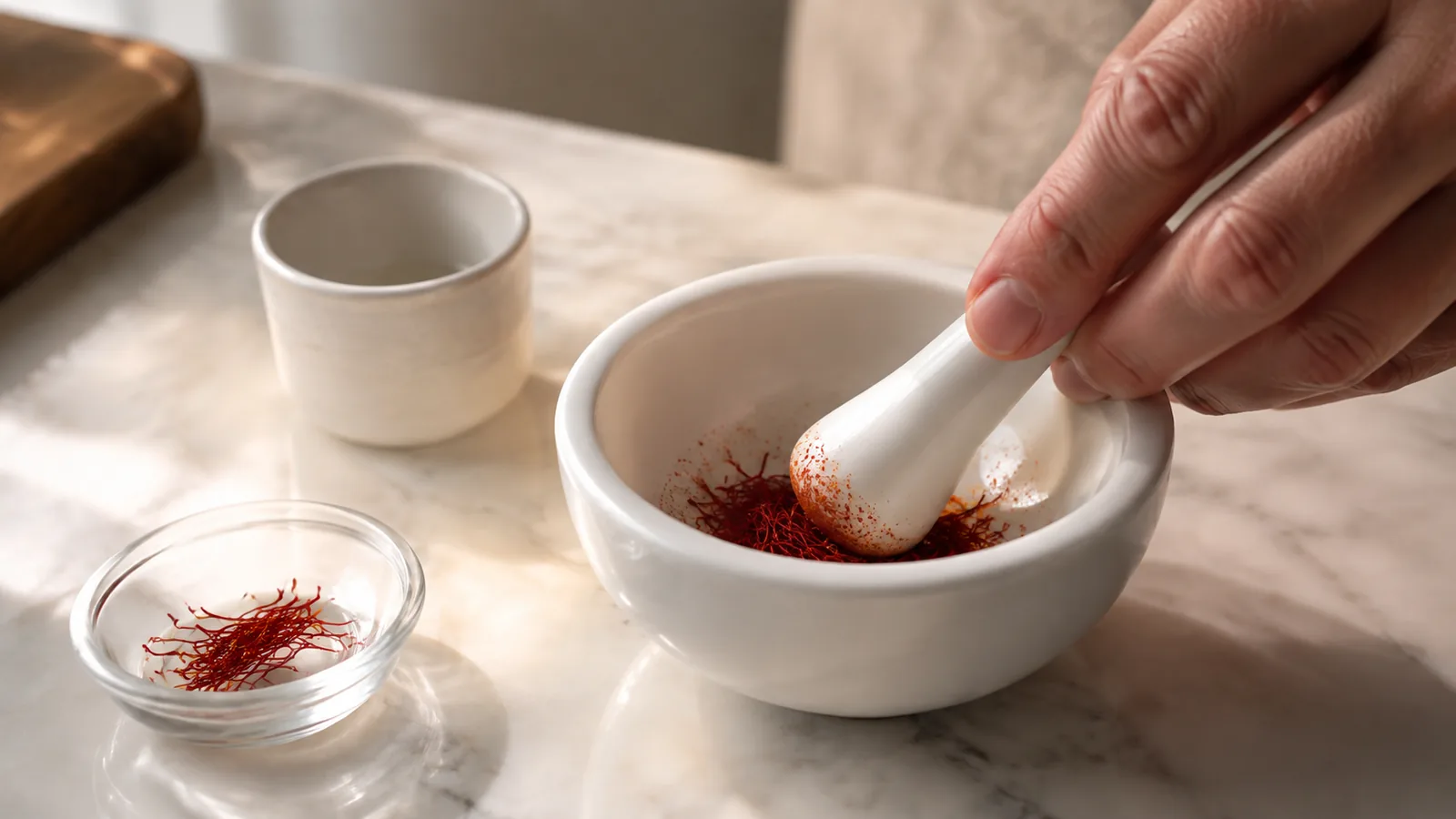
Why and how to grind saffron threads
Grinding saffron increases the surface area that touches water, milk or another recipe liquid. That helps its colour and aroma disperse evenly instead of leaving a few strong threads in an otherwise pale dish. The goal is a coarse, even powder—not heat, prolonged friction or a cloud of dust.
Whole threads are useful for appearance, but they release slowly. For most rice dishes, drinks, sauces and desserts, crushed saffron gives more consistent results from the same measured quantity.
How to grind saffron with a mortar and pestle
- Make sure the mortar, pestle and saffron threads are completely dry.
- Measure the amount required by the recipe. Avoid grinding the whole packet for convenience.
- Place the threads in a small ceramic or stone mortar.
- Press and rotate gently with the pestle. Begin by crushing the threads, then use short circular movements.
- Stop when the saffron resembles an even coarse powder. Tiny visible fragments are fine.
- Add the recipe liquid to the mortar so it collects the powder left on the sides.
A small mortar is easier than a large one because the threads stay beneath the pestle. Ceramic, smooth stone and glass all work. Metal does not automatically ruin saffron’s colour, as the older article claimed, but a tiny smooth mortar is more practical than a broad metal bowl. Wood can retain aroma and moisture, so reserve it for dry spices if that is what you use.
Should you add sugar or salt while grinding saffron?
A small pinch of sugar can provide friction when the saffron is going into a sweet dish. A pinch of salt can do the same for a savoury recipe. Neither is essential, and both become part of the food, so do not add them if they interfere with the recipe or a diner’s dietary needs.
Plain threads also grind well in a suitably small mortar. Do not add water before crushing; damp saffron sticks to the tool instead of breaking into an even powder.
How to grind saffron without a mortar and pestle
Use folded baking paper and a spoon
Place the dry threads between two layers of baking paper. Fold the edges so no powder can escape, then press and rub firmly with the back of a spoon. Open the paper carefully and tip the crushed saffron directly into a cup for blooming.
This is safer than pressing on a sealed retail packet. A packet may split, its printing may rub onto the work surface, and its corners trap powder. Use clean food-safe paper instead.
Use a small bowl and spoon
Put the threads in the smallest smooth bowl you have. Press them against the side with the back of a teaspoon, gathering them back into the centre as you work. This method takes longer, but it is effective for one or two pinches.
Use your fingertips for a rustic crush
For a broth or rice pot where a fine powder is unnecessary, rub very dry threads between clean fingertips over a small bowl. This produces crushed saffron rather than a fine grind. It is less even, so give the fragments a little longer to steep.
Do you need a saffron grinder?
A dedicated saffron grinder or saffron crusher can be convenient if its chamber is small, dry and easy to empty. It is not automatically the best method. Some devices hold powder in their teeth and make it difficult to see how fine the saffron has become.
A coffee or spice grinder is usually too large for a recipe-sized amount. Its motor also introduces heat, and old coffee or spice residue can overwhelm saffron’s aroma. If you use an electric grinder for a larger batch, keep the pulses brief and dedicate the clean chamber to mild spices.
How fine should ground saffron be?
A coarse powder is ideal for most cooking. It should have no long intact threads, yet it need not resemble flour. Extremely fine powder clings to tools and is easy to spill. A few small red fragments in the infusion are normal.
People sometimes search for “how to ground saffron,” but the verb is grind: saffron is ground after you grind it. If you need to know how to crush saffron threads, use the same technique and stop at larger fragments; only the final fineness changes.
How much is a pinch of saffron?
A pinch of saffron is not a precise unit because thread length and finger size vary. When consistency matters, weigh the threads or use the same small measuring spoon each time. Record the amount that works with your saffron and recipe rather than assuming every pinch is equal.
Measure before grinding. Powder packs more densely than loose threads, so a spoonful of ground saffron contains much more spice than the same spoon filled with intact threads.
How to steep saffron threads after grinding
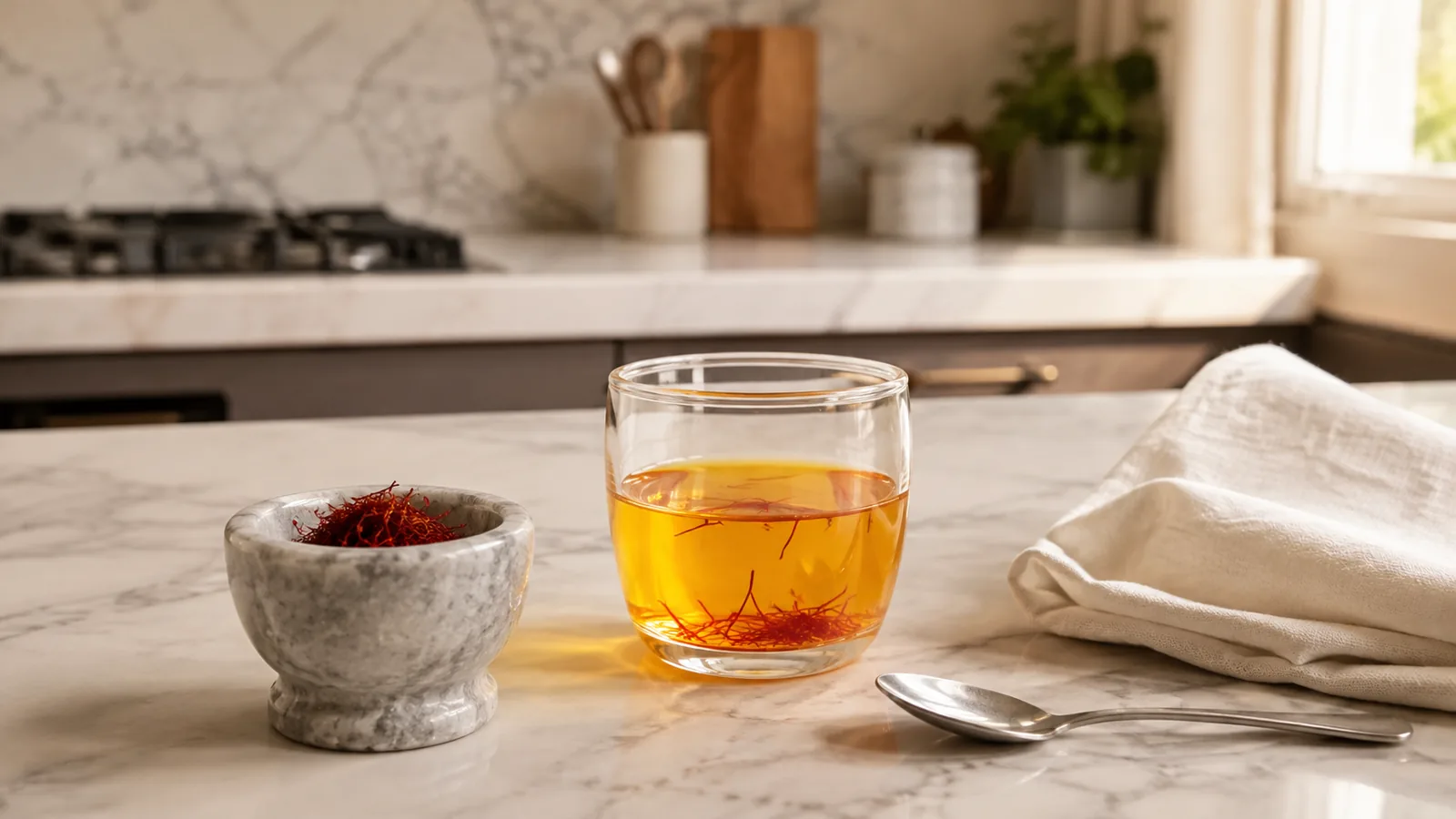
Transfer the ground saffron to a small cup and add a modest amount of hot, not furiously boiling, water. Cover and steep saffron for 10 to 15 minutes. Warm milk or stock can be used when it belongs in the recipe.
The particles do not literally dissolve like salt or sugar. If you are asking how to dissolve saffron threads or how to extract saffron, what you actually need is this blooming step: the liquid draws colour, aroma and flavour from the crushed plant material. Fine red sediment may remain and can normally go into the dish.
For hot-water, ice and recipe-specific methods, see our complete guide to brewing saffron.
When should you add the saffron infusion?
- Steamed rice: fold it into a portion of cooked rice or drizzle it before the final steam.
- Marinades: cool the infusion before combining it with meat, yogurt or oil.
- Soups and sauces: add it late enough to avoid a long hard boil.
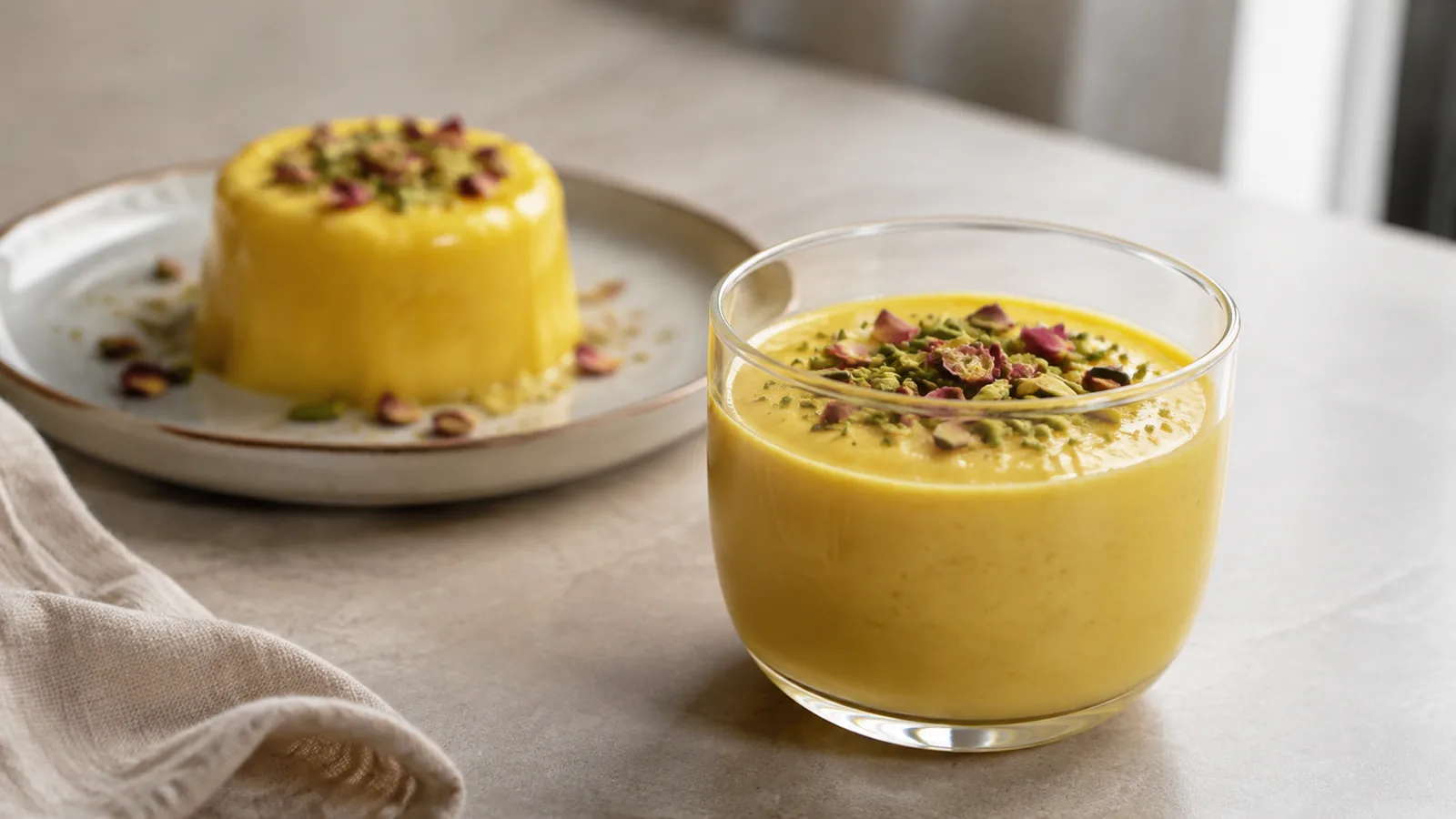
- Desserts: mix it into the recipe’s milk, water or syrup for even colour.
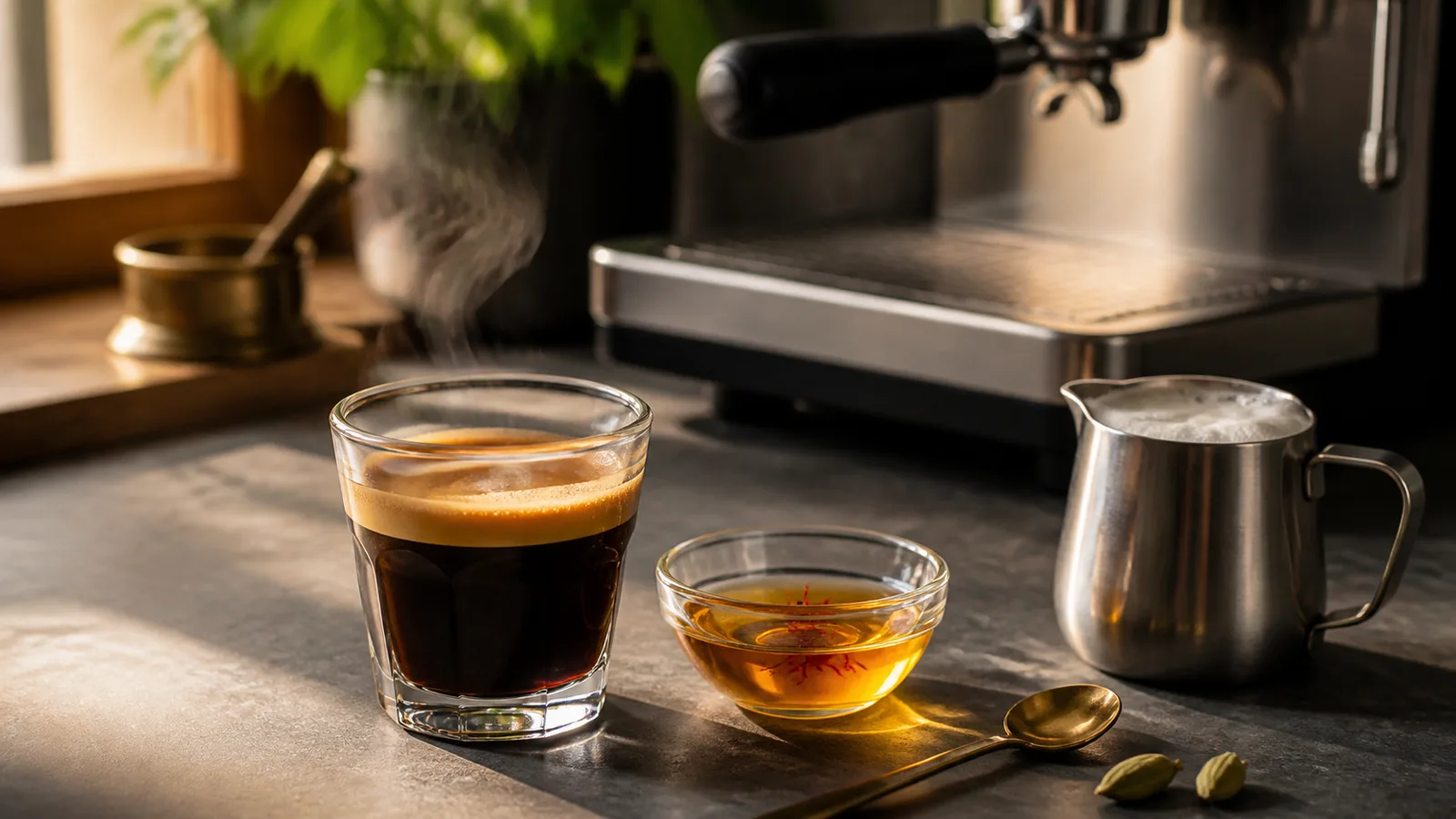
- Cold drinks: prepare and cool the infusion before adding ice.
How to store saffron before and after grinding
Whole threads hold their character better than pre-ground saffron because less surface is exposed to air and light. Keep them in a clean, airtight container in a cool, dark and dry cupboard. Open the container briefly and use a dry spoon.
If you have already ground more than you need, return it to a small airtight glass container and use it soon. Avoid routine refrigerator storage: taking a cold jar into a humid kitchen can create condensation. Refrigeration only helps when the container remains truly airtight and is allowed to reach room temperature before opening.
Do not store a water infusion as though it were dry spice. Refrigerate it promptly in a clean covered container and use it within a short period appropriate to the other ingredients.
Common saffron grinding mistakes
- Grinding damp threads, which smear and stick to the tool.
- Using a large appliance for a tiny amount and losing powder in the chamber.
- Grinding weeks of saffron in advance and exposing it to extra air and light.
- Adding an unmeasured spoonful of powder when the recipe means diluted saffron water.
- Scorching the threads to make them brittle, which damages the aroma.
- Leaving valuable powder on the mortar instead of rinsing it into the infusion.
The best method for most kitchens
For most cooks, a small ceramic or stone mortar and pestle remains the simplest tool. Folded baking paper and a spoon are an effective alternative when you need to know how to crush saffron without a mortar and pestle. Whichever method you choose, work dry, measure first, grind only what you need and bloom the crushed threads before they go into the food.