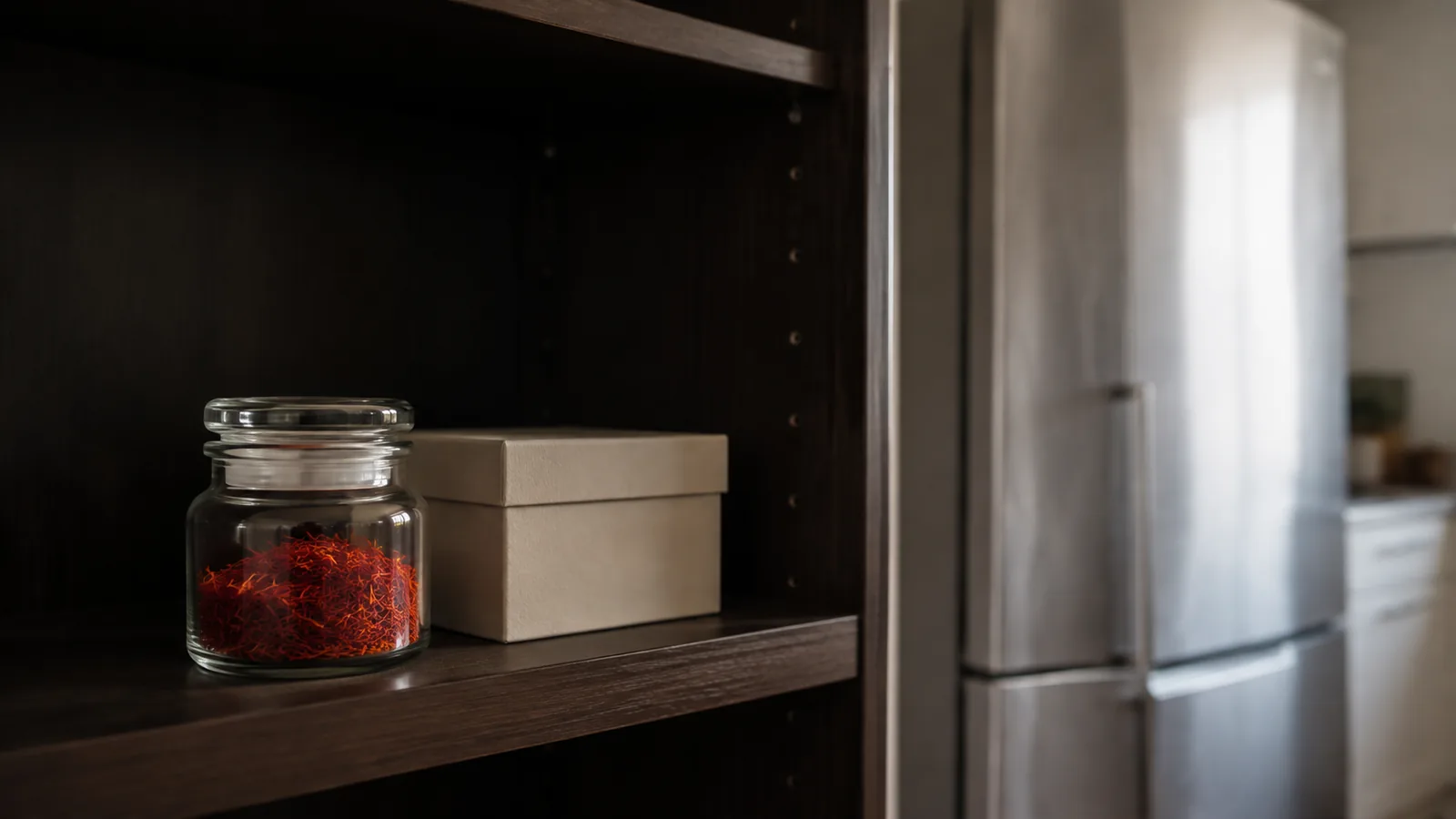
Should I store saffron in the fridge? Usually, no. If you are deciding whether to keep saffron in the fridge, a small airtight container in a cool, dark, dry cupboard is simpler for an everyday supply and avoids condensation. Refrigerating saffron can work in a persistently hot or humid home, but only when it is sealed against moisture and odours and allowed to warm up before the container is opened.
Storing saffron: what you are protecting
This delicate spice gets its colour, aroma and flavour from a complex mixture of compounds. Storage cannot improve a poor batch, but it can slow the changes that happen after drying and help retain culinary potency. The main practical enemies are moisture, light, heat, oxygen, strong surrounding smells and repeated temperature changes.
Storage research confirms that time changes saffron’s chemical profile. In one study comparing freshly dried and two-year stored saffron, samples had been kept at 4°C in darkness. The researchers found lower colour intensity with storage and changes in aroma-related compounds. That study shows that cool, dark conditions do not stop ageing; it does not establish that every household should use a refrigerator.
Current standards also treat storage as part of quality handling. ISO 21983:2019, reconfirmed in 2025, covers saffron harvesting, transport, stigma separation, drying and storage before packing. The current ISO 3632-1:2025 saffron specification includes recommendations for storage and transport. Neither standard turns a fridge into a substitute for sound packaging.
Should saffron be refrigerated?
Dry saffron does not normally need refrigeration. A stable pantry or cupboard away from the cooker, dishwasher, sink and sunny window is suitable for most homes. Keeping the container closed and dry matters more than chasing the lowest possible temperature.
The fridge is not inherently harmful to saffron. Laboratory samples are sometimes refrigerated under controlled, dry, dark conditions. A domestic refrigerator creates a different problem: the container moves between cold storage and warm room air, and water can condense on a cold jar or inside poorly sealed packaging. Saffron can also pick up food odours if its barrier is weak.
That is why the blanket answers “always refrigerate” and “never refrigerate” are both too simple. Refrigeration is an option for well-packed saffron in a difficult climate, not the default method for a jar you open every few days.
The best way to store saffron in a cupboard
- Use a clean, dry, airtight container. A small glass jar with a reliable seal works well. The container should have no lingering spice, coffee, soap or food smell.
- Limit empty air and repeated opening. Choose a jar close to the amount of saffron you own. For a large supply, divide it into a working jar and a reserve jar.
- Block light. Keep a clear jar inside a closed cupboard or opaque outer box. A study of saffron packaging found that lower light transmission helped protect crocin, the pigment family responsible for much of saffron’s colour.
- Keep the location dry and temperature-stable. Avoid cupboards over the hob, beside an oven, against a hot appliance or near steam.
- Use a dry utensil. Do not pinch threads with wet fingers or return damp saffron to the container.
- Label the jar. Record the purchase or opening date and retain the lot and best-before information from the original pack.
The research on light-protective packaging is discussed in this peer-reviewed saffron preservation study. It supports controlling light exposure, but its experimental packaging should not be read as proof that one retail container guarantees a particular shelf life.
When fridge storage may make sense
If every cupboard in your home stays very warm or the indoor climate is persistently humid, the fridge may offer a more stable environment. Use it carefully:
- put completely dry saffron in a small airtight jar;
- place that jar inside a second moisture-resistant bag or container;
- keep it away from strong-smelling foods and the wettest parts of the fridge;
- remove only the portion you need, rather than repeatedly cooling and warming the whole supply; and
- let the sealed container reach room temperature before opening it.
Warming the jar while it remains sealed keeps humid room air away from the cold saffron. Opening it immediately can allow condensation to form. If you use saffron often, a small cupboard jar plus a separately sealed reserve is usually more practical than refrigerating one frequently opened container.
Freezing saffron: is it necessary?
Freezing dry saffron is usually unnecessary for normal household quantities. The same moisture and temperature-cycling risks apply more strongly, and a small jar is normally used long before freezing offers a practical advantage.
For an unusually large supply intended for extended storage, portion the threads before freezing. Use truly moisture-proof, airtight packaging, protect it from light and remove one small portion at a time. Let that portion reach room temperature while still sealed. Do not repeatedly thaw and refreeze the main package.
Freezing does not restore lost aroma, prove purity or make storage indefinite. If the package already contains moisture, sealing and freezing it preserves the underlying problem rather than fixing it.
Threads and powder need slightly different care
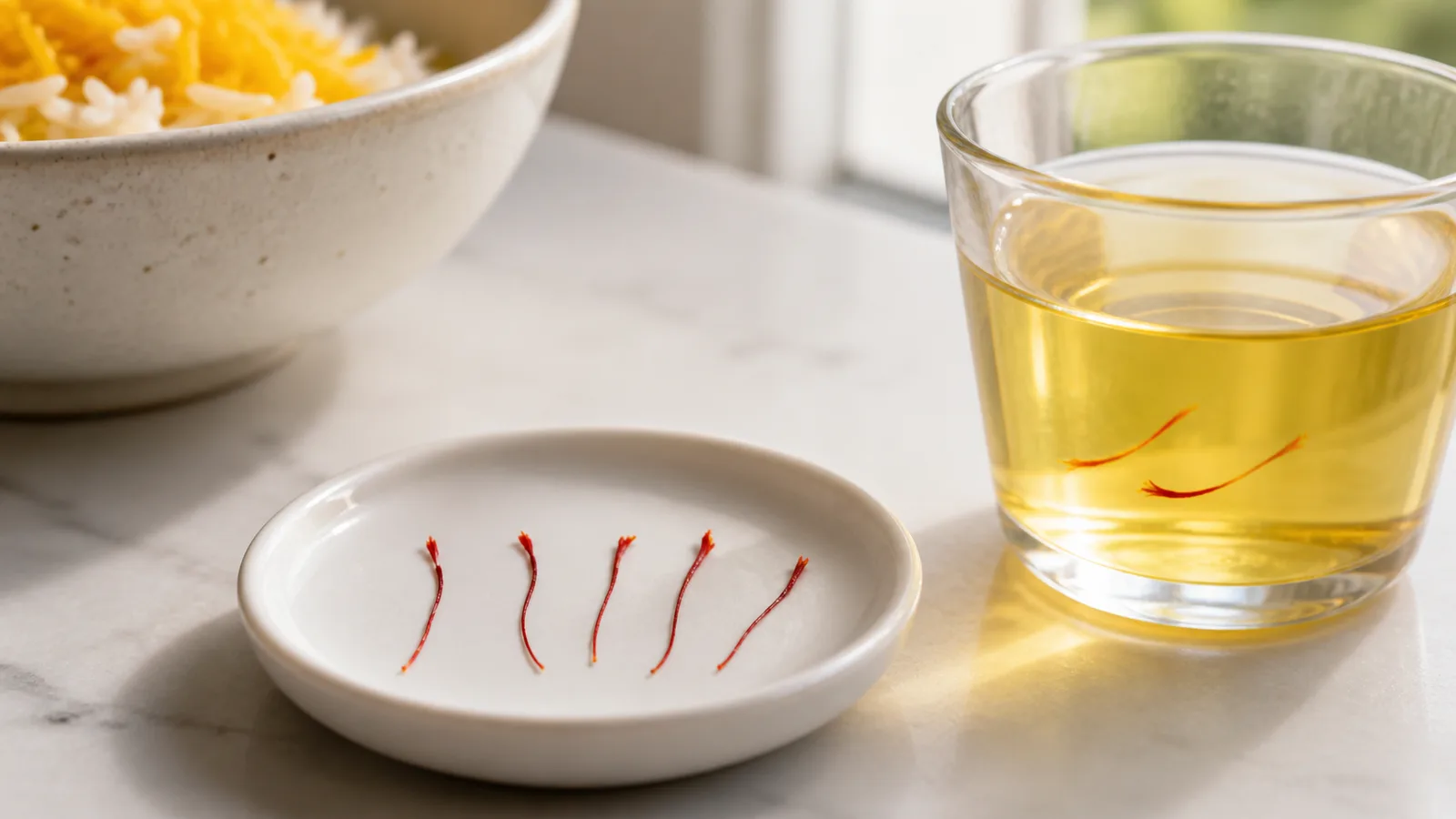
Whole saffron threads expose less surface area and are easier to inspect for foreign matter. Store them intact and grind only what you need. Powder exposes more material to air and makes visual checking difficult, so use a smaller container and minimise opening time.
Do not add rice, sugar or another household ingredient to the jar as a makeshift drying agent. It can introduce odour, dust, moisture or confusion about purity. Properly dried saffron and a sound container are the safer combination.
How to tell whether storage has failed
Stored saffron naturally changes with time, and weaker colour or aroma does not by itself prove that it is unsafe. Check the whole situation. Discard the spice if you see mould, damp clumps, insects, obvious foreign matter or a strong abnormal odour. Do not try to dry and reuse saffron that became wet in storage.
A best-before date is mainly a quality guide, but packaging condition and handling still matter. Our article Does pure saffron expire? explains the difference between gradual sensory decline and clear signs that a product should not be used.
Dry saffron and brewed saffron are not stored the same way
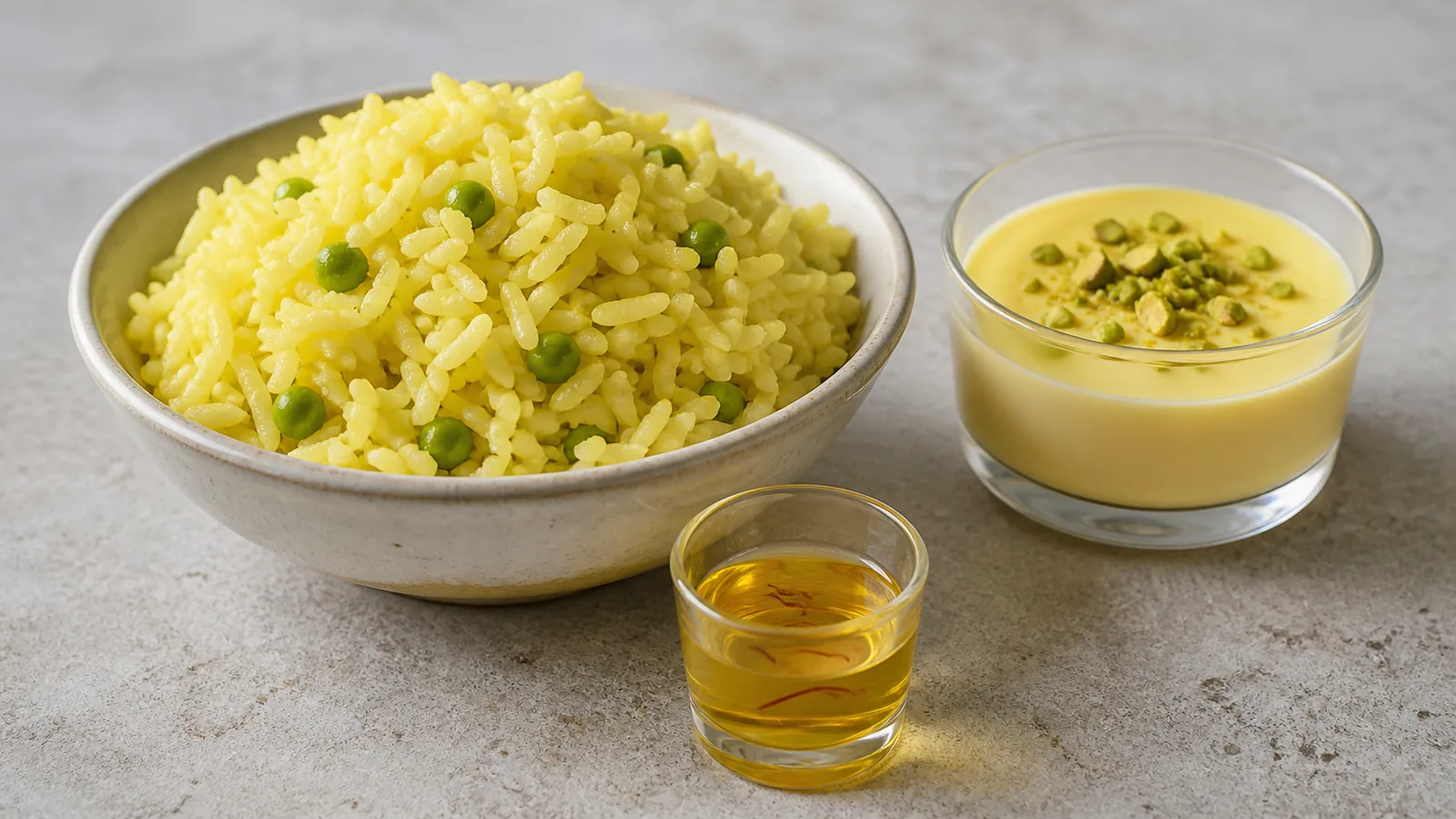
This guidance is for dry threads or powder. Once saffron is brewed into water, milk, stock or another food, the finished preparation has the storage needs of that liquid or dish. Do not leave a perishable saffron mixture at room temperature simply because the dry spice was shelf-stable.
For preparation technique, see the best way to brew saffron. The fuller long-term saffron storage guide covers dry and prepared forms separately.
A simple storage decision
Keep a normal household supply of authentic saffron in a tightly sealed container, inside a cool and dark cupboard. If heat or humidity makes that location unsuitable, divide the saffron, double-seal the reserve and refrigerate it without opening the jar while cold. Freezing is rarely necessary. Whichever location you choose, dry handling and a stable environment do the real work of preserving flavour, fragrance, colour and sensory strength.
If the original package has unclear storage instructions or appears damaged, use the Rowhani contact page with the product and lot details rather than guessing.