Does saffron expire? Pure dried saffron usually loses colour, flavour and aromatic complexity gradually rather than becoming unusable on one exact day. A well-packed jar can remain useful for two to three years, sometimes longer, but the date on the package, the way it was stored and any sign of moisture or contamination matter more than age alone.
Does pure saffron expire?
Pure saffron, like most spices, does not have an indefinite shelf life. Over time, saffron can lose its potency, flavour and aroma. It does not normally spoil as quickly as a fresh or moist food, but “dry” is not the same as indestructible. Light, heat, air and humidity change the compounds responsible for its culinary quality.
There are therefore two different questions behind “Does saffron expire?” The first is whether it still gives a satisfying colour, aroma and taste. The second is whether the contents are wholesome. Faded but clean, dry saffron may simply be weak. Threads exposed to moisture, mould, pests, foreign odours or an unsafe container should be discarded.
Purity does not stop ageing. Even genuine Crocus sativus stigmas change in storage, while adulterated material can be poor from the day it is packed. Check authenticity, storage condition and age separately.
What does the expiry date on saffron mean?
Read the wording beside the printed date. A “best before” or “best if used by” date generally concerns expected quality. A “use by” date is a safety instruction and should be followed. Local labelling rules differ, so the producer’s wording and storage directions take priority over a generic number found online.
An expiration date without an explanation can be ambiguous, which is why the words beside it matter. When the package is unclear, ask the producer rather than assuming that every printed date has the same legal or practical meaning.
The European Food Safety Authority’s explanation of best-before and use-by dates makes that distinction clear: best before concerns quality, while use by concerns safety. A saffron validity period on a commercial pack may also reflect the packaging, testing and market rules chosen for that specific lot.
Keep the original package or record the lot, packed date and best-before date when moving threads into another jar. Without that information, “I bought it last year” may be the only history left, even if the saffron was already old when purchased.
How long does pure saffron last?
For a household jar that was properly dried and remains airtight, cool, dark and dry, two to three years is a practical quality window. Whole threads often hold their character better than pre-ground saffron because grinding exposes more surface area to air and light.
That practical saffron shelf life begins with the condition of the spice when it is packed. It cannot recover time already spent in light, heat or a poorly sealed container before purchase.
Published literature does not support one universal cut-off. A review of saffron compounds and commercial quality notes that merchants commonly consider three to four years under suitable dark, room-temperature storage, while other cited work found useful sensory characteristics across roughly one to four years. That range describes quality under controlled conditions, not a guarantee for every opened jar.
How long saffron lasts in a jar depends on what happens each time it is opened. A large container used beside a steaming cooker faces more humid air than a small jar opened briefly in a dry cupboard. A clear jar left on a sunny shelf ages differently from an opaque or sheltered jar stored away from heat.
Kesar, zafran and saffron are names used for the same spice in different languages and markets; changing the name does not change its shelf life. The relevant details remain the product, package, date and storage history.
Why colour, aroma and taste change with time
Saffron’s colouring strength comes largely from crocins, bitterness from picrocrocin and much of its characteristic aroma from volatile compounds including safranal. Storage does not affect all three in the same way or at the same speed.
A peer-reviewed study of saffron stored over time found a clear change in its chemical profile. Colour-related crocins declined, while some aroma compounds changed or increased during part of the ageing process. This is why “the smell is weaker” is useful but not a complete scientific definition of expired saffron.
Drying method, original grade and storage conditions also influence the starting point. Two jars bought on the same date may perform differently if one was newly packed, well dried and protected from light while the other had already spent months in poor conditions.
How to know if saffron is expired or simply weaker
Can saffron go bad? Yes, especially when moisture or contamination reaches it. Does saffron go off like fresh milk on a predictable day? Usually not. Begin with the label and storage history, then inspect the threads in good light. Separate normal quality loss from reasons to throw the product away.
Signs of declining culinary quality
- the dry threads look noticeably faded compared with a known fresh sample;
- the jar has little characteristic aroma after it is opened;
- a measured pinch produces much less golden colour or flavour than it once did;
- ground saffron smells flat or carries the odour of nearby spices;
- you need much more than the familiar amount to obtain the same culinary result.
These cues suggest lost potency, not necessarily danger. Brittleness alone is not proof that saffron has gone bad; properly dried threads are naturally delicate.
Reasons to discard the saffron
- visible mould, dampness or unexplained sticky clumps;
- insects, webbing, grit or other foreign matter;
- a musty, rancid, chemical or contaminated odour;
- water damage, a broken seal or an unknown storage history;
- a product recall or a use-by instruction that has passed.
The FDA’s saffron examination method treats mouldy, insect-damaged and otherwise unfit material as defects requiring examination. A home user does not need laboratory magnification to decide that visibly mouldy or contaminated spice is not worth the risk.
Can expired saffron be used?
If “expired” means that a best-before date has passed, the jar has remained properly sealed and dry, and there are no spoilage or contamination signs, the main problem may be reduced quality. Test a small measured amount in cooking water. If its aroma, golden colour and flavour are still acceptable, it may still serve a culinary purpose.
If the package says use by, follow that instruction. Do not use a suspicious batch because saffron is expensive or because only part of it looks affected. Mould and moisture are not corrected by picking out a few threads, heating the rest or mixing it with a fresh jar.
Is expired saffron harmful? Age alone does not create a single predictable “side effect of expired saffron.” The risk depends on contamination, moisture, adulteration, packaging and handling. If someone becomes unwell after consuming a product, stop using it, retain the package and seek appropriate medical or food-safety advice.
Do not use expired saffron on the face as a way to avoid wasting it. A food that is too uncertain to eat does not become suitable for skin, and homemade cosmetic use introduces a different exposure that the food label did not assess.
How to store saffron so it stays fresh
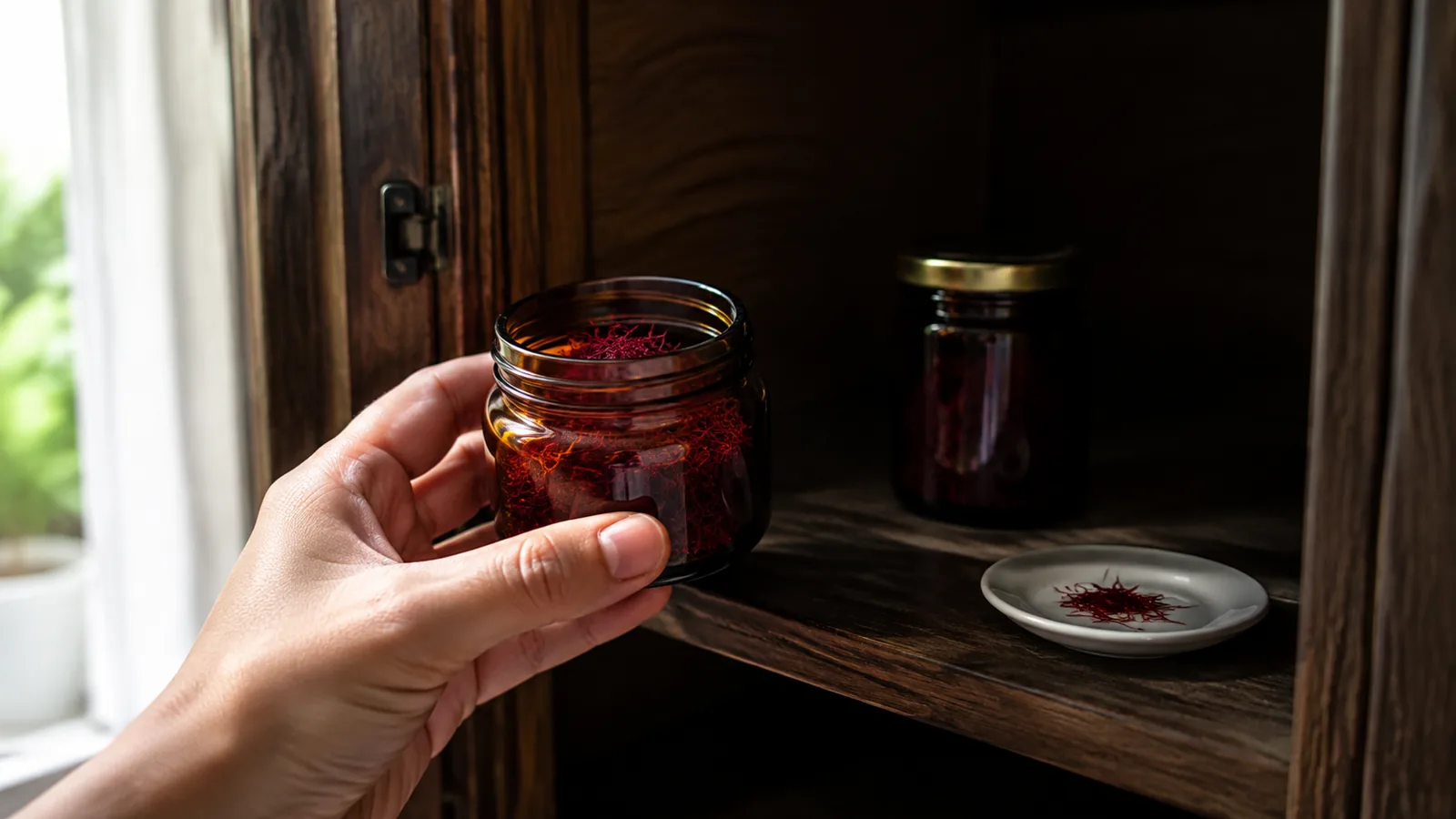
Store whole threads in a clean, food-safe, airtight container. Choose the smallest practical jar so there is less air inside, and close it promptly after use. Keep it in a dark cupboard away from a cooker, oven, window, dishwasher, kettle and other sources of heat, light or steam.
The Royal Horticultural Society’s harvesting and drying guidance likewise recommends an airtight container away from light once saffron is fully dry. Our detailed guide to the best methods for storing saffron covers containers, bulk portions and common household conditions.
Use a clean, dry spoon or tweezers. Do not reach into the jar with wet fingers, and never hold it over a steaming pan. Keep saffron away from strongly scented spices, cleaning products and fragranced materials because the package and threads can pick up unwanted odours.
Leave the main supply as whole threads and grind only the portion needed. For a larger purchase, divide it among several small airtight containers so the reserve stays closed while one working jar is in use.
Does saffron need to be refrigerated?
Refrigeration is not normally necessary for dry saffron. A stable, cool, dark cupboard is simpler and avoids condensation caused by repeatedly moving a cold jar into warm, humid air. The refrigerator also contains food odours that poorly sealed saffron can absorb.
If a producer specifically instructs cold storage, follow the pack directions. Keep the container completely sealed and allow it to reach room temperature before opening so moisture is less likely to condense on the cold threads. Do not move an open jar back and forth without a reason.
This advice applies to dry threads. Prepared saffron water is a moist food and does not share a two-to-three-year shelf life. Make only the amount needed, refrigerate it promptly in a clean covered container and follow the food-safety requirements of the recipe in which it will be used.
How to check whether old saffron still has culinary value
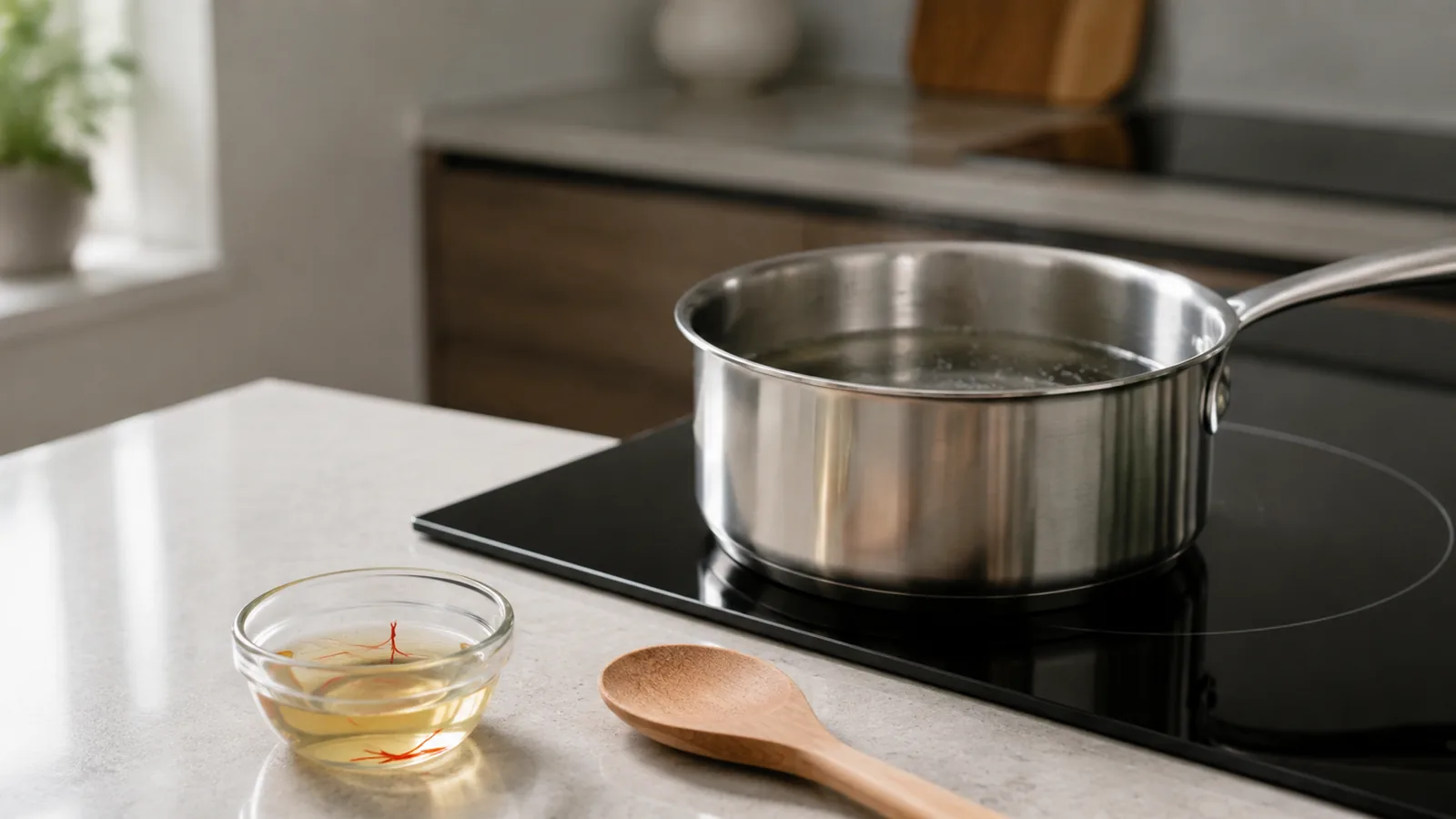
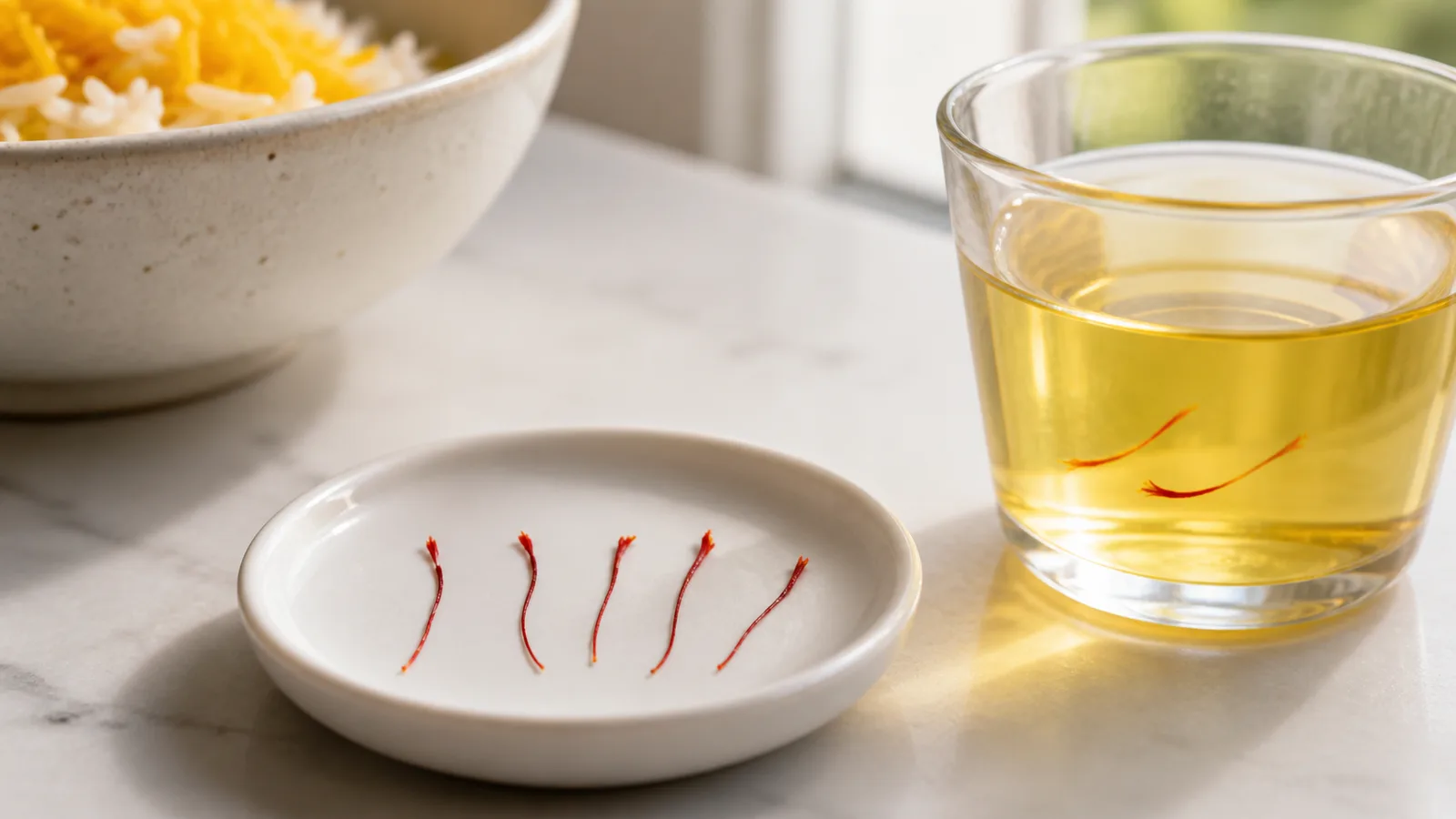
Use a repeatable kitchen check rather than judging only the dry colour. Take the same small measured amount you would normally use and infuse it in the same volume and temperature of water. Compare the aroma, golden colour and taste with your own earlier experience or a known fresh lot.
A weak result means the jar has lost potency; it does not identify the cause or prove fraud. Grinding the entire old batch to force a stronger release will accelerate exposure for whatever remains. Test one portion, then decide whether the result is worth using.
Our article on the best way to brew saffron explains a consistent infusion method. For the related question of years rather than date labels, see how many years saffron lasts.
The safest answer combines the date, storage and condition
Pure saffron can remain useful for years, but the best answer is not “it never expires.” Aim to enjoy well-stored threads within two to three years, follow the producer’s date and instructions, and expect gradual changes in colour, flavour and aroma. Discard any batch with moisture, mould, pests, contamination or a failed seal.
For a new, traceable supply rather than an uncertain old jar, the original all-red saffron selection remains available. Store it airtight, dark and dry from the beginning; good storage protects more value than trying to rescue the threads after damage has occurred.