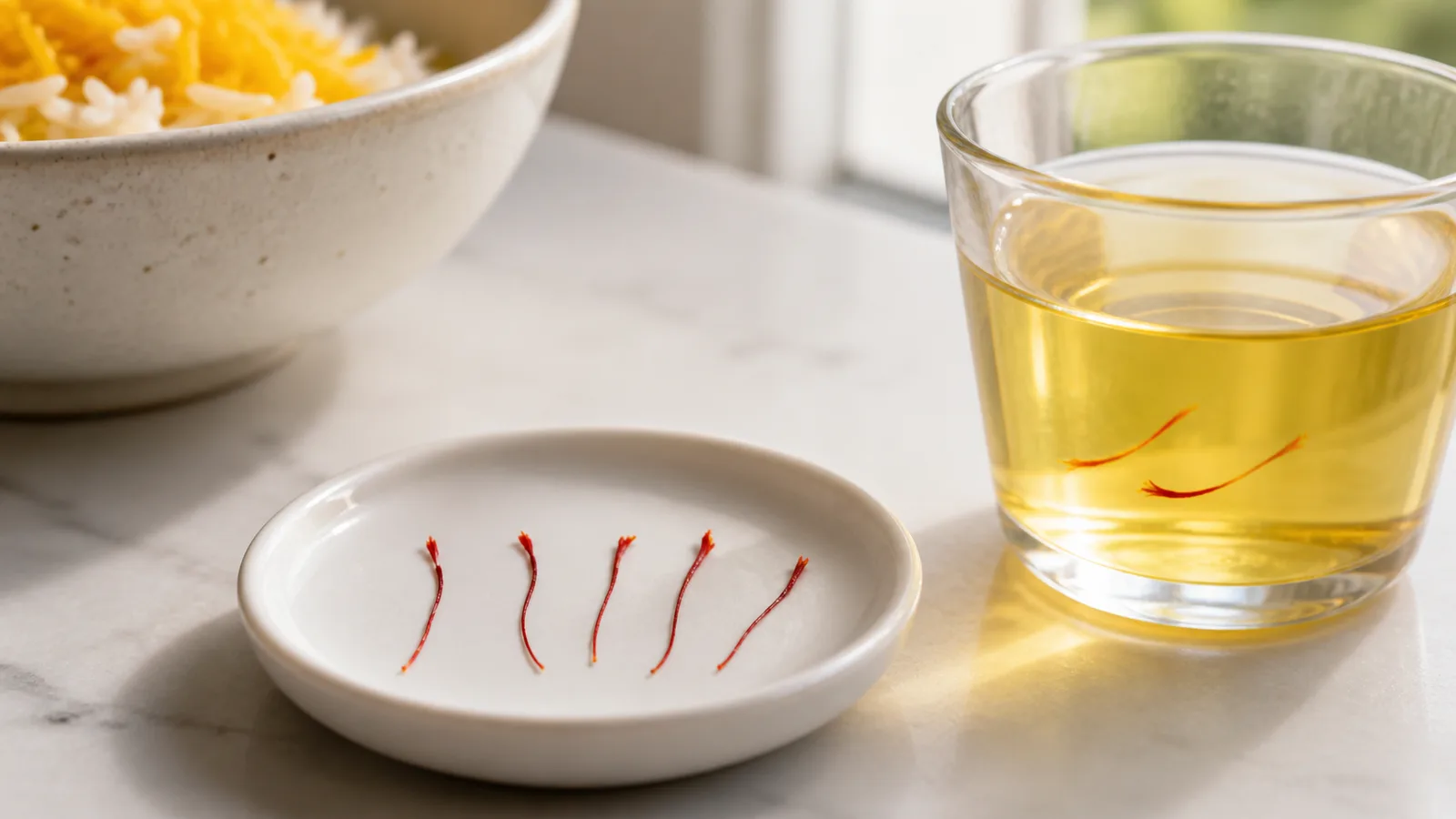
Knowing how to tell real saffron from fake begins with the threads, the label and the seller—not with one dramatic home test. Genuine saffron is the dried red stigma of Crocus sativus. Its shape, aroma, taste and behaviour in water can reveal warning signs, but a convincing counterfeit may pass one of those checks. For an expensive or suspicious batch, traceability and laboratory testing carry more weight than a single sensory clue.
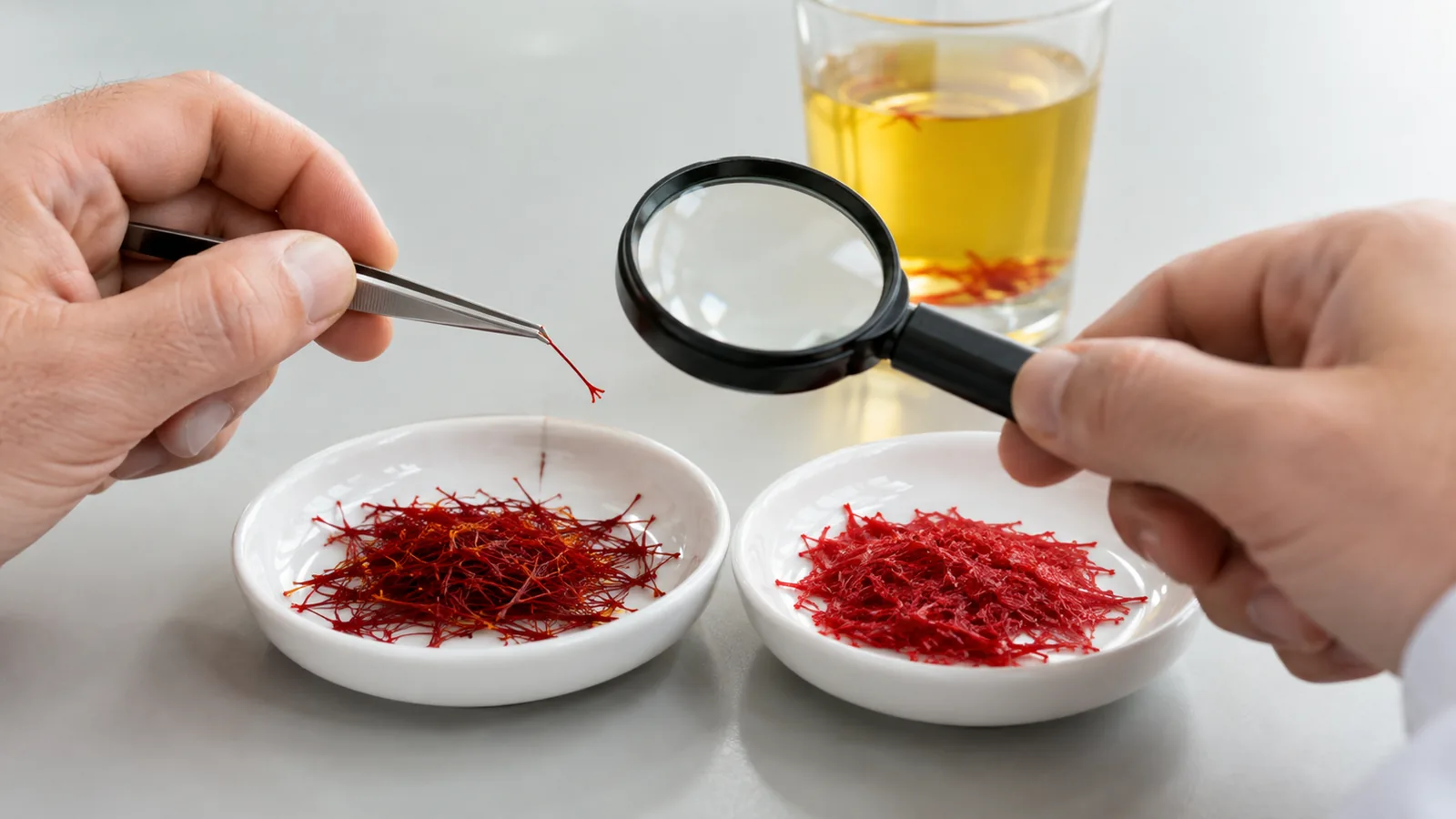
How can you tell the difference between real saffron and fake saffron?
Start by spreading a few dry filaments on a white plate under good light. If you are learning how to identify real saffron, look for long and thin reddish stigmas, often with a widened or trumpet-like end and a narrower base. They are naturally varied rather than cut into perfectly identical strips. A little yellowish-white style at the base can occur in genuine saffron, although an all-red grade contains less of it.
The US Food and Drug Administration’s laboratory method for saffron filaments describes the characteristic reddish, trumpet-shaped stigma. It also shows why appearance needs care: analysts sort saffron material, waste from the same flower, other plant matter and foreign matter separately, often using magnification.
A household inspection cannot match that procedure, but it can identify obvious reasons to pause. Look for flat, uniformly cut fibres, an unnatural paint-like coating, excessive yellow plant material, grit, mould, damp clumps or pieces that do not share the stigma’s basic structure. One unusual thread is a reason to inspect the rest of the lot, not enough evidence to name a specific adulterant.
What is fake saffron made from?
“Fake saffron” can mean several things. A product may contain real stigmas diluted with cheaper material, other parts of the saffron flower, a different plant, dyed fibres or flavour and colour added to imitate a stronger spice. Counterfeit saffron can therefore look wholly artificial or be a mixture that still contains some genuine saffron.
The FDA’s explanation of economically motivated food adulteration specifically uses saffron bulked with non-spice plant material, such as stems, as an example. Its saffron method also documents dyed plant material and safflower mixed with saffron filaments.
Imitation saffron and a culinary substitute are not automatically fraud. Safflower, turmeric or another colouring ingredient can be sold honestly under its own name. The problem begins when a substitute or mixture is represented as pure Crocus sativus saffron.
Check the shape and colour before testing the aroma
Authentic threads are usually deep red, sometimes with orange-red variation and a paler portion where the style remains attached. They are delicate, but not every thread will have the same length or curl. A fake saffron flower or dyed plant fibre may be bright red, completely uniform or shaped like a flat petal rather than a stigma. These are useful screening differences, not universal rules.
Colour alone is easy to imitate. Genuine saffron can also vary with cultivar, harvest handling, grade, age, light exposure and storage. A darker sample is not automatically purer, and a bright sample is not automatically fake. Product photographs taken under different lighting make colour comparisons even less reliable.
Powder removes most of the visible structure. That does not mean every powdered product is counterfeit, but it does mean a shopper cannot examine the stigma shape or easily notice another plant mixed through it. An intact-thread product from a traceable supplier gives the buyer more information before purchase.
What should real and fake saffron smell or taste like?
Real saffron has a concentrated, complex aroma often described as hay-like, honeyed, earthy or slightly metallic. Descriptions vary because people perceive aroma differently. Storage also matters: an old or poorly sealed genuine batch can smell weaker than fresh saffron.
Artificial saffron flavor may smell one-dimensional, perfumed or chemical, while some imitation saffron has very little aroma. Yet added fragrance can imitate a familiar note, so a strong smell is not proof. A musty, mouldy or otherwise unpleasant odour is a quality and safety warning regardless of authenticity.
The characteristic taste of saffron is mildly bitter rather than sugary. Sweetness can suggest added material, but tasting an unknown product is a poor way to investigate suspected dye or contamination. If a batch looks or smells unsafe, do not eat it simply to complete a home test.
For a fuller account of how genuine threads contribute colour, aroma and taste in food, see our guide to the culinary properties of saffron.
Use the water test as a screen, not a verdict
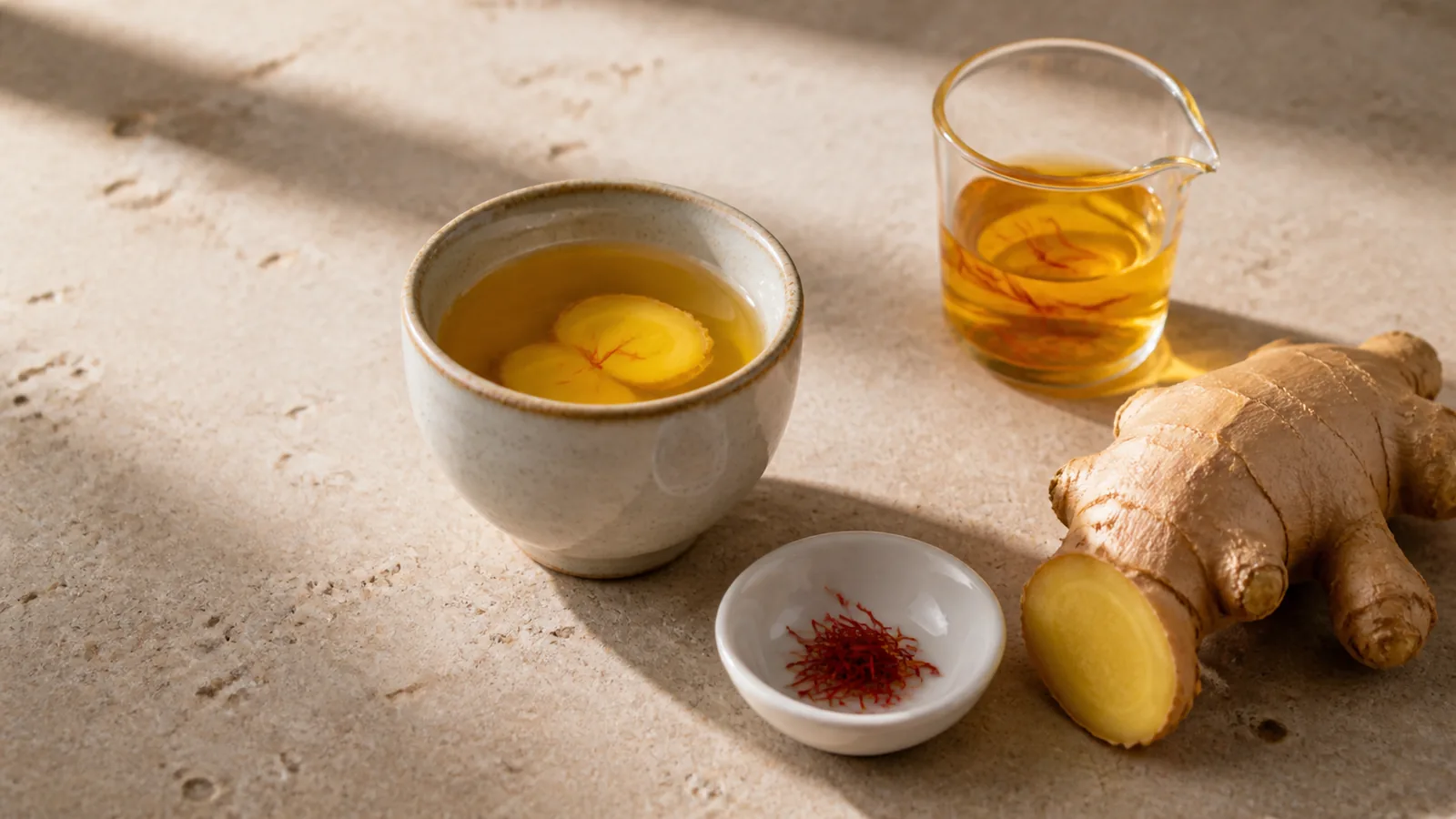
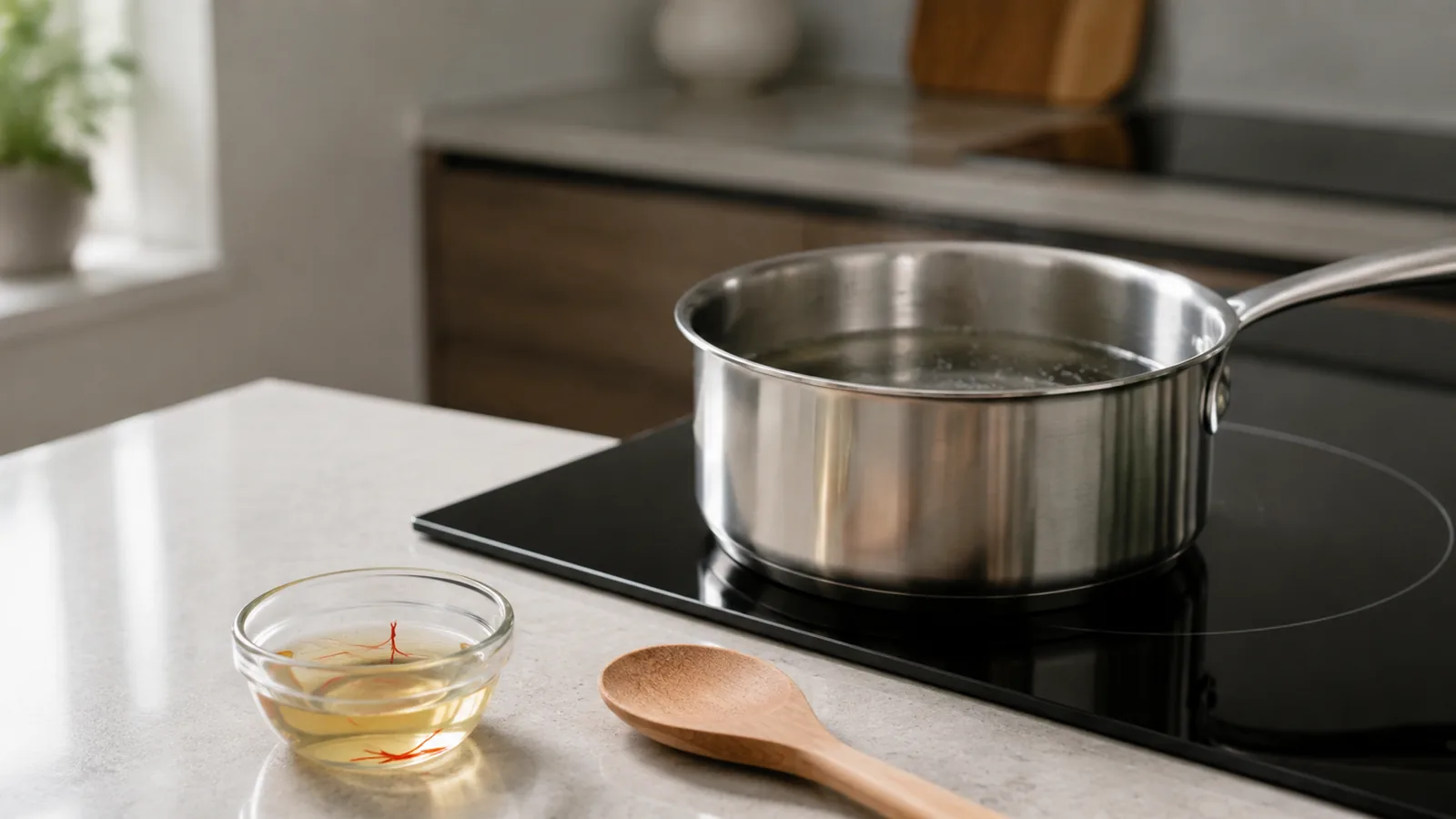
Place a small, known number of threads in a clear glass of room-temperature or warm water. Genuine saffron should colour the water yellow to golden while releasing its aroma. A vivid red plume coming off a thread, a paint-like surface colour or several fibres turning pale almost at once can suggest an added dye.
The timing is less absolute than many online demonstrations imply. Warmth, agitation, broken threads, powder, sample size and water volume all change how quickly colour appears. Real saffron can begin releasing colour promptly, and a sophisticated adulterated mixture may release it gradually. Floating or sinking is not a reliable yes-or-no test either; trapped air and handling affect both.
A peer-reviewed study of genetic and chemical authentication found that some dyed samples coloured cold water faster and more intensely. The same research also explains the limitation: DNA testing can identify plant origin but cannot detect a synthetic dye by itself. Water behaviour may expose one kind of problem while missing another.
Use our detailed saffron diagnosis guidelines when you want to examine a sample step by step. If shape, water behaviour and aroma disagree, treat the result as unresolved rather than choosing whichever clue you prefer.
Price and country of origin are clues, not proof
Real saffron is costly to produce because every flower yields only three stigmas and the harvest is labour-intensive. An implausibly low price deserves caution. A high price, ornate package or famous origin can still be copied, however, so none proves that the contents match the claim.
“Is Turkish saffron real?” has no single answer. Saffron grown or sold in Türkiye can be genuine if the package contains dried Crocus sativus stigmas. In some markets, a regional or translated name may also be used for safflower or another product. Check the botanical name and ingredient statement instead of deciding by nationality.
The same rule applies to Iranian, Spanish, Afghan, Kashmiri or any other origin claim. Geography can describe provenance; it cannot replace authentication. Buy from a reputable source whose seller can identify the producer or packer, lot and net weight and explain any quality or origin documentation it offers.
Authenticity and quality are not the same question
A genuine sample can be old, damp, weak, poorly stored or contain too much style and floral waste. It is still important to distinguish that quality problem from substitution. Calling every weak batch “fake” hides the actual issue and makes comparison harder.
The current ISO 3632-1:2025 saffron specification applies to dried saffron sold as filaments, cut filaments or powder. It defines requirements for the product; laboratories use specified sampling and analytical methods rather than a kitchen trick.
No single laboratory method answers every question either. A published study of market samples used morphology, HPLC, HPTLC and DNA barcoding together. Morphology detected visible differences, chromatography found chemical and same-plant adulteration, and DNA helped identify material from other plant species. The lesson for a buyer is practical: stronger claims require several compatible forms of evidence.
What to check before buying saffron
A careful purchase prevents more problems than opening an untraceable packet and trying to solve it afterward. Before paying, check:
- the ingredient is identified as saffron or Crocus sativus, without unexplained colour or flavour additives;
- the pack is sealed and carries a producer or responsible seller, lot or batch reference, net weight and appropriate date information;
- thread saffron has recognisable stigma structure rather than uniformly cut red strips;
- the seller can explain the claimed origin and any test report, certification or grade instead of relying on a logo alone;
- the price is plausible for real saffron, while remembering that price by itself proves nothing;
- the return or complaint process is clear if the contents do not match the description.
Our guide to buying high-quality saffron covers packaging, freshness and supplier questions in more detail. Those checks complement authenticity; they do not replace it.
When should a saffron sample be tested professionally?
Laboratory confirmation makes sense when a commercial lot has significant value, when a business must verify a supplier, when the product will be repacked or resold, or when there is a safety concern. It is also appropriate when a home screen produces conflicting results.
The 2024 market-sample study indexed by PubMed demonstrates why combined testing matters: different analytical approaches detected different forms of adulteration. Ask an accredited food laboratory which method and sampling plan suit the suspected problem. A report on one small pinch may not represent a large, uneven lot.
If a product rapidly sheds a suspicious dye, contains unknown material, smells mouldy or causes an adverse reaction, stop using it. Retain the package, lot information, receipt and a sample where safe, then contact the seller and the relevant food authority. Do not attempt flame, strong-acid or other hazardous internet tests at home.
A sensible real-saffron check uses several clues
The difference between real and fake saffron is clearest when the evidence agrees. Genuine filaments should have plausible stigma structure, a characteristic but naturally variable aroma, mildly bitter flavour and golden colour in water. The package and supplier should make the product traceable. None of those observations alone guarantees purity.
When buying finished threads, the original all-red saffron selection remains available. When judging an unknown sample, begin with appearance and provenance, use water only as a screen, and choose professional analysis whenever the financial or safety stakes justify certainty.