


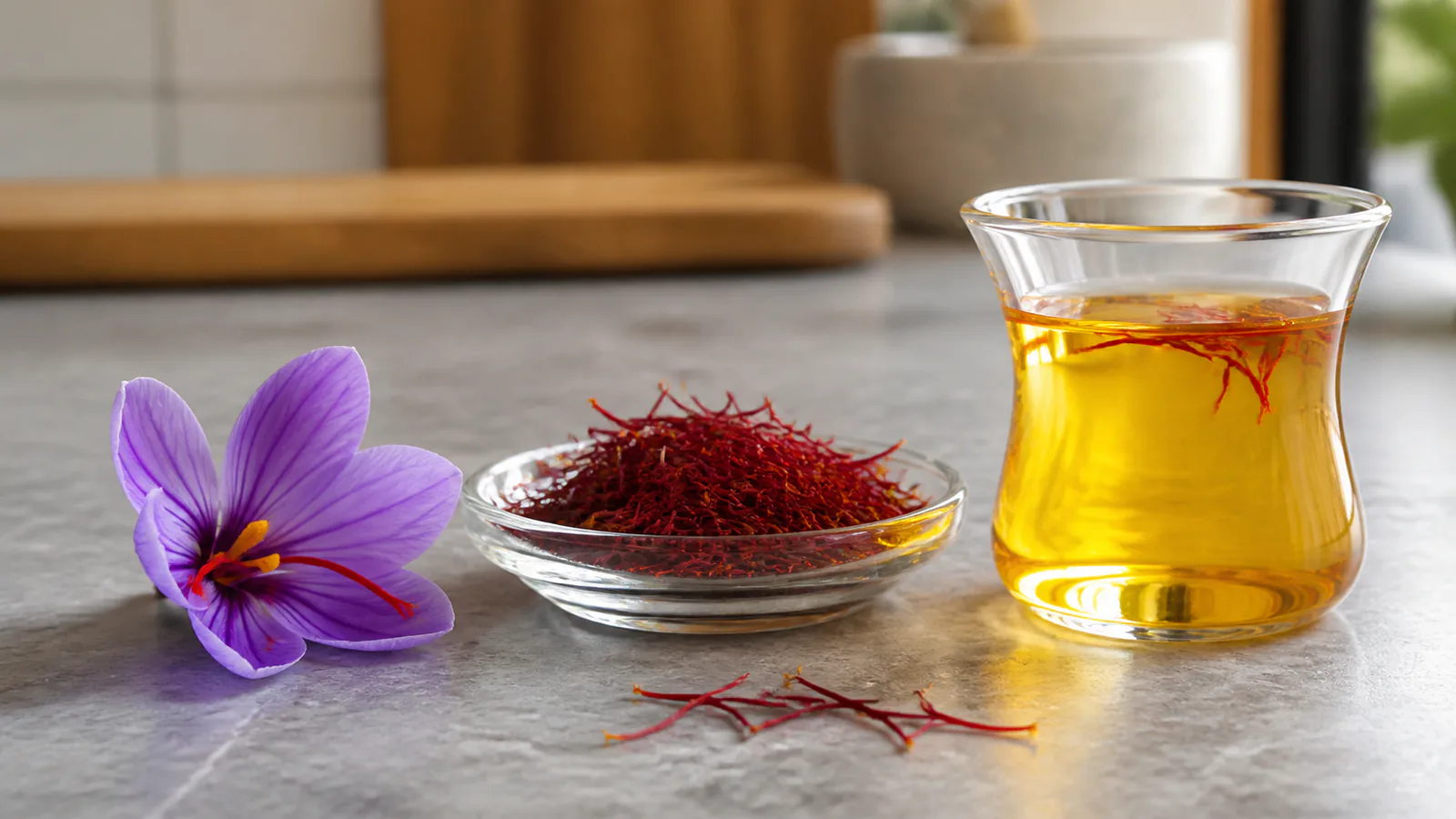
The defining properties of saffron are its golden color, layered aroma and gently bitter taste. They come from the dried stigmas of Crocus sativus and three closely watched groups of compounds: crocins contribute color, picrocrocin contributes bitterness, and safranal has a major role in aroma. Good saffron should bring those qualities to food without added dye, fragrance or filler.
What gives saffron its color, aroma and taste?
Color: crocins
Crocins are water-soluble pigments. When saffron is infused, they produce a clear yellow-to-golden liquid rather than a paint-like red cloud. Color strength matters commercially, but the fastest color release is not automatically the best sign. Thread size, drying, age, grinding, water temperature and agitation all affect how quickly an infusion develops.
Aroma: safranal and other volatile compounds
Saffron’s fragrance is difficult to reduce to one word. People often describe warm hay, honey, dried flowers, earth and a faint mineral or leathery note. Safranal is important, but the aroma is a mixture of volatile compounds. It should smell distinctive and complex, not like perfume or a synthetic flavoring.
Taste: picrocrocin
Picrocrocin is associated with saffron’s characteristic bitterness. The spice is not meant to make a dish sugary or simply floral. Used in a balanced amount, it adds a dry, subtly bitter depth that supports its aroma and color.
A chemical and sensory study of saffron explains this useful three-part relationship: crocins with color, picrocrocin with bitterness and safranal with odor impact. These markers describe the spice more accurately than marketing adjectives alone.
How saffron quality is assessed
A visual check can reveal obvious problems, but professional grading is analytical. The Codex standard for dried saffron sets requirements for matters including moisture, extraneous material and strength measurements related to taste, aroma and color. Laboratory testing is what supports a grade; a photograph or a home water test cannot certify one.
Several factors influence the result:
- Botanical identity: culinary saffron is the dried stigma of Crocus sativus, not petals from another plant.
- Harvest and separation: foreign floral material and excess style reduce purity.
- Drying: time and temperature change moisture, aroma development and pigment retention.
- Storage: heat, light, air and humidity gradually weaken sensory quality.
- Form: powder is convenient, while intact threads make some kinds of adulteration easier to notice.
What can you reasonably check at home?
Look at the product as a set of clues, not as a single pass-or-fail trick. Saffron threads are slender and trumpet slightly at one end. Their color is deep red, although small yellow or pale portions may remain depending on the grade. Rub a dry thread between clean fingers: it should not leave the kind of immediate waxy dye smear expected from a heavily coated imitation.
Next, smell a small amount before brewing it. The aroma should be recognizable but not artificially overpowering. Add a few threads to warm water and watch the color develop. Genuine threads normally release a golden hue while retaining some structure; however, there is no scientifically valid universal rule that real saffron must take exactly 15 minutes. Grind size, water temperature and sample condition make stopwatch tests unreliable.
Home observations cannot detect every substitution or confirm a chemical grade. For a purchasing checklist, batch documentation and the limits of common tests, use our guide to buying high-quality saffron.
How to bring these properties into food
Crush a modest pinch of threads and steep it in warm water for 10 to 20 minutes. Add both the liquid and the softened saffron to the dish. This distributes color and aroma more evenly than scattering dry strands into one spot. Very high heat and long cooking can flatten the volatile aroma, so part of the infusion can be added later when the recipe allows.
Saffron is potent, but more is not always better. Too much can make food harsh and waste an expensive ingredient. The useful amount depends on the volume of the dish, the other flavors and the strength of the particular batch.
Storage protects quality; it does not preserve it forever
Keep saffron in a tightly closed, food-safe container away from light, heat, steam and humidity. A small opaque or dark glass container in a cool cupboard works well. Avoid repeatedly opening a large pack over a hot stove, where moisture and kitchen odors can enter.
The old version of this article suggested that correct storage preserves saffron for several years without loss. That is too absolute. Research shows that drying and storage conditions change crocins, picrocrocin and safranal. A securely stored spice may remain usable for a long time, but its aroma and coloring strength can still decline. Buy an amount you can use while it remains expressive.
Are skin claims a property of saffron?
Traditional beauty recipes combine saffron with ingredients such as honey, milk, rosewater, basil or sandalwood and promise brighter skin, acne treatment, sun-tan removal or slower aging. Those are treatment claims, not sensory properties of the spice, and the old article stated them far more confidently than the evidence allows.
A kitchen mixture has no standardized concentration, and natural ingredients can irritate skin or trigger allergy. Saffron should not be presented as a substitute for sunscreen, acne care or evaluation of a persistent skin change. Our dedicated review of saffron for skin separates laboratory findings, cosmetic formulation and realistic home-use precautions. The saffron face-mask guide also explains patch testing and when not to apply a DIY mixture.
A practical definition of good saffron
Good saffron is correctly identified Crocus sativus, cleanly handled and properly dried, with strong but balanced color, aroma and taste. It should arrive in protective packaging with enough traceability to support what the seller claims. At home, careful infusion and storage help you enjoy those properties. Claims about medical or cosmetic effects require a different standard of evidence and should never be inferred from color, price or tradition alone.

![Exporting Saffron to Turkey + Price Guide [Complete 0 to 100]](https://img.rowhanisaffron.com/20260827003933/saffron-export-turkey-quality-inspection.webp)



