


Saffron production in Khorasan Razavi was forecast at 264 to 284 metric tonnes for the 2023–2024 farming year. That estimate reflected better rainfall than the preceding season, but it was always conditional: summer heat, autumn moisture and early frost could still change the harvest. This article keeps the original forecast in its proper time frame and explains what growers can learn from it.
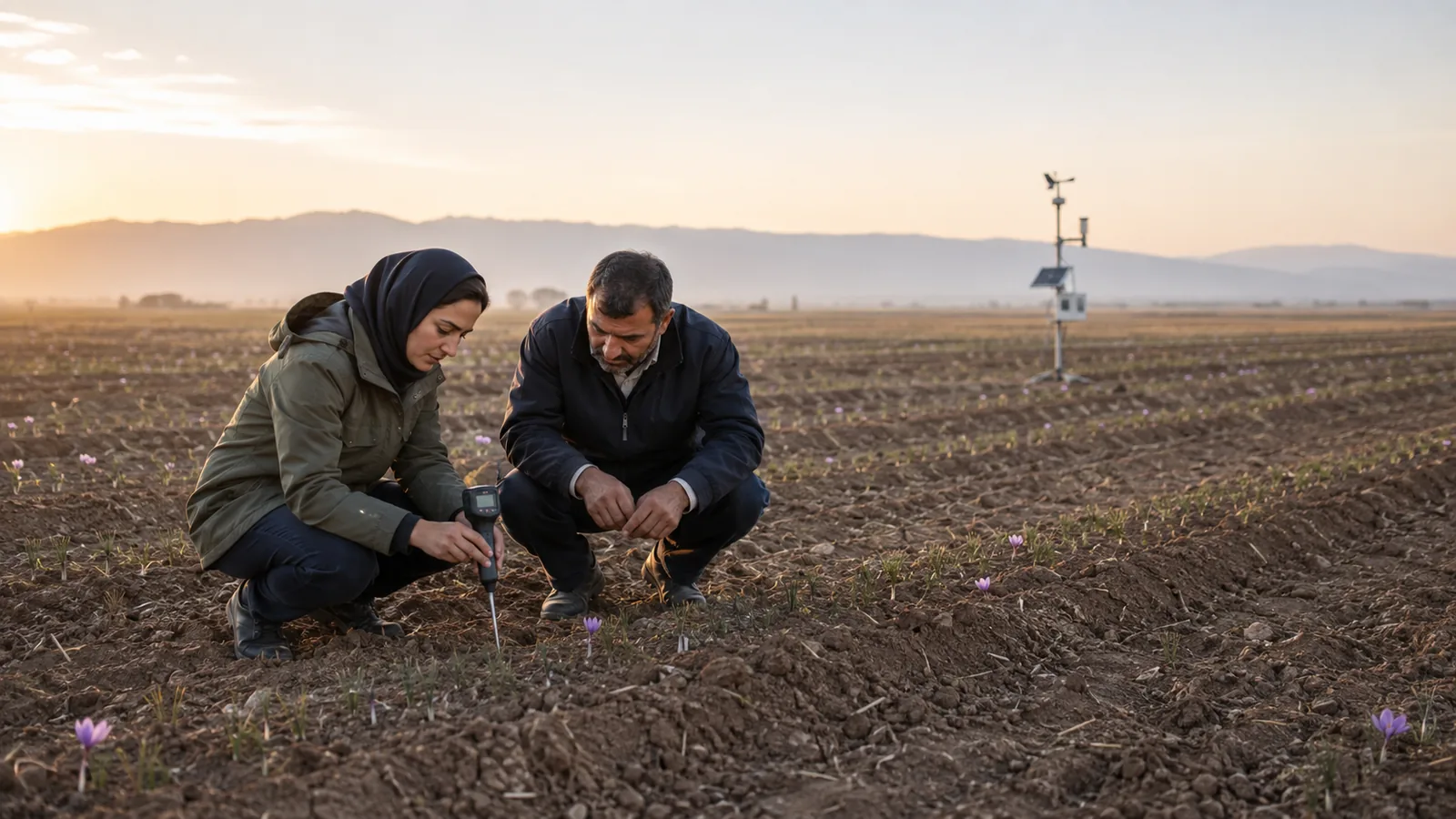
What the 2023–2024 forecast said
Mohammad Miri Disfani, then identified as deputy head of the Khorasan Razavi Agricultural Jihad Organization, placed expected output between 264 and 284 tonnes. The estimate was published before the harvest, so it should not be mistaken for a final production count.
The province’s saffron harvest generally begins around mid-October and continues into mid-December. A forecast made before that window can help with labour, drying and market planning, but the number remains provisional until flowers are picked, stigmas are separated and the dried crop is measured.
Why conditions in the previous season mattered
The original report compared two growing seasons. It described 2021–2022 as a difficult year in which unfavourable conditions limited the plants’ ability to build reserves. Because the next season’s flowers depend partly on the health and stored energy of the corm, stress in one year can carry into the next crop.
For 2022–2023, the report gave average rainfall of 180 millimetres. Although that was said to be 6.5% below the region’s long-term average, it represented an improvement over the preceding season and helped support the more optimistic 2023–2024 estimate. These figures belong to that historical report; they are not current rainfall readings.
Rainfall alone cannot predict saffron yield
Rain matters, but an annual total does not show when it fell or whether the soil held the moisture where corms could use it. Research on Iranian saffron yield has found that combinations of field age, temperature and autumn-to-winter weather provide more useful information than annual rainfall by itself. The peer-reviewed Agronomy study also cautions that the relationships vary between regions and years.
Timing is especially important. Moisture and temperature help govern flower emergence, while extreme heat can weaken corm development and poorly timed frost or rain can disrupt picking. Two fields receiving the same annual rainfall may therefore produce different results.
What could have moved the forecast up or down
The 264-to-284-tonne range assumed that the crop would avoid severe summer heat and damaging weather during flowering. The final result could have shifted for several reasons:
- Corm condition: healthy, adequately sized corms begin the season with a better reserve than weak or diseased planting stock.
- Field age and density: performance changes as a saffron field matures and corms multiply.
- Irrigation and drainage: water must arrive at useful stages without leaving the corm bed waterlogged.
- Heat and frost: unusually high summer temperatures or cold around flowering can alter emergence and picking conditions.
- Harvest capacity: flowers need prompt collection and careful stigma separation during a short, labour-intensive period.
- Drying and storage: post-harvest handling affects saleable dry weight, aroma, colour and contamination risk.
How Khorasan Razavi growers were preparing
The provincial Agricultural Jihad Organization reported running workshops during 2022–2023. The sessions covered plant nutrition, pest management, irrigation, planting methods and harvest practice. Those subjects address different parts of the same production system; none works well as a stand-alone shortcut.
Plant nutrition, for example, should respond to field conditions rather than a universal recipe. Irrigation decisions depend on soil texture, drainage and recent weather. Pest or disease treatment should begin with the problem actually found in the field and follow local registration and label requirements. The practical value of training lies in connecting those decisions.
Growers reviewing planting stock can also use our guide to strengthening saffron corms, which explains why the corm’s condition before flowering matters to the following harvest.
Production volume and saffron quality are different measures
A higher tonnage does not automatically mean a better crop. Total dry production measures quantity across the province. Commercial quality also depends on stigma separation, drying temperature and speed, moisture, cleanliness, storage and laboratory characteristics associated with colour, aroma and flavour.
This distinction matters when evaluating a production programme. A practice that raises fresh flower weight but creates slower processing or inconsistent drying may not improve the value of the finished saffron. Farms and processors need to track both output and the condition of the final product.
Useful measures at farm level
Provincial totals are important for markets and policy, but they do not tell an individual grower why one field performed better than another. A practical seasonal record can include:
- productive area and field age;
- corm source, average size and planting density;
- irrigation dates, measured rainfall and unusual temperature events;
- flowering start, peak and finish dates;
- fresh flowers collected and dry saffron obtained;
- labour time, drying method and rejected material; and
- quality results and the net return after production costs.
Keeping the same measurements from year to year makes it easier to separate a weather effect from a change in management. It also prevents one successful or disappointing season from becoming a rule applied to every field.
Putting the Razavi Khorasan production figure in context
Later reports continue to show a range rather than a fixed annual number. A 2023 report from Iran’s Agricultural News Agency described Khorasan Razavi output as roughly 250 to 300 tonnes depending on drought, rainfall and frost. Its dated provincial report reinforces the point that weather-sensitive estimates need a named crop year.
A separate 2026 news report quoting another provincial agriculture official put annual output in a broadly similar 261-to-280-tonne range. That is useful context, not proof of the 2023–2024 outcome: the season, planted area and reporting method must match before two figures can be compared directly.
How to read the 2023–2024 estimate today
The forecast remains a useful historical snapshot of saffron production in Khorasan Razavi. It shows how officials connected improved rainfall and grower training with a possible recovery, while still recognising the risk from heat and frost.
The sound conclusion is not that the province always produces 264 to 284 tonnes. It is that production planning works best when a provincial forecast is paired with field records, weather timing, corm health, harvest capacity and measured quality. Final output for any season should come from a dated post-harvest report rather than a pre-harvest prediction.

![Exporting Saffron to Turkey + Price Guide [Complete 0 to 100]](https://img.rowhanisaffron.com/20260827003933/saffron-export-turkey-quality-inspection.webp)



