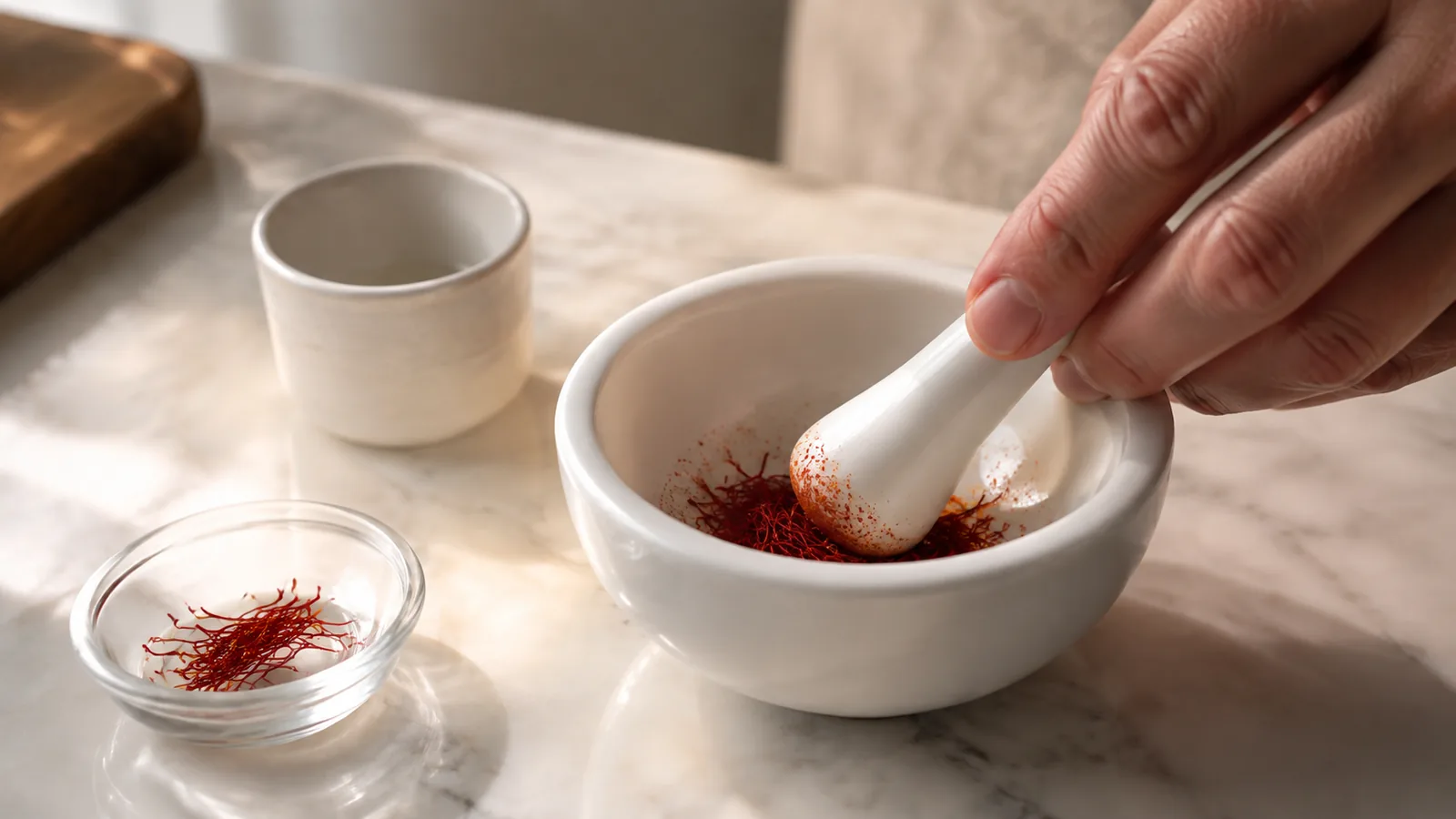
Strengthening saffron bulbs is really about helping the plant build healthy replacement corms for the next flowering season. Start with sound planting stock, give the roots well-drained soil, manage water and nutrition with restraint, and let the leaves complete their work after flowering.
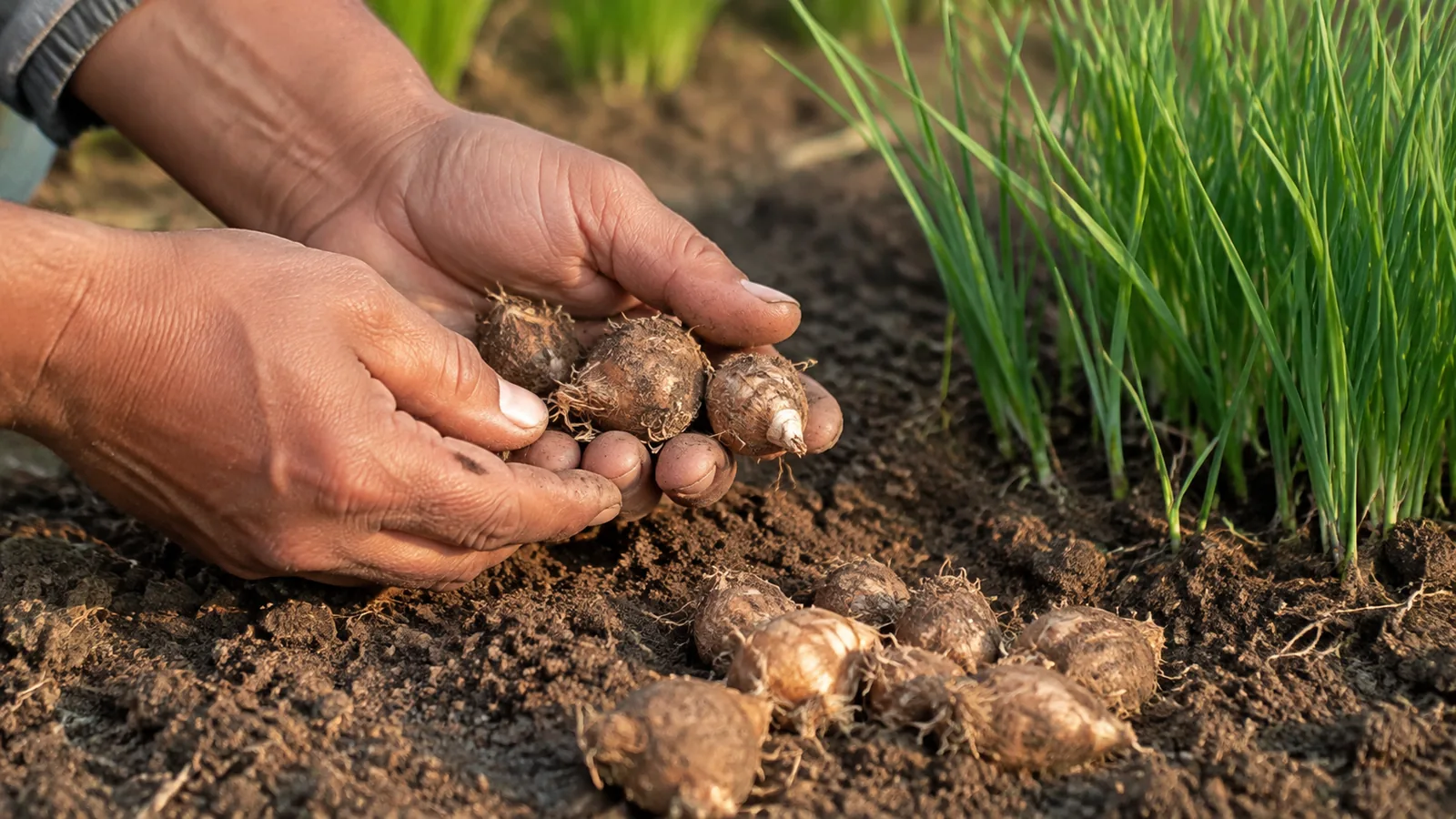
Saffron has corms rather than true bulbs
Growers often call them saffron bulbs, but Crocus sativus grows from corms. A corm is a swollen underground stem. The original mother corm produces flowers and leaves, then forms daughter corms that carry the planting forward.
This life cycle explains why leaf care matters. The leaves gather energy during the cool growing season and feed the replacement corms below ground. Cutting green leaves early, keeping the bed waterlogged or forcing growth with excess fertiliser can leave the next generation weaker rather than stronger.
What a healthy saffron corm looks like
Choose firm, dry corms with intact brown tunics. Avoid any that feel soft, smell sour, show mould, have deep cuts or carry suspicious lesions. Size can influence the chance of flowering in the first season, but weight alone is not a health test. A large damaged corm is a poorer choice than a sound, disease-free one.
Buy planting stock from a traceable supplier and keep lots separate if you are uncertain about their health. Before planting, discard damaged material rather than placing it in a clean bed. Good sanitation at this point is far easier than managing rot after a field is established.
Six foundations for strengthening saffron bulbs
1. Begin with drainage and a soil test
Saffron needs soil that drains freely through wet periods. A fertile loam or sandy loam can work well, but texture labels are less useful than observing what water actually does after rain or irrigation. If water sits around the corm zone, improve drainage or choose another site.
Test the soil before deciding on fertiliser. The results reveal pH, organic matter and nutrient levels, allowing a local agronomist or extension adviser to recommend amendments for that field. There is no responsible universal fertiliser recipe for every saffron bed.
2. Plant at a consistent, suitable depth
Planting too close to the surface exposes corms to temperature swings, drying and physical damage. Planting unnecessarily deep can make lifting harder and may alter how daughter corms develop. The right depth depends on climate, soil, corm size and the expected life of the bed, so follow guidance tested in your region rather than copying a number from a different production system.
Set each corm upright, with the growing point facing upward, and maintain even spacing. Crowded corms compete sooner and produce many small replacements; generous spacing costs more land but gives each plant more room.
3. Match irrigation to the growth cycle
Saffron does not need constantly wet soil. Moisture is most useful when it supports root establishment and active autumn-to-spring growth. Irrigate evenly when the soil needs it, then allow excess water to drain. Saturated soil restricts oxygen and raises the risk of corm rot.
The calendar cannot make this decision on its own. Rainfall, soil texture, temperature and planting depth all affect how quickly a bed dries. Check moisture in the root zone before watering. During summer dormancy, avoid routine irrigation unless the local production system specifically calls for it.
4. Feed the crop from evidence, not habit
Nitrogen, phosphorus, potassium and organic matter can all affect saffron growth, but more is not automatically better. A three-year field experiment in an arid Iranian climate found that manure combined with biological or chemical fertilisers changed leaf, flower and replacement-corm traits. The researchers also made clear that their conclusion applied to areas similar to the trial location. Read the peer-reviewed saffron fertiliser study as evidence about one tested system, not as a universal application rate.
Use well-matured organic amendments where they suit the soil plan, and keep fresh manure away from planting corms. Base mineral fertiliser on the soil test, expected yield and local advice. Too much readily available nitrogen may encourage soft leaf growth without solving the actual limiting factor.
5. Protect the leaves after flowering
Once the flowers have finished, the leaves are still working. Keep them in light, control competing weeds and leave them until they yellow and die back naturally. Removing green foliage for a tidier bed interrupts the period when replacement corms are filling.
Weed carefully so tools do not cut shallow corms. A light, clean mulch may help in some climates, but a wet, compact layer can trap moisture and shelter pests. Inspect the bed rather than relying on a fixed maintenance schedule.
6. Prevent damage from pests, disease and crowding
Weak growth is not always a feeding problem. Rot, rodents, nematodes, damaged planting stock and persistent weeds can all reduce corm performance. Look for a pattern: isolated soft corms suggest a different problem from pale leaves across an entire bed.
Remove badly affected plants with the surrounding soil when disease is suspected, clean tools between beds and avoid moving questionable corms into a new plot. Our guide to saffron pest and disease control explains the main field risks and why identification should come before treatment.
Does foliar spraying strengthen saffron bulbs?
Foliar feeding can correct a diagnosed nutrient shortage when the crop has healthy, active leaves, but it is not a substitute for functioning roots or sound soil. The older article claimed that corms lacked roots two weeks after irrigation and therefore required repeated foliar sprays. That is not a safe general rule.
If tissue analysis or a qualified adviser identifies a need, choose a product labelled for the crop and follow its rate, timing and worker-safety directions. Do not spray concentrated fertiliser onto flowers, apply during hot sun or mix products without checking compatibility. If there is no diagnosed deficiency, routine spraying may add cost and leaf injury without improving daughter corms.
Why saffron bulbs stay small
When daughter corms remain small, work through the likely causes before adding fertiliser:
- Poor drainage: roots struggle in saturated or compacted soil.
- Early leaf removal: green foliage was cut before natural senescence.
- Overcrowding: too many daughter corms are competing in the same space.
- Moisture stress: the active crop repeatedly became either very dry or waterlogged.
- Nutrient or pH imbalance: a soil test shows that one or more conditions limit uptake.
- Weed pressure: weeds compete for light, water and nutrients.
- Pest or disease damage: corms are scarred, soft, discoloured or disappearing.
- Unsuitable climate or site: the seasonal temperature and moisture pattern does not match saffron’s cycle.
Record which beds flowered well, when they were watered, what amendments were used and what the lifted corms looked like. One season of notes is more useful than guessing from a single weak plant.
When to lift and divide an established bed
Saffron multiplies underground. Over time, a productive planting can become crowded, and the average daughter corm may shrink. Lift corms only after the foliage has fully died back and the plants are dormant. Handle them gently, discard unhealthy material, sort viable corms and replant at the locally appropriate time.
How often to divide depends on spacing, soil, climate and the production goal. A home bed may remain undisturbed longer than an intensive commercial field. Flower records and the condition of lifted corms should guide the decision.
A practical season-by-season plan
- Before planting: choose healthy corms, test the soil and correct drainage problems.
- At planting: use consistent depth and spacing, and record the lot and date.
- During emergence and flowering: watch moisture, weeds and signs of rot; avoid unnecessary sprays.
- After flowering: protect the green leaves and apply only evidence-based nutrition.
- At natural dieback: stop treating yellow leaves as a problem and let the crop enter dormancy.
- During dormancy: review records, lift crowded beds if needed and select only sound corms for replanting.
The main principle
The most reliable approach to strengthening saffron bulbs is steady husbandry rather than a single product. Healthy planting stock, free drainage, measured irrigation, soil-test-led nutrition, intact post-flowering leaves and timely division all help the plant build sound replacement corms. If growth remains poor, diagnose the limiting condition before changing the programme.