Can I Grow My Own Saffron?
Yes, you can grow your own saffron in a sunny garden, raised bed or deep container if the corms have excellent drainage and a proper seasonal cycle. It is entirely possible to grow saffron at home. The plant is Crocus sativus, an autumn-flowering crocus. You do not grow it from ordinary seed: buy correctly labelled saffron corms from a reputable bulb supplier.
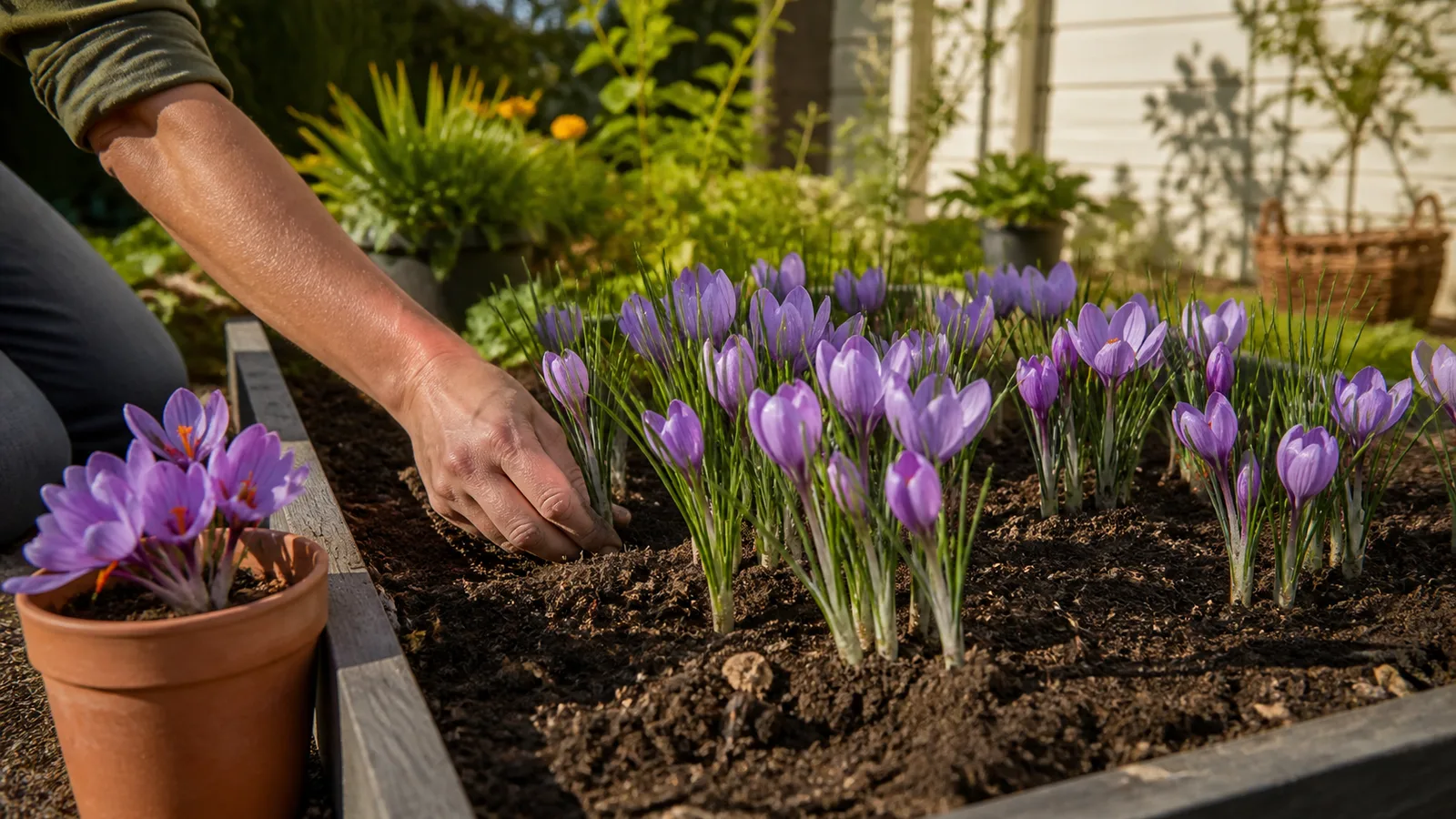
How to grow saffron successfully comes down to four things—healthy corms, sun, free-draining soil and restraint with water. The plant itself is not especially fussy. The harvest is small because each flower supplies only three red stigmas, so a home crop is best approached as a satisfying garden project rather than a shortcut to a full jar.
Choose the Right Location
Where can you grow saffron? Pick the sunniest well-drained spot you have. A sandy loam is ideal, but many soils work if water moves through them freely. Heavy clay or a hollow that stays wet after rain invites corm rot. Improve a marginal site with organic matter and horticultural grit, or plant above ground level in a raised bed.
Saffron is more cold-tolerant than its dry-country reputation suggests. The University of Vermont’s North American saffron cultivation guide describes it as suitable for USDA hardiness zones 4–8. Local winter wet, snow cover and drainage can matter as much as the zone number. In a very wet climate, a container or sheltered bed makes moisture easier to control.
You can grow saffron in the US across a surprisingly broad range, provided the site suits the corms. Gardeners outside those numbered zones should use their local climate and extension advice rather than treating the map as a guarantee.
Do not confuse Crocus sativus with Colchicum, a toxic plant also sold or described as autumn crocus or meadow saffron. The Royal Horticultural Society’s saffron growing guide specifically warns gardeners about this mix-up. Use only correctly identified Crocus sativus; eat only its harvested red stigmas, not the corms or the rest of the plant.
Planting Saffron Corms
Plant dormant corms in late summer, often August or September in the Northern Hemisphere, so they can establish before autumn flowering. The old advice to plant in fall and wait until the next autumn is unnecessarily pessimistic: established-size corms can flower in their first season, although the first display may arrive late or be modest.
- Set each corm with its flatter root plate down and pointed growing tip upward.
- Space corms about 4 inches apart (10 cm).
- Plant about 10–15 cm (4–6 inches) deep in loose, well-drained ground; local soil and winter conditions may justify the shallower or deeper end of that range.
- Water once after planting to settle the soil. During active growth, water only when conditions are dry enough to require it.
The spacing and depth align with current RHS advice; the North Carolina Extension plant guide also recommends full sun, good drainage and roughly 4-inch spacing and depth. Avoid a rigid watering calendar. Soil should not stay saturated, and dormant corms need far less water than actively growing leaves.
Growing saffron in a container
Use a sturdy pot with generous drainage holes and enough depth for at least 10 cm of soil below the corms. A free-draining, loam-based potting mix amended with grit works better than a dense moisture-holding compost. Set the container in full sun and raise it slightly so the drainage holes cannot sit in water.
Outdoor containers can freeze more sharply than garden soil. In a very cold region, place the pot in an unheated but protected position rather than a warm living room. Saffron needs its seasonal rhythm; ordinary indoor heat and low winter light usually produce weaker plants than a cool greenhouse, bright porch or outdoor bed.
What happens through the year?
How long does it take saffron to grow? Flowers can appear in the first autumn after late-summer planting, often around October, but exact timing depends on climate, planting date and corm size. Narrow grass-like leaves grow through the cooler months. Leave that foliage alone after flowering: it feeds the replacement corms. When the leaves yellow and die back in late spring, the plant enters summer dormancy.
Healthy corms form smaller cormlets, so the patch can become more productive over several years. Crowded clumps eventually flower less freely. Lift and divide them during dormancy, replanting the larger corms at the proper depth and allowing small cormlets time to reach flowering size.
Harvesting Saffron
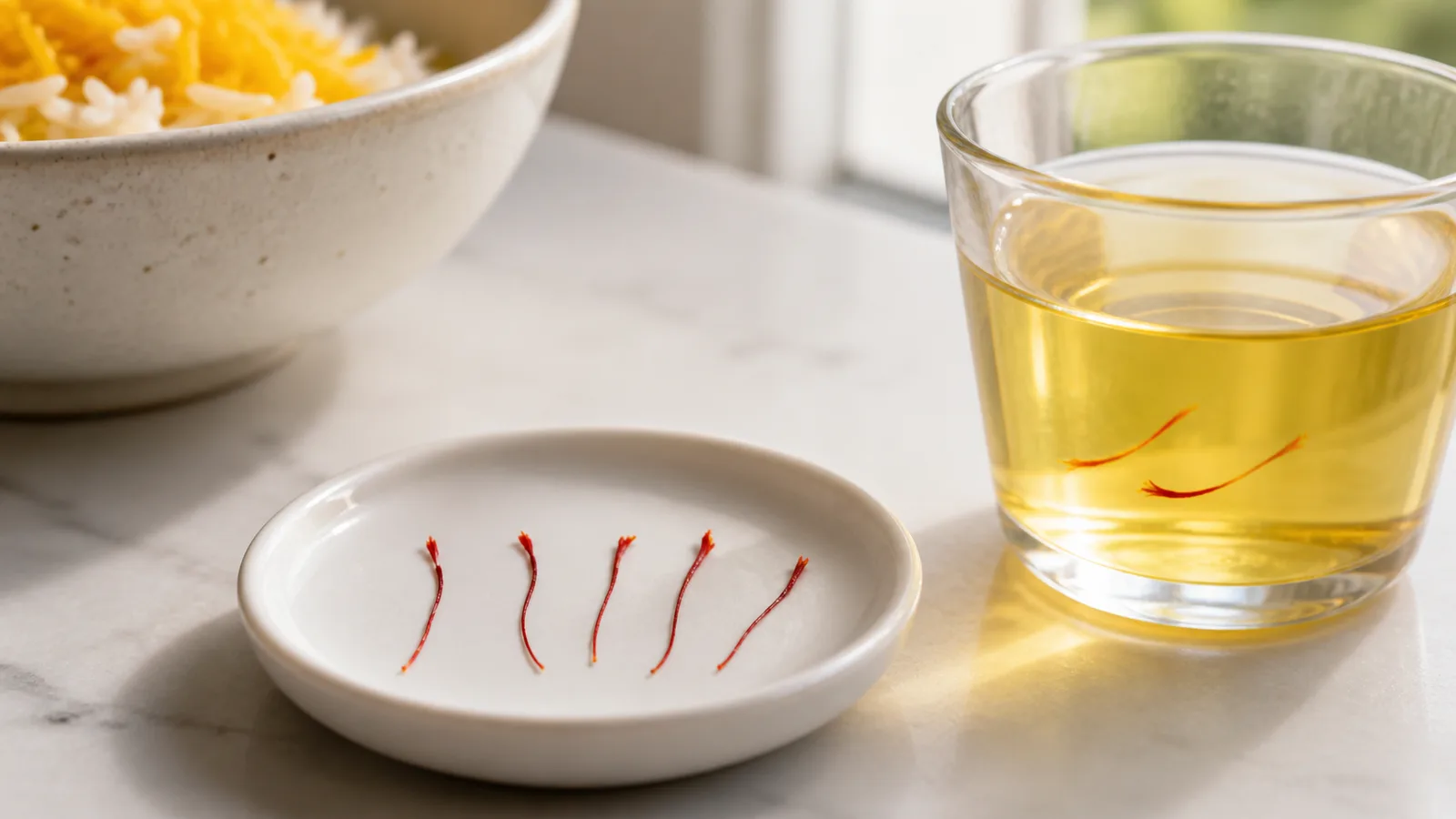
Pick flowers soon after they open, ideally on a dry morning. Inside each bloom are three long red stigmas and shorter yellow-orange stamens. The red stigmas are the saffron threads. Remove them with clean fingertips or tweezers; do not bulk out the harvest with petals or stamens.
Dry the threads gently in a clean, well-ventilated place. The RHS home method places them on kitchen paper over a rack at room temperature for at least 24 hours. Once fully dry, transfer them to a clean airtight container and keep it away from heat, moisture and light. Label the harvest date. A newly dried batch benefits from resting before cooking, as its aroma settles and develops.
Benefits of Growing Saffron
A home patch gives you traceability from corm to spice, fresh autumn flowers and an appreciation of the labour behind each gram. It can also multiply, providing corms to expand the bed. Those are more realistic benefits than promises of easy profit or superior medicinal effects.
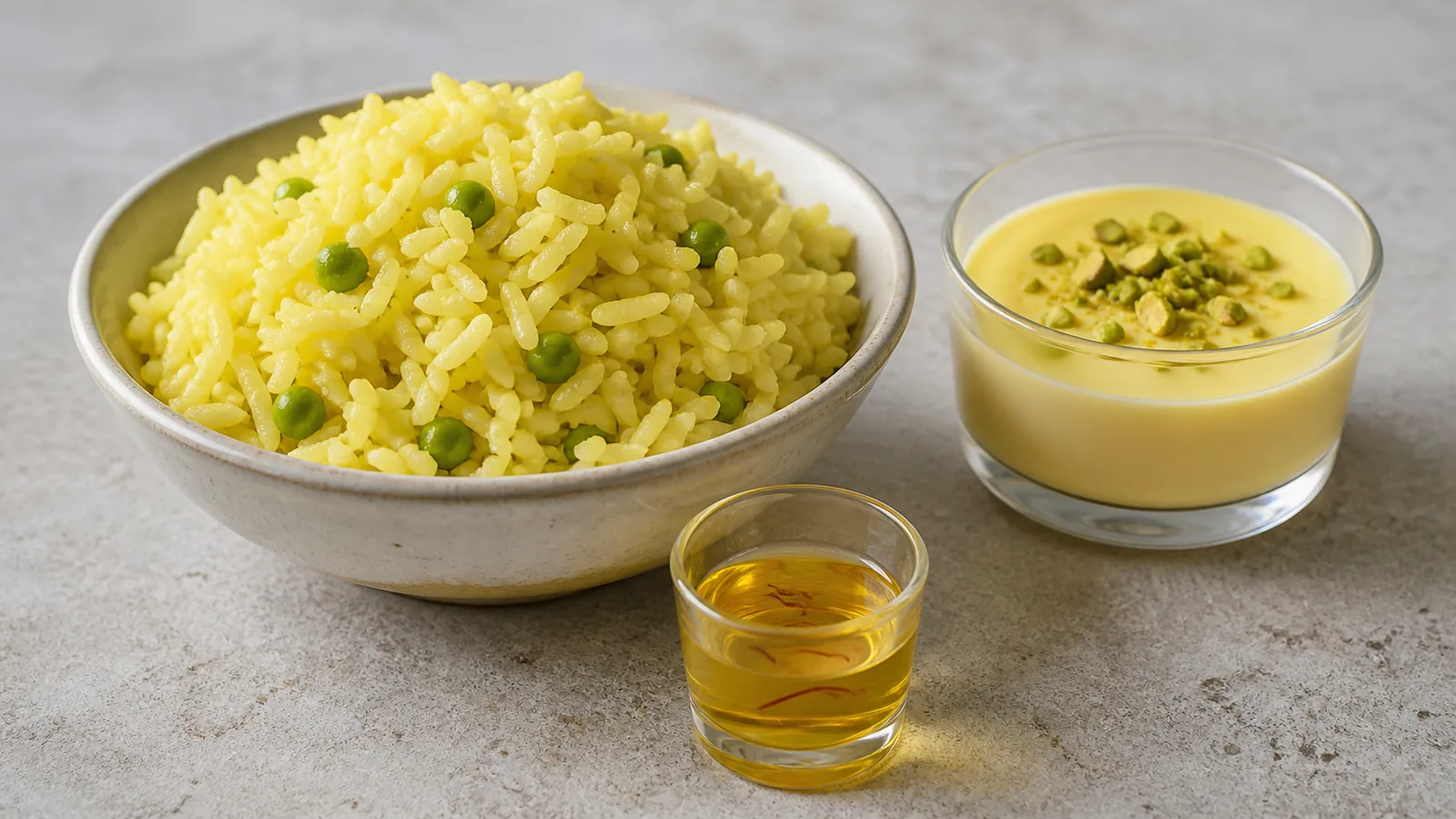
Yield is humbling. The RHS estimates about 150 flowers for 1 gram of dry saffron. A few corms may give enough threads for a dish, not a commercial packet. That is still worthwhile: the first home-grown threads used in rice or a dessert can be more memorable than a large but anonymous harvest.
Why is my saffron not flowering?
Is saffron hard to grow? Usually no, but flowering exposes mistakes. Check the basics before adding fertiliser. Small corms may need another season. A recently planted batch can flower late. Too much shade, waterlogged soil, shallow exhausted corms, crowded clumps or foliage cut down while still green can all reduce the next crop. Rodents may also remove corms without leaving obvious evidence.
If leaves appear but flowers do not, let the plants complete their cycle and reassess the site during dormancy. If corms are soft, discoloured or foul-smelling, drainage or rot is the likely problem. Healthy corms should feel firm.
Can growing saffron become a business?
Growing saffron for profit is possible as a specialist crop, but a garden success does not prove commercial viability. Anyone exploring saffron farming should first run a small trial and record corm cost, flower count, dry yield, harvest minutes, losses, laboratory or food-safety requirements, packaging and the price buyers will actually pay. Labour is concentrated into a short flowering window, and quality must remain consistent after drying and storage.
Start by learning the crop, not by calculating revenue from retail gram prices. The countries that dominate saffron production pair suitable land with skilled seasonal labour and an established supply chain; our guide to where most of the world’s saffron is grown explains that wider context.
Your first home harvest
Can you grow your own saffron? In many climates, yes. Plant genuine Crocus sativus corms in late summer, give them sun and sharp drainage, harvest only the three red stigmas, and let the leaves finish naturally. Expect a small first crop and a better-established patch over time.
When the threads are ready for the kitchen, use them with the same restraint the plant teaches. See how much saffron to use for one cup of rice for a practical first dish.