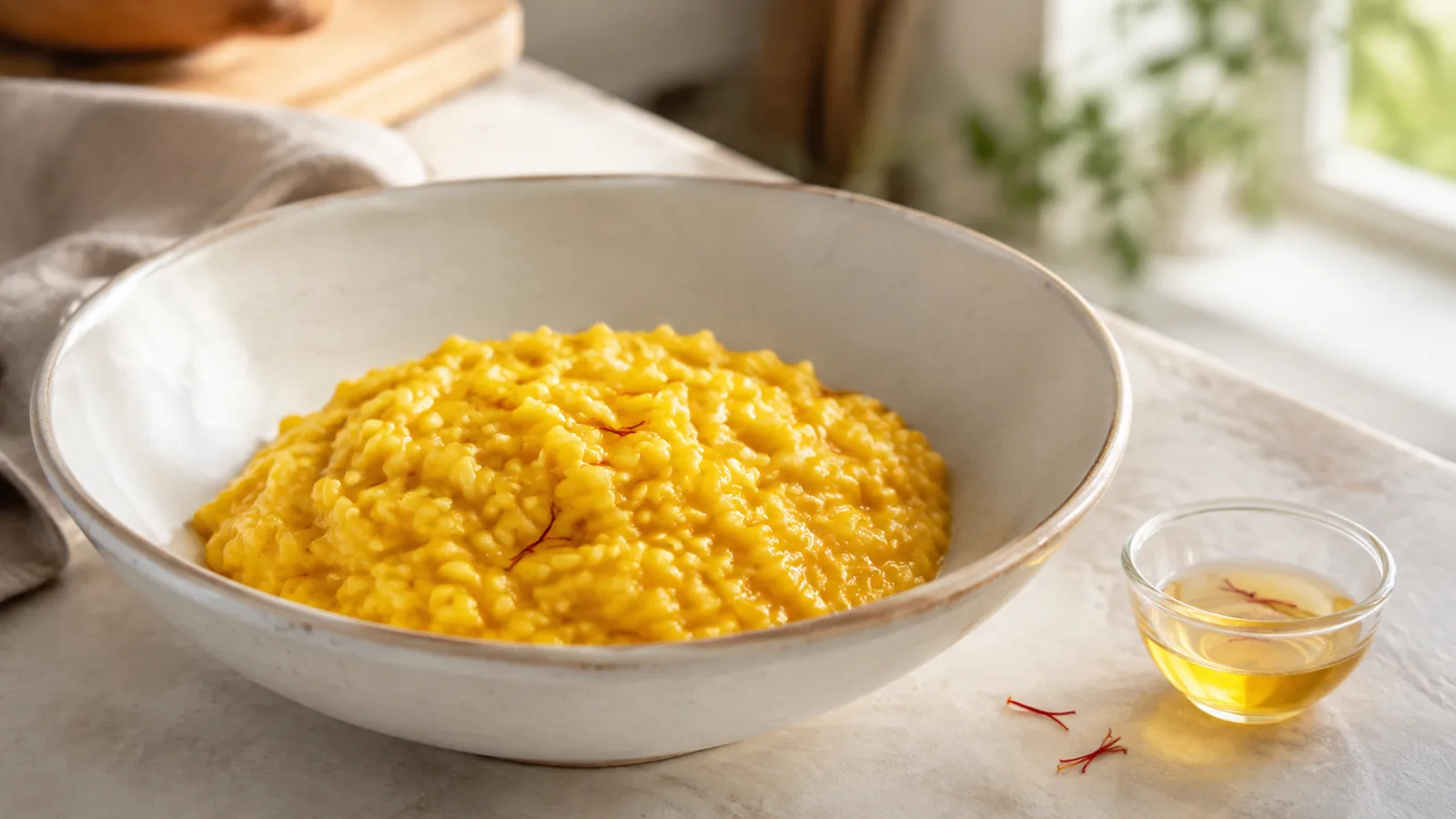
How Much Saffron for 1 Cup of Rice?
When preparing saffron rice, one common question is how much saffron for rice should be used. The amount of saffron depends on the rice quantity and the strength of the flavor you want. For 1 cup of rice, between 1/4 teaspoon and 1/2 teaspoon of saffron is usually enough. This will give the rice a rich golden color and a pleasant aroma. Saffron is a delicate and powerful spice, so using the right amount is essential for achieving the best flavor and appearance.
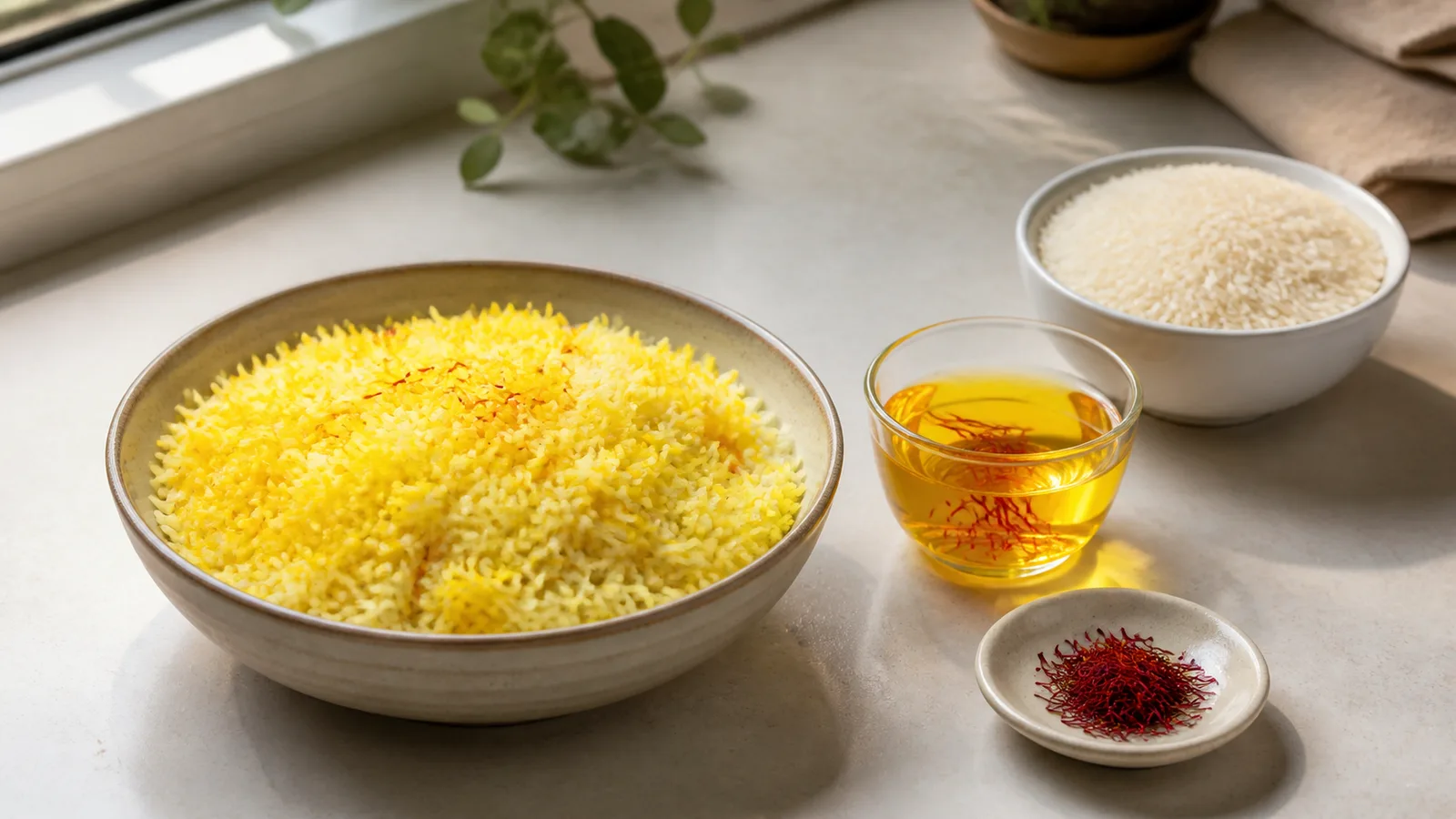
That measurement is for one cup of dry, uncooked rice. Begin with 1/4 teaspoon of loosely packed whole threads for a balanced result. Use closer to 1/2 teaspoon when saffron is meant to lead the dish, rather than sit behind stock, herbs or other spices. If you mean one cup of rice that is already cooked, use only a small pinch and fold in a little prepared saffron water.
Why is the Amount of Saffron Important?
The amount of saffron you use affects both the taste and color of the rice. Too little may disappear behind the other ingredients. Too much can make the dish noticeably bitter and waste an expensive spice. The aim is fragrant rice with a clear golden tone, not the darkest possible colour.
A teaspoon is a kitchen estimate, not a precise weight. Long whole threads sit loosely in the spoon, while broken threads and powder pack more densely. Do not substitute the same spoonful of powder for whole saffron without checking the product directions. For repeatable restaurant or production work, weigh the saffron and record the rice weight as well.
The Right Way to Use Saffron in Rice
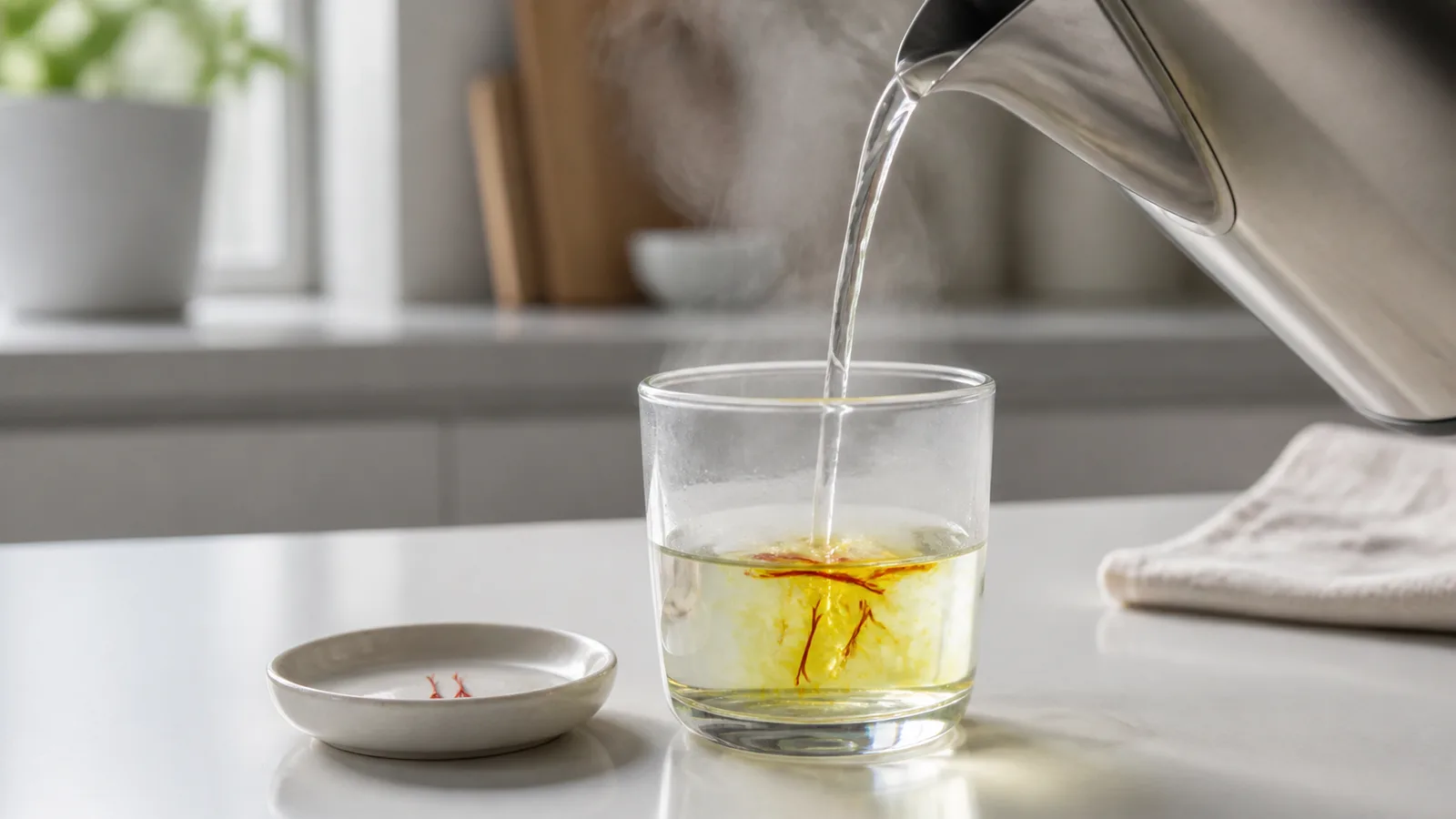
To get the best results, soak the saffron in warm liquid (water, milk, or broth) for 10-15 minutes. Lightly crush the threads first, place them in a small cup, then add two or three tablespoons of warm liquid. It should be hot enough to encourage extraction but does not need to be boiling.
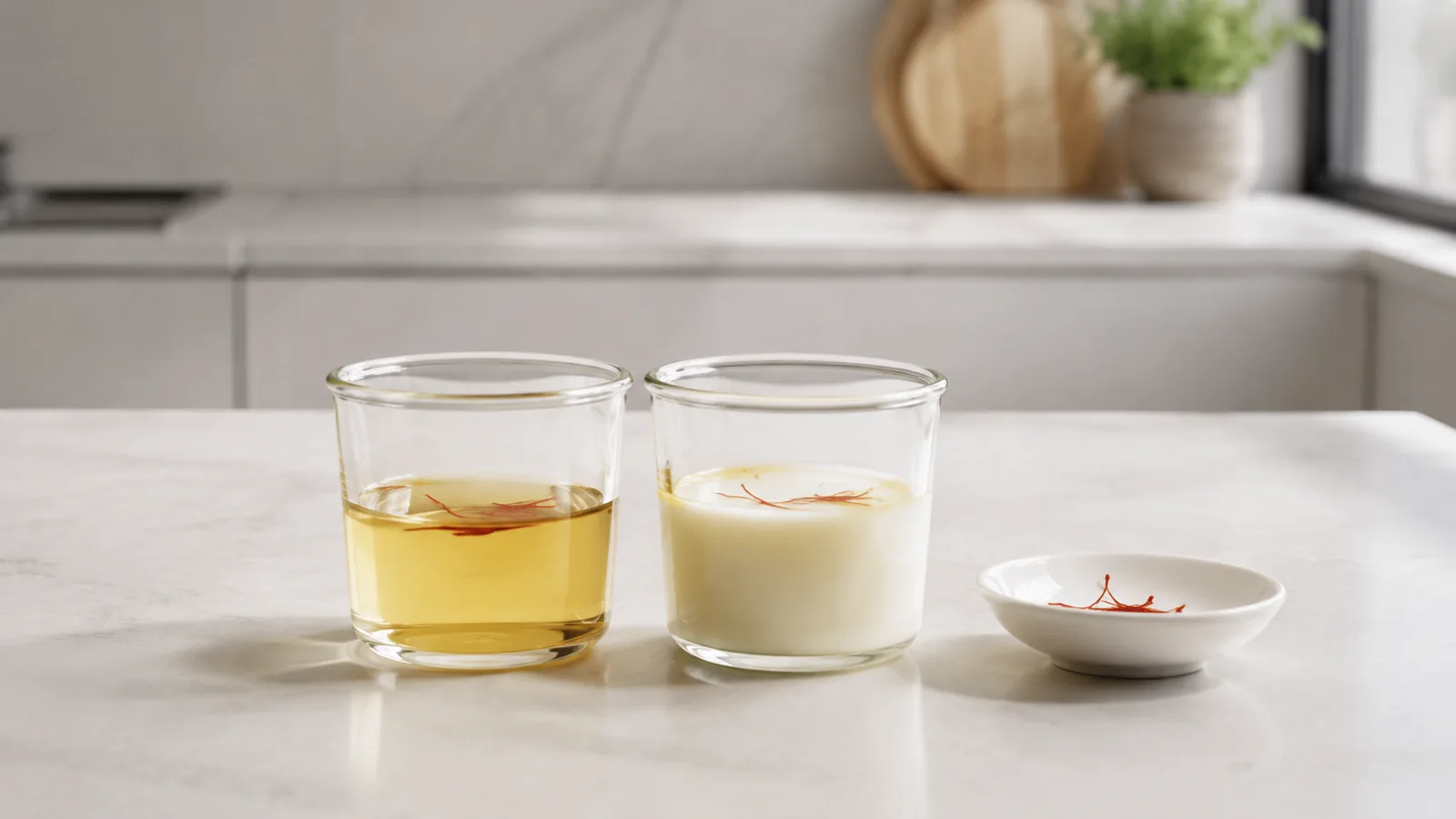
Water is the simplest choice and suits almost every rice dish. Broth can work when its flavour belongs in the recipe. Milk is better reserved for creamy or sweet rice preparations. Whatever liquid you choose, count it as part of the recipe’s total liquid so the rice does not become wet.
Food-science research has measured saffron compounds moving into water under cooking-like temperatures and infusion times. It also found that temperature and time change the balance of crocins, picrocrocin and safranal, which is a useful reminder not to boil a tiny saffron infusion for a long period. The published infusion study tested controlled laboratory conditions; the 10–15-minute kitchen method here is a practical starting point, not a claim that one timing is chemically perfect for every saffron.
How to make saffron rice with this one-cup ratio
- Measure one cup of dry rice and rinse or prepare it as your chosen recipe requires.
- Lightly crush 1/4 teaspoon of saffron threads between clean fingers or in a small mortar.
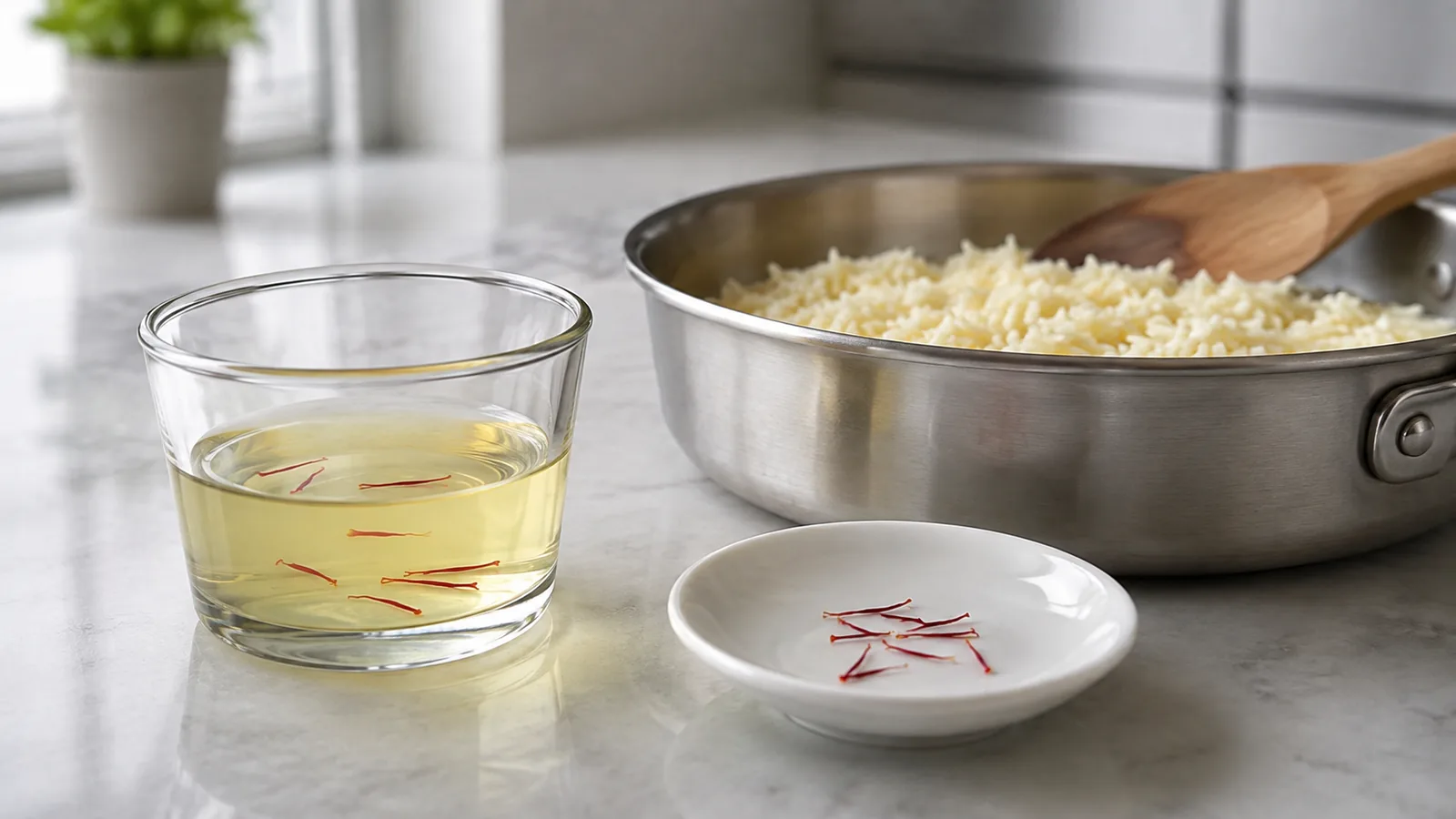
- Cover the saffron with two or three tablespoons of warm water and leave it for 10–15 minutes.
- Cook the rice using the liquid and timing appropriate to its variety. Include the saffron water in the total liquid.
- For a uniform colour, add all the infusion during cooking. For visible golden and pale grains, mix the infusion into a small portion of cooked rice and fold or layer that portion through the rest.
- Taste the finished dish before deciding that the next batch needs more.
This is a ratio guide, so it works with basmati, jasmine and many long-grain varieties. Brown rice needs a longer cooking time and usually has a stronger flavour of its own; the same 1/4-teaspoon starting point is sensible, but adding part of the infusion later can keep the saffron aroma more noticeable.
Using saffron in a rice cooker or on the stovetop
For a rice cooker, pour the prepared saffron water in with the measured cooking liquid, then stir once before starting the cycle. Do not add extra water on top of the cooker’s normal ratio. Our separate guide explains how to add saffron to a rice cooker when you want more detail about timing.
On the stovetop, the same approach works for absorption-style rice. For Persian-style steamed rice, many cooks colour a smaller portion: mix the infusion with several spoonfuls of cooked rice, then layer or spoon that golden rice over the finished platter. This gives an attractive contrast without forcing every grain to the same shade.
How to scale the amount for more rice
If you are deciding how much saffron to use in rice, scale from the dry rice quantity while treating the numbers as a starting range:
- For 1/2 cup dry rice, use about 1/8 to 1/4 teaspoon of threads.
- For 1 cup dry rice, use 1/4 to 1/2 teaspoon.
- For 2 cups dry rice, use 1/2 to 1 teaspoon.
- For 500 g dry rice, start near the lower end of the equivalent scaled range, then adjust on the next batch.
Doubling is only a first approximation. A strongly seasoned biryani may need the upper end of the range, whereas plain buttered basmati can reveal a smaller amount clearly. The age, grade and storage of the saffron also affect what you perceive.
Important Tips for Using Saffron
- Measure whole threads loosely; do not compress them into the spoon.
- Crush only what you need, just before blooming it.
- Keep the infusion covered while it stands so the aroma stays in the cup.
- Use a plain warm liquid unless the recipe genuinely benefits from milk or broth.
- Do not judge quality by colour alone. Added dye can create a strong colour without authentic saffron aroma or flavour.
- Write down the amount that worked with your rice, saffron and cooking method.
If the first batch seems mild, increase the next one gradually rather than pouring dry threads over the finished rice. You can browse our all-red saffron selection when you need whole threads, or use our four-person saffron rice recipe for a complete dish.
For one cup of uncooked rice, 1/4 teaspoon is the most useful place to begin. Bloom it, cook the rice, and move toward 1/2 teaspoon only when the dish and your taste call for a stronger saffron presence.