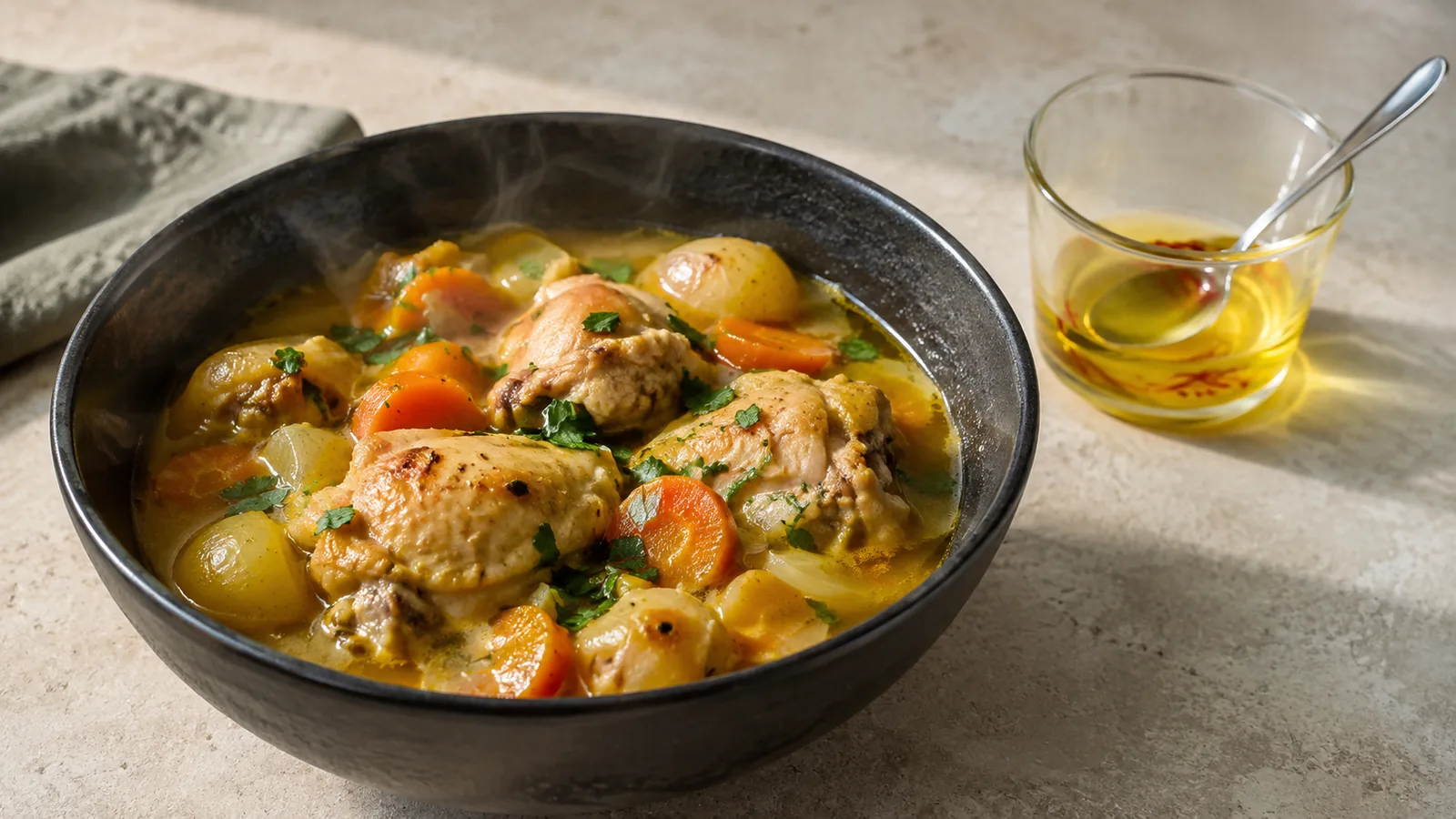
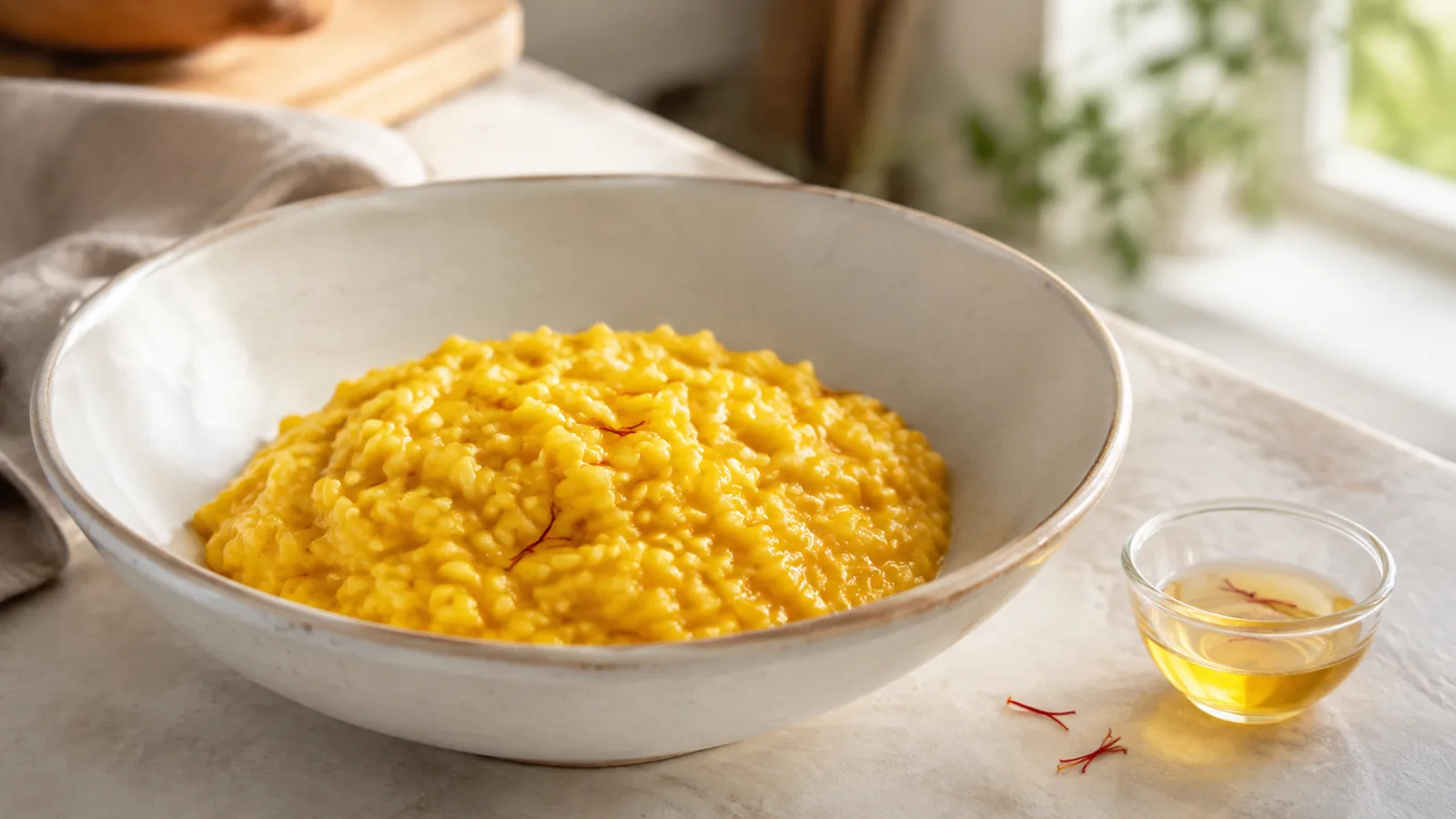
Yes, you can add saffron to a rice cooker. Bloom the threads first, count that infusion as part of the cooker’s total liquid, and run the normal programme for your rice. This gives the grains a more even golden colour and aroma than dropping dry threads onto the finished pot.
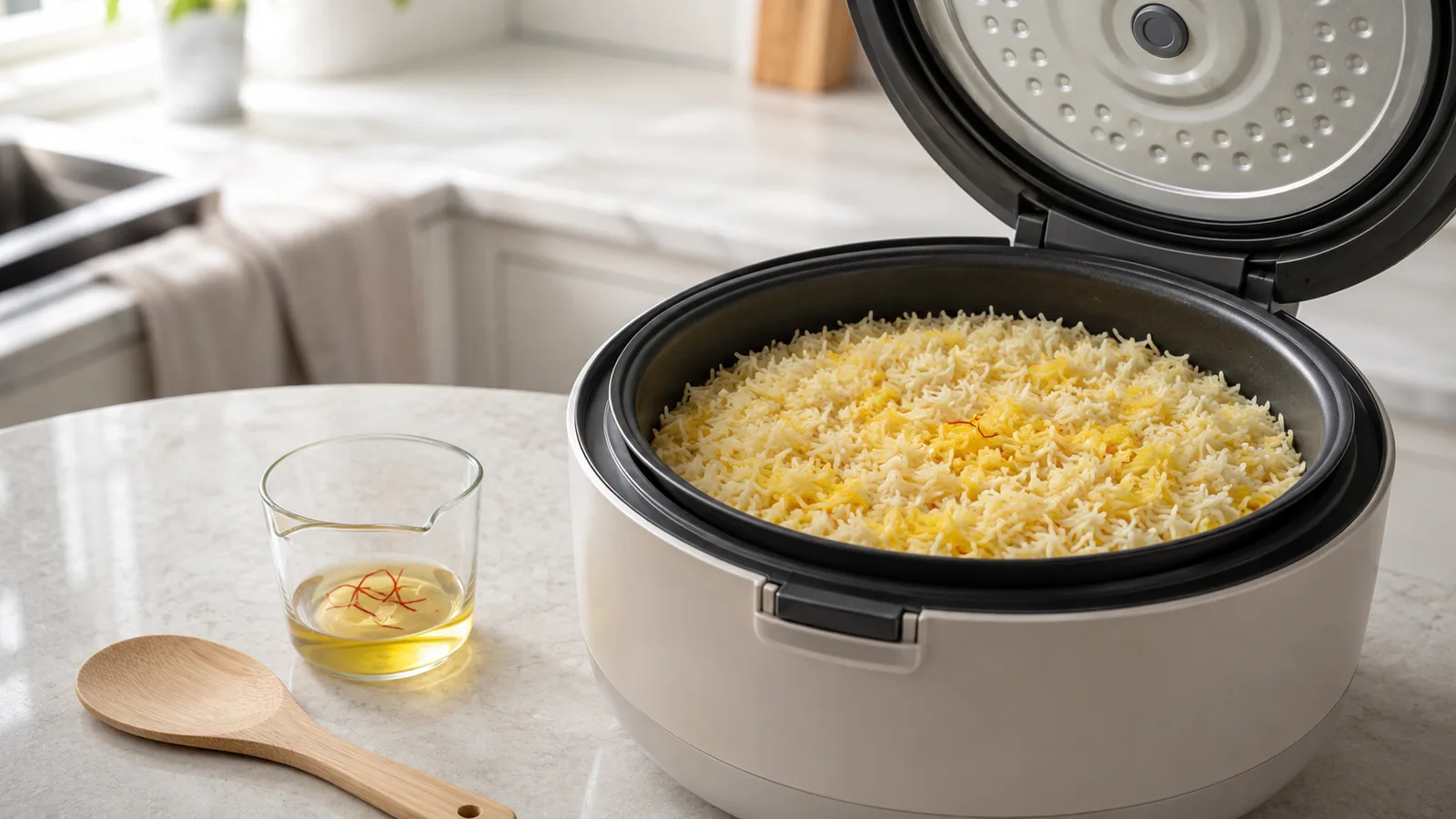
Can I Add Saffron to a Rice Cooker?
Saffron works well in an electric rice cooker because the closed vessel retains moisture and gives the infusion time to spread. The important detail is water balance. If you prepare the saffron in two or three tablespoons of water, subtract that amount from the plain water you would normally use.
The most useful saffron rice cooking tips begin with the machine’s existing instructions. You do not need a special saffron setting: use the programme recommended for the grain—white, basmati, jasmine, brown or another type—and follow the manufacturer’s liquid markings or your tested ratio. Saffron changes the aroma and colour, but it does not change how much water the rice itself needs.
Why Add Saffron to Rice in a Cooker?
A rice cooker provides gentle, enclosed cooking with little stirring. That suits saffron: the water-soluble colour moves through the pot, the lid holds aromatic steam, and the grains can absorb the infusion as they cook. The method is also repeatable once you record the saffron amount and liquid ratio that work with your machine.
Rice cooker saffron rice can be fully golden or deliberately two-tone. Adding the infusion at the beginning colours the whole batch. Mixing it into a small cooked portion at the end creates a stronger white-and-gold contrast.
How to Use Saffron in a Rice Cooker
1. Measure and Rinse the Rice
Measure the rice with the cup intended for your cooker if its bowl markings depend on that cup. Rinse according to the grain and recipe, then drain well. Leaving an unknown quantity of rinse water with the rice makes the final liquid ratio less predictable.
2. Bloom the Saffron
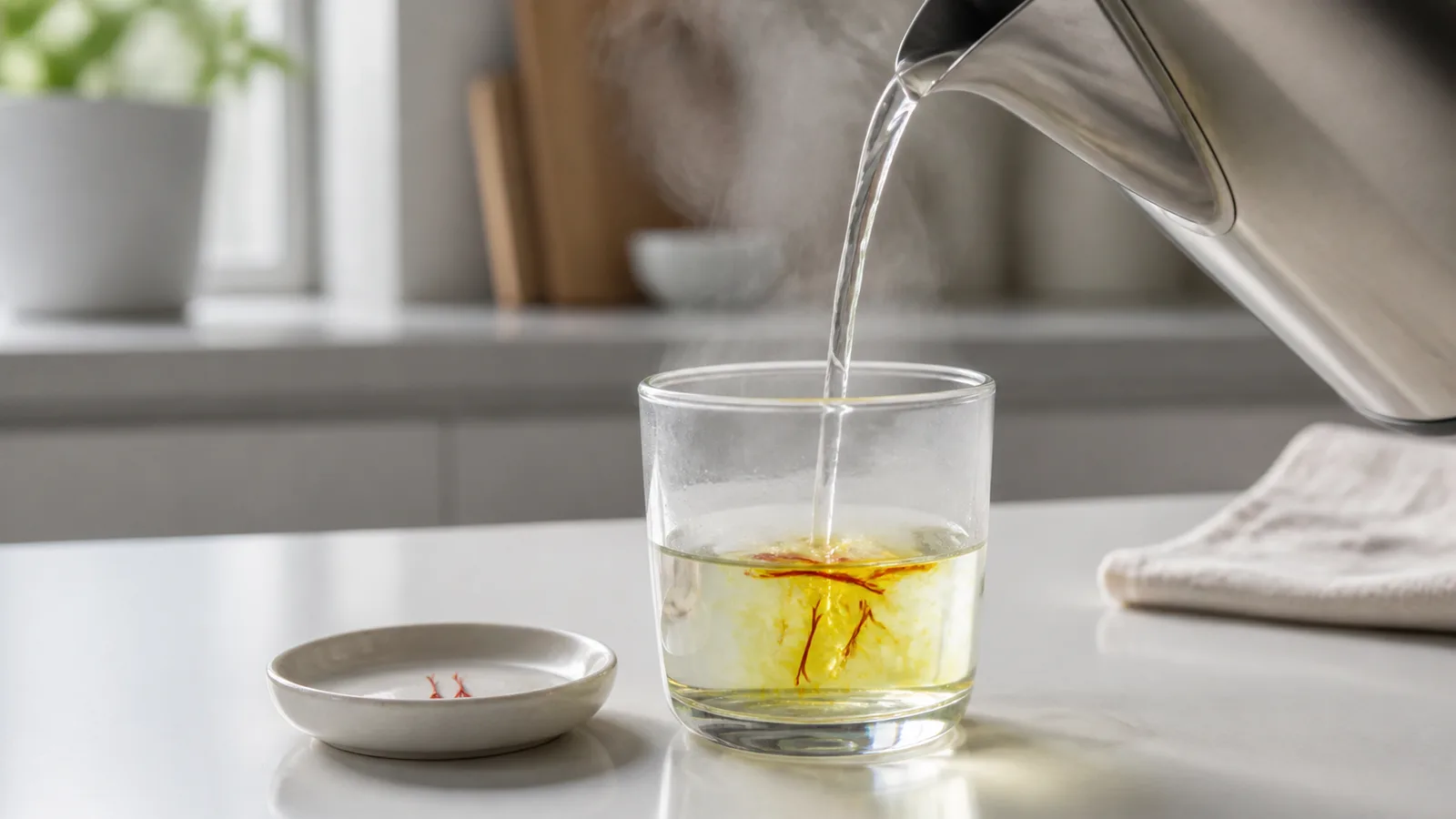
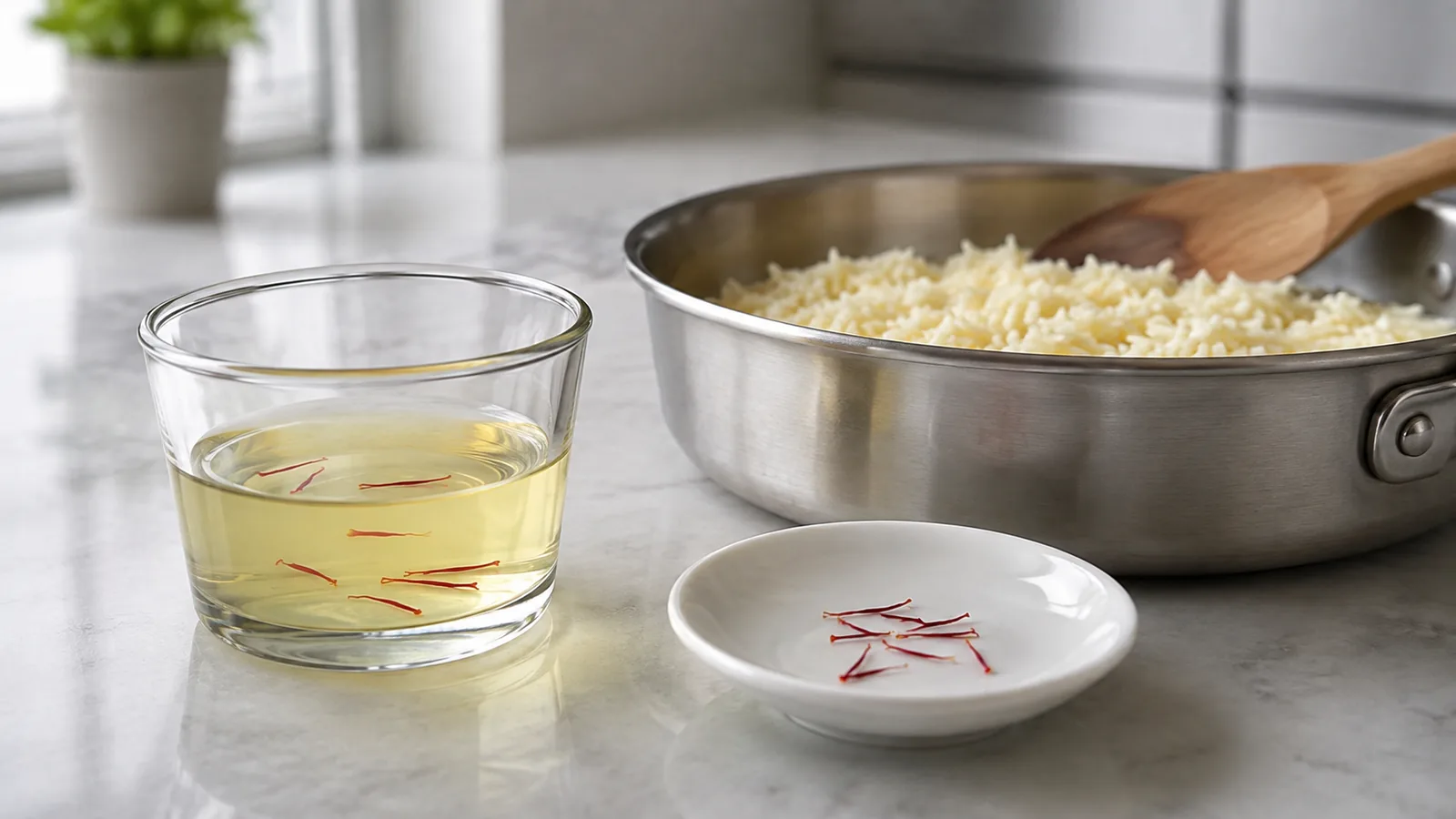
For one cup of dry rice, 0.05 to 0.1 gram is a practical starting range. Lightly crush the threads and cover them with two to three tablespoons of warm water or mild stock. Leave the covered infusion for 10 to 20 minutes, using the lower saffron amount when other seasonings are prominent.
3. Add the Infusion to the Measured Liquid
Put the drained rice in the cooker. Add the saffron infusion, including the softened threads, then add enough plain water or stock to reach the machine’s normal total. Season with salt if appropriate. A small amount of butter or oil is optional; it can round the flavour but is not required for the colour to develop.
4. Cook on the Correct Programme
Close the lid and select the normal setting for that rice. Avoid repeatedly opening the cooker during the cycle. Once it switches to warm, leave the rice covered for about five to ten minutes unless the manufacturer instructs otherwise.
5. Fluff Gently
Use a rice paddle to lift and separate the grains from the sides towards the centre. One or two gentle passes are enough. Vigorous mixing can break the rice and make the texture heavy.
A Simple Saffron Rice Recipe for a Rice Cooker
This basic saffron rice in a rice cooker is a method rather than a fixed water formula, because cooker cups, bowl markings and rice varieties differ.
Ingredients
- 1 rice-cooker cup or standard cup of basmati rice
- 0.05 to 0.1 gram saffron threads
- 2 to 3 tablespoons warm water for blooming
- The remaining water required by your rice cooker and grain
- Salt to taste
- 1 teaspoon butter or oil, optional
Method
- Rinse and drain the rice.
- Crush and bloom the saffron in the warm water for 10 to 20 minutes.
- Add the rice and infusion to the cooker.
- Top up with plain water to the normal total for your machine.
- Add salt and optional fat, then run the correct rice cycle.
- Rest briefly on warm, fluff gently and serve.
How to Make Two-Tone Rice
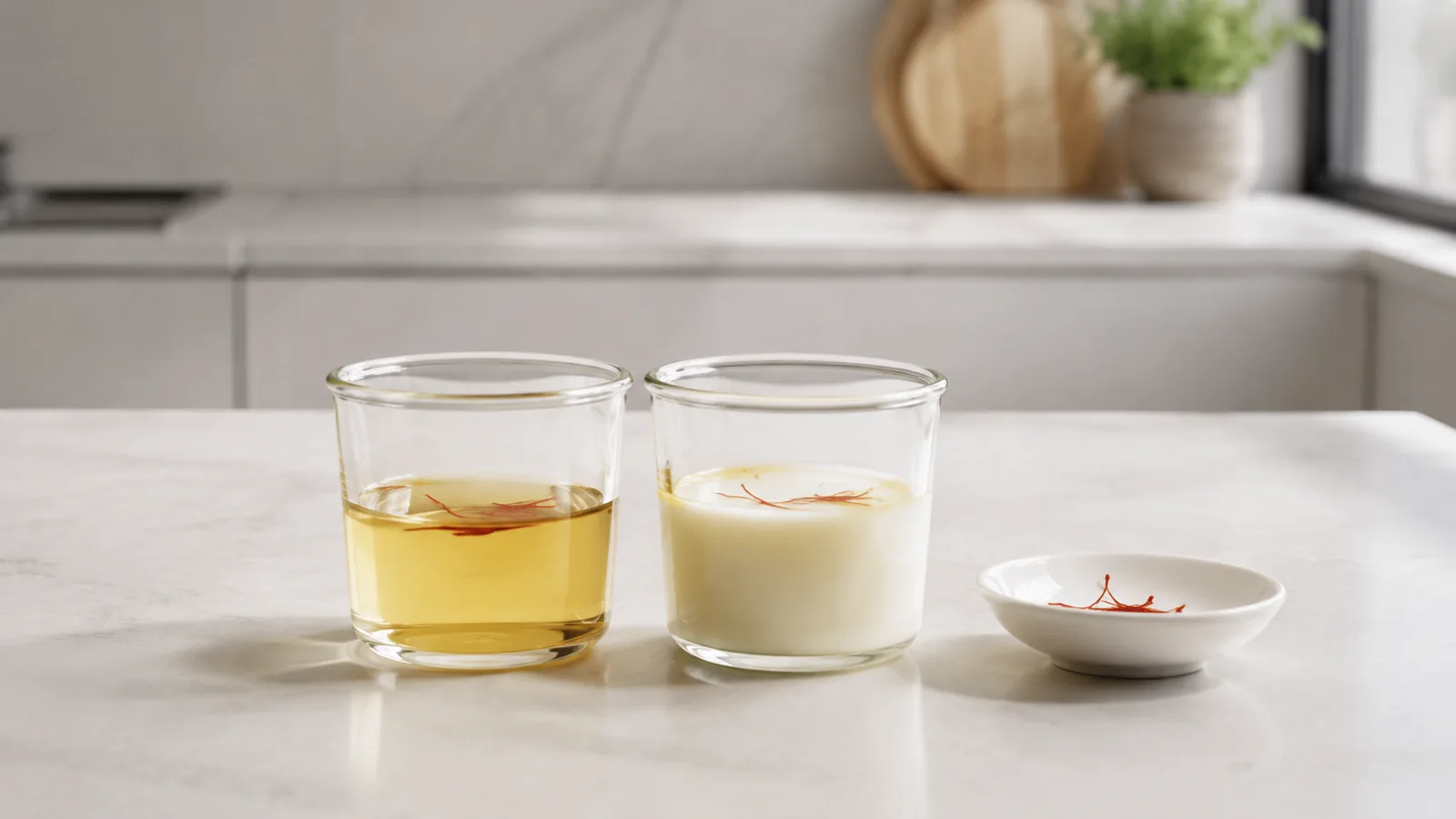
If you want white grains as well as gold, cook the rice without saffron. When it is ready, place about one quarter of the hot rice in a separate bowl and fold in the prepared infusion. Spoon this coloured portion over the remaining white rice.
This method keeps the main batch neutral and creates a more visible saffron section. It is also useful when one rice-cooker batch must accompany dishes with different flavour strengths.
Adjustments for Different Rice
Basmati: rinse well and use the cooker’s basmati or white-rice guidance. Its own aroma remains noticeable beside saffron.
Jasmine: use saffron lightly so the floral aromas do not compete. Follow the cooker’s normal jasmine ratio.
Brown rice: choose the brown-rice cycle and longer cooking time. Add the infusion at the beginning as part of the total liquid.
Mixed rice or grains: use a programme tested for the slowest-cooking ingredient. Saffron cannot correct mismatched cooking times.
Common Rice-Cooker Problems
The rice is too wet. The blooming water was probably added on top of the normal liquid rather than included within it.
The colour is patchy. The infusion was poured into one spot and not dispersed through the initial liquid. Stir once before starting the cycle.
The rice is yellow but not aromatic. The threads may be old, the amount may be too low, or the finished rice may have remained on the warm setting for too long.
The flavour is bitter. Reduce the saffron rather than adding sweetness. A modest amount distributed through more rice gives a cleaner result.
The bottom browns. Some cookers deliberately form a crust or run a hot keep-warm cycle. This is a machine and setting issue, not an effect of the saffron.
Reliable Saffron Rice in a Rice Cooker
For reliable saffron rice in rice cooker models of any size, keep the machine’s usual rice-to-liquid relationship unchanged. Bloom the saffron separately, count that liquid in the total, and choose the correct grain programme. Once those details are controlled, the cooker handles the heat and timing.
For more precise scaling, read how much saffron to use for one cup of rice. Our saffron-blooming guide covers extraction, while the rice-colouring guide explains full-gold and two-tone presentation.