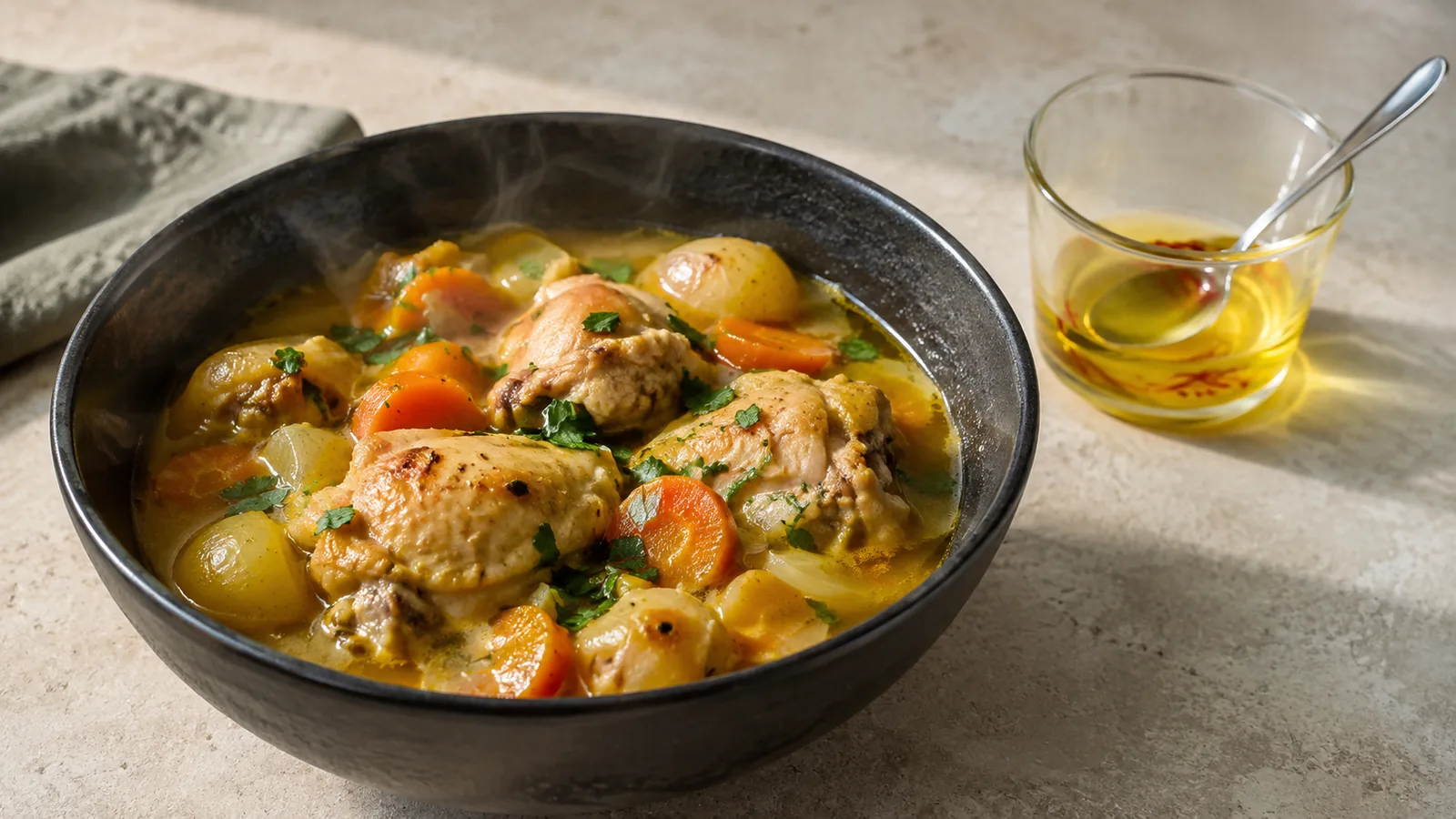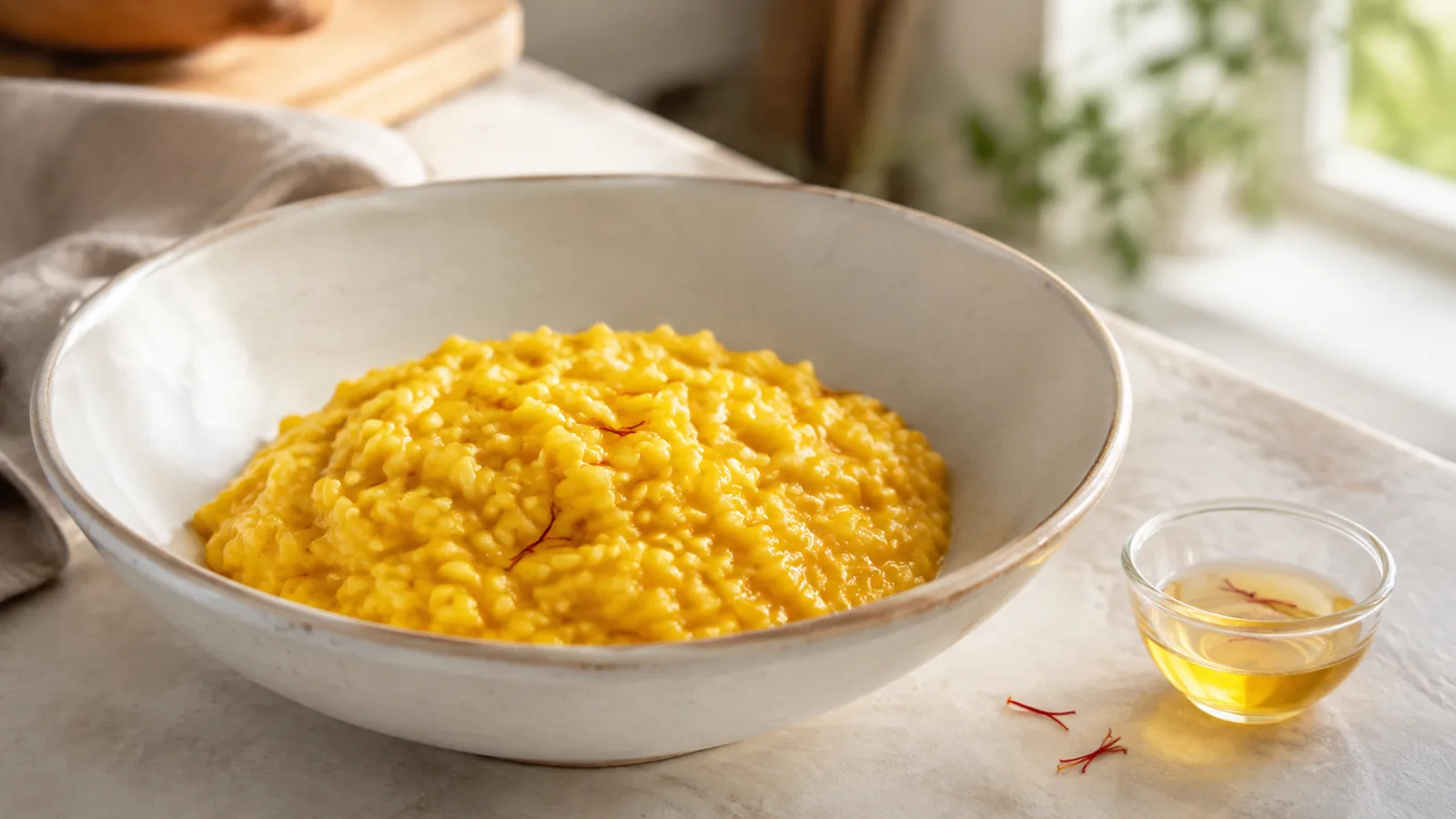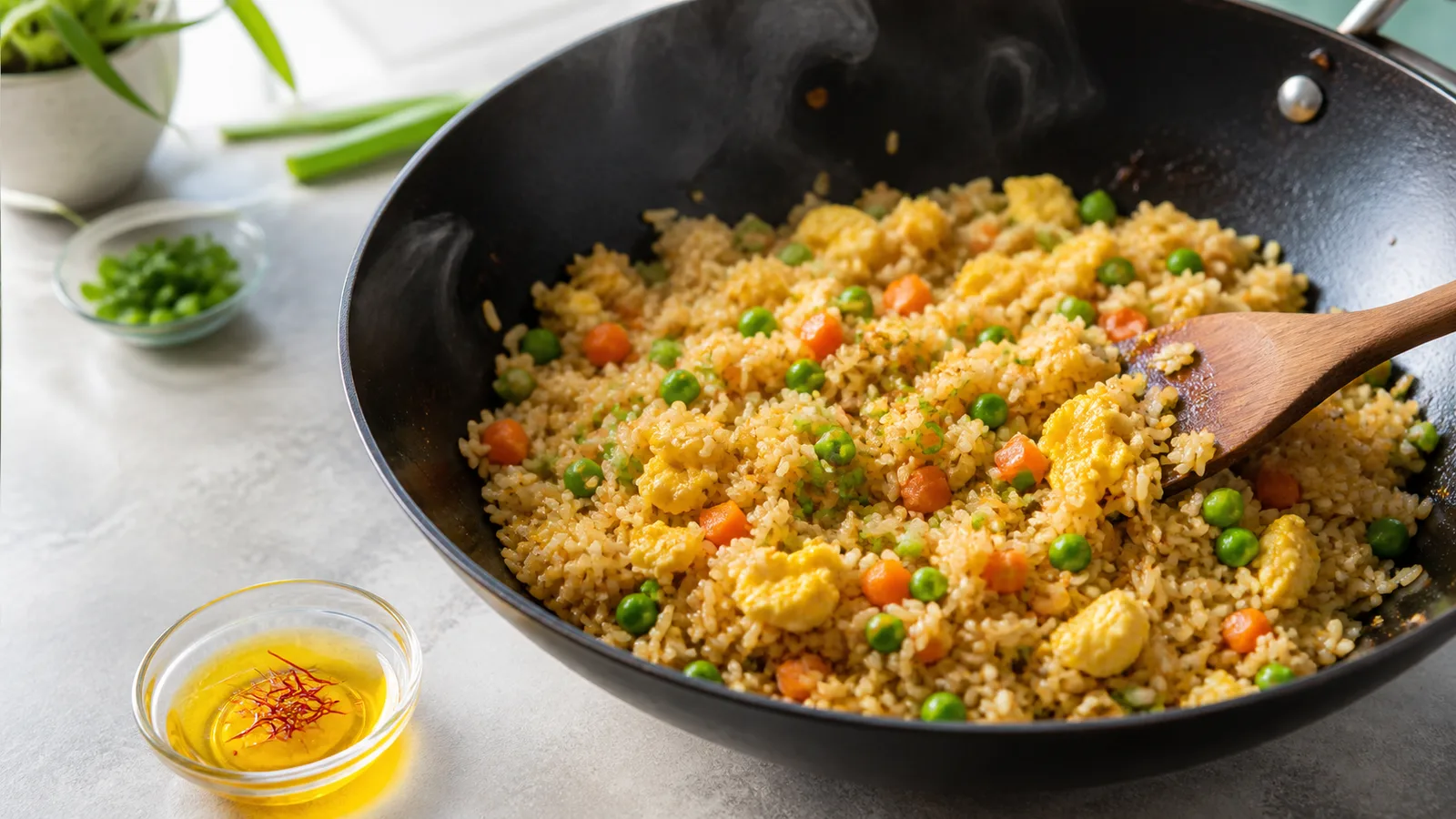
Yes, you can put saffron in fried rice. It gives the grains a warm golden color and a floral, gently earthy aroma, but it needs a little planning: bloom the threads in a very small amount of warm liquid, then add that infusion while the rice is in the hot pan. Too much liquid can make fried rice steam and clump.
This saffron fried rice recipe keeps the saffron clear without asking it to compete with a heavy pour of soy sauce. Use cold cooked rice, prepare the vegetables before heating the wok, and cook quickly.
What saffron adds to fried rice
Saffron brings fragrance and color rather than the toasted savoriness associated with soy sauce, sesame oil, garlic, or wok heat. It can complement ginger, scallions, peas, carrots, egg, chicken, or shrimp. The flavor is easiest to notice when salty and smoky seasonings remain restrained.
The pairing is not tied to one traditional fried-rice style. Think of it as a saffron rice dish made with the high-heat, separate-grain technique of fried rice. If you want the flavor profile of a particular regional recipe, keep its core seasonings in charge and decide whether saffron genuinely belongs.
How to prepare saffron for fried rice
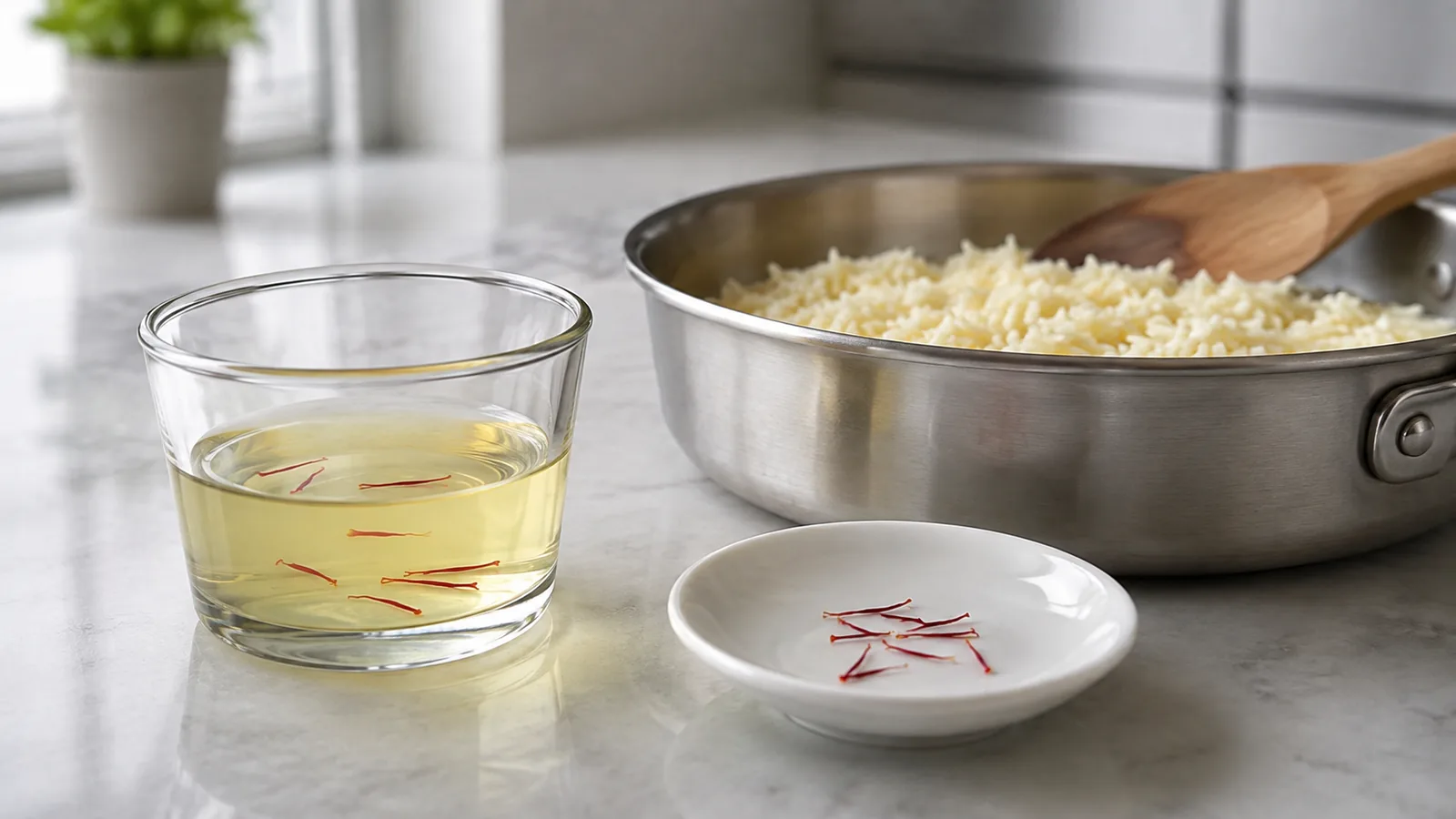
- Put 8 to 12 saffron threads in a small heatproof cup.
- Crush two or three of the threads lightly, leaving the rest whole.
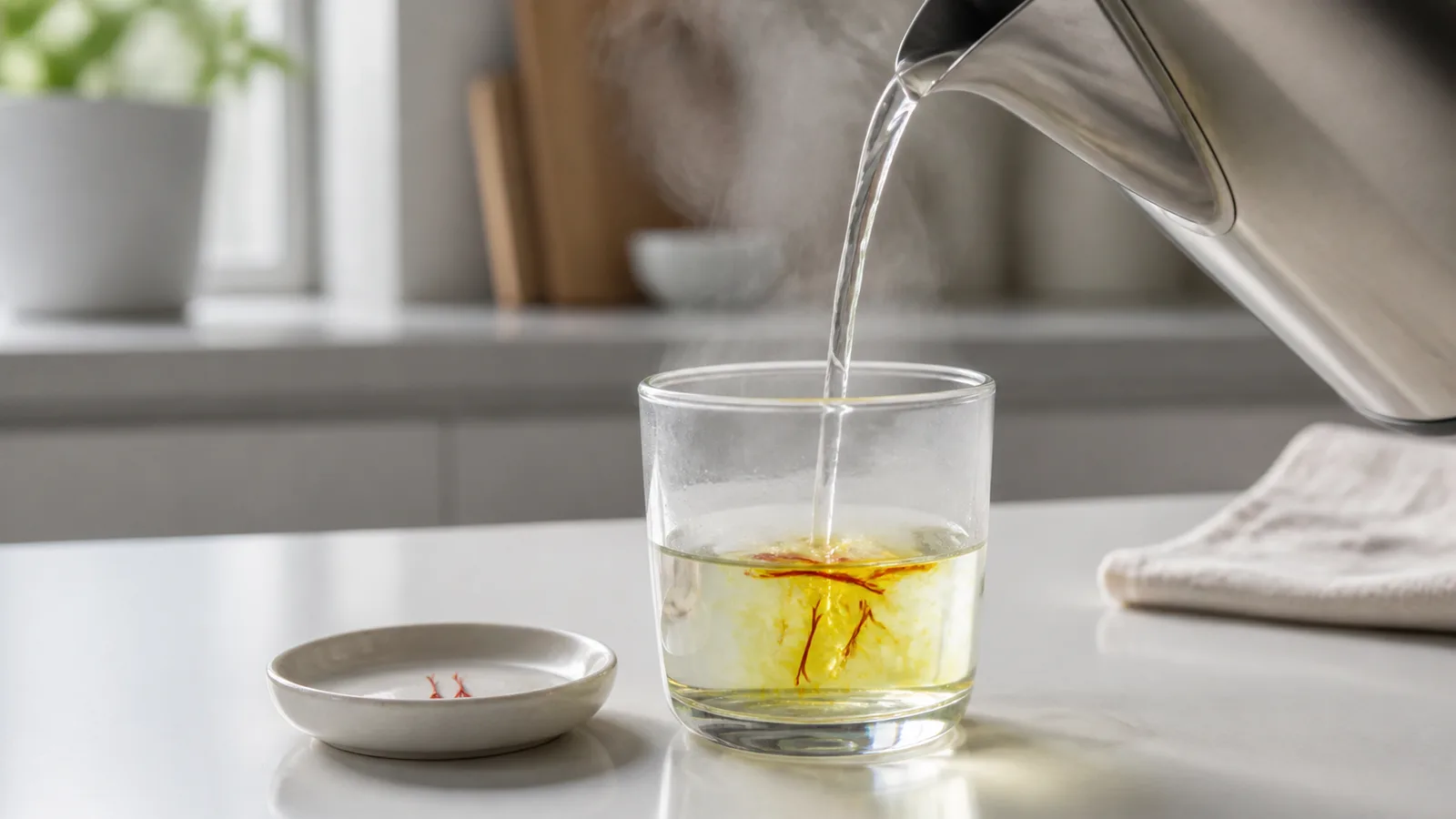
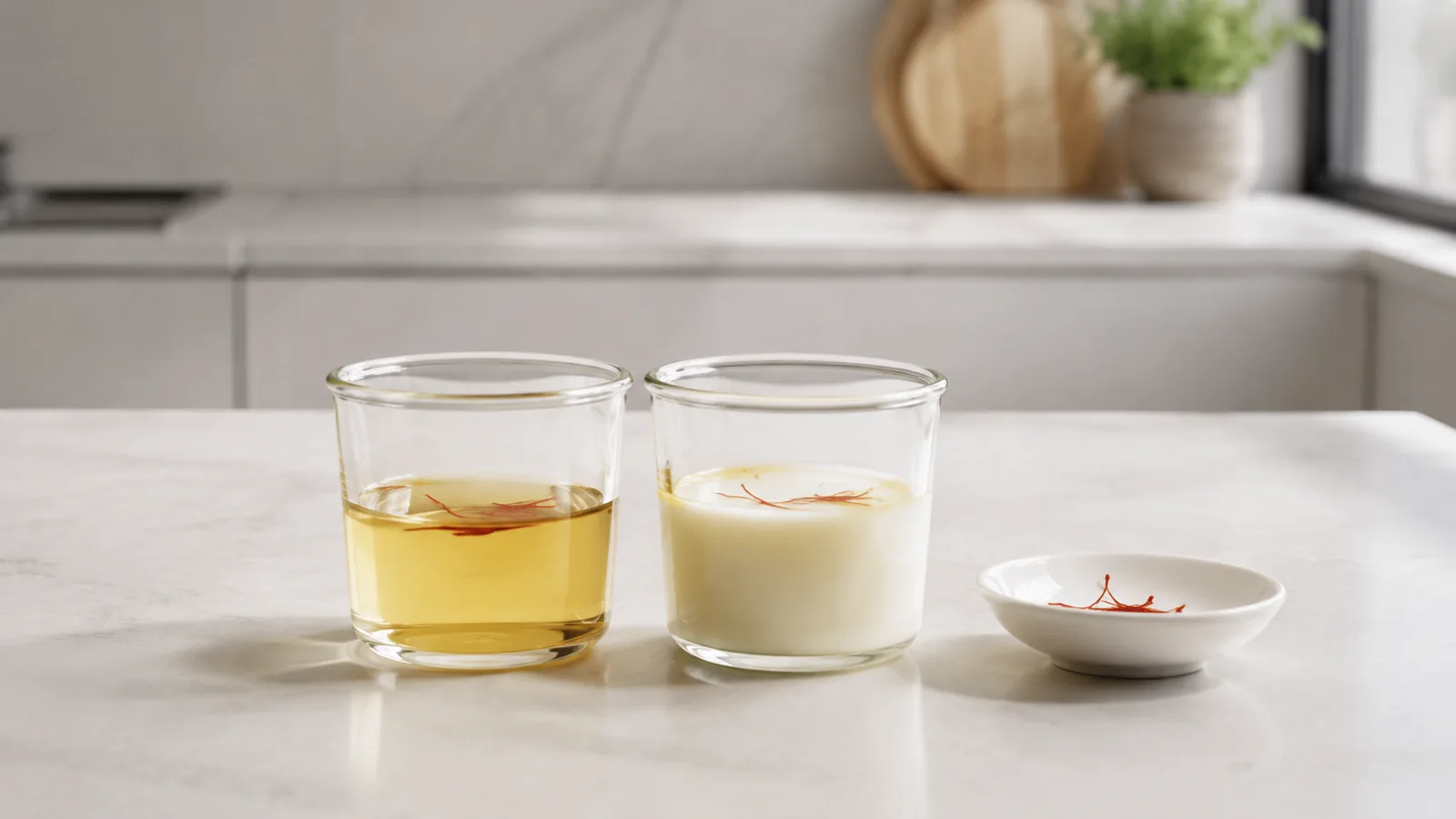
- Add 1 tablespoon of warm water or light broth.
- Cover and bloom for 10 to 15 minutes.
One tablespoon is enough for a two-serving batch and introduces very little moisture. The infusion should smell distinctly floral and look yellow to gold. Use both the liquid and the threads.
Easy saffron fried rice recipe
Ingredients for two servings
- 3 cups cold cooked long-grain rice
- 1 prepared saffron infusion
- 2 eggs, lightly beaten
- ½ cup diced carrot
- ½ cup peas
- 2 scallions, sliced, with white and green parts separated
- 1 small garlic clove, finely chopped
- 2 tablespoons neutral cooking oil, divided
- 1 to 2 teaspoons light soy sauce, optional
- Salt and black pepper to taste
Day-old refrigerated rice is convenient because its surface is drier, but freshly cooked rice can work. Spread it on a tray, let the steam escape, and cool it promptly before frying. Break up firm clumps with clean hands or a fork before the wok gets hot.
Method
- Cook the egg. Heat the wok or a wide skillet over medium-high heat. Add half the oil, scramble the egg until just set, and move it to a plate.
- Cook the vegetables. Add the remaining oil, carrot, peas, scallion whites, and garlic. Stir-fry until crisp-tender and aromatic.
- Fry the rice. Add the cold rice and toss until the grains separate and are hot throughout.
- Add the saffron. Drizzle the infusion around the hot surface rather than onto one spot. Toss promptly so the moisture evaporates and the color spreads.
- Finish carefully. Return the egg, add the scallion greens, and season. If using soy sauce, begin with one teaspoon and taste before adding more.
When should you add saffron?
Add the bloomed saffron after the rice has heated and separated, shortly before the final seasoning. The hot wok evaporates the tablespoon of liquid quickly while the rice takes on the aroma. Adding it at the beginning exposes the saffron to more direct heat; pouring in a large infusion near the end risks soft, wet grains.
You can also toss the cold rice with the infusion before frying, then spread it on a tray for a few minutes so the surface dries again. This produces more even color, while adding it in the wok creates natural golden variation.
How to balance saffron with soy sauce
Dark soy sauce will quickly cover saffron’s color and can dominate its aroma. For a saffron-forward version, use light soy sparingly or season with salt instead. Toasted sesame oil is similarly strong; if you want it, add only a few drops after cooking.
Butter can make the dish richer, but it is not required. A neutral oil tolerates wok heat better and leaves more room for the saffron. Cardamom, rose water, and sweet spices are usually better saved for a pilaf unless you are intentionally developing a different dish.
Common mistakes
- Adding dry threads at the end: they have little time to release their aroma.
- Using warm, wet rice: the grains are more likely to clump and steam.
- Blooming in too much liquid: fried rice needs a dry, hot pan.
- Over-seasoning: heavy soy, sesame oil, or garlic can hide the saffron.
- Expecting a health treatment: a culinary pinch adds sensory character, not a proven antioxidant, mood, anti-inflammatory, or nutritional outcome.
Use dry, fragrant threads and keep the container closed, away from stove heat, light, and moisture. If you need saffron for fried rice, browse our saffron selection.
The simplest answer is yes: saffron in fried rice can be excellent. Bloom only a modest pinch, control the added moisture, and let the hot rice carry the aroma before deciding whether the dish needs stronger seasonings.