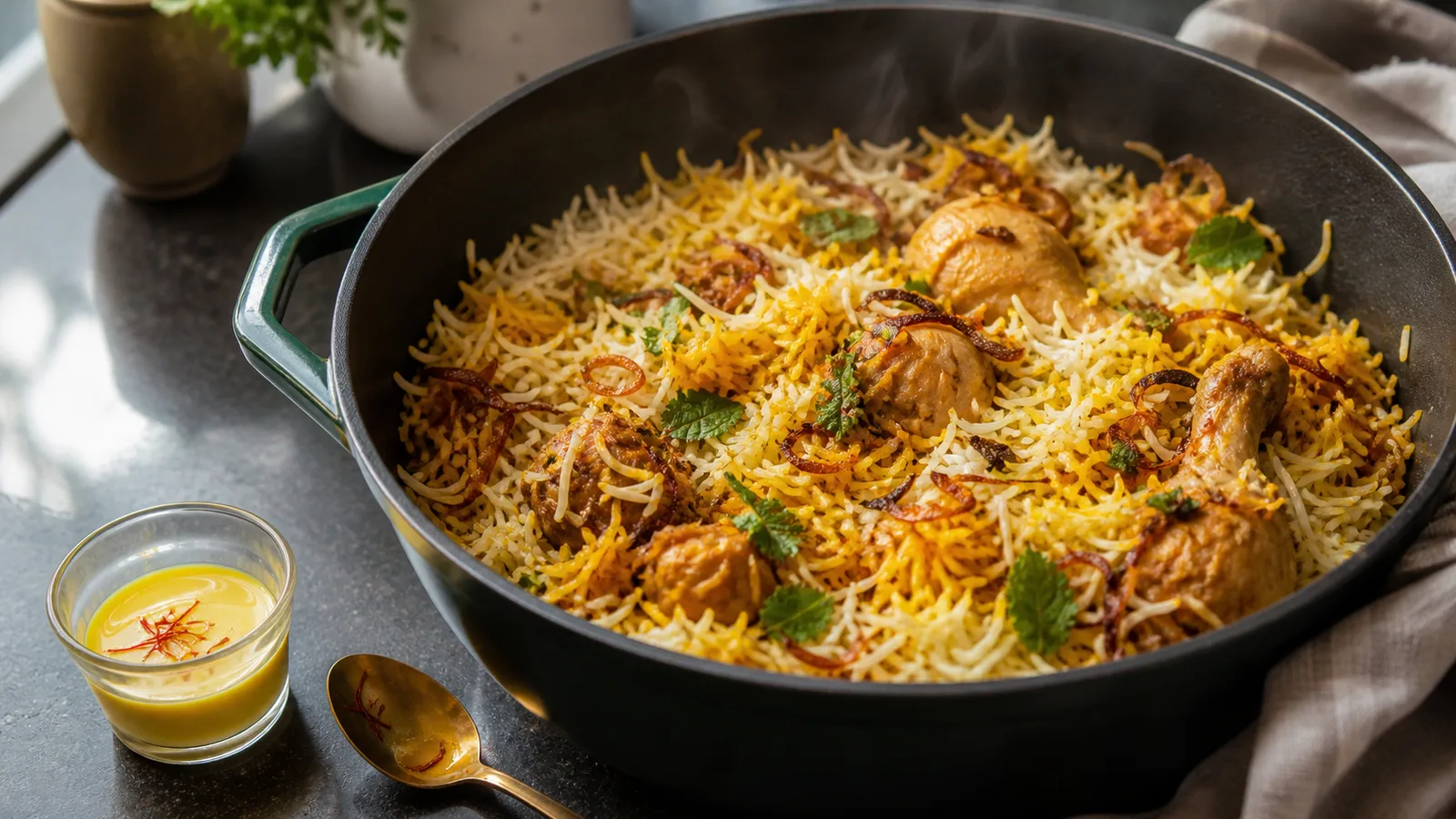
Yes, saffron is often added to biryani, especially in layered versions finished over gentle heat. A small infusion drizzled across the rice creates fragrant golden patches among the white grains. It should support the basmati, fried onions, meat or vegetables, and warm spices—not turn every grain bright yellow or dominate the pot.
The most reliable way to develop saffron flavor in biryani is to bloom the threads in warm milk or water, then add the liquid during layering. Different biryani traditions use saffron differently, and some do not require it at all, so treat it as a deliberate finishing ingredient rather than a rule.
How does the use of saffron affect the flavour of biryani?
Saffron adds a floral, hay-like aroma, gentle earthiness, and a faint natural bitterness. Those notes lighten the impression of a rich masala while joining the fragrance of basmati rice, cardamom, and fried onion. Saffron does not replace the dish’s other spices; it occupies a quieter layer above them.
Too much can make biryani taste medicinal and flatten the contrast between rice and masala. A good result is noticeable when the lid comes off, but individual bites should still vary: some more aromatic, some more savory, and some carrying the sweetness of browned onion.
How to soak saffron for biryani
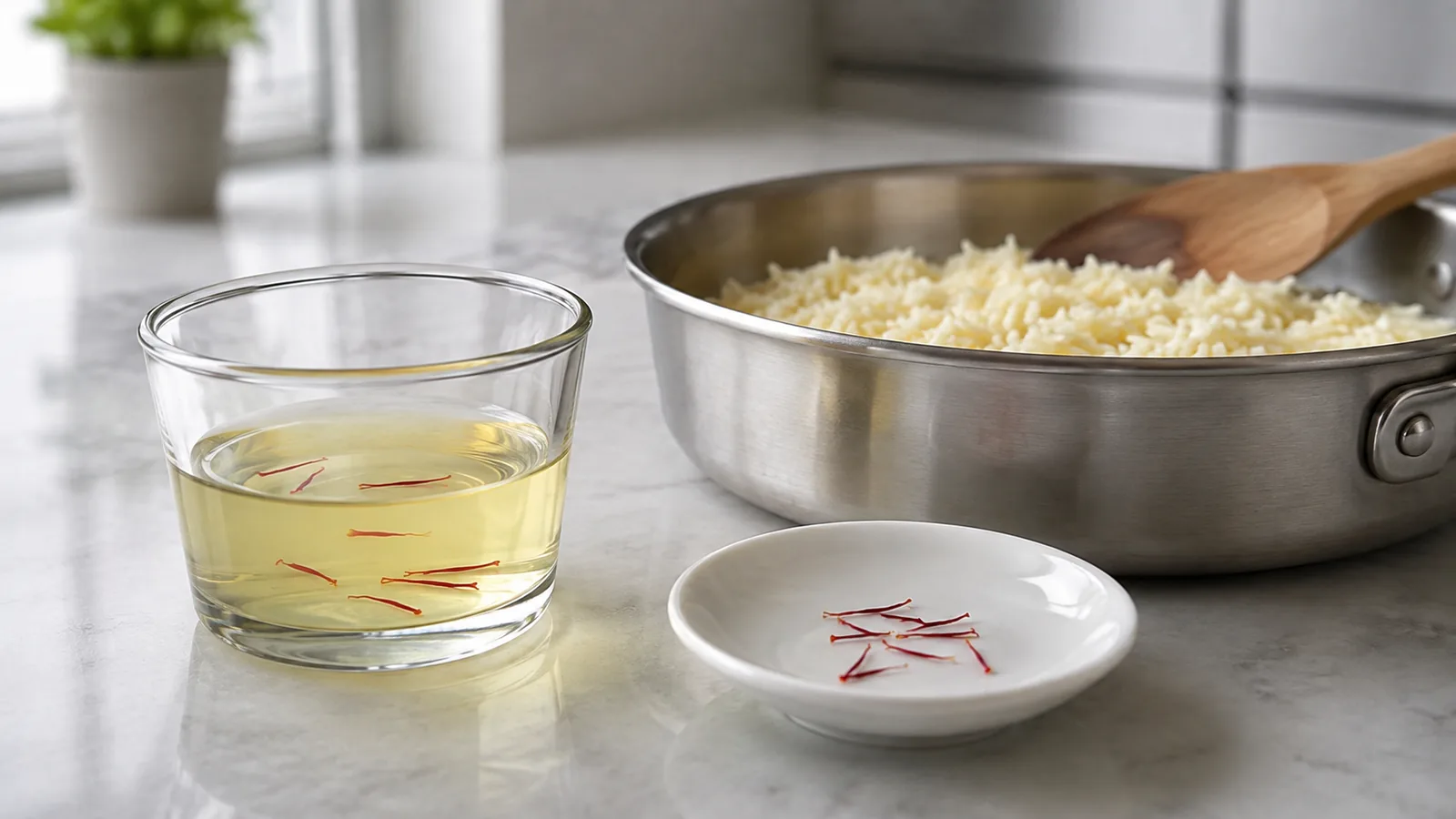
- Place a generous pinch of saffron threads in a small heatproof cup.
- Lightly crush two or three threads, leaving the rest whole.
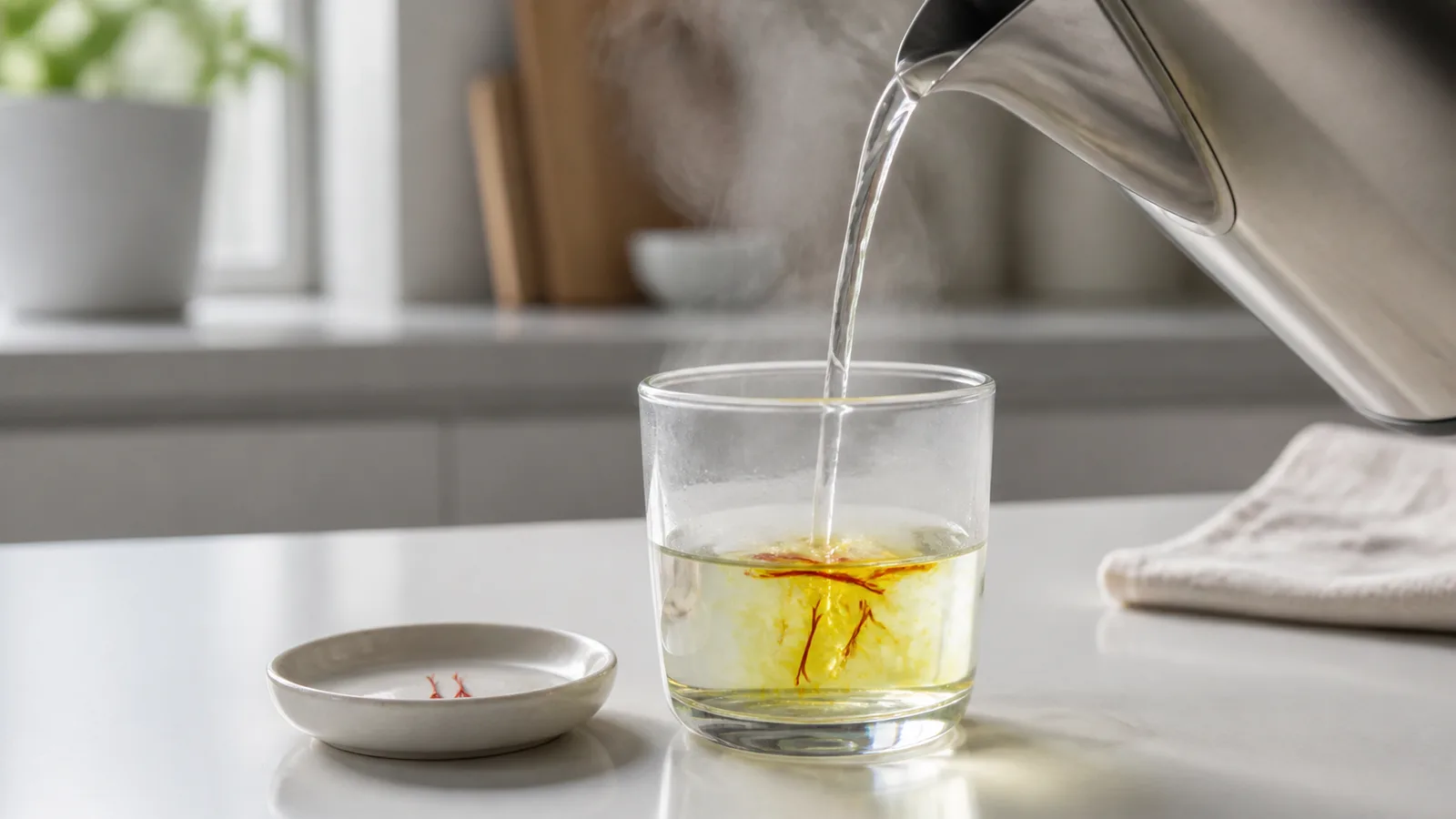
- Add 3 to 4 tablespoons of warm milk or water. It should steam gently, not boil hard.
- Cover and leave the infusion for 10 to 15 minutes.
- Use both the golden liquid and the threads when assembling the biryani.
Blooming releases the color and aroma before the saffron reaches a large pot. It also makes a modest amount easier to distribute. If you are making a dairy-free biryani, water or light stock works well; milk is traditional in many recipes but not essential.
How to use saffron milk for biryani
Par-cook the basmati rice and prepare the masala as your recipe directs. When the pot is ready to layer, spread the rice and masala without compressing them. Spoon or drizzle the saffron milk over the upper rice layers, concentrating it in several areas rather than stirring it through the whole pot.
Add the remaining finishing ingredients—perhaps fried onions, herbs, ghee, or rose or kewra water if the recipe calls for them—then seal the pot and complete the dum cooking. Keep strong floral waters restrained; they can easily compete with saffron.
Do not pour cold milk into a very hot empty pan, and do not add so much liquid that the rice becomes wet. The 3 to 4 tablespoons in the infusion are part of the recipe’s finishing moisture.
How much saffron for biryani?
For a home pot serving roughly four to six people, begin with a generous pinch. Thread size, quality, and strength vary, so a fixed strand count can create false precision. The weight that suits a large catering pot would be excessive in a small family recipe.
If the saffron seems weak, first check the blooming time, the freshness of the threads, and whether a very strong masala is masking it. Adding more is not always the best correction.
How to control saffron color for biryani
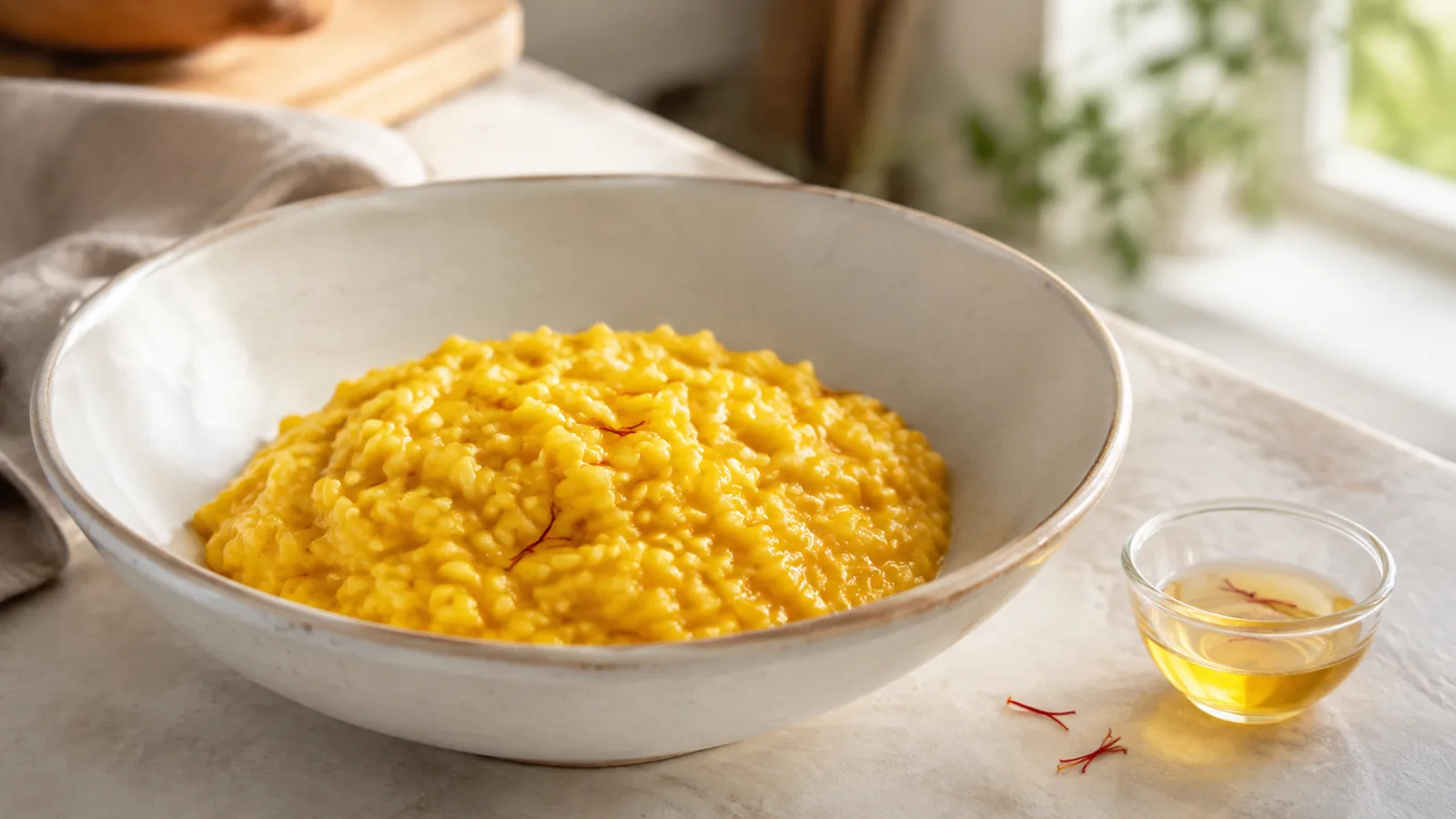
Natural saffron produces yellow-to-golden areas, not an electric orange color. Drizzling the infusion in patches preserves the classic contrast between white and colored rice. Stirring it into every grain makes the appearance flatter and can damage the long rice.
The final shade depends on the saffron, milk or water, steeping time, rice, and lighting. Judge the spice by aroma and flavor as well as color. Artificial biryani color can make rice vivid but does not reproduce saffron’s fragrance.
When should saffron be added?
For layered biryani, add it during final assembly, shortly before the sealed cooking stage. This protects the aroma while giving the infusion time to move through the steam. Adding dry threads to the boiling rice water is less controlled: much of the liquid is drained, and the effect can be diluted.
For a one-pot style, add the bloomed saffron near the end of cooking when only a little liquid remains, then cover the pot and let the rice finish gently. Follow the structure of the recipe rather than forcing a layering method where it does not belong.
Common mistakes
- Using too much: saffron should remain a fragrant accent, not the only flavor.
- Skipping the bloom: dry threads spread less evenly and may remain under-extracted.
- Stirring finished layers: this breaks grains and erases the white-and-gold contrast.
- Adding too many floral ingredients: rose or kewra water can hide saffron quickly.
- Expecting a health treatment: a culinary pinch adds sensory character, not a proven mood, digestive, heart, or antioxidant outcome.
Choosing saffron for biryani
Use dry, fragrant threads that are clearly identifiable and predominantly red. Keep them sealed away from steam, direct light, and stove heat. Powder is harder to inspect and loses aroma more quickly once opened. You can browse our saffron selection when planning your next biryani.
Saffron in biryani works best when it is bloomed patiently, added with restraint, and allowed to create variation across the pot. That preserves the long grains and layered flavors while giving the finished dish its distinctive fragrance and natural golden accents.