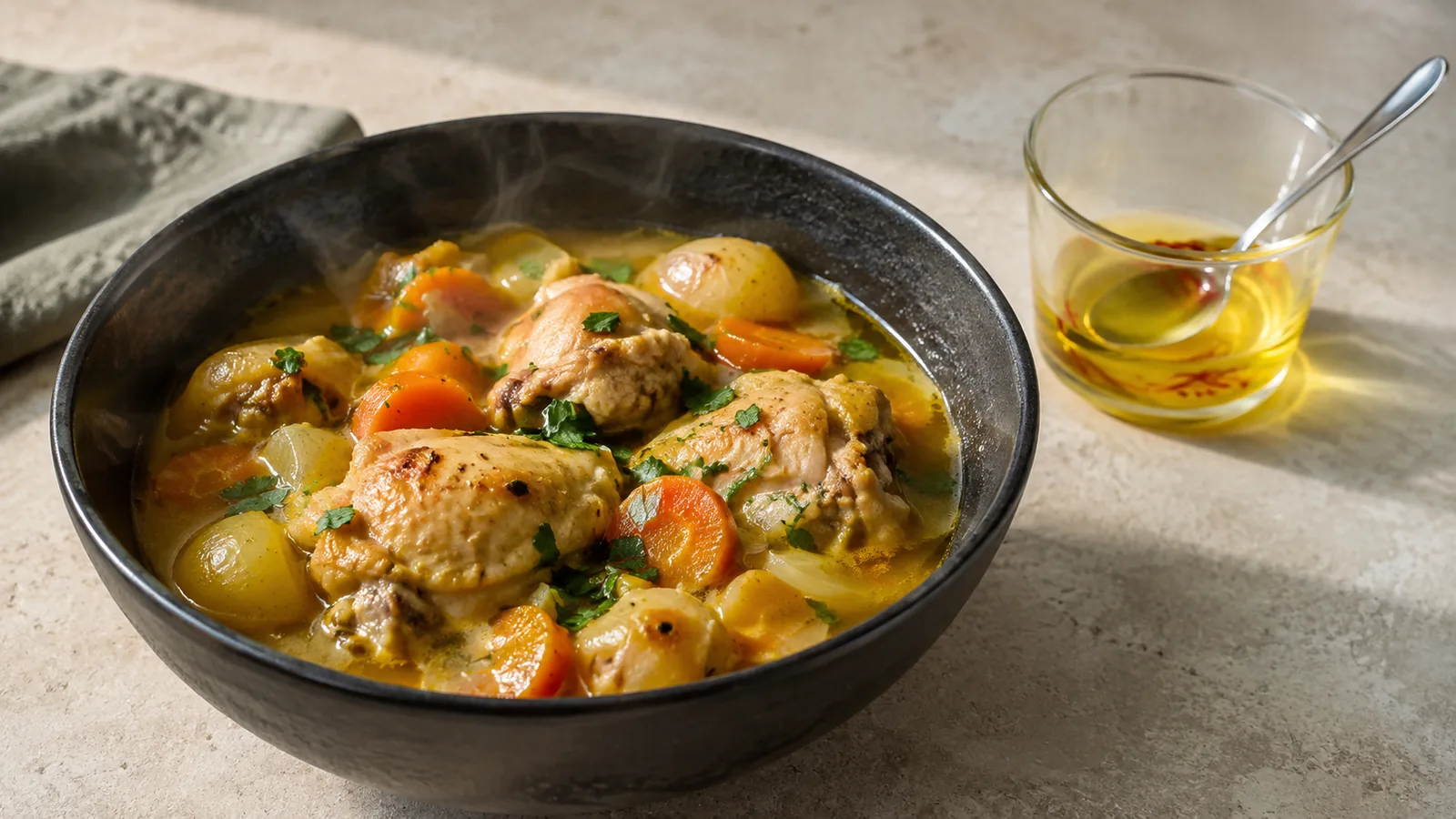
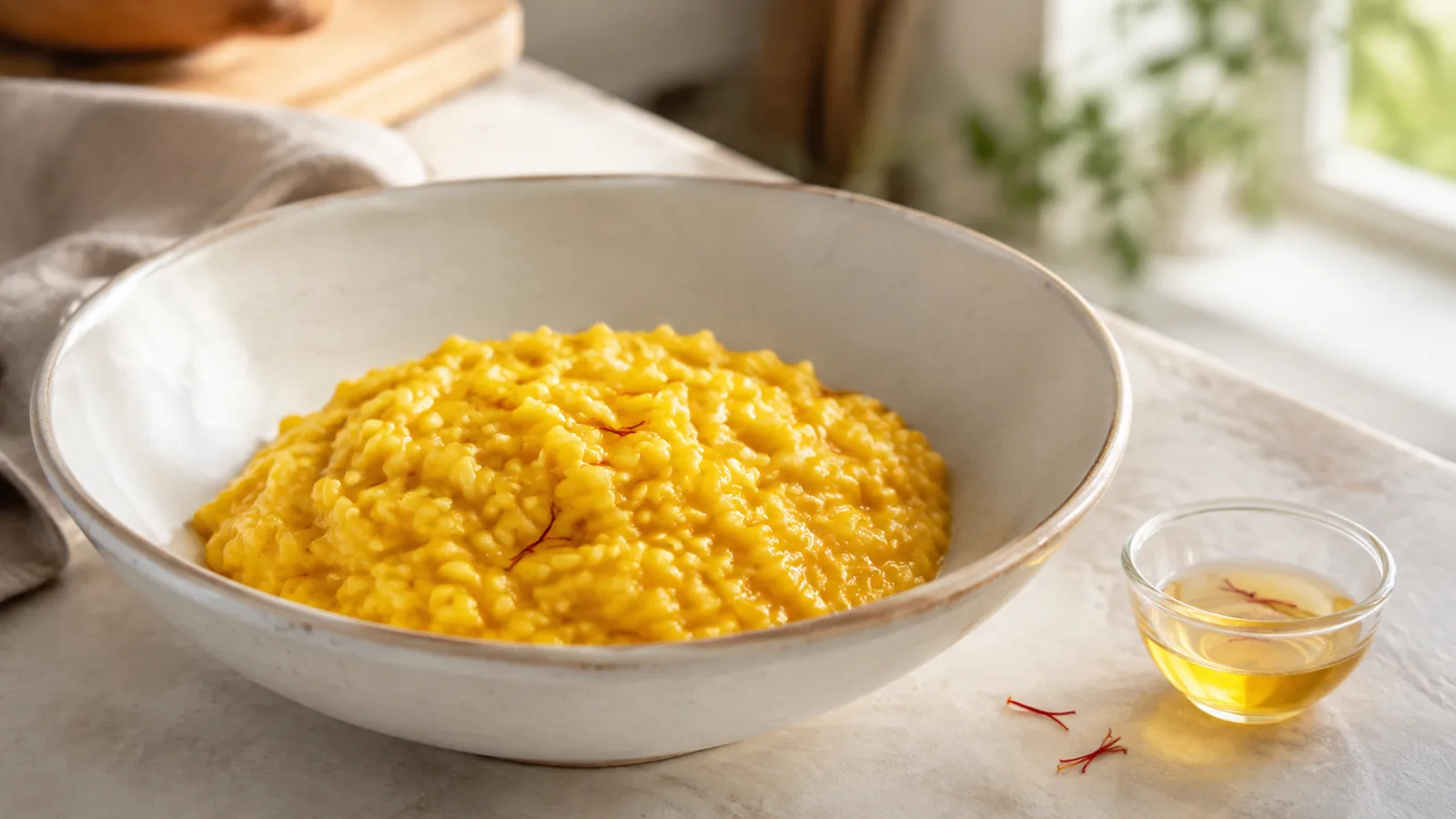
Yes, saffron changes the taste of rice. It adds a dry floral aroma, a faint earthy quality and gentle bitterness, while the rice softens those sharper notes. The change should be noticeable but not overpowering: properly seasoned rice still tastes like rice, with saffron appearing in the aroma and finish.
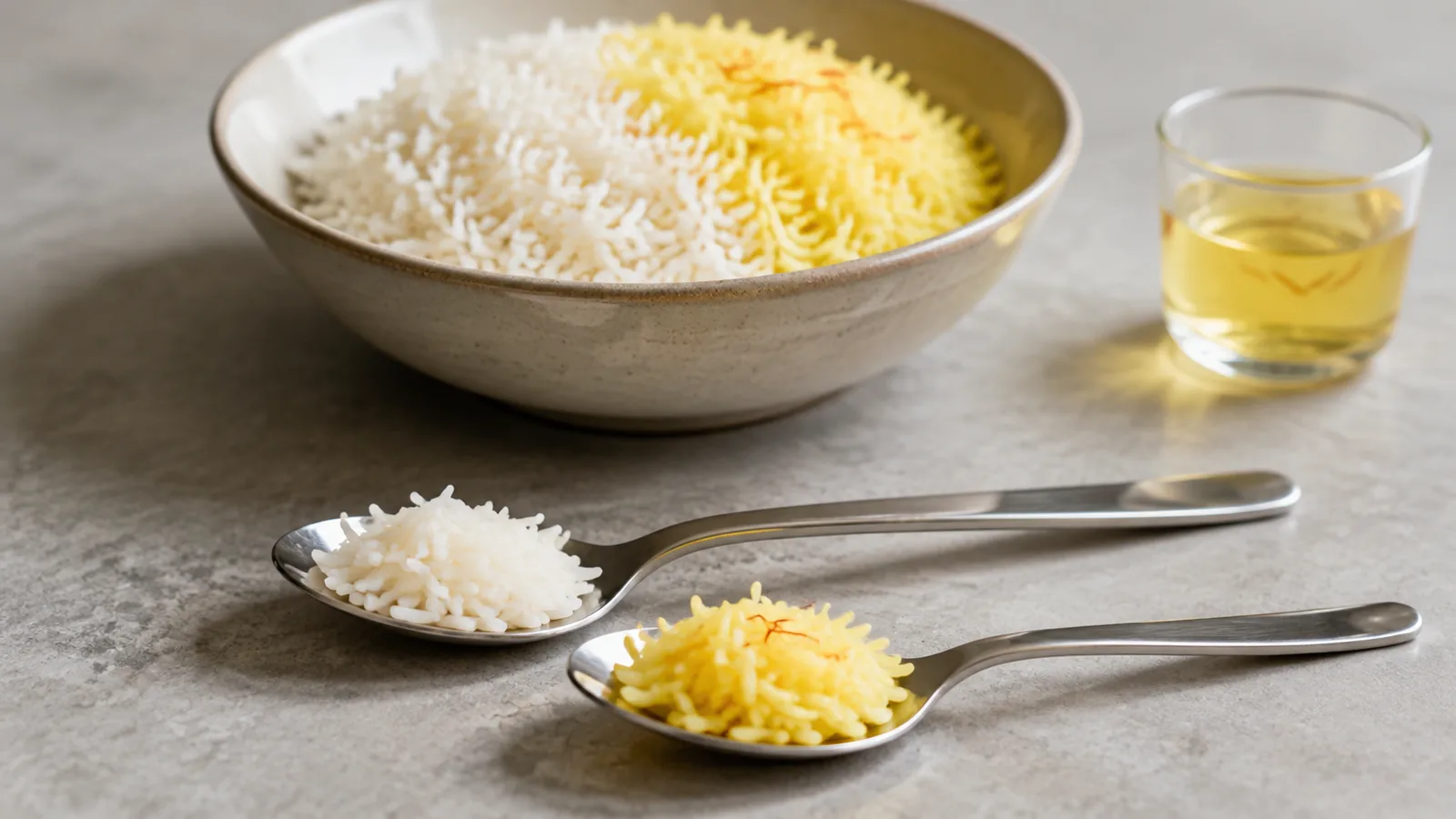
Does Saffron Change the Taste of Rice?
The saffron impact on rice taste is different from adding salt, sugar or chilli. Saffron does not make every bite simply “stronger.” It introduces a new aromatic layer, alters the balance of mild sweetness and bitterness, and changes the expectation created by the rice’s golden colour.
How large that change feels depends on the rice, the quantity of spice, the extraction method and the other ingredients in the pot. In plain basmati the aroma is easy to identify. In a heavily seasoned biryani or paella, saffron becomes one part of a wider flavour structure.
Saffron’s Flavor Profile
Saffron is commonly described as floral, warm, earthy, honeyed or reminiscent of dry hay. “Honeyed” does not mean that the threads contain enough sweetness to act like sugar. Much of that association comes through aroma, while picrocrocin contributes the spice’s characteristic bitter taste.
A sensory study of the detection and recognition thresholds of picrocrocin found that temperature and other saffron constituents affected bitterness perception. This helps explain why saffron can seem round and gentle in warm buttered rice yet sharper in a plain, concentrated infusion.
How Saffron Affects Rice
Aroma Reaches You First
Hot rice releases fragrant molecules as steam rises from the grains. This means saffron may be most vivid when the lid is lifted or the platter first reaches the table. As the rice cools, the aroma becomes quieter and the bitter component may be easier to notice.
Mild Rice Softens Bitterness
Rice provides starch, moisture and a relatively neutral background. Butter, olive oil or a mild stock can round the taste further, while salt prevents the dish from seeming flat. The goal is balance: enough saffron to be recognisable, but not so much that bitterness becomes the first and last impression.
Colour Changes Expectation
The golden tone comes chiefly from crocins. Colour is not flavour, yet it affects how the meal is perceived before tasting. A warm gold suggests an aromatic dish; an unnaturally bright yellow may create an expectation that the real saffron flavour cannot match.
What Does Saffron Basmati Rice Taste Like?
Saffron basmati rice taste combines two distinct aromas. Basmati contributes a nutty, popcorn-like fragrance, while saffron adds the floral, dry-hay and earthy layer. Neither should erase the other. Separate grains and restrained seasoning make the contrast especially clear.
Short-grain rice produces a different result. In risotto, starch released into the cooking liquid makes the dish creamy, so saffron feels integrated into a rich sauce rather than sitting lightly around separate grains. In rice pudding, milk and sugar soften bitterness and emphasise the honeyed aroma.
How Quantity Changes the Taste
Too little saffron may give a pale colour with almost no identifiable aroma. Too much creates a dry, medicinal bitterness. For one cup of dry rice, 0.05 to 0.1 gram is a sensible starting range, adjusted for the strength of the threads and the other ingredients. Spoon measures are less exact because long threads pack differently.
If the colour seems light, do not immediately double the spice. Better crushing, sufficient blooming liquid and more even distribution may release and carry what is already there. A culinary extraction study found that water-rich conditions favoured crocin extraction.
How to Use Saffron in Rice
- Lightly crush a measured portion of dry saffron threads.
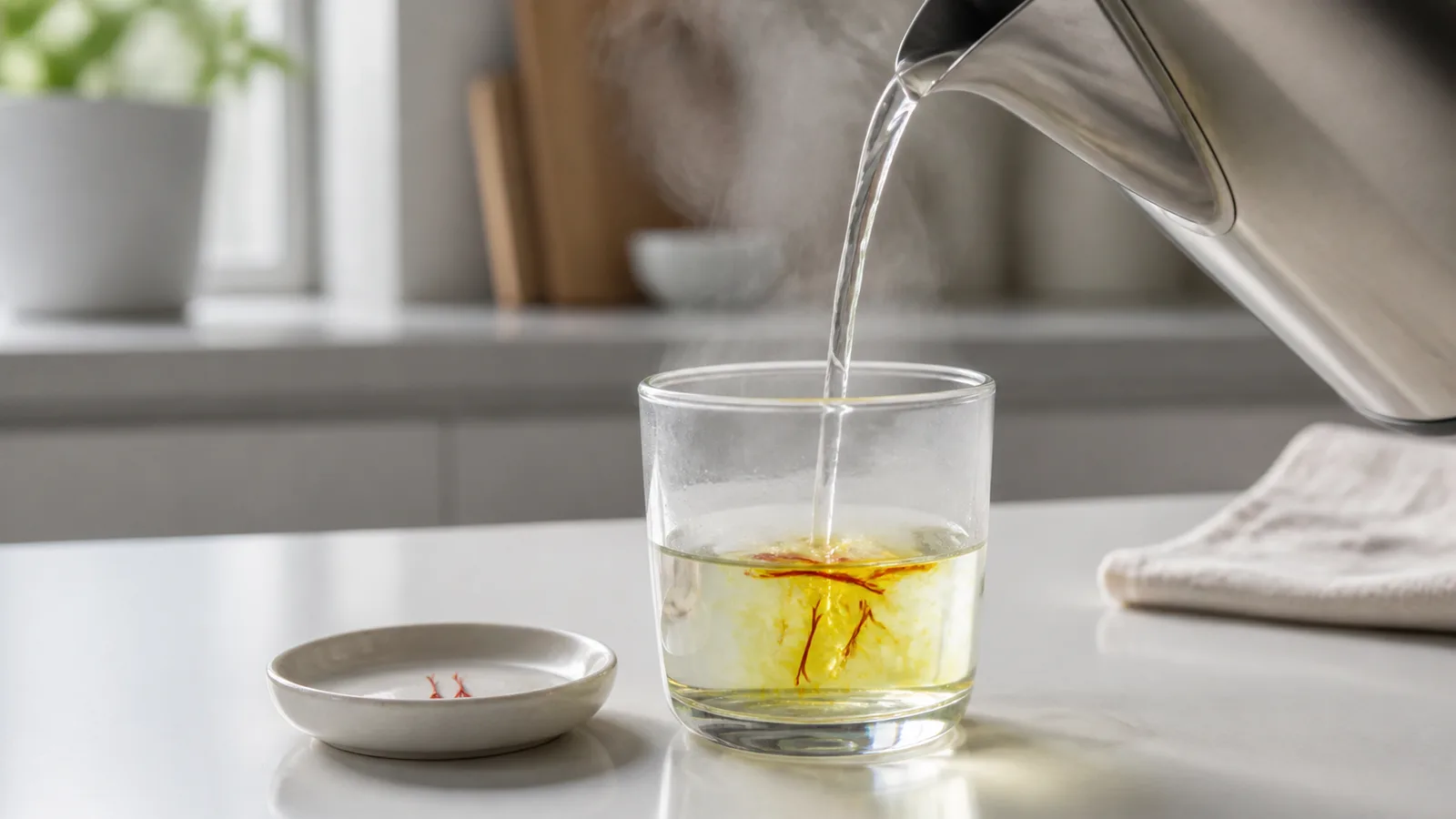
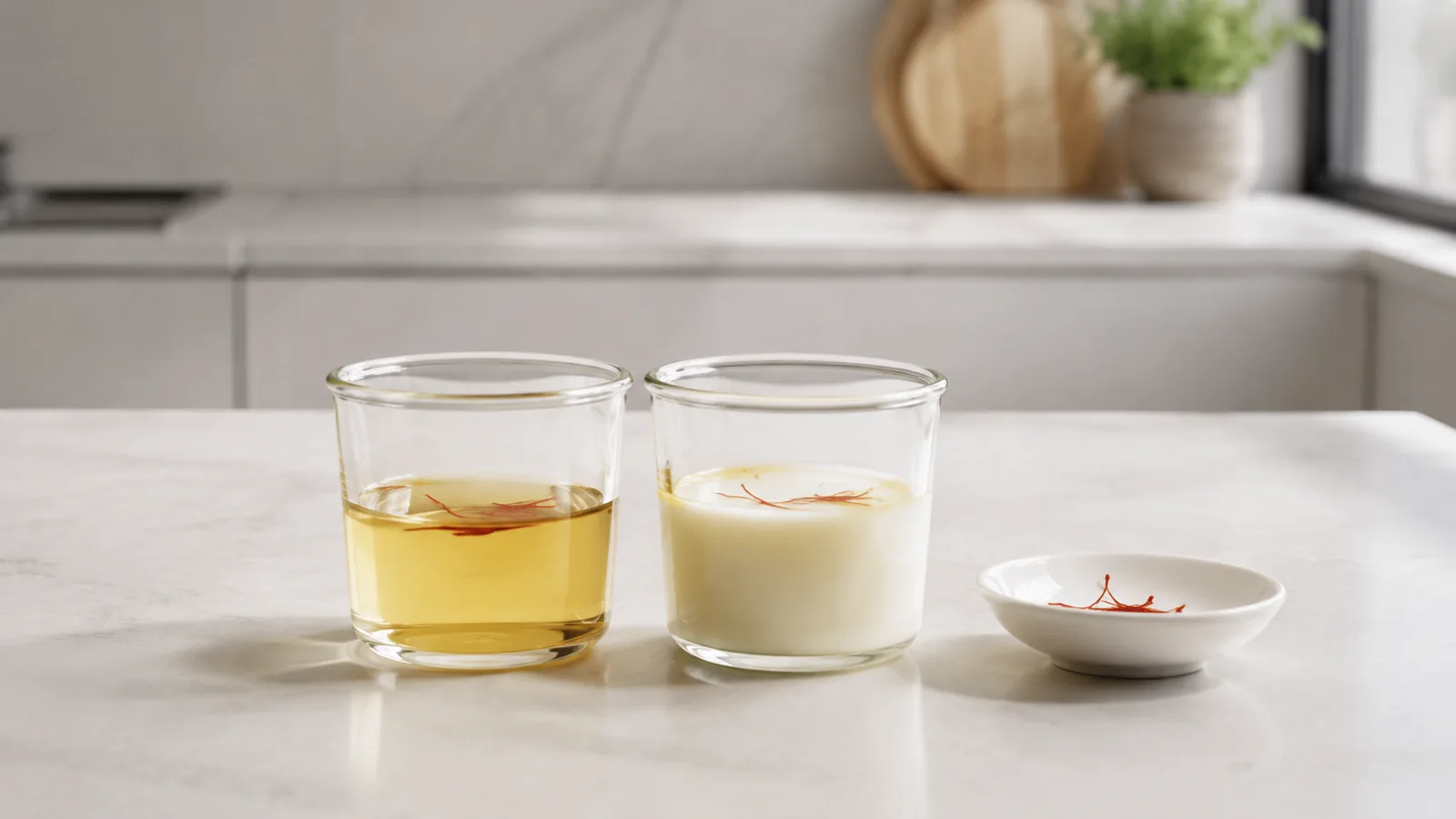
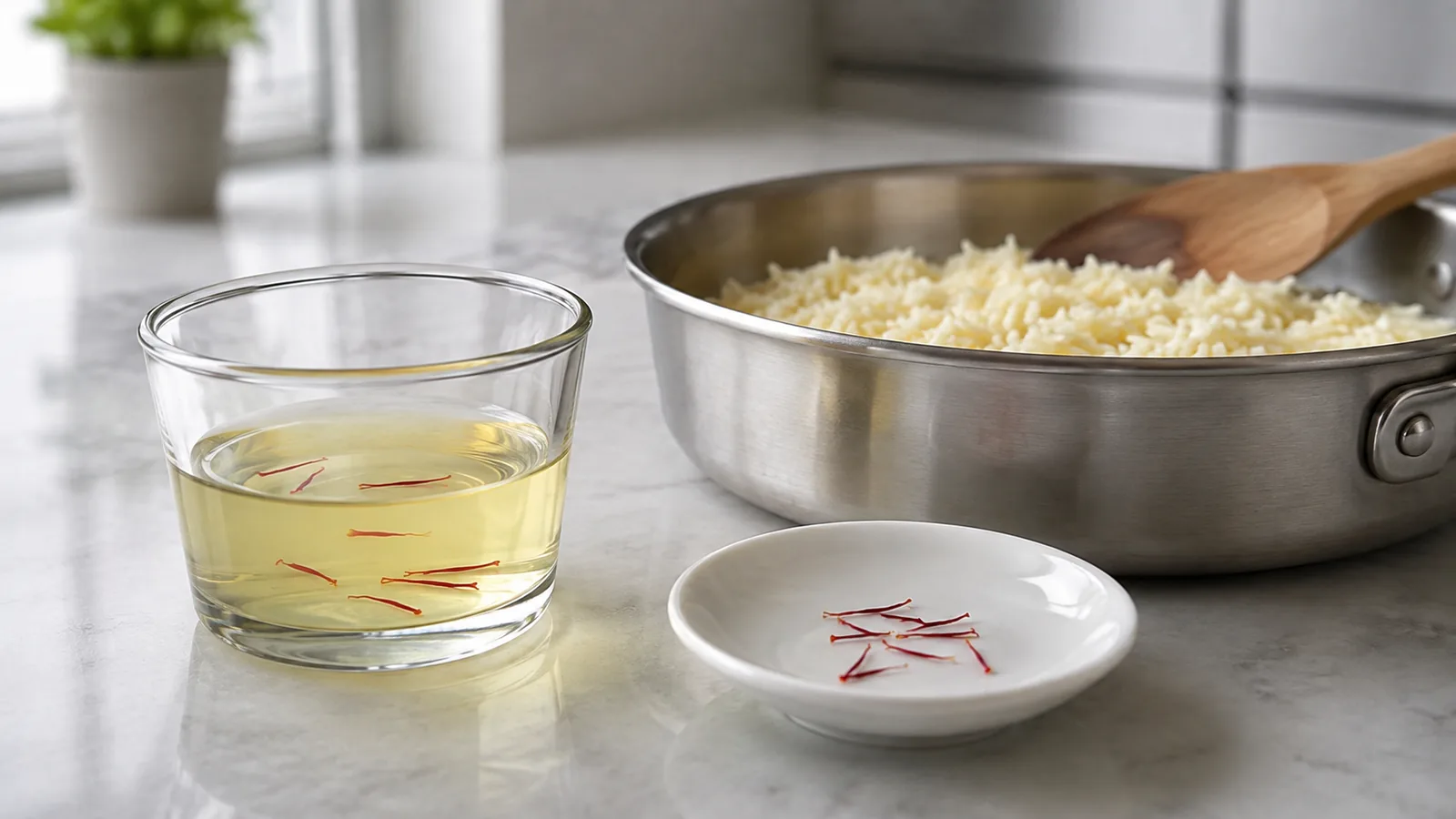
- Cover them with two or three tablespoons of warm water or mild stock.
- Leave the covered infusion for 10 to 20 minutes.
- Add both liquid and threads to the rice where the moisture can spread evenly.
- Cook gently and keep the pot covered as appropriate for the rice method.
- Rest the rice briefly, then fluff or arrange it without excessive stirring.
For uniform flavour, include the infusion in the measured cooking liquid. For a stronger contrast, mix it into a smaller portion of cooked rice and place that over the white grains. The second method gives some bites a clearer saffron note and others a milder one.
Other Ingredients That Change the Result
Stock: a mild chicken or vegetable stock adds savoury depth; a strongly reduced stock can hide the floral aroma.
Fat: butter and olive oil round the texture and help the aroma linger, but too much can make the rice heavy.
Salt: proper seasoning makes the rice taste complete. Saffron does not replace salt.
Acid: lemon, barberries or another tart element can brighten a rich rice dish, though a large acidic addition changes the balance.
Other spices: cardamom, cinnamon, cumin and paprika can work with saffron in the right recipe. When many assertive spices are used together, the saffron may become difficult to distinguish.
Is Saffron Rice Healthy?
The flavour and colour do not by themselves make a bowl of rice healthier or less healthy. That depends on the full recipe, portion, rice type, added salt and fat, and what is served with it. Culinary saffron quantities are small, so claims from studies of concentrated supplements should not be treated as benefits of an ordinary serving of saffron rice.
How to Tell Whether the Balance Is Right
The clearest saffron rice taste is balanced rather than forceful. Smell the rice before tasting: the aroma should be clear but not perfume-like. On the tongue, notice the rice first, then the floral and earthy character, with a mild bitter finish. If only the colour is present, improve the freshness or extraction. If the bitterness dominates, use less saffron or distribute the infusion through more rice.
The companion guide on why saffron works in rice covers the wider culinary reasons for the pairing. For visual control, see how to colour rice with saffron. Available thread grades are listed in our saffron shop.