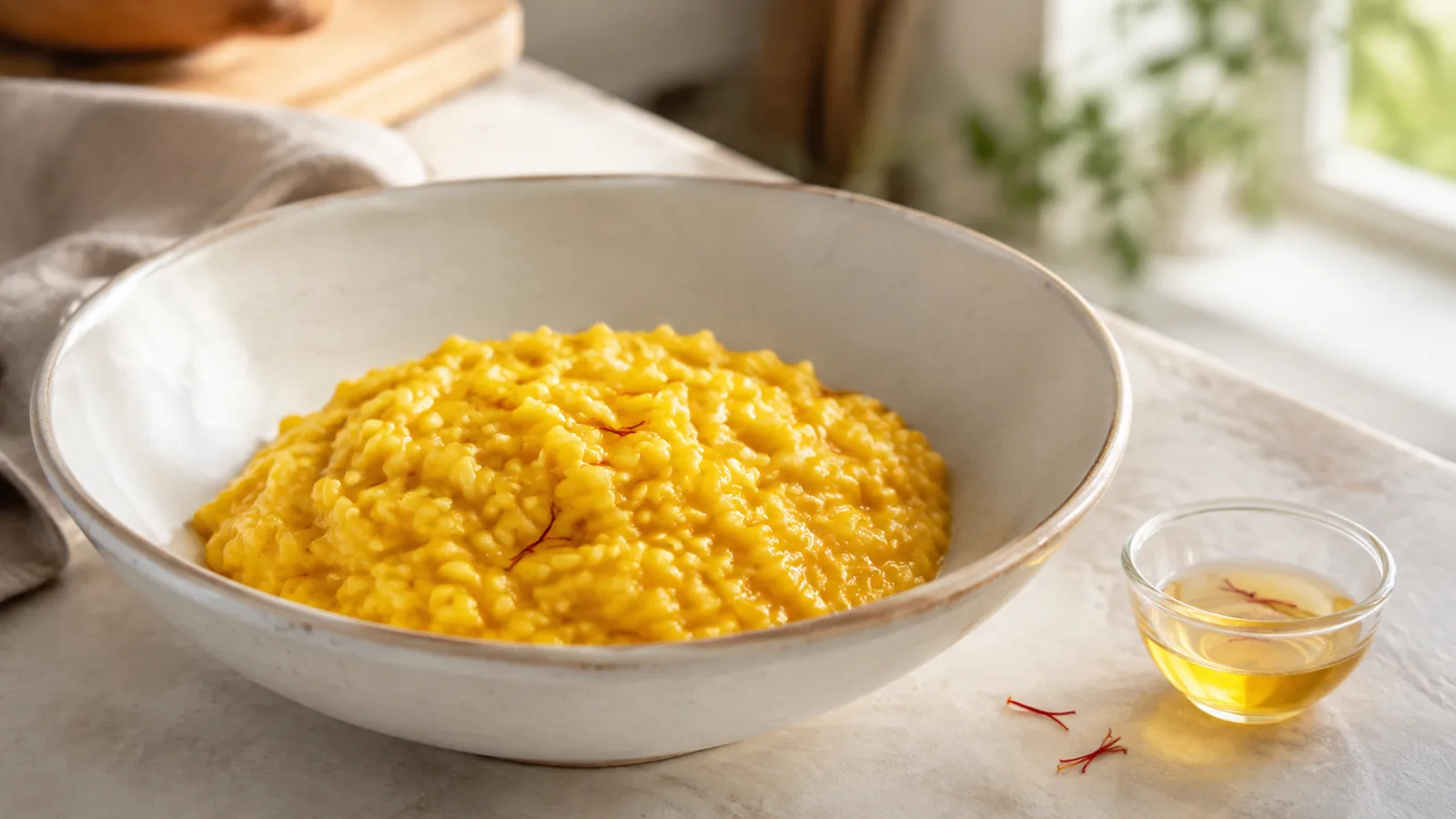
Saffron belongs in rice because rice gives the spice room to show all three of its culinary strengths: a floral aroma, gentle bitterness and a clear golden colour. The grains absorb a saffron infusion evenly, while their mild flavour keeps the spice recognisable instead of covering it.
Why Saffron in Rice Works So Well
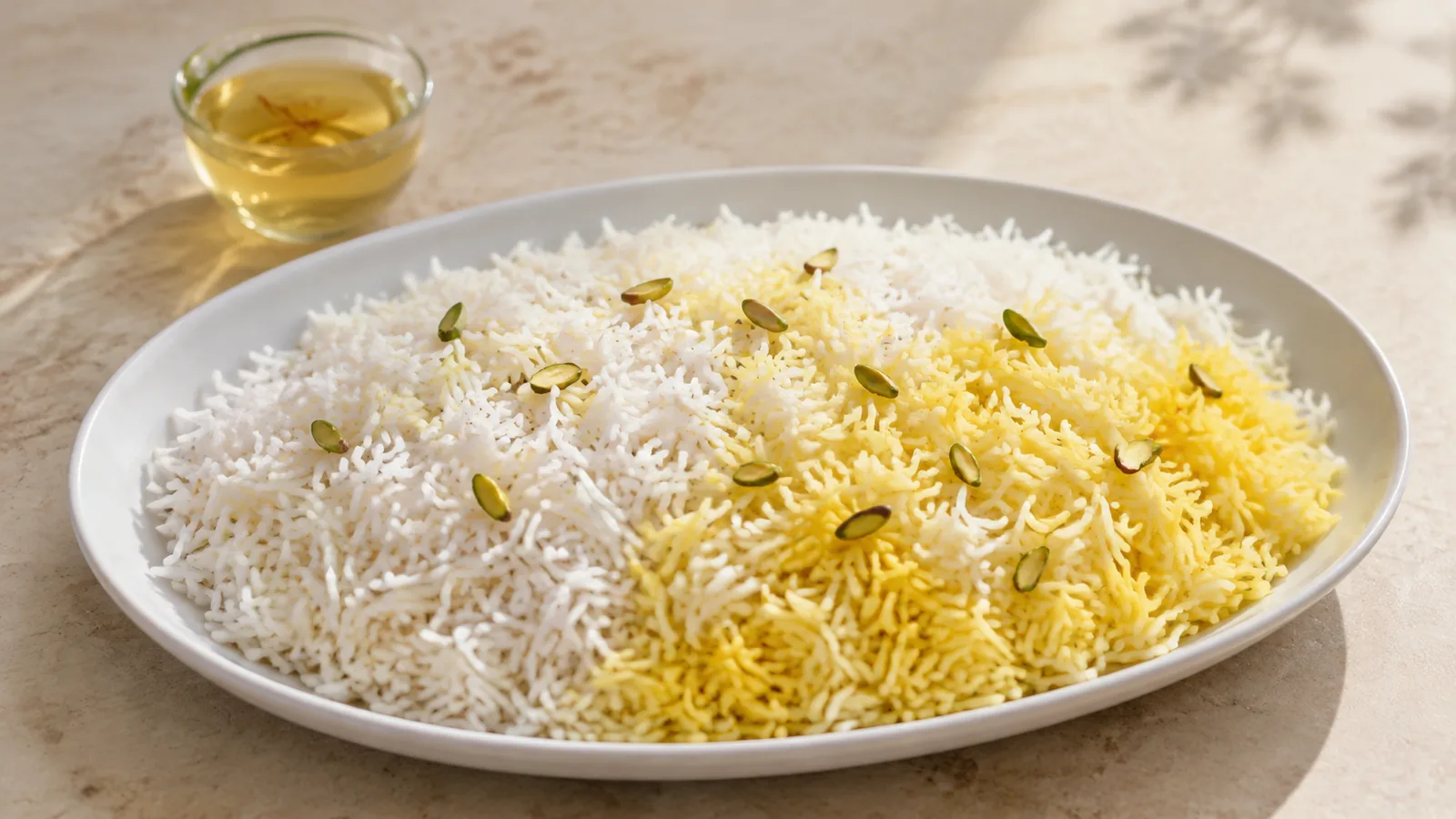
Rice and saffron are a particularly useful pairing because starch carries flavour but does not add much competing aroma. As the rice cooks or steams, moisture distributes the infusion across many grains. You can tint the whole pot for an even result or colour only one portion and fold it through the white rice for contrast.
The benefits of saffron in rice are primarily culinary. It changes how the dish smells, tastes and looks, and it can turn a simple starch into the aromatic centre of a meal. Those effects are noticeable with a restrained quantity, so the rice need not become bitter or uniformly bright yellow.
Flavor Enhancement
Saffron adds a dry floral aroma with earthy, hay-like and sometimes honeyed associations. On the tongue, it contributes measured bitterness rather than sugar-like sweetness. Plain rice softens that bitter edge, while salt, butter or oil can round the flavour and help its aroma linger.
The result should not taste as though saffron has replaced the rice. Good saffron rice still has the clean flavour and separate texture of the grain, followed by a warm aroma as you chew. If the first impression is sharply bitter, the cook has usually used too much or concentrated the infusion in too small a portion.
Vibrant Color
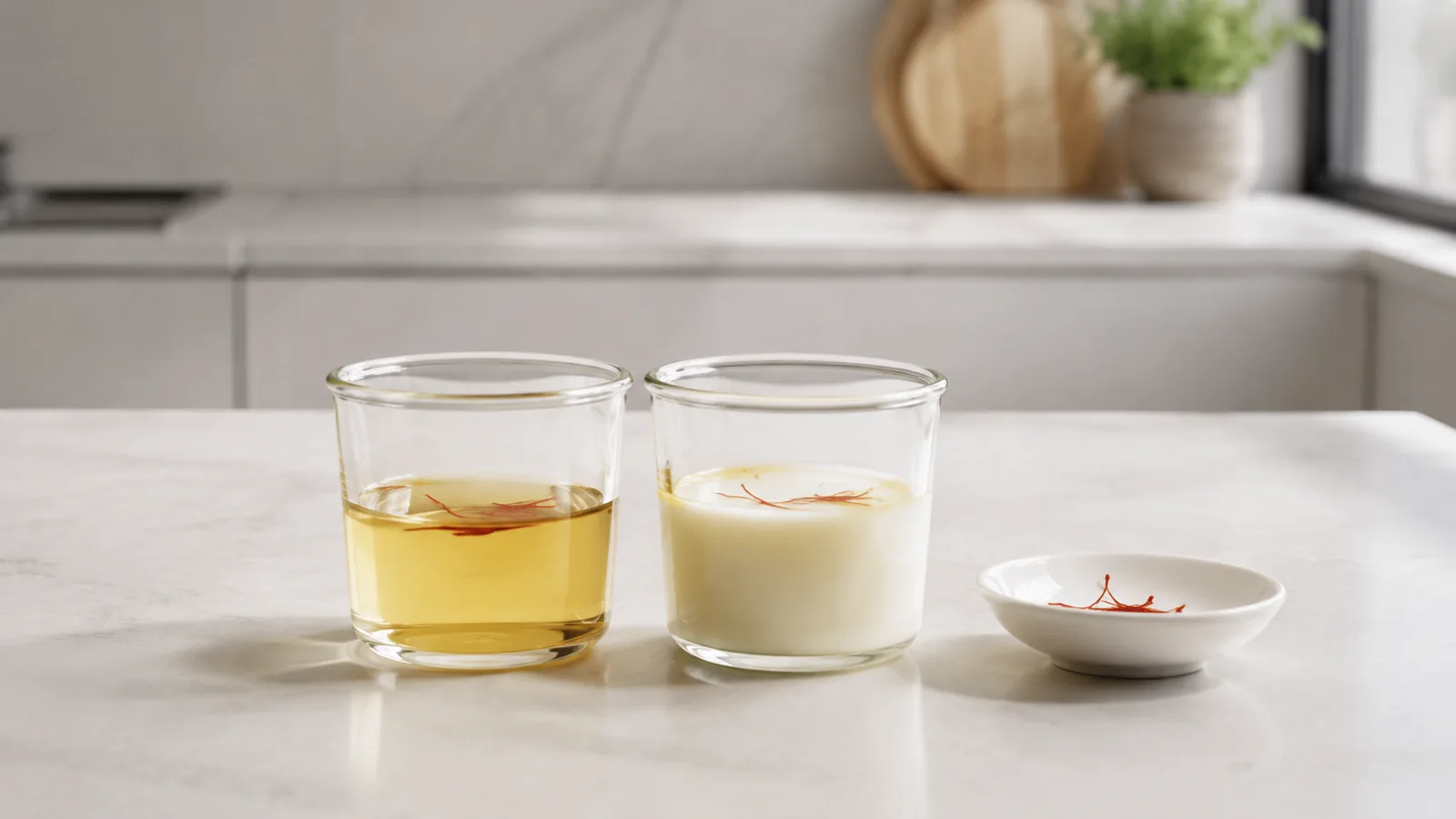
Crocins are the water-soluble pigments chiefly responsible for saffron’s colour. They move readily into a water-based infusion, producing shades from pale yellow to deep gold. A 2024 culinary extraction study found that water-rich conditions favoured crocin extraction, which helps explain why blooming the threads is so effective for rice.
Colour can be used in several ways. A fully mixed infusion gives every grain a warm tone. Adding it to one section near the end creates the familiar contrast of white and golden rice. In layered dishes, a concentrated golden top provides visual emphasis without making the entire pot equally intense.
Aroma and Texture Stay in Balance
Saffron works best when the rice texture is already under control. Separate, tender grains expose more surface to the aroma; wet or overcooked rice can feel heavy and make the flavour seem dull. The spice does not correct too much water, inadequate rinsing or unsuitable cooking time.
Long-grain basmati is a natural choice when you want a light texture and pronounced aroma. Shorter rice suits creamy preparations such as risotto or rice pudding, where the infusion spreads through the surrounding liquid as well as the grains. Neither is inherently more authentic for every cuisine: the right rice depends on the dish being cooked.
Health Benefits: Is Saffron Rice Healthy?
“Saffron rice benefits” is sometimes used to imply that adding a few threads turns rice into a therapeutic food. That goes beyond what a normal culinary serving can establish. Saffron contains studied plant compounds, but the amount used to season a pot of rice is small, and research on concentrated extracts or supplements cannot simply be transferred to a serving of food.
Is saffron rice good for you? It can fit into a varied diet, but whether saffron rice is healthy depends more on the complete recipe and portion than on its colour. Rice type, added butter or oil, salt, accompanying vegetables and proteins, and serving size all matter. Use saffron for flavour and aroma; do not rely on the dish to treat a condition or supply a meaningful supplement dose.
How to Use Saffron in Rice
- Lightly crush a modest portion of threads in a dry mortar.
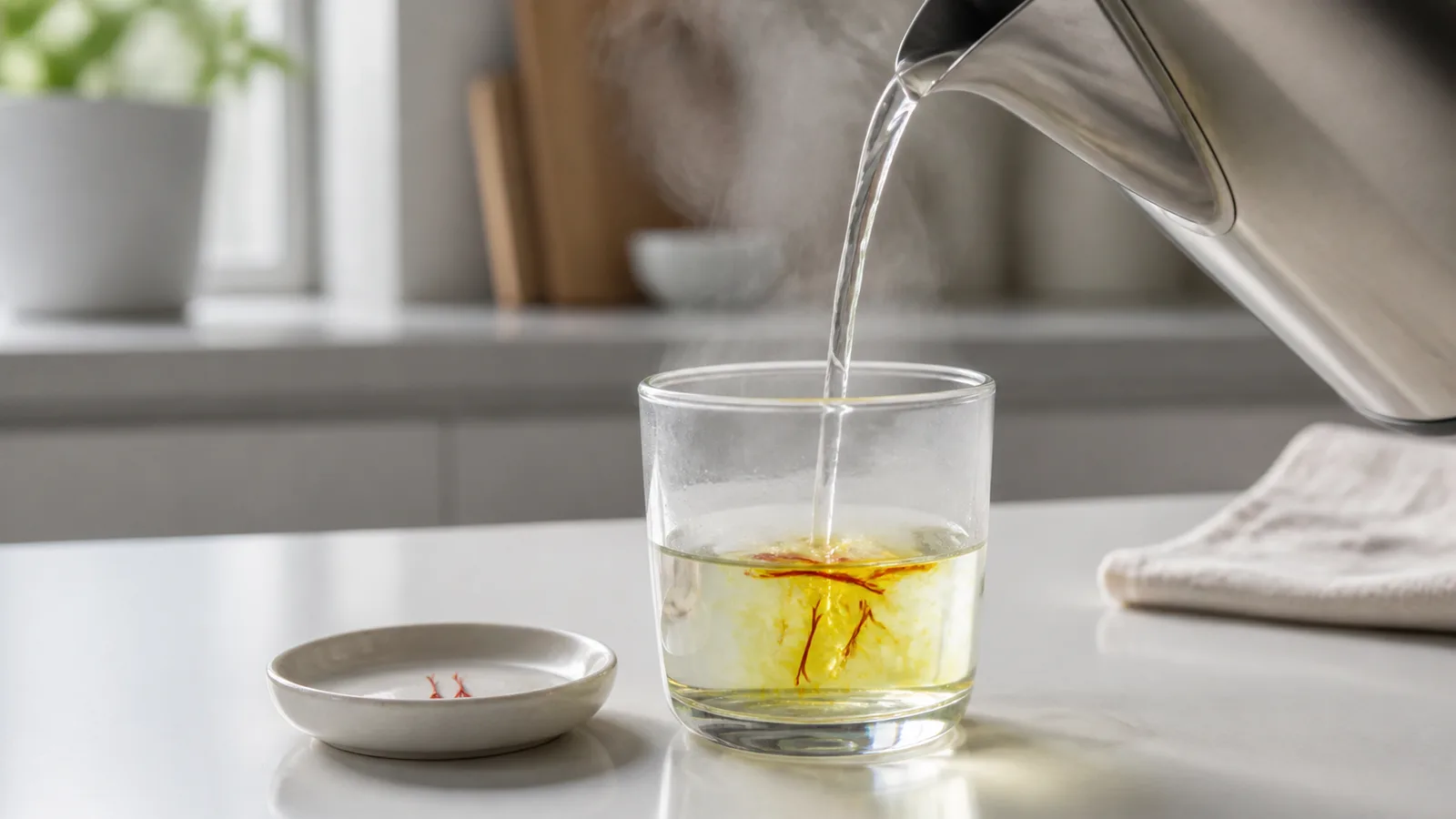
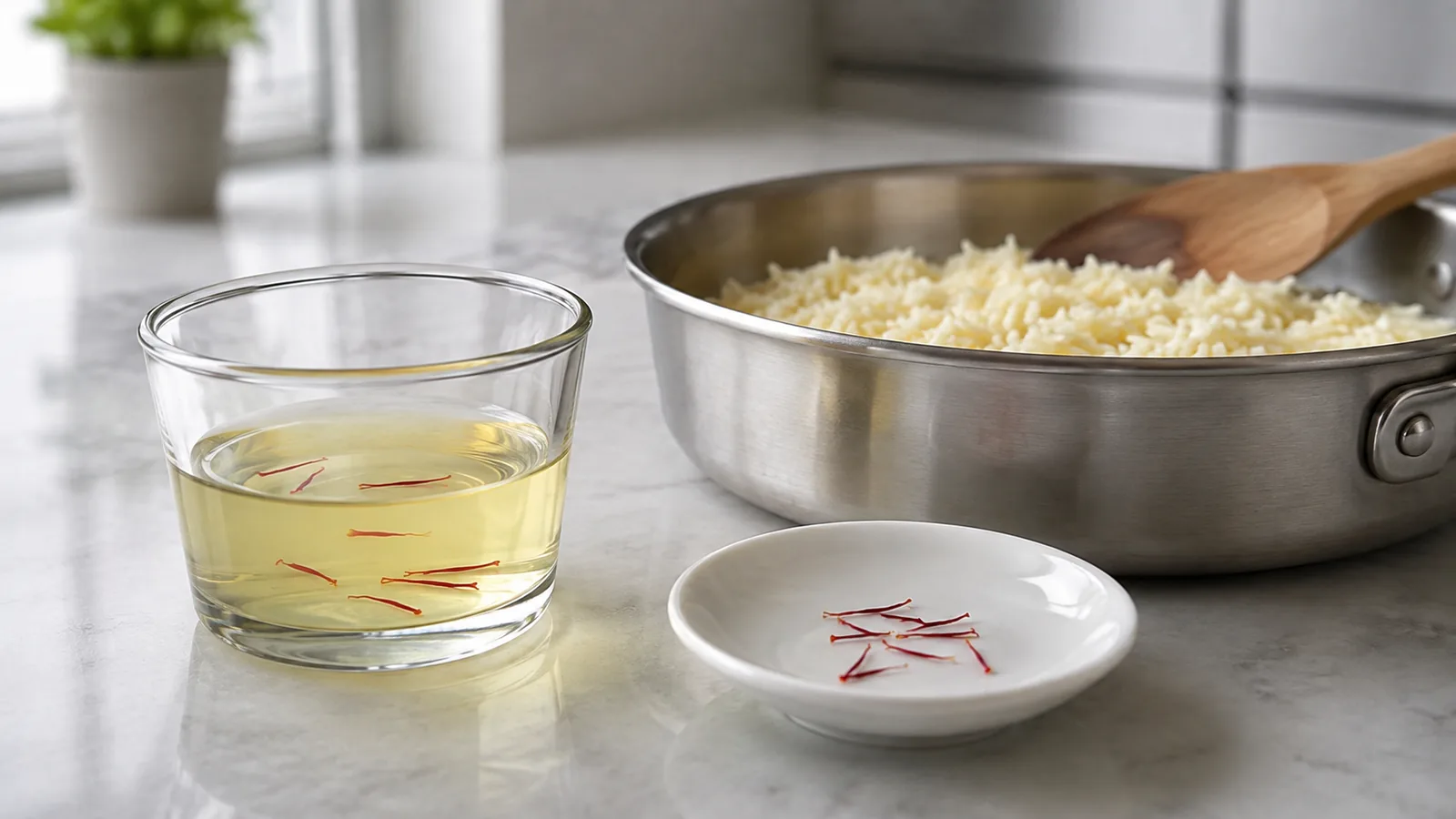
- Cover them with a small amount of warm water or mild stock.
- Leave the covered infusion for about 10 to 20 minutes.
- Add it at a stage when the liquid can reach the rice evenly.
- For two-tone rice, mix the infusion into a small portion of cooked rice, then arrange or fold it through the white grains.
- Taste before adding more; deeper colour does not always mean a better flavour.
The ideal moment depends on the method. In absorption rice, add the infusion with the measured cooking liquid or shortly before the liquid is fully absorbed. In parboiled-and-steamed rice, drizzle it over selected layers before the final steam. For risotto, stir it in while enough liquid remains to distribute it, but not so early that prolonged heat flattens the aroma.
What to Pair with Saffron Rice
Saffron rice can remain simple or carry a small number of complementary ingredients. Butter, olive oil, onion, pistachio, almond, barberry and mild stock all leave space for the spice. It also sits comfortably beside roasted vegetables, grilled chicken, lamb, fish, seafood stew or a gentle curry.
Strong smoke, heavy chilli and a crowded mixture of assertive spices can overwhelm saffron. If those flavours define the main dish, keep the rice simple and let its aroma provide contrast rather than trying to make it equally forceful.
Common Problems and Their Causes
- The rice is yellow but has little aroma: the saffron may be stale, or it may have been exposed to intense heat for too long.
- Some bites are bitter: dry threads or a concentrated infusion were not distributed evenly.
- The whole dish tastes bitter: too much saffron was used; dilution is more useful than adding sugar.
- The colour is patchy by accident: the infusion was poured onto finished rice without enough gentle mixing.
- The saffron disappears behind other flavours: the stock or spice mixture is too dominant for the quantity used.
Why Saffron Rice Remains a Classic
Rice makes saffron easy to appreciate. It carries the infusion across the dish, displays the colour clearly and provides a calm flavour base for the aroma. That combination—not a promise of medicinal benefit—is the strongest reason to use saffron in rice.
If you want to refine the extraction before cooking, see our guide to the best way to brew saffron. The companion article on how much saffron to use for one cup of rice helps with quantity, and our saffron shop lists the available grades.