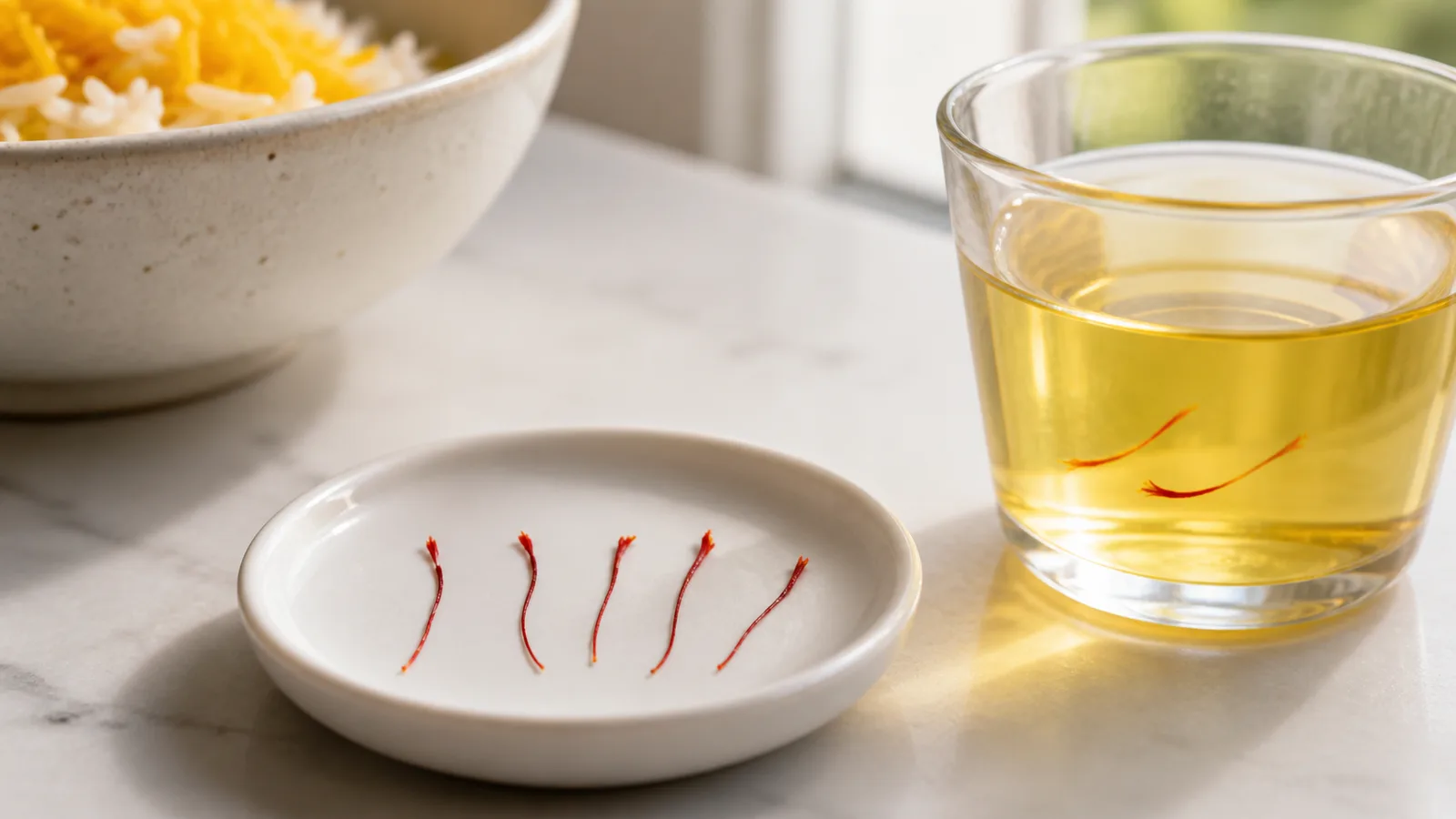
To colour rice with saffron, lightly crush the threads, bloom them in a small amount of warm water, then add the complete golden infusion where it can reach the grains evenly. This produces a natural yellow-to-gold colour along with saffron’s aroma; dry threads scattered at the end cannot give the same consistent result.
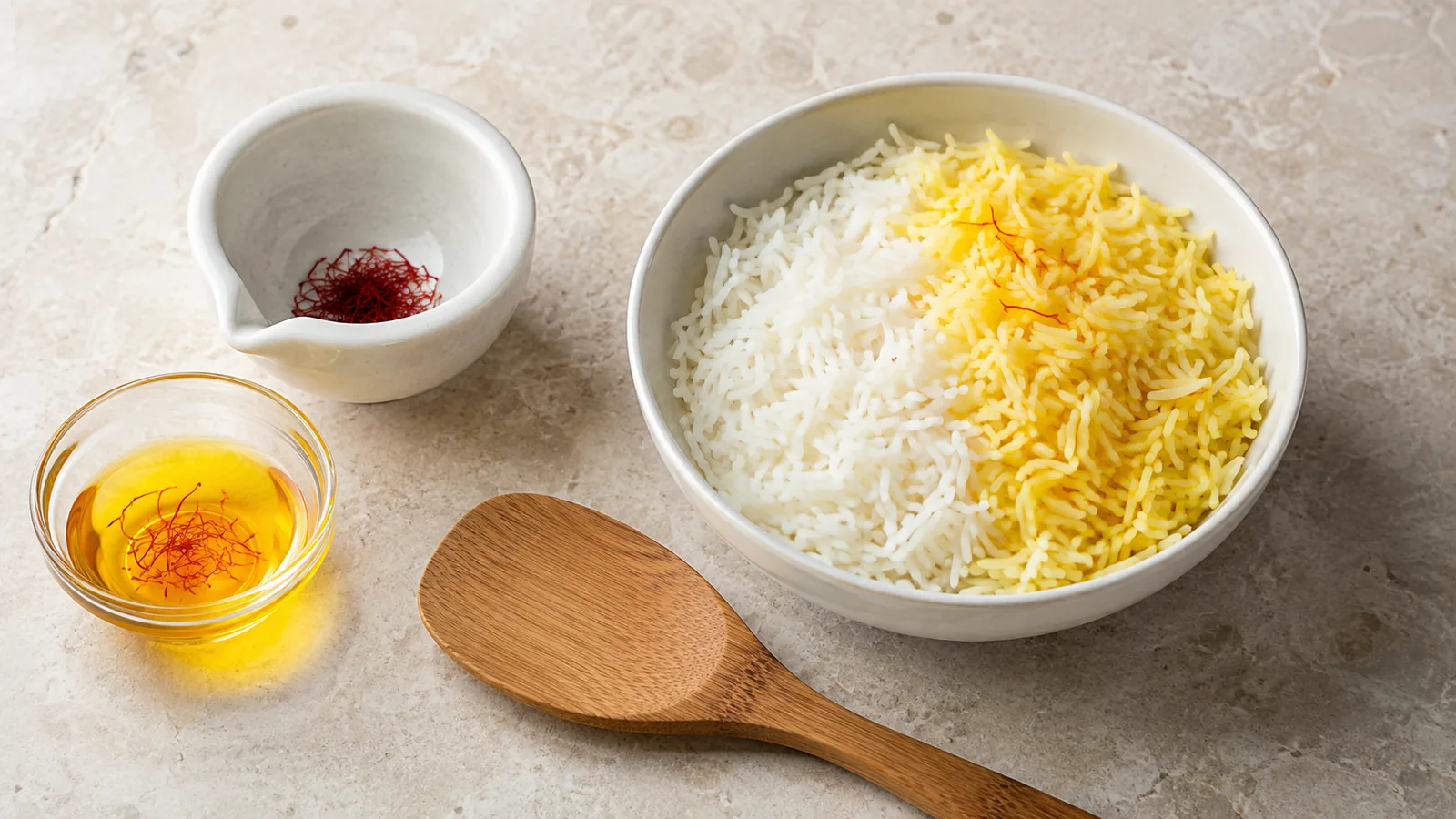
How to Use Saffron to Color Rice
A reliable saffron rice coloring technique has two parts: extract the pigment into liquid, then decide how widely you want that liquid distributed. Mix it through the cooking water for uniformly golden rice, or add it to one portion near the end for a white-and-gold effect.
Saffron is a spice, not merely a dye. More colour usually brings more flavour and bitterness, so the goal is not the brightest possible yellow. Aim for a warm, believable gold with an aroma that remains gentle enough to accompany the rest of the meal.
Step 1: Prepare the Saffron Infusion
For one cup of dry rice, about 0.05 to 0.1 gram of saffron is a useful starting range. Spoon measures vary with thread length and packing, but that is roughly a loose 1/4 to 1/2 teaspoon. Use the lower end when saffron is one of several seasonings or when you want a pale colour.
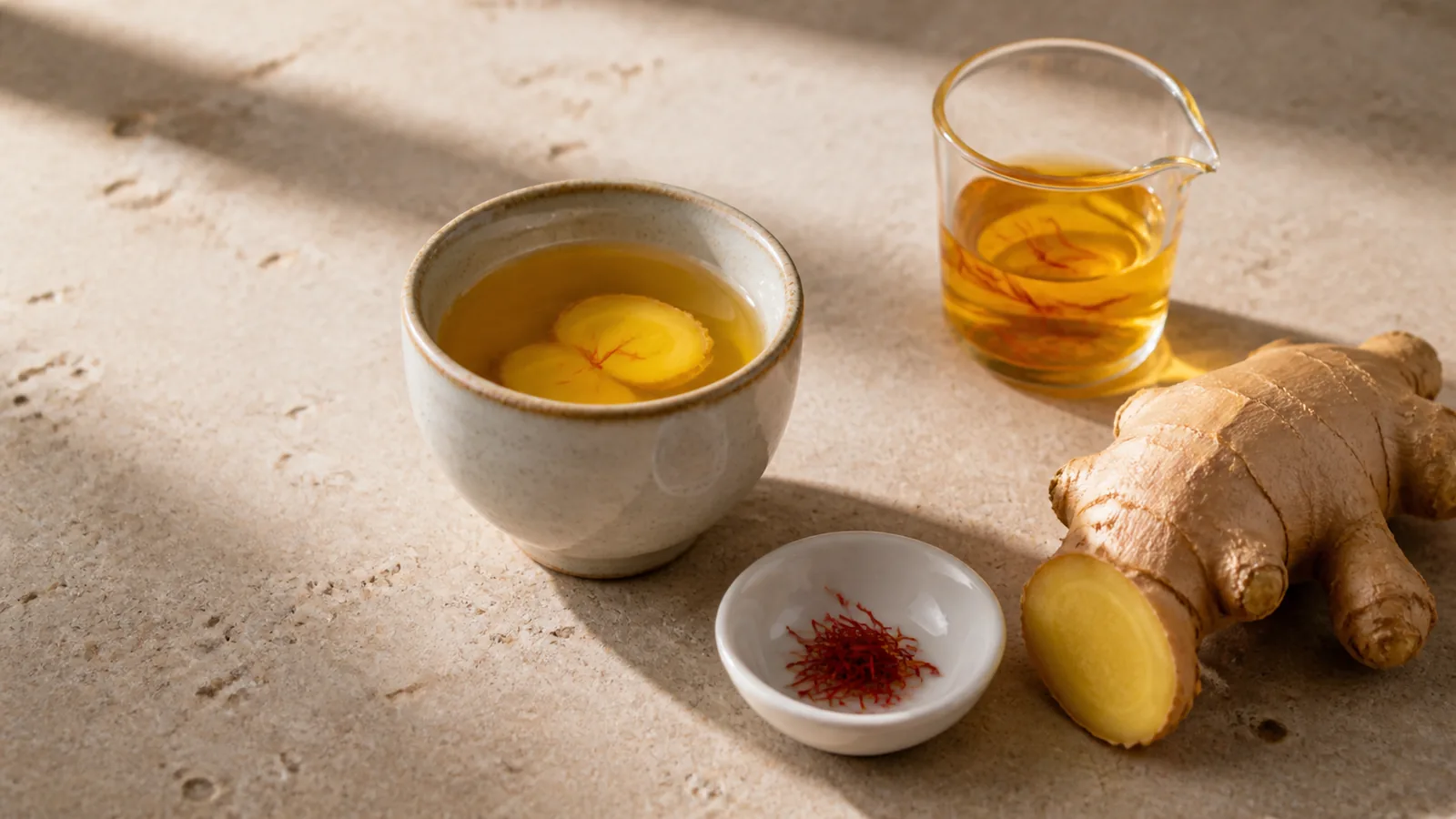
- Place the dry threads in a small mortar and crush them lightly. A coarse powder exposes more surface without requiring a perfectly fine grind.
- Add two to three tablespoons of warm water or mild stock.
- Cover the vessel and leave it for 10 to 20 minutes.
- Use both the coloured liquid and the softened threads.
The water should be warm rather than held at a hard boil. A 2024 culinary extraction study found that water-rich conditions favoured crocin extraction. Crocins are the water-soluble pigments that give saffron rice its characteristic colour, which is why a small infusion distributes more reliably than dry threads.
Step 2: Add the Saffron Infusion to the Rice
For Evenly Golden Rice
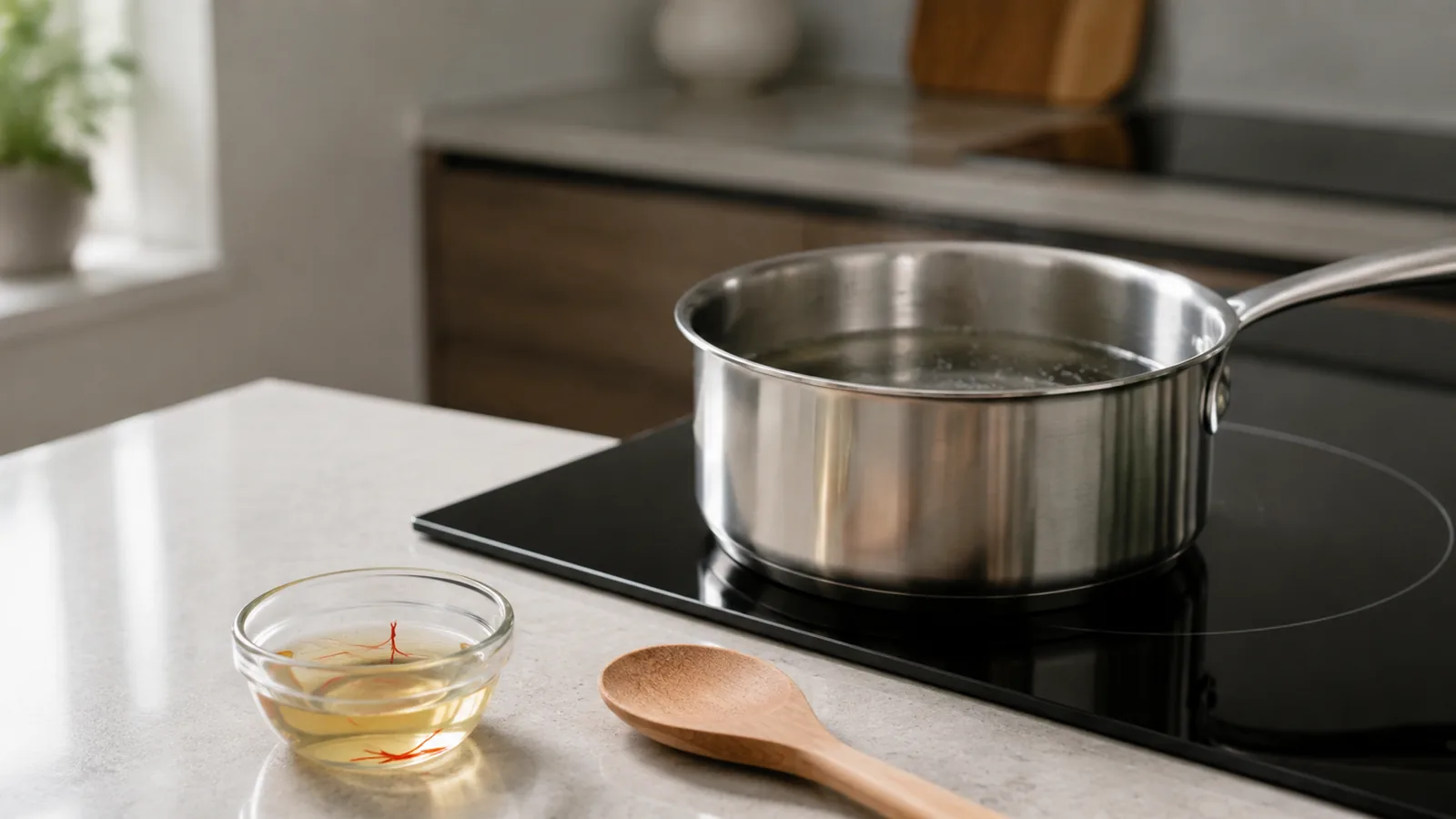
Add the infusion to the measured cooking liquid before it is absorbed. Stir once so the colour is dispersed, then cook according to the rice variety and method. In a rice cooker, include the saffron liquid as part of the total water rather than adding it on top of the normal amount.
This method suits pilaf, seasoned basmati and any dish where every grain should carry a similar colour. It also gives the most even flavour because the infusion travels through the pot with the water.
For White-and-Gold Rice
Cook the rice without saffron. Near the end, place a small portion of hot cooked rice in a bowl and fold in the infusion until the grains are evenly golden. Spoon that portion over the remaining white rice or fold it through very lightly.
This approach creates visual contrast and lets diners taste saffron in varying intensity from bite to bite. It is particularly useful with steamed basmati, where vigorous mixing would damage the separate grains.
For Layered or Steamed Rice
Drizzle the infusion over selected layers just before the final steam. Cover the pot so the aroma circulates, but avoid stirring repeatedly. The result should show natural ribbons and pockets of gold rather than random dark stains.
Step 3: Cook the Rice
Follow the correct water ratio and cooking time for the rice itself. Saffron does not compensate for excess water or an overlong boil. When using the absorption method, keep the heat controlled once the liquid begins to simmer. For parboiled rice, drain the grains while they are still firm enough to survive the final steam.
A closed lid helps retain moisture and aroma. Once the rice is nearly done, avoid unnecessary lifting and stirring. The pigment will continue to spread as moisture moves through the pot, while rough handling can turn distinct long grains into a sticky mass.
Step 4: Serve and Enjoy
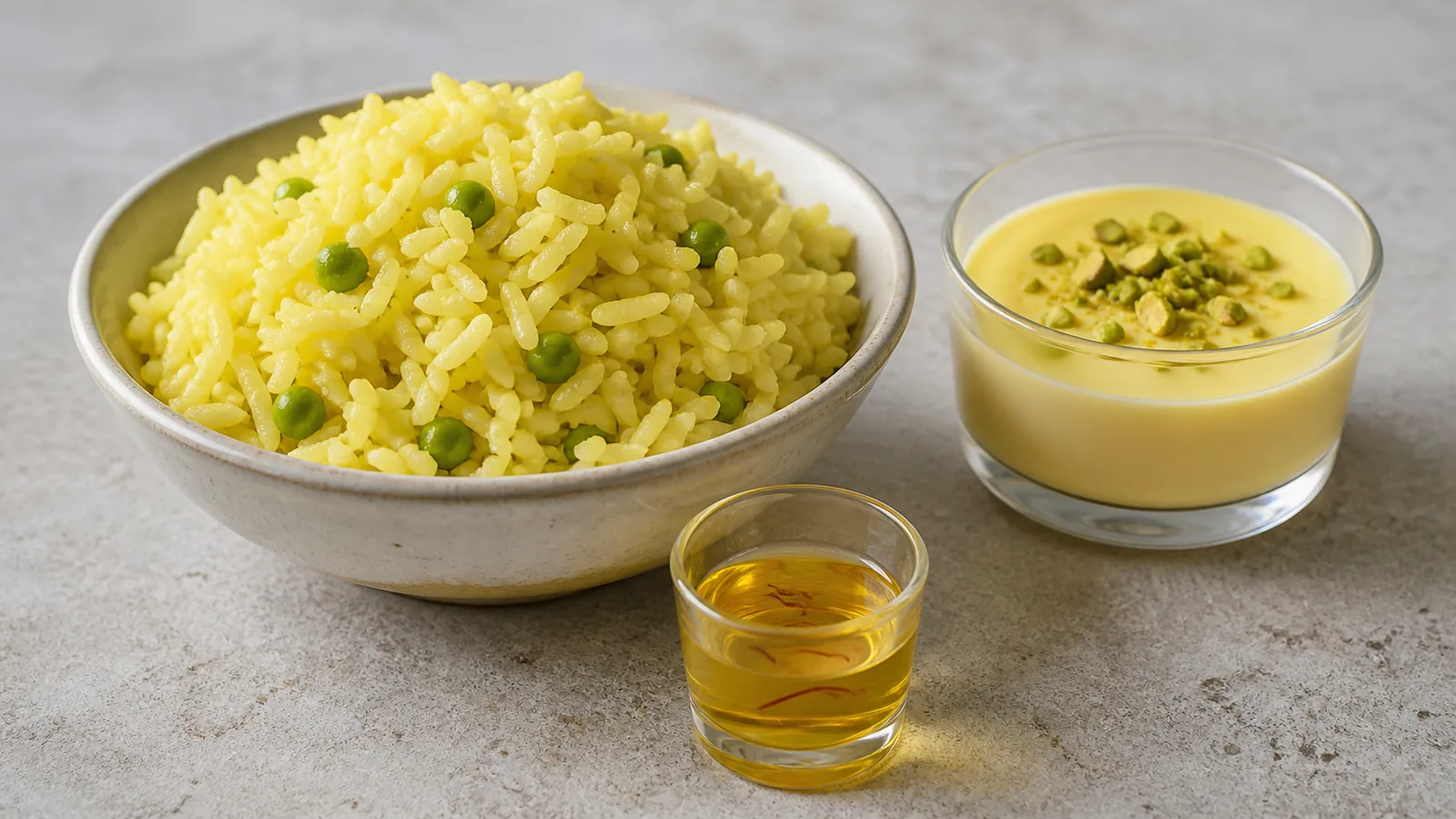
Rest the cooked rice briefly, then fluff it gently from the edges with a fork or rice paddle. A white-and-gold preparation can be arranged on a platter without further mixing. Fully coloured rice should appear warm gold rather than fluorescent yellow.
Serve it with food that leaves room for the saffron: grilled chicken, lamb, roasted vegetables, fish, seafood stew or a mild curry. Pistachios, almonds and tart barberries can add contrast, but they are optional. The rice should still make sense as a calm aromatic side dish.
How to Control the Shade
For saffron coloring that looks natural, adjust how much of the rice receives the infusion before increasing the quantity of spice.
- Pale yellow: use a modest infusion and distribute it through the entire pot.
- Warm gold: make a slightly more concentrated infusion or colour only part of the rice.
- White-and-gold contrast: mix the infusion into a small cooked portion, then arrange it over white rice.
- Layered colour: drizzle the infusion over selected sections before steaming.
Do not chase colour by adding artificial yellow dye and calling the result saffron rice. Genuine saffron develops a softer, more varied gold and contributes aroma as well as pigment. Turmeric can colour rice, but it tastes different and does not substitute for saffron’s sensory profile.
Why Saffron Rice Sometimes Stays Pale
The threads were not crushed. Whole threads expose less surface, so extraction and distribution are slower.
The infusion was too small or too weak. A few drops cannot spread across a large pot. Keep the saffron quantity restrained, but use enough water to carry it.
The saffron is old or poorly stored. Heat, light, air and moisture gradually reduce its sensory quality. Keep dry threads tightly sealed in a cool, dark place.
The cooking water was miscalculated. Extra infusion liquid must be counted as part of the recipe’s total water, especially in a rice cooker.
The coloured rice was mixed too aggressively. This can make the dish look muddy and damage the grain structure instead of creating clean contrast.
A Natural Colour with a Culinary Purpose
Using saffron to color rice works because the pigment dissolves into the same moisture the grains need for cooking. Bloom the spice first, count the infusion as part of the recipe liquid, and choose either full distribution or deliberate white-and-gold contrast. The colour will then support the aroma and flavour rather than appearing as a separate decorative layer.
For a fuller extraction method, read the best way to brew saffron. Our guide to saffron quantity for one cup of rice covers scaling, and the saffron shop lists the available grades.