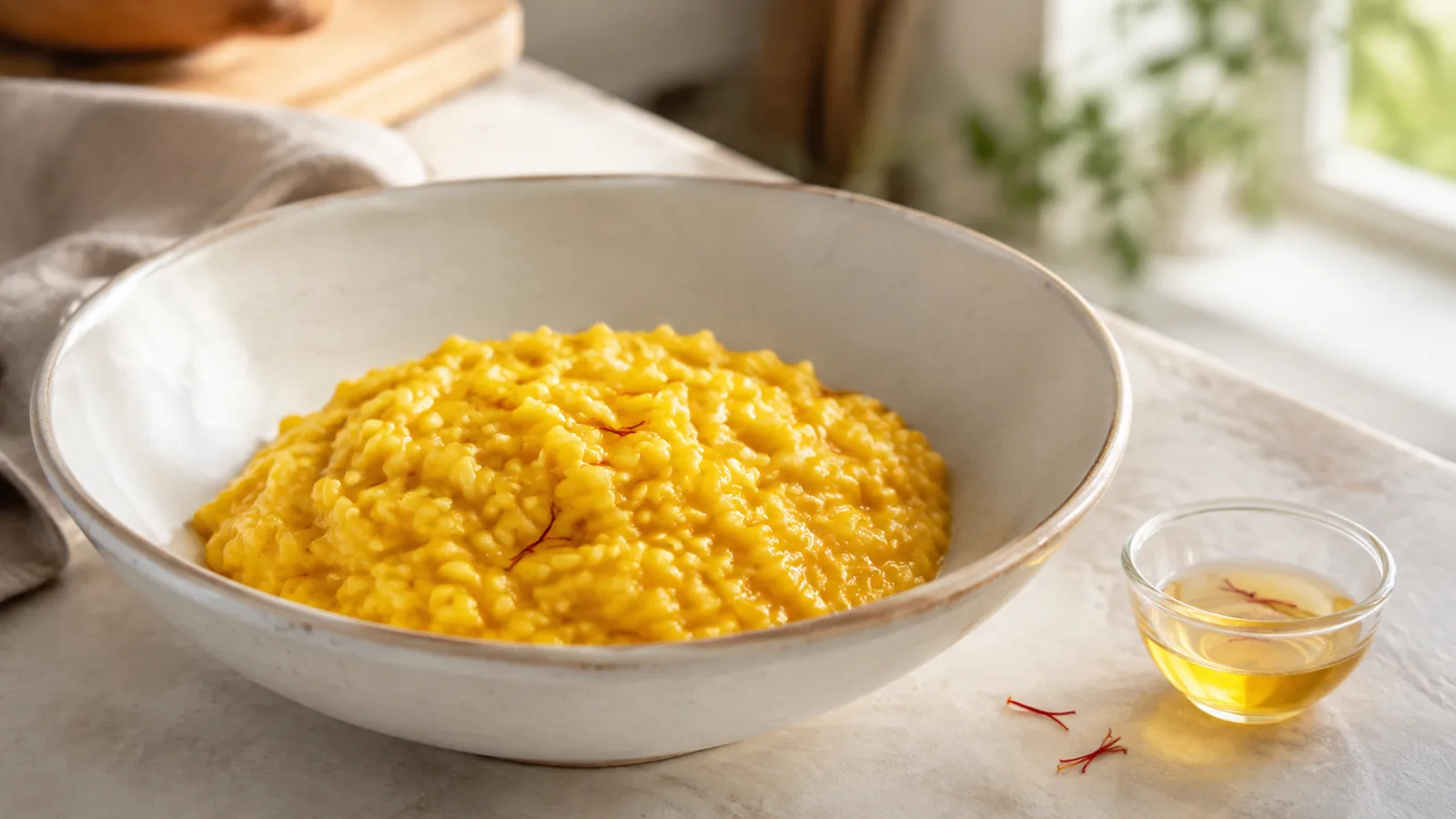
The ideal time to add saffron is late enough to protect its aroma but early enough for the infusion to spread. In long-cooked food, that usually means the final 10 to 20 minutes. Rice that will be drained needs saffron after draining and before the final steam; cakes need it mixed with the wet ingredients before the batter sets.
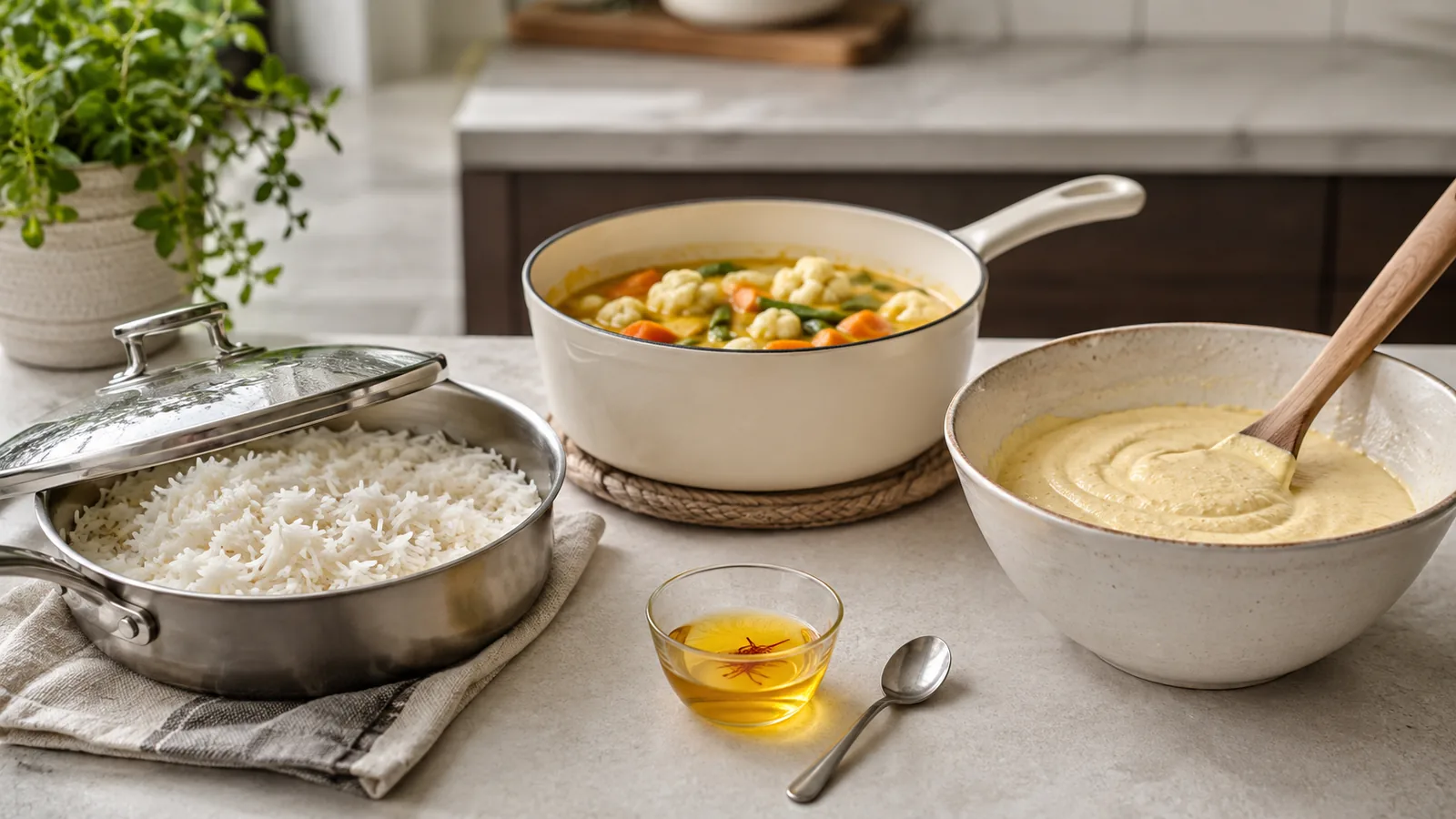
Ideal Time to Add Saffron for Maximum Flavor and Aroma
When do you add saffron and how do you decide? Watch three clocks: how long the flavour needs to distribute, how much heat the aroma will face, and when the food becomes too firm to mix. The correct moment is where those needs overlap.
- Distribution clock: liquid needs time to carry the infusion through rice, stock, sauce or milk.
- Heat clock: a long, hard boil can make saffron’s delicate aroma less noticeable.
- Setting clock: dough, custard and rice eventually become difficult to mix without harming their texture.
This is why “always add saffron at the beginning” and “always add it at the end” are both unreliable rules. Timing follows the cooking method, not a single universal minute.
Infusing Saffron in Warm Liquid
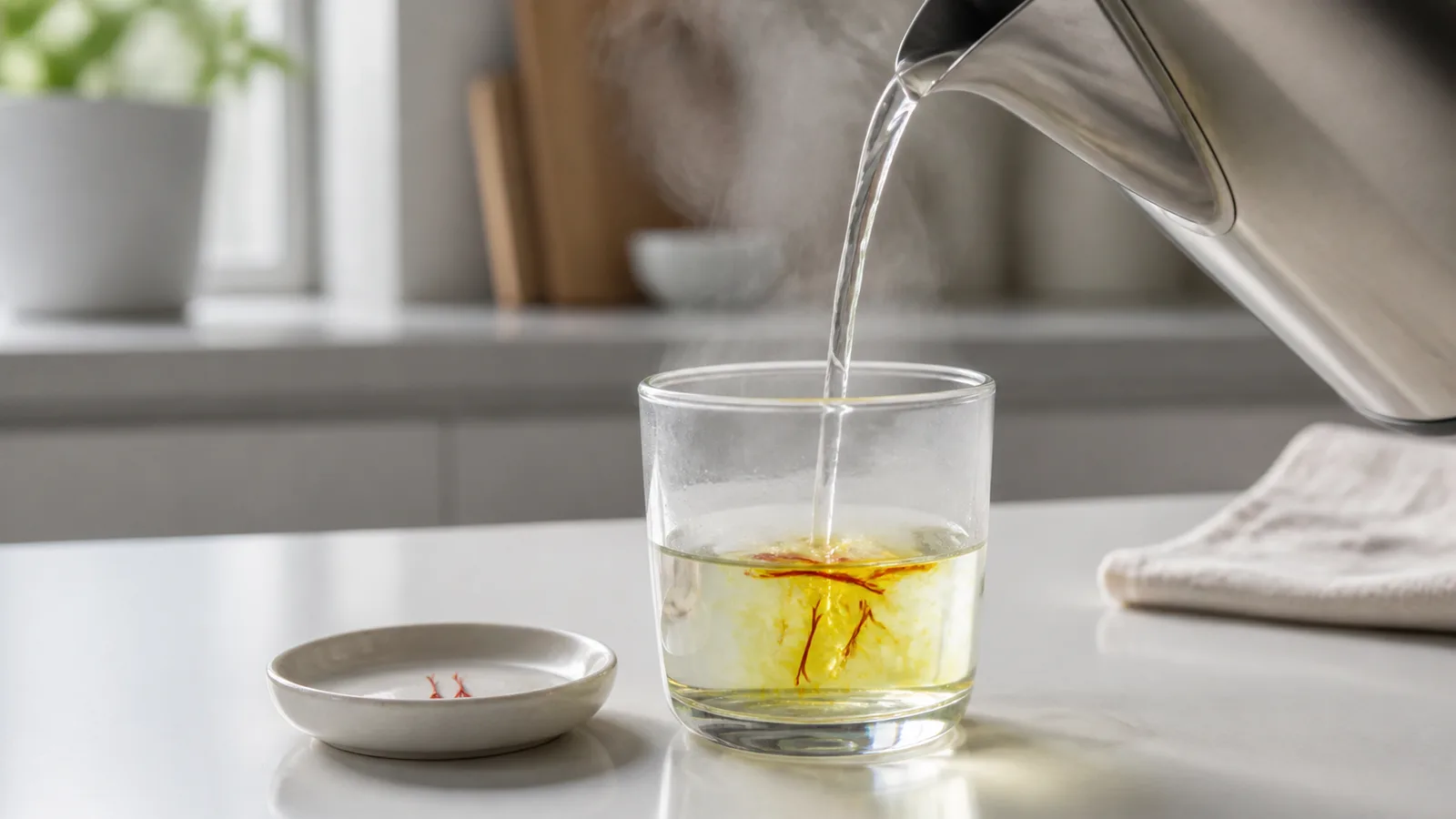
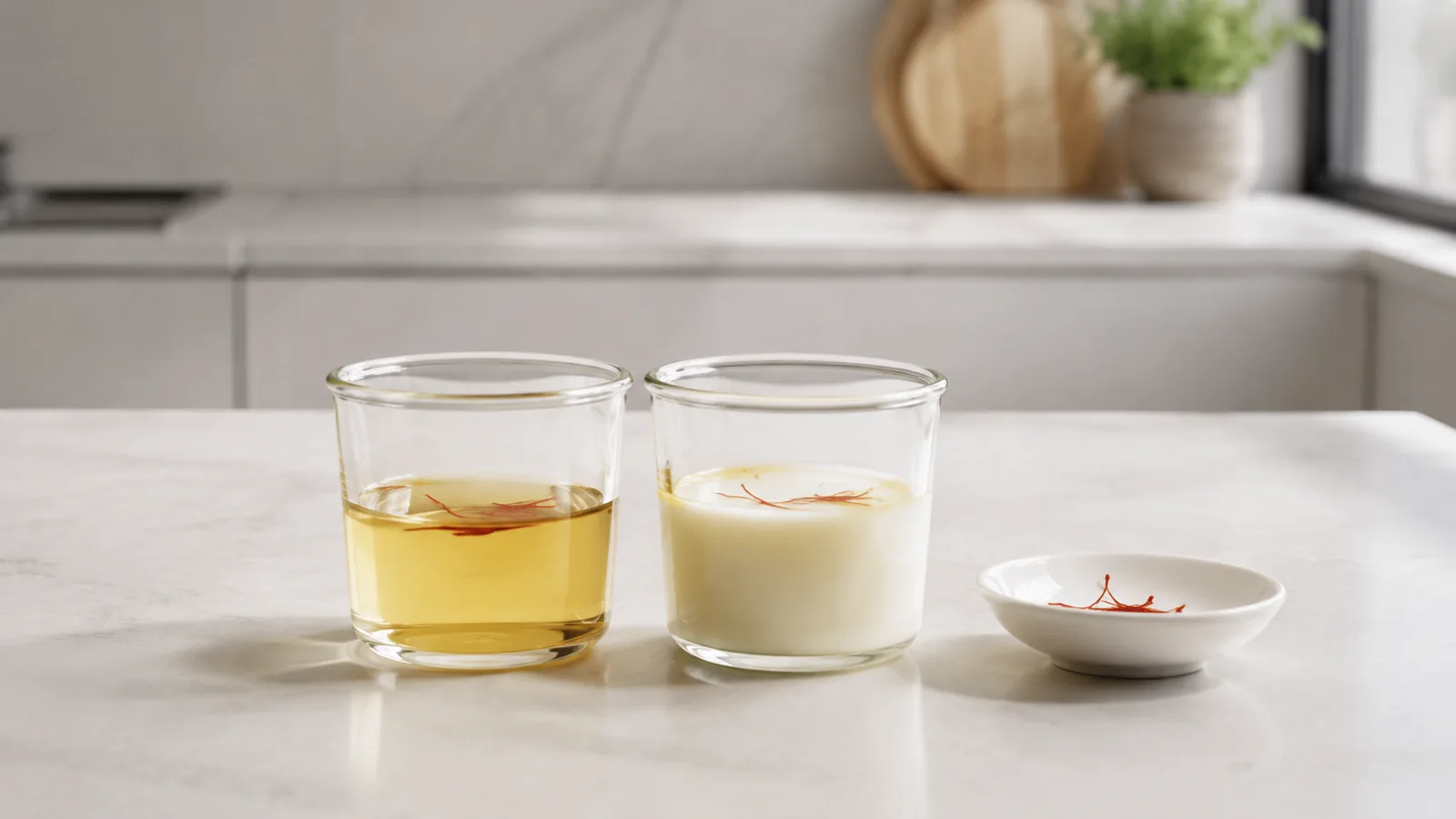
Before deciding when to add saffron, prepare it. Lightly crush the measured threads, cover them with a few tablespoons of warm water, milk or mild stock, and leave the vessel covered for 10 to 20 minutes. Add the liquid and softened threads together.
Blooming gives the colour and flavour a vehicle. A 2024 culinary extraction study found that water-rich conditions favoured crocin extraction. The technique also prevents a few dry threads from remaining concentrated in isolated bites.
Count this infusion as part of the recipe’s liquid. That matters in rice cookers, bread dough, cake batter and any formula where two or three extra tablespoons could alter the texture.
When to Add Saffron to Rice
Absorption Rice and Rice Cookers
Add the infusion with the measured cooking liquid so it can move through the grains during the cycle. Because the total cooking time is moderate and the liquid remains in the pot, the saffron has time to distribute without being discarded.
Parboiled and Steamed Rice
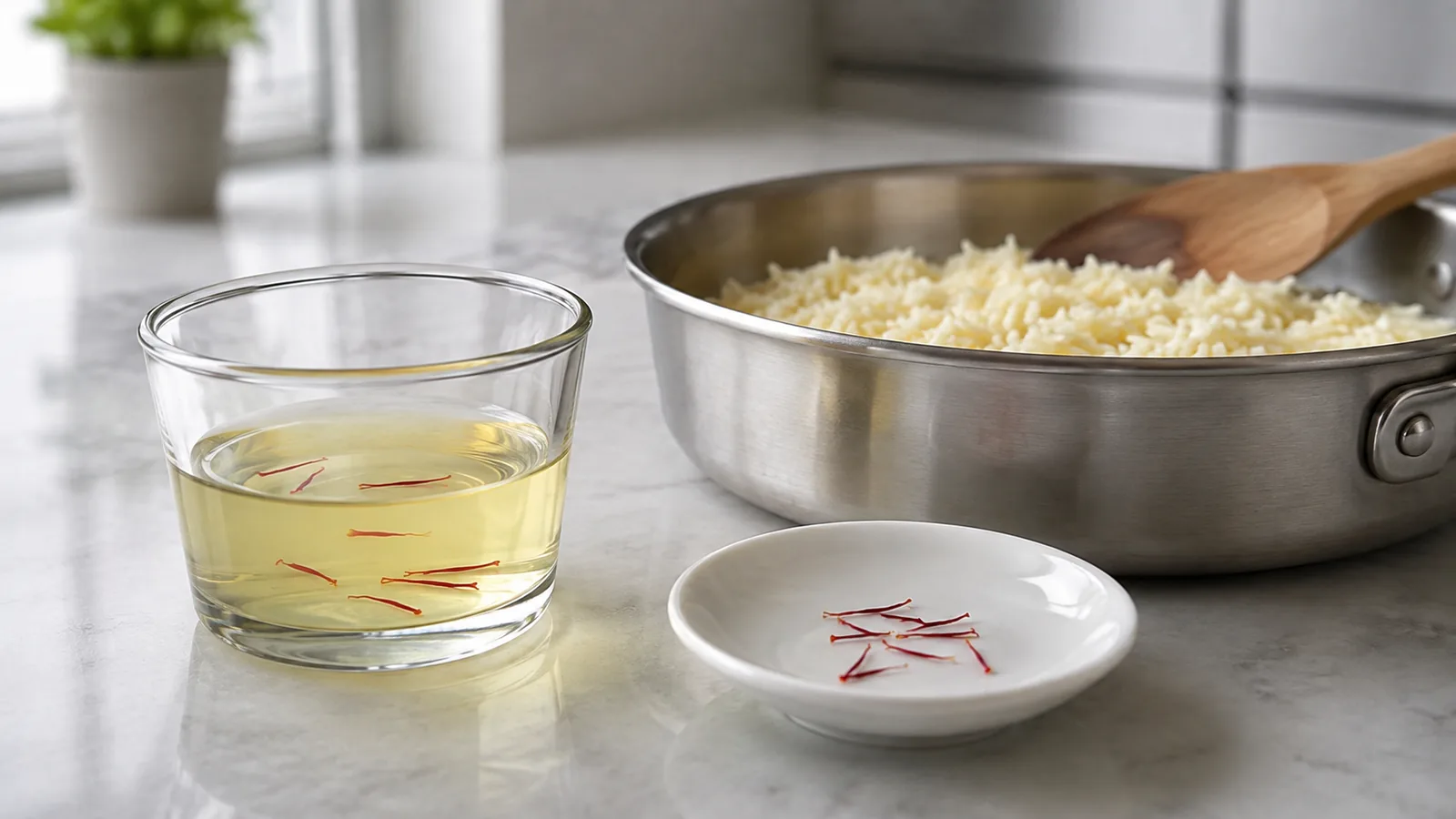
Do not add saffron to the first pot of water if that water will be drained. Bloom it while the rice parboils, then drizzle the infusion over the rice before its final steam. You can colour the whole pot or mix the infusion into one portion for a golden top layer.
Risotto and Other Stirred Rice
Add the infusion once the rice is partly cooked and enough liquid remains to distribute it. The saffron should have time to become part of the creamy base, but it does not need to endure every minute of the simmer.
Adding Saffron in Slow-Cooked Dishes
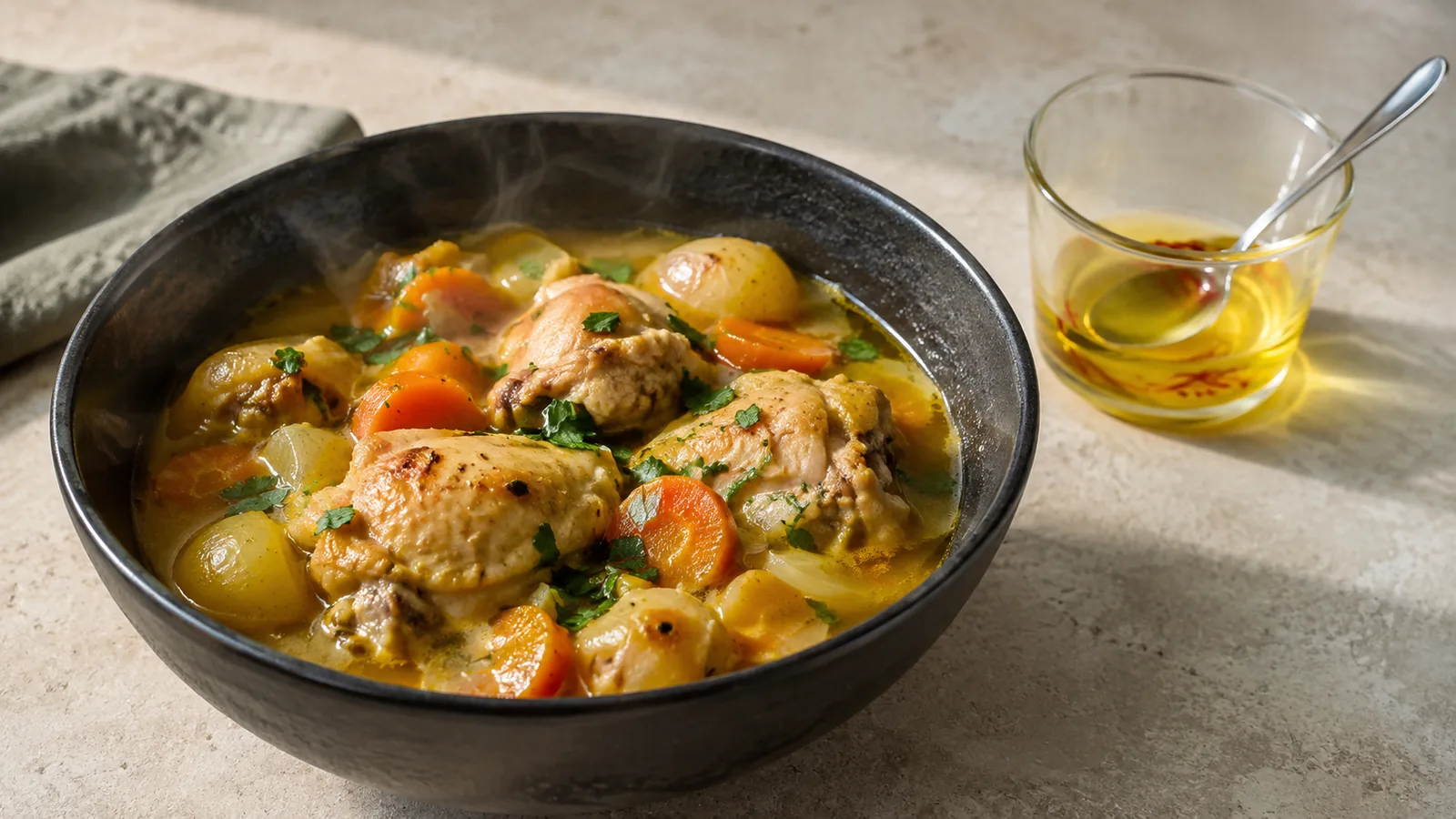
For a stew, braise or slow-cooked sauce, wait until the main ingredients are nearly tender. Add the infusion during the final 10 to 20 minutes as a starting point, then adjust for the volume and thickness of the dish. A large pot may need a little longer to distribute evenly.
The legacy advice to add saffron at the very beginning of a multi-hour cook is not ideal for aroma preservation. Research on saffron in boiling water found that prolonged heat affected crocins and safranal. In practice, an earlier small portion can provide background colour while a reserved portion added later restores a fresher aroma.
Adding Saffron to Desserts
Custard, Rice Pudding and Milk Sweets
Stir the infusion into the warm mixture while it is still fluid, normally before the final thickening. If the dessert must simmer for a long time, hold the saffron until the latter part of cooking. It needs enough movement to spread but not an extended boil.
Cakes and Quick Breads
Let the infusion cool if necessary, then mix it with the wet ingredients. Once flour enters and the batter thickens, trying to distribute a coloured liquid can create streaks or encourage overmixing. Here the setting clock matters more than adding saffron “late.”
Yeast Dough
Add the cooled infusion with the recipe liquid so the colour spreads through the dough. Subtract the infusion volume from the other water or milk. A finishing syrup can carry a second, lighter saffron note after baking.
Saffron in Beverages
For tea, warm milk and lattes, add saffron while the liquid is hot enough to steep, cover it if practical, and avoid a prolonged rolling boil. Ten to 15 minutes gives the threads time to release colour and aroma.
Cold drinks are possible, but dry threads release slowly in cold liquid. Prepare a concentrated warm infusion, let it cool, then mix it into lemonade, sparkling water or another chilled drink. This gives more predictable colour and avoids thread clusters.
Marinating with Saffron
Bloom the saffron first and mix it into the marinade so it can coat the food evenly. A water- or yoghurt-based marinade distributes it more reliably than dry threads scattered over meat or vegetables. Keep any marinade containing raw meat refrigerated and do not reuse it as a serving sauce unless it is cooked safely.
For grilling, some saffron aroma may be lost over intense heat. Reserving a small clean portion of the infusion for a cooked sauce, butter or finishing glaze can keep the spice recognisable at the table.
Early, Middle or Late?
Use these practical timing rules:
- Add early: when cooking is relatively short and the infusion must be absorbed, as in an electric rice-cooker cycle.
- Add in the middle: when a liquid dish needs distribution time but still has a substantial simmer ahead, as in risotto.
- Add late: during the final part of a long stew, braise or sauce.
- Add before setting: with wet ingredients for cakes, bread and custards.
- Add in two stages: when you want background colour plus a fresher final aroma.
Signs the Timing Was Wrong
Golden colour, faint aroma: the saffron may have cooked too long, stayed uncovered, or been old before use.
Dark streaks and bitter bites: dry threads or a concentrated infusion were added too late to distribute.
Weak colour and flavour: the saffron was not crushed or bloomed long enough, or too little liquid carried it through the food.
Loose batter or wet rice: the infusion was added on top of the recipe’s normal liquid instead of replacing part of it.
A Timing Rule You Can Reuse
When to use saffron comes down to movement and heat. Bloom it first. Add it while the food is still moist enough to distribute the infusion, but avoid giving a delicate aroma more high-heat exposure than the recipe needs. For a long cook, reserve at least part of the infusion for the final stage.
Our companion guide gives more examples of when to add saffron to specific foods, while the saffron-blooming guide compares preparation methods. Current whole-thread options are listed in the saffron shop.