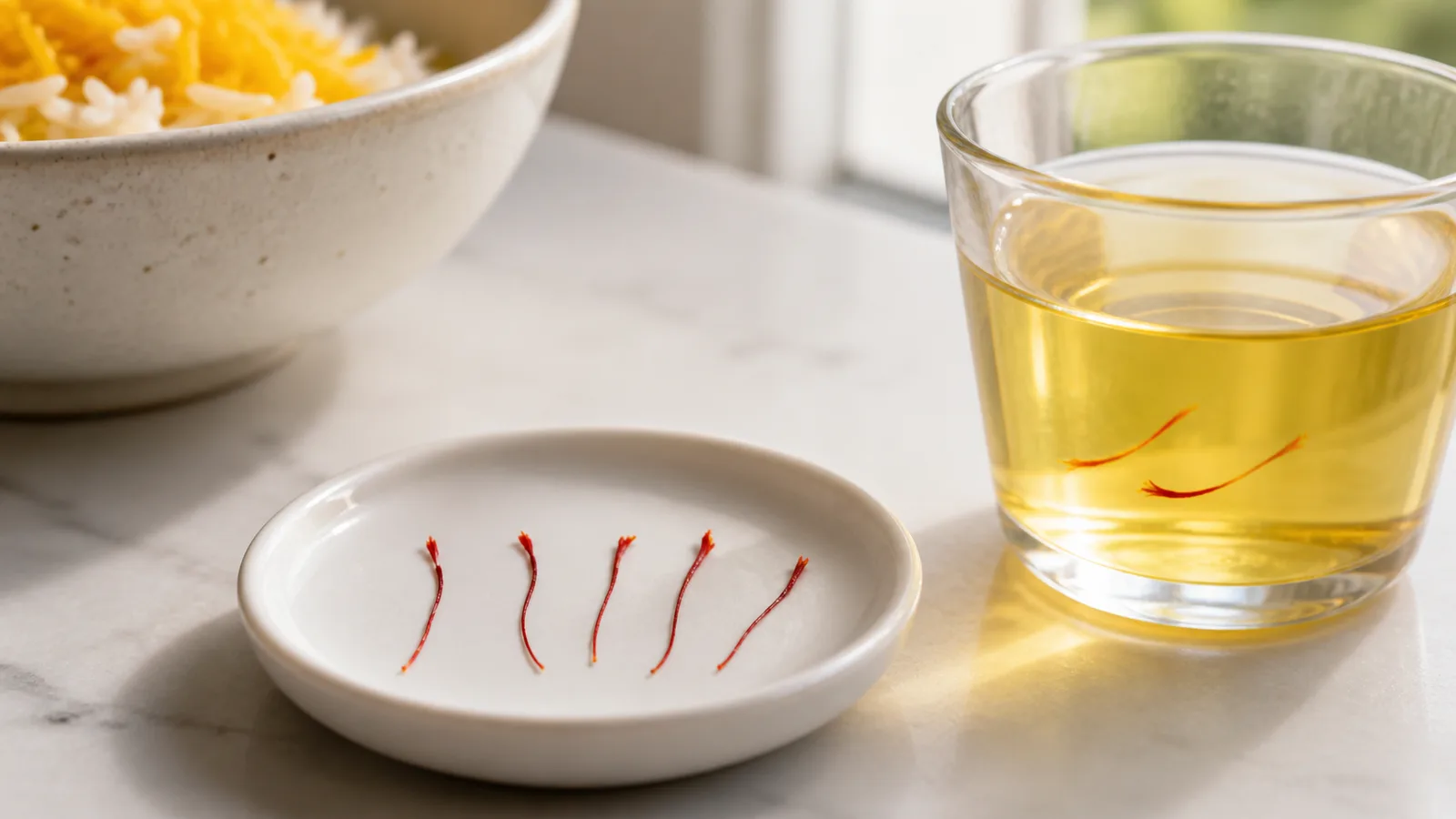
Saffron adds a dry floral aroma, earthy warmth and gentle bitterness to a dish. Its honey-like character is mainly aromatic rather than sugary. In a mild base such as rice, milk or stock, those qualities become clear; in strongly seasoned food, saffron works more as a background note.
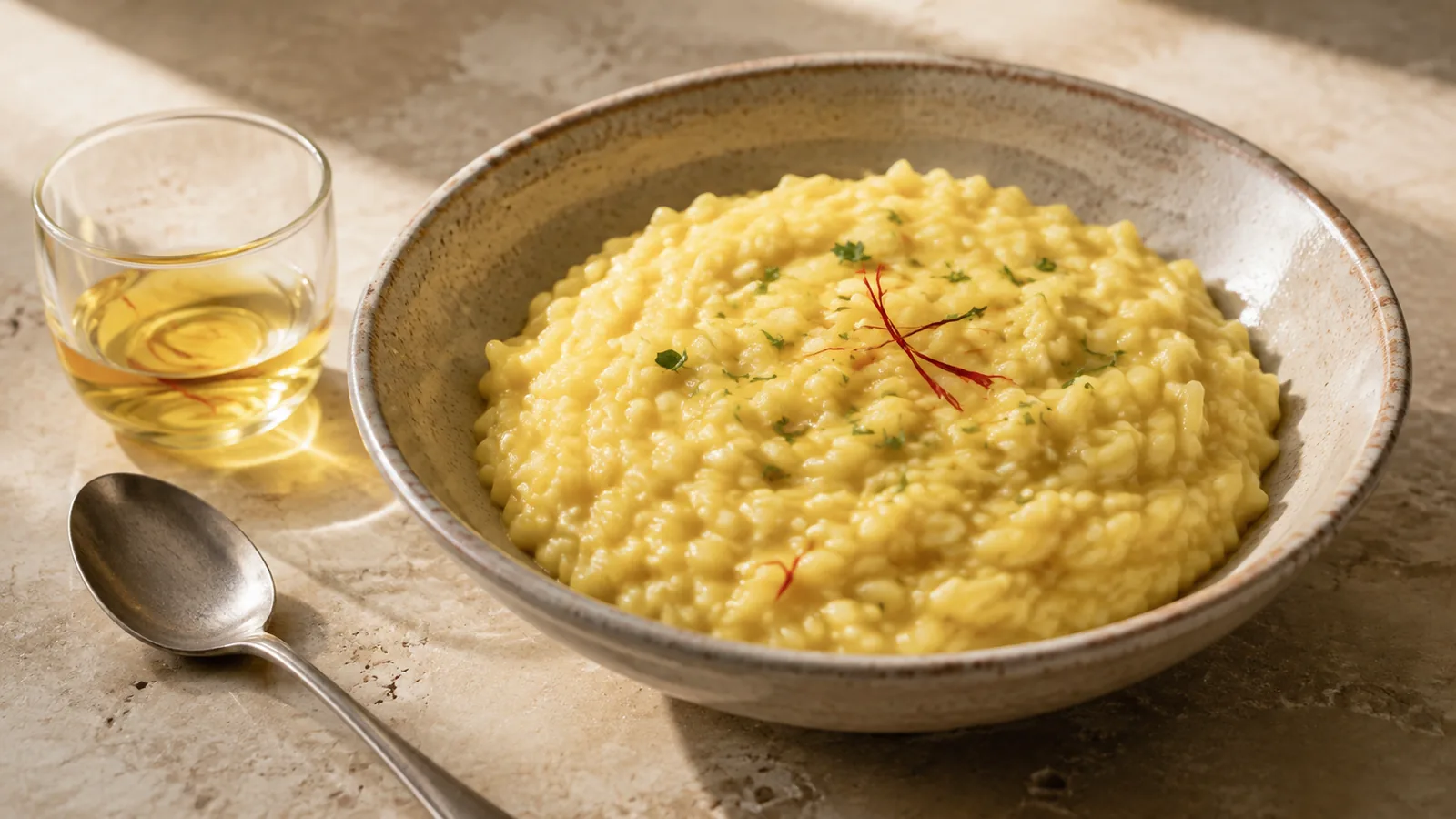
Flavour of Saffron: What Taste Does It Bring to Your Dish?
What does saffron add to a dish? It changes more than one sense at once. The aroma reaches the nose, picrocrocin contributes a bitter edge, crocins turn moisture golden, and that colour changes what the diner expects before tasting. The result can feel warm and complex even though saffron does not add heat, salt or sugar.
This contextual effect is the reason a saffron flavor description often sounds different from one recipe to another. The spice may seem floral in rice, honeyed in milk, earthy in stock or gently bitter in a plain infusion. The surrounding ingredients and serving temperature decide which impression comes forward.
The Taste of Saffron
Saffron flavour is easier to understand when aroma and taste are separated. If you are asking what does saffron taste like, begin with its mild bitterness; much of the honeyed and floral impression comes through the nose. The flavor of saffron feels broader in food because both senses operate together.
The taste of saffron spice is not simply “sweet.” It has a recognisable bitterness that becomes pleasant when diluted through food. A trained sensory study examined the detection and recognition thresholds of picrocrocin and found that temperature and other saffron constituents changed how its bitterness was perceived.
At a useful culinary quantity, saffron taste is subtle but persistent. You may first notice the other ingredients, followed by a floral-earthy note and a dry finish. If the dish tastes medicinal, the saffron is probably too concentrated. If the food is yellow but has no clear aroma, the threads may be old, poorly extracted or buried under stronger seasonings.
Aromatic Quality
Saffron’s aromatic quality is central to its flavour. Safranal is an important volatile compound in its characteristic scent, commonly described with words such as floral, hay-like, warm and honeyed. Because scent travels with steam, hot rice, broth or milk may smell more vivid than the same food after it cools.
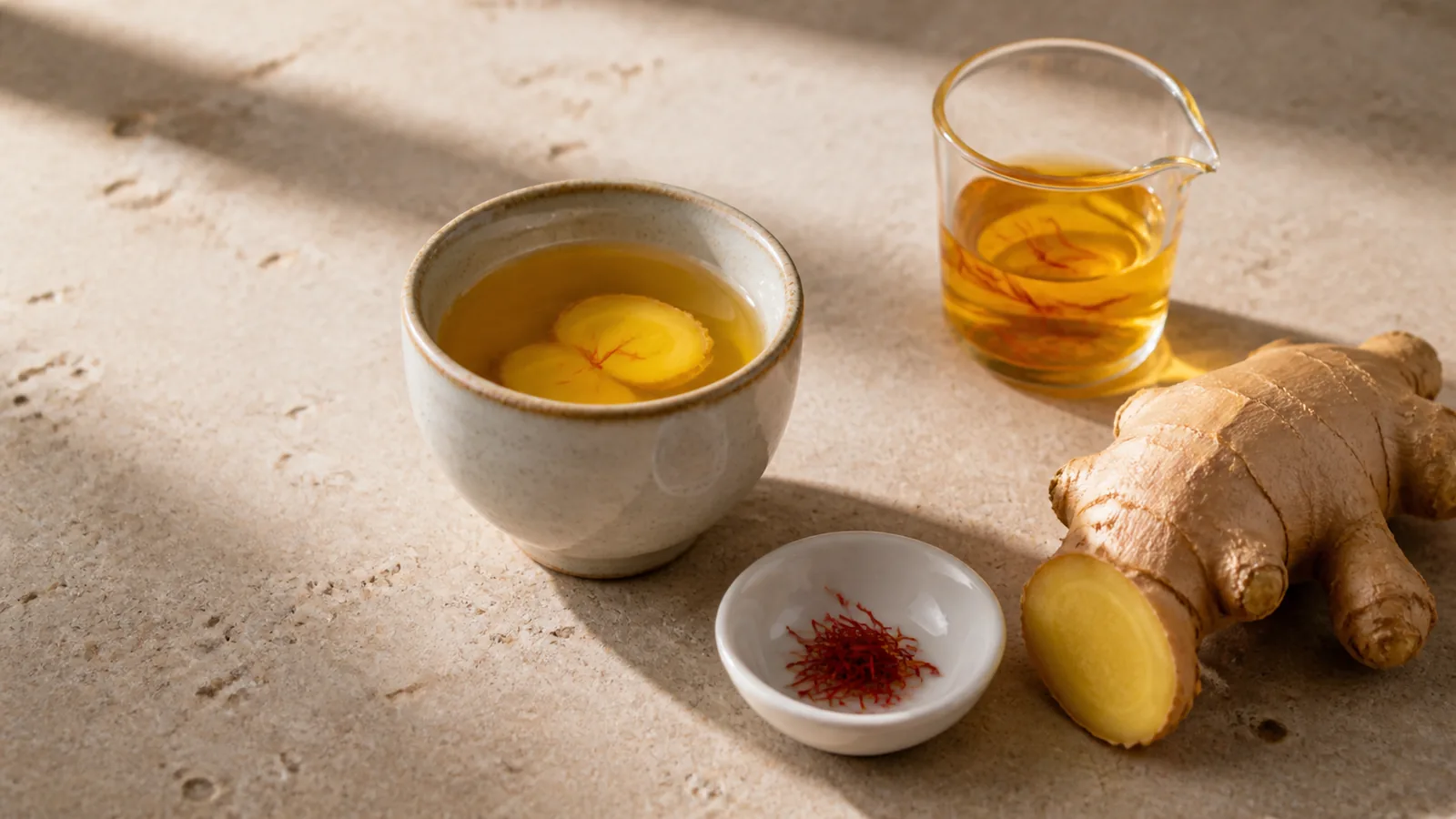
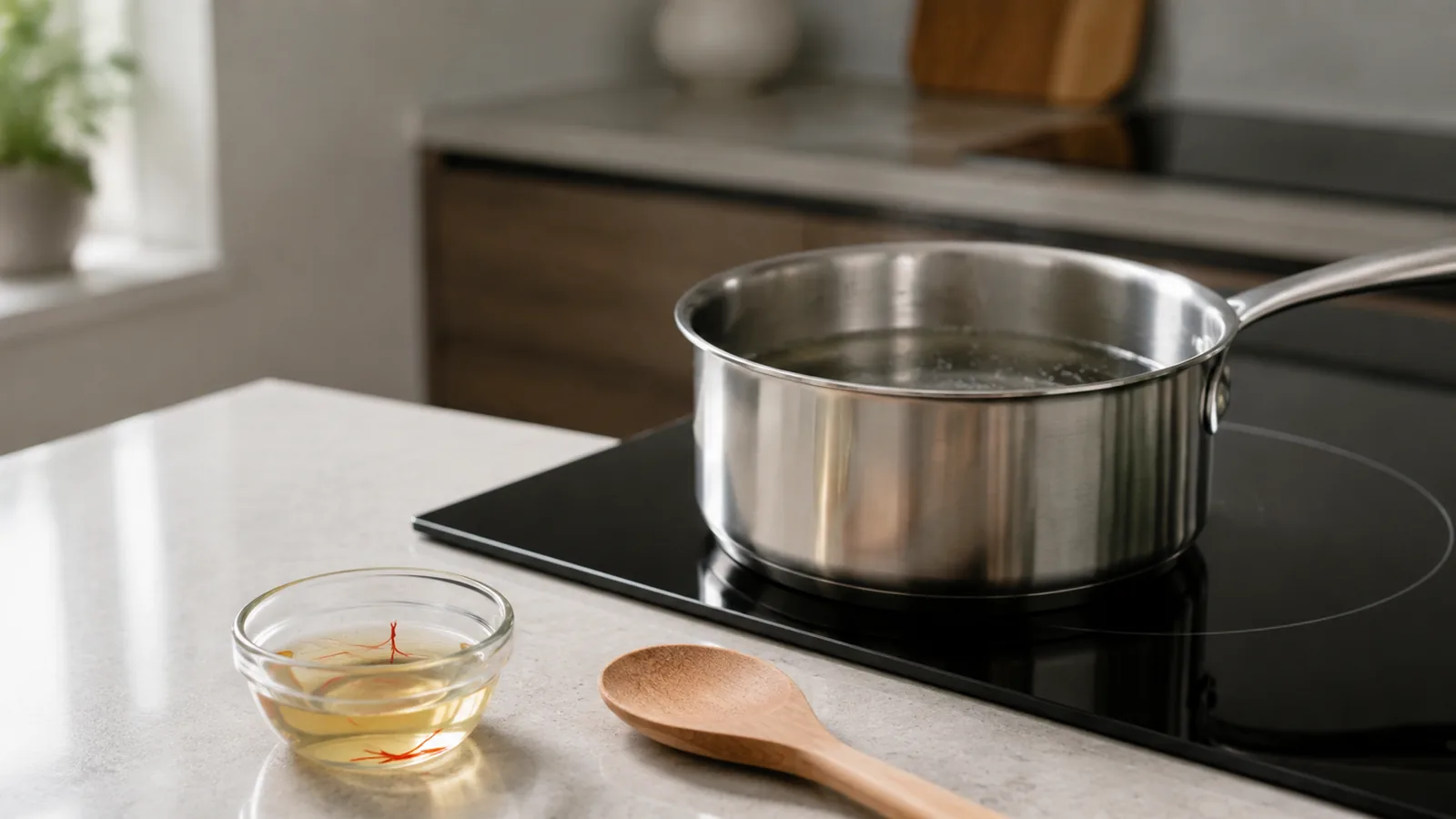
Blooming the threads in a small amount of warm liquid helps distribute the aroma and colour. A 2024 culinary study found that water-rich conditions favoured crocin extraction. Warm water is therefore a useful general carrier, while milk or mild stock can be used when it already belongs in the recipe.
How Saffron Changes Different Dishes
Plain Rice
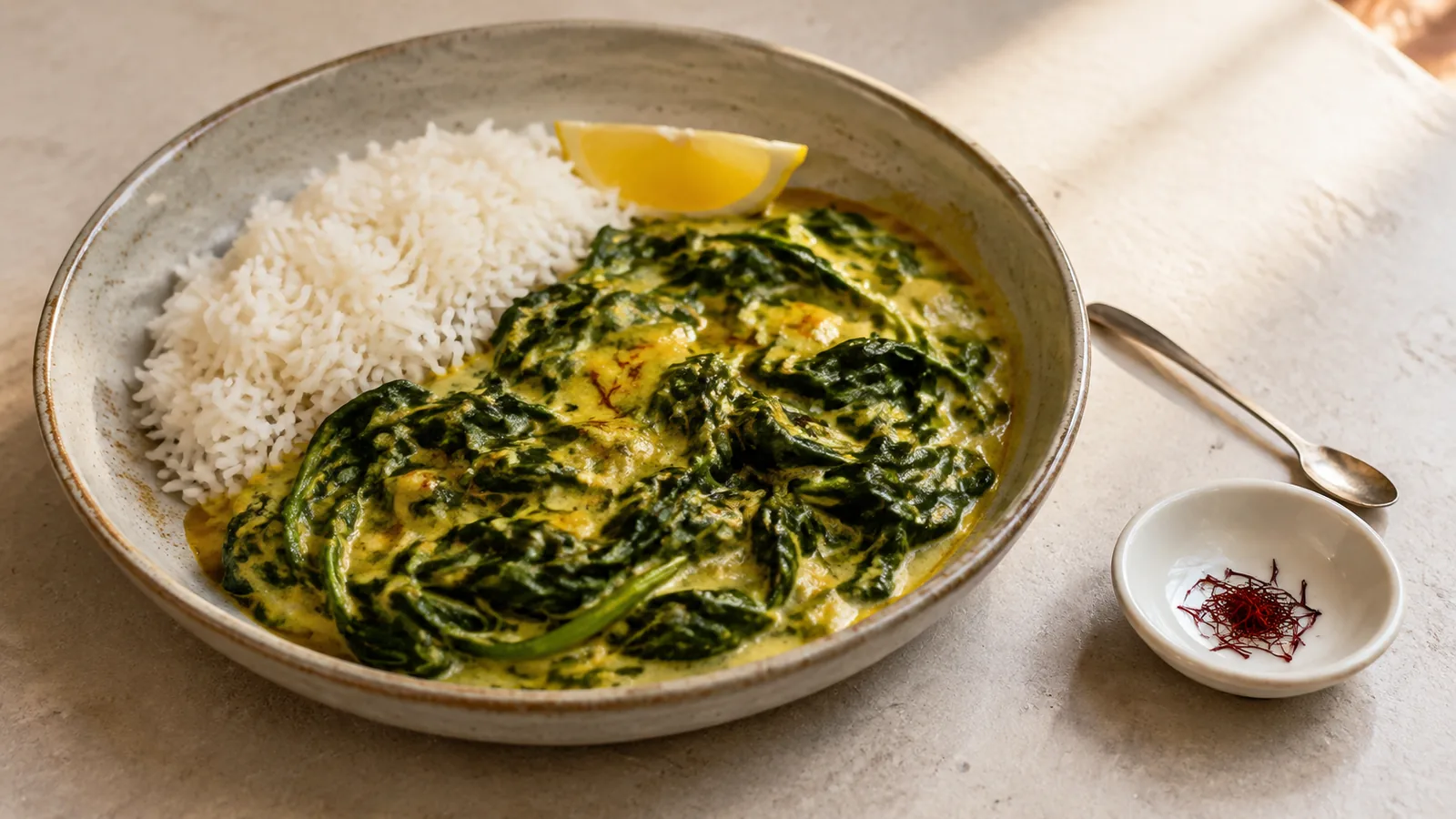
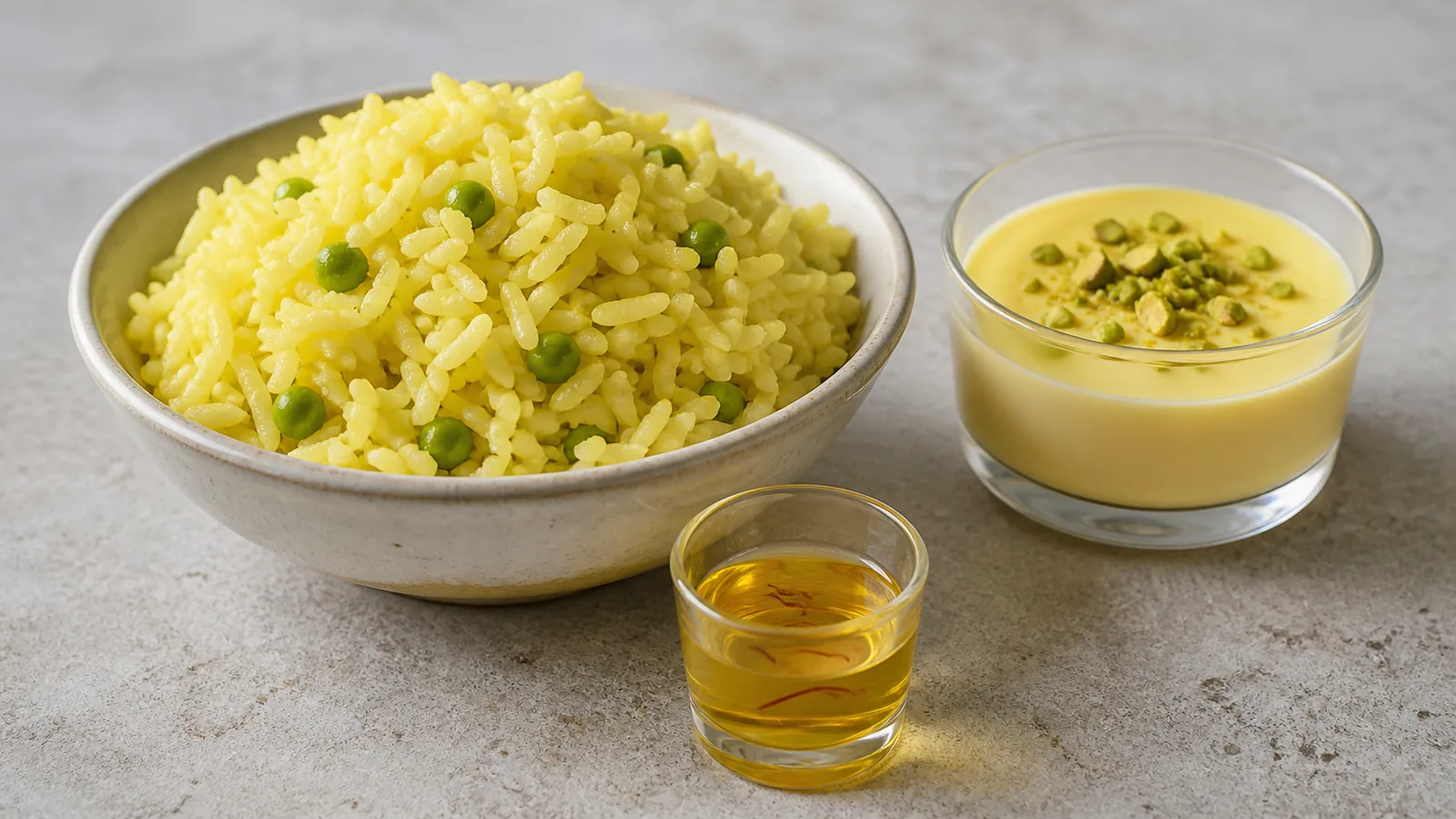
Rice gives saffron a quiet background. The grains carry the infusion, the mild flavour softens bitterness, and the golden colour is immediately visible. Butter, oil and salt can round the result, but the rice should remain recognisable rather than tasting perfumed.
Broth, Soup and Sauce
In a light stock, saffron adds aromatic lift and a warm colour. It does not add umami by itself; the savoury depth comes from stock, meat, mushrooms, cheese or other ingredients. Saffron instead supplies contrast, making a simple broth smell more layered.
Milk, Cream and Custard
Dairy softens the bitter edge and gives the honeyed aroma more room to register. In ice cream or custard, sugar creates the sweetness; saffron contributes the floral, earthy counterpoint. Too much can make a delicate dessert taste dry or medicinal.
Fruit and Syrup
Pear, apple, citrus and other gently flavoured fruits can carry saffron without losing their identity. In syrup, the spice gives both colour and a lingering aroma. Tart fruit or a little lemon can brighten the combination, while excessive acidity may dominate it.
Saffron in Savory Dishes
In savory dishes, saffron works best with moisture and a controlled seasoning base. It is at home in pilaf, paella, risotto, fish soup, mild curry and braised chicken. These foods provide water, stock or fat to distribute the infusion.
The spice does not automatically “enhance” every ingredient. Smoke, strong chilli, a dark roasted sauce or a crowded spice mixture may cover it. If those flavours define the dish, adding more saffron usually increases bitterness and cost rather than clarity.
Saffron in Desserts
In desserts, saffron provides contrast to sweetness rather than supplying sweetness itself. It pairs naturally with milk, cream, rice, pistachio, almond, cardamom, vanilla, orange and lemon. Good uses include rice pudding, ice cream, kulfi, custard, cake, bread and poached fruit.
Add a prepared infusion while the mixture is still fluid enough to distribute it. In cake and bread, count the infusion as part of the wet ingredients. In custard or rice pudding, add it before the final thickening but avoid an unnecessarily long boil.
What Flavour Is Saffron in a Finished Recipe?
The saffron flavor profile can shift according to five practical variables:
- Quantity: too little disappears; too much makes bitterness dominant.
- Extraction: crushed, bloomed threads distribute more evenly than dry whole threads.
- Temperature: heat releases aroma, while prolonged cooking can leave it less vivid.
- Food base: rice, milk and light stock expose saffron more clearly than forceful sauces.
- Freshness: well-stored threads usually retain a livelier aroma than old material.
That is why there is no single tasting note that describes every saffron dish. The core remains floral, earthy and mildly bitter, but food decides how those qualities are framed.
How to Add the Flavour Evenly
- Measure a restrained portion suited to the recipe.
- Lightly crush the dry threads.
- Cover them with a small amount of warm water, milk or mild stock.
- Leave the covered infusion for 10 to 20 minutes.
- Add both liquid and threads while the dish is moist enough for even distribution.
- Taste near the end and adjust salt, acid or sweetness around the saffron before adding more spice.
How to Taste Saffron in Food
Smell the dish first, then notice the first flavour, the mid-palate and the finish. A balanced preparation usually presents the food itself first, saffron’s aroma alongside it, and a mild dry bitterness at the end. Colour alone is not proof that the flavour is well developed.
If you want the underlying sensory terms without a particular recipe, read our guide to what flavour saffron adds. The article on fruit pairings for saffron covers one useful application, and current thread grades are listed in the saffron shop.