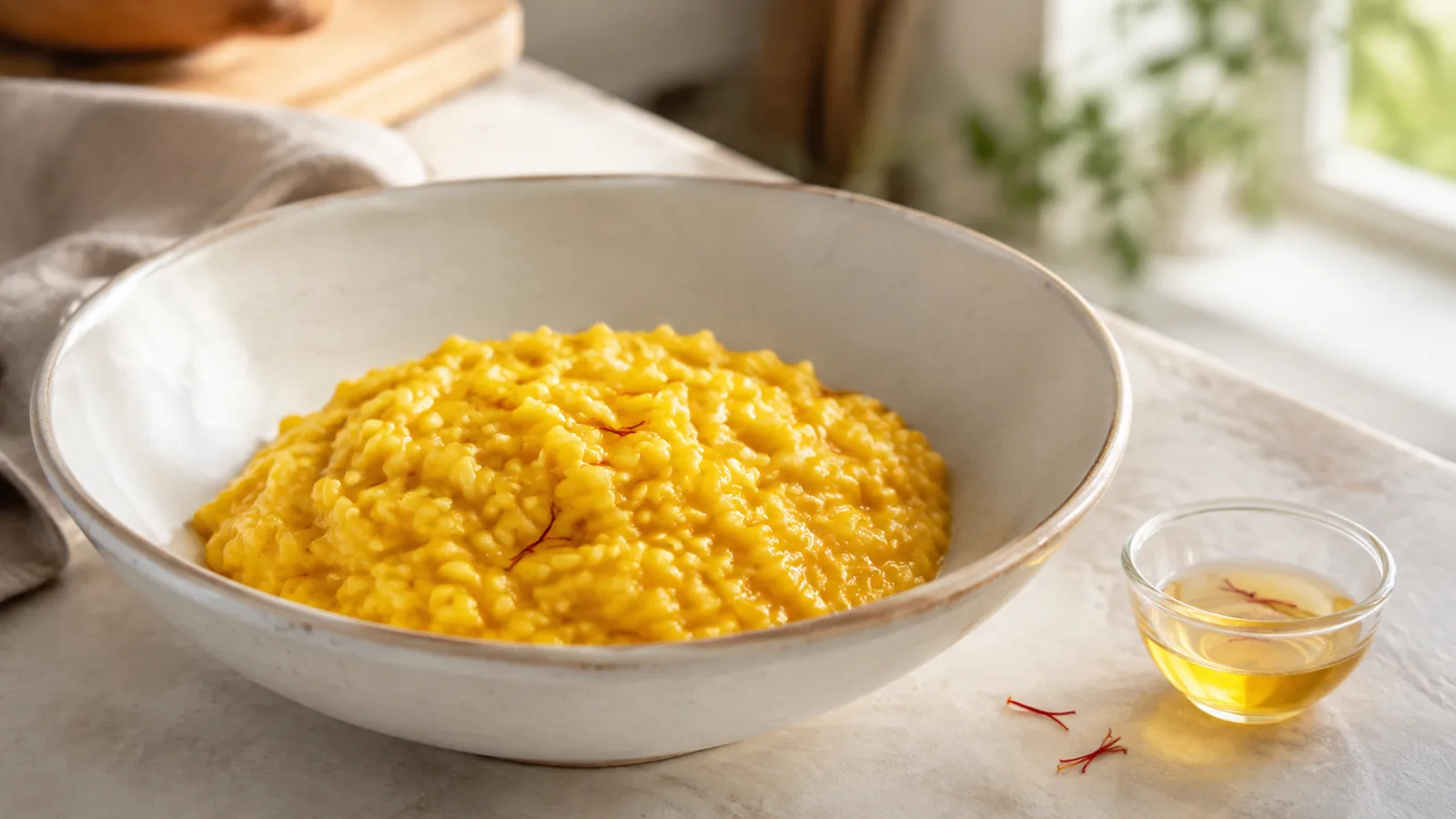
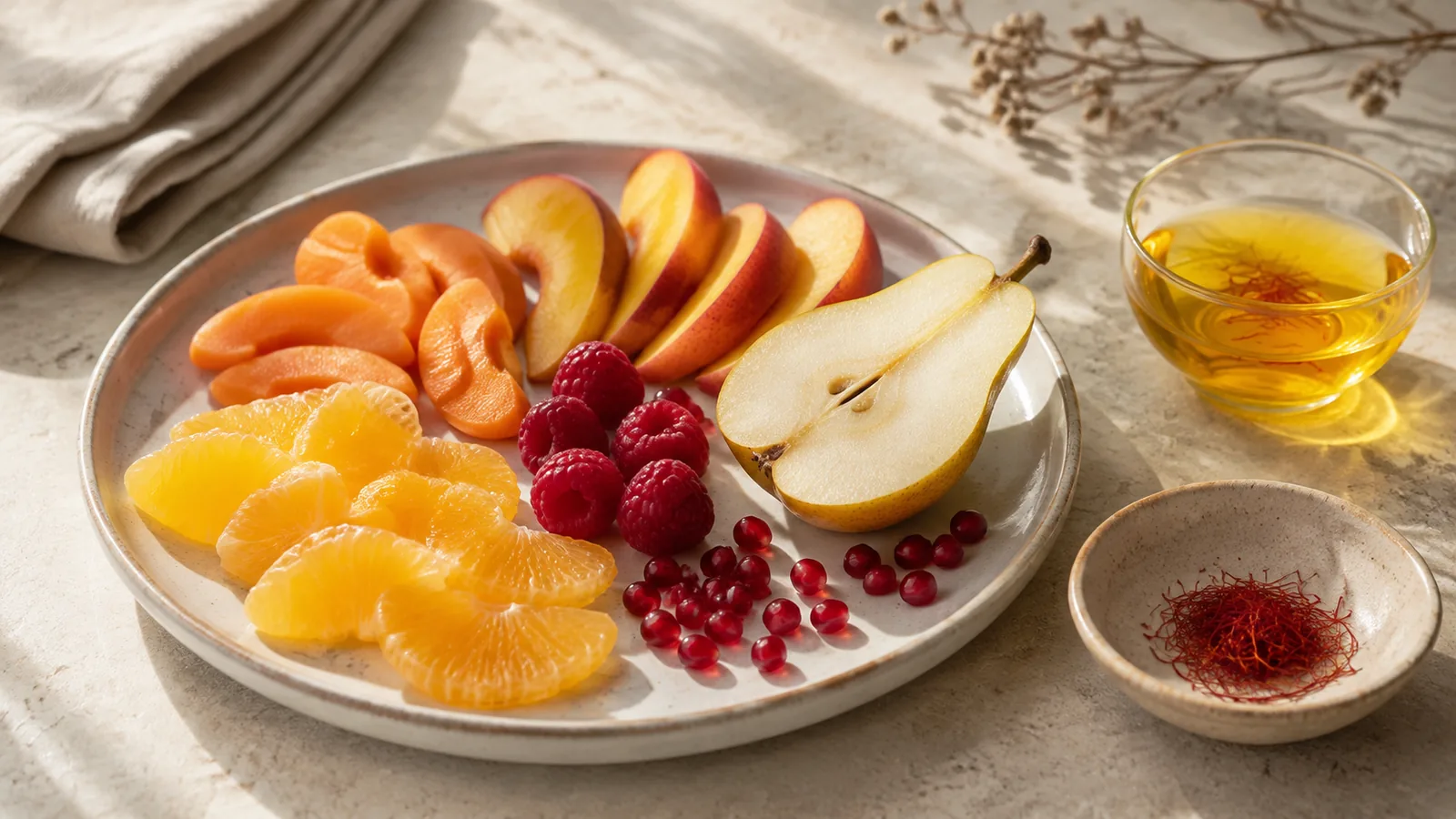
Orange, lemon, apricot, peach, pear, apple, strawberry, raspberry and pomegranate all go well with saffron. The best choice depends on the dish: citrus sharpens saffron’s warm aroma, stone fruit supports it with mellow sweetness, and berries add acidity and colour without requiring a heavy dessert.
What Fruit Goes Well with Saffron?
Saffron has a floral, honeyed and slightly bitter character. Fruit can soften that bitterness or provide a bright contrast, but the pairing should still taste like the fruit named in the recipe. A small saffron infusion is usually enough; adding more can make a delicate peach or pear dish taste medicinal.
The most useful way to choose among fruits that pair with saffron is to consider acidity, sweetness and texture. These saffron flavor pairings are easier to understand by preparation: juicy citrus behaves differently from a berry compote, while firm pears and apples can carry a warm poaching liquid for much longer.
Citrus Fruits: Orange, Lemon and Mandarin
Orange is one of the easiest saffron partners. Its sweetness and gentle acidity work in cakes, rice pudding, compotes, drinks and sauces. Use the finely grated zest for aroma and the juice for acidity; avoid the bitter white pith.
Lemon gives a sharper contrast. A little zest can lift saffron in biscuits, custards, syrup cakes and fruit salads, while lemon juice is best added with care because too much can dominate. Mandarin and clementine offer a softer alternative when you want citrus fragrance without pronounced sourness.
Simple idea: saffron-orange syrup
Bloom saffron in a spoonful of warm water, then add it to a light orange syrup after the sugar has dissolved. Let the syrup cool before spooning it over sliced oranges, yoghurt, cake or poached fruit. This keeps the fragrance noticeable instead of cooking it through a long reduction.
Stone Fruits: Apricot, Peach, Nectarine and Plum
Apricot has enough acidity to remain lively beside saffron and enough sweetness to make the pairing feel natural. Fresh or dried apricots work in compotes, rice dishes, cakes and sauces. Dried fruit needs more liquid, so add the bloomed saffron to the poaching or cooking liquid rather than directly to the fruit.
Peaches and nectarines are more delicate. Pair them with a light saffron syrup, cream, yoghurt or a mild cake batter rather than a crowded spice mixture. Plums bring deeper acidity and suit compotes or baked desserts; a restrained amount of saffron prevents the combination from becoming bitter.
Pears, Apples and Quince
Firm pears are particularly good for saffron poaching because they hold their shape and gradually take on the golden liquid. Cardamom, a strip of orange peel or a small piece of cinnamon can join the syrup, but one supporting spice is often enough.
Apples work best when the recipe includes moisture: think baked apples with saffron syrup, apple compote or a gently spiced cake. Quince already has a strong perfume and benefits from slow cooking, so use saffron lightly and add the infusion later in the cooking time. The result should preserve quince’s identity rather than cover it.
Berries: Strawberry, Raspberry and Blueberry
Strawberries and raspberries provide fresh acidity against saffron’s warmth. They suit chilled desserts, yoghurt, panna cotta, jam and fruit salad. For an uncooked dish, make a small warm saffron infusion, cool it completely, then mix it into the dressing or cream.
Blueberries have a quieter flavour and deep colour, so saffron may be less obvious visually. Use the pairing in a light custard, cake or compote where the two flavours have time to meet. Blackberry can work in the same way, although its seeds and stronger tannic note make it a less delicate match.
Pomegranate, Grapes and Figs
Pomegranate seeds add tartness and a crisp texture to saffron rice, fruit salad and yoghurt-based desserts. Add them near serving time so they remain fresh. A little pomegranate juice can also sharpen a syrup, but its colour will move the dish away from saffron gold.
Fresh grapes can be roasted or poached in a lightly saffroned liquid, while raisins fit savoury rice dishes and tagines. Figs have a concentrated sweetness that benefits from yoghurt, citrus or another acidic element. Saffron should sit in the sauce or syrup rather than being scattered dry over the fruit.
Mango and Other Tropical Fruit
Ripe mango has the sweetness and soft texture to work with saffron in lassi-style drinks, ice cream, custard and chilled puddings. Pineapple can also pair with it, but its assertive acidity is easier to balance in a syrup or cooked dessert than with dry threads. Banana is mild enough to accept saffron, though cardamom or citrus often helps the combination feel less flat.
When working with tropical fruit, keep the saffron infusion concentrated so you do not water down a smoothie or cream. Let it cool before adding it to chilled ingredients.
How to Combine Fruit and Saffron
- Measure the saffron for the whole recipe rather than adding threads by eye.
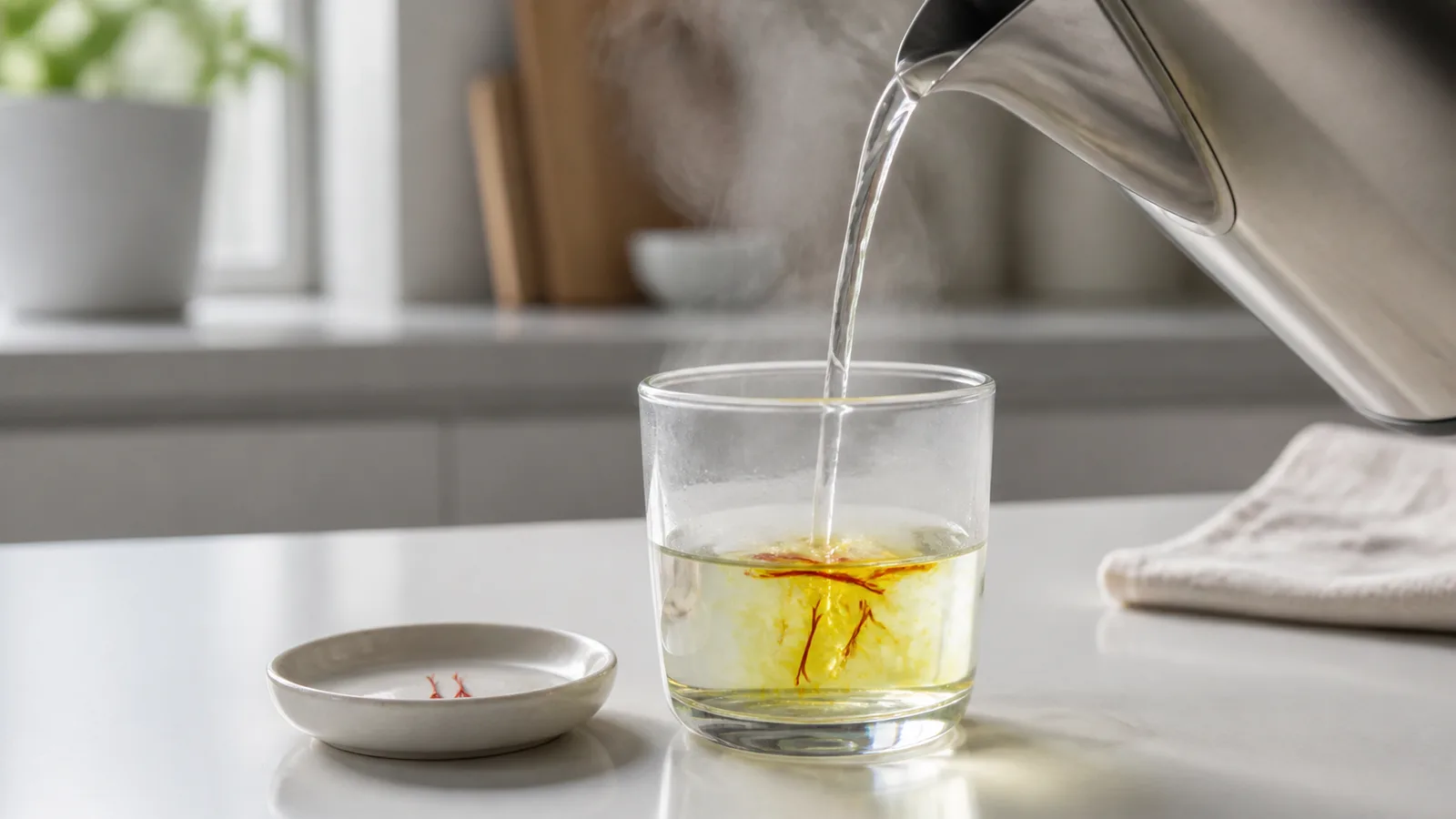
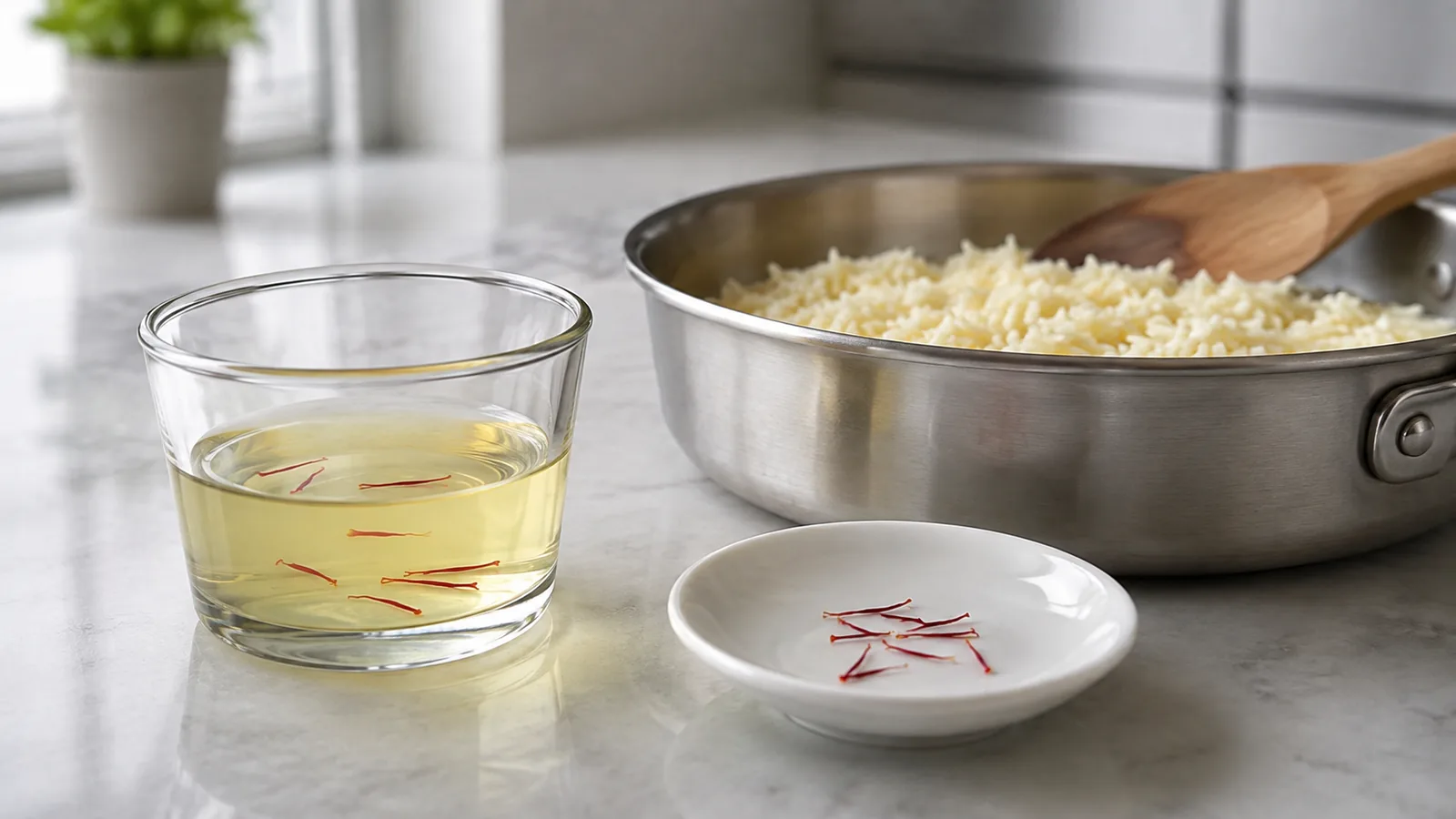
- Gently crush it and bloom it in a few spoonfuls of warm water for 10–20 minutes.
- Add the complete infusion to a syrup, poaching liquid, custard, batter or dressing.
- Give cooked fruit time to absorb the liquid; cool the infusion first for raw fruit.
- Taste for balance before adding extra sugar, acid or spice.
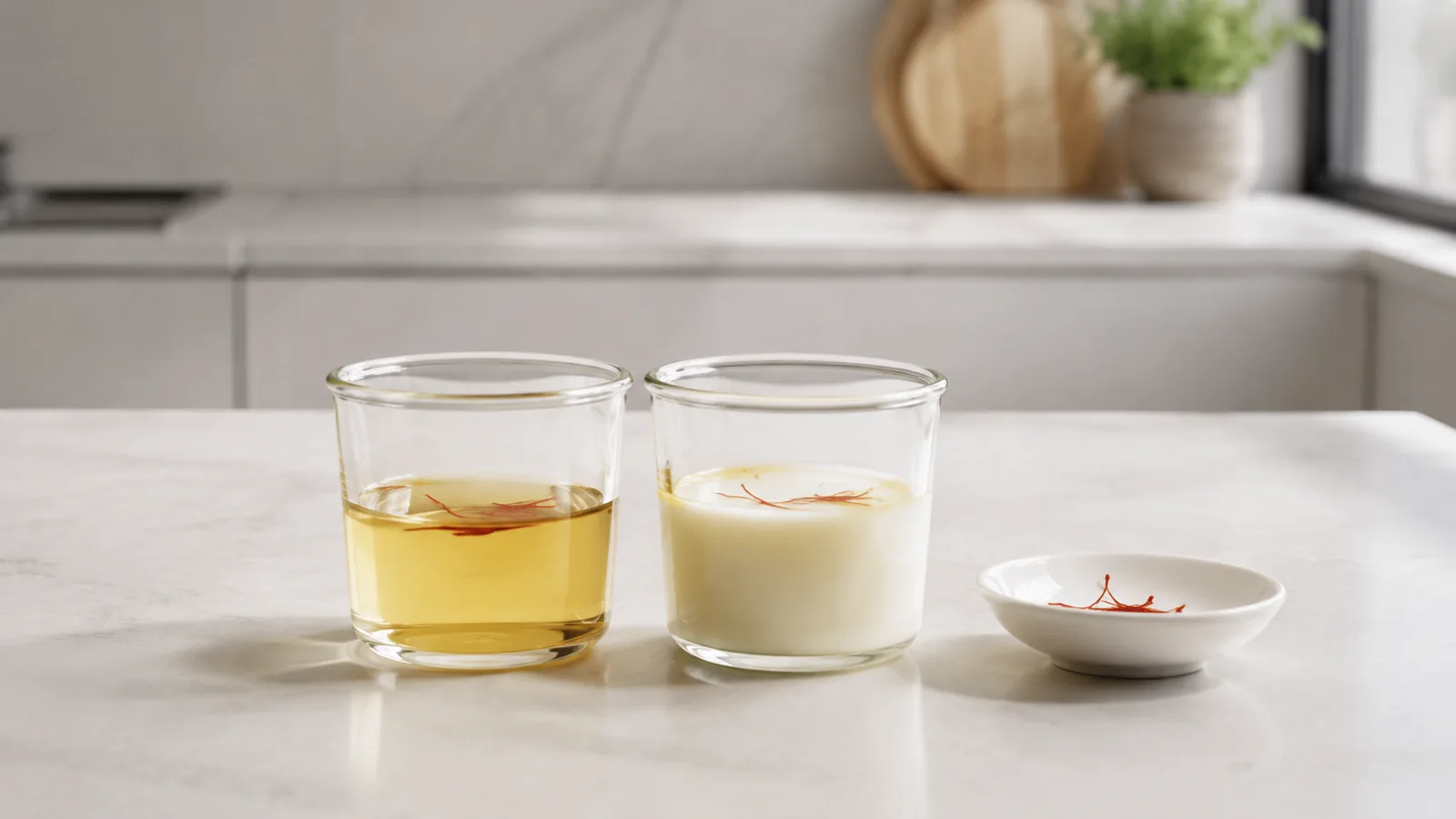
Milk can replace water when the saffron is going into a dairy dessert. Fruit juice can work too, but very acidic juice may make it harder to judge the strength of the infusion. The broader guide to using saffron in food explains the preparation method in more detail.
Pairing Saffron Fruit with Other Flavours
Cardamom, vanilla, rose water, cinnamon, ginger, pistachio, almond, yoghurt and cream can connect saffron and fruit. Choose one or two that serve the dish. Rose water and cardamom are both powerful; using them together with saffron requires restraint if you still want to taste the fruit.
Acidity is equally useful. A squeeze of lemon, a spoonful of yoghurt or naturally tart berries can stop a sweet saffron dessert from becoming heavy. Nuts provide texture, while cream and custard soften sharper fruit.
Fruit Pairings by Type of Dish
- Fruit salad: orange, strawberry, raspberry, pomegranate and peach with a cooled saffron-citrus dressing.
- Poached fruit: pear, quince, apple, apricot or plum in a light saffron syrup.
- Cakes and baking: orange, lemon, apricot, peach, apple or blueberry.
- Custards and dairy desserts: mango, strawberry, raspberry, pear or orange.
- Savoury rice: raisins, dried apricot, pomegranate seeds or orange peel.
- Drinks: orange, lemon, mango, berries or pomegranate, with the infusion cooled when needed.
Common Pairing Mistakes
- Using too much saffron: delicate fruit cannot hide an excessive bitter or medicinal note.
- Adding dry threads to cold fruit: bloom them first and cool the infusion.
- Combining every aromatic flavour: saffron, rose, cardamom, vanilla and cinnamon can quickly crowd one another.
- Ignoring the fruit’s acidity: adjust sugar only after tasting the complete mixture.
- Cooking fresh berries too long: add them late or keep them raw when colour and texture matter.
The Best Place to Start
If you are choosing one fruit, start with orange, apricot or pear. Each makes saffron easy to notice and works in both simple and more elaborate recipes. Bloom a modest amount, pair it with a preparation that contains some liquid, and leave enough space for the fruit’s own flavour.
The saffron shop lists current whole-thread options for cooking. Whichever fruit you choose, measure carefully: the best saffron pairing is balanced, not merely bright yellow.