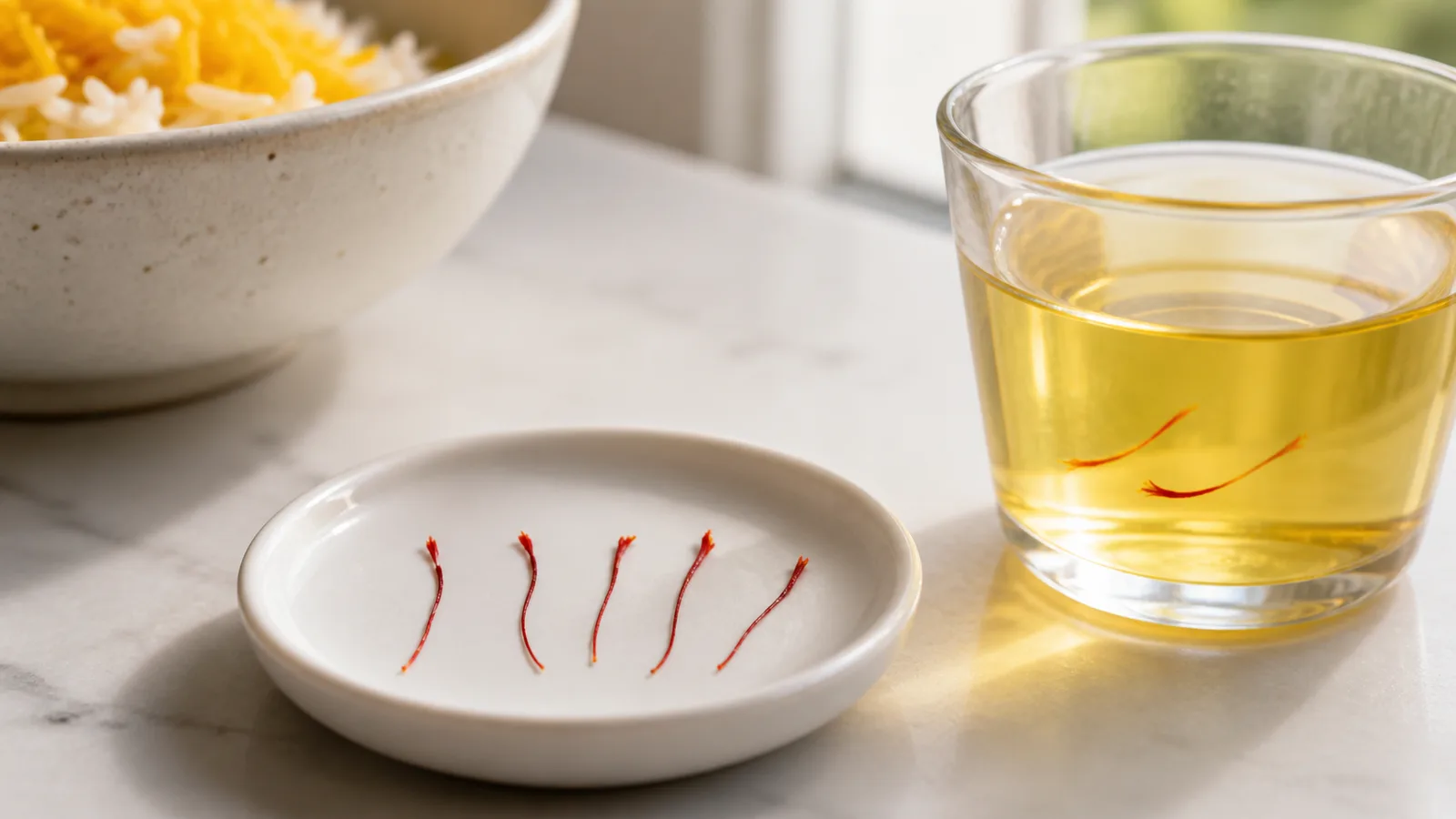
The easiest way to eat saffron in food is to crush a measured pinch, steep it in a little warm water for 10–20 minutes, then add both the liquid and threads to the dish. This spreads its golden colour, aroma and gentle bitterness more evenly than dropping dry threads into one spot.
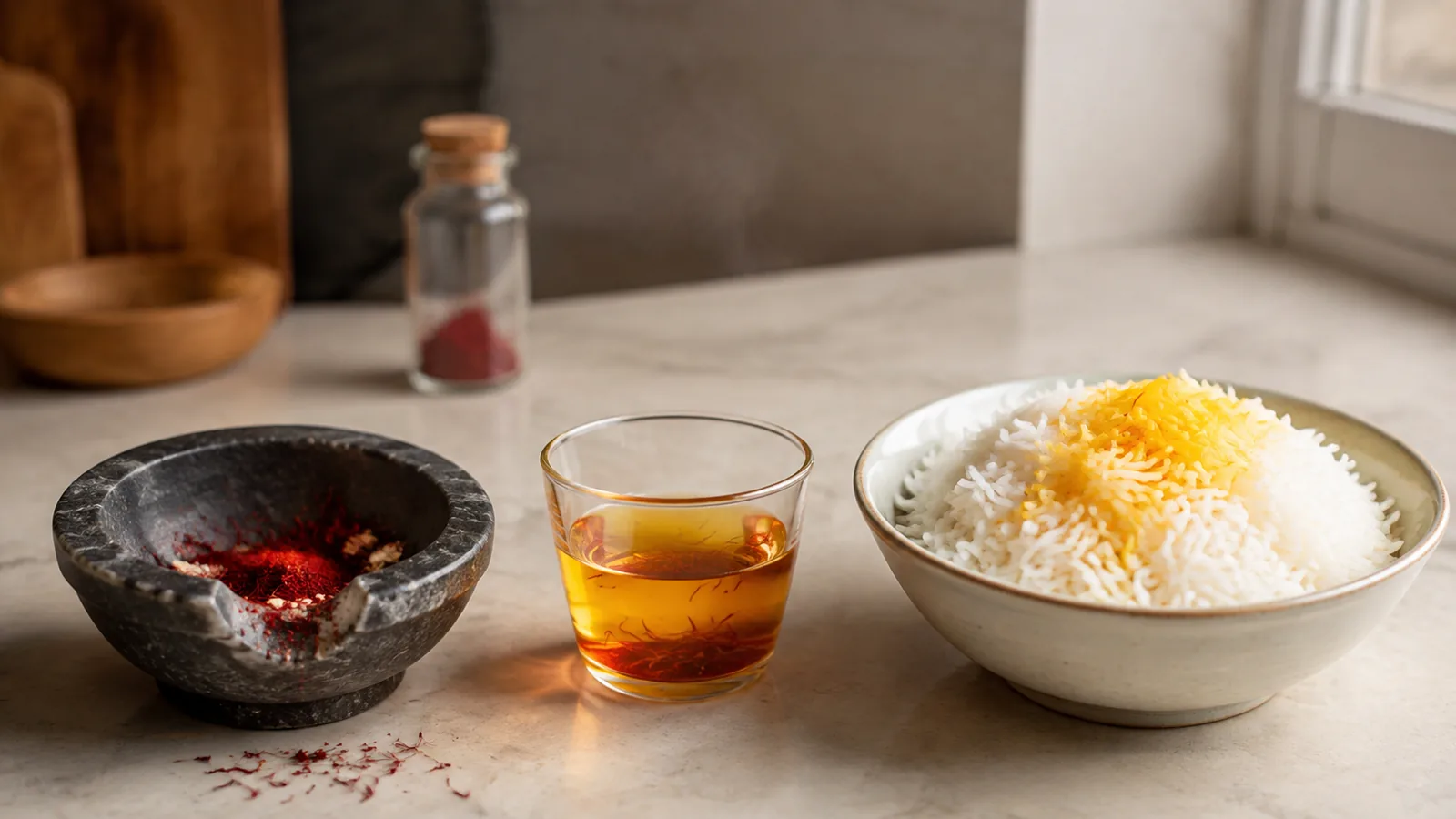
How to Eat Saffron in Food
For anyone asking how to use saffron in food, the key is matching the preparation to the recipe. Good saffron usage in cooking begins with the dish, not a universal number of threads. A small family rice dish, a loaf of bread and a large pot of stew do not need the same amount. Thread length and thickness also vary, so follow a tested recipe or weigh the spice when consistency matters.
Saffron is used as a seasoning and colourant, not as a garnish that must be chewed dry. Whole threads are edible, but blooming them first usually gives the cook better control. It also prevents a few bites from receiving most of the flavour while the rest of the dish remains pale. The saffron cooking tips below apply equally when the spice is sold as kesar or zafran.
Prepare Saffron before Cooking
1. Measure the Amount for the Dish
Begin with the amount in your recipe. If you are adjusting an unfamiliar dish, start modestly and make a note for next time rather than repeatedly adding dry threads. Too much can produce a harsh or medicinal-tasting result and wastes an expensive spice.
Our guide to how much saffron to use in cooking explains why serving count, liquid volume and the strength of the batch matter more than an arbitrary thread total.
2. Crush the Threads Gently
Place the measured threads in a small dry mortar and break them into coarse pieces. You do not need to grind the entire jar into dust. Crushing only the portion needed exposes more surface area while the remaining whole threads stay protected from air and light.
If the quantity is difficult to grind, a small pinch of sugar or salt from the recipe can provide friction. Choose the one that suits the dish, and keep the mortar completely dry.
3. Bloom in a Water-Rich Liquid
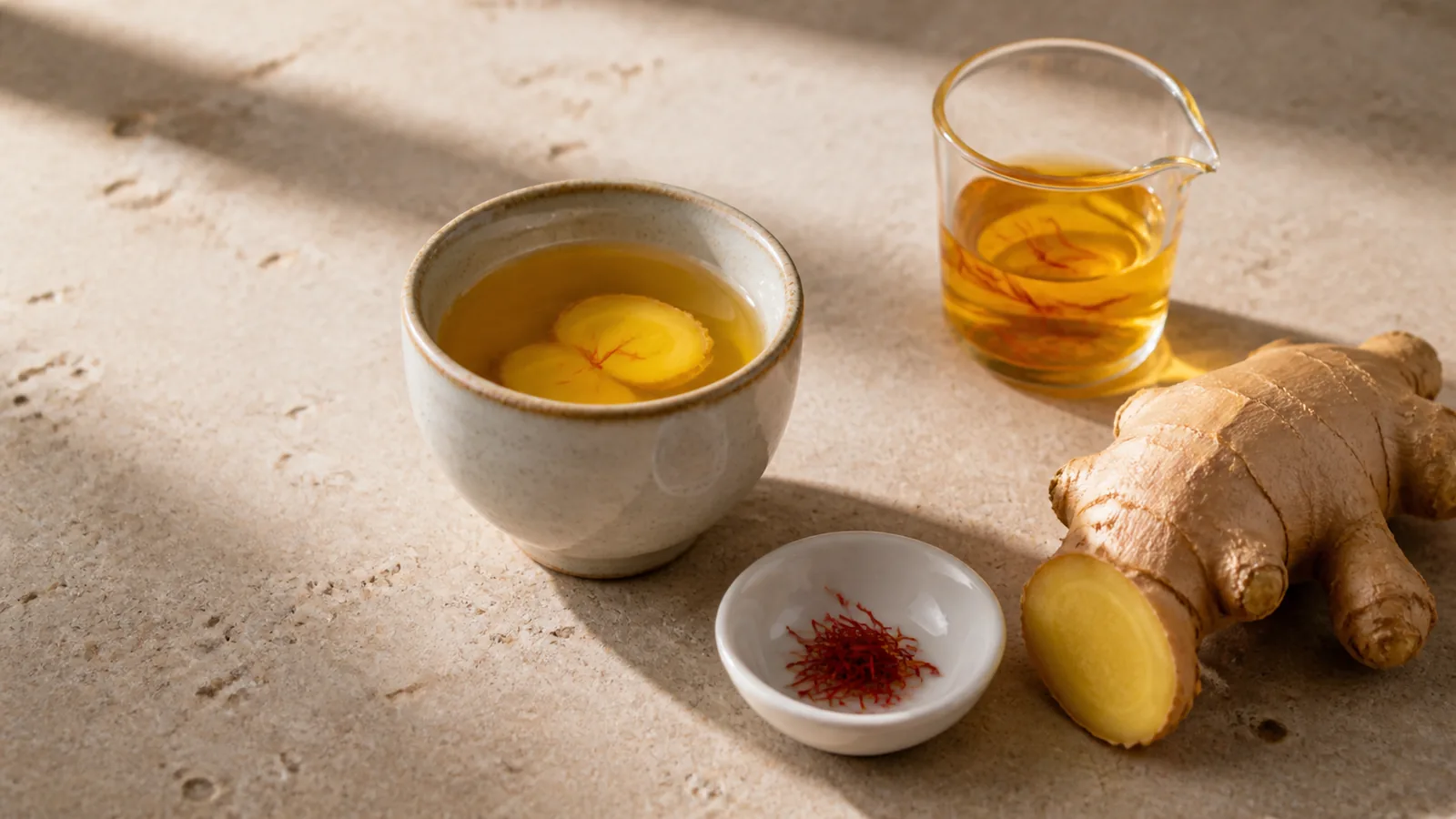
Cover the crushed saffron with a few spoonfuls of warm water. Warm milk or a mild broth can work when it belongs in the recipe, but water gives the colour compounds an effective route into the food. A 2024 culinary extraction study compared water, oil and mixed media at different temperatures and found that saffron’s crocins were favoured in water-rich conditions.
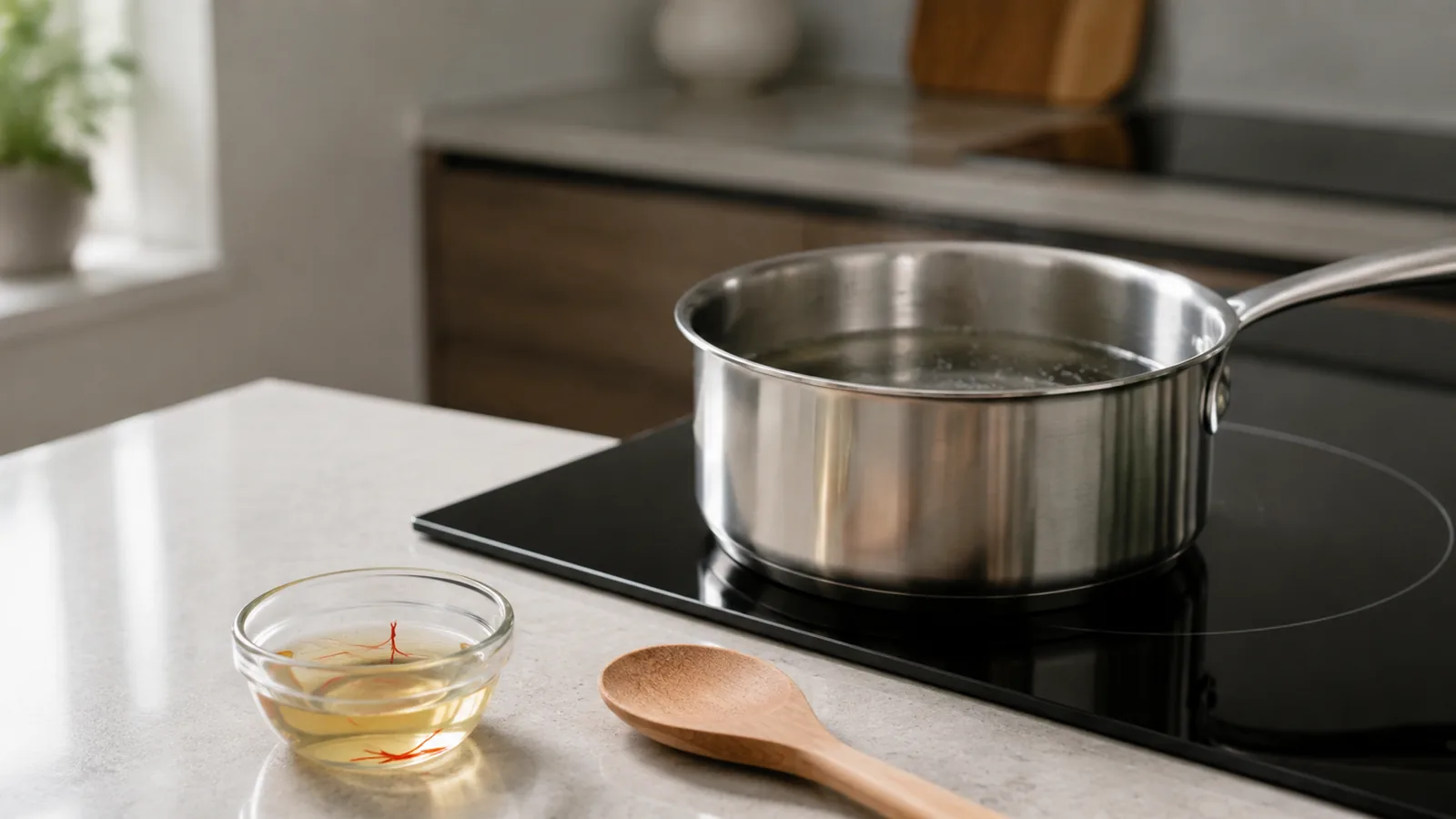
For an ordinary kitchen method, use water that is hot but not violently boiling and leave it for 10–20 minutes. The liquid should develop a clear golden to orange-gold colour and a recognisable aroma. The exact depth varies with the saffron, amount, vessel and water volume; instant dark red dye bleeding is not a quality target.
4. Add the Entire Infusion
Pour in the liquid and the softened pieces. Do not strain away the threads unless the texture conflicts with a very smooth preparation. Count the blooming liquid as part of the recipe’s total liquid when precision matters, especially in baking.
When to Add Saffron to Different Foods
Rice, Pilaf and Tahdig
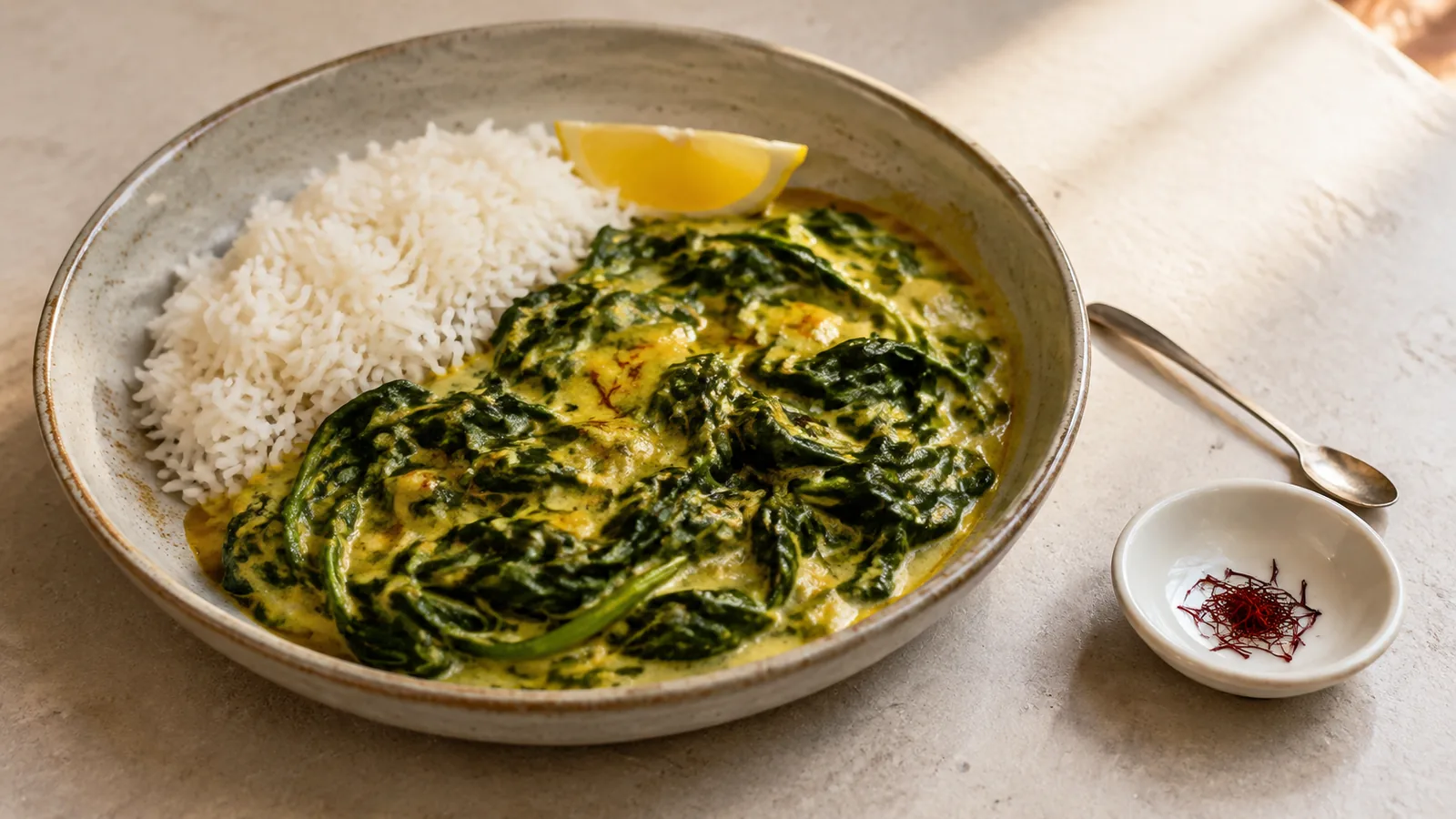
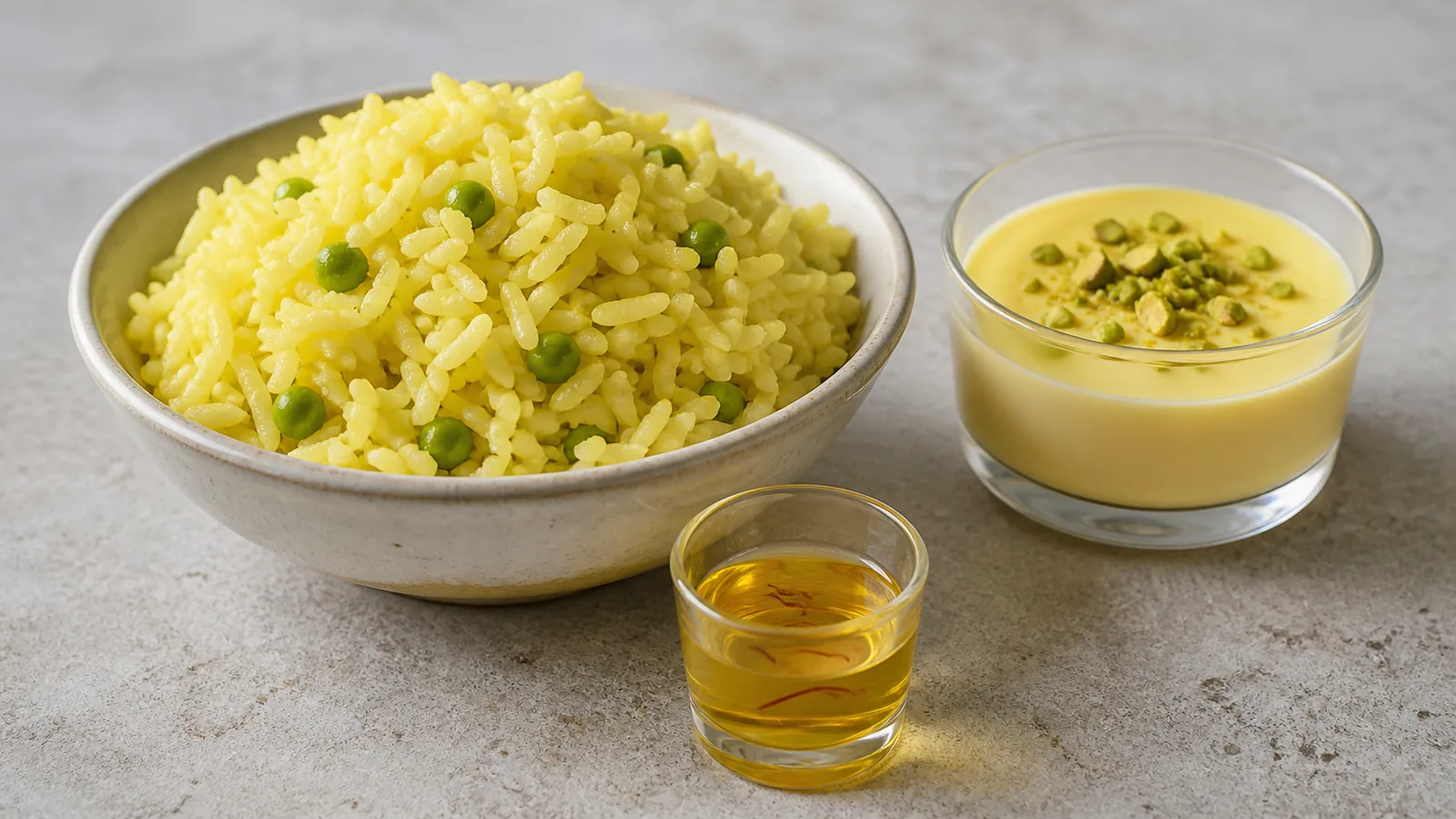
For steamed rice, mix the infusion with a portion of cooked rice for a concentrated golden layer, or distribute it over the pot before the final steam. This protects the fragrance better than boiling all the saffron with the rice from the beginning. It also lets you control where the colour appears.
Soups, Stews and Sauces
Add the infusion late enough to keep its aroma noticeable but early enough to blend into the liquid. In a long stew, the final part of cooking is often more useful than the first minute. A study of saffron in boiling water found that prolonged high-heat cooking can adversely affect crocins and safranal, so extra cooking time does not automatically extract a better flavour.
Meat, Seafood and Vegetables
Stir the infusion into a marinade, cooking liquid, butter sauce or finishing broth that already belongs in the recipe. Saffron works particularly well when it can spread through some moisture. Avoid sprinkling expensive dry threads over a dry surface and expecting them to season the whole dish evenly.
Bread, Cakes and Desserts
Bloom the saffron, cool the liquid if necessary, then mix it with the wet ingredients. Include that liquid in the recipe calculation so a delicate dough or custard does not become unexpectedly loose. For very pale desserts, add gradually and judge the aroma as well as the colour.
Milk, Tea and Other Drinks
Warm liquid helps saffron disperse, but there is no need to boil it for a long time. Bloom it separately or steep it directly in the warm drink, depending on the recipe. Strain only if you prefer a clear cup. A concentrated supplement or medicinal dose is a different product and is outside this culinary method.
Flavours That Work Well with Saffron
Saffron can sit comfortably beside rice, chicken, lamb, fish, shellfish and mild vegetables. In sweets and drinks, it often pairs with cardamom, rose water, citrus zest, pistachio, almond or other nuts and dried fruit. Use supporting flavours with restraint so the saffron remains identifiable rather than becoming one more strong note in a crowded mixture.
Fat can carry aroma in a finished dish, but blooming only in oil is not the best route for saffron’s water-soluble colour. Add the water-based infusion to the sauce, butter or oil component once the recipe can accept it.
Can You Eat Saffron Threads Raw?
A few genuine culinary threads can be eaten as part of food, but chewing them dry offers no special cooking advantage. Their taste is concentrated, the texture can be fibrous, and the colour remains poorly distributed. Blooming makes the same measured portion easier to use.
Do not confuse culinary saffron with a supplement or use a food article to choose a therapeutic amount. Recipes normally use small quantities for sensory effect. If a product is sold as an extract or supplement, follow its own label and appropriate professional advice rather than converting it into “threads per day.”
Common Mistakes to Avoid
- Using a large amount before tasting: more saffron can make a dish bitter instead of more refined.
- Boiling it for the entire cooking time: prolonged high heat can flatten aroma and affect colour compounds.
- Blooming only in oil: begin with water or another water-rich liquid, then combine it with the fat in the dish.
- Adding dry threads to one corner: use the infusion to distribute the spice.
- Holding the jar over steam: measure away from the pot so moisture does not enter the stored saffron.
- Grinding the whole supply: crush only what you need and keep the rest airtight, dark and dry.
A Simple Method You Can Reuse
- Measure the saffron specified by the recipe.
- Gently crush that portion in a dry mortar.
- Add a few spoonfuls of hot, non-boiling water.
- Steep for 10–20 minutes.
- Add the complete infusion at the stage that suits the dish.
- Taste the finished food and record any adjustment for the next batch.
For a more detailed comparison of steeping methods, see the best way to brew saffron. If you need whole threads for cooking, the current saffron range shows the available pack sizes and styles.
The Short Answer
How do you use saffron in food? Measure it for the recipe, crush the threads gently, bloom them in warm water for 10–20 minutes, and add the whole infusion where it can spread through the dish without a long boil. That method suits rice, soups, sauces, baked goods, dairy dishes and drinks, while leaving room for each recipe to determine the right quantity and timing.