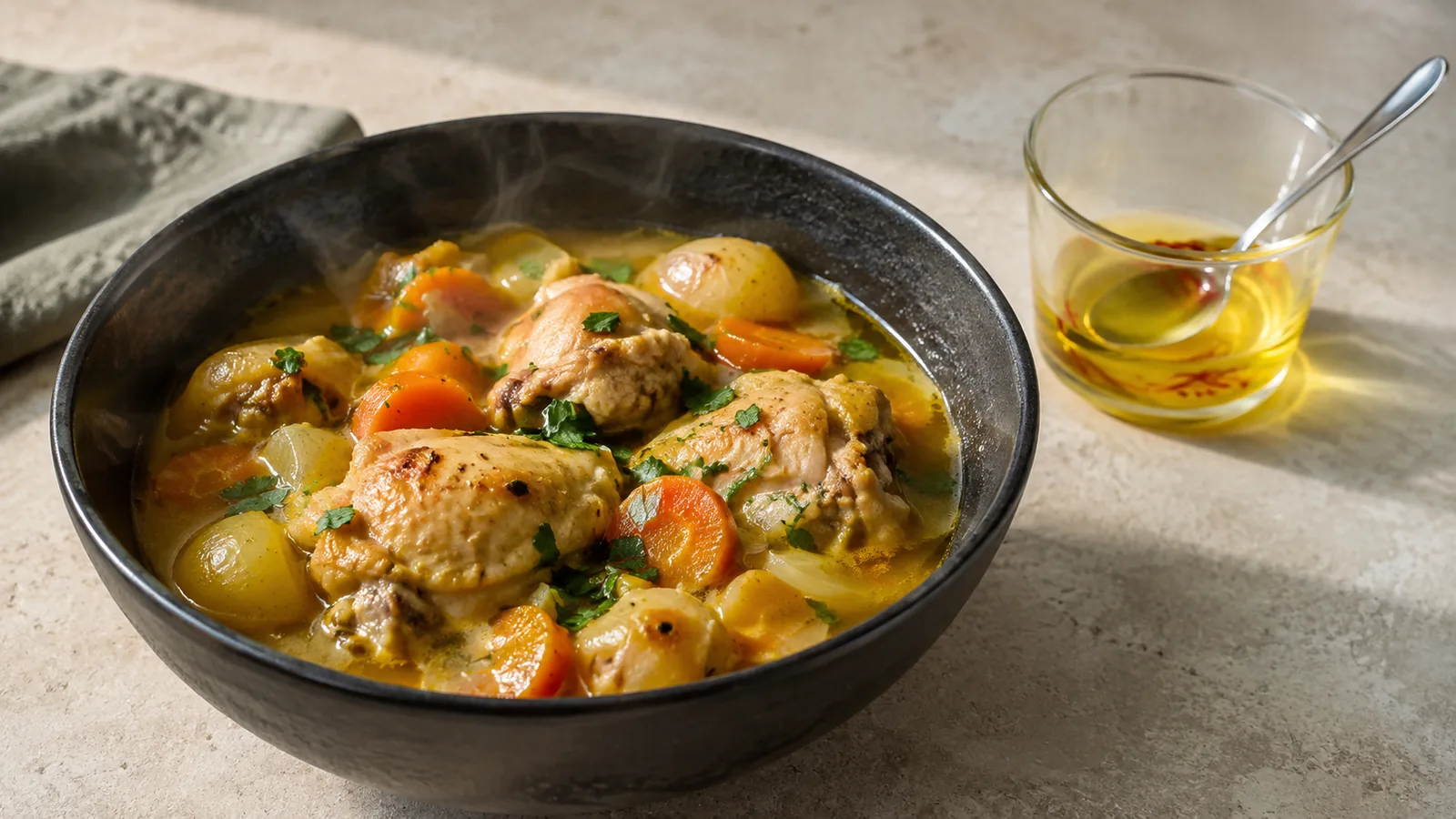
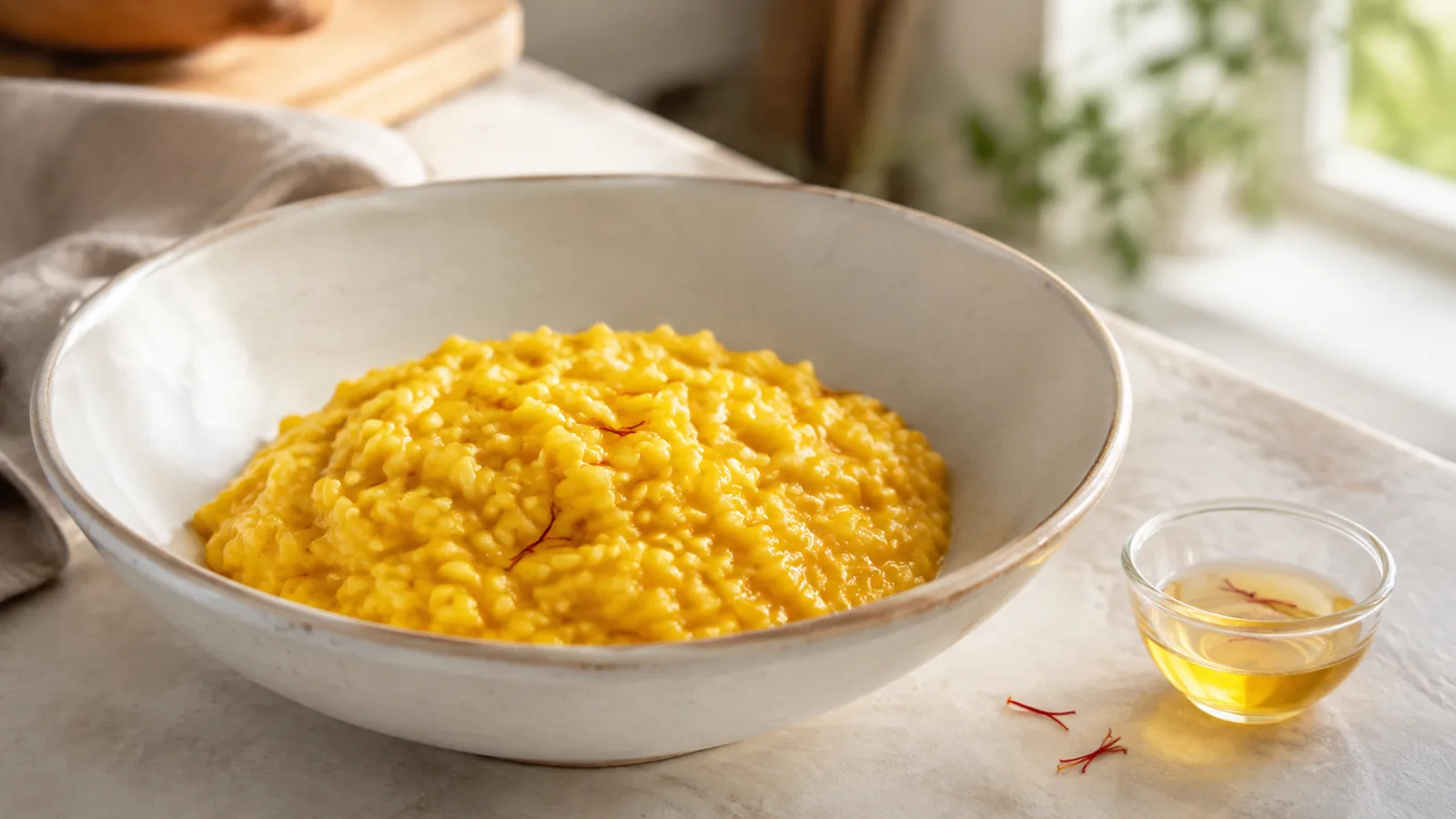
The best time to add saffron depends on the food: use a bloomed saffron infusion near the end of long-cooked rice, soups and stews, but mix it into the wet ingredients earlier for bread, cakes and custards. The aim is to give the colour time to spread without cooking away the spice’s delicate aroma.
When to Add Saffron to Food
There is no single minute that works for every recipe. A pot of rice needs a different approach from a cake batter or a cup of tea. In most savoury dishes, saffron performs best when it has been bloomed first and added during the later part of cooking. In baking, it needs to enter with the liquid ingredients so it can be distributed before the mixture sets.
These saffron cooking tips are about timing, not simply adding more spice. Saffron can become bitter when overused, while a long, hard boil can leave its fragrance less noticeable. A modest, well-prepared portion added at the right stage usually gives a better result.
Bloom the Saffron before Adding It
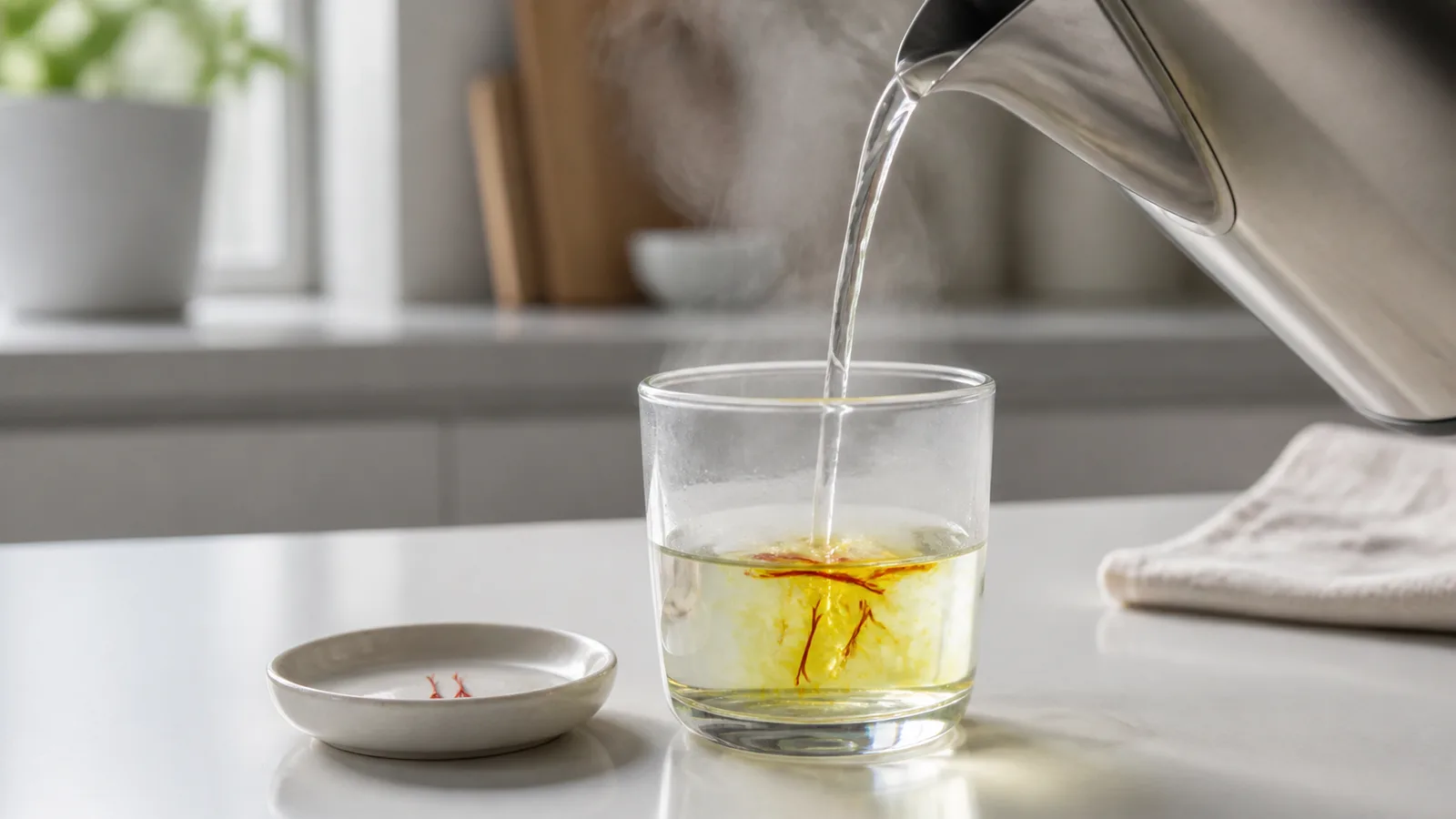
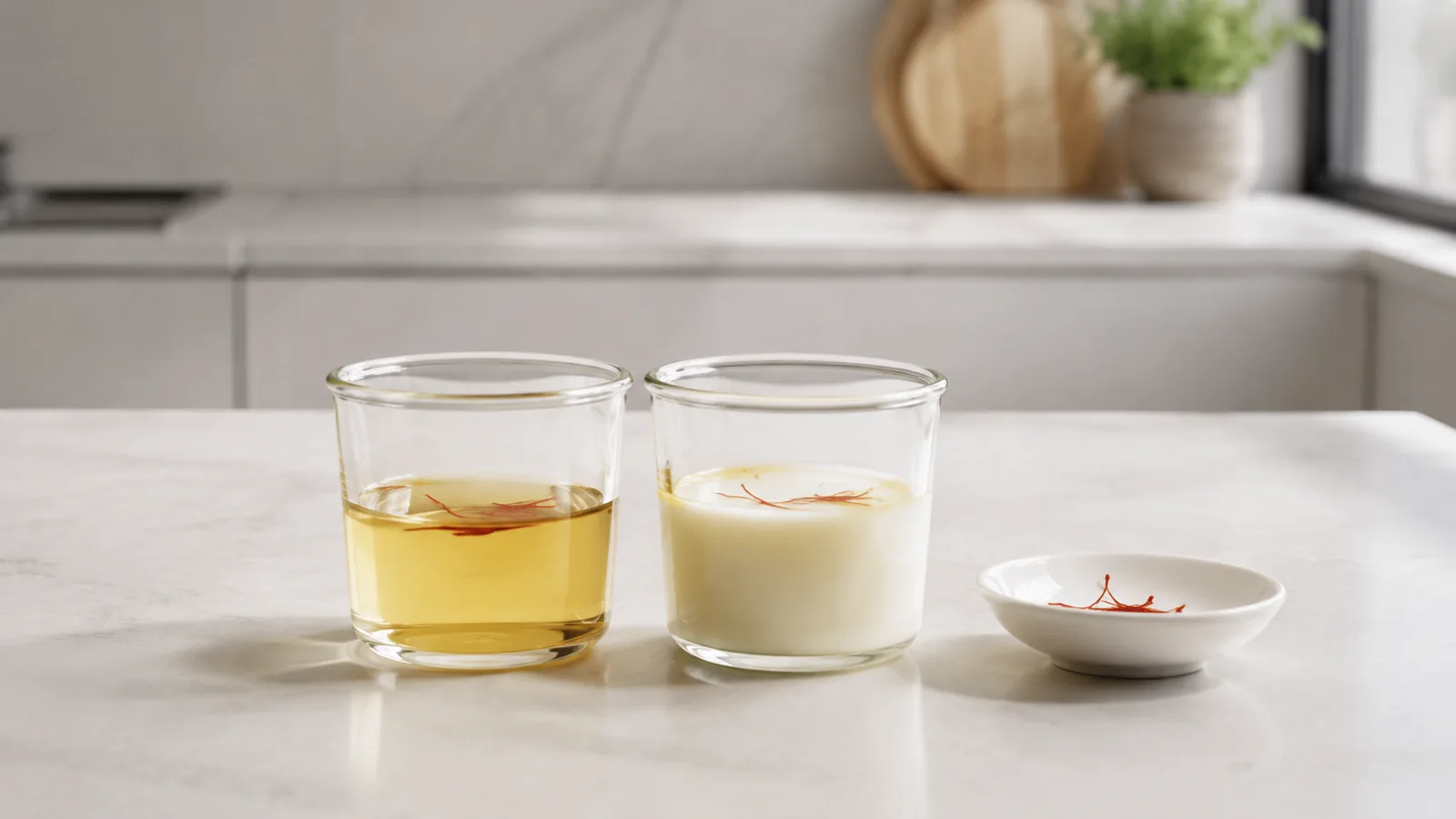
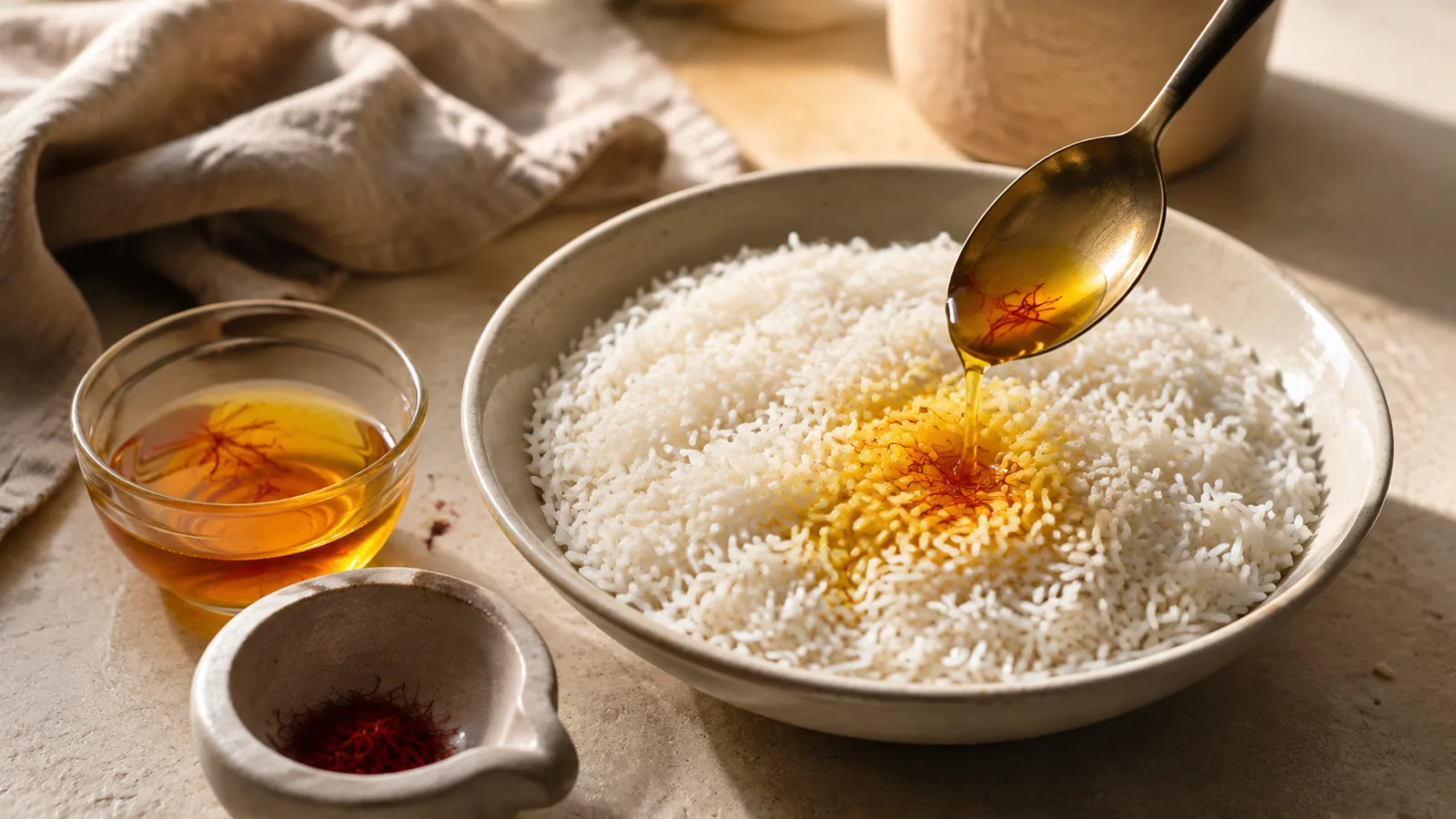
Measure the amount required by the recipe, gently crush the threads and cover them with a few spoonfuls of warm water. Leave the mixture for 10–20 minutes, then add both the golden liquid and the softened threads. Warm milk or a mild broth can also work when it belongs in the dish.
A water-rich liquid is particularly useful for releasing saffron’s colour compounds. A 2024 culinary extraction study found that water-rich conditions favoured the extraction of saffron crocins. Blooming also prevents a few dry threads from colouring and flavouring only one part of the finished food.
For the complete preparation method, including measuring and crushing, see our guide to using saffron in food.
Best Timing for Rice and Pilaf
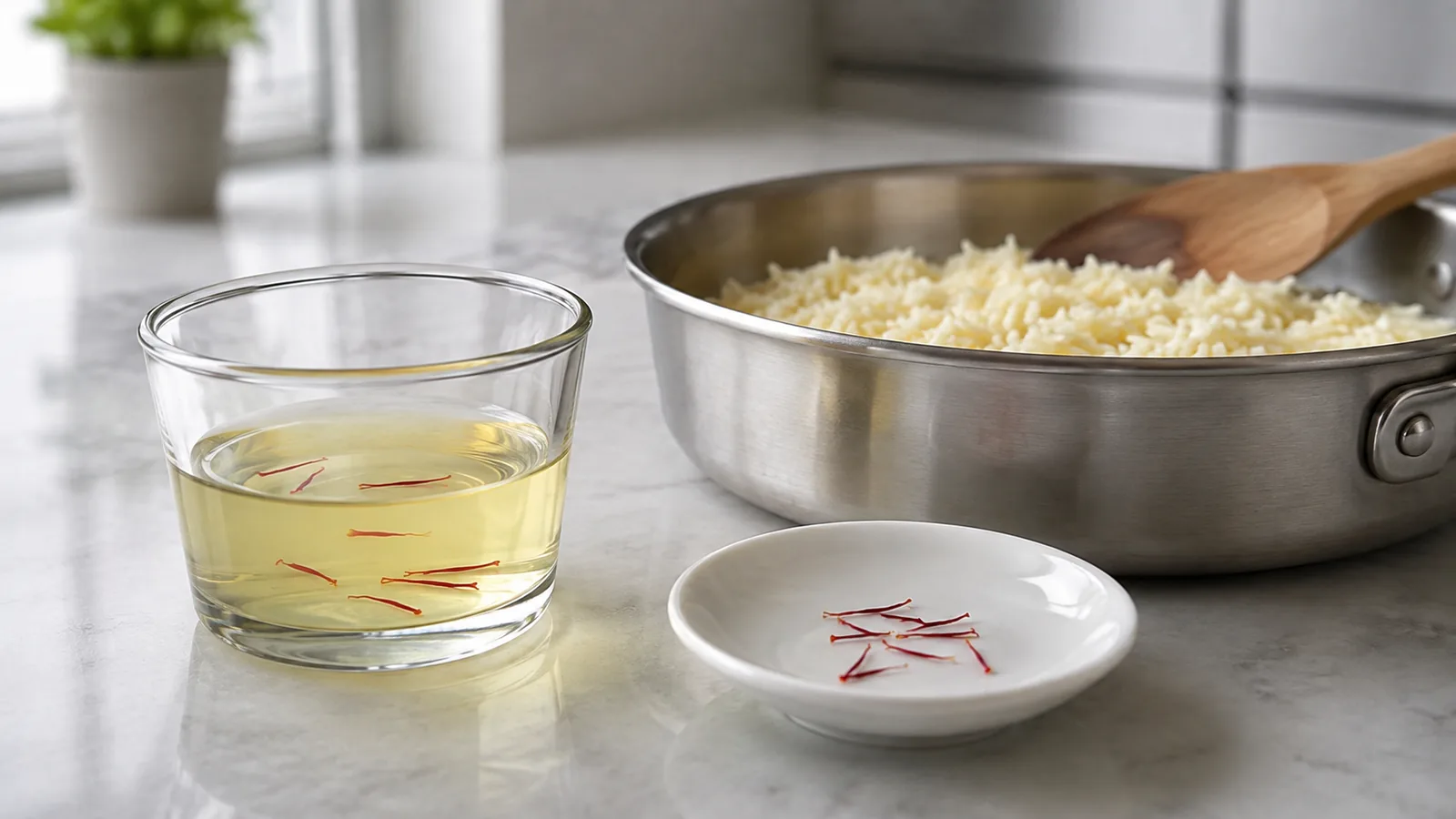
For steamed rice, prepare the infusion while the rice cooks. Add it before the final steaming stage, either by drizzling it across the pot or mixing it with a portion of cooked rice for a golden top layer. This gives the moisture time to spread while keeping the aroma close to serving.
If saffron is added to the first pot of boiling water and then drained away, much of its colour and flavour can leave with that water. It is usually more effective to add the infusion after draining, when the rice is assembled for its final steam.
When to Add Saffron to Soups, Stews and Sauces
Add the infusion during the final part of cooking, once the main ingredients are nearly tender but while there is still enough liquid and time for an even distribution. For a long stew, the last 10–20 minutes is a useful starting point. A delicate sauce may need only a few minutes.
Do not keep saffron at a rolling boil for an hour simply to make it stronger. Research on saffron in boiling water found that prolonged heat can adversely affect crocins and safranal, compounds associated with its colour and aroma. The practical lesson is simple: bloom first, add late enough to protect the fragrance, and allow enough time for the infusion to become part of the dish.
When to Add It to Meat, Fish and Vegetables
Saffron needs moisture to move through food. For chicken, lamb, seafood or vegetables, add the infusion to a marinade, braising liquid, stock or sauce rather than scattering dry threads over the surface.
In a quick-cooking seafood dish, the saffron can enter with the cooking liquid near the beginning because the total cooking time is short. For meat that braises for several hours, reserve some or all of the infusion for the later stage. If a marinade contains saffron, keep it refrigerated and follow ordinary food-safety rules for the raw ingredient.
When to Add Saffron in Baking and Desserts
Bread and Cake Batter
Bloom the saffron first, let the infusion cool if the recipe is temperature-sensitive, and mix it with the wet ingredients. Adding it at this stage distributes the colour before flour is fully incorporated. Count the infusion as part of the recipe’s liquid so the dough or batter does not become too loose.
Custards, Rice Pudding and Milk Desserts
Add the infusion while the mixture is warm and fluid, usually before the final thickening. Stir thoroughly, then judge the aroma as well as the colour. If the dessert will continue simmering for a long time, hold the saffron until closer to the end.
Syrups and Finishing Liquids
Saffron can be steeped directly in a warm syrup or added as a prepared infusion. Give it a few minutes off the strongest heat before pouring the syrup over a pastry or dessert. This method keeps the saffron noticeable in the final layer rather than burying it in a long bake.
When to Add Saffron to Tea and Other Drinks
For tea, milk and other hot drinks, add the threads or infusion while the liquid is hot enough to steep but does not need a prolonged boil. A short covered steep helps keep the aroma in the cup. Cold drinks are easier to prepare with a concentrated warm infusion that has been cooled before mixing.
Should Saffron Go in at the Beginning or the End?
Use this rule of thumb:
- Short, moist cooking: add it early enough to spread through the liquid.
- Long simmering or braising: add it in the final part of cooking.
- Steamed rice: add it before the final steam rather than to water that will be drained.
- Baking: mix the cooled infusion into the wet ingredients.
- Finishing syrup or drink: steep it in the warm liquid without a long boil.
If the dish allows it, reserve a small portion of the infusion and stir or drizzle it in near the end. That can restore a fresh saffron aroma while the earlier portion provides an even golden colour.
Common Timing Mistakes
- Adding dry threads at the last second: they may remain concentrated in a few bites and have little time to release colour.
- Boiling saffron for the full cooking time: longer heat is not necessarily better for its aroma.
- Adding the infusion to water that will be discarded: this wastes much of what has been extracted.
- Forgetting the extra liquid in baking: even a small infusion should be included in the recipe’s liquid balance.
- Judging only by colour: strong colour does not mean the dish needs more threads; smell and taste matter too.
A Practical Final Answer
When should you add saffron to food? Bloom it before use. Add it late in long-cooked savoury dishes, before the final steam for rice, and with the wet ingredients in baking. Give the infusion enough time to spread, but avoid an unnecessarily long boil. If you want to compare blooming methods in more detail, read the best way to brew saffron; current whole-thread options are listed in the saffron shop.