Most adults can eat a small culinary amount of saffron regularly if they tolerate it, but there is no universal daily dose and no need to use saffron every day for health. A pinch in food is different from a concentrated extract taken as a supplement.
Daily use deserves more caution during pregnancy or breastfeeding, with medicines or a significant health condition, before surgery, or when the amount is higher than ordinary cooking. In those situations, ask a qualified healthcare professional about the exact product.
Can I eat saffron every day?
Using saffron everyday in rice, soup, yoghurt, milk or tea can be a normal food practice. The important questions are how much the recipe uses, whether you feel well after eating it and whether the product is culinary saffron or a standardised medicinal extract.
“Safe” does not mean unlimited or guaranteed to suit everyone. If daily saffron consumption causes nausea, stomach discomfort, headache, dry mouth, poor appetite or another new symptom, stop and reassess rather than continuing for a hoped-for benefit.
Safe saffron use starts with the form
Culinary threads are used for colour, flavour and aroma. A capsule may contain a concentrated extract made to a defined specification, and research doses belong to that preparation. Milligrams from an extract trial cannot be converted reliably into a number of natural threads.
The same distinction applies to powders and mixed products. A powder may be culinary spice, a standardised extract or a blend with other ingredients. Read the full label, serving directions and warnings before treating it as suitable for daily use.
Is 20–30 mg a recommended daily amount?
Some commercial extracts and clinical trials use amounts in this range, but it is not a universal expert recommendation for every adult. Different products contain different concentrations of crocins and safranal, and trial participants are selected for specific research questions.
Twenty to thirty milligrams also cannot be translated confidently as “a few strands.” Threads differ greatly in length, thickness, moisture and potency. For cooking, follow the dish and use the small amount needed for sensory effect rather than weighing a pseudo-medical daily dose.
Can you eat saffron raw?
Food-grade saffron threads are edible, so swallowing a thread in a finished dish is not unusual. Eating them dry is rarely the best culinary method, though. Whole dry threads release colour and flavour unevenly and can feel fibrous.
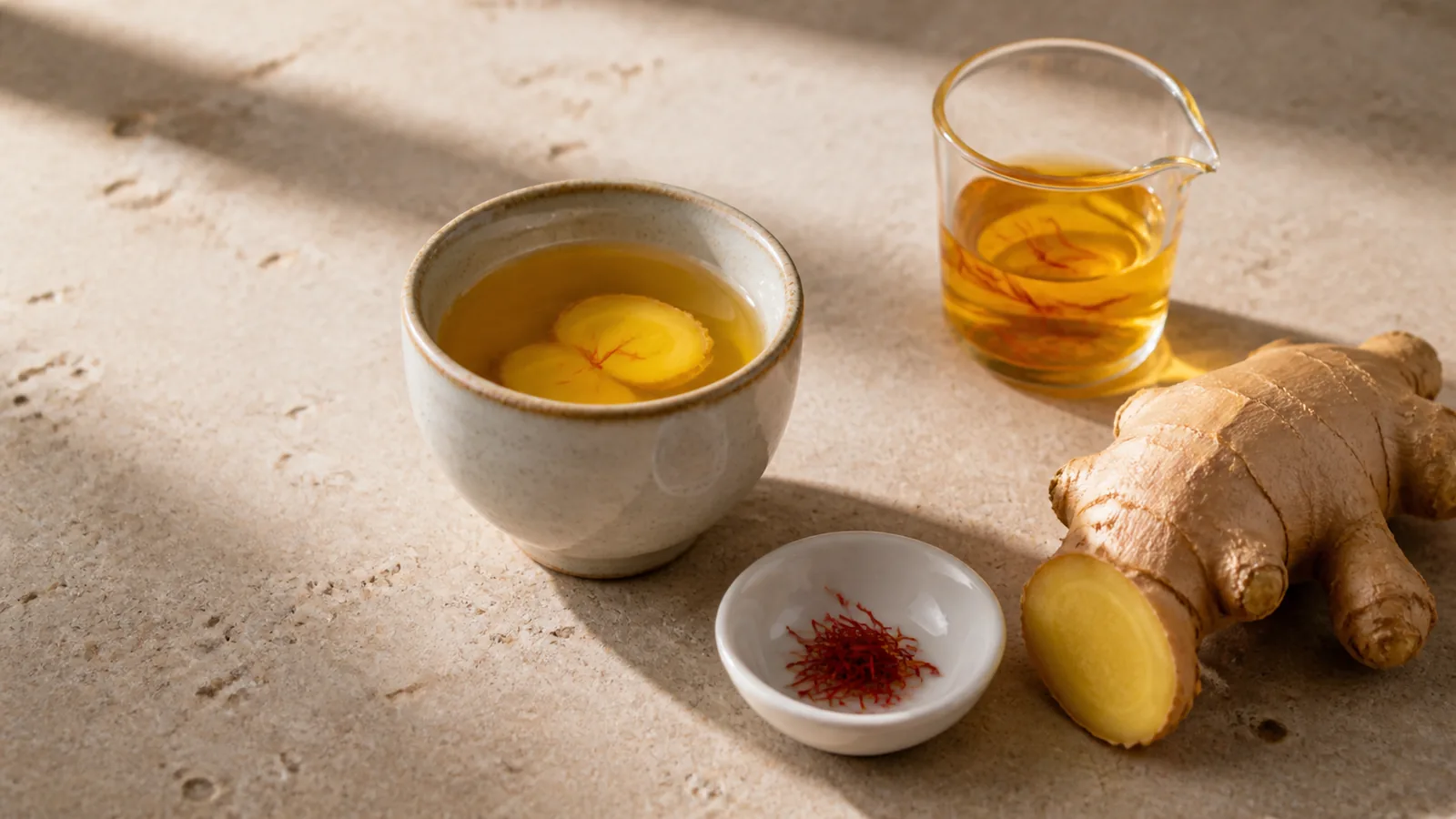
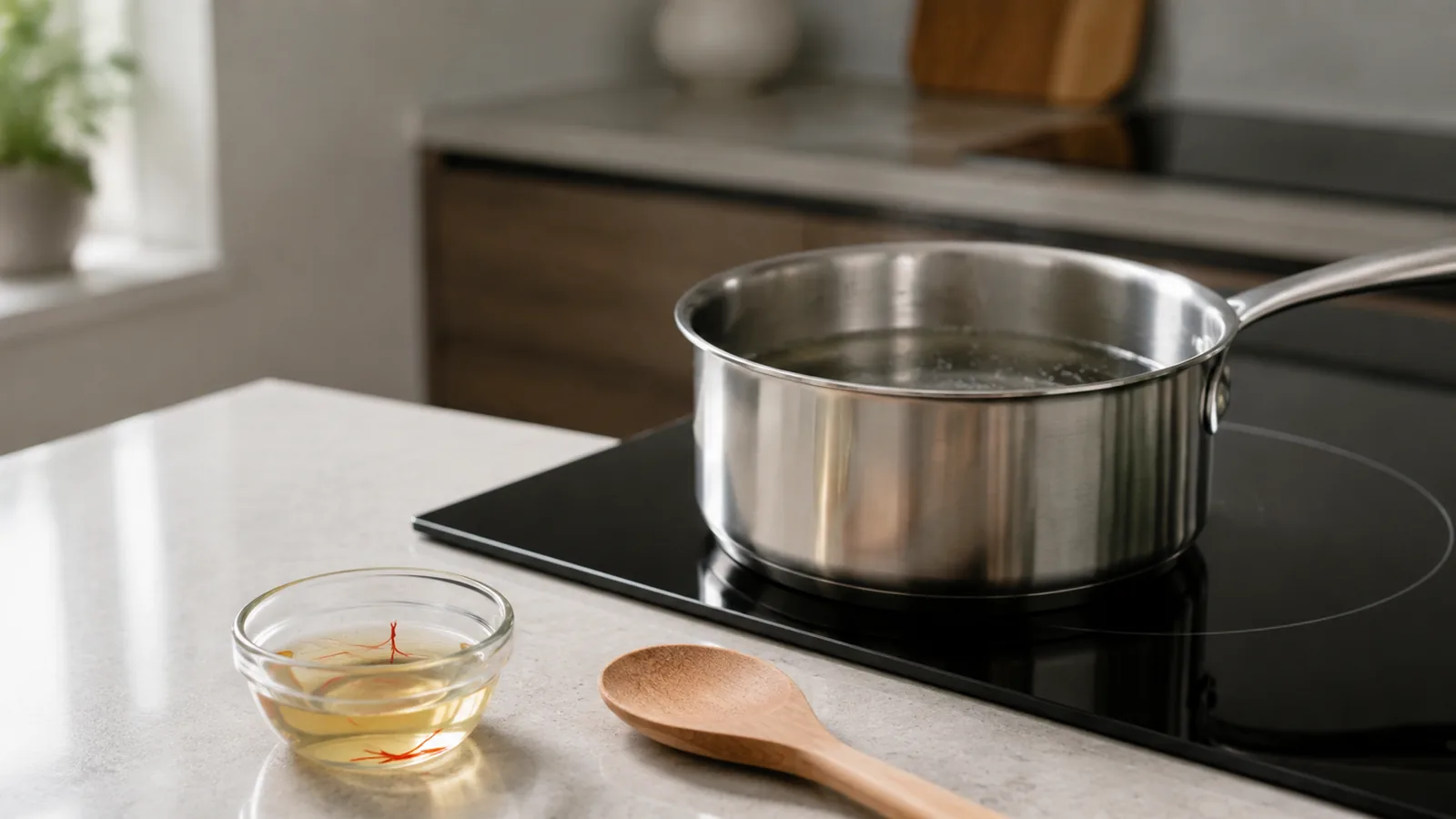
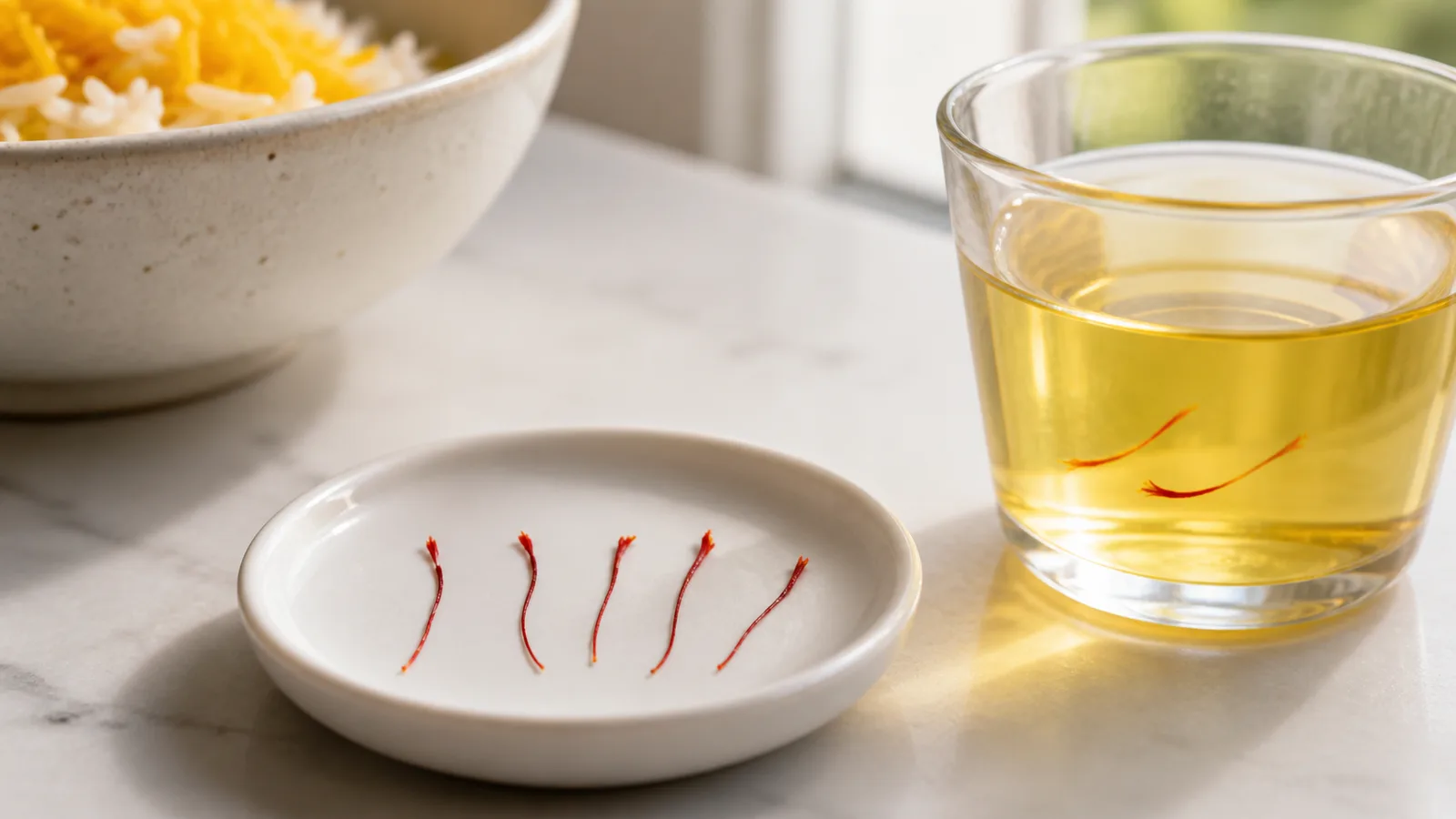
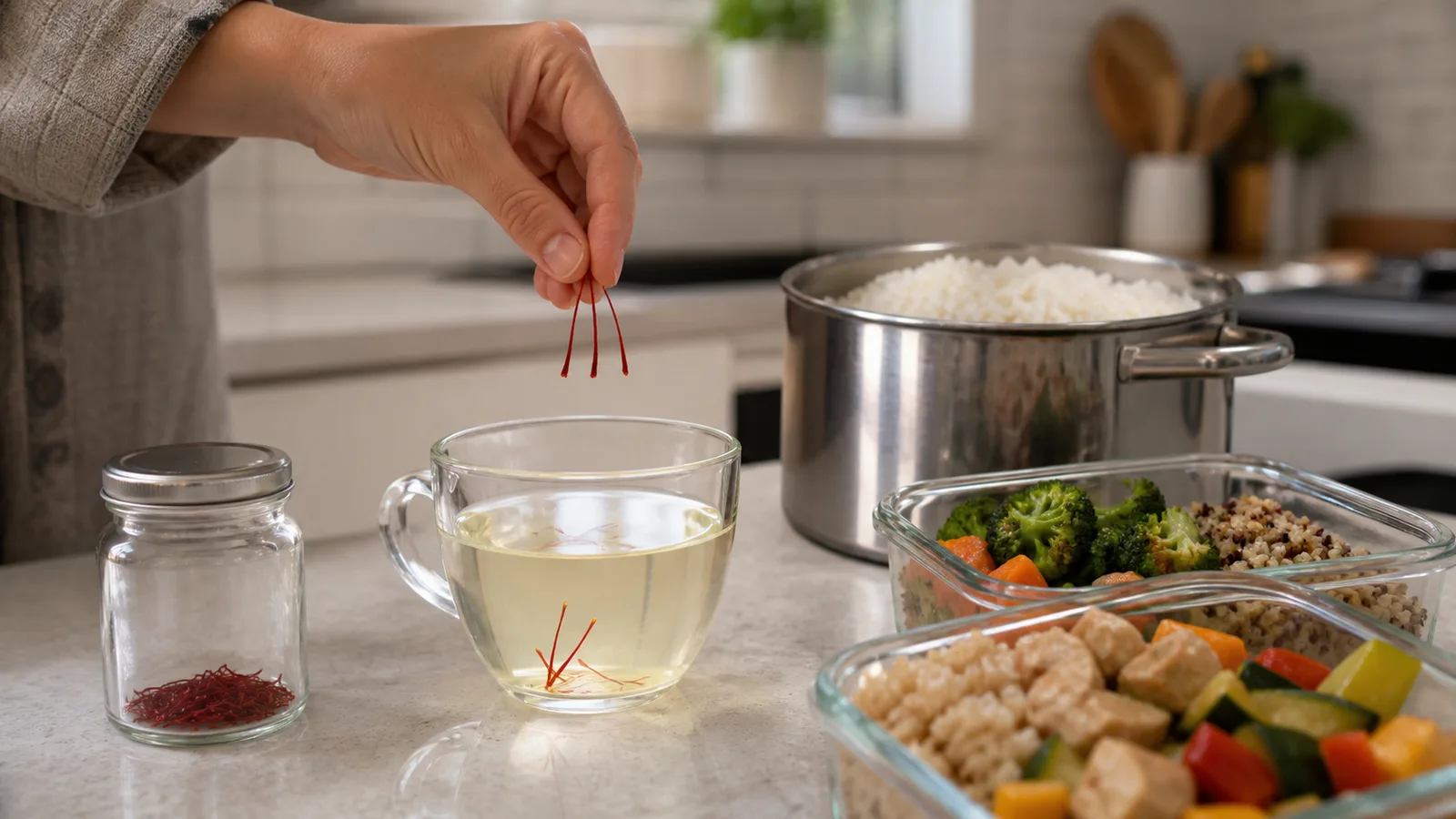
Lightly crush a small pinch and bloom it in warm water, milk or stock for 10–15 minutes. Add both the liquid and softened threads to the food. This improves distribution without changing the saffron into a more powerful “dose.”
Saffron: how to consume it in everyday food
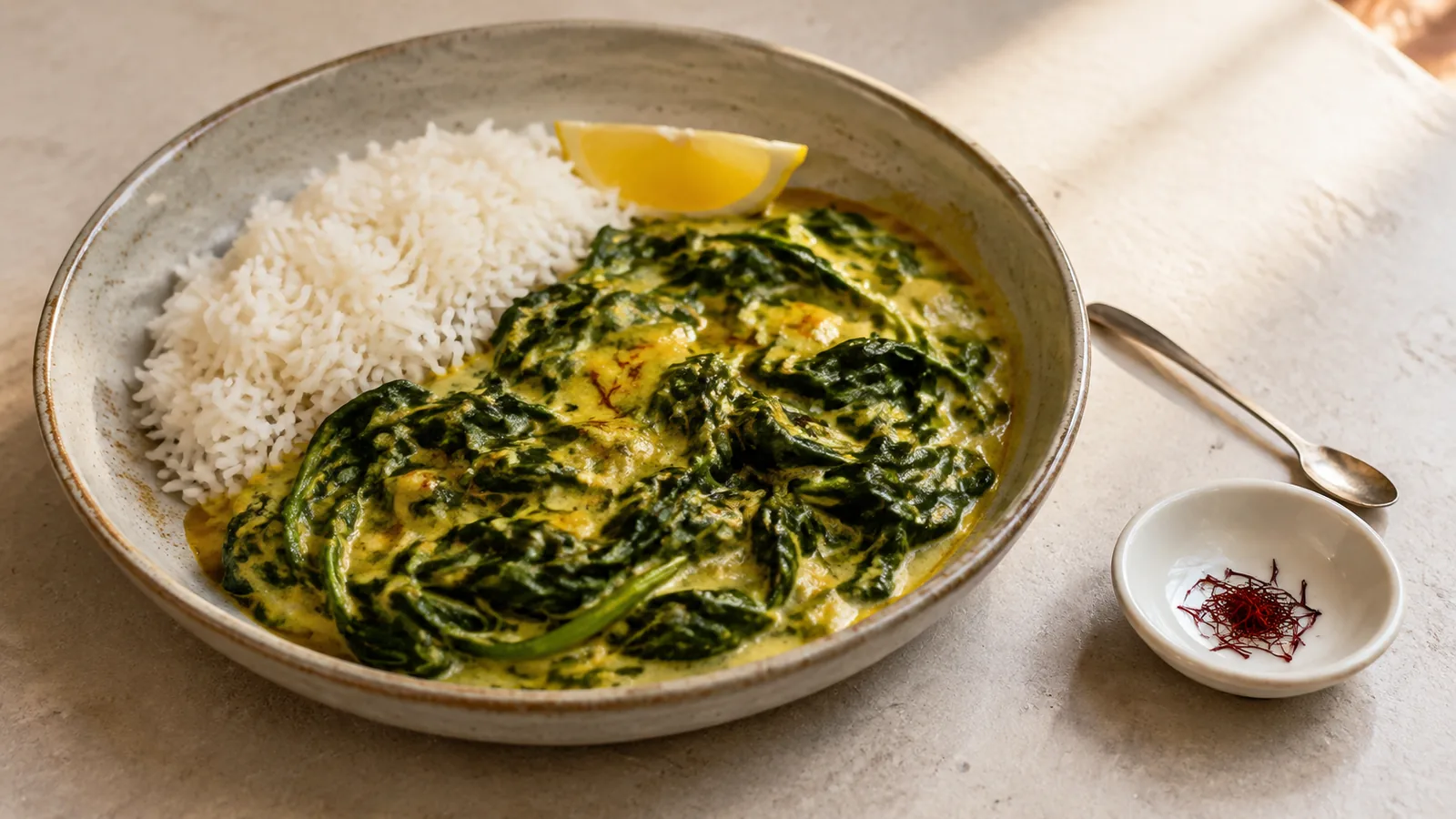
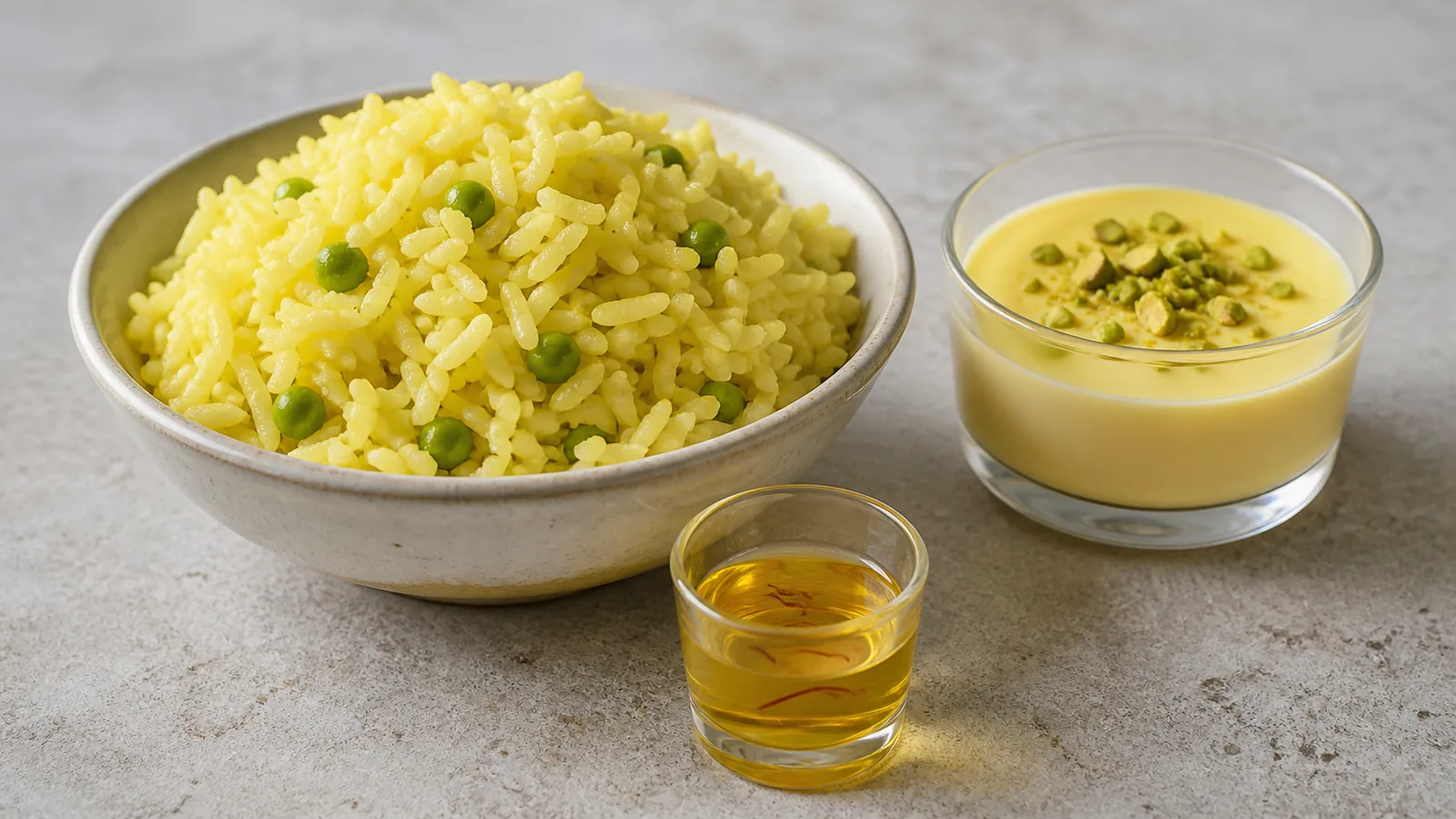
People searching saffron how to consume it usually need a practical food method. Use it where it genuinely improves desserts or meals:
- stir bloomed saffron into rice, risotto, soup or stew;
- add it to yoghurt, custard, pudding or dough;
- infuse a few threads in warm milk or caffeine-free tea;
- use the blooming liquid in a marinade or sauce.
You do not need a morning and evening serving, and taking it on an empty stomach has not been shown to be superior. If it feels uncomfortable without food, use it as part of a meal.
What does the safety evidence show?
A 2026 systematic review of adverse events examined 102 clinical trials and one case report involving saffron monopreparations. Saffron was generally well tolerated, but estimated related adverse events occurred in about 17.5% of participants; gastrointestinal problems were most common and usually minor and self-limiting. The authors advised considering monitoring with higher-dose or prolonged medicinal use.
That evidence is reassuring without proving that every form is harmless indefinitely. Trials vary in duration, extract and participant health, and they do not create a lifetime daily allowance.
Does daily saffron guarantee benefits?
No. Saffron contains antioxidant compounds, and researchers study defined preparations for outcomes including mood and sleep. This does not mean that a few threads in a meal will improve mood, digestion or overall wellness, or that more frequent use creates stronger antioxidant protection.
Enjoying the spice for taste is a complete reason to use it. A daily routine should not be built around a promise to prevent or treat a condition.
Who should get individual advice?
Talk with a healthcare professional before regular supplement-level use if you are pregnant, trying to conceive or breastfeeding; take prescription medicines; have a bleeding, blood-pressure, mood or other significant condition; are preparing for surgery; or plan to combine several supplements.
Children should not be given a concentrated saffron product merely by scaling down an adult serving. Keep supplements out of their reach and follow professional advice.
Quality and storage matter
Choose intact deep-red threads with a clear aroma and an identified source. Very cheap powder is harder to assess and may be diluted or coloured. Store saffron airtight, dry and away from heat and light; a daily-use jar left beside the cooker will lose aroma faster.
The practical answer
Can we eat saffron daily? For many adults, a modest culinary amount used in ordinary food is reasonable. It is optional, not a health requirement, and it is not the same as taking a concentrated extract every day.
Use authentic culinary saffron for flavour, follow any supplement label exactly, and seek product-specific advice when medicines, pregnancy, surgery or a health condition enter the picture.