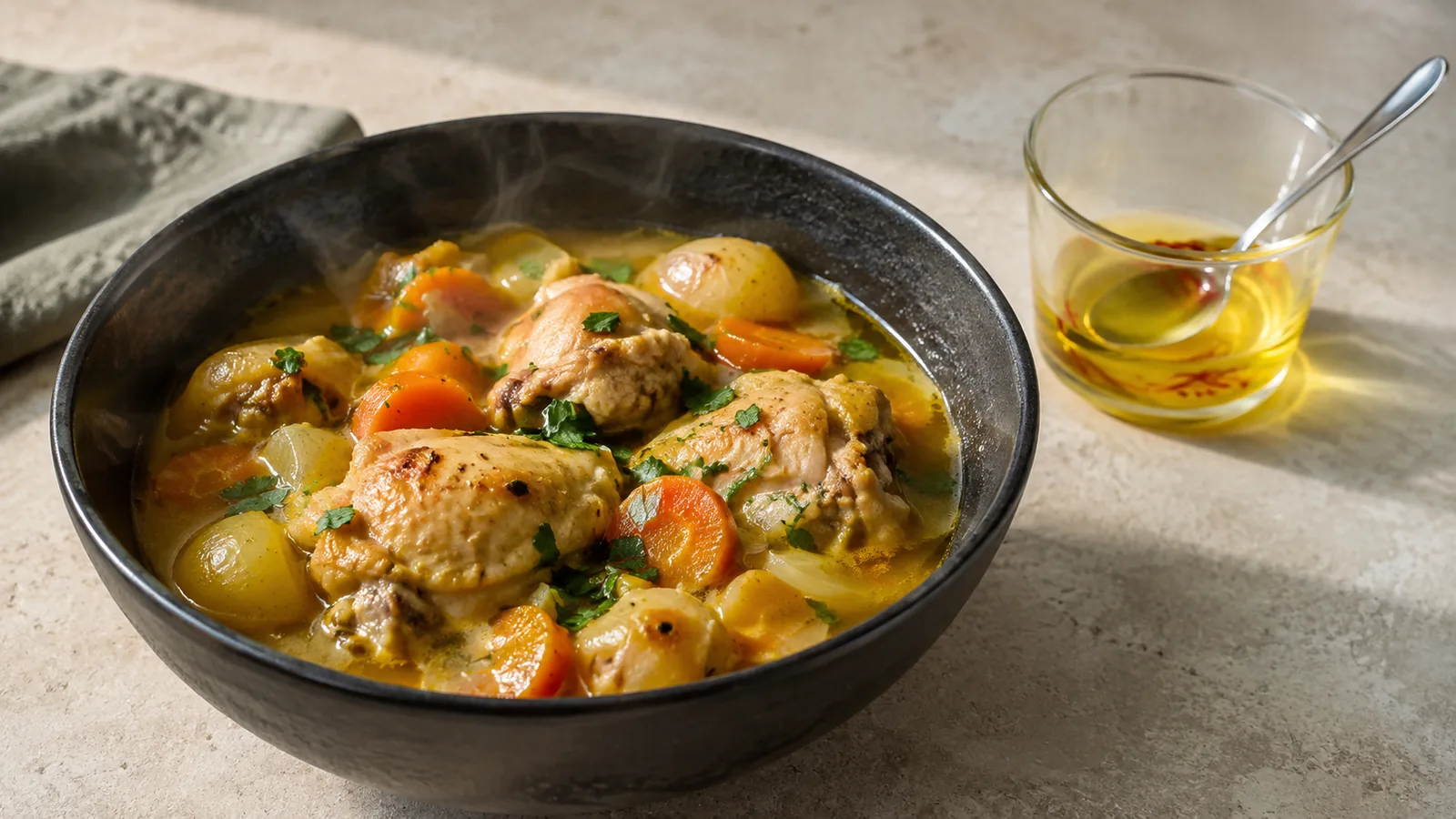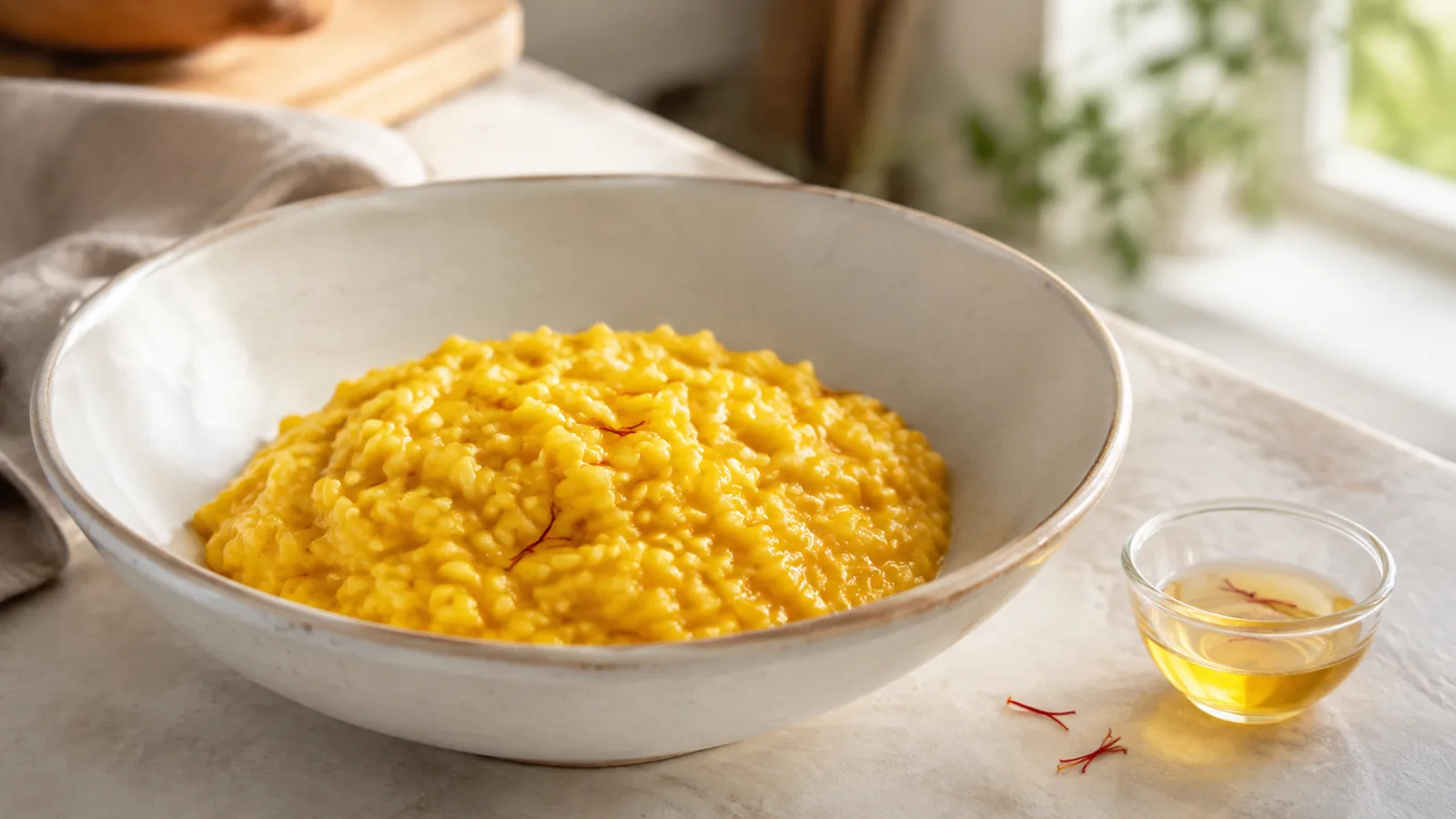
Saffron changes food in three main ways: it adds a golden colour, a distinctive aroma and a gently bitter, complex taste. Used well, it makes rice, broth, sauce, dough or custard smell more layered without overwhelming the main ingredients.
It does not make food spicy or automatically sweet. Nor does a tiny culinary pinch turn a dish into a treatment for inflammation, digestion or mood. Saffron in food is primarily about flavour, colour and aroma.
What does saffron do to food?
The sensory effect comes from several compounds. Research on saffron composition and sensory perception connects crocins with colour, picrocrocin with bitter taste and safranal with odour impact. Their balance, along with freshness and how the spice was dried and stored, helps explain why one batch may seem more aromatic or colouring than another.
This is also why saffron for food should be used sparingly. Too little may disappear behind strong ingredients; too much can make the dish medicinal or bitter.
How saffron changes flavour
Saffron’s flavour is often described as floral, earthy, hay-like and lightly honeyed, but “sweet” can be misleading. The spice does not supply meaningful sweetness. In dessert, sugar, fruit or honey creates the sweet taste while saffron adds aromatic contrast.
In savoury cooking, saffron adds depth without chilli heat. It can round out stock, tomato, citrus, dairy and gentle spices. The effect is clearest in dishes with enough liquid or fat to distribute the aroma, but not so much heavy seasoning that it disappears.
How saffron colours a dish
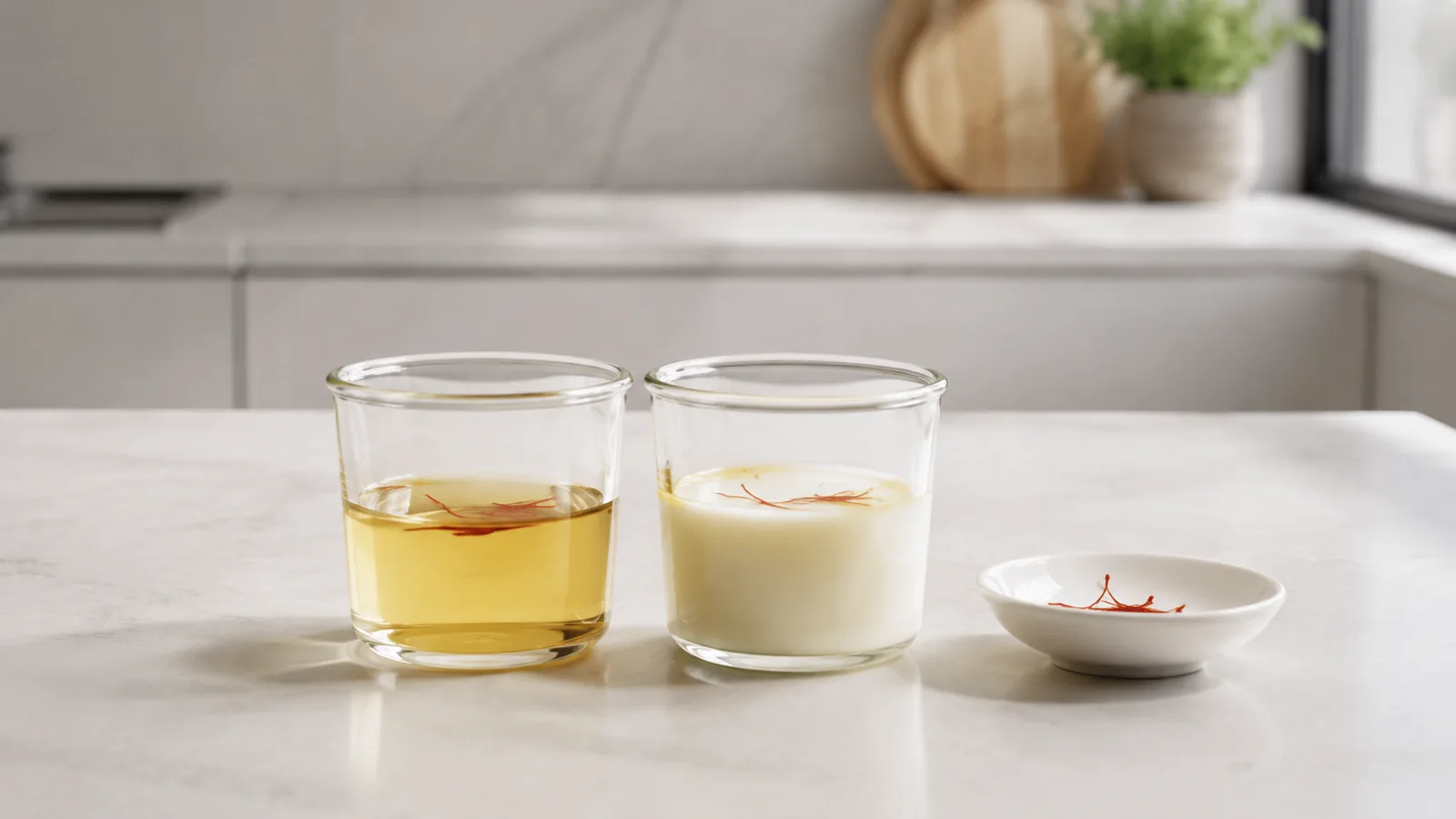
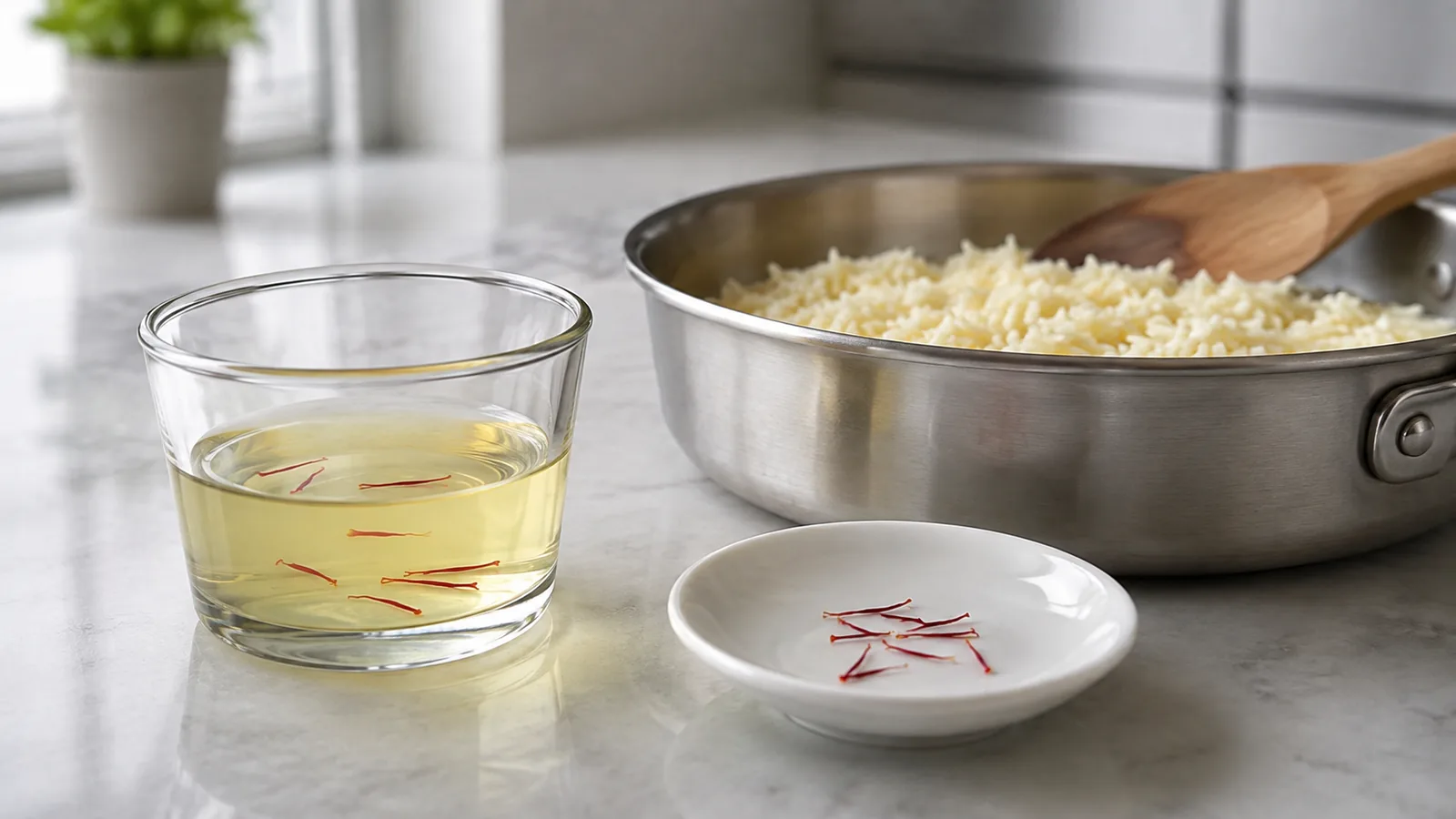
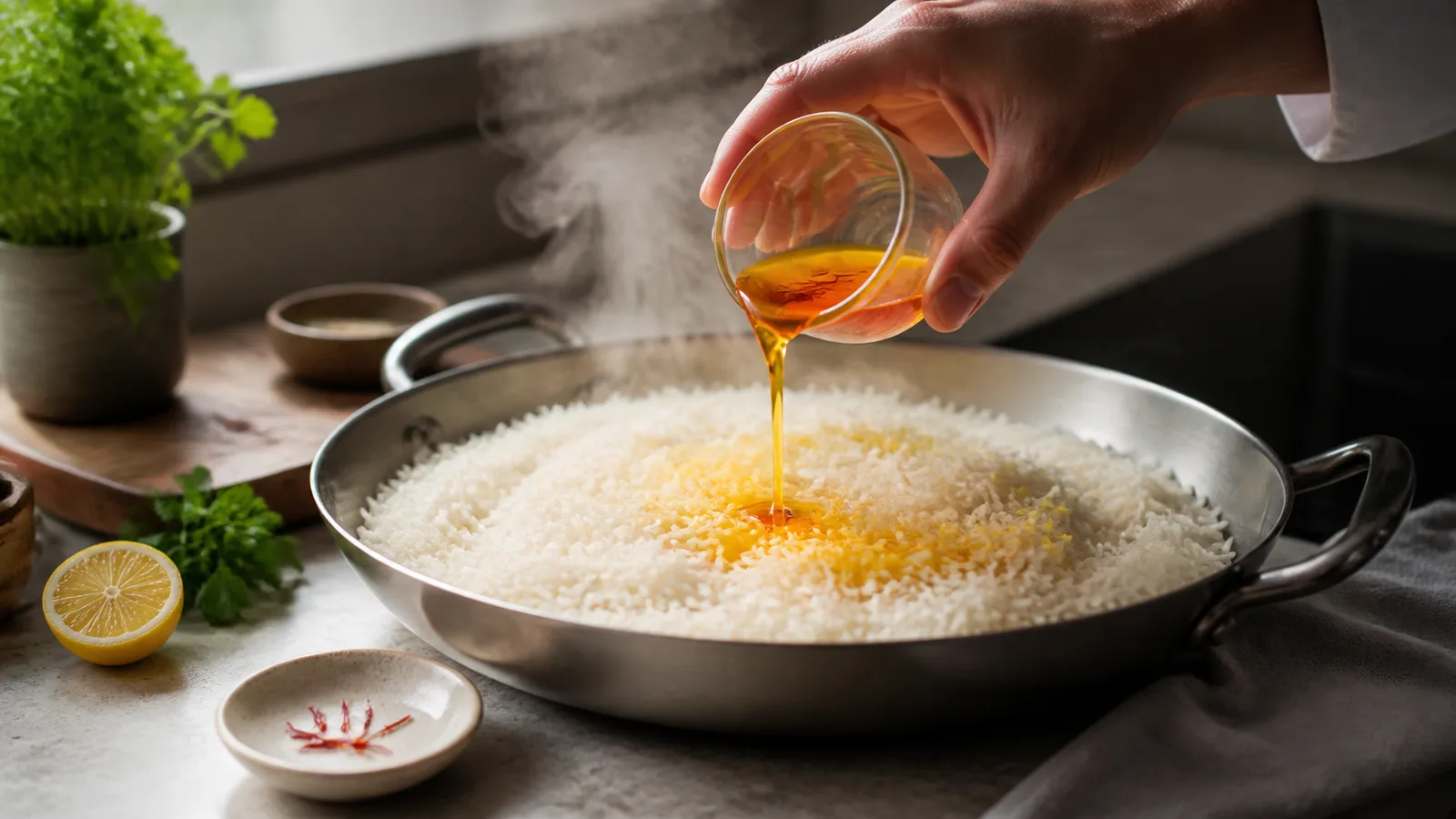
Crocins dissolve in water and turn the blooming liquid yellow to deep gold. Once mixed into food, that liquid can colour a whole pot evenly. If it is drizzled over only part of a rice dish, it creates attractive golden patches among white grains.
The right result is golden, not fluorescent orange or red. An unusually intense colour with almost no saffron aroma can be a warning sign of added dye or another colouring spice. Turmeric also makes food yellow, but it brings a different earthy flavour and cannot reproduce saffron’s aroma.
What saffron does to aroma
Safranal is an important part of saffron’s odour, but the full aroma comes from a wider volatile profile. Heat helps release fragrance into a dish; prolonged aggressive boiling can drive delicate notes away. Blooming the threads and adding the liquid at a sensible stage gives the aroma time to integrate.
Fresh saffron should smell clearly aromatic when the container opens. Threads stored in a warm, bright or poorly sealed place gradually lose impact, so old saffron may colour food while contributing less fragrance.
Does saffron change texture?
A normal culinary amount has little direct effect on texture. The water, milk, stock or cream used to bloom it can affect a recipe, especially dough, cake batter or custard, so count that liquid in the formula.
Saffron does not make rice fluffy, tenderise meat or thicken sauce by itself. Those results come from cooking technique and the other ingredients. Its role is sensory rather than structural.
What is saffron used for in cooking?
Saffron uses in food include both savoury dishes and sweets:
- Rice: Persian saffron rice, biryani, paella and risotto use the spice for perfume and colour.
- Soups and stews: bouillabaisse, fish soup, chicken stew and vegetable broth carry saffron well.
- Seafood: saffron complements fish, mussels, prawns and shellfish sauces.
- Meat and vegetables: it works with chicken, lamb, cauliflower, potato, squash and legumes.
- Desserts: saffron ice cream, rice pudding, milk puddings, custards, cakes and buns use it as an aromatic counterpoint.
- Drinks: saffron tea, warm milk and other infusions show its aroma and colour clearly.
If you are asking what is saffron used for in food, these dishes all rely on the same three strengths—taste, colour and fragrance—rather than on a universal recipe.
How to bloom saffron for food
- Use a small pinch of intact threads.
- Lightly crush them between clean fingers or with a mortar.
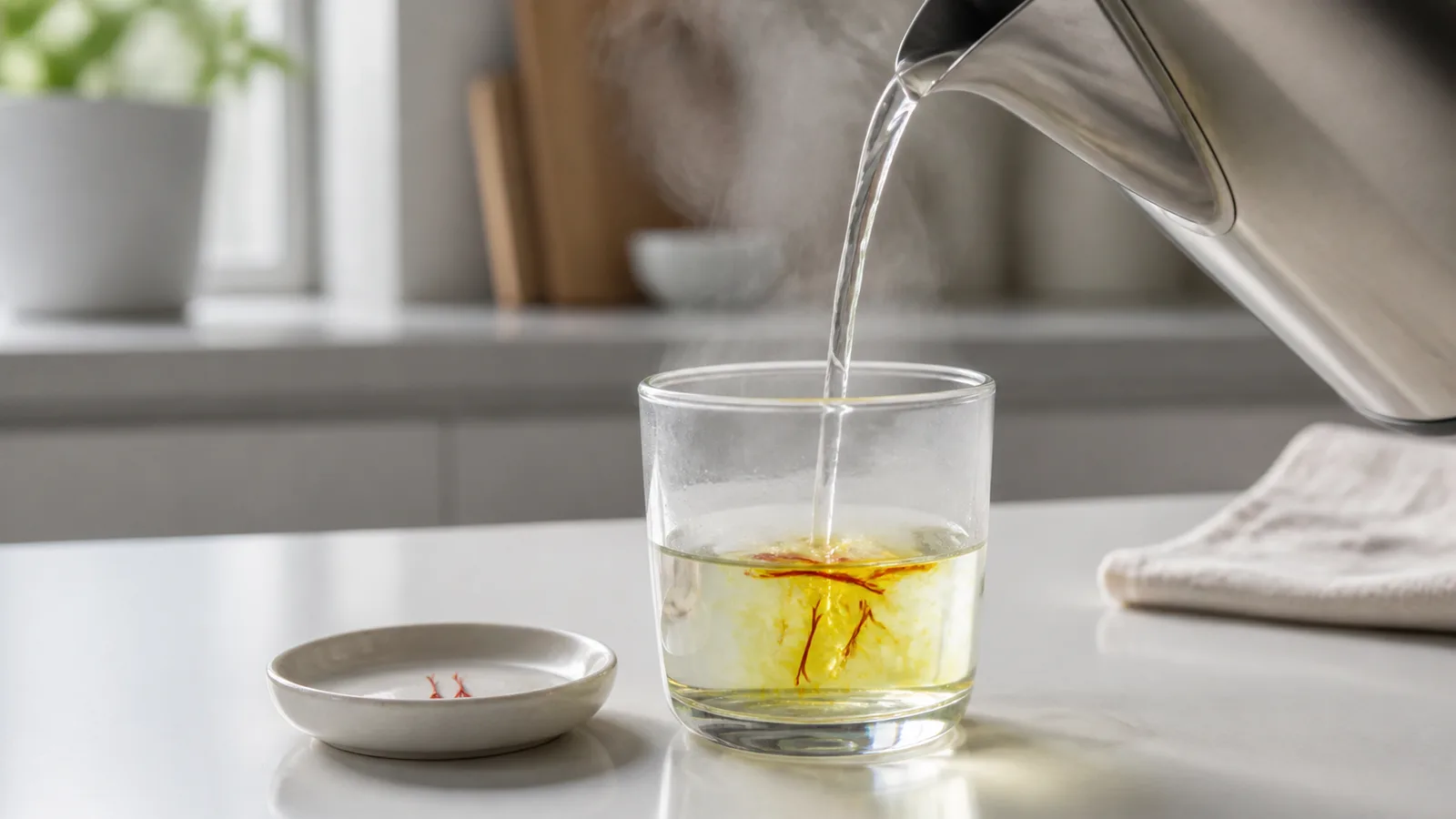
- Cover with a few tablespoons of warm water, milk or stock.
- Leave for 10–15 minutes, until the liquid is deeply coloured and aromatic.
- Add both the liquid and softened threads to the dish.
Warm rather than violently boiling liquid is easy to control. Very hot methods are not automatically wrong, but pouring the bloom into an intensely boiling pot and cooking it for a long time can mute the fragrance.
Why dry threads on top often disappoint
A few dry threads used as garnish may look attractive, but they release colour and flavour unevenly and can feel wiry when eaten. Saffron on food works best when at least most of it has been bloomed or cooked into the dish. If you want visible threads, reserve only a couple for presentation.
Does saffron boost nutritional value?
Saffron contains antioxidant compounds and is studied for biological effects, but food typically uses a very small amount. It is therefore misleading to claim that a saffron dish meaningfully supplies vitamins, improves digestion, reduces inflammation or acts as a natural mood booster.
The nutritional profile of the meal comes mainly from its rice, vegetables, protein, dairy, oil, sugar and portion size. Saffron can make those ingredients more enjoyable without needing a health halo.
The practical answer
What does saffron do to your food? It brings colour from crocins, characteristic bitterness from picrocrocin and much of its aromatic impact from safranal. Bloom it, use a restrained amount and pair it with ingredients that leave room for its fragrance.
Start with authentic saffron threads and a simple dish such as rice or a light broth. That makes it easier to recognise what the spice contributes before trying it in a more complex recipe.