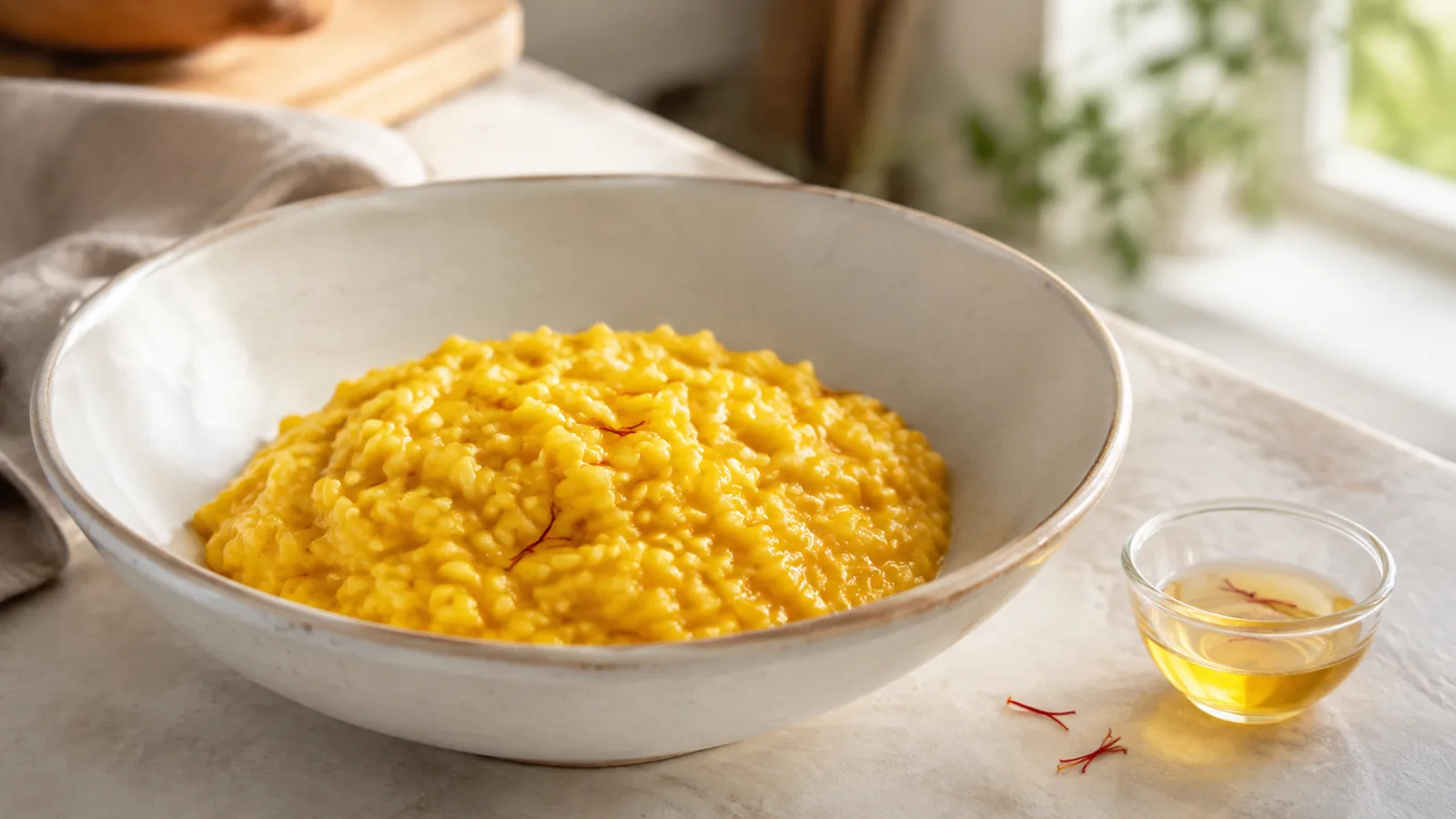
Yes, you can sprinkle saffron on food, but a few dry threads work mainly as a garnish. For more even colour and flavour, bloom most of the saffron in warm water first, drizzle the infusion through the dish, and reserve only a small number of threads for the top.
Can You Sprinkle Saffron on Food?
Genuine saffron threads are edible, so a light finishing garnish is perfectly reasonable. The catch is that dry threads release little of their colour when they sit on a dry surface. They can also taste concentrated and feel slightly fibrous if one bite receives several at once.
The best method for sprinkling saffron on food therefore uses two forms of the same measured portion. Bloom the larger share for distribution, then add a few visible threads after plating. This gives the dish a clear saffron aroma and golden colour without creating an expensive red tangle on top.
Bloom First for Better Flavour and Colour
- Measure the saffron required for the whole dish.
- Set aside a few intact threads if you want a garnish.
- Gently crush the remainder in a dry mortar.
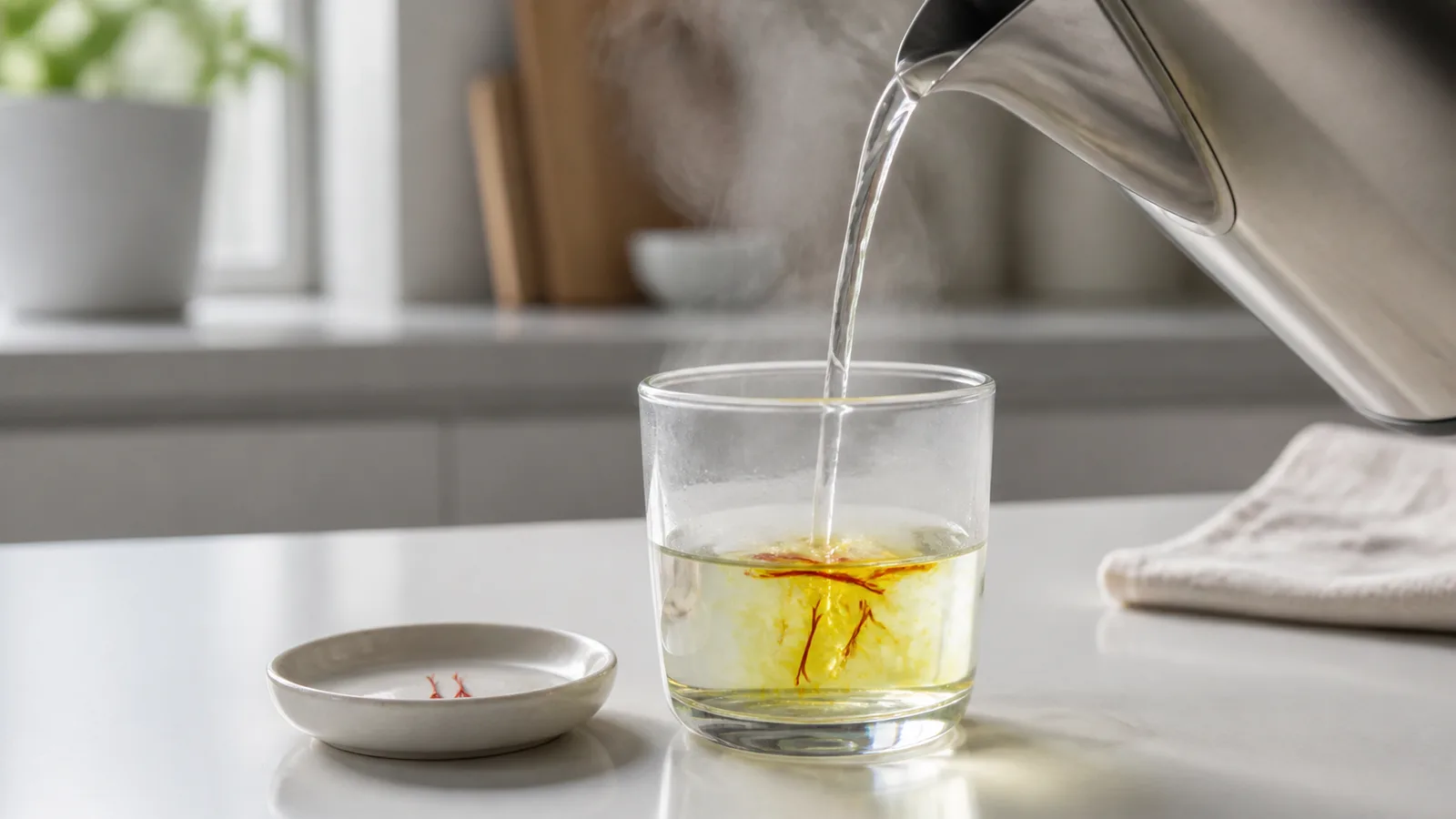
- Cover it with a few spoonfuls of warm water for 10–20 minutes.
- Add the golden liquid and softened pieces to the food.
- Finish with the reserved threads just before serving.
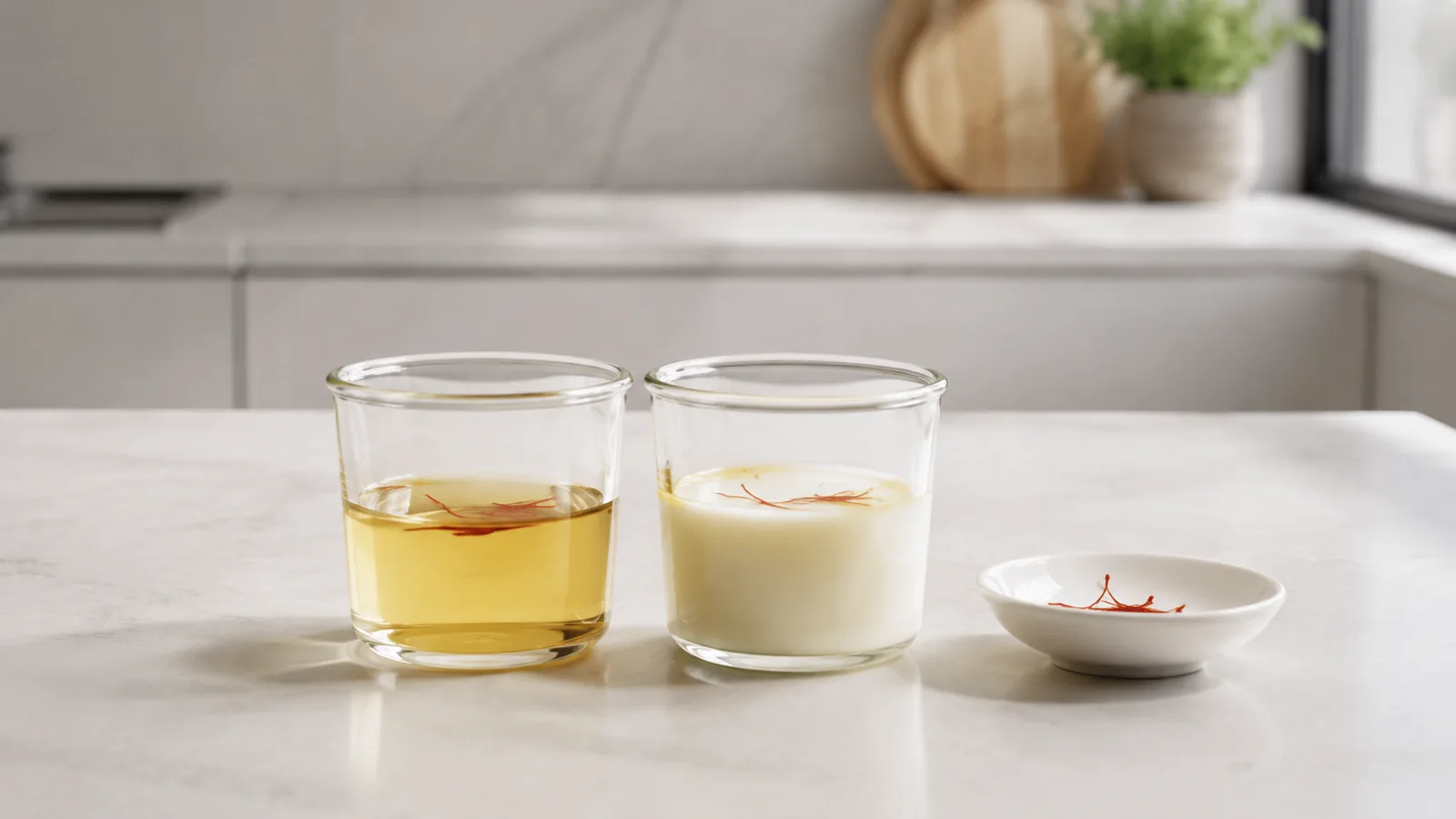
A water-rich liquid helps release saffron’s colour compounds. In a 2024 culinary extraction study, water-rich conditions favoured crocin extraction. Milk or a mild broth can replace water when either already belongs in the recipe, but blooming solely in oil is a less effective route to the golden colour.
Our guide to using saffron in food explains measuring, crushing and blooming in more detail.
How to Finish Rice with Saffron
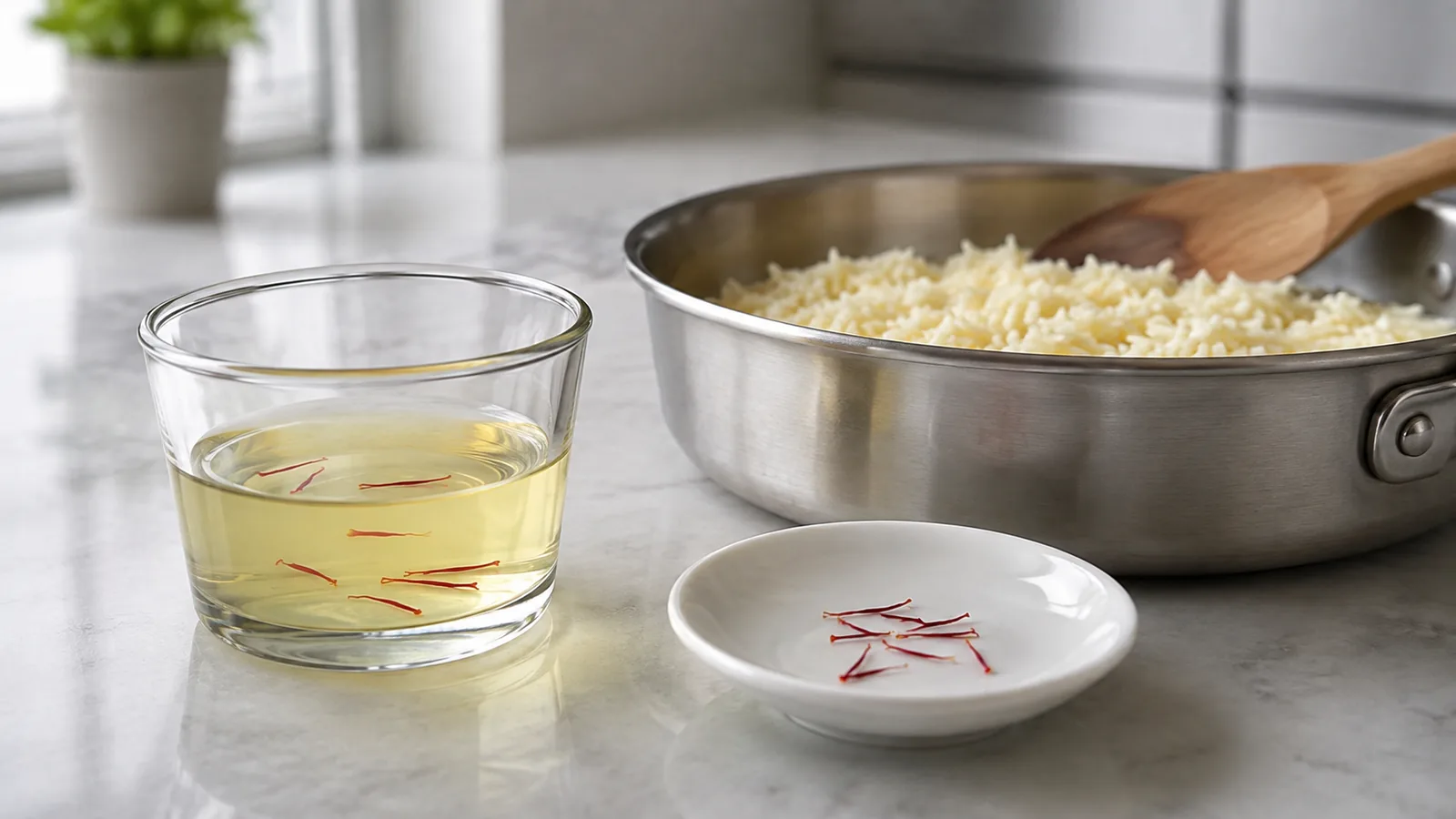
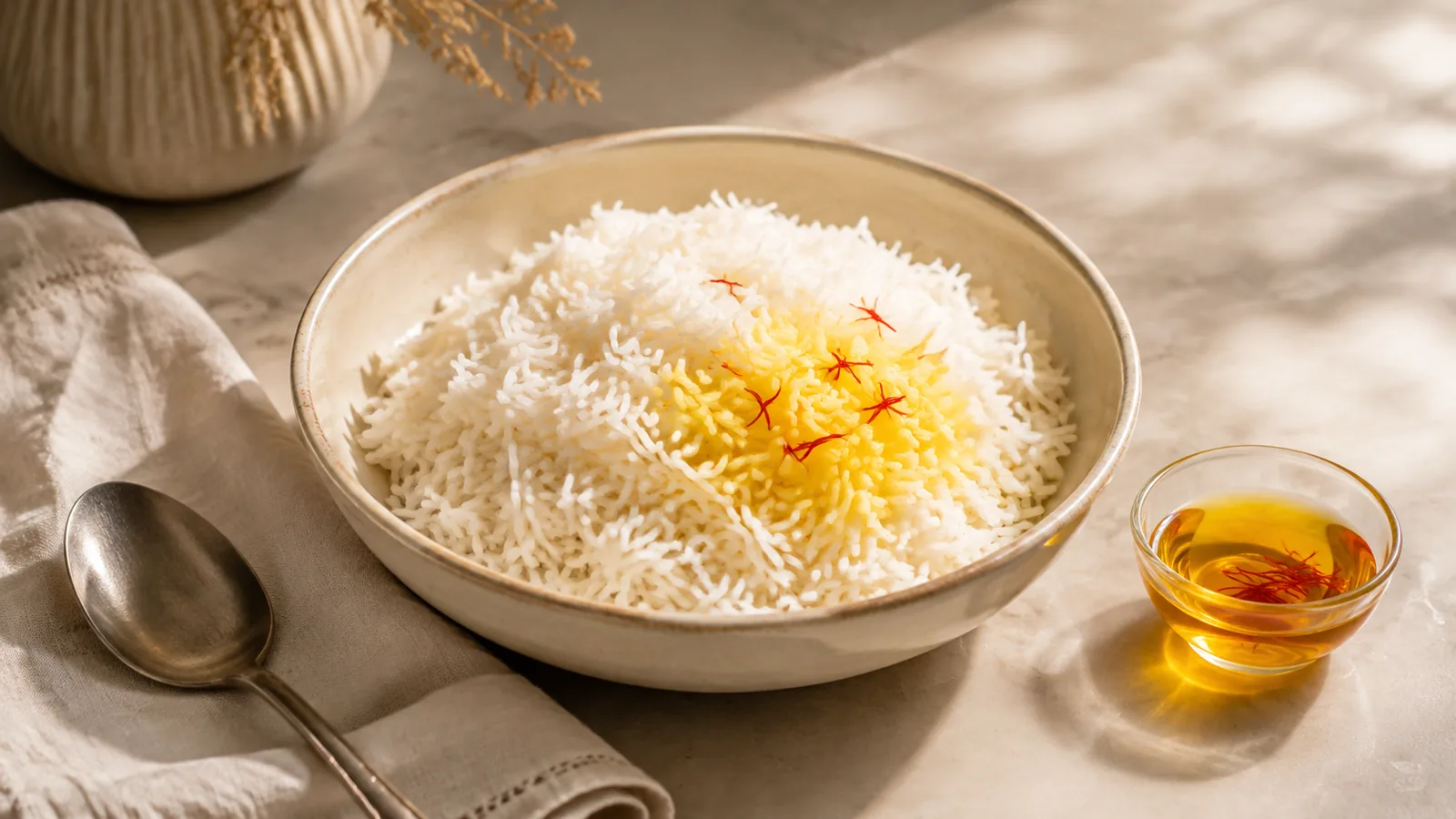
For rice, mix the prepared infusion with a small portion of the cooked grains. Spoon that golden rice over the white rice, then add a few whole threads where they will be seen. This looks intentional and distributes the saffron far better than scattering dry strands across an entire pot.
If the rice is still steaming, the surface moisture will soften the garnish slightly. Avoid adding a large pile: it can create a bitter, chewy mouthful and makes it difficult to tell how much spice the dish contains.
Using Saffron on Soups, Stews and Sauces
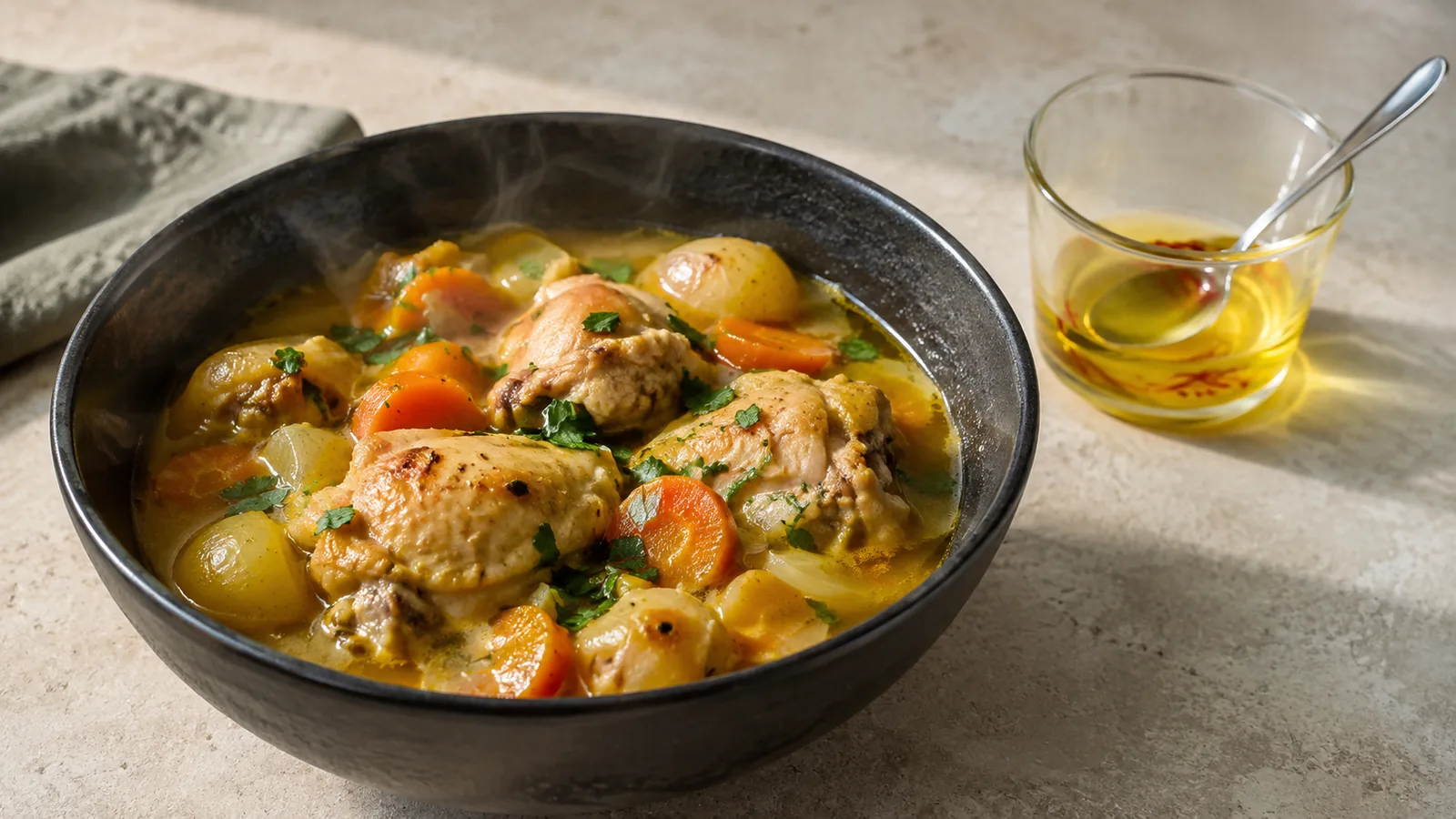
Stir the infusion into a soup, stew or sauce during the later part of cooking. Add whole threads only after serving if they suit the presentation. A dry garnish cannot season a bowl of liquid evenly, and it may simply float in one place.
For a smooth soup or cream sauce, crush the saffron well before blooming and allow it to settle into the dish. If a perfectly smooth texture matters, you can strain the infusion, although keeping the softened pieces usually wastes nothing. See when to add saffron to food for timing by cooking method.
Sprinkling Saffron on Desserts
A few threads can look attractive on rice pudding, custard, ice cream, yoghurt, cake glaze or a fruit dessert. First put the saffron flavour into a component that contains moisture: a syrup, custard, cream, milk mixture or dressing. Add the dry garnish only once the dessert is assembled.
For cold desserts, make the infusion with warm liquid and let it cool before mixing. Adding hot water directly to whipped cream, yoghurt or ice cream will change the texture. On cakes and pastries, a saffron syrup or glaze carries flavour more reliably than dry powder dusted over the surface.
Citrus, apricot, peach, pear, berries and pomegranate are useful partners when the dessert needs freshness or acidity. The guide to fruit that goes well with saffron offers combinations by dish type.
Can You Sprinkle Ground Saffron Directly?
You can, but it is rarely the most effective use. Fine saffron powder can collect in one patch, stain a pale surface unevenly and taste harsh in a concentrated bite. It is also easier to confuse with coloured powder or blends when you cannot see the thread structure.
If you want a fine golden finish, bloom the ground saffron and brush or drizzle the liquid onto the food. For a dry garnish, use a few recognisable threads rather than a blanket of powder.
Foods That Suit a Saffron Garnish
- Rice and pilaf: distribute infused golden rice over the top and finish with a few threads.
- Risotto and paella-style rice: put the saffron into the cooking liquid; garnish only after the rice is ready.
- Creamy curries: stir in the infusion near the end and place a very small garnish over the serving bowl.
- Soups and sauces: use the infusion for flavour; whole threads are optional presentation.
- Custards and puddings: add saffron to the milk or syrup and reserve a few threads for the surface.
- Fruit and yoghurt: use a cooled infusion in the dressing, then add threads sparingly.
- Tea and warm drinks: steep the threads in the drink rather than treating them as a dry topping.
How Many Threads Should You Put on Top?
There is no universal thread count because saffron threads vary in length and thickness, and dishes vary in size. The garnish should be a small fraction of the measured recipe amount. For an individual serving, a few separated threads are normally more attractive and pleasant to eat than a dense pinch.
Do not add extra saffron simply because the garnish looks sparse. Its purpose is to signal the ingredient, while the bloomed portion provides the flavour and colour throughout the food.
Common Mistakes
- Using all the saffron dry: much of its colour and flavour remains trapped in the threads.
- Making a thick red pile: this creates an unpleasant concentrated bite.
- Dusting powder unevenly: bloom it and use the liquid instead.
- Adding threads to food that will be discarded: do not place saffron in boiling or soaking water that the recipe drains away.
- Garnishing too early: add the visible threads after the main cooking is complete.
- Judging the dose by colour alone: other ingredients can change the colour of the dish.
The Practical Answer
Can you sprinkle saffron on food? Yes. Keep a few whole threads for a restrained final garnish, but bloom most of the measured saffron and add that infusion where it can spread. You will get a more even aroma, flavour and golden colour, while the visible threads still make the ingredient recognisable.
Current whole-thread options for cooking are available in the saffron shop. Measure before you begin, and treat the garnish as part of that amount rather than an uncounted extra.