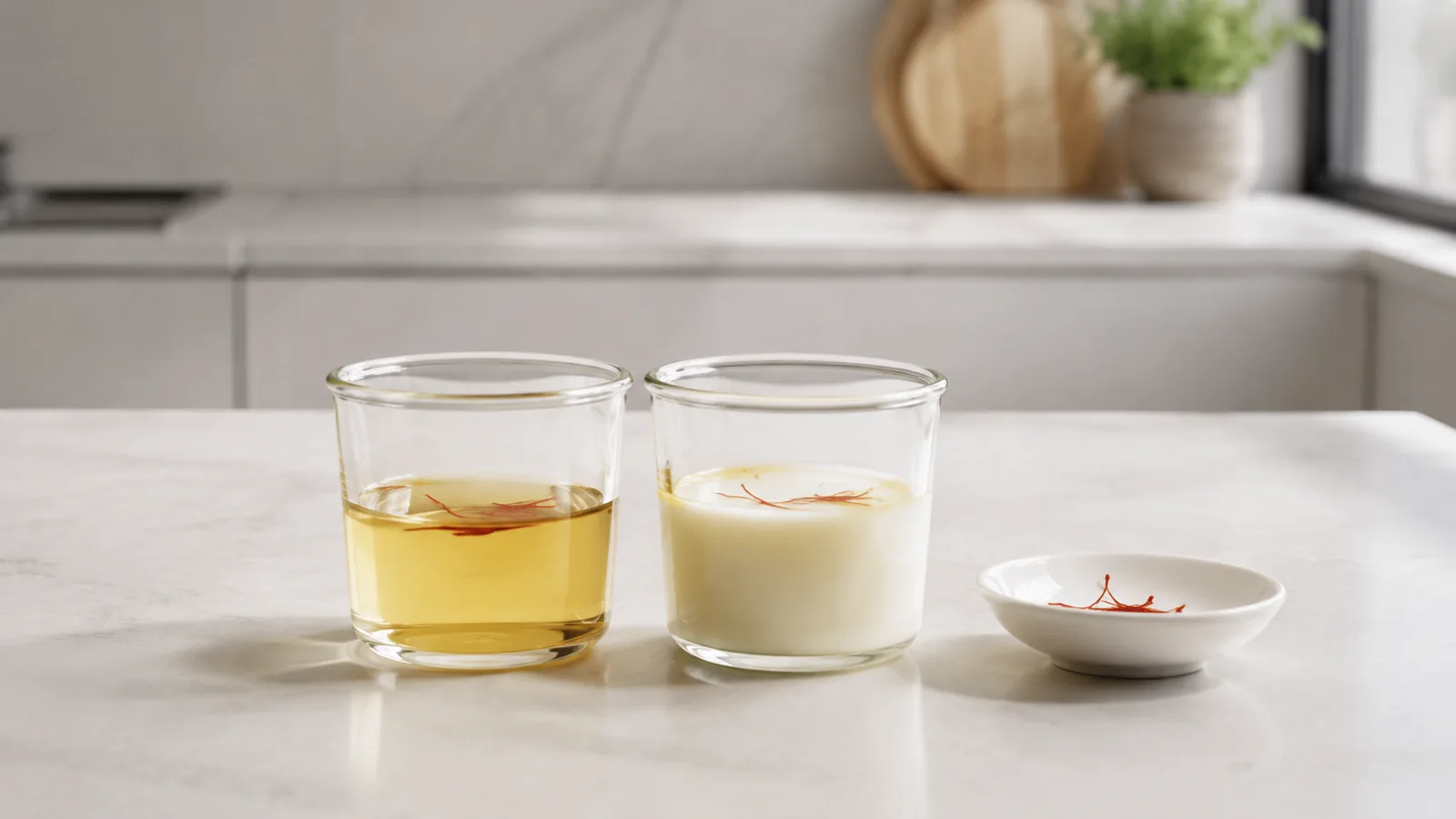
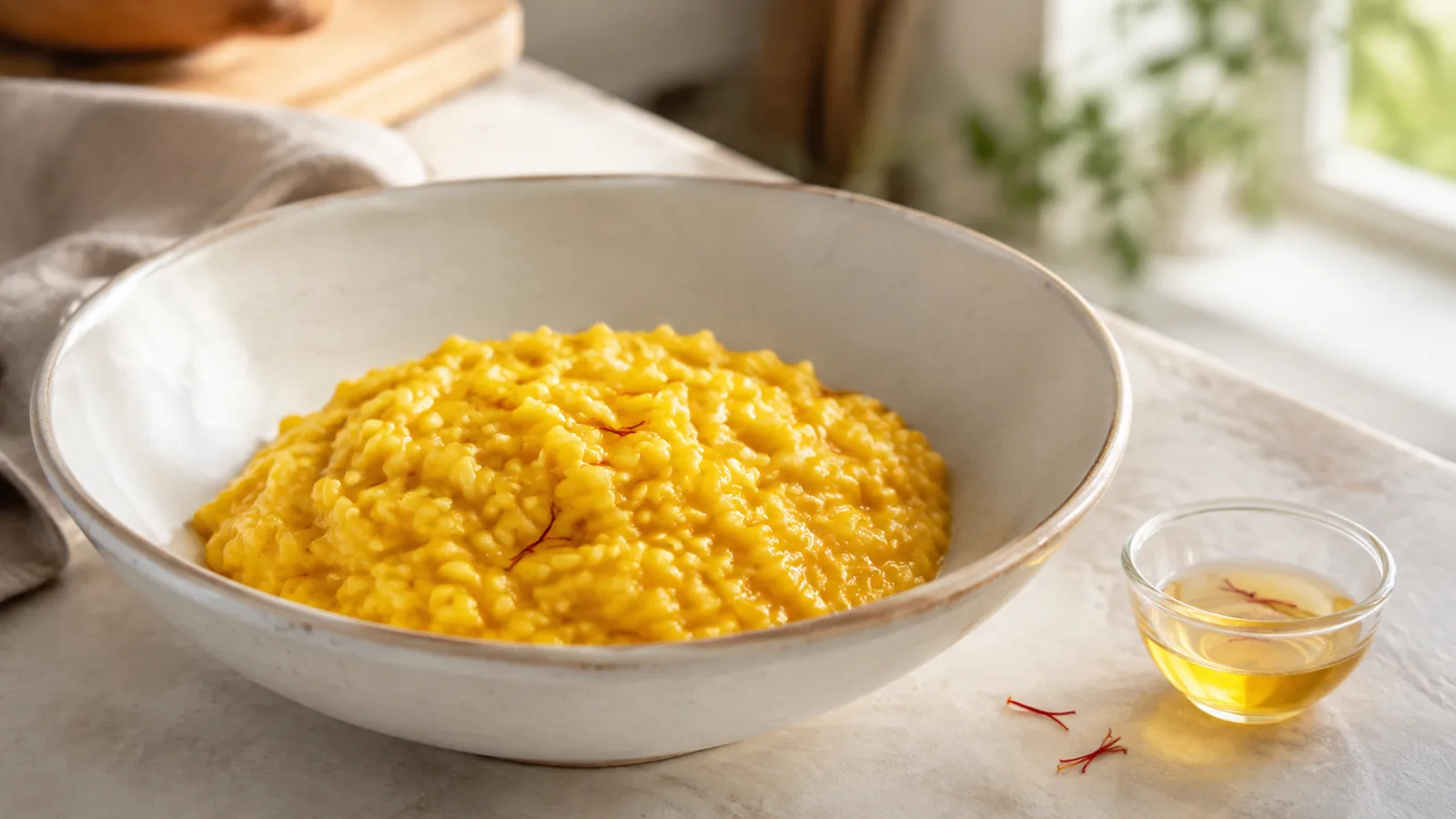
Water is the better all-purpose liquid for blooming saffron because it releases the golden colour without changing a recipe’s flavour or texture. Milk is a good choice for kheer, custard, ice cream and warm milk drinks, where its creaminess already belongs. Neither is universally “better”; choose the liquid that fits the finished dish.
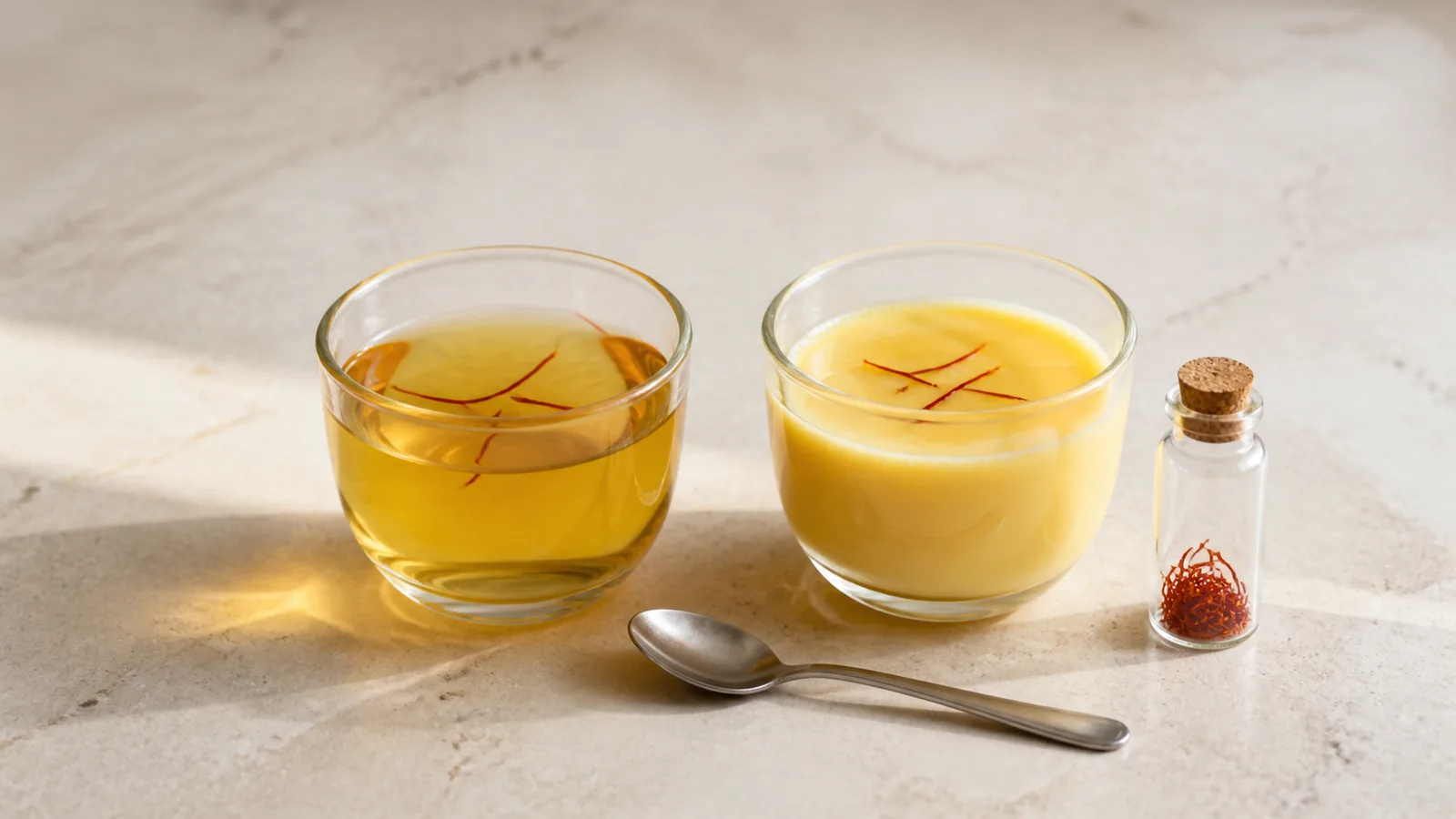
Is Saffron Better in Milk or Water?
If you want one reliable default, use warm water. It is neutral, easy to measure and suitable for rice, soup, stew, sauce, bread, cake and drinks. A small, concentrated infusion can be added without introducing fat, dairy flavour or much extra liquid.
Milk works well when the recipe is already dairy-based. It carries saffron into a creamy mixture and produces an appealing golden colour, but it is not necessary for extracting the spice. The right choice among saffron preparation methods depends on what you are cooking, not on the idea that richness always means stronger saffron.
What Warm Water Does
Saffron’s crocins, the compounds chiefly associated with its colour, are water-soluble. A 2024 culinary extraction study comparing water, oil and mixed media found that water-rich conditions favoured crocin extraction. This is why a small warm-water infusion quickly becomes golden.
Water also lets you judge the saffron itself. The infusion’s colour and aroma are not masked by milk, spices or stock, and it can move into almost any recipe. Use only a few spoonfuls when the dish cannot accept much extra liquid.
Water is useful for:
- steamed rice, pilaf and risotto;
- soups, stews and curries;
- seafood, meat and vegetable sauces;
- bread and cake batter;
- tea, lemonade and chilled drinks;
- syrups, dressings and fruit desserts.
What Milk Changes
Milk does more than provide water: it also brings protein, fat, sweetness and body. Those qualities suit a creamy dessert or drink, but they may be unwanted in rice, broth or a clear syrup. A milk infusion should therefore be treated as part of the recipe rather than a separate “stronger” extraction.
Warm milk allows saffron to disperse and gives dairy dishes a uniform golden tone. Whole milk tastes richer; lower-fat milk is lighter. Plant-based alternatives can work when their flavour suits the recipe, although coconut, almond, oat and soy drinks each add a character of their own.
Milk is useful for:
- kheer and rice pudding;
- custard, panna cotta and ice cream bases;
- milk cakes and enriched bread;
- warm saffron milk;
- lassi-style and other dairy drinks;
- mild creamy sauces that already contain dairy.
How to Bloom Saffron in Water
- Measure the saffron required by the recipe.
- Gently crush the threads into coarse pieces in a dry mortar.
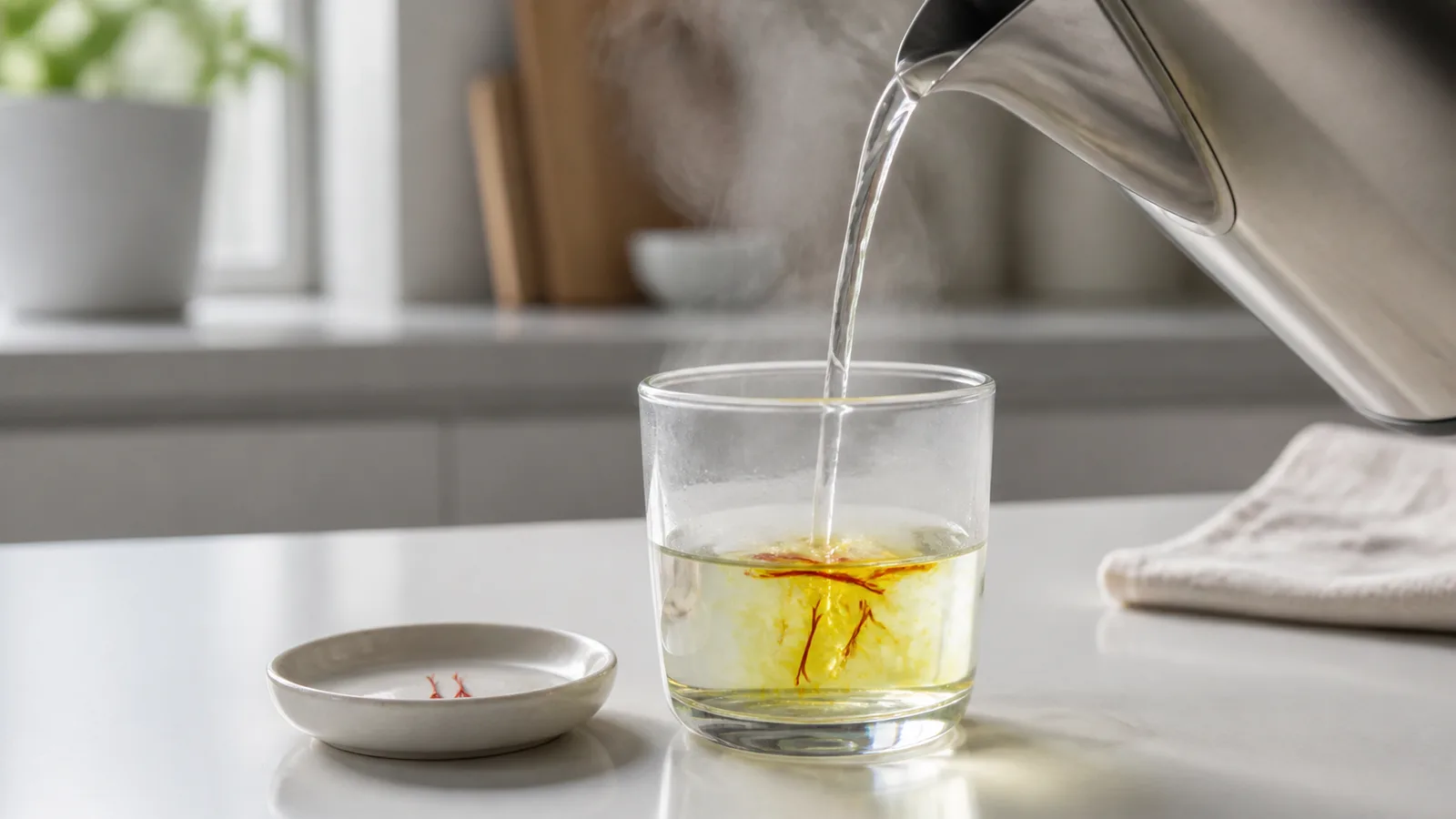
- Add a few spoonfuls of warm water.
- Leave the covered infusion for 10–20 minutes.
- Pour both the liquid and softened pieces into the food.
The water should be hot enough to encourage extraction but does not need to be violently boiling. A small volume creates a concentrated infusion that is easy to distribute. If the recipe is delicate, count this water as part of its total liquid.
How to Bloom Saffron in Milk
- Warm a small portion of the milk from the recipe; do not scorch it.
- Crush the measured saffron and stir it into that milk.
- Cover and leave it for 10–20 minutes.
- Add the infusion back to the main milk mixture.
- Continue the recipe over the appropriate heat.
Taking the blooming milk from the measured recipe amount prevents a custard or dough from becoming unexpectedly loose. If the final dish is cold, cool the infusion before adding it. Keep milk refrigerated whenever it is not being heated or served.
Does Milk Extract More Saffron Flavour?
Milk can make saffron taste rounder because the finished drink or dessert is richer, but that is a sensory effect of the whole recipe. It does not mean water has failed. Water efficiently releases colour and produces a clean infusion; milk changes the context in which the saffron is tasted.
Saffron aroma is delicate in either liquid. Avoid a prolonged hard boil simply to deepen the colour. Add the infusion at the stage appropriate to the dish and judge the result by aroma and taste, not colour alone. The guide to when to add saffron to food covers timing for different preparations.
Can You Use Broth, Juice or Syrup Instead?
Yes, provided the liquid belongs in the recipe. Mild unsalted broth suits a savoury dish; a light syrup works for poached fruit and desserts; juice can carry saffron into a drink or fruit sauce. Strongly flavoured stock or very acidic juice makes it harder to judge the spice and may pull the dish in another direction.
A practical approach is to bloom saffron in neutral warm water, then add that concentrated infusion to the broth, milk, juice or syrup. This separates extraction from flavour adjustment and works across a wider range of recipes.
What about Blooming Saffron in Oil?
Oil is not the best starting medium for saffron’s water-soluble colour. Fat can help carry aroma in a finished sauce, but bloom the threads in water or another water-rich liquid first, then combine the infusion with the dish’s butter or oil.
Do not fry dry saffron over fierce heat with tempering spices. It is expensive, delicate and does not need the direct heat used to toast cumin or mustard seeds.
Common Preparation Mistakes
- Using too much liquid: keep the infusion concentrated so it does not dilute the dish.
- Scorching milk: warm it gently and stir before it catches on the pan.
- Boiling for a long time: more heat does not guarantee a better aroma.
- Adding cold infusion to a sensitive mixture: match temperatures when making custard or enriched dough.
- Blooming only in oil: begin with a water-rich liquid for colour distribution.
- Ignoring the recipe’s liquid total: subtract the blooming liquid where precision matters.
Which One Should You Choose?
Use water when you want a neutral, versatile saffron infusion. Use milk when the finished recipe is creamy and milk already contributes to its taste and texture. For many dairy recipes, both methods are valid: bloom in a little water for precise extraction, or take a small amount of warm milk from the recipe for convenience.
For a deeper look at temperature and steeping options, read the best way to brew saffron. Current whole-thread options are listed in the saffron shop.