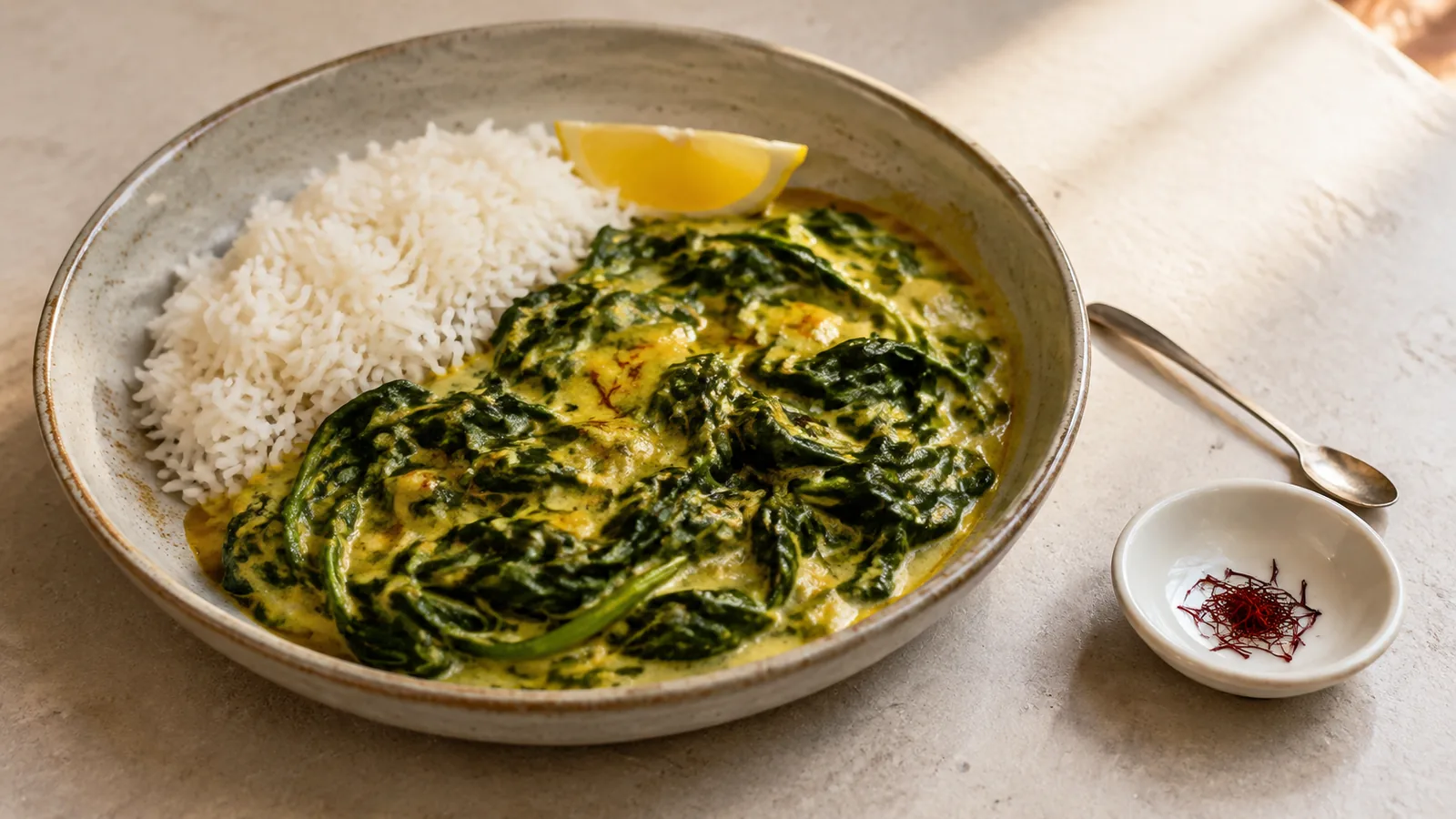
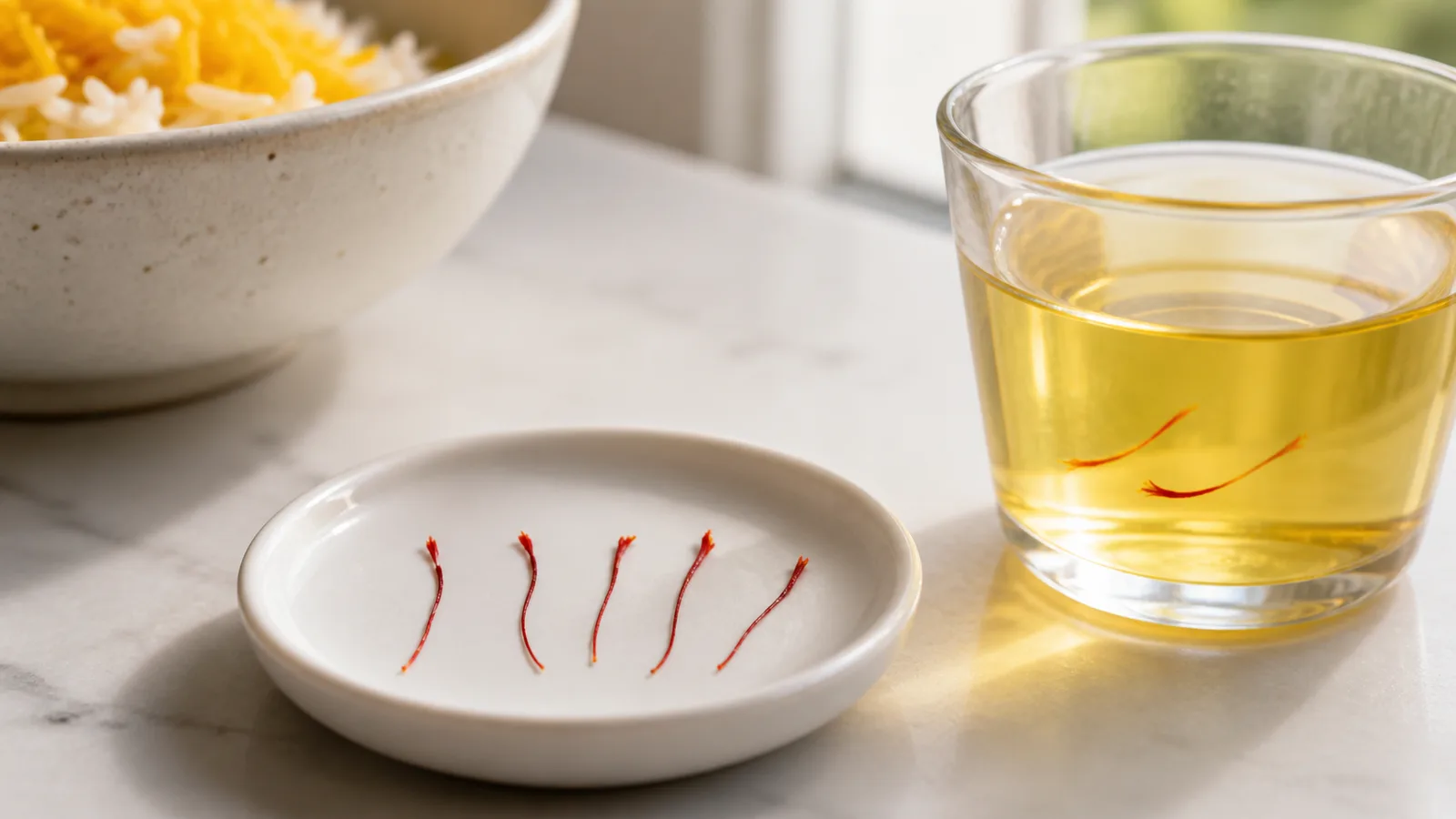
Yes, saffron is used in some curries, especially aromatic kormas, creamy meat dishes and recipes shaped by Mughal, Awadhi or Kashmiri cooking. It is not a standard ingredient in every curry. Saffron is most useful when its floral, honeyed aroma can still be noticed beside the sauce’s other spices.
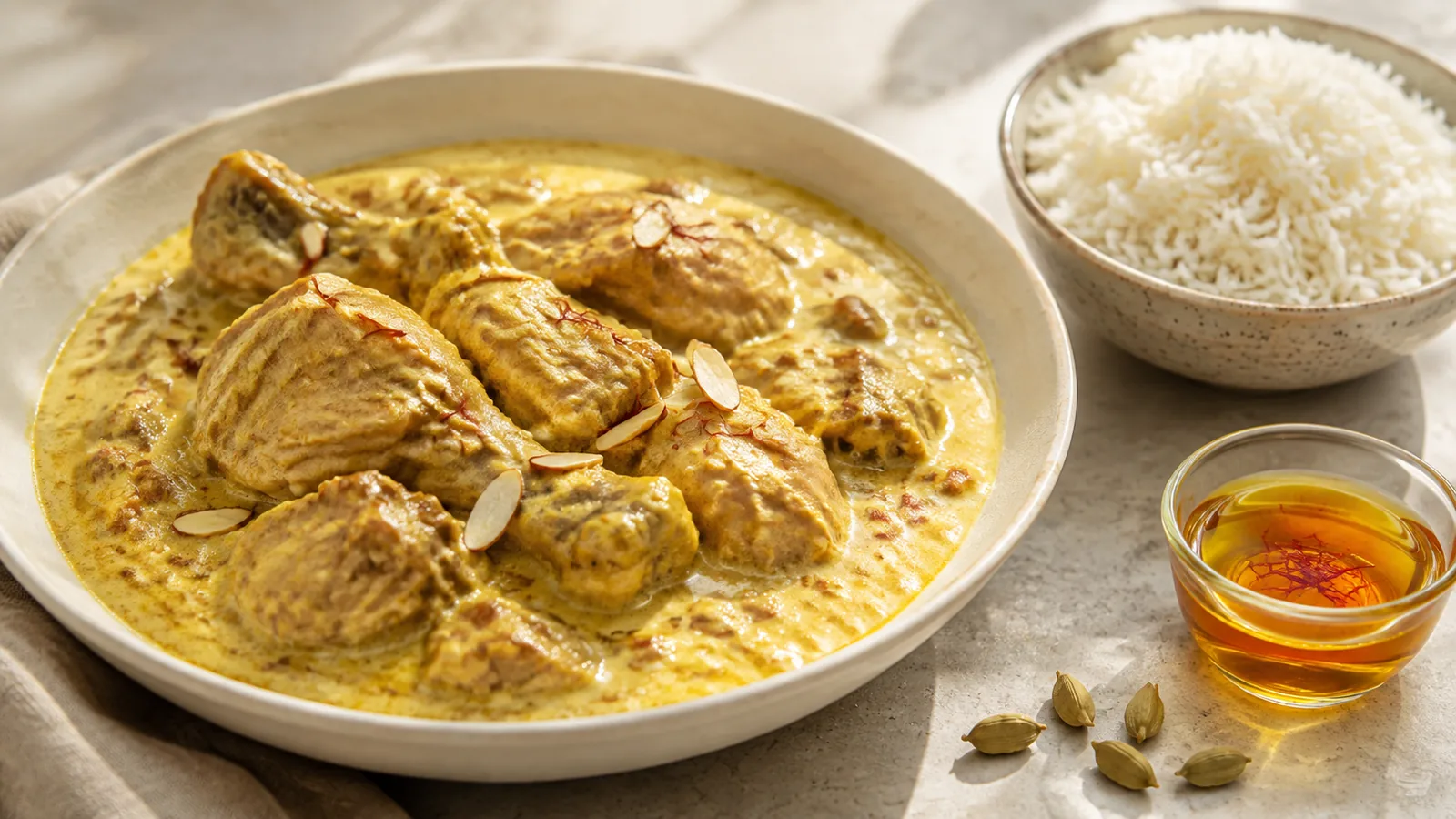
Is Saffron Used in Curry?
“Curry” covers a very wide range of dishes. Some are fiery and tomato-rich; others are mild, nutty, creamy or broth-like. Saffron has a recognised place in selected preparations, but adding it to every curry would flatten those differences and waste an expensive spice.
The strongest tradition for saffron in curry dishes appears in refined, aromatic cooking rather than heavily chilli-driven everyday sauces. An official Indian Embassy recipe booklet describes saffron and rose water as hallmarks of Murgh Awadhi Qorma. India’s official tourism site also describes Kashmiri Aab Gosht as a mild milk-based sheep-rib dish with cardamom and saffron.
Curries That Traditionally Suit Saffron
Awadhi and Mughlai-Style Korma
Korma-style dishes often use yoghurt, cream, nuts, fried onion and warm aromatic spices. That rich but relatively gentle base leaves room for saffron. In Murgh Awadhi Qorma, its floral note sits beside cardamom, cloves, cinnamon, bay leaf and rose water rather than competing with extreme chilli heat.
This does not mean every modern korma recipe contains saffron. Regional practice, household preference and cost all matter. It is more accurate to call saffron a recognised ingredient in certain versions than an essential definition of korma.
Kashmiri Milk- or Yoghurt-Based Dishes
Kashmiri cooking offers examples in which saffron works with milk, yoghurt and cardamom. The official Incredible India overview of Wazwan mentions saffron in Aab Gosht, a mild preparation, while describing many other dishes in the feast without saffron. That contrast matters: the spice is selected for a particular flavour structure, not scattered across the entire cuisine.
Royal and Celebration Dishes
Saffron’s expense and aroma have long suited dishes intended for feasts or special occasions. Rich meat gravies, kofta preparations and layered rice-and-curry meals may use it as a finishing infusion. The word “royal” in a recipe title does not prove authenticity, however; look at the actual ingredient tradition and cooking method.
Is Saffron Used in Every Indian Curry?
No. Many excellent curries rely on mustard seed, curry leaf, tamarind, coconut, tomato, fenugreek, chilli, black pepper or regional spice blends without any saffron. Dal, fish curry, vegetable curry and home-style chicken curry do not become incomplete when it is absent.
A recipe may also use “saffron” to describe a colour rather than the spice itself. Check the ingredient list. Turmeric creates a strong yellow tone and is far more common in everyday savoury cooking; it does not provide saffron’s aroma.
Which Modern Curries Can Work with Saffron?
Outside a specific traditional recipe, saffron can work in:
- mild chicken or lamb curry with yoghurt, cream or ground nuts;
- delicate seafood curry with a light broth or coconut-milk base;
- vegetable curry built around cauliflower, potato, pumpkin or peas;
- lentil dishes with restrained chilli and warm spices;
- white or pale sauces where the golden infusion can be seen;
- celebration dishes served with saffron rice or a fragrant pilaf.
These are possibilities, not a rule. A strongly smoked, very sour or chilli-heavy curry may leave little room for saffron. Decide what role the spice will play before adding it.
What Saffron Adds to a Curry
Saffron contributes a floral, hay-like and lightly honeyed aroma, gentle bitterness and golden colour. It is not a thickener, and it does not supply the broad savoury foundation created by browned onion, ginger, garlic, stock or toasted spices.
Its role is often clearest near the top of the flavour rather than in the base. Cardamom, cumin, coriander seed, cinnamon and a restrained amount of turmeric can sit beside it. Too much clove, smoke or chilli can dominate it; too much saffron can make the dish harsh.
How Saffron Is Added to Curry
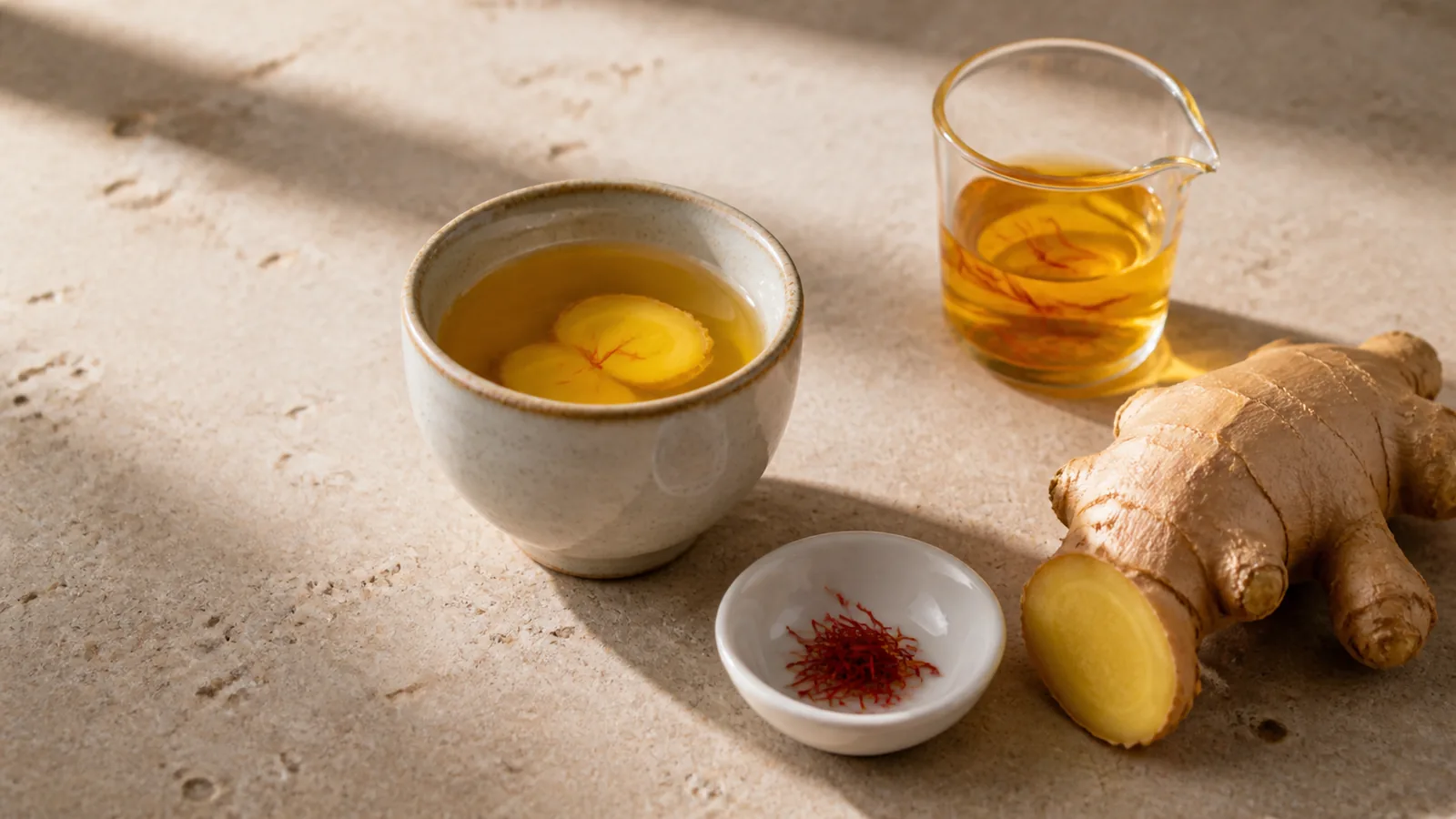
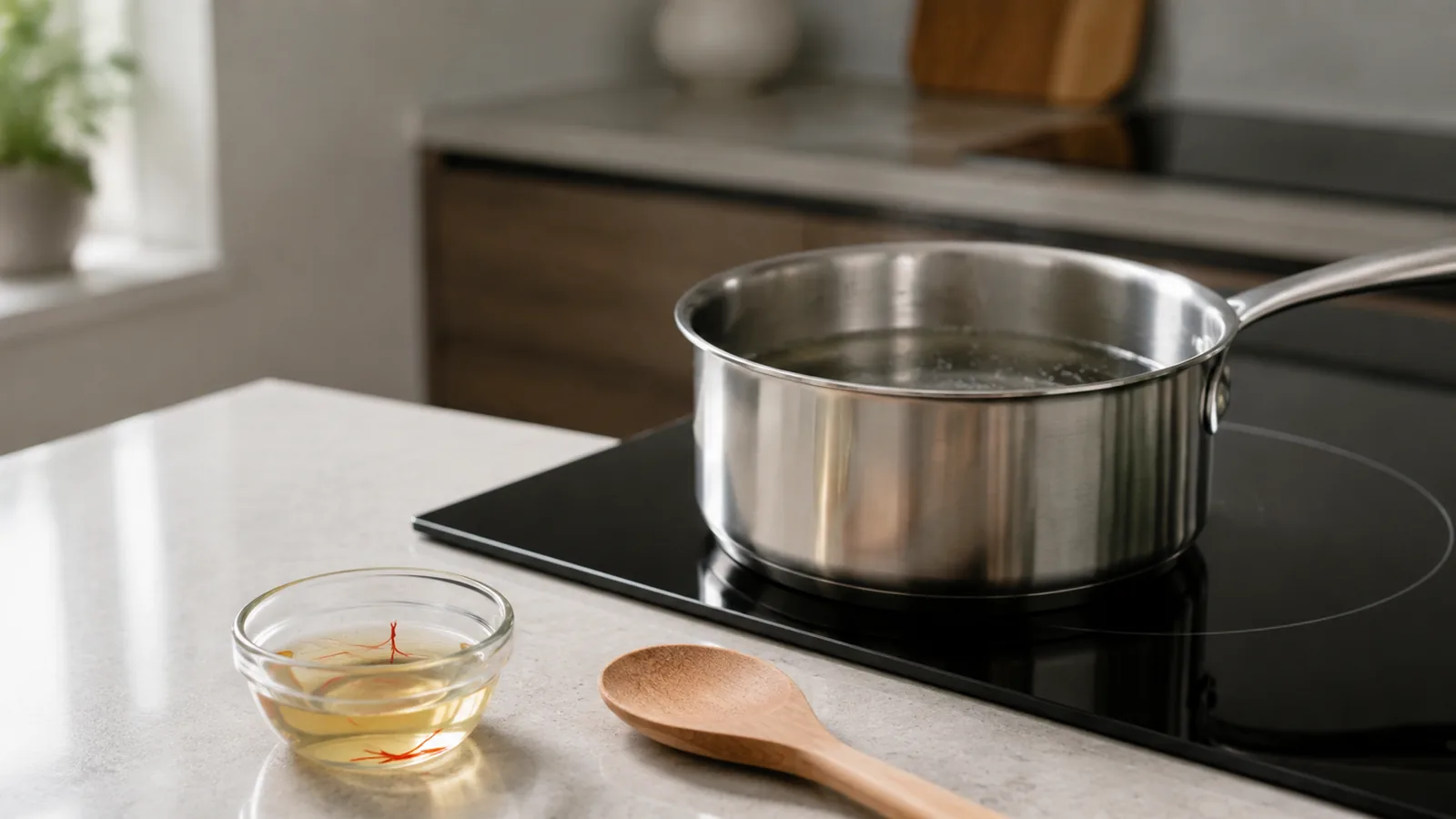
Measure the saffron, gently crush the threads and bloom them in a few spoonfuls of warm water, milk or mild unsalted stock for 10–20 minutes. Add both the liquid and softened pieces during the later part of cooking. Use milk only when dairy belongs in the sauce.
For a long-cooked meat curry, the final 10–20 minutes is a useful starting point. A quick seafood or vegetable curry can receive the infusion earlier because its total cooking time is shorter. Do not fry dry saffron over fierce heat with whole tempering spices.
The practical guide to putting saffron in curry covers preparation, timing and spice balance in more detail. Keeping the two questions separate helps: this page explains where saffron belongs; that guide explains how to use it.
Saffron in Curry versus Saffron Rice
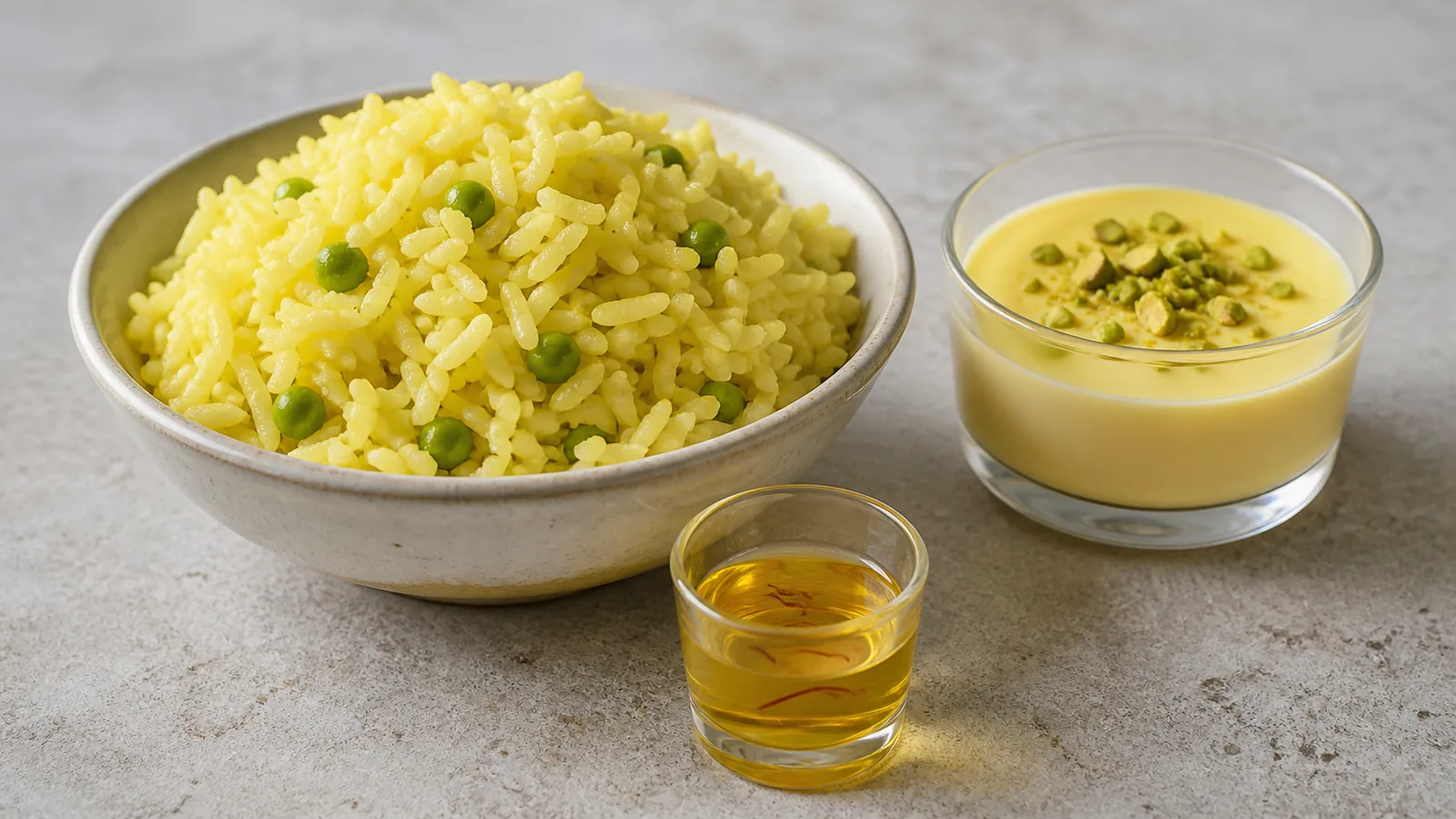
Saffron rice served with curry is not the same as saffron in the curry sauce. Biryani and pulao may bring saffron into the rice layer while the accompanying gravy follows its own spice profile. Official tourism descriptions identify saffron in both Kashmiri pulao and Hyderabadi biryani.
This can be a better choice when the curry itself is strongly flavoured. The rice carries saffron’s aroma and colour, while the sauce keeps its established identity. A diner experiences the two together without forcing saffron into every component.
How to Tell Whether a Recipe Really Needs It
- Read the recipe’s regional context: is saffron part of that dish’s tradition or a modern optional addition?
- Look at the flavour intensity: a mild aromatic sauce leaves more room than a very hot, smoky one.
- Check the liquid: saffron needs a water-rich medium to spread through the curry.
- Consider the rice: putting saffron in the accompanying rice may create a clearer result.
- Use a measured amount: more spice does not make the dish more authentic or luxurious.
Common Misunderstandings
Saffron is not what makes curry powder yellow; turmeric normally performs that role. “Saffron curry” is also not one single standard dish. It may describe a korma, a seafood curry, a restaurant creation or simply a sauce coloured with saffron.
Nor is saffron required for a curry to be premium or traditional. Authenticity comes from the dish’s own context, ingredients and technique. Add saffron when it has a clear culinary purpose, not as a universal upgrade.
The Short Answer
Is saffron in curry? Yes, in selected aromatic curries and particularly in some Awadhi, Mughlai and Kashmiri preparations. It also works in certain modern mild curries. It is not used in every curry and should not replace the dish’s core spice structure.
When a recipe calls for it, bloom a measured amount and add the infusion at a stage that protects its aroma. Current whole-thread options are listed in the saffron shop.