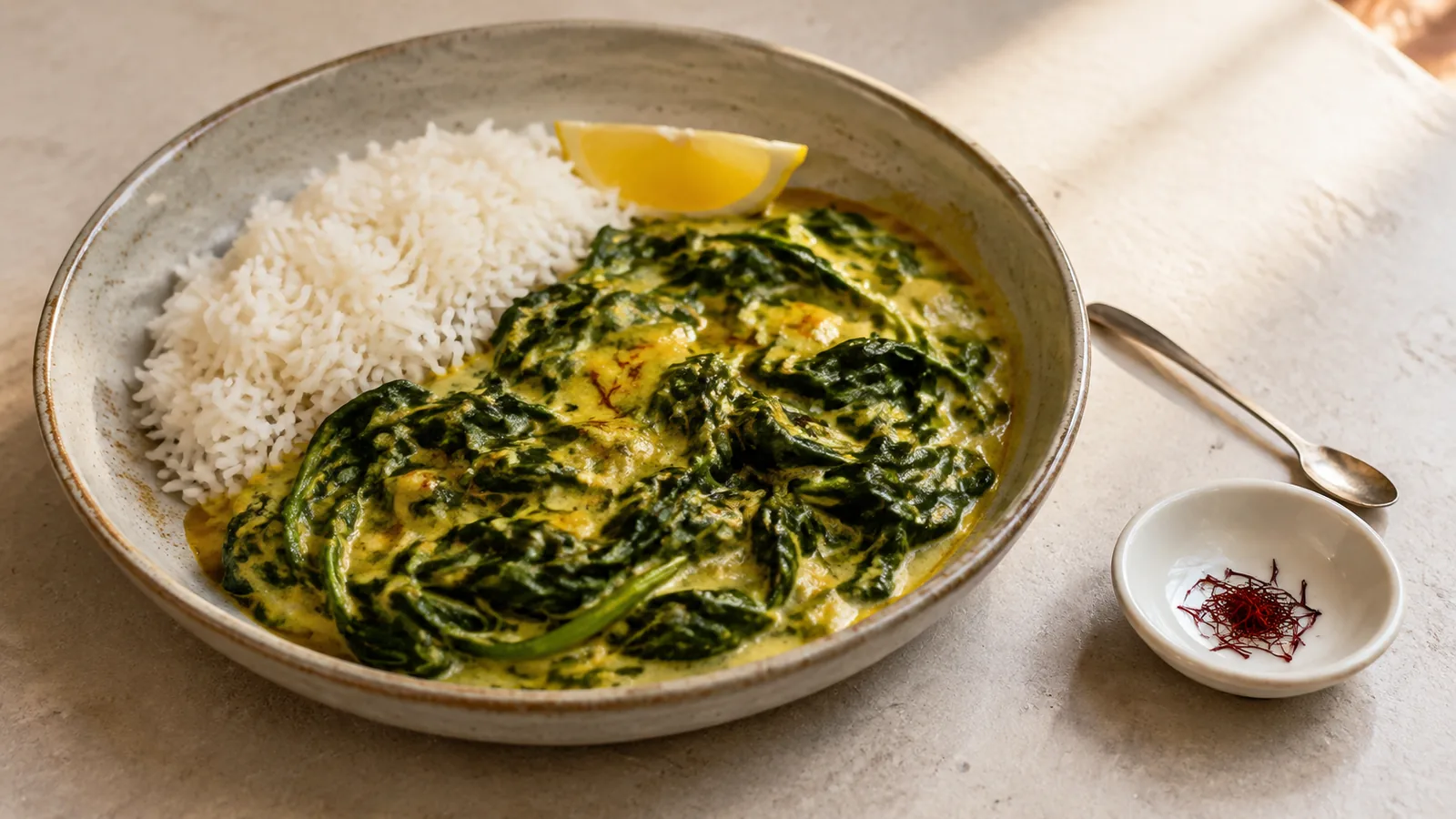
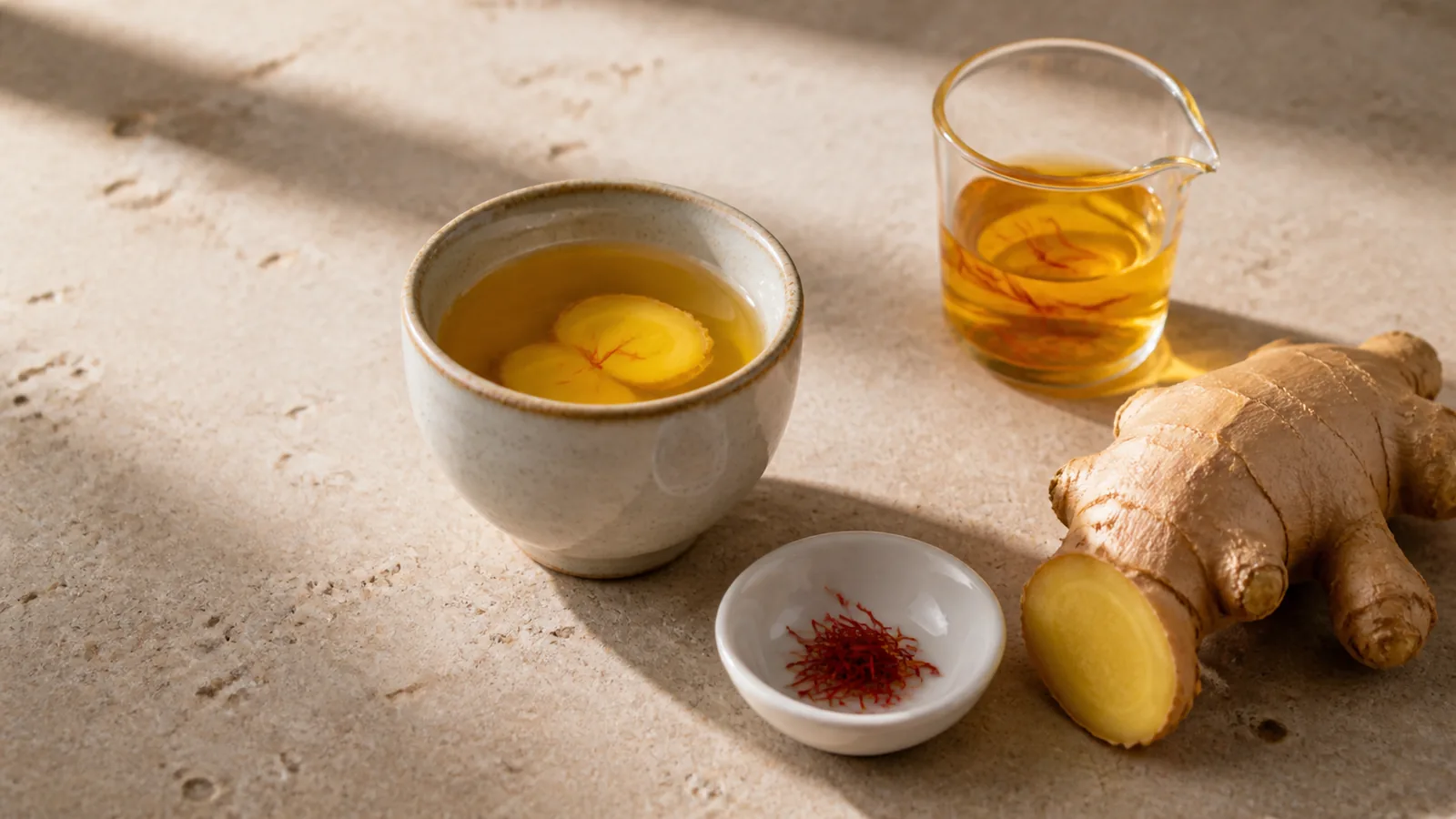
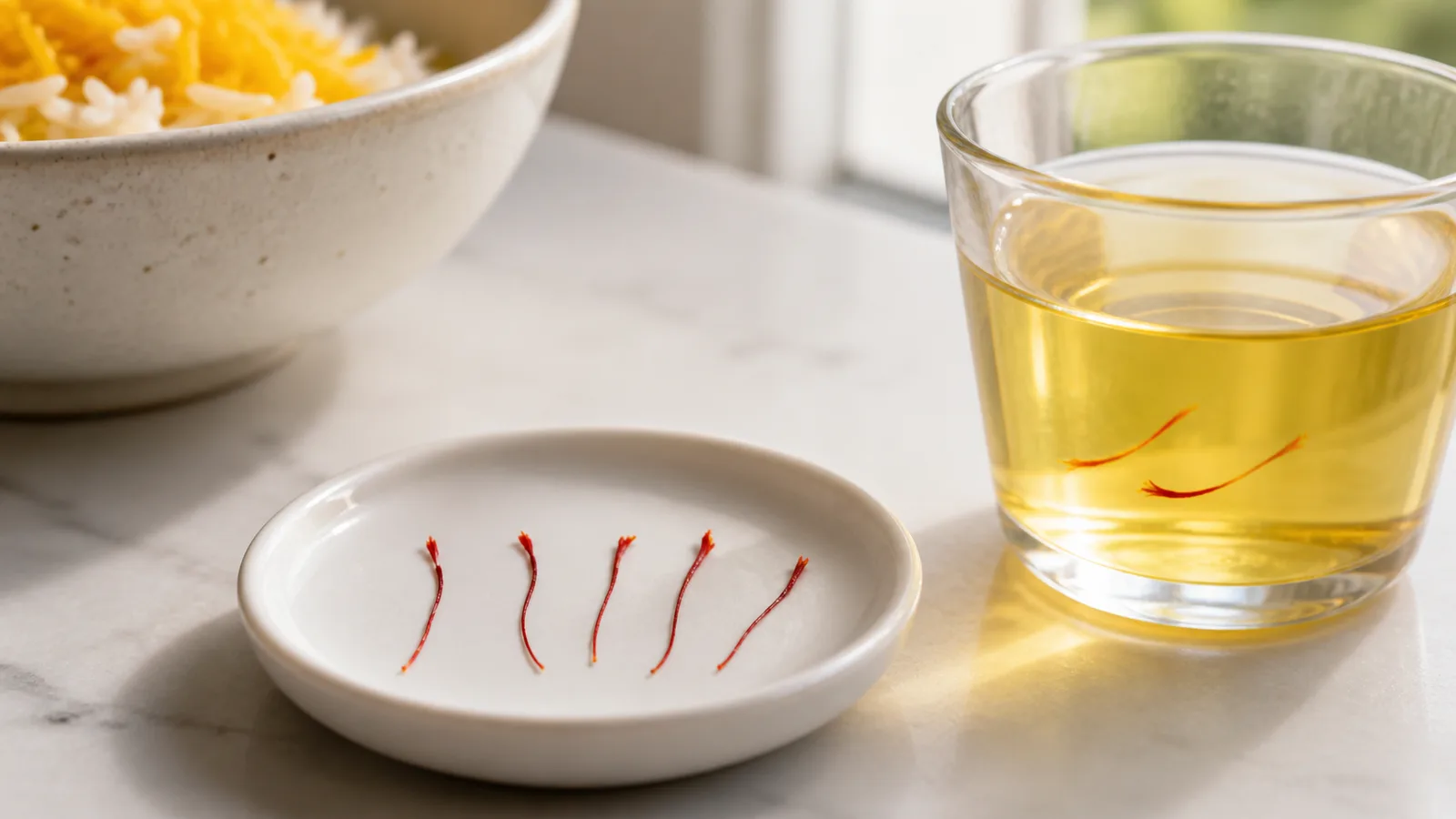
To add saffron to food, gently crush the measured threads, steep them in a few spoonfuls of warm water for 10–20 minutes, then add both the golden liquid and the softened pieces to the part of the recipe that contains moisture. Use the cooking liquid for rice and stews, the wet ingredients for baking, or a syrup and sauce for finished dishes.
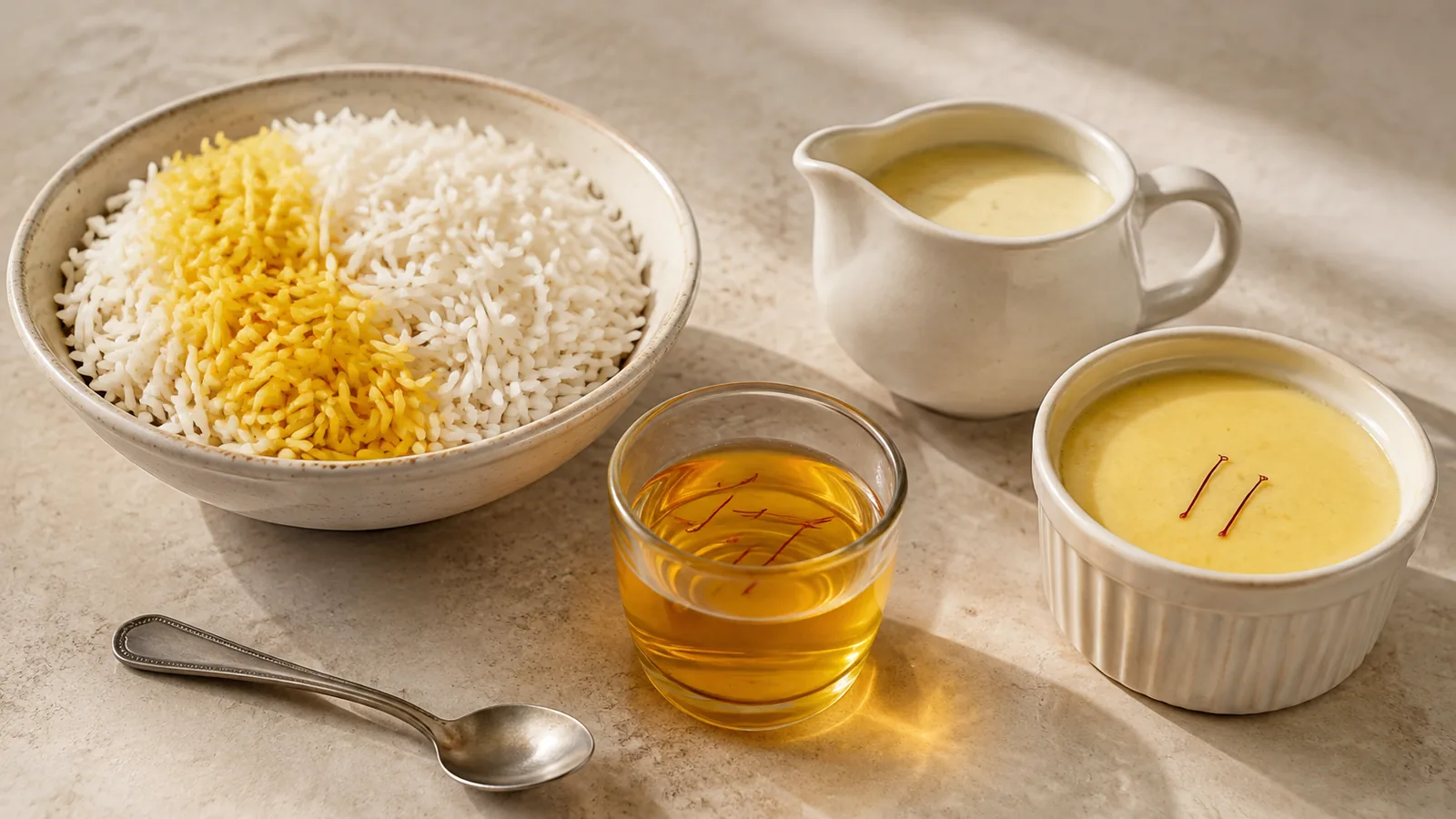
How to Add Saffron to Food
The important decision is not simply “early or late.” Saffron needs a route through the dish. An infusion can spread through rice, broth, custard or cake batter; dry threads placed on a dry surface cannot season the food evenly.
Good results from adding saffron to dishes come from matching the infusion to the recipe. Water is the neutral default. Milk belongs in dairy desserts and drinks, while mild unsalted stock can suit a savoury sauce. Use a small volume so the saffron is concentrated and the dish is not diluted.
The Basic Saffron Infusion
- Measure the saffron required by the recipe.
- Gently crush that portion into coarse pieces in a dry mortar.
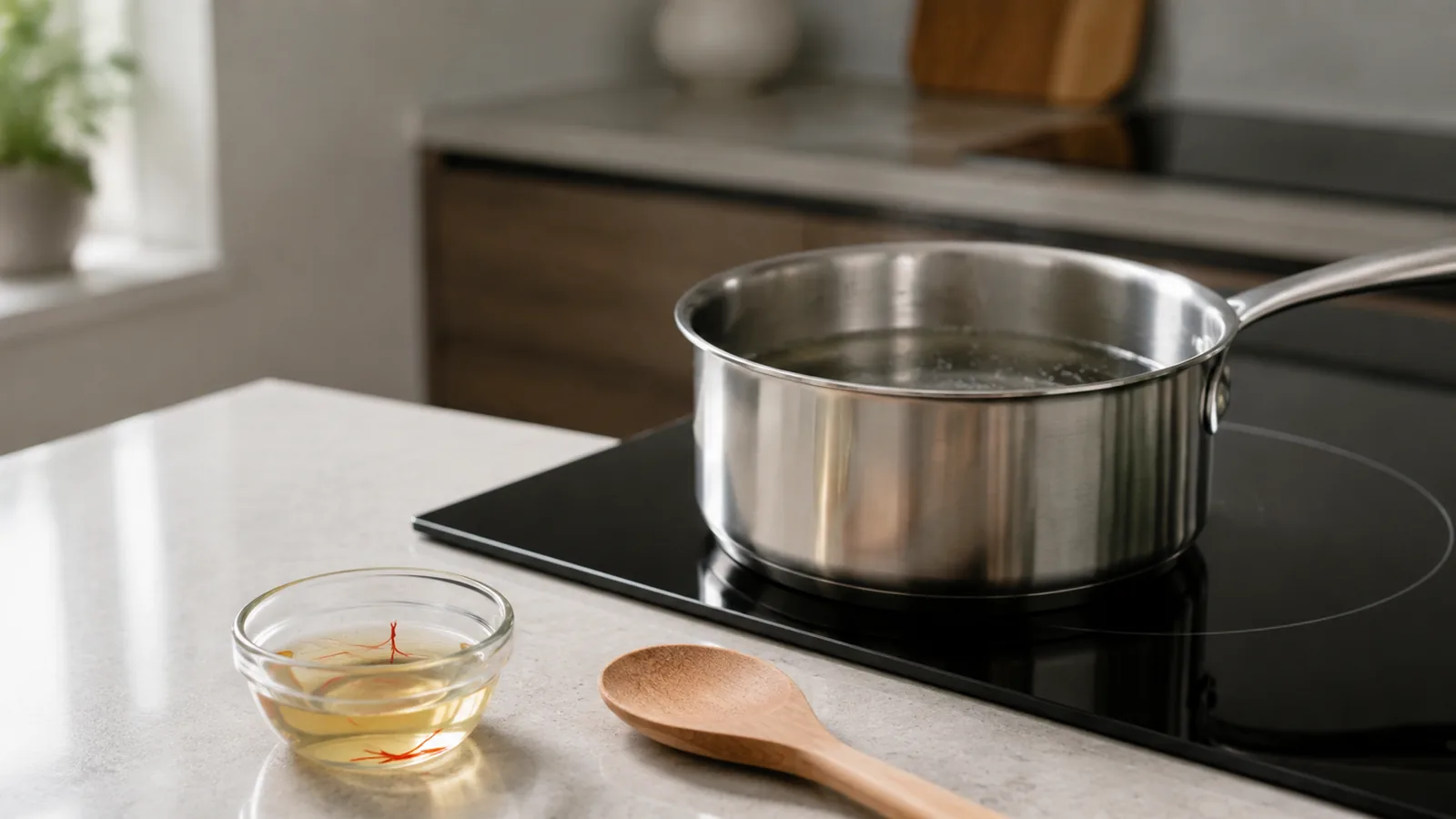
- Cover it with a few spoonfuls of warm water.
- Leave the infusion for 10–20 minutes.
- Add the complete liquid and threads to the appropriate recipe component.
Saffron’s crocins, which provide much of its golden colour, are water-soluble. A 2024 culinary extraction study found that water-rich conditions favoured crocin extraction. The water should be warm but does not need to be violently boiling.
Crush only what you need. Whole threads store better than a jar of pre-ground spice because less surface area is exposed to air, light and moisture.
Add Saffron to the Cooking Liquid
For soup, stew, curry, risotto and sauce, stir the infusion into the liquid. In a long-cooked dish, add it during the later stage so the aroma remains noticeable. In a quick sauce or seafood dish, it can enter earlier because the total heating time is short.
Do not pour saffron into water that will be discarded. If rice is boiled and drained, add the infusion after draining, before the final steam. If pasta water is going down the sink, put saffron into the finished sauce instead.
Add Saffron to Rice before the Final Steam
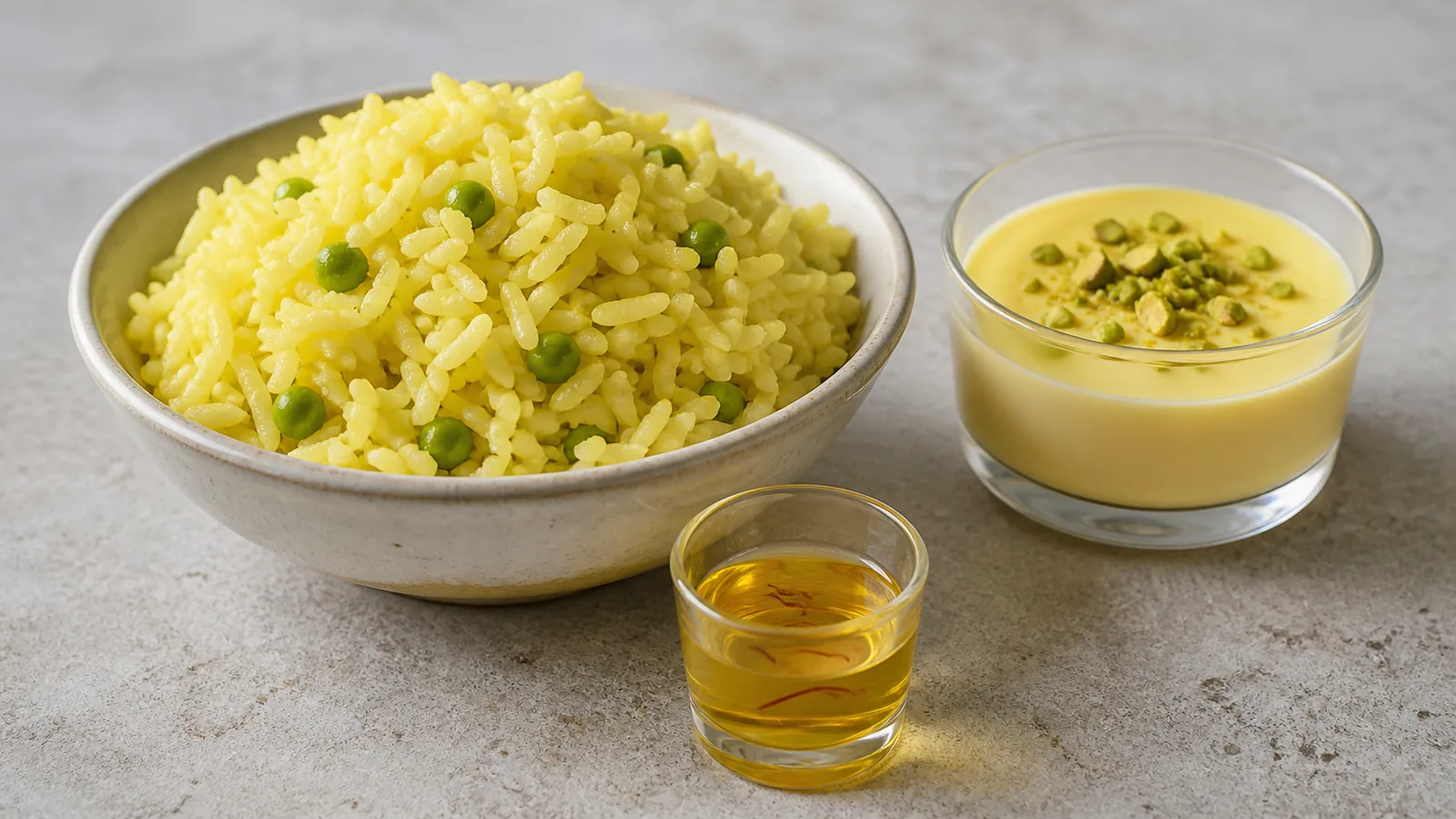
Prepare the infusion while the rice cooks. After draining or when the absorption water is nearly gone, distribute the liquid over the rice before its final covered steam. You can also mix the infusion with a small portion of cooked rice and use that golden rice as a top layer.
This method gives the colour somewhere to travel and keeps it in the dish. A few intact threads can be reserved for garnish, but the bloomed portion should perform most of the flavour work.
Add Saffron to Wet Baking Ingredients
For bread, cake, biscuits and enriched dough, let the infusion cool if necessary, then mix it with the recipe’s milk, water, eggs or other wet ingredients. Distributing it before the flour is fully incorporated avoids dark spots and concentrated bitter patches.
Count the infusion as part of the recipe’s liquid. A few extra spoonfuls may not matter in a large loaf, but they can loosen a delicate cake or biscuit dough.
Add Saffron to Milk, Custard and Cream
Take a small amount of warm milk from the measured recipe quantity and use it to bloom the saffron. Return that infusion to the main mixture before the final thickening. This works for rice pudding, kheer, custard, panna cotta and ice cream base.
Cool the infusion before adding it to whipped cream, yoghurt or a chilled mixture. Keep milk refrigerated whenever it is not being heated or served.
Add Saffron through a Syrup, Dressing or Sauce
Some finished foods do not contain enough free moisture to absorb dry saffron. A syrup carries it into cake, pastry, poached fruit and drinks. A cooled dressing can distribute it over fruit salad, while butter sauce or a light broth can carry it over seafood and vegetables.
Bloom the saffron before combining it with the fat component. Oil can carry aroma in a finished sauce, but it is not the most effective starting medium for saffron’s water-soluble colour.
When Direct Threads Make Sense
A few whole threads can finish rice, custard, curry or a drink. They show the ingredient and soften where the surface is moist. Treat them as a small part of the measured recipe amount, not an extra handful.
Do not use a dense dry pile. It can feel fibrous and taste harsh in one bite. If you want a golden finish rather than visible threads, brush or drizzle a concentrated infusion over the surface. The guide to sprinkling saffron on food explains the garnish distinction.
Where to Add Saffron by Dish
- Steamed rice: over the rice before the final steam, not in water that will be drained.
- Soup or stew: into the broth during the later cooking stage.
- Curry: into the sauce after the high-heat spice-frying stage.
- Risotto: into the cooking liquid with enough time to spread through the grains.
- Bread or cake: into the wet ingredients, with the infusion counted as recipe liquid.
- Custard or pudding: into warm milk before final thickening.
- Poached fruit: into the poaching syrup.
- Cold drink: as a warm-made infusion that has been cooled first.
Flavours to Add beside Saffron
Cardamom, cinnamon, cumin, citrus zest, rose water, vanilla, pistachio and almond can all complement saffron, but the combination should suit the dish. Cardamom and cinnamon are natural in some desserts; cumin belongs more readily in savoury rice and curry.
Choose one or two supporting flavours instead of crowding the recipe. Chilli, clove, smoke and strong stock can easily dominate saffron. If the spice is meant to be noticeable, leave it some space.
How Much Should You Add?
Follow a tested recipe or weigh the saffron when consistency matters. Thread counts are unreliable because threads vary in length and thickness. Start modestly when developing a dish and record the amount; repeatedly dropping more dry threads into the pot is difficult to control.
Do not judge quantity by colour alone. Turmeric, tomato, stock and the colour of the cooking vessel can alter what you see. Taste and aroma matter, and too much saffron can become bitter or medicinal.
Common Mistakes to Avoid
- Adding saffron to liquid that will be thrown away: move the infusion to a retained cooking stage.
- Frying dry threads over high heat: bloom them separately.
- Using too much blooming liquid: keep it concentrated.
- Forgetting the liquid balance: subtract the infusion in precise baking and custard recipes.
- Adding a dry pile at the end: reserve only a few threads for presentation.
- Grinding the whole supply: crush the measured portion just before use.
A Method You Can Reuse
Measure, crush and bloom the saffron. Find the recipe component that can distribute it—the rice, broth, sauce, milk, syrup or wet ingredients—and add the complete infusion there. Then use only a few threads on the finished surface if a garnish helps.
For broader food examples, read how to use saffron in food. For the question of timing, see when to add saffron. Current whole-thread options are listed in the saffron shop.