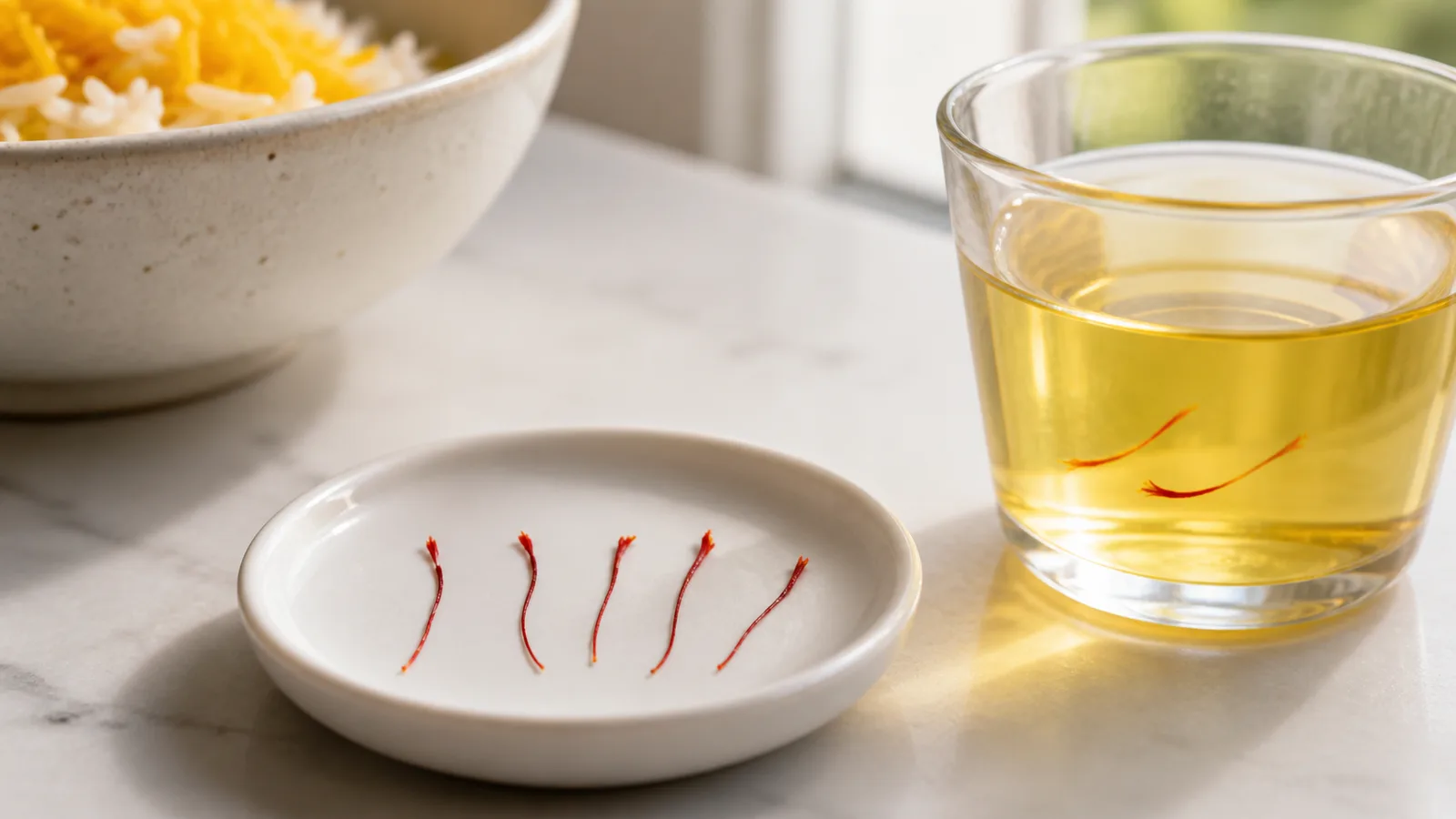
Yes, you can add saffron to boiling water, but the gentler method is to boil the water, remove it from the heat, wait briefly, and then pour it over crushed saffron. Steep the covered infusion for 10–20 minutes. A short contact with very hot water is useful; a long rolling boil can flatten the aroma and affect the spice’s colour compounds.
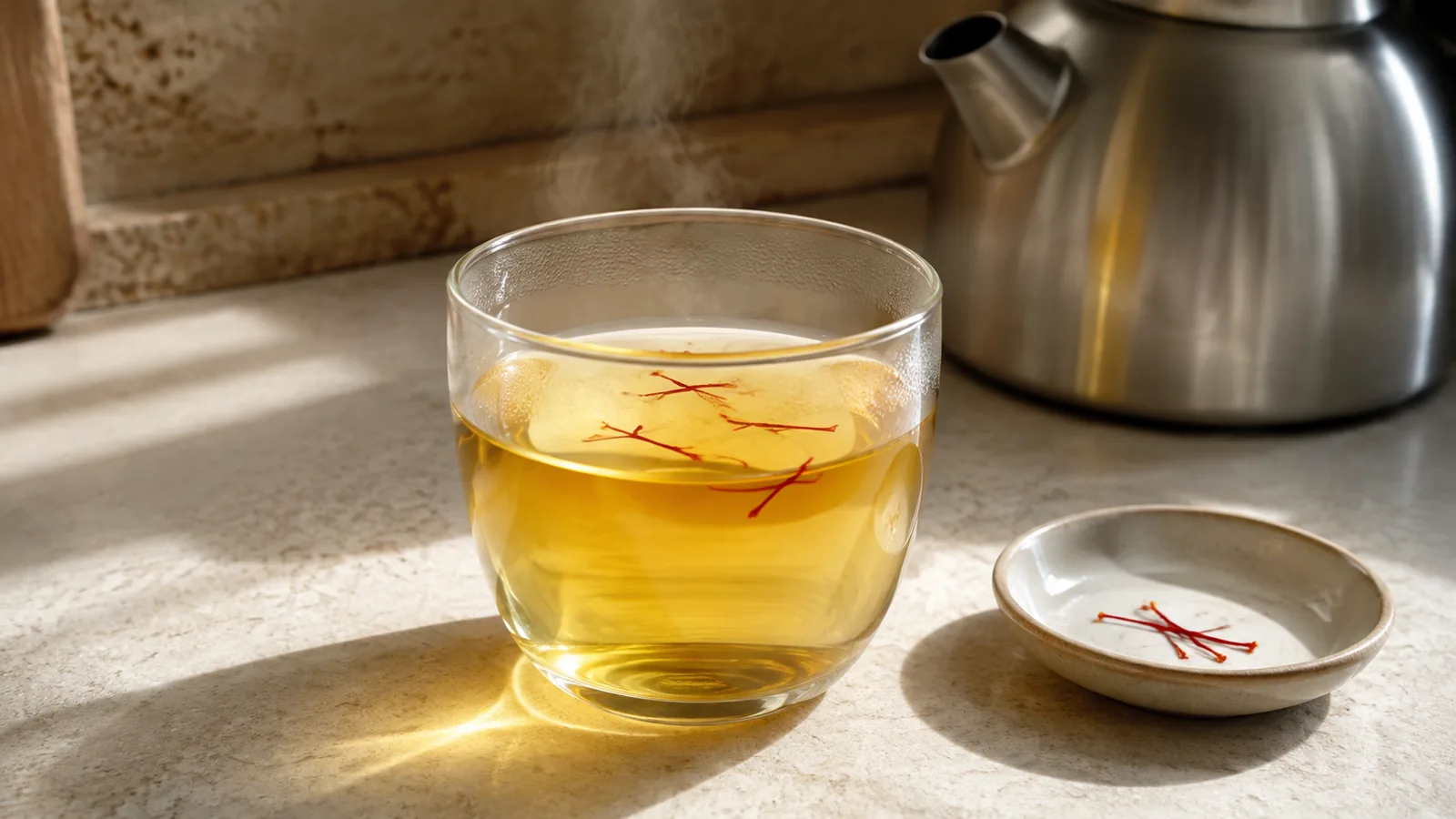
Can You Add Saffron to Boiling Water?
If you are asking, “can I put saffron in hot water?”, the practical answer is yes. Saffron’s golden crocins dissolve well in water, so heat helps the infusion develop. The aim is not to protect the threads from all heat, but to avoid boiling them harder and longer than the recipe needs.
Adding saffron to boiling water means different things in different kitchens. Pouring just-boiled water over a measured pinch for a covered steep is sensible. Dropping saffron into a pot that will boil for an hour is a different treatment and usually gives less control over its aroma.
The Best Hot-Water Method
- Measure the saffron required by the recipe.
- Gently crush the threads into coarse pieces in a dry mortar.
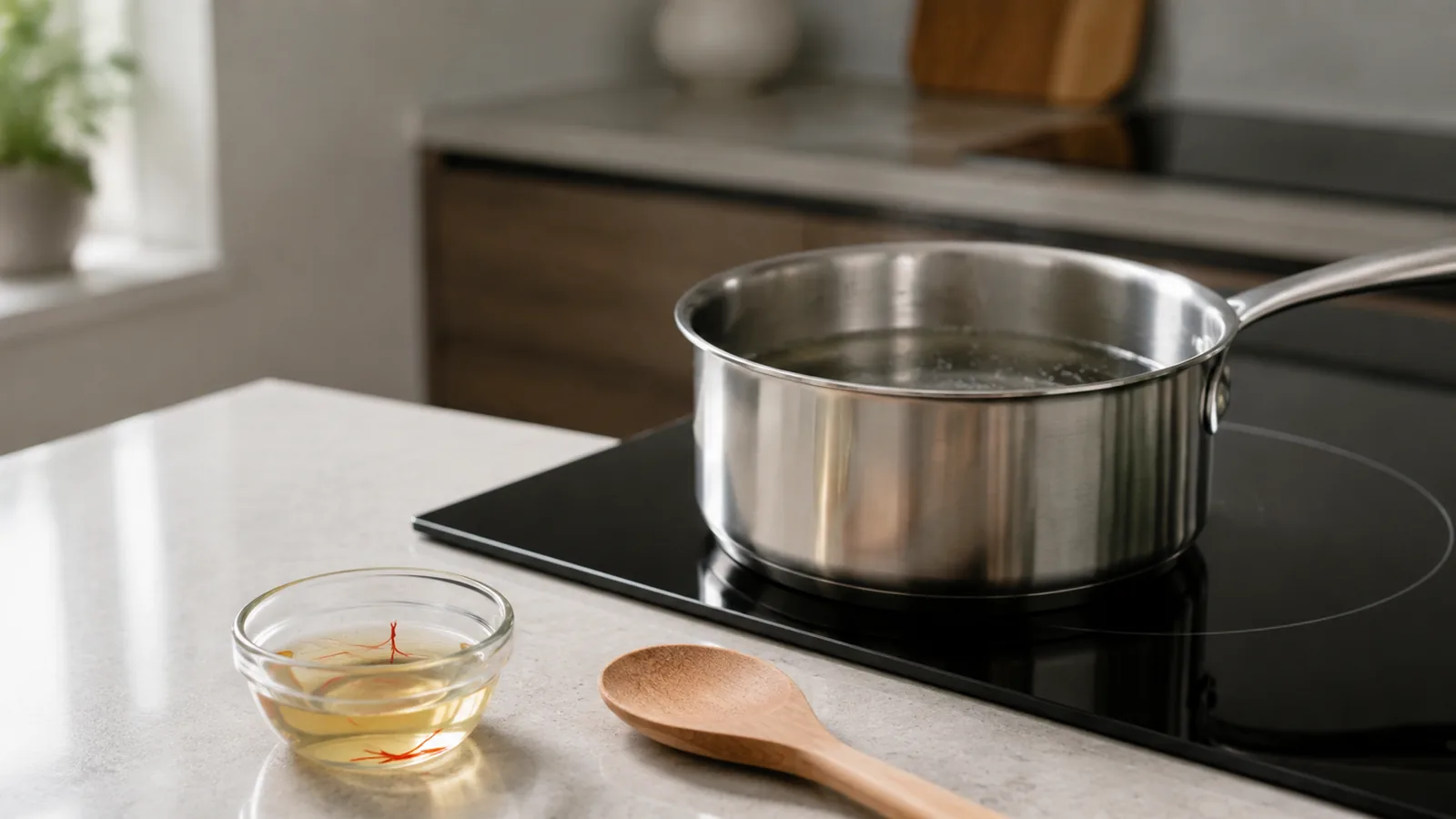
- Bring fresh water to a boil, then remove it from the heat.
- Wait about 30–60 seconds and pour a few spoonfuls over the saffron.
- Cover and steep for 10–20 minutes.
- Add both the golden liquid and softened pieces to the dish.
The brief wait is a practical kitchen habit, not a magic temperature threshold. Kettles, cups, room temperature and water volume all differ. What matters is using hot water for extraction without keeping the saffron at a violent boil.
Why Water Works
Saffron contains water-soluble crocins associated with its colour. A 2024 culinary extraction study found that water-rich conditions favoured crocin extraction. Crushing the measured threads exposes more surface area, while the small water volume keeps the infusion concentrated.
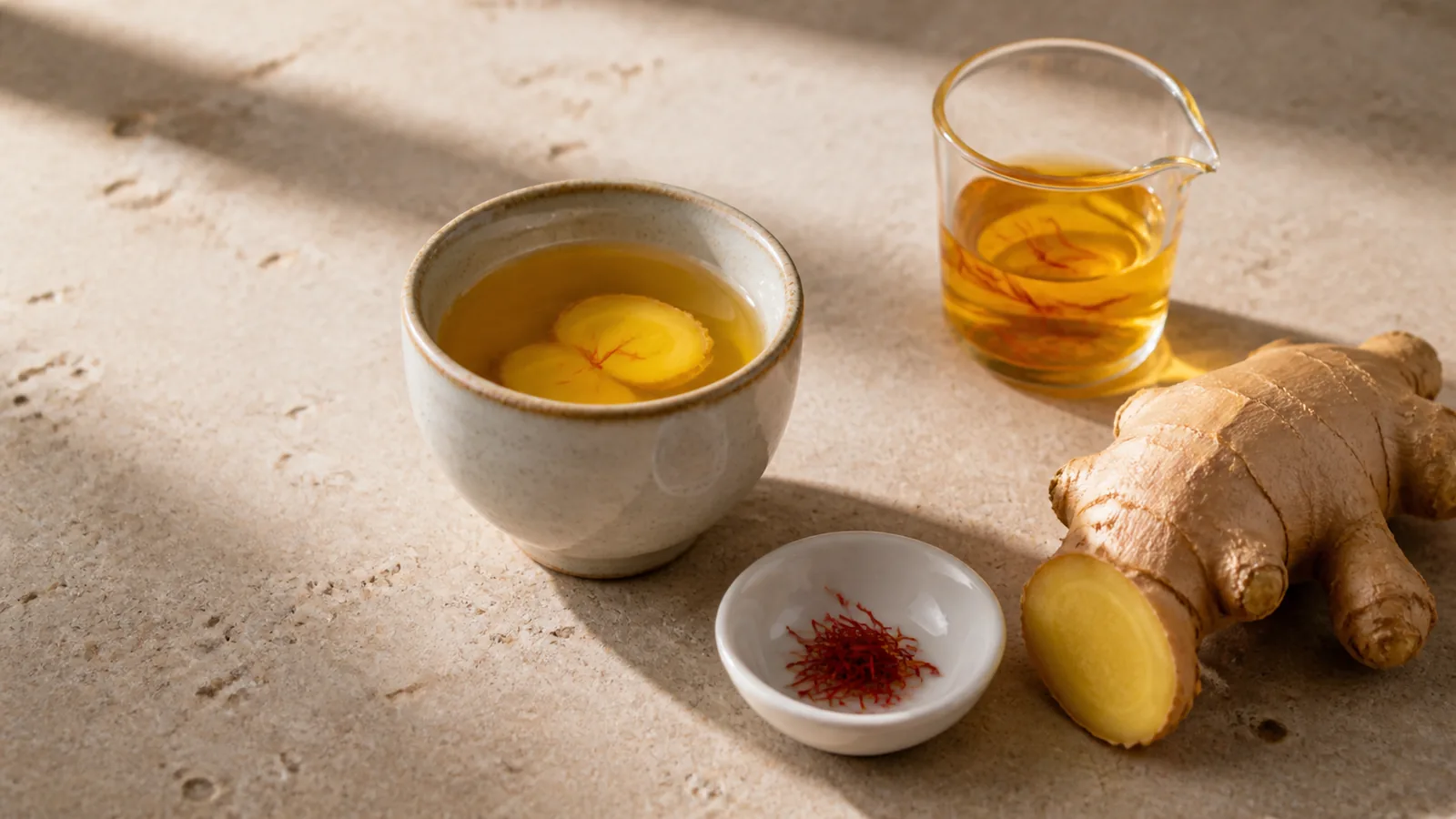
The water should turn clear golden to orange-gold, depending on the quantity, steeping time, vessel and saffron. Instant dark red dye bleeding is not a target for quality. Aroma and taste matter as much as colour.
Does Boiling Water Destroy Saffron?
A brief pour of just-boiled water does not make saffron useless. The larger concern is prolonged heating. Research that examined saffron in boiling water found adverse effects on crocins and safranal during extended high-heat cooking. Safranal contributes substantially to saffron’s aroma.
That finding does not require cooks to use cold water. It supports a moderate approach: hot infusion, limited high-heat exposure, and timing that suits the dish. A rice pot that steams briefly is not the same as a stock that boils all afternoon.
When Saffron Can Go into a Boiling Dish
Saffron can enter a boiling or simmering cooking liquid when the remaining cooking time is short. Risotto, paella-style rice, quick seafood broth and a finishing sauce all provide moisture and distribution. Add the prepared infusion rather than an unmeasured bunch of dry threads.
For a long stew or soup, wait until the final part of cooking. For rice that will be boiled and drained, do not put the saffron into the discarded water. Add it after draining, before the final steam. The detailed timing guide explains when to add saffron to different foods.
Hot Water versus Warm Water
Both can work. Hot water develops an infusion quickly. Warm water offers gentle extraction and is easy to use when you are preparing saffron ahead of the final cooking stage. In an ordinary home recipe, a covered 10–20-minute steep in either hot or warm water is more important than chasing one exact number.
Avoid lukewarm water that sits for a long time without a reason. Prepare the amount you need, use clean utensils and add it to the food rather than storing a small wet infusion at room temperature.
Should You Use Milk Instead?
Milk is useful when it belongs in the recipe, such as kheer, custard, ice cream or a warm saffron milk drink. It adds fat, protein, sweetness and body. Water is the more versatile default because it does not alter flavour or texture.
For a dairy dish, take a small amount from the recipe, warm it gently, steep the saffron, then return the infusion to the main mixture. The comparison of saffron in milk or water explains where each liquid fits.
Can You Pour Boiling Water over Whole Threads?
You can, but lightly crushing the portion first generally improves distribution. Whole threads have less exposed surface area and may take longer to release their colour. Keep a few intact only if you want them visible in the finished dish.
Do not grind the entire jar in advance. Crush only the measured portion and keep the rest whole, airtight, dry and protected from light.
How Much Water Should You Use?
Use only enough to cover the crushed saffron and create a pourable infusion—a few spoonfuls is often sufficient for a family recipe. The exact volume depends on the dish. A soup can accept more water than a cake batter or thick sauce.
Count the infusion toward the recipe’s total liquid where precision matters. Too much blooming water can loosen dough, custard or a reduced sauce even when the saffron amount is correct.
Common Hot-Water Mistakes
- Boiling saffron for a long time: prepare an infusion or add it later in the recipe.
- Using a full cup unnecessarily: keep the infusion concentrated.
- Adding it to water that will be drained: move it to a retained cooking stage.
- Leaving the infusion uncovered: cover the vessel while it steeps to retain aroma.
- Judging only by colour: other ingredients and the vessel can change what you see.
- Using an unmeasured pinch: follow a tested recipe or weigh the spice for consistency.
A Simple Rule to Remember
Use hot water to bloom saffron, not prolonged boiling to punish it. Bring the water to a boil, take it off the heat, wait briefly, then steep crushed threads for 10–20 minutes. Add the complete infusion to a part of the recipe that will remain in the dish.
For a deeper comparison of steeping techniques, read the best way to brew saffron. Current whole-thread options are listed in the saffron shop.