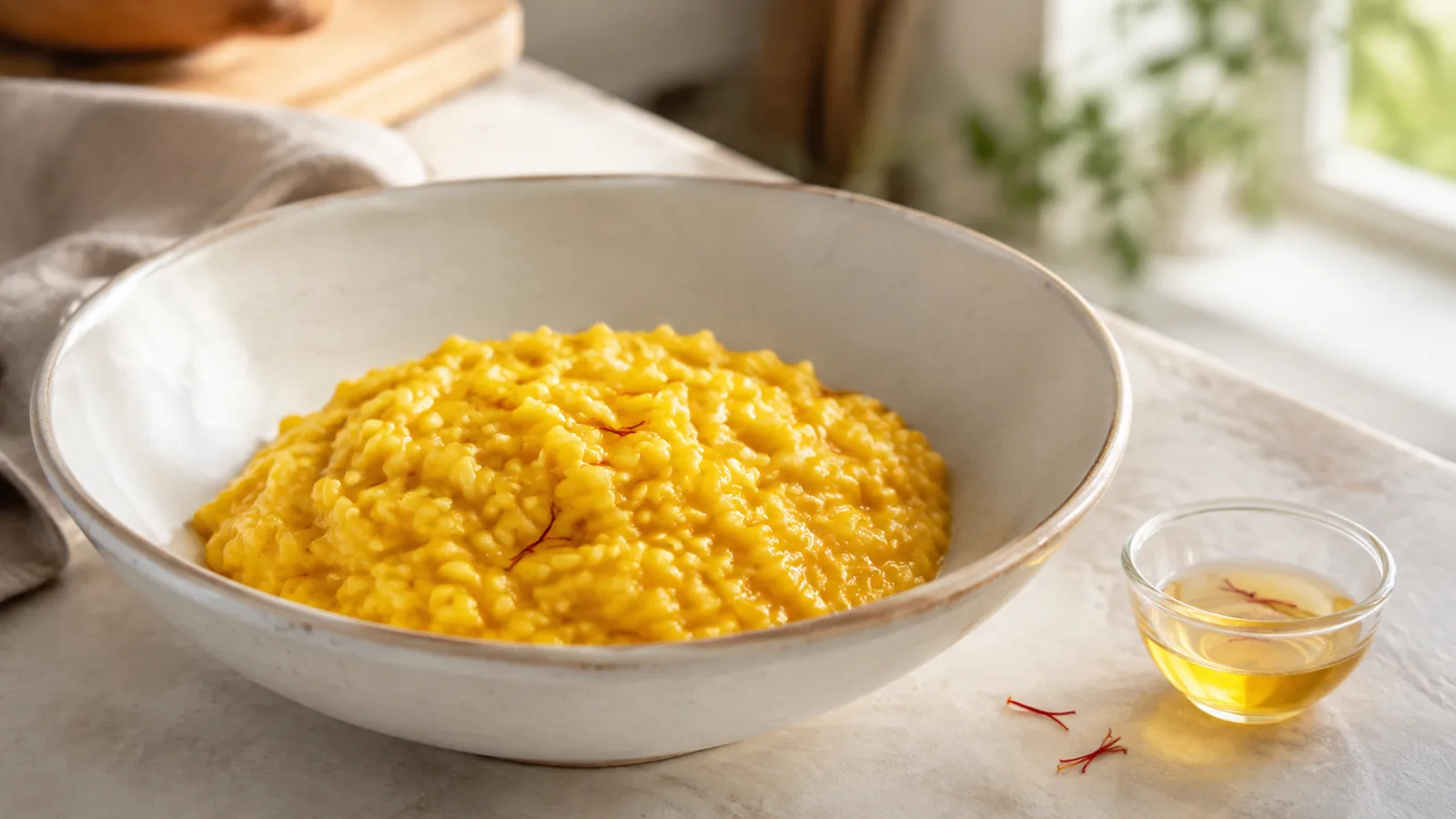
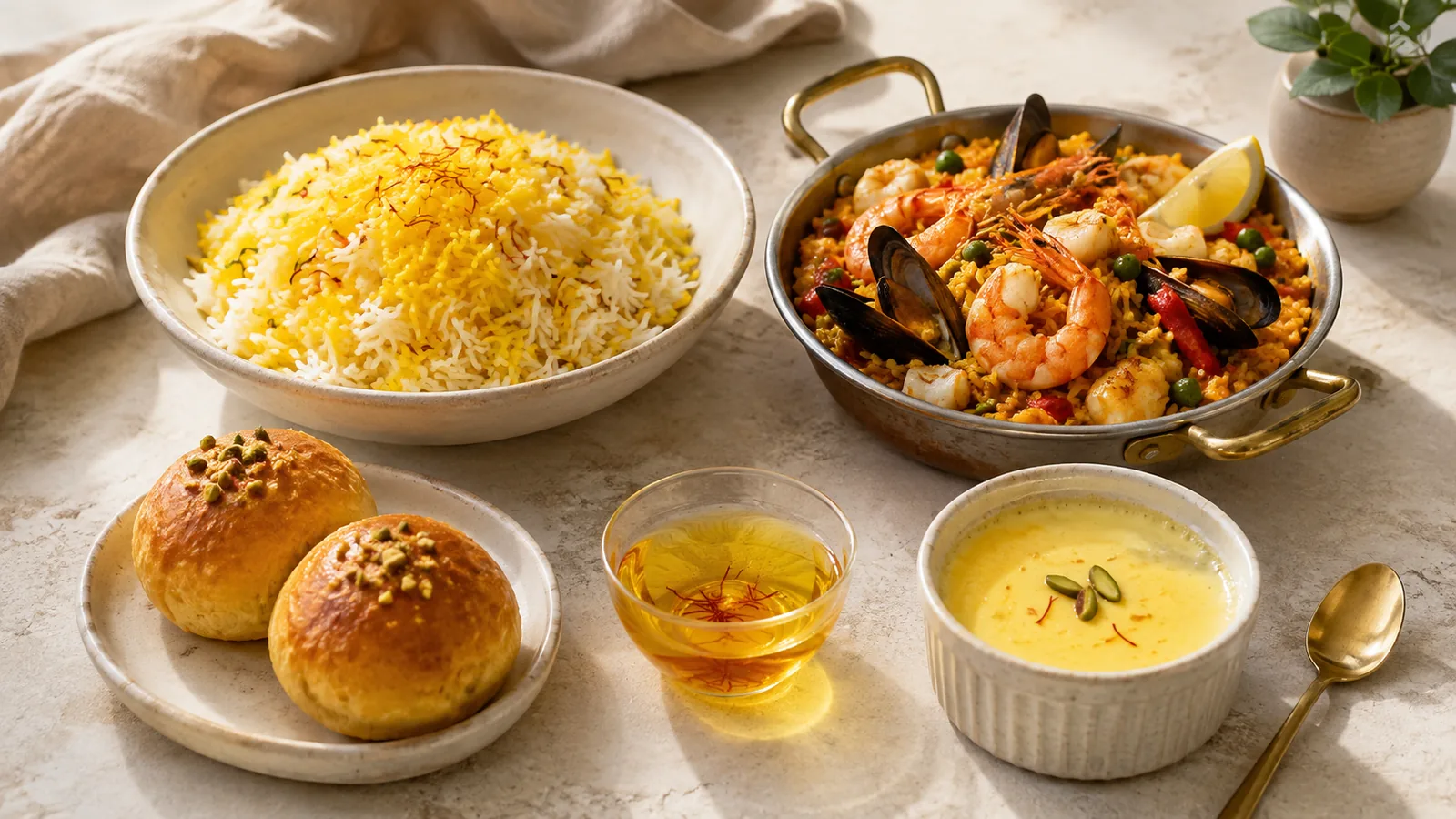
Recipes that take saffron include Persian saffron rice, Spanish paella, risotto alla Milanese, biryani, saffron chicken, bouillabaisse, korma, Swedish saffron buns, rice pudding, kulfi and saffron ice cream. The spice works best in dishes with enough liquid to distribute its golden colour and room for its floral, honeyed aroma.
What Recipes Take Saffron?
Saffron appears in savoury and sweet cooking across the Mediterranean, Middle East, South Asia and parts of Europe. Some recipes place it at the centre; others use a small infusion to connect rice, broth, dairy or fruit. It is never a universal upgrade for every dish.
The most useful way to explore recipes using saffron is by cooking method. Rice absorbs an infusion differently from custard, and a bread dough needs saffron in its wet ingredients before the flour sets. These ways to use saffron explain not only what you can make with the spice, but where it enters each recipe.
Saffron Rice Recipes
Persian Saffron Rice and Tahdig
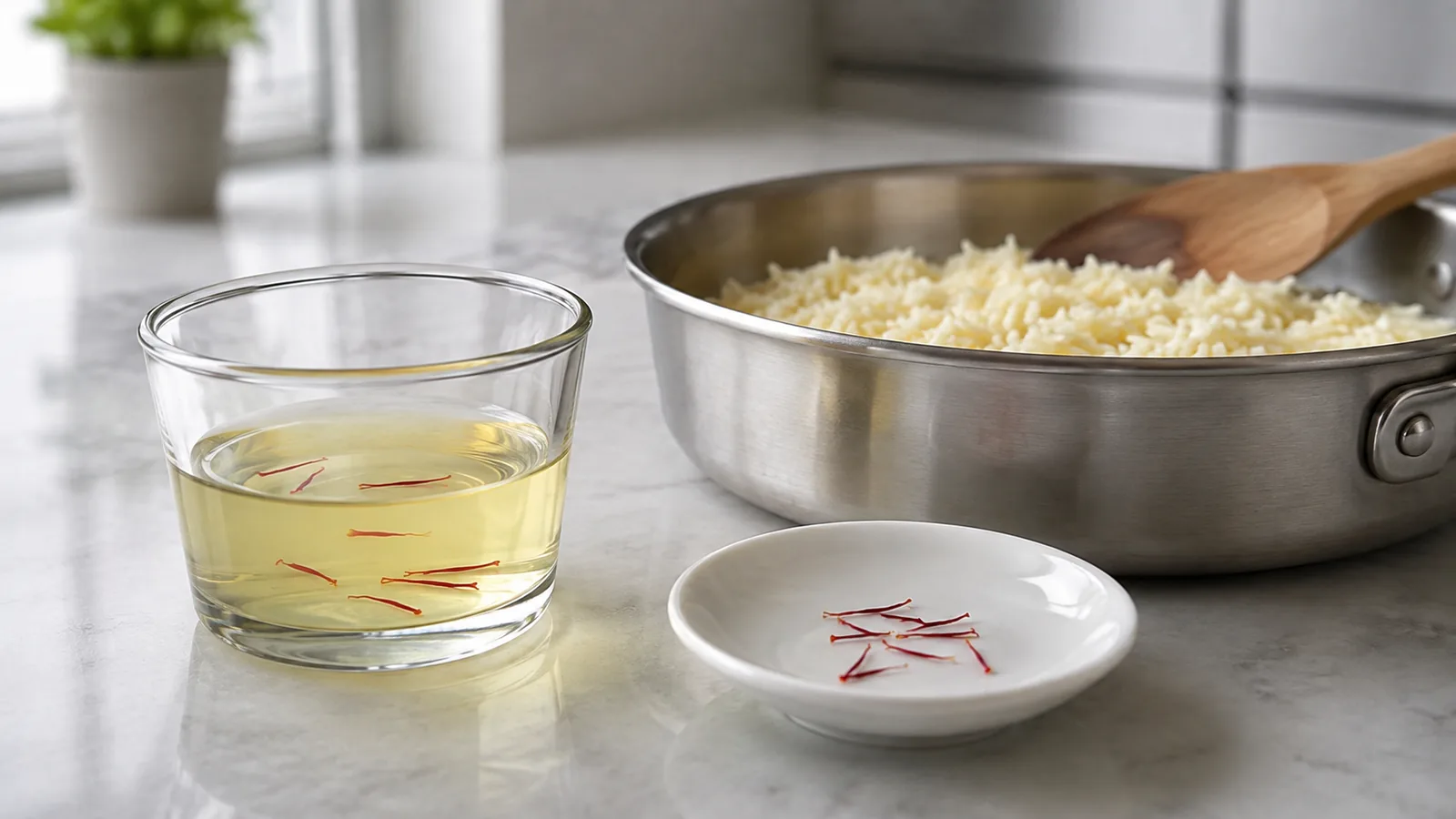
Persian rice often uses a concentrated saffron infusion to colour a portion of the cooked grains. That golden rice can form a top layer or join yoghurt, egg or fat in a crisp tahdig. Adding the infusion after the rice has been drained keeps it in the final dish.
Spanish Paella
Saffron is strongly associated with paella, where it colours and perfumes the cooking liquid absorbed by the rice. The exact ingredients vary by regional style and recipe. Add a bloomed infusion to the stock so the spice travels through the pan rather than remaining in one patch.
Risotto alla Milanese
This northern Italian risotto is one of the clearest saffron dishes: the spice gives the creamy rice its characteristic golden tone. It enters through warm stock or an infusion while the rice is still loose enough to absorb it.
Biryani and Pulao
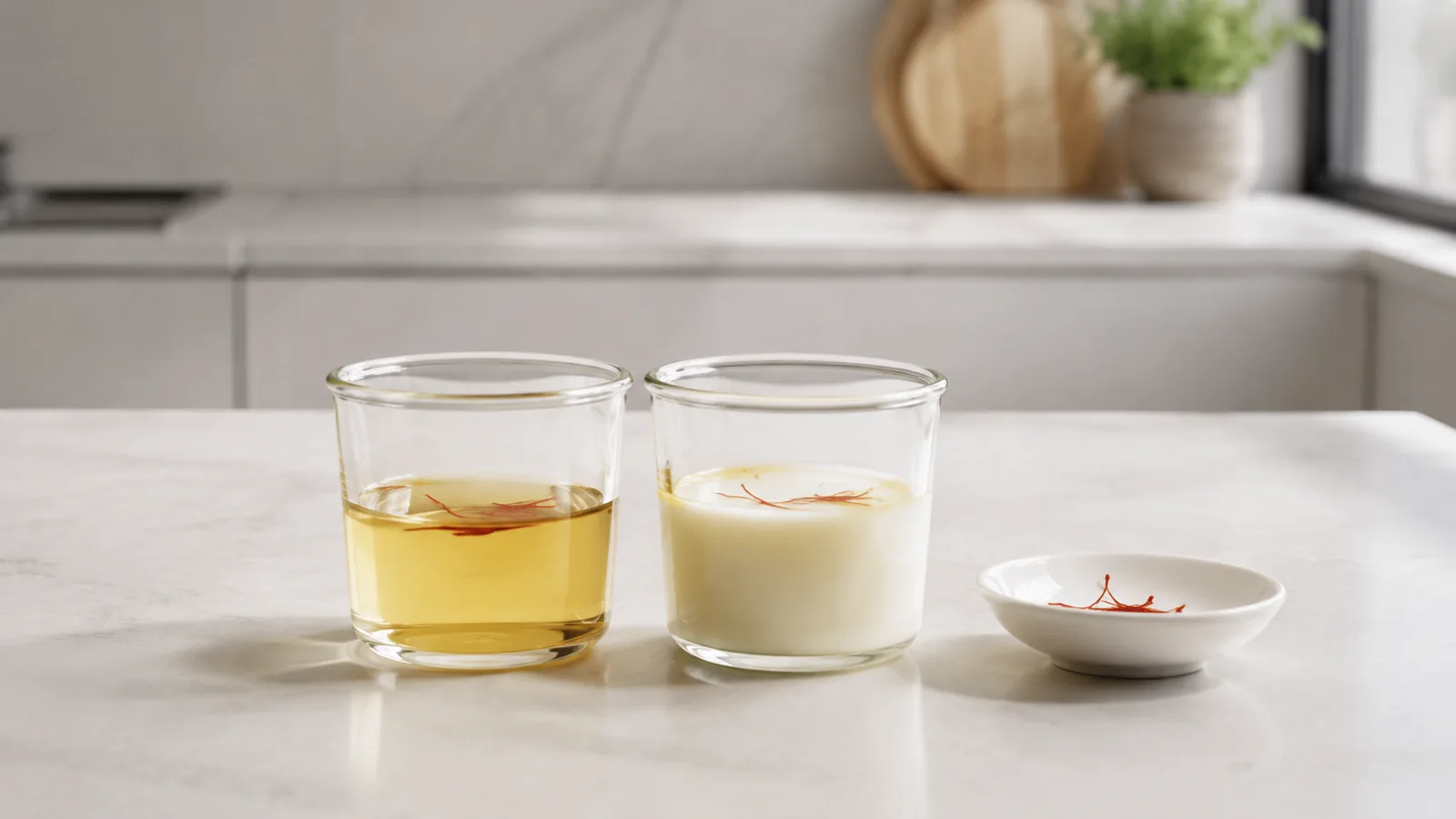
In layered biryani, saffron is commonly steeped in warm milk or water and distributed over the rice before the final covered cooking. Pulao may use it in the cooking liquid or as a golden layer. Both preparations can include meat, vegetables, nuts or dried fruit, but those additions depend on the recipe.
Meat and Poultry Dishes with Saffron
Saffron Chicken
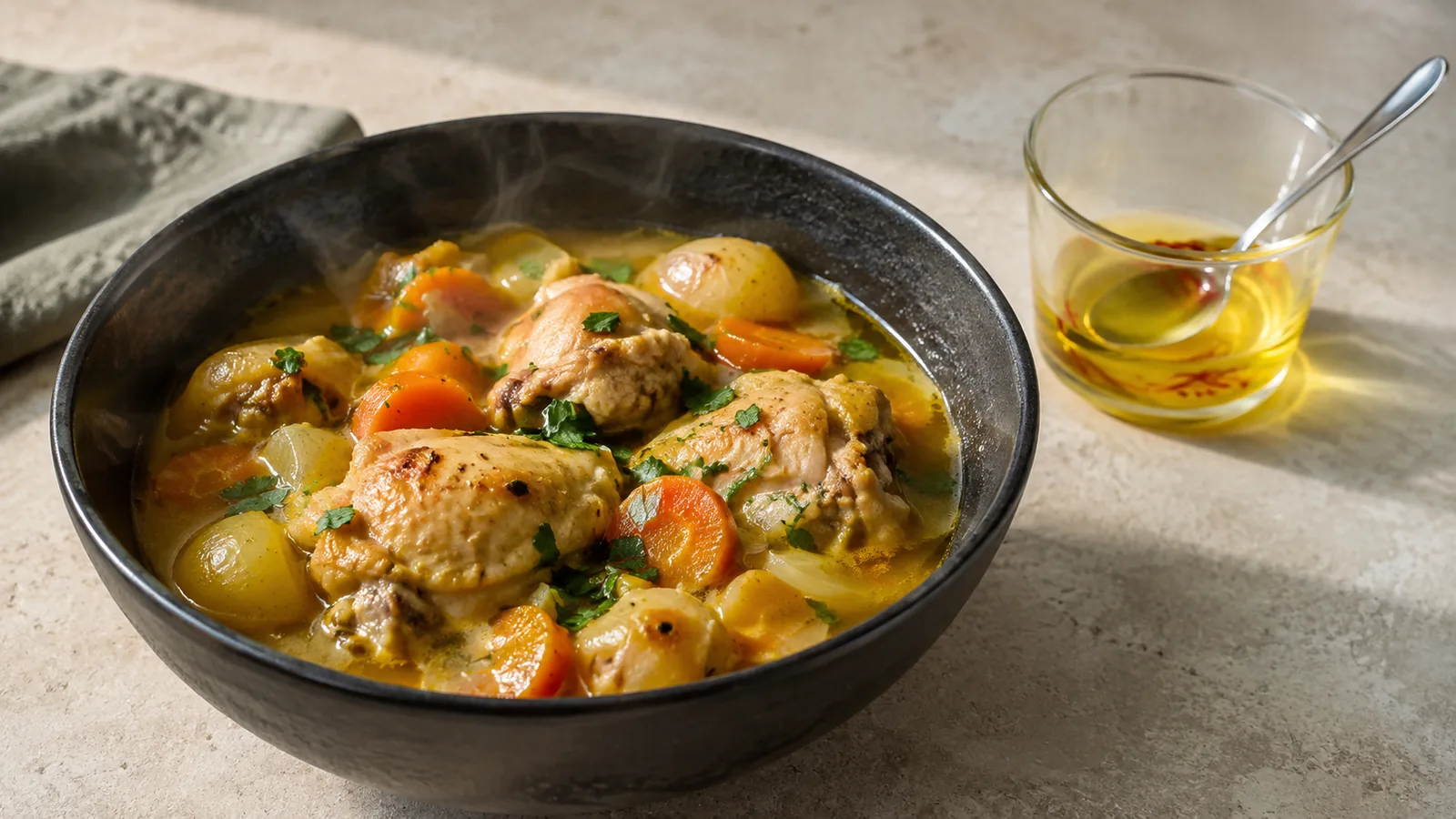
Chicken can carry saffron in a marinade, braising liquid, yoghurt sauce or finishing butter. Garlic, onion, lemon, cardamom and mild stock are useful partners. Add the infusion late in a long braise so the aroma remains identifiable.
Korma and Mild Curry
Selected Awadhi, Mughlai and Kashmiri-style preparations use saffron with yoghurt, cream, milk, nuts and warm spices. It is not present in every curry. A restrained aromatic sauce leaves more room for the spice than a heavily smoked or intensely chilli-driven base.
Our guide to saffron in curry traditions explains where the ingredient belongs and where it does not.
Lamb, Kofta and Braised Meat
Saffron can enter lamb or meatball dishes through broth, yoghurt gravy or a finishing infusion. Cinnamon, cardamom, dried fruit and nuts can complement it, but a long ingredient list is not automatically better. Choose a recipe in which the saffron has a defined role.
Seafood Recipes That Use Saffron
Bouillabaisse and Fish Soup
Many versions of Provençal fish soup use saffron in the broth alongside seafood, tomato, fennel and citrus peel. Because the broth carries the spice, it can reach every spoonful. Add enough to be noticed without turning the soup bitter.
Saffron Fish and Shellfish Sauce
A light saffron sauce suits white fish, mussels, clams, prawns and scallops. Bloom the threads in warm water or mild fish stock, then add the infusion to a cream, butter or broth-based sauce. The seafood should remain the main flavour.
Seafood Rice
Beyond paella, saffron works in risotto, pilaf and one-pot rice with shellfish. Put it into the retained cooking liquid. Scattering dry threads over finished rice provides little distribution and can create concentrated bites.
Vegetable, Soup and Pulse Recipes
Vegetable Soup
Potato, leek, cauliflower, pumpkin, carrot and fennel can all support a saffron broth. Choose a mild base and add the infusion during the later cooking stage. A strong stock can mask the spice before the vegetables are even served.
Vegetable Stew and Tagine
Saffron can join chickpeas, squash, carrot, potato, courgette, dried apricot or preserved lemon in a moist stew. These are adaptable saffron-in-food recipes rather than one fixed formula; regional and household versions differ.
Lentils and Beans
Mild lentil or white-bean dishes can accept saffron, especially when finished with lemon, yoghurt or olive oil. It is less useful when a very hot spice blend already dominates. Bloom first and stir it into the retained broth.
Saffron Bread and Baking
Swedish Lussekatter
These saffron buns are associated with the December celebration of Saint Lucia. The saffron is dispersed through the dough’s warm liquid, giving the buns a golden colour and distinctive aroma. Raisins are a common decoration.
Saffron Cake
Saffron works in loaf cake, sponge, syrup cake and almond cake. Bloom it, cool the liquid if needed and mix it with the wet ingredients. Orange, lemon, cardamom, almond, pistachio and pear can support the flavour.
Biscuits and Pastries
A concentrated infusion can colour biscuit dough, enriched pastry or a glaze. Count the blooming liquid as part of the recipe so the dough does not become unexpectedly soft.
Saffron Desserts
Rice Pudding, Kheer and Sholeh Zard
Rice pudding provides both moisture and a mild base. Dairy versions can bloom saffron in warm milk; Persian sholeh zard uses water, rice and saffron for a dairy-free golden pudding often flavoured with rose water, cinnamon or nuts.
Ice Cream and Kulfi
Saffron can be steeped in the warm dairy base before chilling. Pistachio, cardamom, rose water and vanilla are possible partners, but use them selectively. Churning or freezing will not correct an infusion that was too strong.
Custard and Panna Cotta
Warm milk or cream carries saffron evenly through custard, crème brûlée or panna cotta. Add the infusion before the mixture sets, then strain only if a completely smooth appearance is important.
Poached Fruit and Compote
Pear, quince, apricot, peach, apple and plum can absorb a light saffron syrup. Citrus zest or a single warm spice adds contrast. See the guide to fruit and saffron pairings for more combinations.
Drinks Made with Saffron
Warm saffron milk, tea, lassi-style drinks, lemonade and alcohol-free fruit coolers are approachable saffron cooking uses. Steep the spice in warm liquid first; cool that infusion before adding it to an iced drink.
Saffron also appears in some regional coffee and tea preparations. Use a culinary amount for flavour. A concentrated supplement or medicinal extract is a different product and does not belong in a recipe guide.
How to Prepare Saffron for Any Recipe
- Measure the amount specified by the recipe.
- Gently crush the threads in a dry mortar.
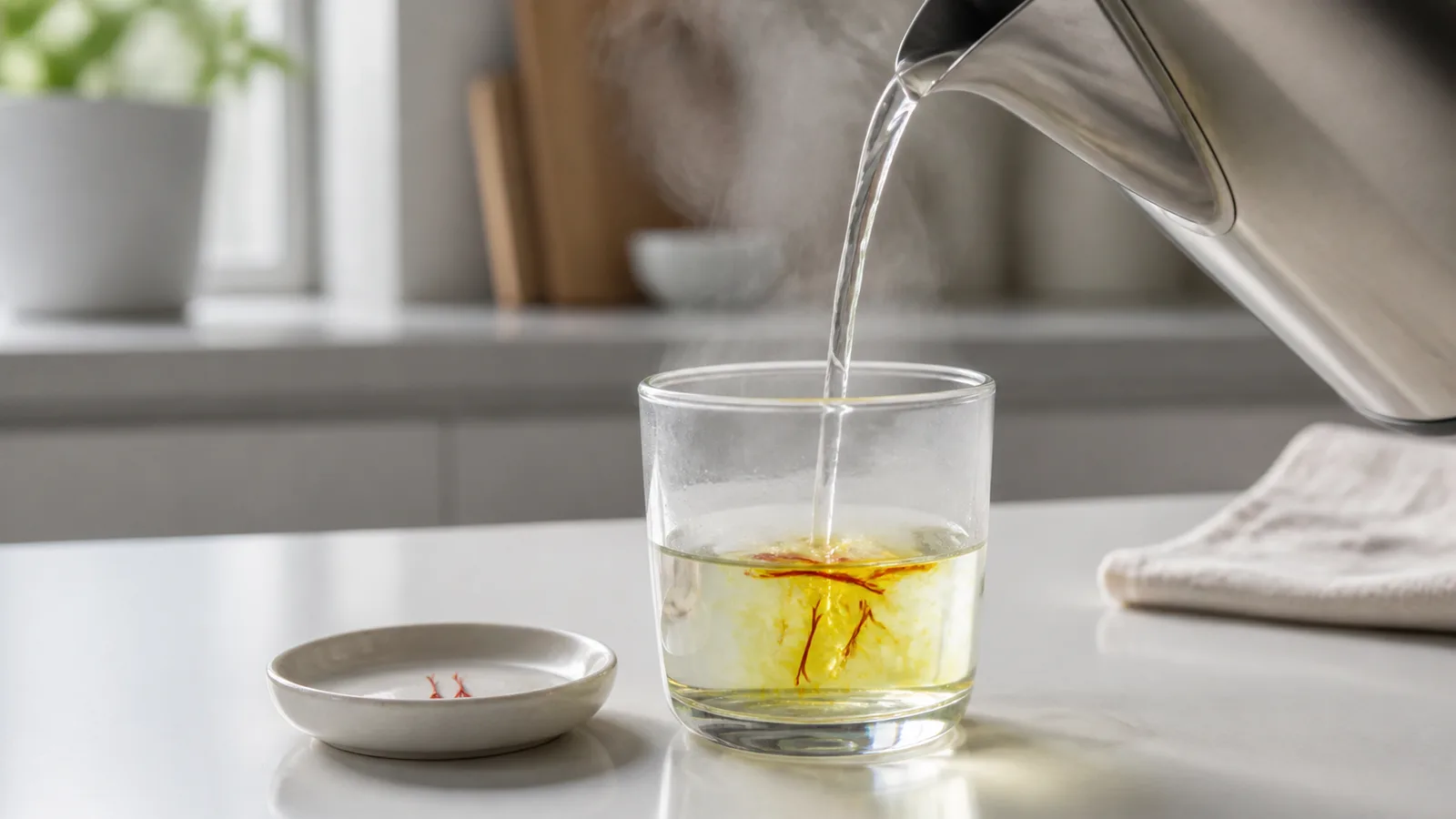
- Add a few spoonfuls of warm water and steep for 10–20 minutes.
- Use milk or mild stock instead when it already belongs in the dish.
- Add both the infusion and softened pieces to the retained liquid or wet ingredients.
A 2024 culinary extraction study found that water-rich conditions favoured saffron crocins, the compounds chiefly associated with its colour. This supports the practical habit of blooming saffron rather than frying dry threads over fierce heat.
For a complete method, see how to add saffron to food.
How to Choose the Right Saffron Recipe
- Start with rice if you want the colour and aroma to be easy to recognise.
- Choose broth or sauce when the spice needs to reach meat, seafood or vegetables.
- Use dairy for a rounded dessert, custard or drink.
- Try fruit and syrup when you want acidity beside saffron’s warmth.
- Use a tested recipe when baking, because liquid balance and dough structure matter.
Common Recipe Mistakes
- Assuming every yellow dish uses saffron: turmeric, annatto and other ingredients can also provide colour.
- Adding more than the recipe needs: excess saffron can taste harsh and wastes the spice.
- Putting it in discarded water: add the infusion after draining or to retained stock.
- Frying it with tempering spices: bloom saffron separately.
- Crowding the flavour: too much chilli, clove, smoke or rose can hide it.
Where to Begin
If you are deciding what to do with saffron for the first time, choose a rice dish, custard or light chicken sauce. Each contains enough moisture to distribute the infusion and a relatively clear flavour background. Once you understand its strength, move into breads, fruit, soups and more complex spice blends.
These are not the only dishes that use saffron, but they offer a practical range of techniques. Current whole-thread options are listed in the saffron shop.