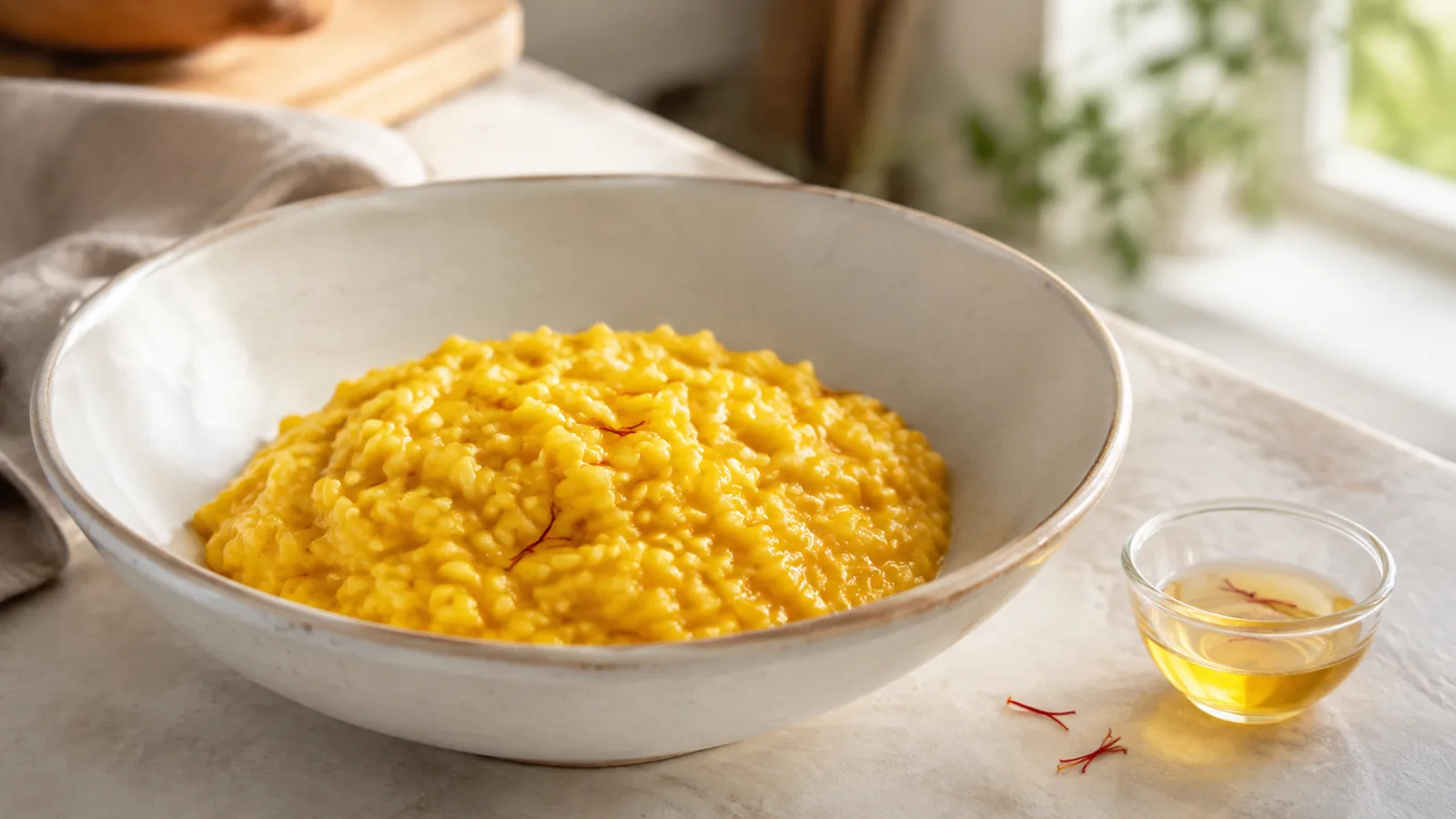
Saffron adds a floral, hay-like and gently honeyed aroma, together with a clean, slightly bitter taste. Some people notice earthy, warm, grassy or faintly metallic notes. It does not make food sugary; the impression of sweetness comes largely from its aroma and from the ingredients served beside it.
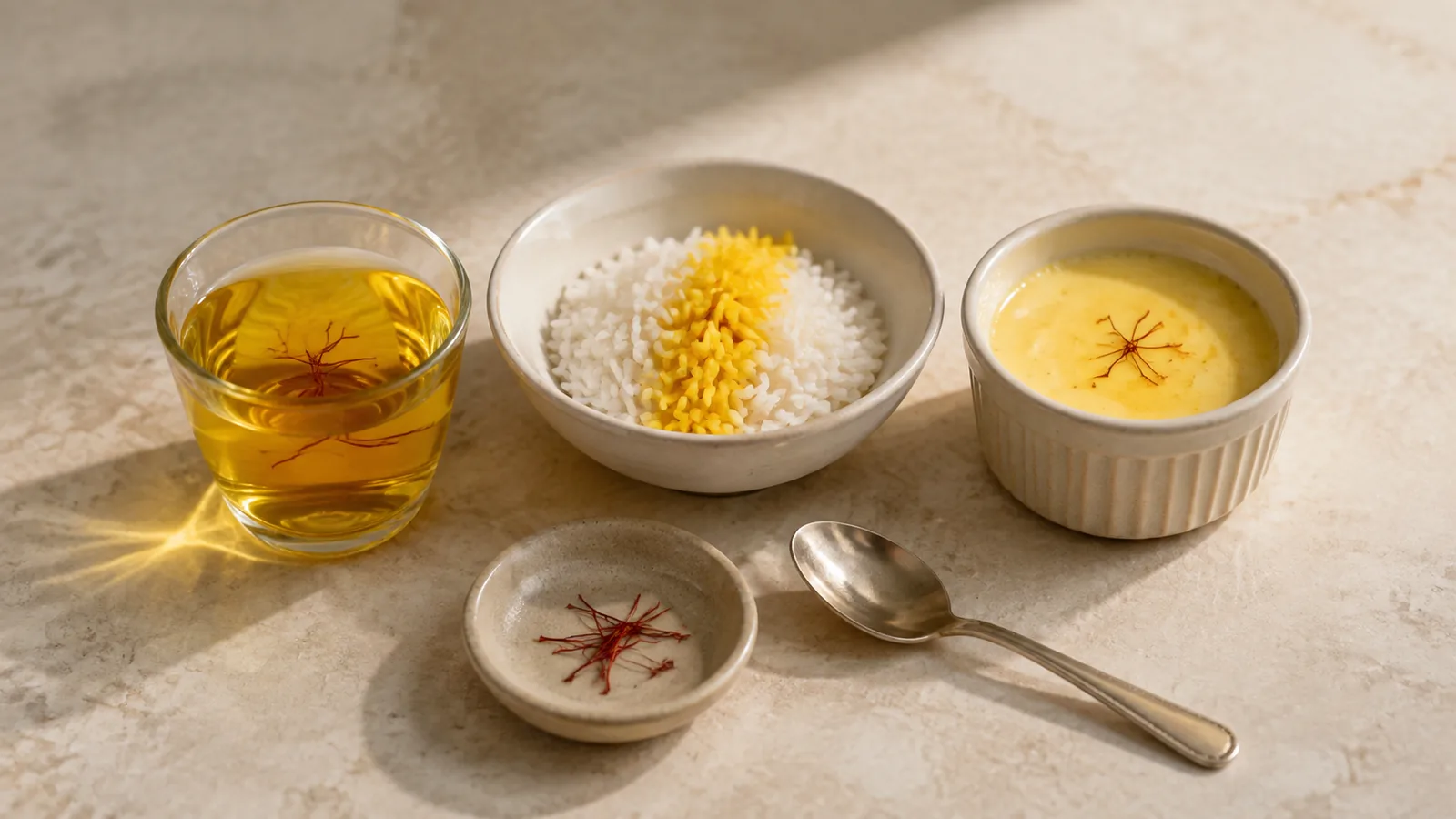
What Flavour Does Saffron Add?
Does saffron add flavor? Yes. Does saffron add flavour beyond its golden colour? It does, although the effect is subtle and easy to overwhelm. A well-balanced dish smells aromatic before it tastes bitter. Too much saffron can move from intriguing to harsh or medicinal.
The flavor of saffron is difficult to reduce to one familiar ingredient because taste and aroma arrive together. Descriptions such as floral, sweet-smelling, spicy, hay-like, earthy and grassy are comparisons, not a claim that saffron tastes exactly like honey, lavender or cut grass.
The Three Main Sensory Roles
Safranal and Aroma
Safranal is a major volatile compound associated with saffron’s characteristic aroma. Volatile means it can reach the nose, which is why storage, blooming and cooking time affect how clearly the spice is perceived. A 2023 food-science review describes high-quality saffron’s aroma as sweet, floral and spicy, sometimes hay-like.
The word “sweet” here describes an aromatic impression. Saffron does not sweeten a recipe as sugar does. In a dessert, milk, fruit or sugar may reinforce the honeyed side of the aroma; in broth or rice, the same saffron can seem drier and more savoury.
Picrocrocin and Bitterness
Picrocrocin is the principal compound associated with saffron’s bitter taste. A trained-panel study measured the detection and recognition thresholds of picrocrocin and found that temperature and other saffron constituents affected bitterness perception.
A slight bitterness gives saffron structure. It stops the aroma from feeling like perfume and helps it work in savoury dishes. A strong bitter hit usually means too much saffron, poor distribution or several threads concentrated in one bite.
Crocins and Golden Colour
Crocins provide much of saffron’s yellow-orange colour. They are important to the experience of a saffron dish, but colour is not flavour. A deeply yellow plate can come from turmeric or colouring without saffron’s aroma, while a pale dish may still contain a noticeable saffron infusion.
Judge genuine saffron in food with your nose and palate as well as your eyes.
Is Saffron Earthy, Floral or Sweet?
It can suggest all three, depending on the saffron, recipe and person tasting it. “Floral” is often the clearest description of the aroma. “Earthy” or “hay-like” captures its dry, warm character. “Honeyed” describes a sweet-smelling impression, not actual sugar.
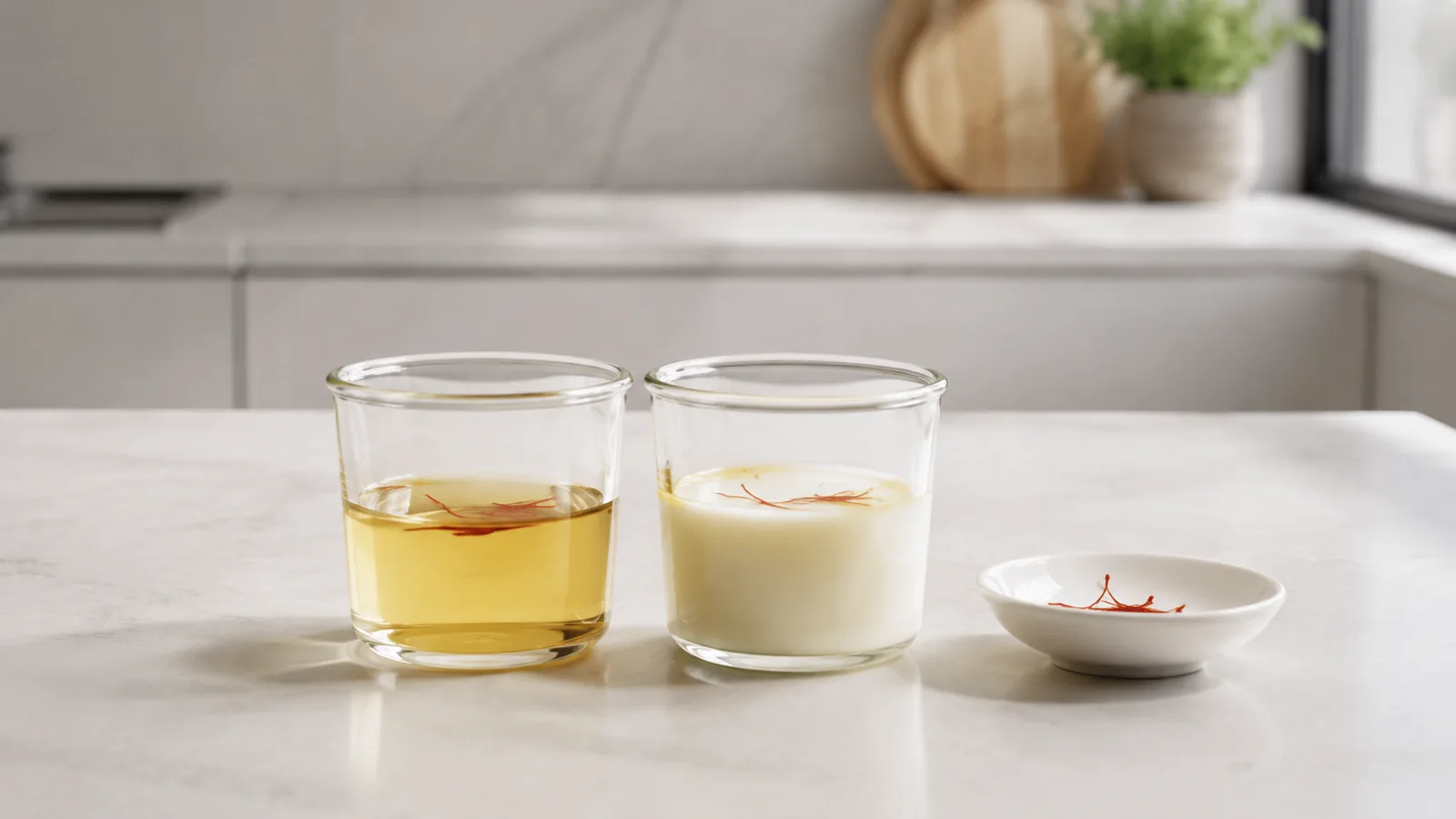
The cooking medium changes the emphasis:
- Warm water gives a relatively clean view of the saffron itself.
- Milk and cream soften bitterness and make the aroma feel rounder.
- Broth draws attention to warm and savoury notes.
- Citrus brightens the floral side and adds acidity.
- Sugar or fruit makes honeyed associations more obvious.
What Does Saffron Do in Savoury Food?
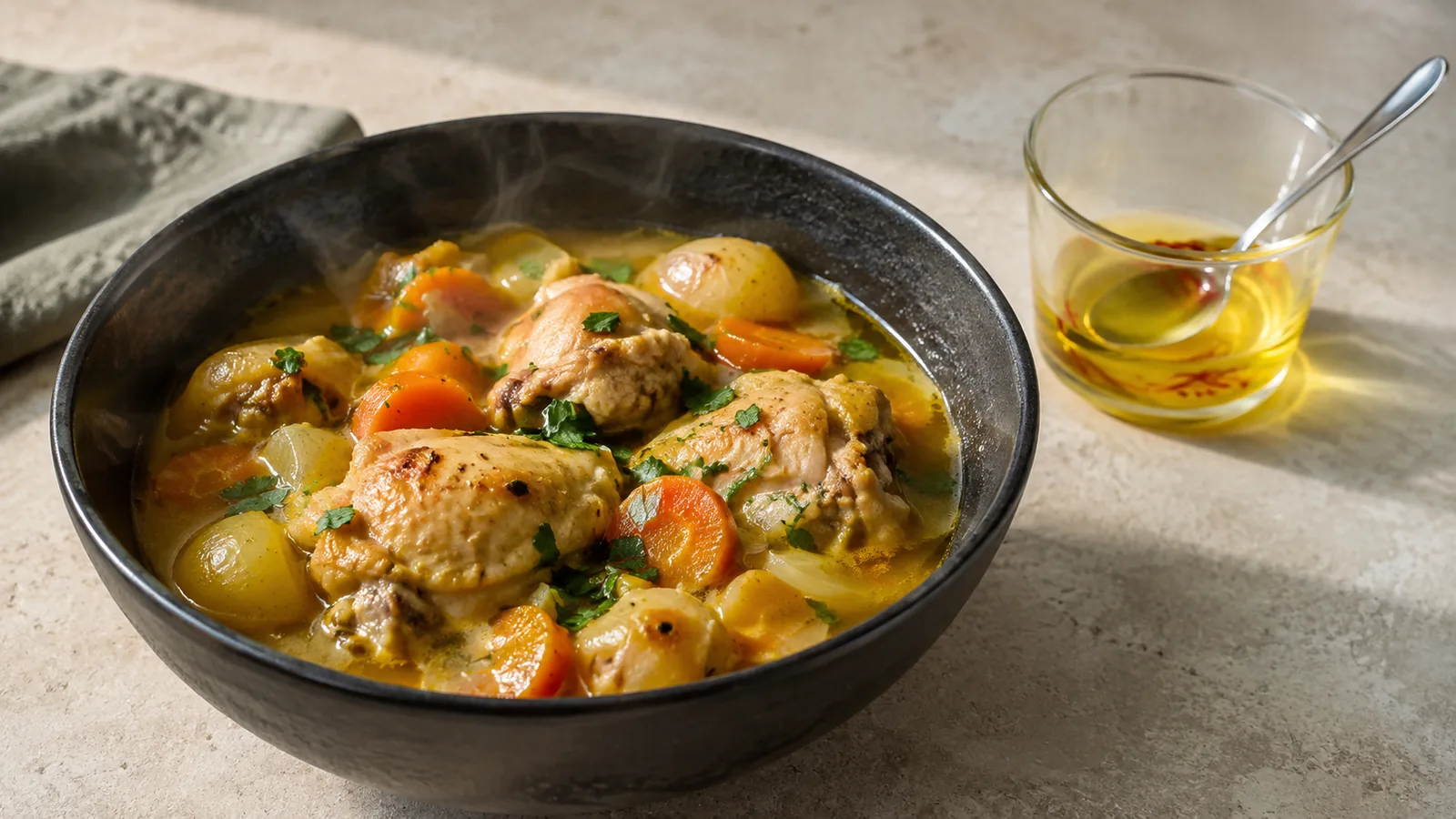
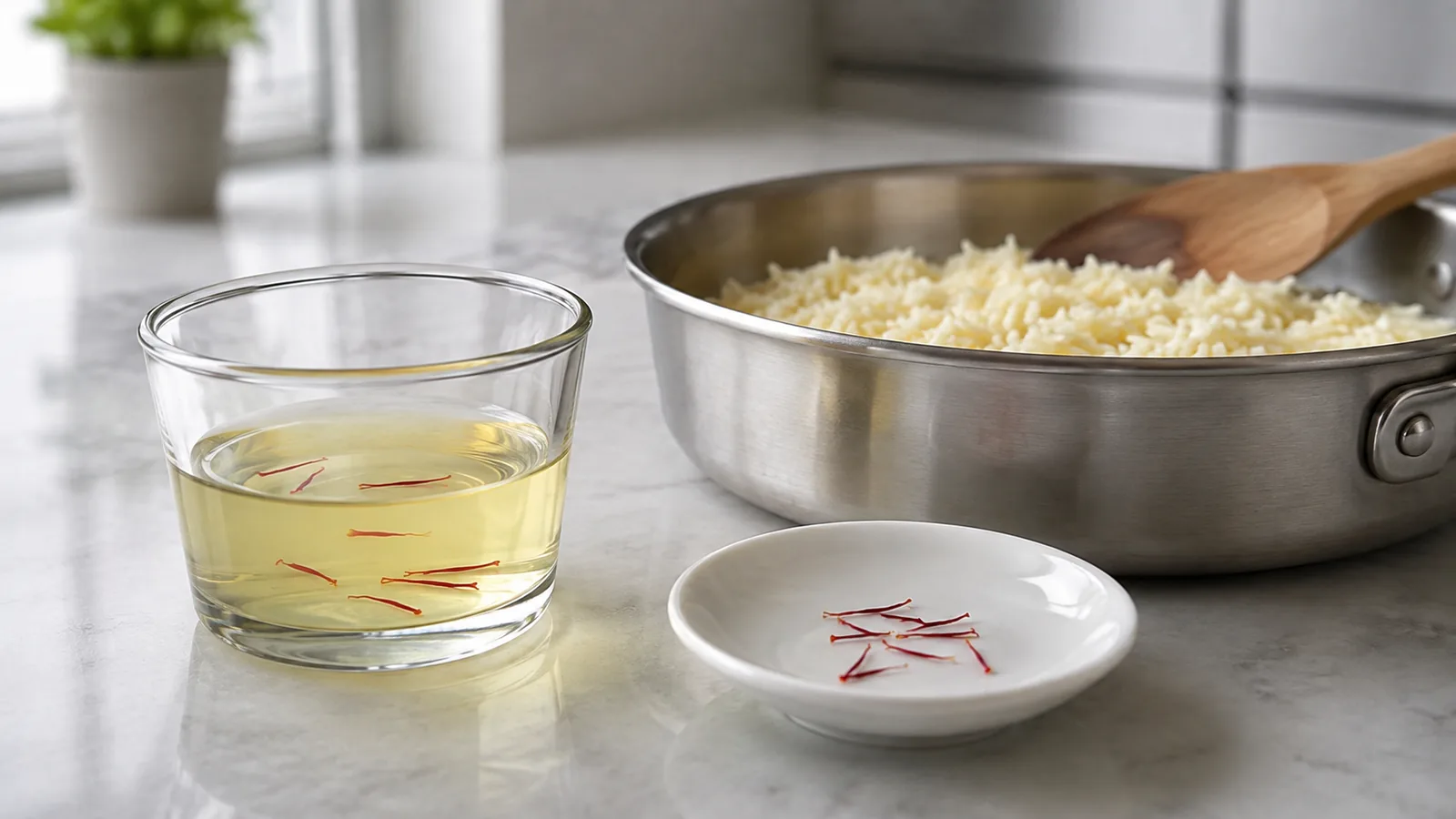
In rice, saffron adds a warm aromatic layer that sits above the grain rather than replacing its flavour. In soup and stew, it can connect broth, vegetables and seafood. In chicken or lamb dishes, it works well with mild stock, yoghurt, onion and gentle warm spices.
Saffron is easiest to notice when the base is restrained. Heavy smoke, intense chilli, too much clove or a strongly reduced stock can cover it. Cardamom, cumin, coriander seed and cinnamon can complement it when used for the needs of the recipe rather than as a compulsory list.
Examples of dishes and recipes that use saffron include Persian rice, paella, risotto alla Milanese, selected curries, fish soup and saffron chicken.
What Does Saffron Do in Desserts?
Dairy, sugar, nuts and fruit soften the spice’s bitterness and bring forward its floral and honeyed associations. Saffron works in custard, rice pudding, kheer, ice cream, kulfi, cake and pastry. It should still be recognisable; a dessert overloaded with rose water, cardamom and vanilla can hide it.
Orange, apricot, peach, pear, raspberry and pomegranate provide useful contrast. The guide to fruit that pairs with saffron explains how acidity, sweetness and texture affect those combinations.
Why Saffron Can Taste Different from One Dish to Another
Quantity and Distribution
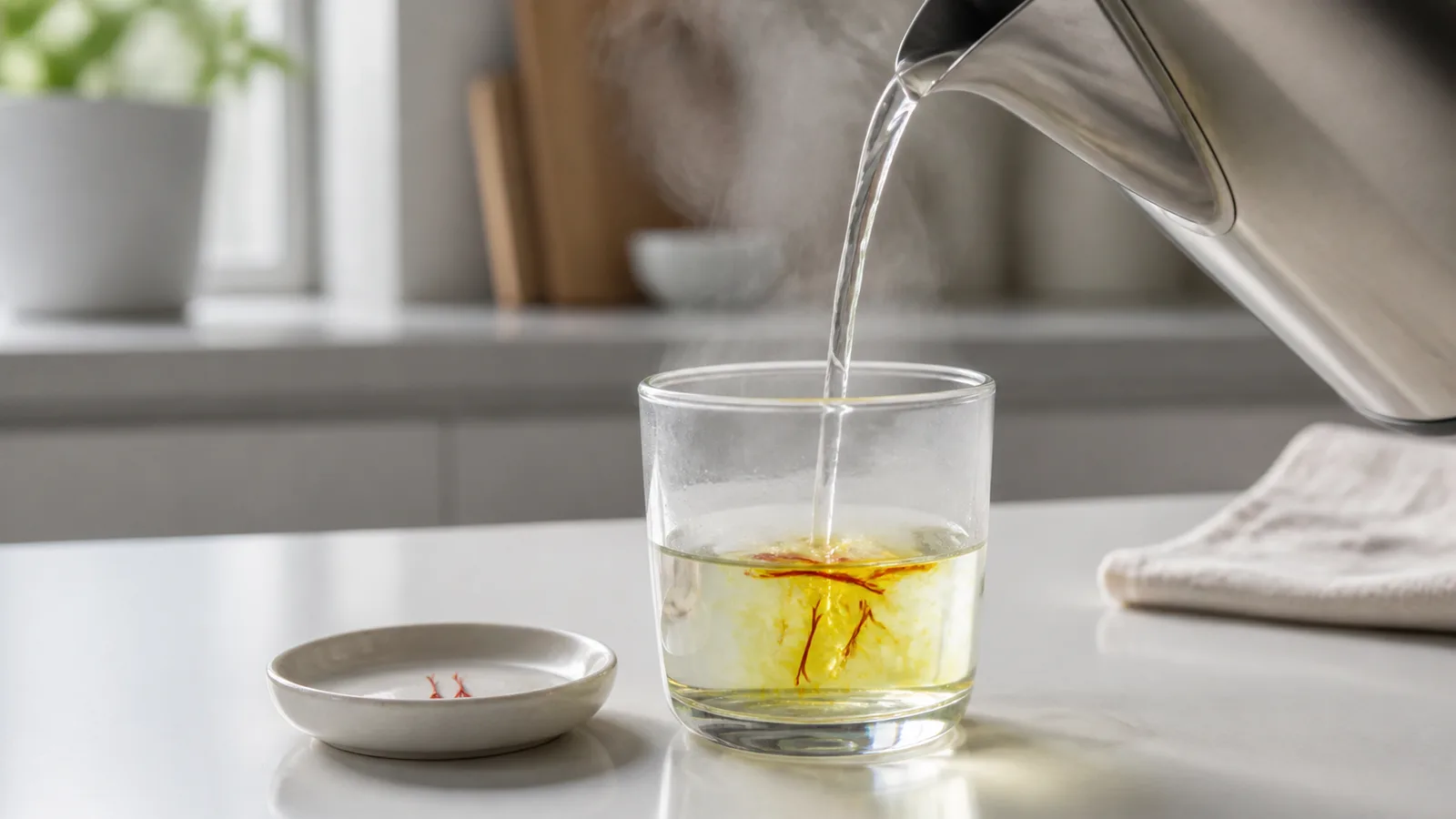
A small, evenly distributed infusion tastes different from several dry threads in one mouthful. Blooming the measured spice in warm water spreads both its colour and bitter compounds through the dish.
Heat and Cooking Time
Saffron’s aroma is volatile. A short steep and appropriate cooking time help preserve it; a prolonged hard boil can leave the colour while making the fragrance less distinct.
Freshness and Storage
Air, light, heat and moisture gradually reduce quality. Whole threads kept airtight, dark and dry should retain their aroma better than an open jar of pre-ground spice. A weak old batch may colour water but smell muted.
The Rest of the Recipe
Salt, sugar, acid, fat and serving temperature all change perception. The picrocrocin sensory study found bitterness thresholds changed with temperature and the presence of other constituents. This helps explain why the same measured saffron can seem gentle in cold cream and sharper in a hot infusion.
How to Taste Saffron on Its Own
Make a small warm-water infusion with a measured pinch. Smell the dry threads first, then smell the covered infusion after 10 minutes. Take a small taste once it is comfortably warm. Look for floral and hay-like aroma, a clean bitter edge and a lingering warm impression.
Do not expect sweetness or a chilli-like heat. The infusion is a sensory check, not a drink that needs to be strong. If it tastes aggressively bitter, dilute it before deciding how to use the saffron in food.
How to Bring Out the Flavour
- Measure the saffron for the recipe.
- Gently crush the threads in a dry mortar.
- Bloom them in a few spoonfuls of warm water for 10–20 minutes.
- Add the liquid and softened pieces where they can spread through the food.
- Avoid an unnecessarily long rolling boil.
- Taste the finished dish before deciding that it needs more.
The practical guide to adding saffron to food shows where the infusion belongs in rice, broth, sauce, baking and desserts.
Flavours That Pair Well with Saffron
- For rice and savoury food: onion, garlic, cardamom, cumin, coriander seed, mild stock, chicken, lamb, seafood and vegetables.
- For desserts: milk, cream, vanilla, cardamom, rose water, pistachio, almond and honey.
- For brightness: orange, lemon, apricot, peach, pear, berries and pomegranate.
- For warmth: cinnamon or ginger in a recipe that can support them.
Pairing is not a quota. Choose only what helps the dish, and keep strong aromas in proportion.
Common Misunderstandings
- “Saffron tastes sweet”: its aroma can seem honeyed, but it does not add sugar.
- “Yellow means saffron flavour”: colour and aroma are different sensory roles.
- “More saffron means more luxury”: too much creates harsh bitterness.
- “It should taste like turmeric”: turmeric has a different flavour and cannot reproduce saffron’s aroma.
- “Every person tastes it the same way”: sensory descriptions and thresholds vary.
The Short Answer
What is the flavor of saffron? It is aromatic, floral, hay-like and warm, with a gently honeyed impression and a real bitter edge. In the right amount, it gives food depth without shouting over the main ingredients. The best way to understand it is to smell a fresh warm infusion, then taste it in a simple rice, broth or dairy dish.
Current whole-thread options are listed in the saffron shop.