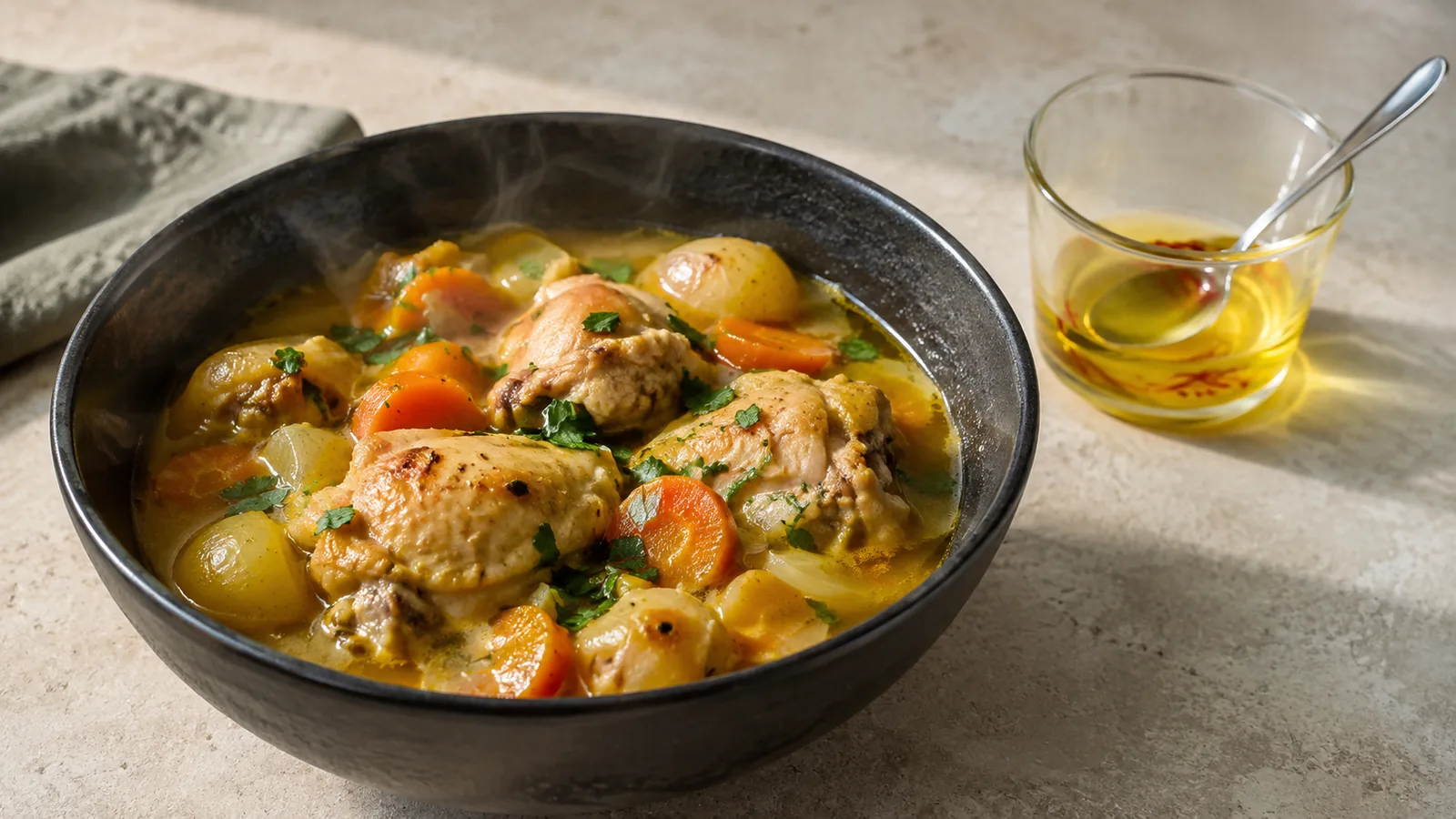
This Saffron Rice Recipe for 4 People makes separate, fragrant basmati grains over a crisp layer of potato tahdig. The quantities suit a family dinner, and the method explains when to drain, steam and add the saffron so there is no guesswork halfway through cooking.
What this Persian saffron rice recipe makes
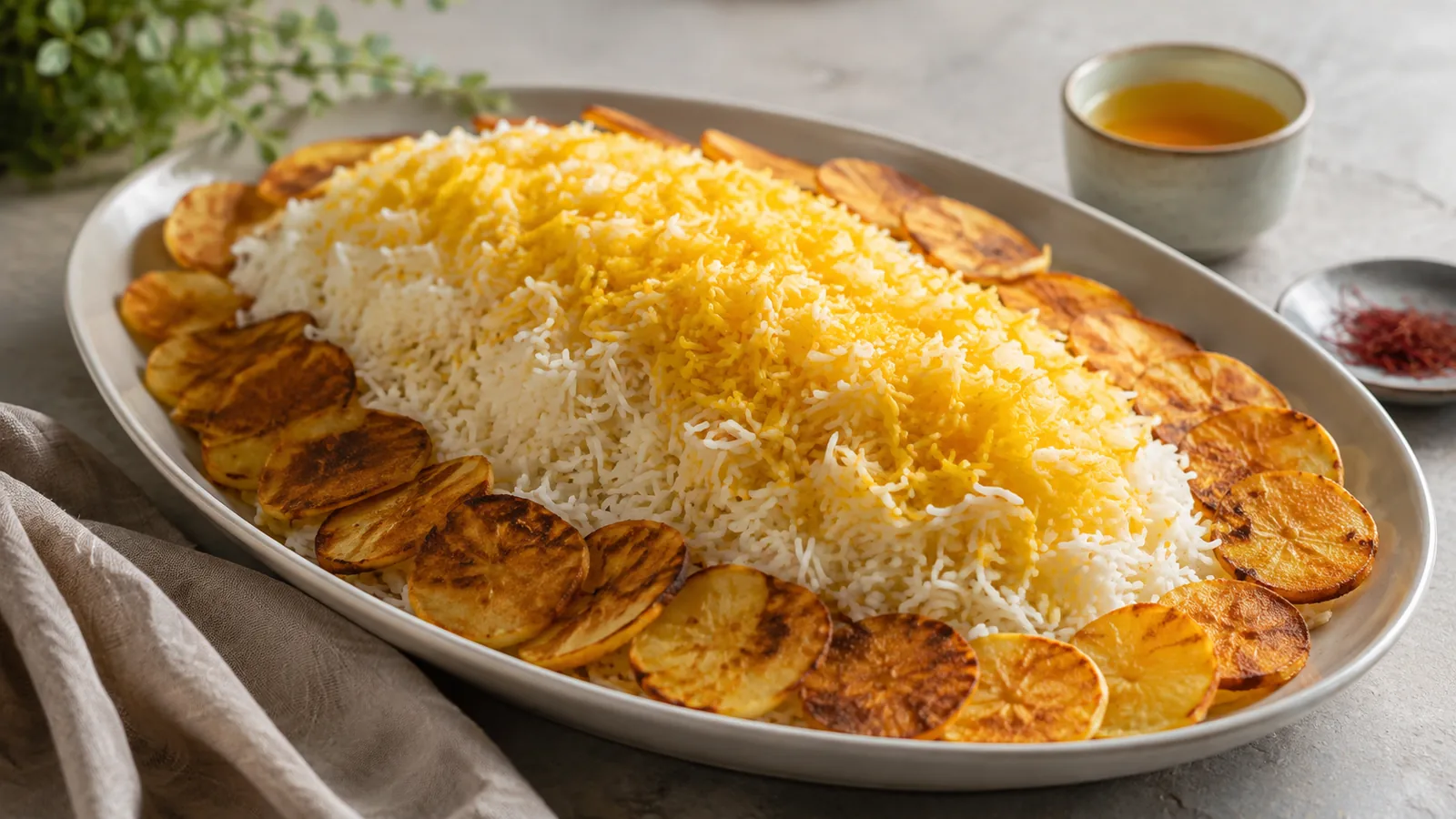
The finished pot serves four as a generous side dish. It has white rice, a golden saffron portion and crisp potato slices underneath. Depending on the menu or the cook, the same style may be described as Iranian saffron rice or Persian saffron rice.
- Serves: 4 as a side dish
- Preparation: 20 minutes, plus an optional 30-minute soak
- Cooking: about 45 minutes
- Pot: a 24 cm heavy-based, non-stick pot with a close-fitting lid
- Method: parboil, drain and steam over potato tahdig
The original version used four cups of dry rice for four people. That is closer to an eight-person side dish once cooked. This corrected recipe uses two cups; a scaling section below explains how to keep the former four-cup quantity when a larger batch is actually needed.
Ingredients for four people
- 2 cups (about 370–400 g) white basmati rice
- 1/4 teaspoon loosely packed saffron threads, about 0.15 g
- 3 tablespoons hot water for blooming the saffron
- 4 tablespoons neutral oil or melted ghee, divided
- 2 small or 1 large floury potato, enough for one layer
- 1 1/2 tablespoons salt for soaking and boiling; most drains away
- about 2.5 litres water for parboiling
A quarter teaspoon is a practical kitchen measure, but threads vary in size. If you cook saffron rice often, a small scale makes repeat batches easier. For a fuller explanation of thread counts and intensity, see how much saffron to use in rice.
How to make saffron rice
1. Rinse and soak the rice
Put the rice in a bowl, cover it with cool water and move the grains gently with your fingers. Drain the cloudy water and repeat until it looks much clearer. Avoid squeezing or grinding the grains against one another.
Cover the rinsed rice with fresh water and stir in half a tablespoon of the salt. A 30-minute soak is helpful but not essential. Longer soaking is also workable with good basmati; it does not automatically make the rice sticky. Drain before parboiling.
2. Bloom the saffron
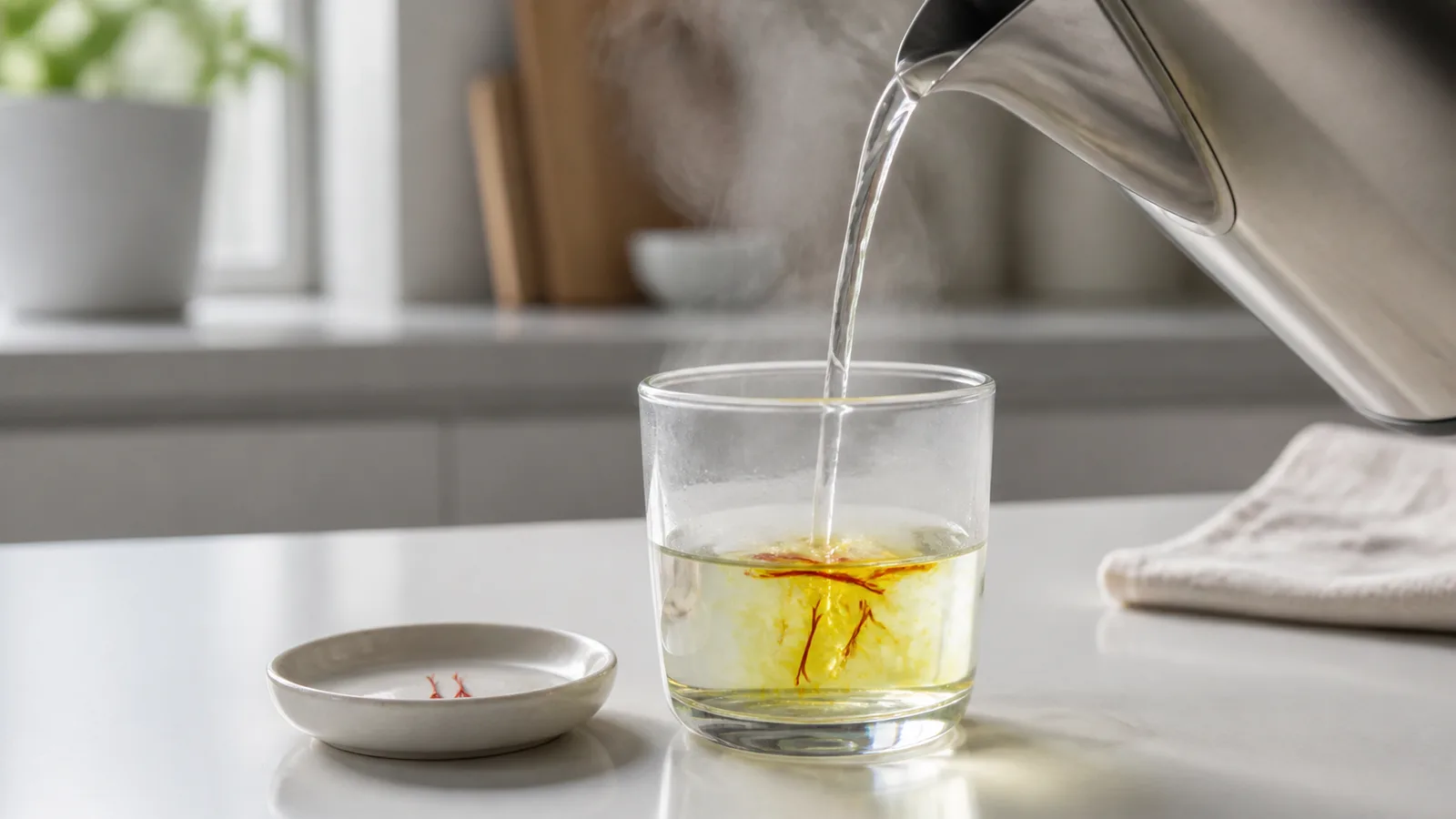
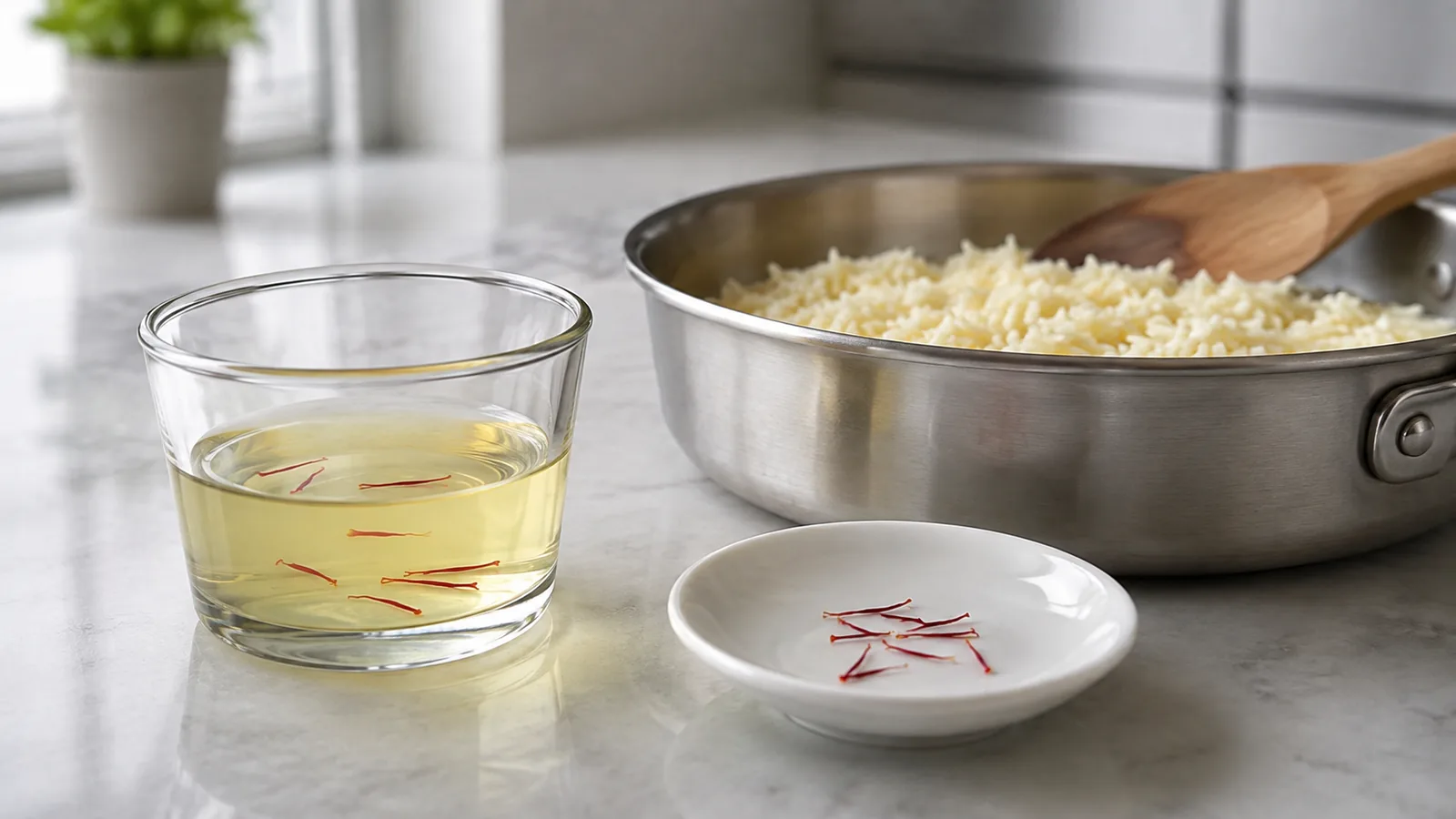
Lightly crush the threads in a clean, dry mortar. Pour over three tablespoons of hot, not violently boiling, water. Cover and leave for 15 minutes.
Some Iranian cooks scatter ground saffron over an ice cube and let it melt. You can use that method if it is familiar, but let the cube melt completely before the rice needs it. Hot-water blooming is faster and easier to time for this recipe.
3. Parboil the rice
Bring about 2.5 litres of water to a strong boil in a large saucepan. Add the remaining tablespoon of salt, then add the drained rice. Stir once so no grains settle in a clump.
Boil for 5–7 minutes, checking early. A grain should be flexible and soft at the surface but still offer a small chalky resistance in the centre. Bite one to check rather than trusting the clock: variety, age and soaking time all affect the result.
Drain the rice into a fine colander and rinse briefly with lukewarm water to halt the boiling and remove excess surface salt. Let it drain while the potato layer begins.
4. Start the potato tahdig
Peel the potatoes and cut them into even slices about 5 mm thick. Dry the surfaces with a clean towel. Add three tablespoons of oil to the rice pot and set it over medium heat.
Arrange the potato in one snug layer. Spoon one tablespoon of the saffron infusion over it. Let the slices sizzle for 2–3 minutes; they should begin cooking but should not become fully crisp before the rice goes in.
5. Mound and steam the rice
Spoon the drained rice onto the potatoes without shifting them. Shape it into a loose mound, leaving space around the sides for steam. Make four or five holes through the mound with the handle of a wooden spoon.
Drizzle the remaining tablespoon of oil around the rice. Wrap the lid in a clean tea towel, keeping every corner well away from the flame, and cover the pot. Cook over medium heat for about 5 minutes, until steam builds, then reduce to the lowest steady heat and cook for 30–40 minutes.
Do not repeatedly lift the lid. Near the end, listen for a gentle sizzle and smell for toasted potato rather than waiting for a fixed 90-minute cooking time. If the base smells sharply burnt, remove the pot from the heat at once.
6. Make the golden saffron rice
Lift about one cup of cooked rice into a small bowl. Fold in the remaining saffron infusion, using a fork so the grains stay separate. This gives you a bright golden portion to scatter over the white rice.
If you prefer the whole pot pale gold, drizzle the infusion through the steam holes before the final 10 minutes instead. Do not stir the pot at that stage; stirring can compress the grains and disturb the tahdig.
7. Release the tahdig
Turn off the heat and leave the covered pot for 5 minutes. Spoon the rice onto a warm platter, then lift out the potato slices with a thin spatula and arrange them around the edge.
For a single round crust, place a platter over the pot and invert it in one confident movement. Use oven gloves and keep the platter firmly centred. If this is your first attempt, lifting the potatoes individually is less dramatic and much easier to control.
What to serve with Iranian saffron rice
This rice belongs beside a sauce or a well-seasoned main dish. Ghormeh sabzi, gheimeh and fesenjan are classic partners because the separate grains take up a little stew without becoming heavy. Grilled chicken, lamb, roasted vegetables and plain yogurt also work well.
Adding cooked chicken or lamb beside the rice makes a fuller meal; mixing meat straight into this pot does not turn it into tahchin. Tahchin uses an egg-and-yogurt mixture to bind part of the rice, often around a filling. If that is the texture you want, use a dedicated method rather than changing this recipe halfway through. A related option is saffron rice crust with yogurt.
For a festive finish, add a small handful of toasted slivered almonds or pistachios to the golden rice. Barberries bring tartness but should be warmed briefly and gently; high heat can scorch their skins. Smoked rice has a stronger character, so blend it with plain basmati before committing the whole pot to that flavour.
Troubleshooting the rice and tahdig
The grains are soft or clumped
The rice was probably boiled too long or stirred too often. Drain as soon as a grain is tender outside and firm at its core. Use a wide pot so the mound is not packed tightly.
The potato is pale
The base may not have heated before the rice was added, or there may be too little fat between the potato and pot. Give the slices their short initial sizzle and keep the final steaming heat low but steady.
The tahdig sticks
Let the pot rest for 5 minutes after cooking. If it still resists, set the base on a cool, damp kitchen towel for about a minute, then loosen the edge with a thin spatula. Do not pour water into the hot pot.
The saffron tastes bitter
More saffron is not always better. Measure the threads, bloom them separately and add the liquid rather than dropping dry powder into one corner. Scorched saffron or an oversized amount can make the final spoonful harsh.
How to scale the recipe to four cups of rice
For eight side-dish servings, use the former four cups of dry rice, half a teaspoon of saffron, six tablespoons of hot water, six to eight tablespoons of oil and enough potato for one layer in a wider pot. Boil the rice in at least four litres of water so the grains have room to move.
Do not simply make a deeper mound in the same 24 cm pot. A wider pot gives the larger batch more tahdig area and lets steam travel through the rice. Start checking at the same time as the smaller recipe; doubling the ingredients does not mean doubling every cooking time.
Is saffron rice safe during pregnancy?
A serving of this rice and a concentrated saffron supplement are not the same exposure. This recipe uses about 0.15 g of saffron across four portions and makes no medicinal claim. It should not be used to decide a supplement dose.
The NHS notes that not every “natural” remedy is safe during pregnancy and advises people using herbal remedies to tell their midwife, doctor or pharmacist. If you are pregnant, have been told to avoid saffron or are considering an extract or supplement, follow your clinician’s advice rather than treating a recipe as medical guidance. See the NHS guidance on medicines and herbal remedies in pregnancy.
A dependable four-person saffron rice
The useful cues are simple: rinse until the water clears, stop parboiling while the centre still has bite, build steam before lowering the heat and add bloomed saffron with restraint. Follow those cues and this Persian rice recipe with saffron will give four people distinct grains, a crisp potato base and a golden finish that looks as good as it tastes.