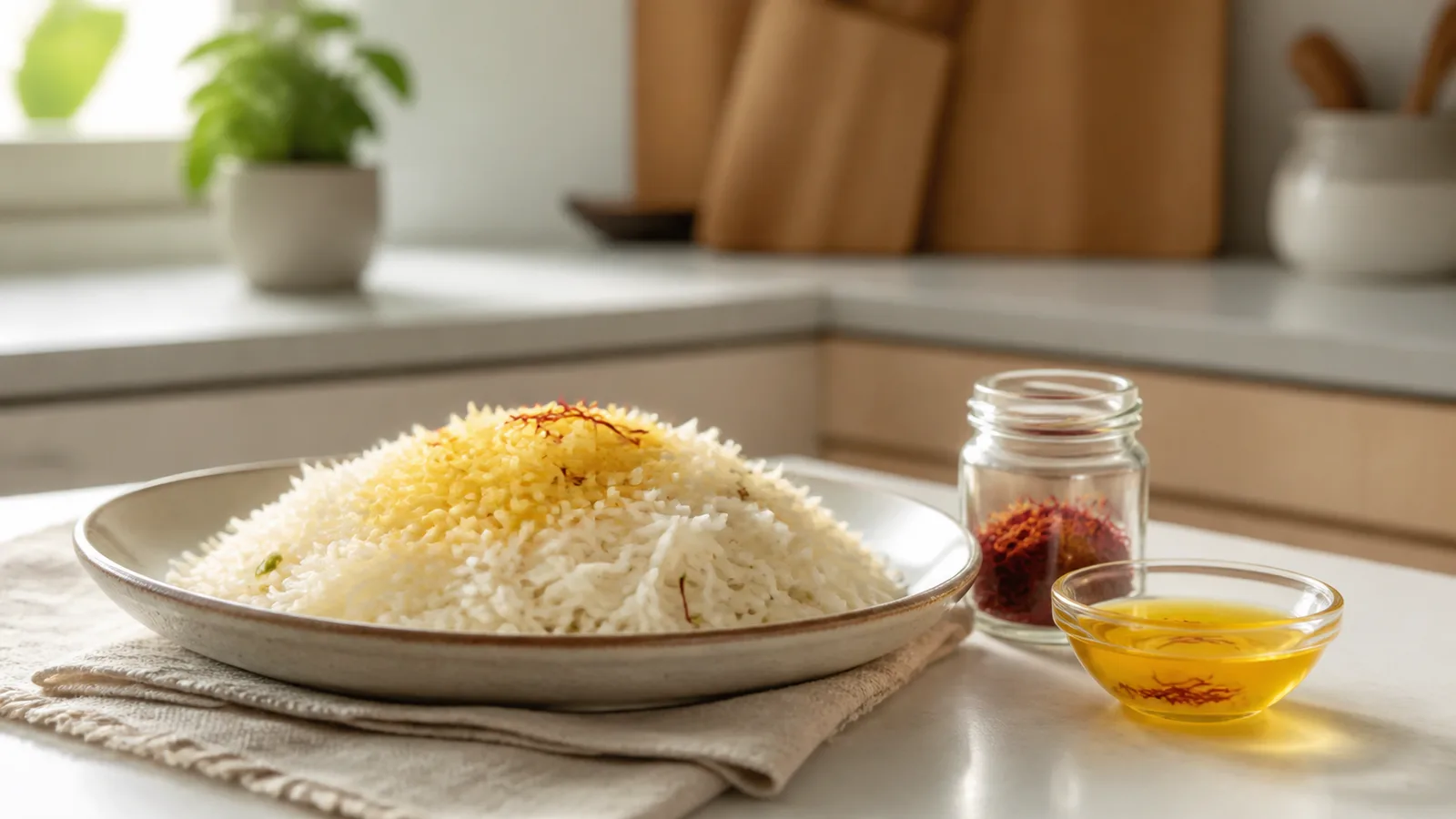
Saffron milk benefits begin with what is actually in the cup: milk contributes its usual nutrients, while a small pinch of saffron adds colour, aroma and a gently bitter floral note. The drink can be served warm or cold and needs very little saffron. It is pleasant and nourishing when the milk suits your diet, but it is not a proven treatment for depression, digestive disease, poor immunity, menstrual disorders or cancer.
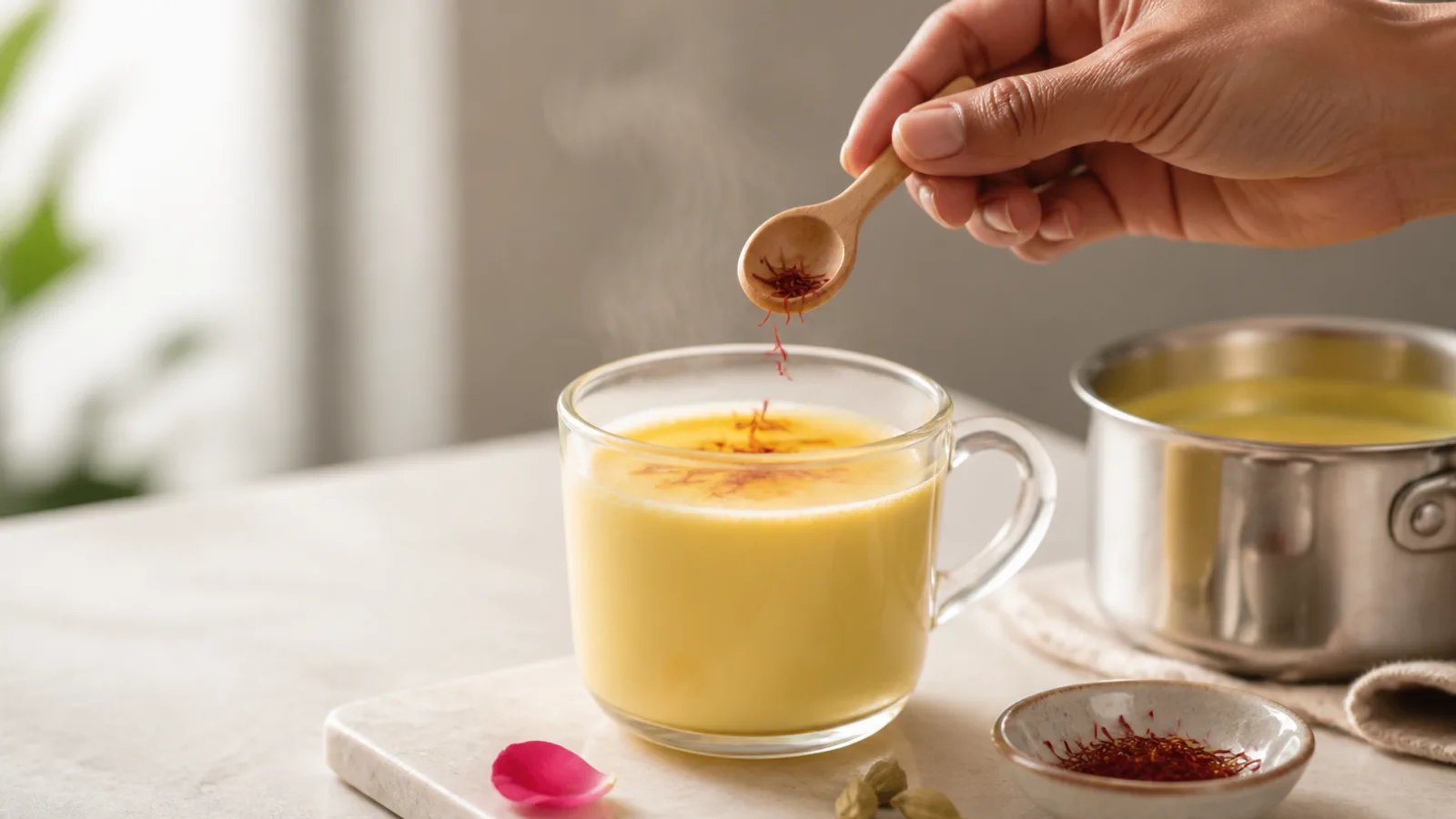
Saffron milk is also called kesar milk or kesar doodh. These names describe the same basic idea, although recipes vary by household. Cardamom, rose water, honey and nuts are optional; none is required for the drink to work as a recipe.
What is saffron milk?
At its simplest, saffron milk is pasteurized milk infused with saffron threads. The water in milk extracts some of saffron’s colour compounds, and gentle heat helps the aroma open. It can be made with dairy milk or an unsweetened fortified plant milk, though the protein, sugar, vitamins and minerals will differ. Check the label if a particular nutrient matters to you.
“Local” milk is not automatically healthier. If local means raw or unpasteurized, it may carry harmful germs. The US Food and Drug Administration recommends choosing pasteurized milk and notes that pasteurization does not meaningfully reduce its nutritional value.
How to make saffron milk
This recipe makes one cup. It is easy to double, but taste the saffron before scaling it aggressively; different harvests vary in strength.
- 1 cup (240 ml) pasteurized milk or unsweetened plant milk
- 3 to 6 good saffron threads, lightly crushed
- 1 lightly crushed green cardamom pod, optional
- 1/4 teaspoon food-grade rose water, optional
- Honey or sugar to taste, optional
- Put the crushed saffron in a small cup with 1 tablespoon of hot water. Cover and leave it for 10 minutes.
- Warm the milk and cardamom over low heat until steaming. Do not let it boil over or form a scorched layer on the pan.
- Stir in the saffron infusion and heat gently for another minute. Remove the cardamom pod.
- Add rose water a drop at a time. Taste before sweetening, then serve warm.
For a cold version, cool the finished drink promptly and refrigerate it before serving over ice. Another traditional preparation blooms ground saffron over a melting ice cube before it goes into the milk. That works, but warm-water blooming is quicker and does not change the medical value of the drink. Whole, unground threads can also be added directly; allow them more time to colour the milk.
Benefits of saffron with milk: the practical answer
The benefit of saffron milk depends first on the base. Dairy milk normally contributes protein, calcium and other nutrients; a fortified soy or oat drink has its own profile. Saffron makes the drink aromatic without requiring coffee or black tea, so it can be caffeine-free. Honey adds sweetness and sugar, not a special medicinal synergy. The advantages of saffron milk are therefore partly nutritional and partly sensory.
Saffron itself has been studied in humans, but most trials use a measured powder or standardized extract for several weeks. They do not test three or four threads in a cup of milk. When an article transfers a result from a supplement study directly to kesar doodh, it skips a crucial preparation and dose difference.
Mood, depression and relaxation
A warm drink can be part of a relaxing evening routine. Separately, a current GRADE-assessed review of saffron trials found moderate-certainty evidence for improvement in some self-reported depression and anxiety scores, while several clinician-rated scales did not show a significant effect and study results varied substantially. That does not show that saffron milk reduces depression. Persistent low mood, anxiety or major sleep changes deserve professional care.
Digestion and stomach comfort
Some people find warm milk comforting; others develop bloating, gas or discomfort because they do not digest lactose well. Saffron does not cancel lactose or a milk-protein allergy. Lactose-free dairy milk or a suitable plant milk may make a better recipe for someone who is intolerant. Saffron milk has not been shown to cure indigestion, support a “healthy gut” or treat digestive disease.
Immune function and antioxidants
Milk supplies nutrients and saffron contains compounds with antioxidant activity, but “boosts immunity” is too vague to be a defensible outcome. Drinking saffron milk every day has not been shown to strengthen the body’s defences or prevent infection. Diet quality is built across many foods, not secured by one golden drink.
PMS, menstrual pain and cycle regulation
Researchers have examined measured saffron preparations for premenstrual syndrome and dysmenorrhea. A 2026 systematic review reported favourable pooled results, but it did not establish ordinary saffron milk as a treatment or show that it regulates menstrual cycles. Warm milk may provide comfort. Severe pain, fainting, very heavy bleeding or a marked cycle change should be assessed by a clinician.
Cancer claims
Saffron compounds have been studied in cells and animals, but that is not proof that the drink prevents cancer, stops cancer-cell growth in a person or belongs in a treatment strategy. The US National Cancer Institute explains that antioxidant findings from laboratory research have not translated into proof that antioxidant supplements prevent cancer in people. Saffron milk must not delay screening, diagnosis or treatment.
Kesar milk benefits for women and men
Kesar is another name for saffron, so kesar milk benefits and saffron milk benefits refer to the same drink. There is no good evidence that a culinary cup produces a special general benefit for men or a separate set of benefits for women. The relevant differences are individual: milk tolerance, diet, pregnancy, medicines and the reason a person is drinking it.
Claims about male fertility, testosterone, female fertility or a baby’s complexion need direct evidence and should not be inferred from the colour of the drink. For sex-specific research questions, measured clinical preparations and defined outcomes matter; ordinary milk with saffron is food.
Is drinking saffron milk every day a good idea?
Drinking saffron milk every day is not necessary to enjoy it. If it fits your diet, use a small culinary amount of saffron, choose pasteurized milk, and watch added sugar. A daily sweetened full-fat drink changes energy intake even when the saffron quantity is modest. If it causes bloating or reflux, adjust the milk or frequency rather than assuming discomfort is a sign that it is “working.”
- Do not drink it if you have a milk-protein allergy; lactose-free milk does not remove milk proteins.
- Ask a clinician before frequent medicinal saffron use during pregnancy or breastfeeding.
- Check before concentrated use if you take medicine for mood, blood pressure, blood sugar or bleeding, or if surgery is approaching.
- Stop if saffron, cardamom, rose water or another addition causes a rash, swelling, breathing difficulty or persistent digestive symptoms.
The best version is uncomplicated: safe milk, a few genuine threads and enough time for their aroma to open. For a spiced caffeinated variation, see our saffron masala tea recipe.