Saffron masala tea brings a small pinch of saffron into milky spiced chai. The finished cup should taste rounded rather than crowded: black tea gives it structure, ginger and pepper add warmth, cardamom lifts the aroma, and saffron appears in the finish. It is caffeinated, usually sweetened and best understood as a comforting drink—not a treatment for digestion, anxiety, immunity or blood sugar.
The recipe below makes two generous cups and keeps every spice recognizable. It also gives you room to adjust the milk, sweetness and heat without wasting saffron.
Saffron masala tea ingredients
- 2 cups (480 ml) milk or an unsweetened plant milk
- 1 cup (240 ml) water
- 2 teaspoons loose black tea, or 2 black tea bags
- A small culinary pinch of saffron threads, about 10 to 15 threads
- 1 teaspoon freshly grated ginger
- 1 small cinnamon stick
- 3 or 4 green cardamom pods, lightly crushed
- 2 cloves
- 4 or 5 black peppercorns, lightly crushed
- Honey or sugar to taste, added after straining
A third of a teaspoon of saffron is far more than this two-cup recipe needs. Starting with a small pinch makes the flavour easier to balance and avoids turning an expensive spice bitter. Whole cinnamon also leaves a cleaner drink than ground cinnamon.
How to make saffron masala chai
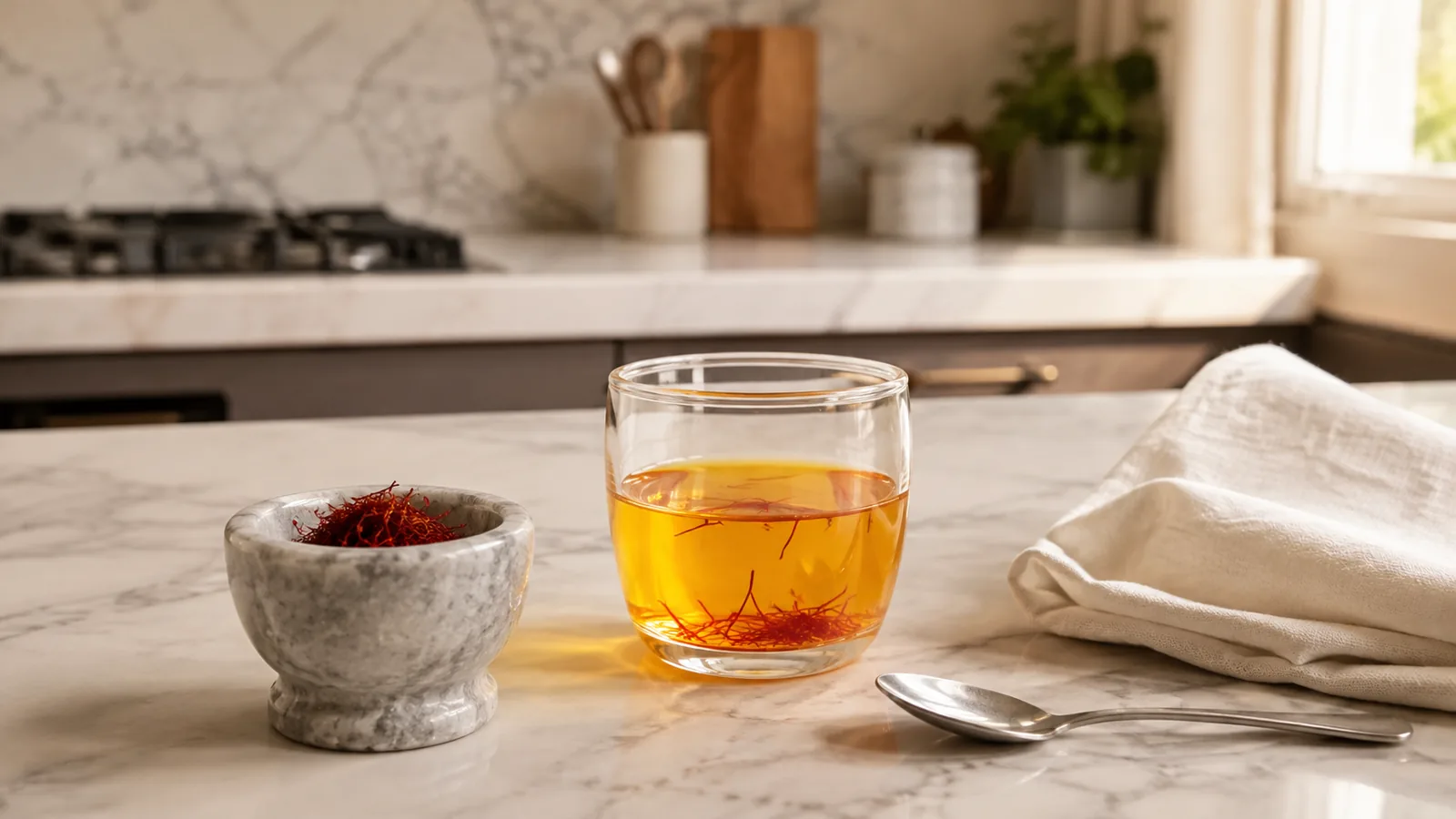
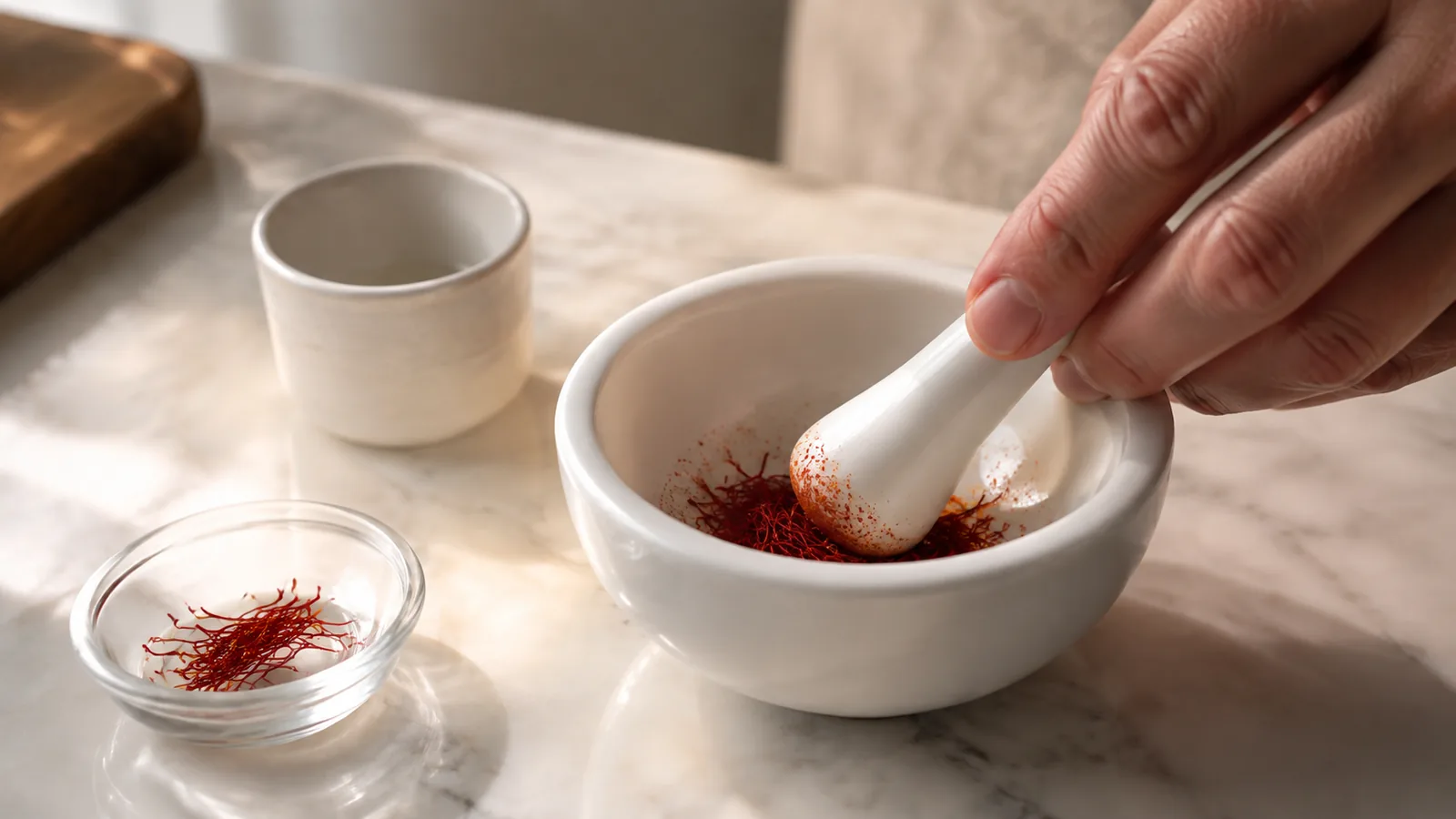
- Bloom the saffron. Lightly crush the threads and cover them with 2 tablespoons of hot water. Set aside under a lid for 10 minutes.
- Start the masala. Put the cup of water, ginger, cinnamon, cardamom, cloves and peppercorns in a small saucepan. Bring to a gentle simmer for 4 to 5 minutes.
- Add milk and tea. Pour in the milk and bring it back to a gentle simmer. Add the black tea and cook for 2 to 3 minutes, watching closely so the milk does not boil over.
- Finish with saffron. Stir in the golden infusion and simmer for about 30 seconds. Longer hard boiling can flatten the aroma and make the black tea more astringent.
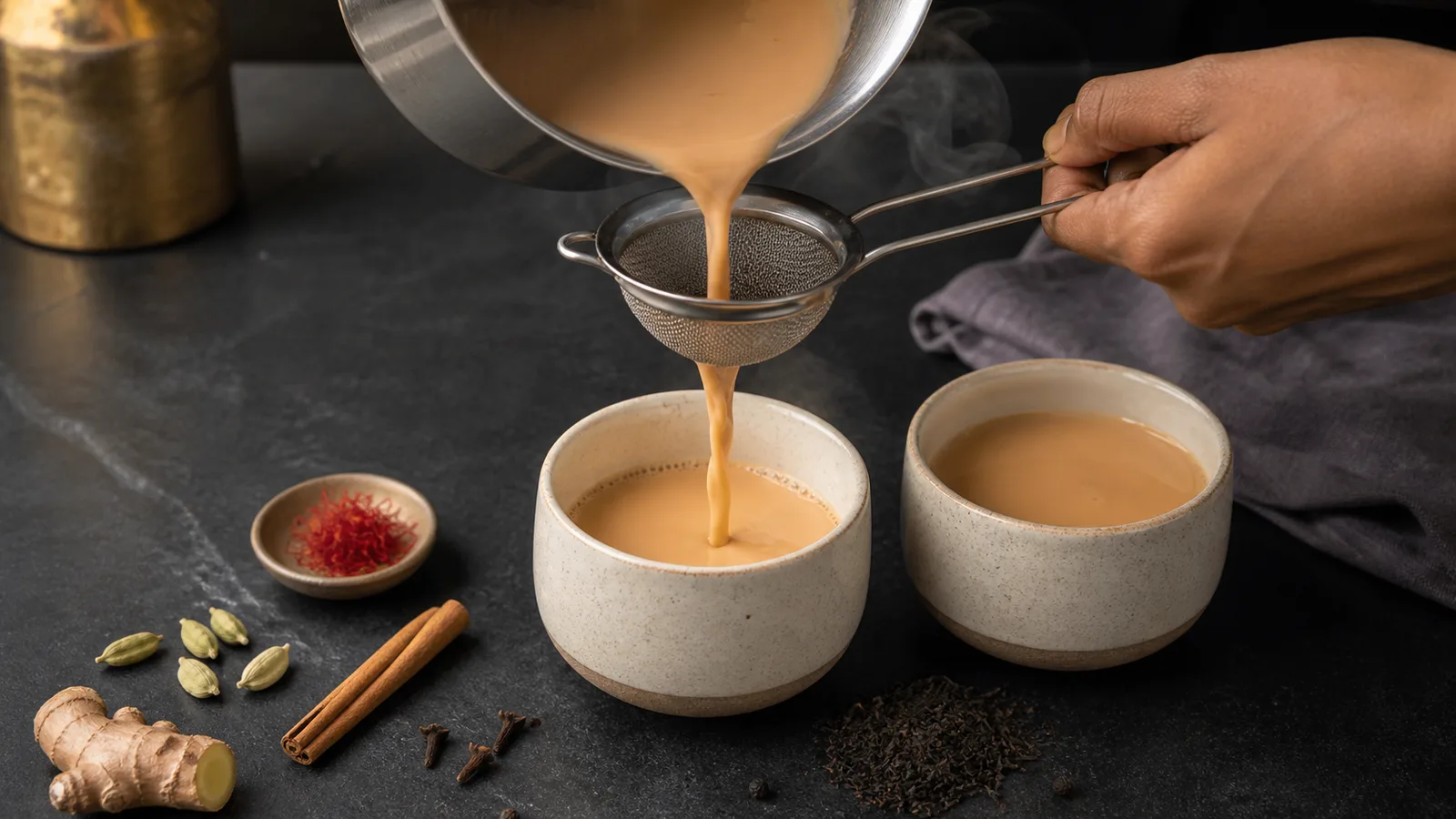
- Strain and sweeten. Pass the tea through a fine sieve into two cups. Taste before adding honey or sugar.
If you prefer a stronger tea flavour, increase the black tea slightly rather than boiling it much longer. For more heat, add another slice of ginger or one peppercorn. If saffron disappears behind the spices, reduce the cloves first; they dominate a cup quickly.
Putting saffron in tea without losing its aroma
You can put saffron in tea, but timing matters. Saffron has a delicate floral aroma, while masala chai is built from forceful spices. Blooming the threads separately and adding that infusion near the end gives the saffron a better chance to be noticed. Throwing dry threads into a vigorously boiling milk tea at the beginning is simpler, but it can produce a flatter result.
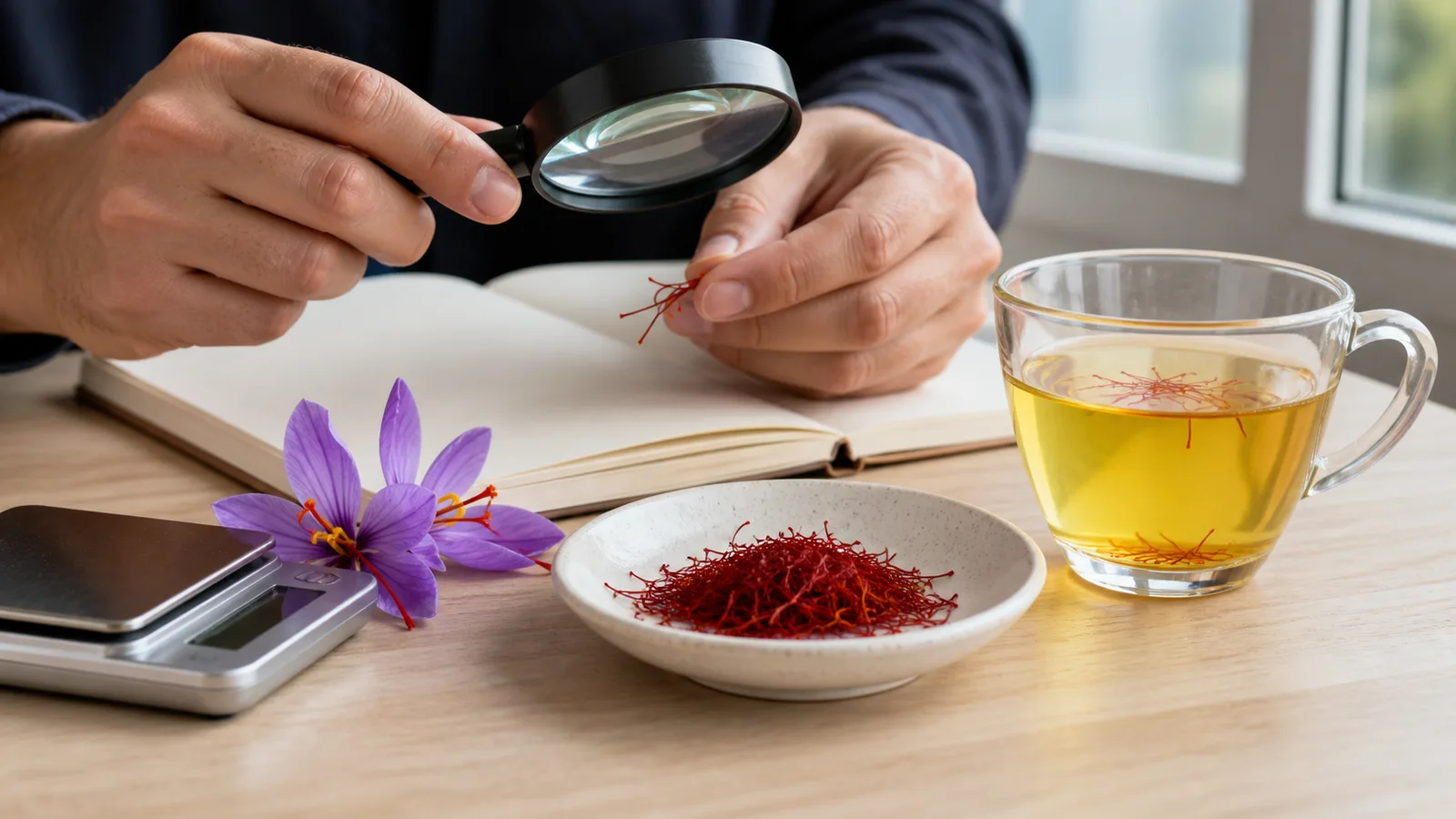
Use genuine food-grade threads and grind only the small amount needed. The liquid should turn warm gold rather than artificial scarlet. Saffron powder also works, provided it is pure and traceable, but it is harder to assess visually than whole threads.
Variations that still taste like saffron
Dairy-free masala tea
Choose an unsweetened oat or soy milk that tolerates heat. Some almond milks separate when simmered, so warm them gently and add them after the spice water has cooked. Coconut milk works but brings a strong flavour that can cover the saffron.
Iced saffron masala tea
Make the recipe a little stronger, cool it promptly, then pour it over plenty of ice. Sweeten while warm so the sugar dissolves. Do not leave a milk-based batch at room temperature for a long gathering; keep it refrigerated and return unused tea to the refrigerator promptly.
A lighter evening cup
Black tea contains caffeine. For an evening version, use decaffeinated black tea or leave the tea leaves out and make a spiced saffron milk. A tea-free version will be softer and is no longer masala chai in the strict sense, but it keeps the same aromatic idea.
Saffron masala chai benefits: what is realistic?
The most reliable benefits are the qualities you can experience directly: a warm drink, fluid, aroma and the pleasure of a carefully balanced recipe. Milk can contribute protein and other nutrients depending on the type used. Black tea contributes caffeine and polyphenols. The spices contain interesting plant compounds, but that does not prove the cup prevents chronic disease.
Antioxidants and inflammation
Saffron, tea and several masala spices show antioxidant or anti-inflammatory activity in laboratory research. “Contains antioxidants” is not the same as “reduces the risk of chronic disease,” and a mixed beverage has not been shown to treat body-wide inflammation. The amount of every ingredient, how it was prepared and the outcome studied all matter.
Digestion, bloating and indigestion
Ginger is traditionally associated with digestion and has been studied mainly as a supplement for particular forms of nausea. The US National Center for Complementary and Integrative Health notes that much of the research tests supplements rather than food and that ginger can itself cause heartburn, abdominal discomfort or diarrhoea. Masala tea may feel pleasant after a meal, but it does not cure bloating or indigestion.
Stress, anxiety and relaxation
Sitting down with a fragrant cup can be a calming routine. Separate research has tested measured saffron preparations over several weeks. A current GRADE-assessed review found improvement in some self-reported depression and anxiety scores, while several clinician-rated scales did not show a significant effect and results varied substantially. That evidence does not establish saffron masala tea as a treatment for stress, anxiety or depression.
Immunity, infection and blood sugar
There is no sound basis for claiming that this recipe “boosts immunity” enough to fight infection. Nor should it be used to regulate blood sugar or manage diabetes. Sugar or honey raises the drink’s carbohydrate content, and even an unsweetened cup cannot replace glucose monitoring, medicine or an eating plan agreed with a clinician.
Caffeine, spice and medicine cautions
Black tea is a variable source of caffeine. The US Food and Drug Administration cites 400 mg per day as an amount not generally associated with negative effects for most adults, while emphasizing large differences in sensitivity and advising pregnant or breastfeeding people to discuss limits with a clinician. A mug of chai is only one source among coffee, tea, chocolate, energy products and some medicines.
- Reduce the ginger and pepper if they aggravate reflux or mouth irritation.
- Ask about regular medicinal use of saffron or concentrated spices if you take medicine for blood sugar, blood pressure, mood or bleeding, or if surgery is approaching.
- Choose decaffeinated tea if caffeine causes palpitations, anxiety or sleep problems.
- Stop if any ingredient causes swelling, rash, breathing difficulty or persistent digestive symptoms.
For a non-milk infusion and a closer look at preparation-specific evidence, see our guide to saffron tea benefits. For this recipe, the best test is simpler: the first sip should taste like tea, warm spices and saffron in balance.