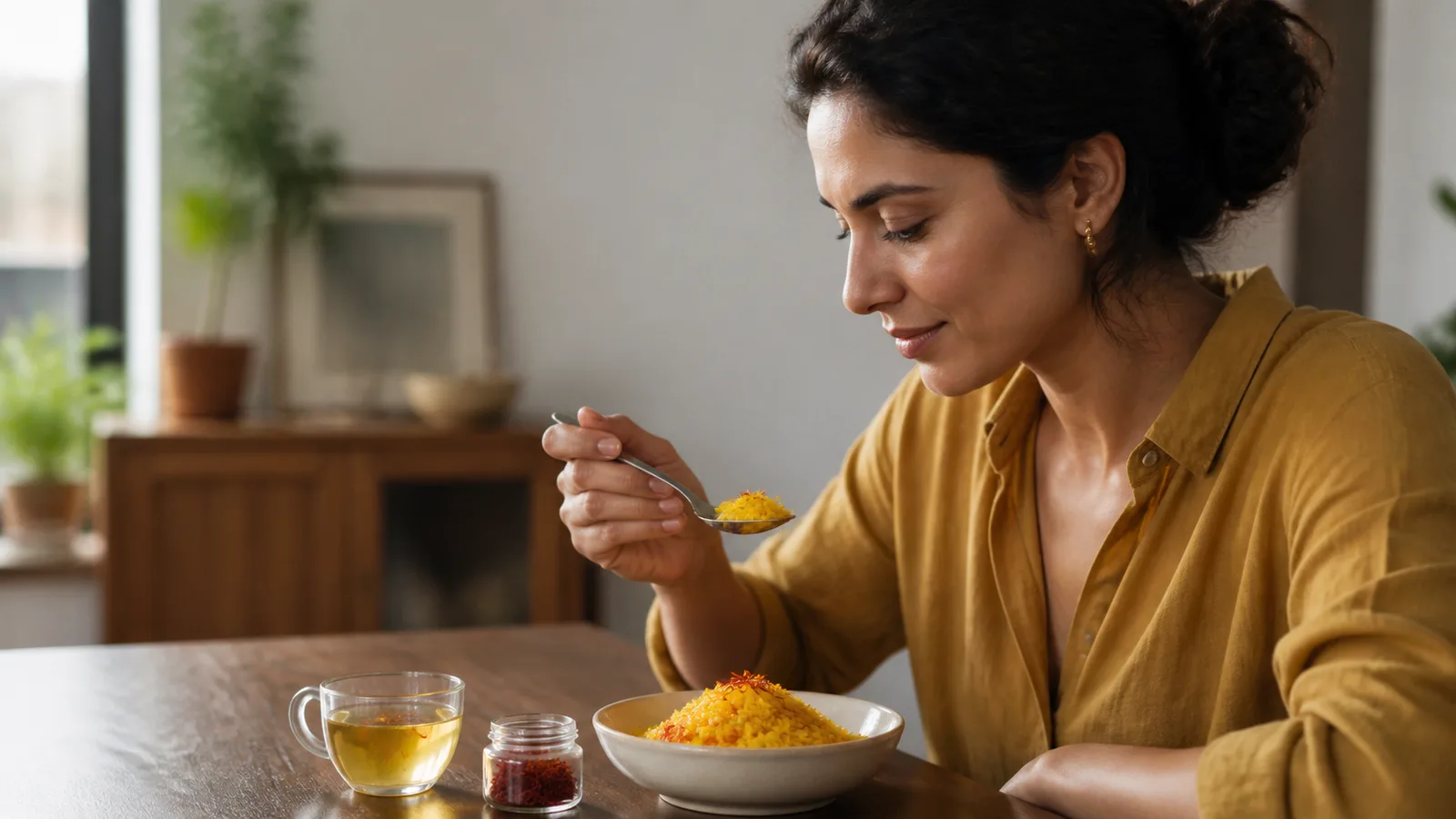
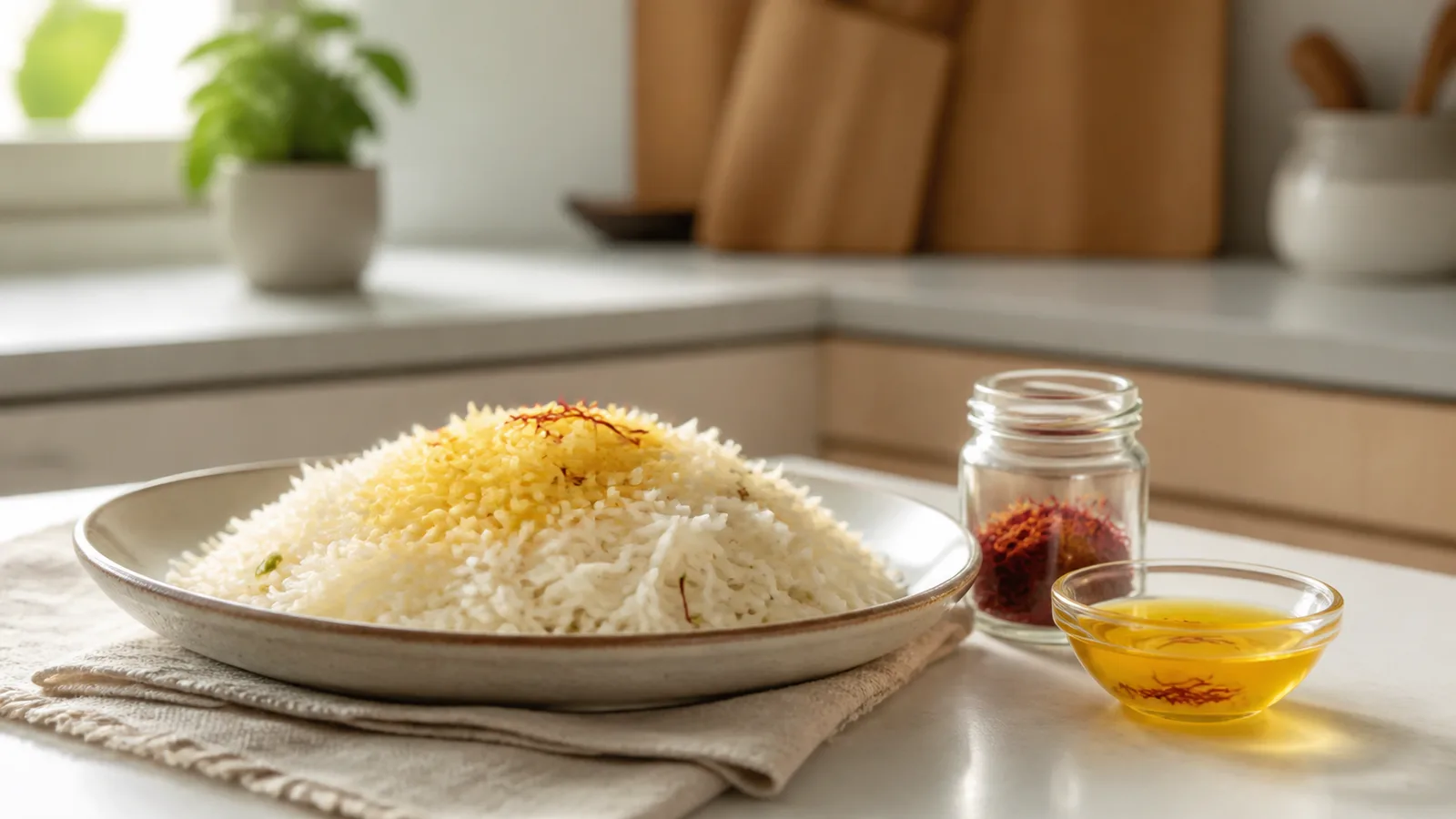
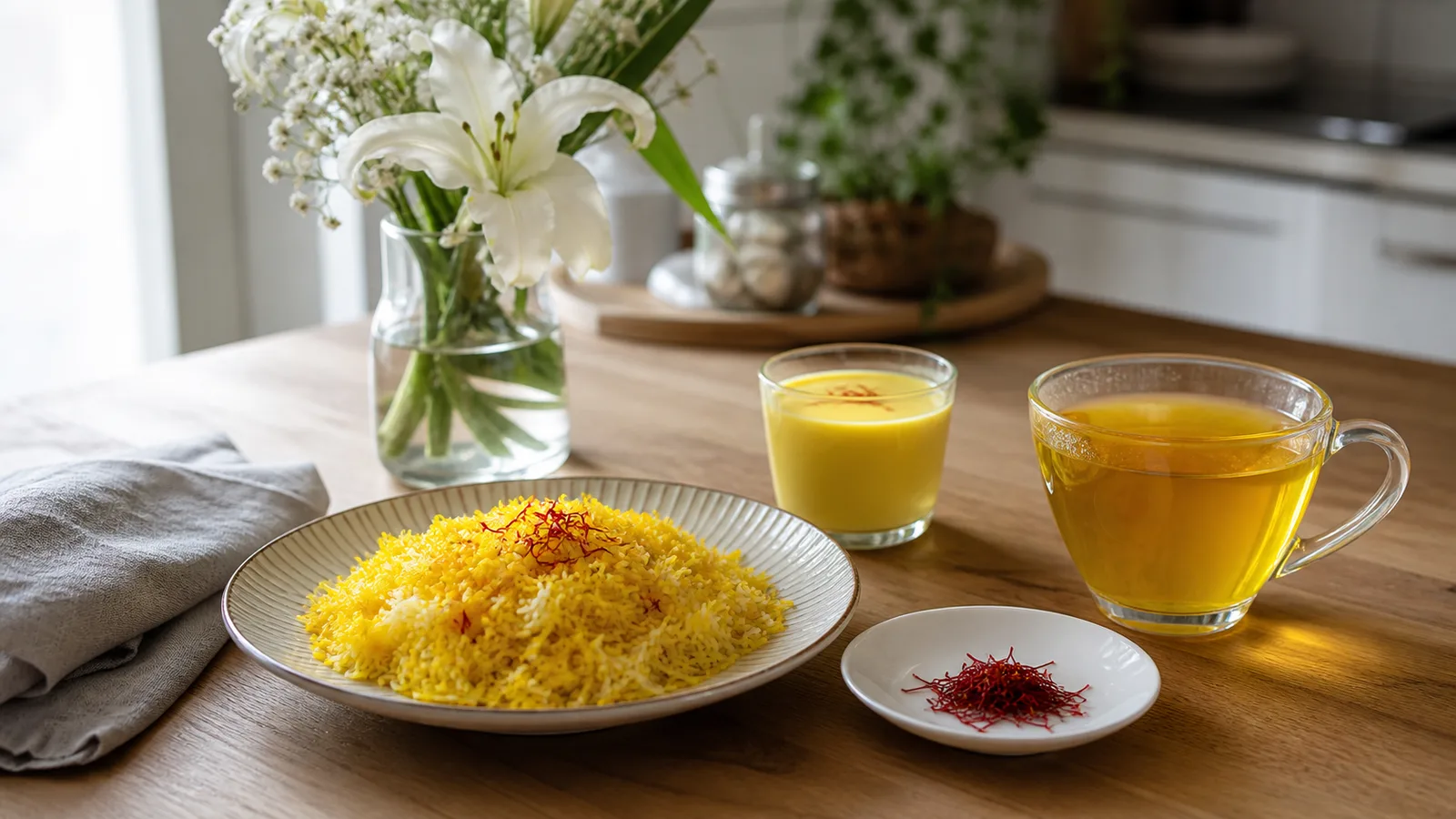
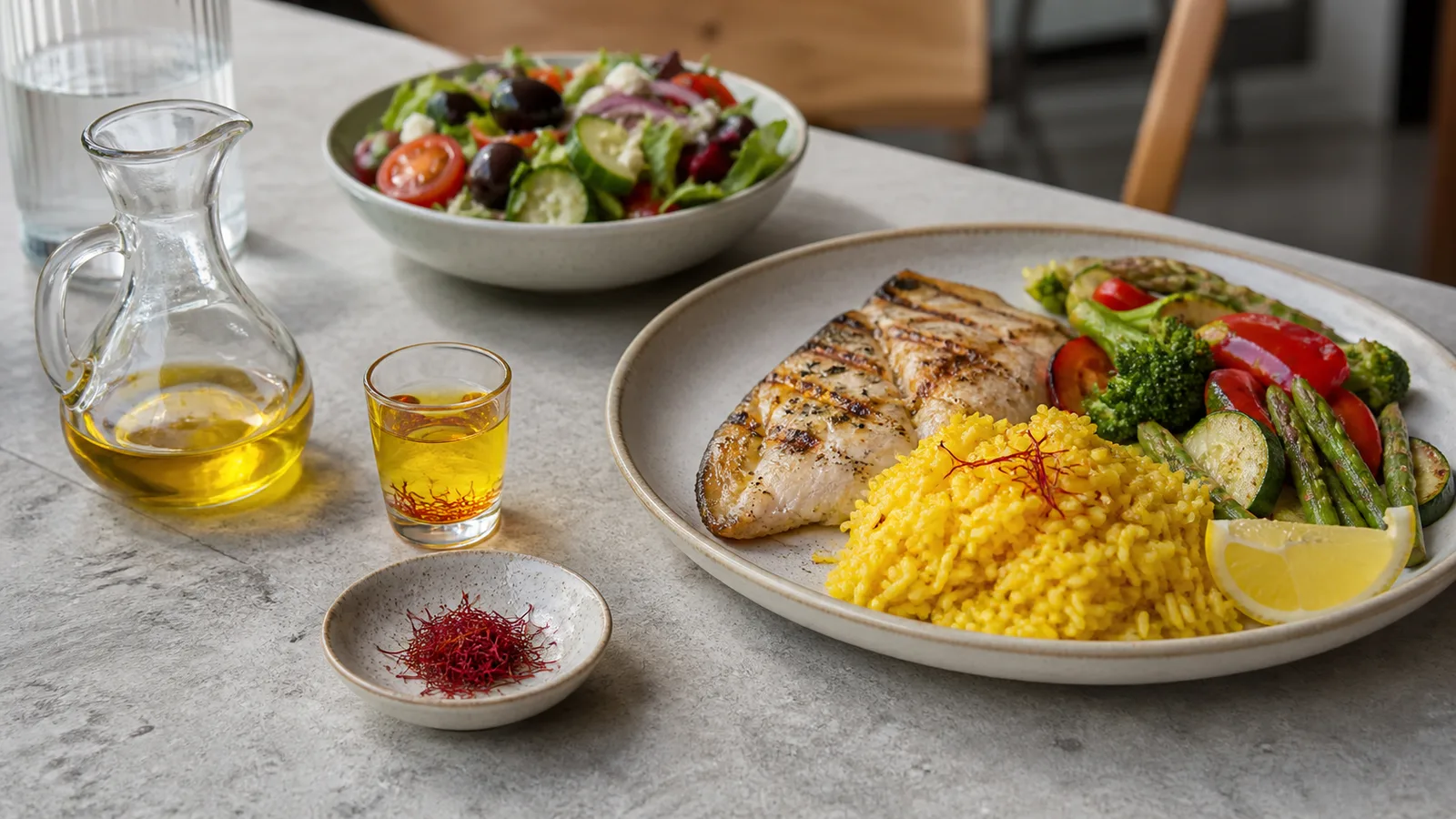
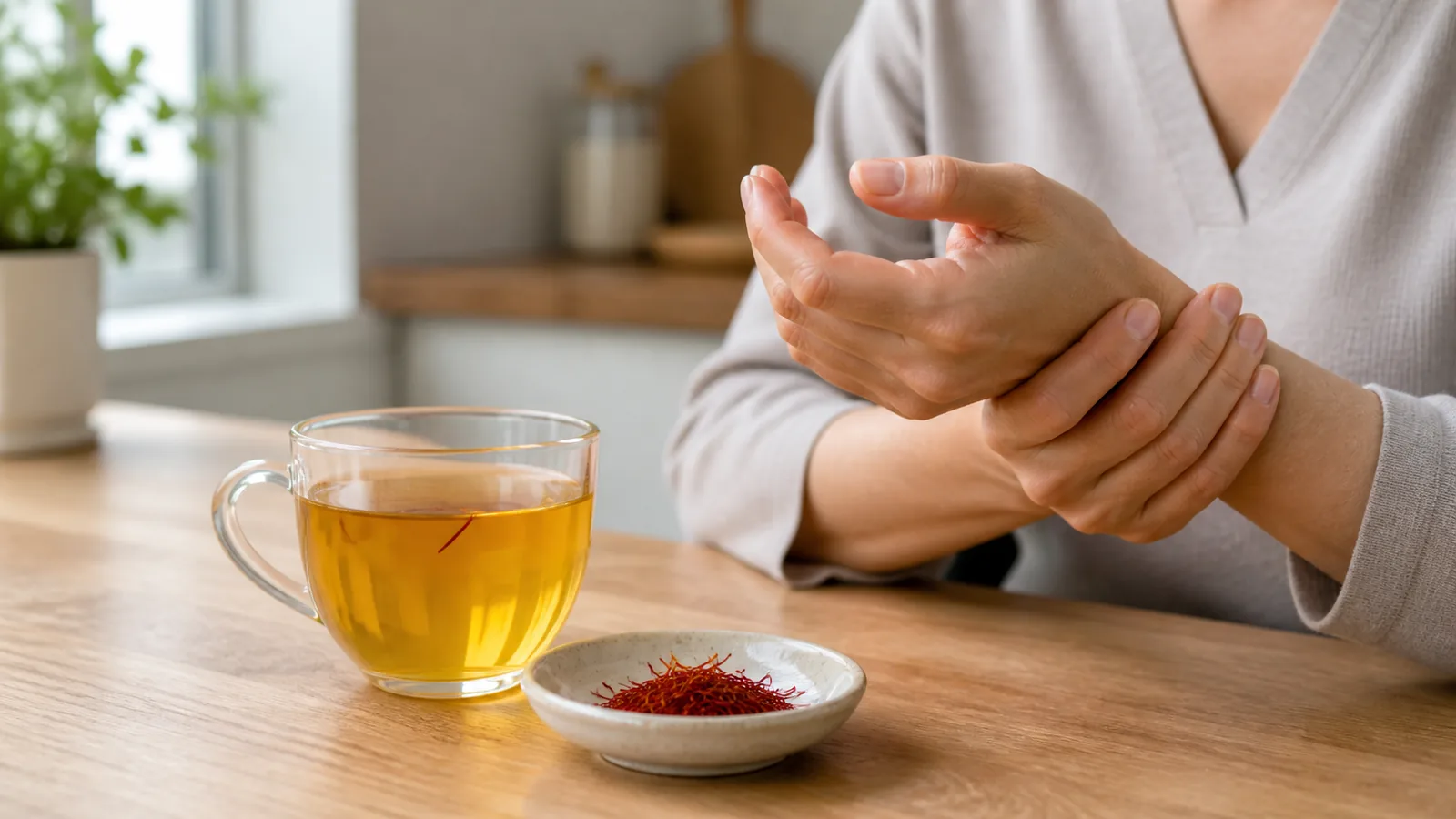
Saffron tea benefits are often described as if a cup of tea works exactly like a measured saffron supplement. It does not. A well-made cup is fragrant, warming and an enjoyable way to use real saffron threads, but most human research has tested standardized extracts, powders or capsules rather than homemade tea. That distinction matters when deciding what a daily cup can reasonably do.
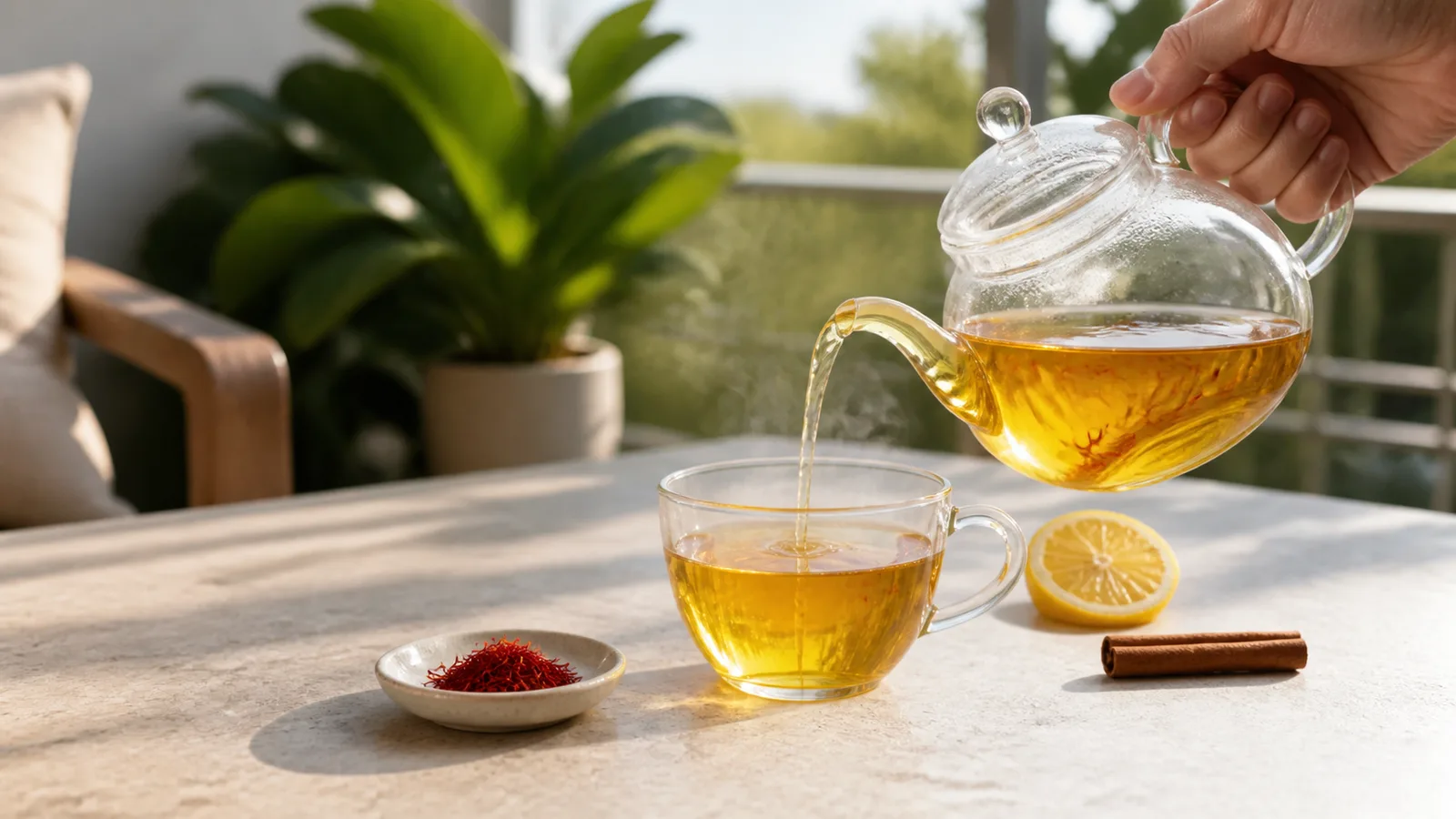
The most dependable benefits of saffron tea are culinary and sensory: it provides fluid, warmth, colour and a distinctive aroma without needing added sugar. Brewing also releases some of the spice’s water-soluble compounds, including crocins, while the aroma comes partly from safranal. The strength of the drink depends on the saffron, the number of threads, water temperature and steeping time. It is therefore better treated as a culinary drink with promising ingredients, not as a standardized dose or a replacement for medical care.
What is actually in saffron tea?
Each saffron thread is a dried stigma from the flower Crocus sativus. The threads contain crocins, which create the deep gold colour in water, along with picrocrocin and aromatic compounds associated with saffron’s flavour. These compounds are among the reasons saffron has attracted scientific interest.
Brewing does not turn every cup into the preparation used in a clinical trial. Researchers may use a named extract with a set concentration or a precisely weighed powder for several weeks. A home infusion varies from cup to cup. When a study reports a result for saffron supplementation, it cannot automatically be claimed as a proven benefit of saffron tea.
What are the health benefits of saffron tea?
The broad research picture is promising in a few areas, but it is uneven. An evidence map of saffron meta-analyses found signals for outcomes including mood and cognition, while also identifying variation in methods and review quality. In practical terms, that supports careful language: saffron has been studied, but a cup of tea is not a proven treatment.
Mood and relaxation
A quiet tea ritual can feel relaxing in its own right. Separate clinical research has also examined saffron for symptoms of depression and anxiety. A 2024 meta-analysis of randomized trials reported encouraging results for saffron preparations, while calling for larger and more diverse studies. Those trials do not show that occasional saffron tea treats depression or anxiety. Anyone experiencing persistent symptoms should speak with a qualified health professional rather than substituting tea for prescribed care.
Blood pressure and circulation
Saffron is sometimes promoted as a natural way to lower blood pressure. The more measured finding is less dramatic: a systematic review of randomized trials found small average reductions with supplementation and said the effect might not be clinically important. The studies did not establish homemade tea as a treatment for hypertension. If you take blood-pressure medicine or tend to have low readings, discuss regular medicinal use with your clinician. Our separate guide to saffron and blood pressure explains this evidence in more detail.
Eye health
Small clinical trials have investigated oral saffron supplements in adults with age-related macular degeneration. One randomized six-month study reported changes in some retinal-function measures, with results that varied by measure and time point. This is preliminary, condition-specific research. It does not prove that saffron tea prevents macular degeneration, restores vision or replaces an eye specialist’s treatment.
Memory and cognition
Cognition is another area under study. Human trials have generally involved particular patient groups and controlled preparations, not healthy adults drinking tea for a quick memory boost. The evidence map above found a positive signal across some analyses, but that should not be stretched into a promise of sharper memory from one drink. A cup may fit comfortably into a balanced routine; it should not be sold as a cure for forgetfulness or cognitive disease.
Antioxidants and cancer claims
Saffron contains compounds with antioxidant activity, especially in laboratory experiments. That fact does not mean saffron tea prevents cancer. The US National Cancer Institute notes that antioxidant findings from laboratory studies have not translated into proof that antioxidant supplements prevent cancer in people. Saffron tea can be enjoyed as food, but it must not delay screening, diagnosis or treatment.
How to make saffron tea
You do not need a large amount. Good saffron has a strong aroma, and using more can make the cup bitter rather than better.
- Lightly crush a small culinary pinch of saffron threads between clean fingers or in a mortar.
- Put the threads in a cup and add about 250 ml of hot water. Water just off the boil works well.
- Cover and steep for 10 to 15 minutes. The water should turn clear gold and develop a floral, gently earthy aroma.
- Taste before adding anything. Lemon, cinnamon, ginger or a little honey can soften the flavour, but added sugar is optional.
You can also add the crushed threads to black or green tea. In that case, remember that the finished drink contains caffeine even though a plain saffron-and-water infusion does not. Steeping for only five minutes gives a lighter cup; a longer covered infusion usually develops more colour and aroma.
Choosing threads for a clean, fragrant cup
Use food-grade saffron from a supplier that can identify its origin and handle it carefully. Real threads are deep red, narrow and slightly trumpet-shaped at one end. The drink should colour gradually rather than releasing an instant artificial red cloud. Store the spice dry, airtight and away from light so its aroma lasts.
Saffron is called “red gold” because harvesting it takes so much hand work. Each flower carries only three stigmas, and they must be separated and dried with care. That labour, rather than a need to use a large quantity, explains the price. A modest pinch is the sensible amount for a cup.
Side effects and sensible use
Culinary amounts of saffron are generally well tolerated, but “natural” does not mean free of side effects. A systematic review of human saffron studies found that reported adverse effects were most often gastrointestinal and usually minor, while recommending care with higher-dose or prolonged medicinal use.
- Stop drinking it if you notice an allergic reaction or persistent digestive symptoms.
- Pregnant or breastfeeding people should ask their clinician before using concentrated saffron or drinking it frequently for a health purpose.
- Check first if you take medicine for blood pressure, mood, bleeding or another ongoing condition, or if surgery is approaching.
- Do not copy supplement doses into a teapot. A culinary infusion and a concentrated extract are different products.
A useful way to think about the drink
Is saffron tea good for you? It can be a flavourful, unsweetened drink and a gentle way to enjoy the spice. Research on saffron gives legitimate reasons for scientific interest, particularly around mood and selected clinical outcomes, but it does not turn a variable home brew into medicine. Make it with real threads, keep the amount culinary, and enjoy the cup for what it reliably offers: colour, aroma, warmth and a distinctive taste.