Does saffron lower blood pressure? Human trials suggest that saffron supplements may produce a small average reduction, but the change is too modest to treat high blood pressure or replace prescribed care. Normal culinary use is different from a standardized extract, and a promising mechanism in a laboratory is not the same as a meaningful result in a person.
This is the central point in saffron and blood pressure research. Saffron contains interesting compounds and remains worth studying, but the clinical evidence does not support using saffron for high blood pressure as a treatment or blood-pressure controller.
Saffron and blood pressure: what human studies found
A systematic review and dose-response meta-analysis pooled eight randomized controlled trials in adults. Compared with control groups, saffron supplementation was associated with an average reduction of 0.65 mmHg in systolic pressure and 1.23 mmHg in diastolic pressure. The authors described those changes as small and possibly not clinically important.
A newer meta-analysis in people with metabolic syndrome and related conditions reached a similar practical conclusion. Average systolic and diastolic changes were about 1.15 and 1.61 mmHg respectively. The numbers were statistically detectable across the included studies, but they were not large enough to turn saffron into hypertension treatment.
These reviews also combine trials that differ in participant health, product formulation, study length and dose. Pooling can estimate an average; it cannot tell an individual reader how their blood pressure will respond to a cup of tea or an unstandardized supplement.
Does saffron lower blood pressure enough to matter?
For most people with hypertension, a change of roughly one millimetre of mercury is not a treatment plan. Blood pressure varies during the day and can shift with stress, recent exercise, caffeine, cuff size, posture and measurement technique. That everyday variation can be larger than the average effect reported in the saffron reviews.
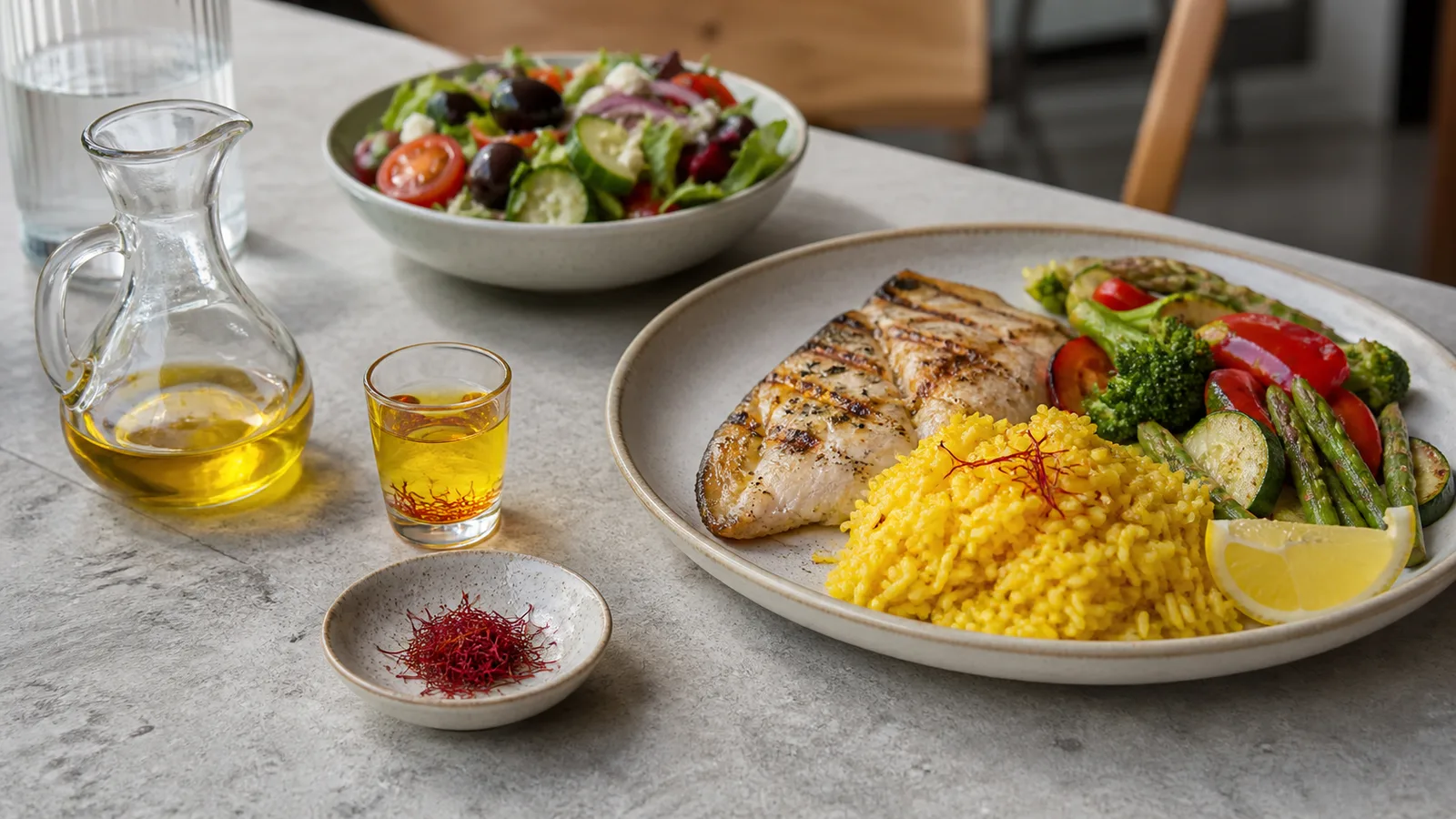
Reliable control usually depends on a broader plan: accurate measurements, food patterns suited to cardiovascular health, physical activity, sleep, weight management where appropriate, and medicine when prescribed. The NHLBI’s treatment guidance explains how lifestyle measures and medication are combined according to a person’s actual risk and readings.
Saffron can fit into a balanced diet for flavour. It should not be used to delay assessment, to “test” whether medication is still necessary, or to compensate for consistently high readings.
Why saffron appears in cardiovascular research
Researchers have several reasons to study the spice. Saffron contains crocin, crocetin, picrocrocin and safranal. Experimental work has explored antioxidant activity, vascular tone and signalling pathways that affect how blood-vessel muscle contracts or relaxes.
Antioxidant compounds
Crocin and related compounds can show antioxidant activity in chemical, cell and animal models. That helps scientists form hypotheses about oxidative stress and blood-vessel function. It does not prove that eating saffron prevents artery disease, protects the heart or stabilizes blood pressure in humans.
Vascular relaxation and resistance
Blood pressure is partly influenced by resistance in smaller blood vessels. Laboratory studies have proposed effects involving potassium channels, calcium movement and the relaxation of vascular tissue. These mechanisms are biologically interesting, but the measured result in human trials remains the more useful evidence for a reader—and that result is small.
Animal studies from Mashhad
Research associated with Mashhad University of Medical Sciences examined saffron compounds such as crocin and safranal in animal models. Those studies helped describe possible pathways and informed later questions. A rat experiment cannot establish a safe human dose or show that saffron controls hypertension in daily life.
Our related review of the effects of saffron on blood pressure looks more closely at how human and experimental evidence should be separated.
Does saffron raise blood pressure?
Current human evidence does not suggest that an ordinary culinary amount consistently raises blood pressure. It also cannot guarantee that every person or concentrated product will have no effect. Supplement strength varies, and people differ in their medicines, underlying health and sensitivity to active compounds.
If readings rise after starting any supplement, stop guessing about the cause. Record measurements using a validated upper-arm monitor and discuss the pattern with a clinician or pharmacist. The same applies to dizziness, faintness or readings that are lower than usual, especially when blood-pressure medicine is already being taken.
Food, tea and saffron supplements are different exposures
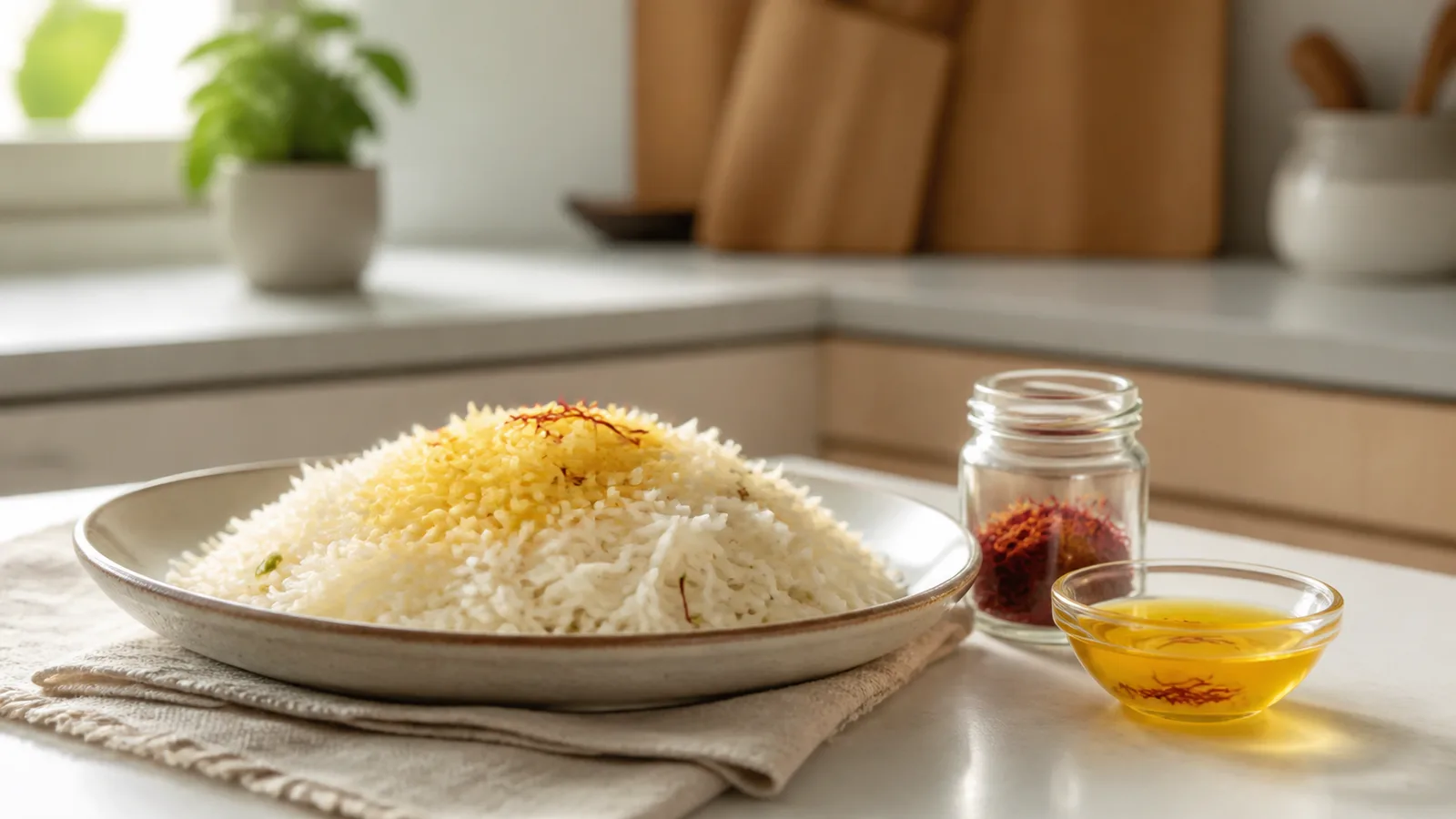
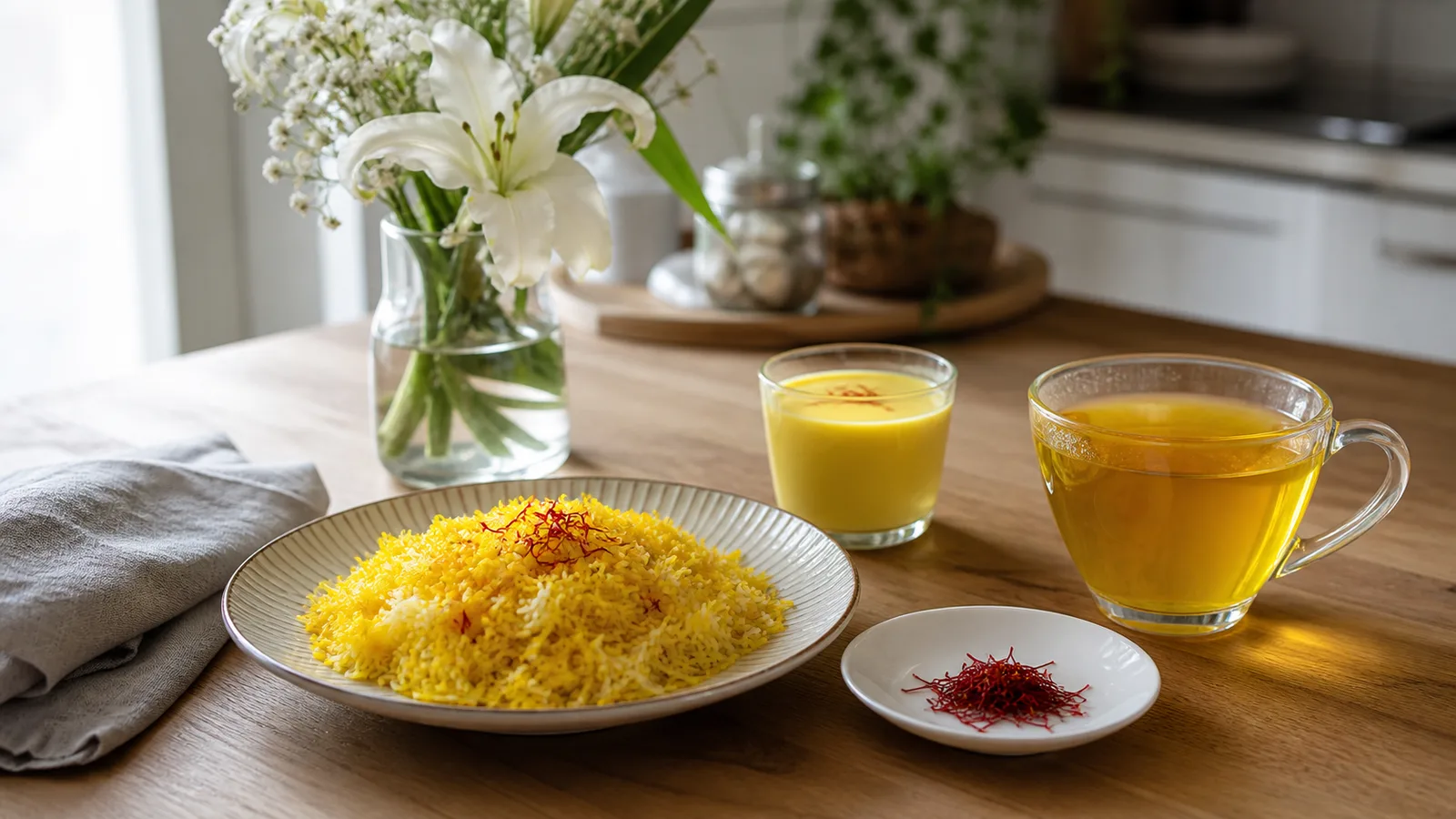
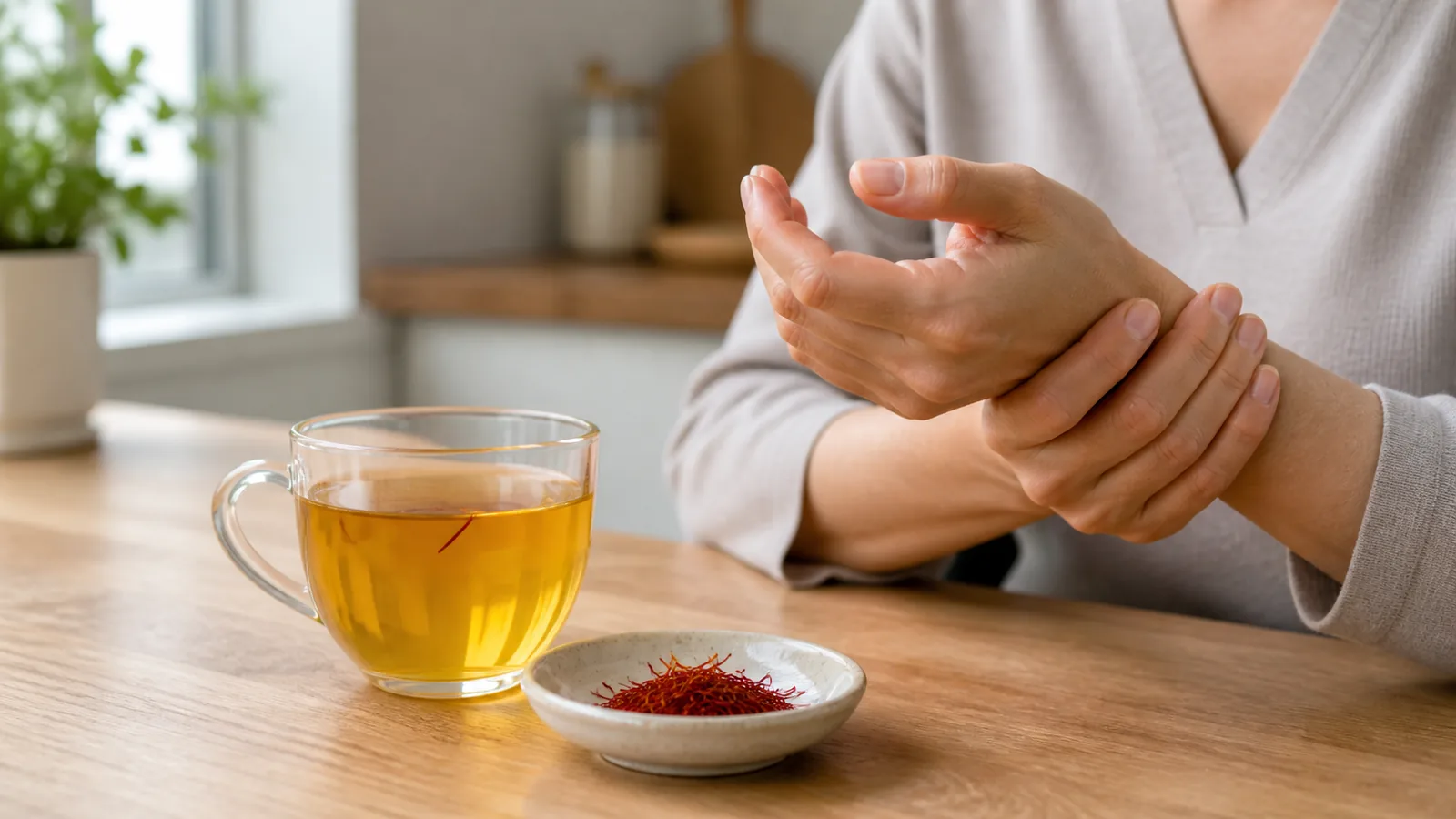
A pinch of saffron bloomed for rice or soup is used for taste, aroma and colour. Saffron tea is an infusion whose strength depends on thread weight, quality, water temperature and steeping time. A research extract is manufactured and measured for a trial. These preparations cannot be treated as interchangeable.
Copying a milligram amount from a paper is not a safe way to choose a supplement. Trial products may be standardized to particular compounds, while a retail capsule can use a different extract or include other ingredients. People who take antihypertensives, anticoagulants, diabetes medicine or several medicines should ask a pharmacist or clinician before adding a concentrated saffron product.
How to check blood pressure accurately
One reading is a snapshot, not a diagnosis. The American Heart Association’s home-monitoring guidance recommends an automatic validated upper-arm cuff and a record of readings over time. Sit quietly before measuring, support the arm, keep the feet flat and use the cuff as instructed.
Home monitoring helps show whether a treatment plan is working, but it does not replace regular medical care. Never stop or reduce blood-pressure medicine because one reading looks better or because a supplement has been added.
A reading above 180/120 mmHg needs to be repeated after at least one minute. If it remains that high and there is chest pain, shortness of breath, weakness, numbness, back pain, a vision change or difficulty speaking, the AHA advises calling emergency services rather than waiting for food, tea or a remedy to work.
The “warm and dry” description of saffron
Traditional Persian medicine often describes saffron as warm and dry. That language belongs to a historical medical framework and remains part of saffron’s cultural story. It is not a blood-pressure measurement and does not demonstrate that saffron lowers or raises pressure in a particular person.
Traditional use can guide research questions, but modern treatment decisions need clinical outcomes, accurate monitoring and an understanding of the individual’s overall health.
Practical safety boundaries
- Use saffron as a culinary spice if that is already part of your normal diet.
- Do not replace hypertension medication or medical follow-up with saffron.
- Ask about concentrated products if you take blood-pressure, blood-thinning or diabetes medicine.
- Tell a clinician about supplements before surgery and during pregnancy or breastfeeding.
- Seek assessment for repeated high or low readings rather than adjusting treatment alone.
A broad systematic review of saffron adverse events found that many trials reported at least one adverse effect during an intervention. This does not make normal food use dangerous; it does show why “natural” should not be used as a synonym for risk-free.
What the research suggests overall
Saffron for blood pressure remains a research subject, not a treatment recommendation. Meta-analyses find small average reductions, while experimental studies offer possible explanations involving antioxidant compounds and vascular relaxation. The human effect measured so far is modest.
Keep saffron in its honest role: a distinctive spice that may continue to interest cardiovascular researchers. For high blood pressure, accurate readings, established lifestyle measures and an agreed clinical plan matter far more.