Research suggests that saffron supplements may produce a small reduction in blood pressure, but the average change reported in clinical trials is too modest to treat hypertension on its own. Saffron used in food can still be part of an enjoyable diet. It should not replace prescribed medicine, regular blood-pressure checks or the lifestyle plan agreed with your clinician.
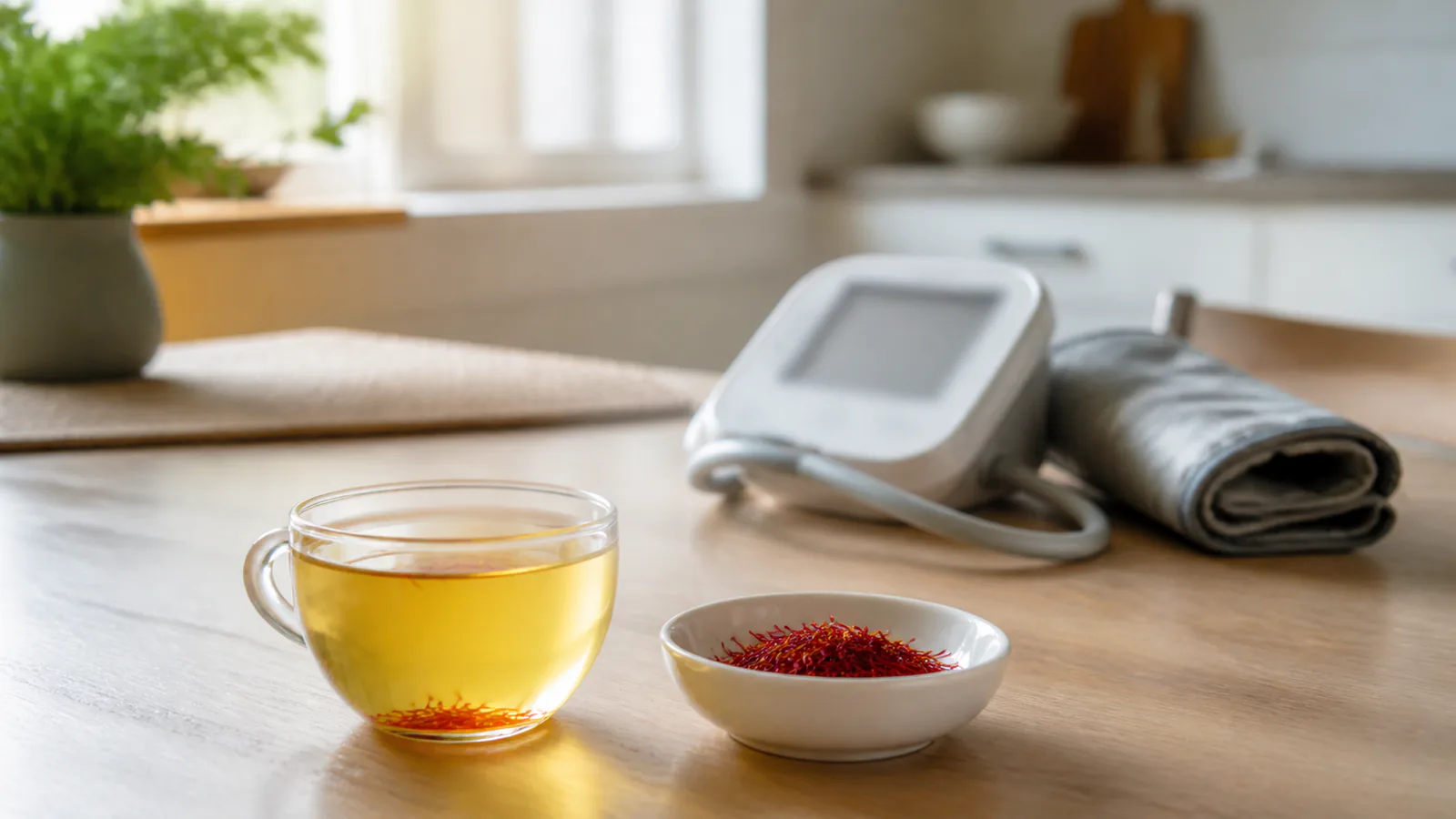
The distinction between an interesting research result and a useful treatment is especially important here. A statistically detectable change of one or two millimetres of mercury (mmHg) is not the same as bringing high blood pressure into a safe range.
What studies say about saffron and blood pressure
A 2021 systematic review and meta-analysis combined eight randomised controlled trials in adults. Compared with control groups, saffron supplementation was associated with an average reduction of 0.65 mmHg in systolic pressure and 1.23 mmHg in diastolic pressure. The authors explicitly noted that these effects were small and might not be clinically important.
A later 2025 meta-analysis examined 25 trials involving 1,486 people with metabolic syndrome or related conditions. It reported average differences of 1.15 mmHg for systolic pressure and 1.61 mmHg for diastolic pressure. The review also called for larger, high-quality trials in more diverse populations.
The studies did not all use the same participants, saffron preparation, dose or treatment period. Some tested whole-saffron supplements; others investigated extracts or isolated constituents such as crocin. Pooling them gives a broad signal, but it cannot guarantee that a particular retail product will have the same composition or effect.
Understanding systolic and diastolic pressure
A blood-pressure reading contains two numbers. Systolic pressure is the force in the arteries when the heart contracts. Diastolic pressure is the pressure while the heart relaxes between beats. Both numbers matter, and a clinician interprets them alongside age, medical history, other risk factors and readings taken over time.
A single home reading can be affected by recent activity, stress, caffeine, posture and cuff position. That is why repeated measurements taken correctly are more useful than an isolated number. If a reading is unexpectedly high or low, follow the medical instructions you have been given rather than trying to correct it with food or a supplement.
How saffron might influence blood pressure
Saffron contains crocin, crocetin and safranal. Laboratory and animal studies have explored whether these compounds affect antioxidant pathways, blood-vessel relaxation and signalling involved in vascular tone. These mechanisms help researchers decide what to test next, but they do not prove a meaningful clinical benefit in people.
The human trial results are the more relevant evidence, and their average effects have so far been small. It is therefore more accurate to say that saffron is being studied for possible cardiovascular effects than to call it a blood-pressure treatment.
Culinary saffron is not the same as an extract
A pinch of saffron used to season rice or make tea is different from a standardised extract supplied in a trial. The quantities differ, and supplements may concentrate selected constituents. Products can also vary in purity and labelled strength.
That means a study of one preparation cannot be converted into a home recipe. It also means that taking more is not a sensible way to chase a larger effect. Our guide to saffron overdose and side effects explains why concentrated or excessive use deserves caution.
Could saffron lower blood pressure too far?
Someone whose pressure is already low, or who takes antihypertensive medicine, should discuss concentrated saffron products with a clinician or pharmacist before using them. Combining substances that may affect pressure can cause dizziness, weakness or fainting in some circumstances. Individual risk depends on the medicine, dose, health conditions and product.
Pregnancy, planned surgery, bleeding disorders and treatment with multiple medicines are additional reasons to seek professional advice before using a saffron supplement. Normal culinary amounts and concentrated extracts should not be treated as interchangeable.
What actually helps control high blood pressure
Established care may include prescribed medication, reducing excess sodium, regular physical activity, maintaining a suitable weight, limiting alcohol, not smoking, improving sleep and managing related conditions. The right combination is personal and should be reviewed against reliable measurements.
The American Heart Association advises people not to stop prescribed medication and to check with a health professional before taking a supplement that claims to lower blood pressure. No spice, vitamin or drink substitutes for medication and lifestyle changes when they are needed.
How to read saffron blood-pressure claims
- Check whether the evidence comes from people, animals or laboratory cells.
- Look at the size of the change in mmHg, not only whether it was statistically significant.
- Confirm which saffron preparation and population were studied.
- See whether the trial compared the product with a placebo and measured adverse effects.
- Be wary of a seller turning a pooled research result into a dose or treatment promise.
Saffron and blood-pressure research is worth following, but the current clinical evidence supports a measured conclusion: supplements may have a small average effect, while hypertension still requires proper monitoring and proven care.