Saffron benefits for men are studied most directly in sexual function, fertility and mood, but the evidence is mixed. Some small trials report improvements in narrow groups, while larger or better-controlled studies have found no benefit for important outcomes. Saffron is not a proven testosterone booster, fertility treatment or substitute for medical care.
The spice can still be enjoyed in food, and standardised extracts remain a legitimate research subject. The important work is separating a culinary serving from a trial product—and a promising result from a result that applies to men in general.
Saffron benefits for men: what is specifically studied?
Much saffron research includes adults of more than one sex and does not establish a male-specific effect. The main questions that have recruited men as a defined group are semen quality, erectile function and antidepressant-related sexual difficulties.
Searches for “kesar benefits for male,” “zafran benefit for men” and “saffron benefits for male” are asking about the same spice, Crocus sativus. Different regional names do not indicate different products, but extracts can differ substantially in plant part, strength and standardisation.
Does saffron improve male fertility?
Male fertility is more than sperm count. Assessment may include concentration, movement, shape, hormones, anatomy, medical history and the health of both partners. A supplement result on one semen measure does not prove a higher pregnancy or live-birth rate.
Early saffron studies point in different directions. One uncontrolled study reported changes in motility and morphology. A much larger double-blind placebo-controlled trial in 260 men used saffron for 26 weeks and found no significant improvement in sperm density, motility, morphology or seminal antioxidant capacity.
A systematic review of saffron, erectile function and semen parameters described the semen findings as contradictory and limited by the included studies. The fair conclusion is that saffron has not been established as a fertility treatment.
A man concerned about fertility should seek an appropriate evaluation rather than waiting through months of self-treatment. Varicocele, infection, medicine, hormone issues, heat exposure, smoking, alcohol, weight and other factors may require very different responses.
Does saffron help erectile function?
Here too, the population matters. A sizeable randomised crossover study of 346 men with erectile dysfunction found no significant improvement while participants took saffron; sildenafil performed substantially better.
A separate four-week trial in just 36 men examined sexual difficulties associated with fluoxetine. In that specific group, saffron improved erectile-function and intercourse-satisfaction scores compared with placebo, but it did not significantly improve sexual desire or several other domains. That finding cannot be expanded into a general claim that saffron treats erectile dysfunction.
Persistent erectile difficulty can be an early sign of cardiovascular, metabolic, hormonal, neurological or medication-related problems. It deserves a clinical conversation, not just an aphrodisiac experiment.
Saffron, libido and sexual health
Saffron has a traditional reputation as an aphrodisiac, and pooled analyses have reported signals in sexual-function questionnaires. The underlying trials are small and heterogeneous, and their participants do not all have the same cause of difficulty.
Libido is influenced by mood, sleep, relationship context, hormones, medicine, alcohol, pain and general health. A spice cannot resolve every pathway. Saffron libido results should be described as preliminary and preparation-specific, not as a guaranteed increase in desire.
Does saffron raise testosterone?
There is no strong human evidence that culinary saffron reliably raises testosterone in men. Changes seen in animal work or an isolated laboratory marker cannot support a “natural testosterone booster” claim.
Symptoms such as low desire, reduced morning erections, loss of muscle, fatigue or infertility have many causes. Testosterone deficiency requires appropriate symptoms plus correctly timed laboratory testing and interpretation.
What about prostate health?
Saffron is not an established treatment for an enlarged prostate, prostatitis or prostate cancer. Antioxidant or tumour-cell experiments do not show that a food or extract prevents a human cancer.
Urinary difficulty, blood in urine or semen, pelvic pain, fever or a new testicular lump should be assessed promptly. Saffron must not delay examination or screening decisions.
Saffron and men’s mood
Mood is one of the better-studied saffron topics, although it is not uniquely a men’s benefit. A current GRADE-assessed meta-analysis of 34 randomised trials found improvement on some self-reported depression and anxiety scales but not on several clinician-rated or other mood measures; certainty was rated moderate and heterogeneity was high.
That is a reason for further clinical work, not a reason to stop prescribed treatment. Depression can affect sleep, work, relationships and sexual health, and it can carry a risk of self-harm. Persistent symptoms deserve professional support. Our guide to saffron and the brain separates proposed mechanisms from measured human outcomes.
Memory and cognitive function
Crocin, crocetin and safranal are studied in relation to oxidative stress and nervous-system pathways. Clinical research has also explored cognition in selected patient groups. None of this establishes that saffron makes a healthy man’s memory sharper or prevents dementia.
New confusion, rapidly worsening memory or cognitive change that disrupts daily life should be assessed. Sleep problems, depression, alcohol, medicine and medical conditions can all affect concentration.
Circulation, blood pressure and cholesterol
Saffron trials have measured blood pressure, lipids and metabolic markers, but changes are not consistent enough to make the spice a cardiovascular treatment. “Supporting circulation” is too vague to justify replacing exercise, prescribed medicine or a well-evidenced eating pattern.
Men using blood-pressure or glucose-lowering medicine should be cautious with a concentrated saffron product because an additional effect may matter. Our article on saffron and blood pressure reviews this evidence and its limits.
Inflammation, pain and exercise recovery
Saffron compounds show anti-inflammatory activity in laboratory and animal studies, and some human trials measure inflammatory markers. That does not prove relief for an unexplained joint, muscle or chest pain, nor does it establish better athletic performance.
Pain after unfamiliar exercise may settle with normal recovery. Persistent swelling, weakness, severe pain, chest pressure or shortness of breath needs an appropriate assessment rather than a stronger saffron dose.
Hair loss and eyesight
There is no solid clinical evidence that eating saffron prevents male-pattern hair loss or “improves scalp circulation” enough to regrow hair. Hair loss can be genetic, inflammatory, nutritional, autoimmune or medicine-related, so the cause matters.
Small trials of saffron and retinal function have focused mainly on adults with age-related macular degeneration. They do not show that saffron strengthens normal eyesight. Sudden vision loss, flashes, a curtain-like shadow, eye pain or injury requires urgent eye care.
How to consume saffron safely
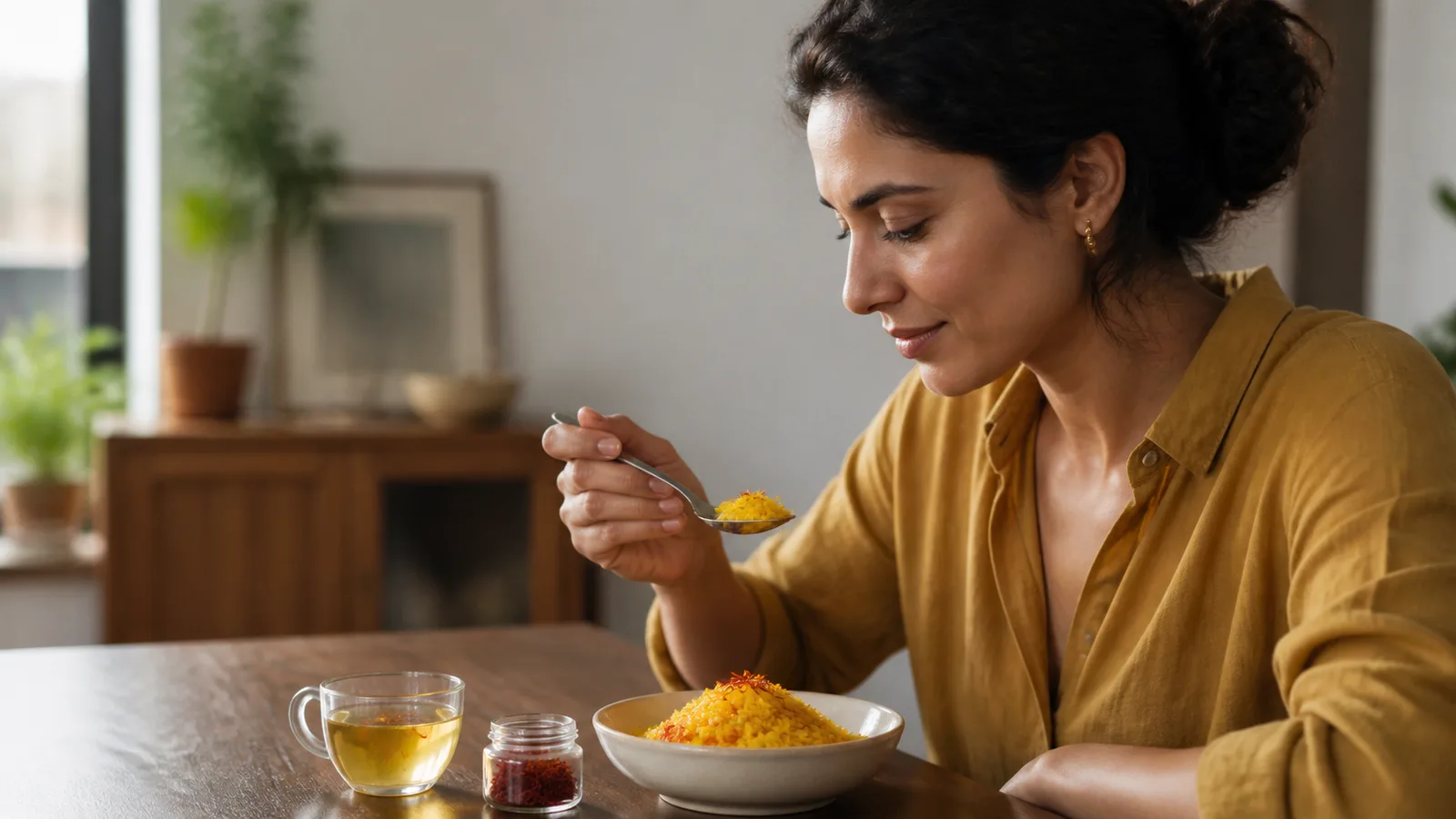
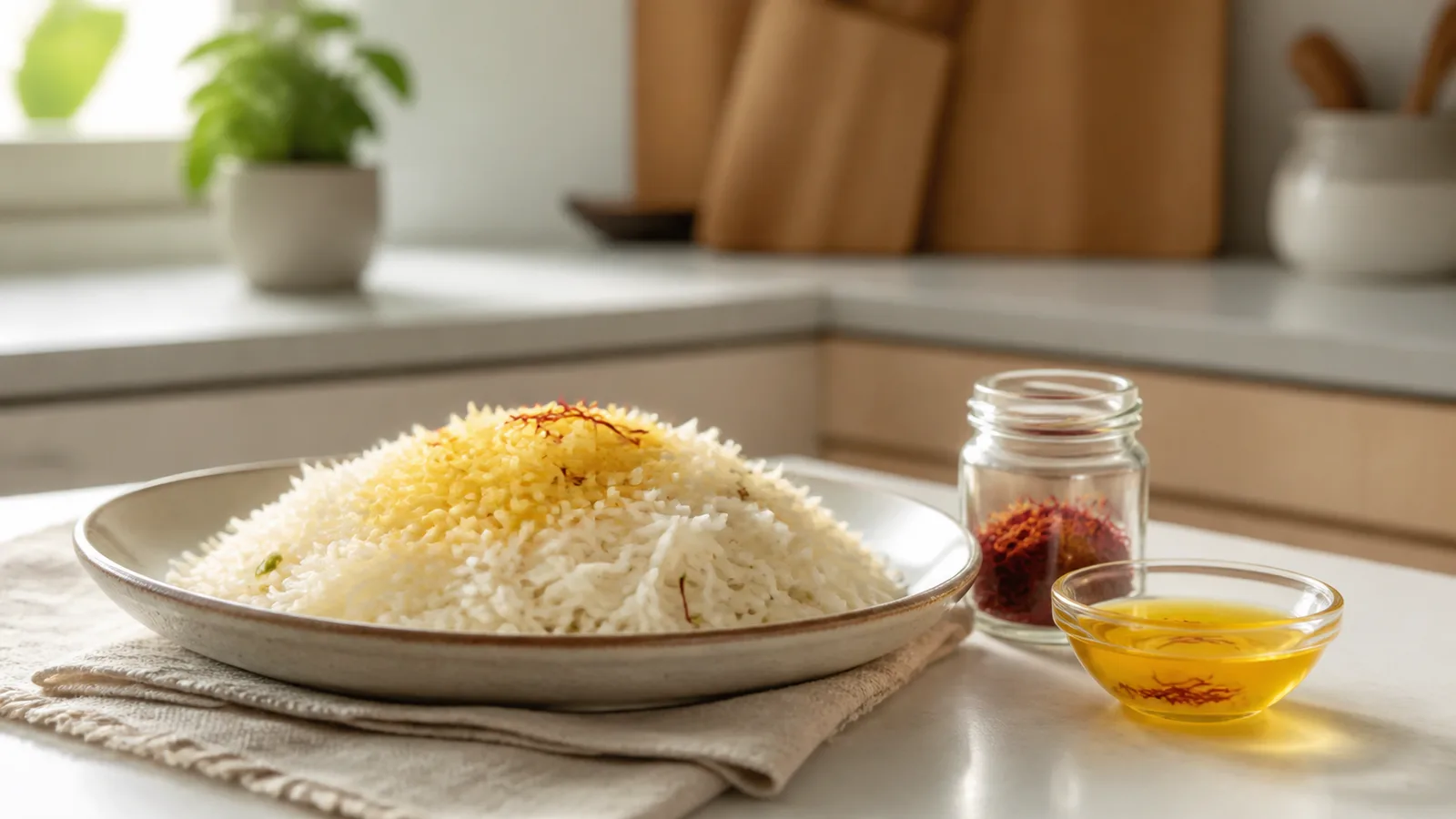
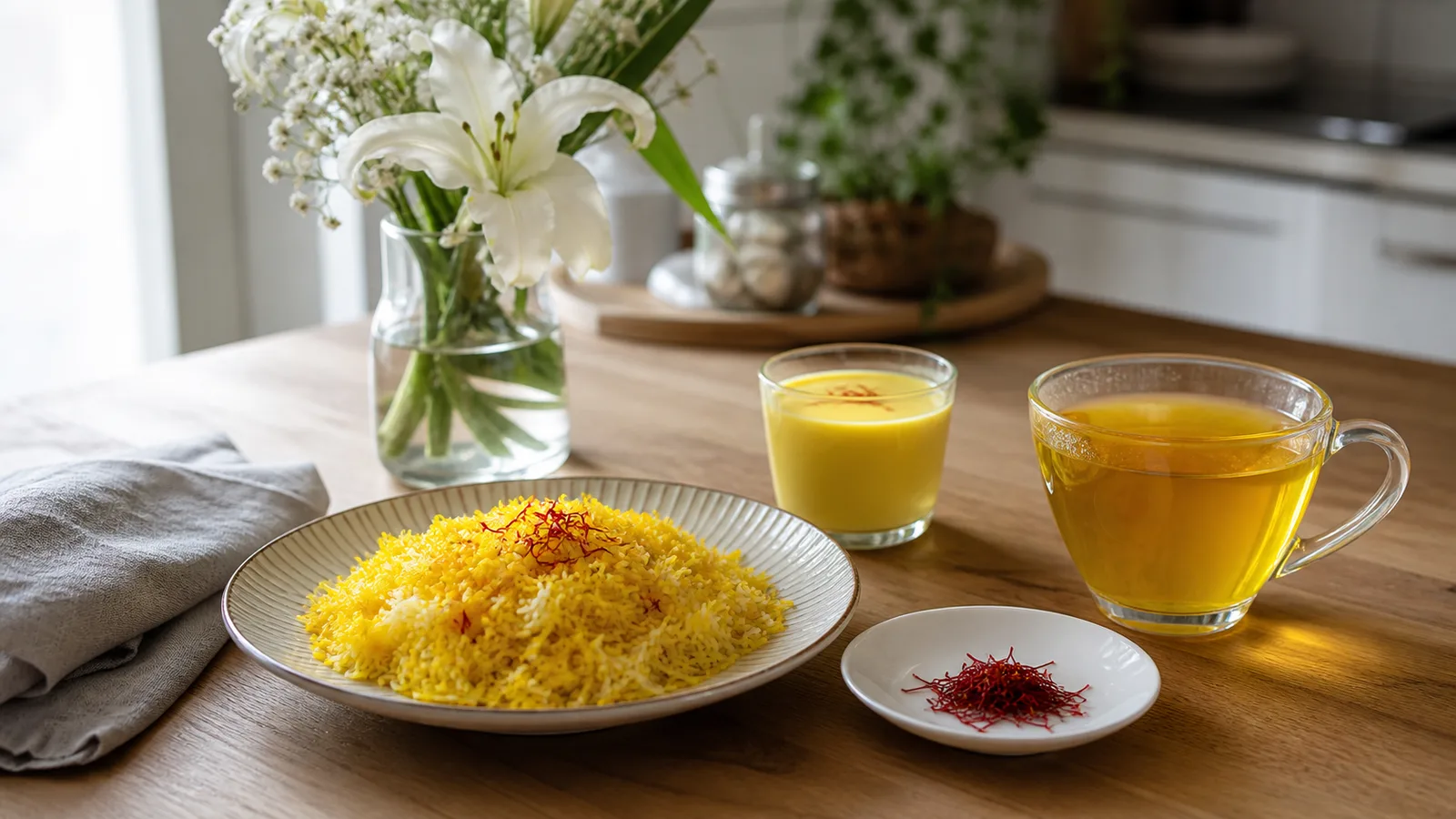
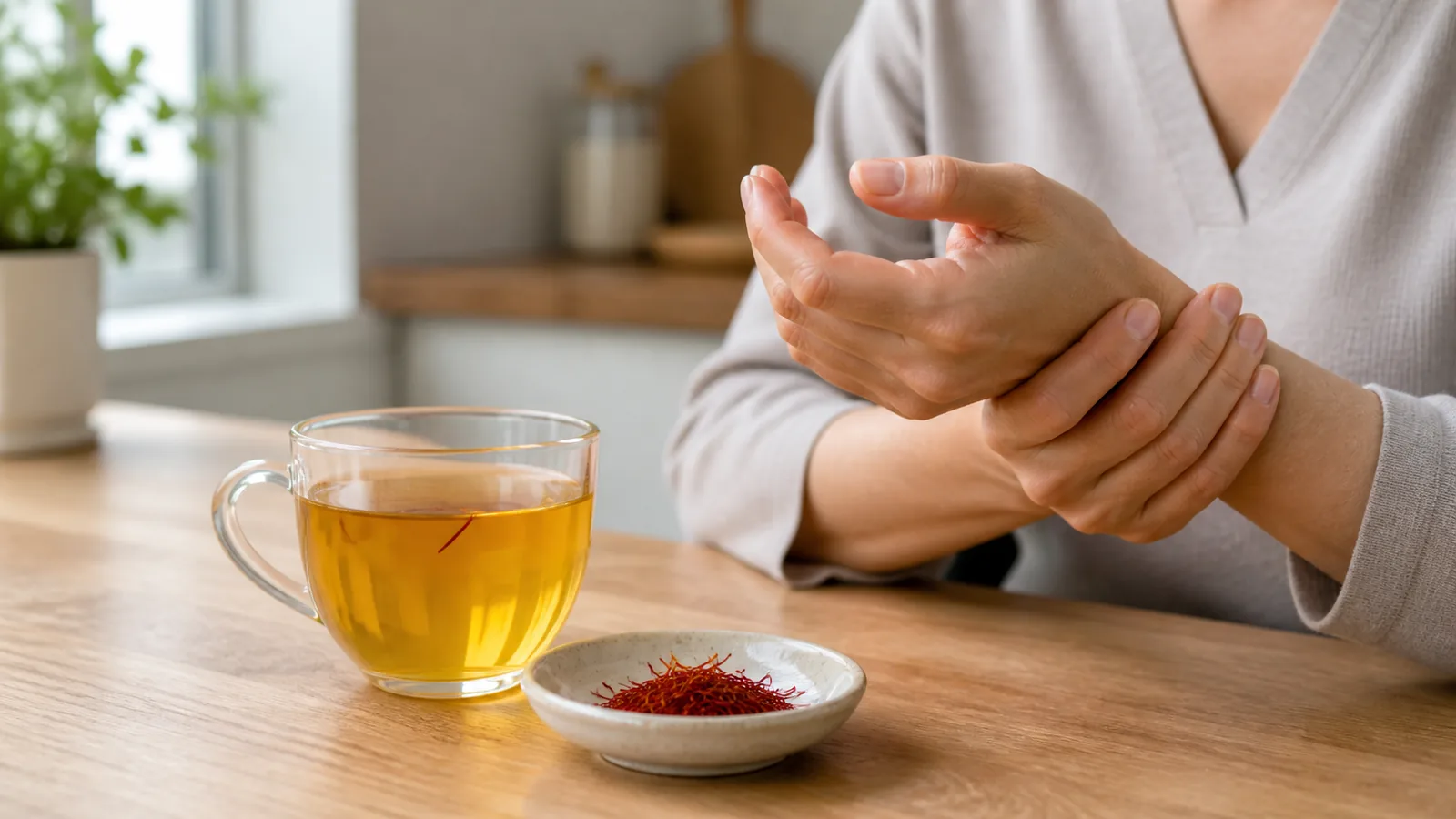
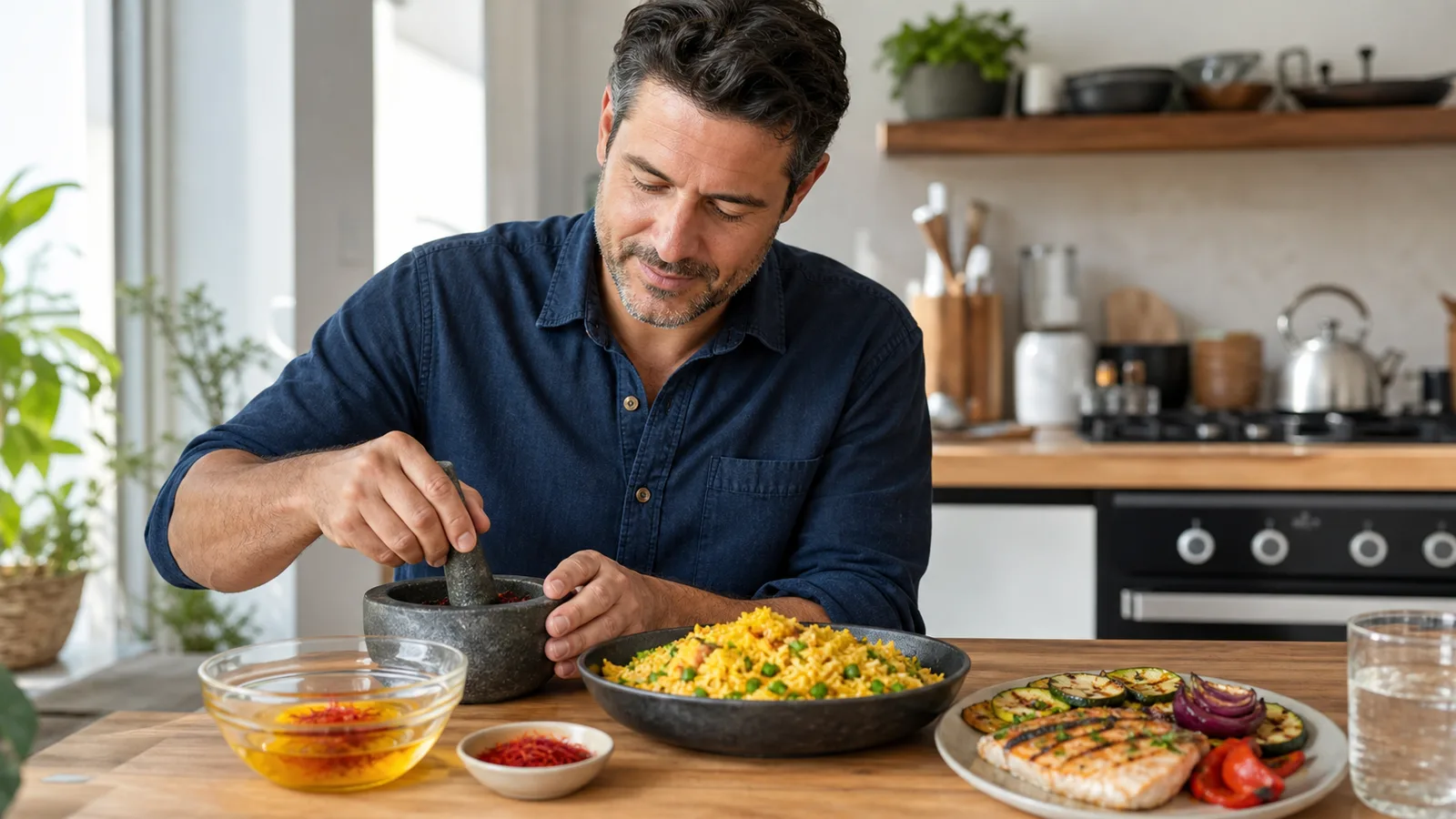
For food, crush a small pinch of genuine threads, bloom it in warm water and use the liquid across a dish. Tea is another culinary option, but it should not be made progressively stronger in pursuit of a sexual or fertility effect.
Clinical trials use measured powders or standardised extracts. Their milligram amounts are descriptions of those studies, not a home dosing recommendation and not equivalent to grabbing the same weight from an unverified product. Do not self-dose with gram-level quantities.
A current systematic review of saffron adverse events found that reported reactions vary with preparation and study. Nausea and other gastrointestinal effects can occur. Speak with a clinician or pharmacist before a supplement if you take regular medicine, have low blood pressure, a bleeding disorder, liver or kidney disease, or are preparing for surgery.
A realistic conclusion for men
Saffron for men is most interesting where researchers have tested defined male outcomes. Fertility results conflict; a large placebo-controlled study did not improve semen measures. General erectile-dysfunction evidence includes a substantial negative trial, while a small study found benefit in the narrow setting of fluoxetine-related dysfunction. Mood evidence is broader but not male-specific.
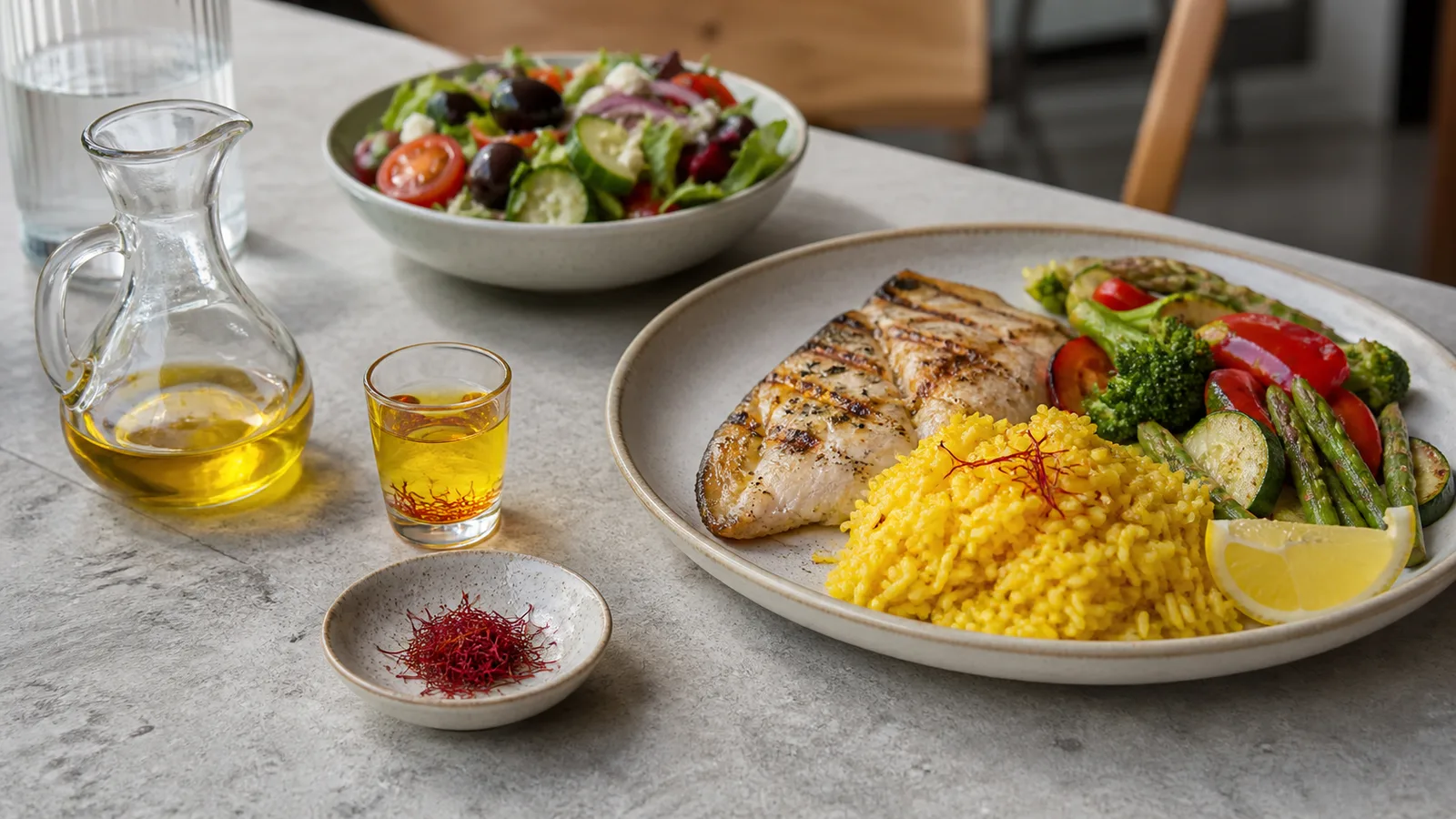
Use saffron as a valuable spice and treat any extract as a concentrated product with a specific evidence question. Men’s health problems are rarely solved by one ingredient, and the best next step is often identifying the actual cause.